Bridal jewellery for intimate wedding: A thoughtful guide to choosing meaningful pieces
August 30, 2026 | 10 minutes read
Key Takeaways
An intimate wedding gives every detail room to feel personal, including the jewellery. Choose pieces that suit your setting, dress, comfort, and story rather than trying to wear everything at once.
- Let the venue and dress guide the scale of your jewellery.
- Choose one focal piece and keep supporting details intentional.
- Mix heirlooms and new pieces through a shared metal or gemstone detail.
- Prioritize comfort, secure fastenings, and pieces you can wear again.
- Coordinate the wedding party through color, finish, or style—not identical sets.
Define your intimate wedding jewellery style
The best bridal jewellery for intimate wedding celebrations feels connected to the couple and the setting. A private garden ceremony, city restaurant reception, and small traditional gathering each invite a different sense of proportion. Begin with the atmosphere you want guests to remember, then choose jewellery that belongs naturally in it. A useful timeless wedding jewellery guide can also help you think through heritage pieces, modern designs, and coordination across ceremonies.
Match jewellery to the wedding setting
A small venue usually puts you closer to your guests, so jewellery is seen at conversational distance rather than from across a ballroom. In a softly lit restaurant, polished gold, pearls, or restrained diamonds can look warm and refined; outdoors, brighter stones and textured finishes may catch the light beautifully. Consider the architecture, flowers, time of day, and how formal the celebration feels before choosing scale.
Balance understated elegance with personal expression
Understated does not mean anonymous. It might be a slim bangle with an unusual finish, earrings in a favorite gemstone, or a necklace chosen because it recalls someone important. Keep the foundation simple, then allow one detail—color, shape, or workmanship—to make the look unmistakably yours. Personal meaning matters most when it remains visible without overwhelming the rest of the ensemble.
Choose between classic, modern, vintage, and bohemian styles
Classic jewellery often relies on pearls, clean diamond settings, and traditional silhouettes. Modern looks may favor geometric lines, sculptural earrings, or a single polished metal, while vintage styles suit antique-inspired details, lace, and softly luminous stones. Bohemian styling can be lighter and more organic, with mixed textures or nature-led motifs. You can borrow from more than one category, but repeat at least one element so the combination feels deliberate.
Use heirloom pieces to add sentimental value
An heirloom can become the emotional center of a small wedding look, whether it is a grandmother’s pendant, a parent’s ring, or a pair of earrings worn by several generations. Have the piece inspected and cleaned before the day, and check that its clasp or setting is secure. If its scale feels too formal, pair it with quieter contemporary pieces rather than forcing a complete vintage look. For more ideas on evaluating enduring workmanship, explore this guide to heritage jewellery craftsmanship.
Select jewellery for your wedding dress
Your dress provides the visual framework for every accessory. Neckline, fabric, sleeve length, embellishment, and hairstyle all affect how jewellery sits and how it appears in photographs. Try pieces on with the actual dress or a close fabric sample whenever possible. The goal is not to repeat every detail, but to create a clear relationship between the gown and the jewellery.
Pair necklaces with different necklines
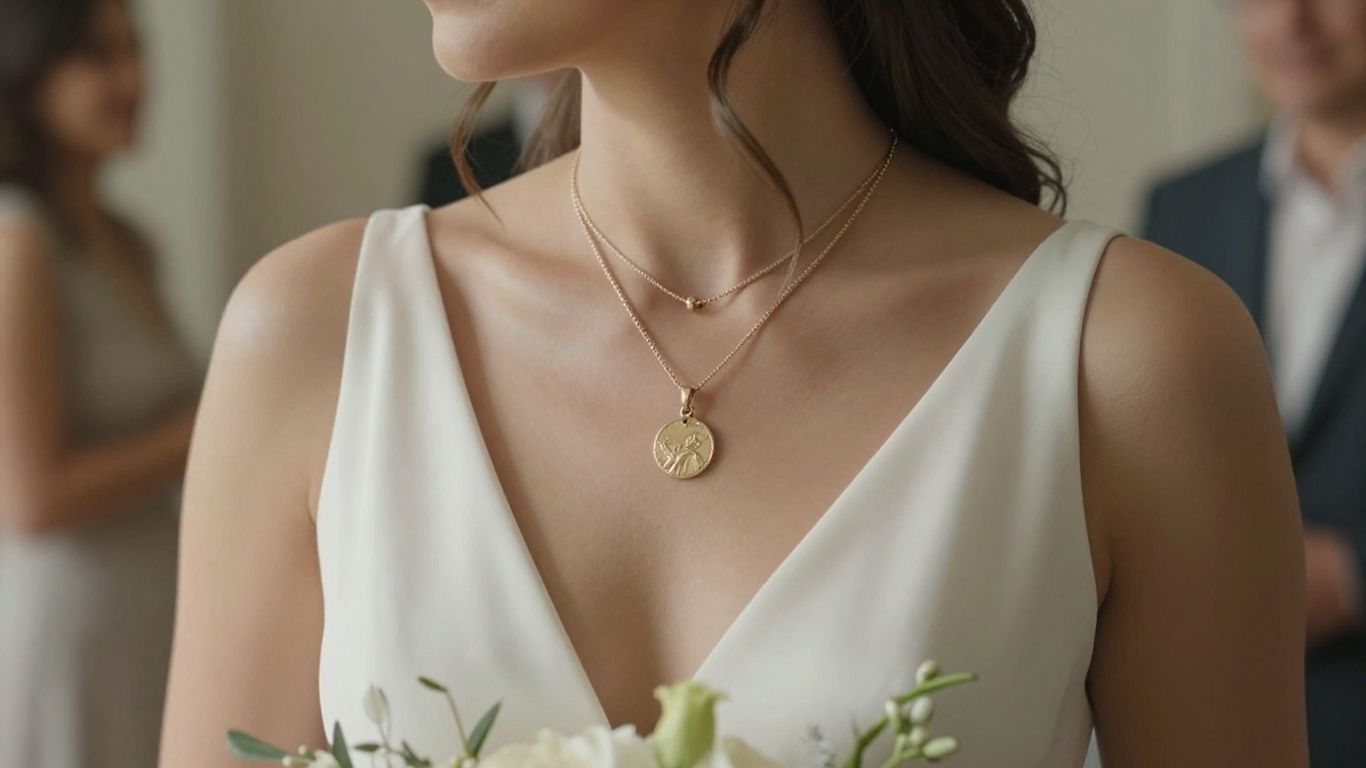
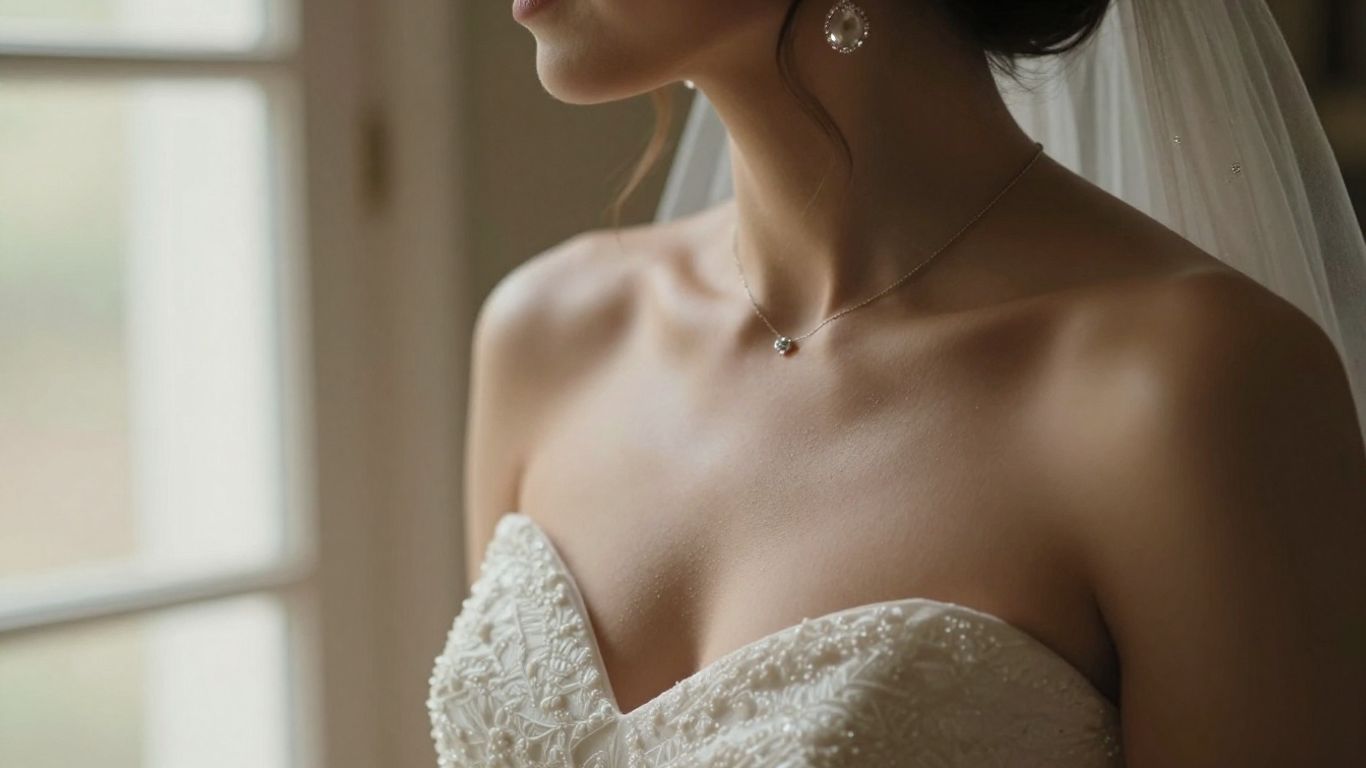
A strapless or sweetheart neckline gives a necklace space to make an impression, from a close pendant to a short statement design. With a V-neck, follow the line with a pendant or a necklace that echoes its shape. High necklines and heavily embellished bodices may look more balanced with no necklace at all, allowing earrings or a bracelet to carry the detail. For a silk saree or similarly fluid outfit, the advice in this silk saree jewellery guide can help with proportion and layering.
Choose earrings that complement your hairstyle
Updos expose the ears and neck, making drops, hoops, and sculptural studs easy to appreciate. With hair worn down, choose earrings that will not disappear into it; a brighter stone or a clean silhouette can provide enough definition. Think about your face shape only as a gentle guide, not a rule. Most importantly, test the earrings for weight and movement before the ceremony.
Coordinate bracelets with sleeves and gloves
Bracelets should have enough space to move without catching on lace, beading, or delicate glove fabric. A sleeveless dress may welcome a bangle stack, while long sleeves often look cleaner with one slim bracelet or a meaningful watch-style piece removed for the ceremony. If your engagement ring and wedding band already provide hand detail, keep the opposite wrist intentionally quieter.
Match jewellery details to embellishments and fabric
Repeat the dress’s visual language rather than copying it exactly. Pearls can soften satin, warm gold can complement ivory or champagne tones, and clear stones can sit comfortably with cool white fabric. Matte or textured jewellery may suit rustic or tactile fabrics, while polished surfaces can echo sleek crepe. The reception gown jewellery guide offers another useful way to consider metal, gemstone, hairstyle, and photography together.
Build a balanced bridal jewellery look
A balanced look has a point of focus and enough quiet space around it. This is especially effective at an intimate celebration, where guests and cameras will notice small choices. Start with the piece you most want to wear, then add only what supports it. The result should feel finished when you catch your reflection, not crowded.
Decide which piece should be the focal point
Your focal piece might be a necklace, earrings, a tiara, a bangle, or even an heirloom ring. Once you choose it, let neighboring pieces play supporting roles in scale and shine. Statement earrings usually need a simpler neckline and necklace, while an elaborate necklace may pair best with small studs. This approach keeps the eye moving without giving every accessory equal volume.
Combine metals without making the look feel busy
Mixed metals can look thoughtful when there is a bridge between them. A two-tone ring, a small repeated accent, or a warm-and-cool palette carried through the wedding party can make the combination feel intentional. Limit the number of finishes, especially if the dress already has sequins or metallic thread. Repetition is what turns contrast into cohesion.
Layer delicate pieces with intention
Layering works best when each necklace has a distinct length and the pendants do not compete. The same principle applies to slim bangles or rings: vary the shape slightly, but keep the overall scale restrained. Lay the pieces beside one another before wearing them and remove anything that tangles, hides another piece, or changes the neckline’s visual line. A smaller collection often photographs more clearly than a larger one.
Know when minimal jewellery makes the strongest statement
A simple dress, dramatic veil, architectural hairstyle, or striking bouquet may already provide enough visual interest. In that case, pearl studs or a fine bracelet can feel more luxurious than a full set. Minimal jewellery also gives an heirloom or unusual ring space to be noticed. Choosing less is not a lack of effort; it is a way of showing confidence in the pieces you kept.
Choose pieces for an intimate ceremony and reception
An intimate wedding often moves between settings more fluidly than a large formal event. You may greet guests at close range, sit at one long table, walk through a garden, and dance in the same outfit. Jewellery needs to look beautiful in those transitions and remain comfortable through them. Plan for real movement, changing light, and plenty of close-up photographs.
Select jewellery that suits a small venue
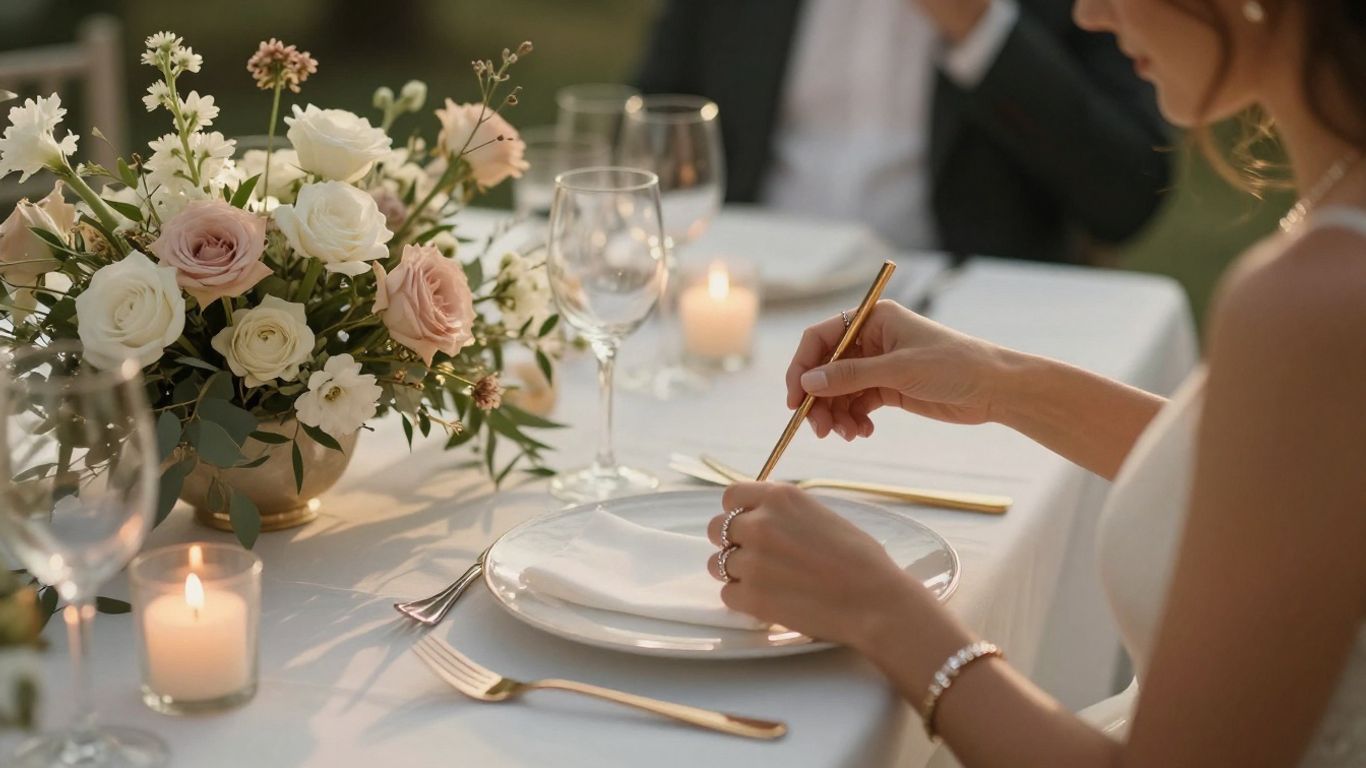
In a small ceremony space, oversized pieces can feel louder than intended, particularly when paired with a detailed dress. Medium-scale earrings, a focused necklace, or a few refined bangles often create enough presence. Look at the room’s ceiling height, table distance, and decoration density. A piece that feels modest in a large hall may be exactly right when guests are seated nearby.
Consider outdoor weddings and changing light
Outdoor light shifts from bright midday sun to golden hour and candlelit evening. Highly reflective surfaces may sparkle strongly in direct sun, while colored gemstones can become especially rich at sunset. Secure loose hair jewellery and avoid pieces that snag on veils, shawls, or foliage. If rain, wind, or heat is possible, choose materials and fastenings you will not need to monitor constantly.
Prioritize comfort for close-up photographs
Close photographs reveal more than a beautiful setting: they capture a tense clasp, red earlobes, or a bracelet that has slipped out of place. Wear each piece for a trial period and move, sit, hug, and raise your arms. Check earring backs, necklace extenders, and bracelet closures. Comfort is not merely practical; it helps your expression stay relaxed throughout the day.
Plan versatile pieces for day-to-evening wear
For a ceremony-to-dinner look, choose pieces that can shift with one small change. Remove a pendant after the vows, add a bangle before the reception, or swap studs for drops at dusk. Keep the additions in a labeled pouch with a trusted person, and practice the change before the wedding. Versatility is particularly valuable when an intimate celebration is designed around a smaller, carefully chosen wardrobe.
Personalize your bridal jewellery choices
Personal jewellery has a natural place in a smaller wedding because the celebration itself is often built around closeness and shared history. A gemstone can recall a birthday, a family can contribute an heirloom, and a small engraving can hold a private message. Personalization should still relate to the full look through color, metal, or proportion. When it does, sentiment and style strengthen each other.
Incorporate birthstones and meaningful gemstones
Birthstones can appear in a ring, pendant, earrings, or a tiny hidden detail rather than becoming the dominant color. You might choose one stone for each partner, a family birthstone, or a hue connected to a meaningful place. Check the stone’s durability and setting before wearing it for a full day. A jeweller can also help you select a cut and mounting that suit your routine after the wedding.
Add family heirlooms without losing cohesion
The easiest way to blend an heirloom with new jewellery is to repeat one of its qualities. Match its metal, echo its gemstone color, or choose a simpler piece with a related outline. If the heirloom is ornate, let it stand alone rather than surrounding it with competing detail. Photograph the combination in advance so you can see whether the pieces feel connected from a distance.
Engrave or customize selected pieces
Customization can be as quiet as an engraved date inside a band or as visible as a redesigned pendant. Keep the words short and check spelling, character limits, and production timing before approving the final design. If you are considering a newly designed sentimental piece, this personalized jewellery design guide may help you organize memories, metals, gemstones, and durability questions.
Reflect cultural and family traditions
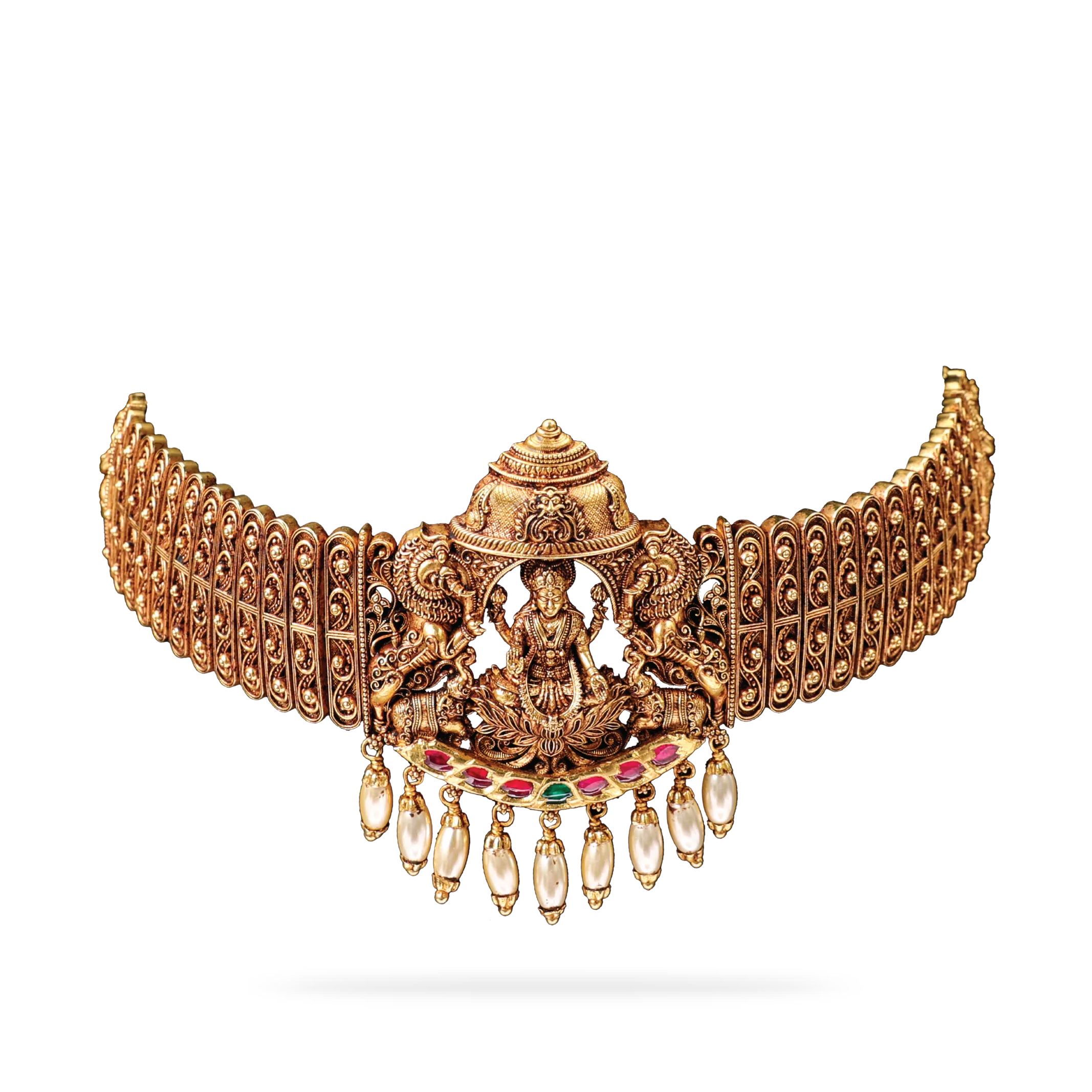
Tradition can guide the metal, motif, number of bangles, or type of necklace you choose. Some couples wear one significant traditional piece with a contemporary dress; others build the entire look around ceremonial jewellery. Ask family members about the meaning and correct way to wear inherited or cultural pieces. Respectful styling leaves room for both continuity and personal choice.
Shop for quality, comfort, and value
A thoughtful purchase is not defined only by its price. It should suit the wedding, feel secure on the body, and remain useful afterward. Compare the construction as carefully as you compare the appearance. For broader planning around materials, categories, and priorities, this wedding jewellery planning guide provides a helpful starting point.
Compare fine jewellery, demi-fine jewellery, and costume options
Fine jewellery may offer precious metals and gemstones suited to long-term wear, while demi-fine and costume pieces can make experimentation or coordinated attendant gifts more accessible. The right choice depends on how often you expect to wear the item, whether it carries family significance, and how much of the budget it uses. Avoid judging solely by category; inspect the actual construction, finish, and care requirements.
Check metal purity, gemstone quality, and craftsmanship
Ask what the metal content is, whether gemstones are natural, treated, or simulated, and what documentation accompanies the piece. Examine prongs, soldered joins, symmetry, polish, and the smoothness of edges that touch skin or fabric. A secure setting matters more than a flashy display model. For a structured approach to comparing stores, materials, making charges, and after-sales policies, see this bridal jewellery shopping guide.
Set a realistic bridal jewellery budget
Start with the total wedding budget, then separate must-have pieces from optional additions. Include alterations, resizing, taxes, insurance, storage, and any customization in your estimate. Existing jewellery may reduce what you need to buy, but do not assign it an imagined value without checking its condition. This bridal jewellery budget guide can help you think through costs by category and future wearability.
A simple planning table can make trade-offs easier before you visit a showroom or place an order.
| Jewellery need | Priority question | Practical choice |
|---|---|---|
| Focal piece | What will guests notice first? | Invest in one standout item |
| Everyday potential | Will you wear it after the wedding? | Favor adaptable scale and design |
| Sentimental value | Does an heirloom already fill the role? | Restore or thoughtfully pair it |
| Comfort and security | Can you wear it for several hours? | Test weight, fit, and fastenings |
Use the table as a conversation tool, not a rigid formula. A less expensive piece may be the wiser choice if it fits your life, while a higher-cost heirloom-quality item may deserve priority when it carries lasting meaning.
Review sizing, security, returns, and delivery timelines
Confirm ring and bracelet sizes, necklace lengths, clasp types, and whether adjustments are possible. Ask how repairs, returns, exchanges, and cleaning are handled, and get delivery dates in writing for custom or resized pieces. Schedule a final inspection well before the wedding rather than opening the box the night before. Keep invoices, certificates, and care instructions together in a secure place.
Coordinate jewellery with the full bridal party
The wedding party does not need to look identical to look connected. A shared metal, gemstone family, or level of formality is usually enough to create visual harmony. Give attendants room to suit their own outfits and comfort, especially when necklines and hairstyles differ. The couple’s jewellery should remain the anchor, with everyone else supporting the same overall mood.
Create a cohesive look without matching every piece
Choose a simple visual thread, such as warm gold, luminous pearls, or clean geometric shapes. Attendants can interpret that thread through studs, pendants, bracelets, or hair details according to their outfits. When colors vary, matching finish or scale can still tie the group together. This feels more generous than requiring everyone to wear a set that does not suit them.
Choose jewellery gifts for attendants
A useful gift is one that feels personal but remains easy to wear after the wedding. Consider small earrings, a delicate pendant, or a bracelet in a versatile metal, and check allergies and style preferences discreetly beforehand. Packaging, a handwritten note, and a connection to the day can make a modest piece meaningful. Order early enough to inspect every item and arrange exchanges if needed.
Coordinate the groom’s and partner’s accessories
Partners can coordinate through metal tone, watch details, cuff links, tie pins, rings, or a subtle gemstone color. The connection does not need to be obvious; even a shared finish can create a pleasing sense of unity in photographs. Choose accessories that suit each person’s usual style rather than turning the wedding into a costume. Comfort and secure fastenings matter here too.
Keep the overall wedding aesthetic consistent
Return to the wedding’s central mood when making final decisions. A relaxed outdoor celebration may call for lighter textures and natural color, while a formal dinner may support polished metal and deeper stones. Review the couple’s jewellery, attendants’ accessories, attire, flowers, and table details together. Consistency comes from repeated choices, not from making every element identical.
Conclusion
Choosing bridal jewellery for intimate wedding celebrations is less about collecting a complete set and more about editing with care. Let the setting, dress, comfort, and family story guide the pieces you keep, then give each one enough space to be appreciated. The most successful look will feel beautiful in photographs, natural during the day, and meaningful long after the celebration.
Frequently Asked Questions
How much jewellery should a bride wear for an intimate wedding?
There is no fixed number, but one focal piece with a few supporting details is a reliable starting point. Let the neckline, hairstyle, dress embellishment, and venue determine whether you add or remove pieces.
Should bridal jewellery match the wedding dress exactly?
Not necessarily. It should complement the dress through related color, metal, texture, or scale rather than duplicate every embellishment. A little contrast can make both the gown and jewellery more distinct.
Is it acceptable to wear family heirlooms with modern jewellery?
Yes. Create cohesion by repeating the heirloom’s metal, gemstone color, or shape in one newer piece, and allow the heirloom to remain the emotional focal point if it is especially ornate.
What jewellery works best for an outdoor intimate wedding?
Choose secure, comfortable pieces with enough contrast to remain visible in changing light. Avoid anything likely to snag on veils, clothing, or foliage, and test every fastening before the wedding day.
How can a bride keep jewellery comfortable for several hours?
Wear each item during a trial at home, including the earrings, necklace, bracelets, and rings. Sit, walk, hug, and move your arms so you can identify weight, rubbing, slipping, or snagging before the event.
Should the bridal party wear matching jewellery?
Matching is optional. A shared metal, finish, gemstone color, or level of formality can create a coordinated appearance while allowing each attendant to choose a piece that suits their outfit and personal style.
When should wedding jewellery be purchased?
Begin early enough to allow for styling trials, resizing, customization, repairs, and delivery delays. A final inspection several weeks before the wedding gives you time to resolve problems without adding last-minute stress.
Bridal jewellery for muhurtham: How to choose the perfect South Indian bridal jewellery set
10 minute read
Related blogs:
November 20, 2025
The Timeless Elegance of the Tennis Bracelet: A Comprehensive Guide
Read More
November 20, 2025
The Ultimate Guide to Styling and Wearing a Choker Necklace
Read More
November 20, 2025
Find Your Perfect Engagement Ring: A Comprehensive Guide to Styles and Diamonds
Read More
November 20, 2025
The Timeless Elegance of a Diamond Tennis Bracelet: A Buyer's Guide
Read More









.webp)
.webp)