Bridal jewellery for silk saree: A complete guide to choosing the perfect wedding look
August 28, 2026 | 10 minutes read
Key Takeaways
A silk saree already brings texture, color, and ceremony to a bridal look. The jewellery should support those qualities while remaining comfortable enough to wear for hours.
- Match jewellery scale to the saree’s weave and border.
- Use color, metal, and gemstones to create harmony or a deliberate contrast.
- Balance necklaces with earrings, bangles, waist belts, and hair accessories.
- Check weight, craftsmanship, documentation, and total cost before buying.
- Plan different jewellery combinations for the ceremony, reception, and smaller events.
Match jewellery styles to different silk saree weaves
The weave of a silk saree is the first clue to the right jewellery style. Dense zari, glossy surfaces, soft drape, and raised motifs each reflect light differently, so a set that looks perfect with one saree may feel too heavy or too plain with another. Begin by observing the border and pallu, then choose jewellery that follows their visual rhythm.
Pairing Kanjeevaram sarees with traditional gold jewellery
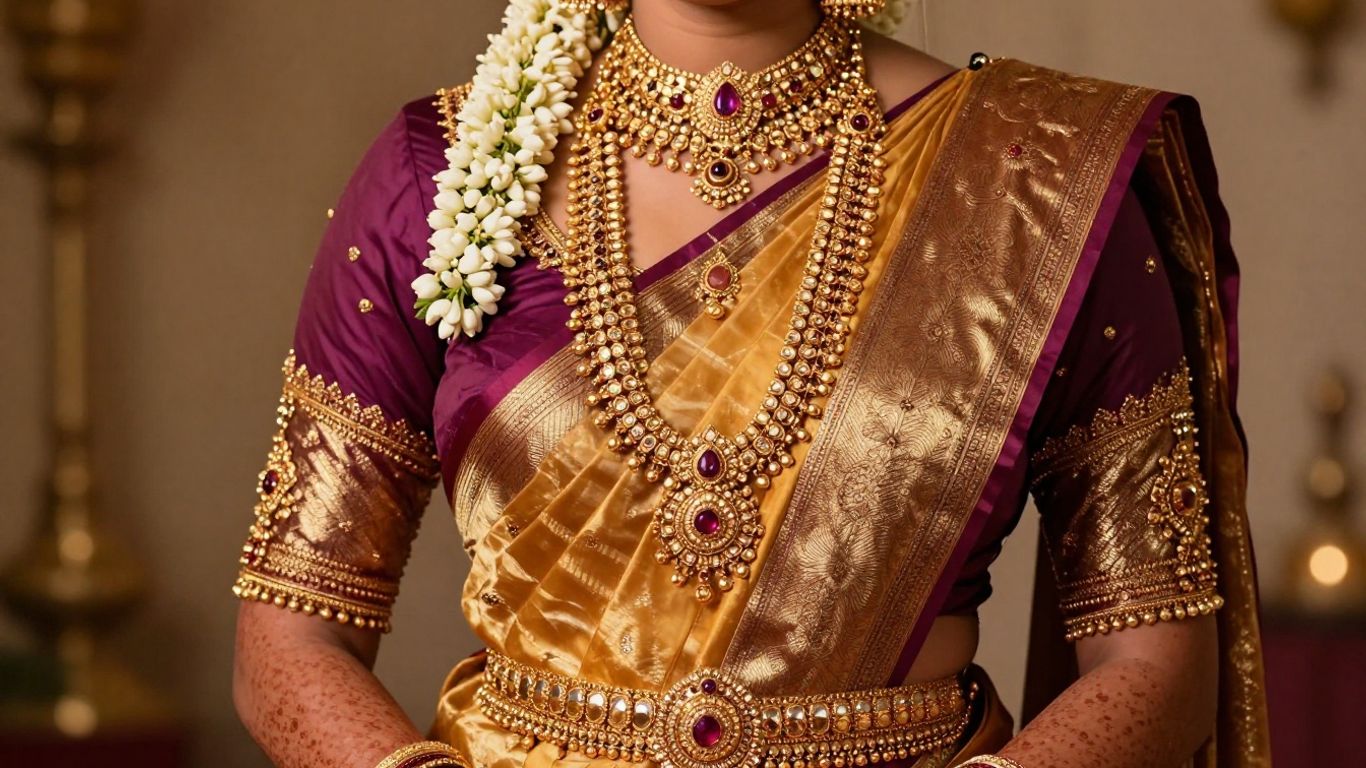
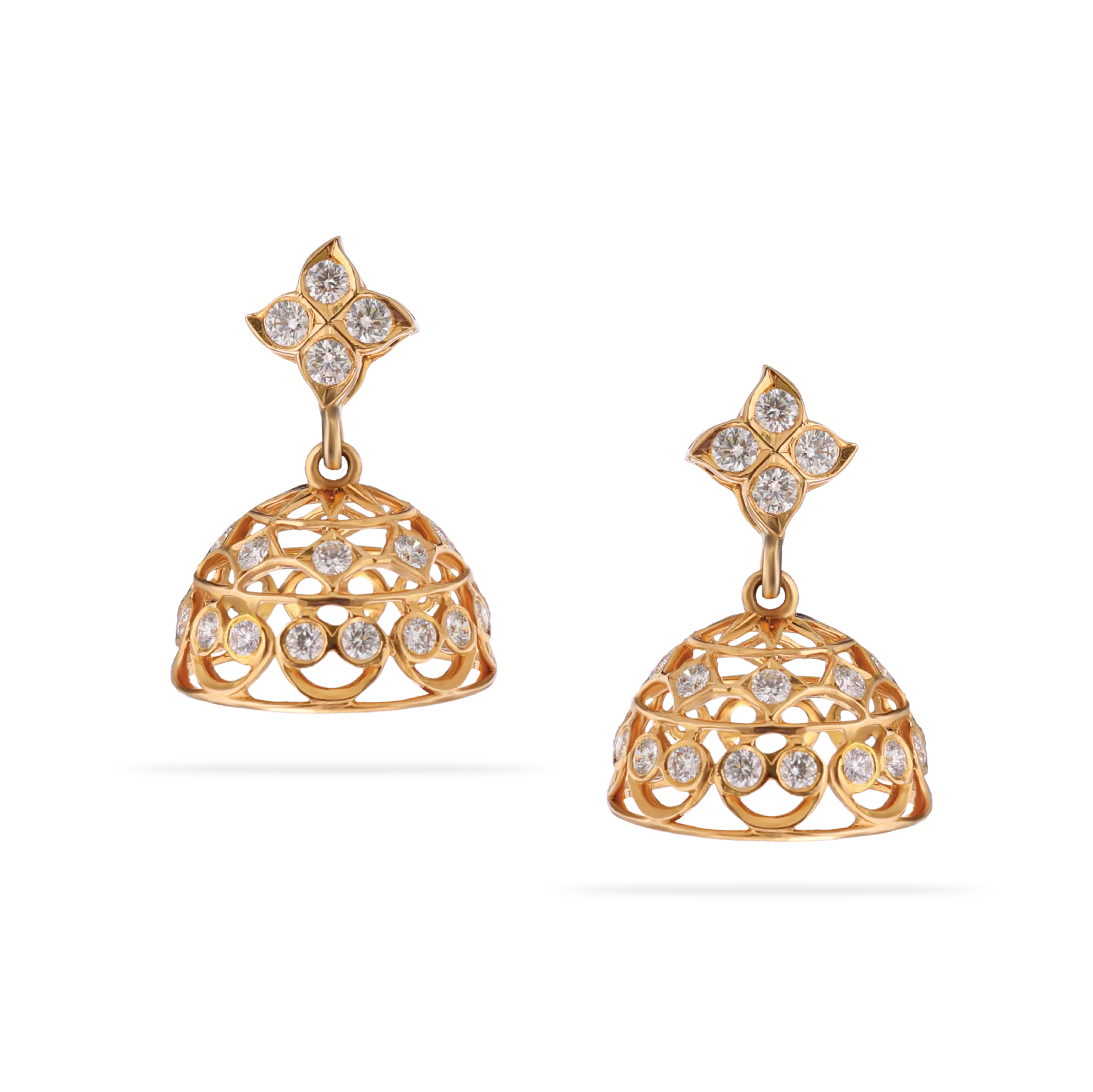
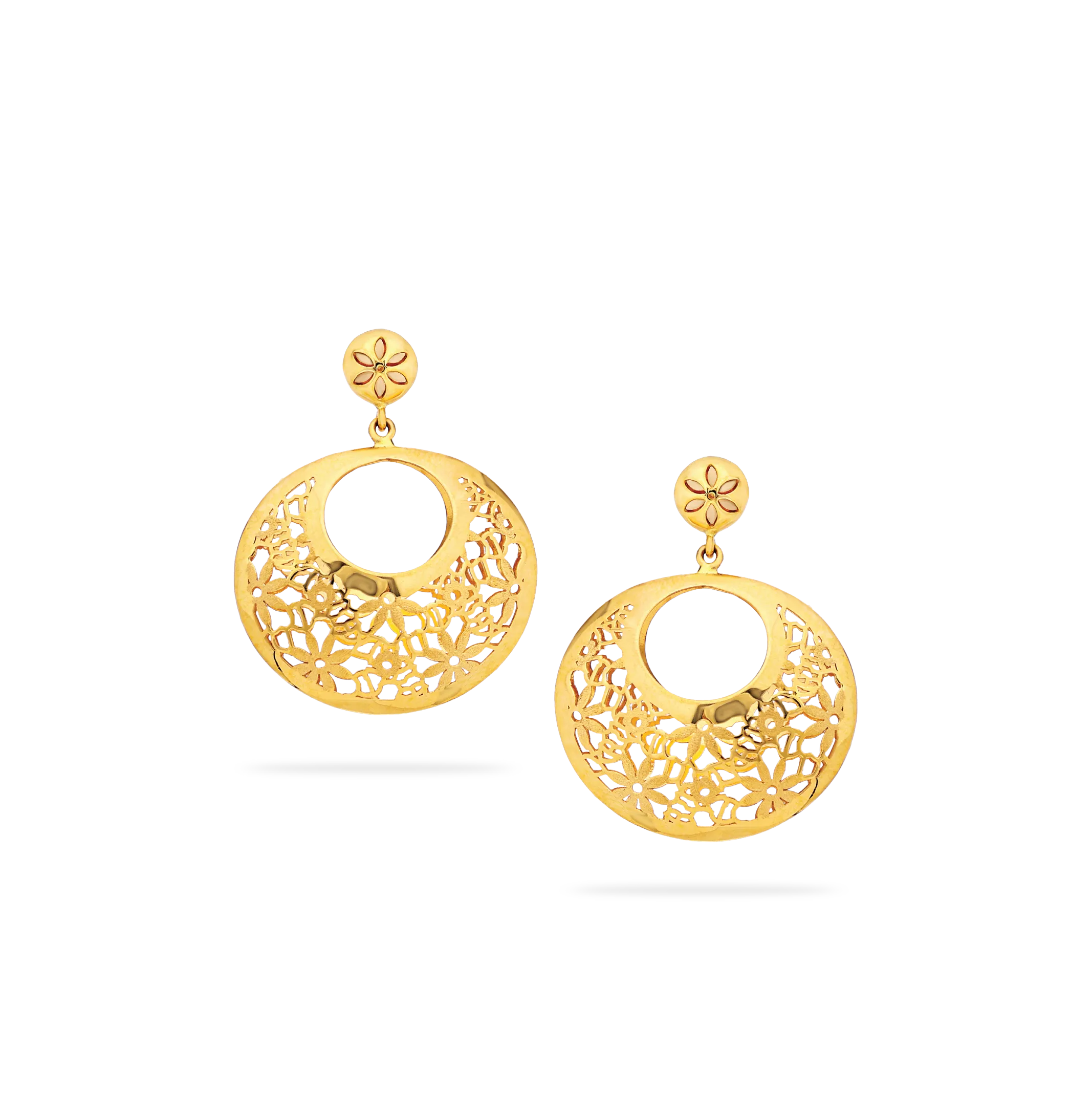
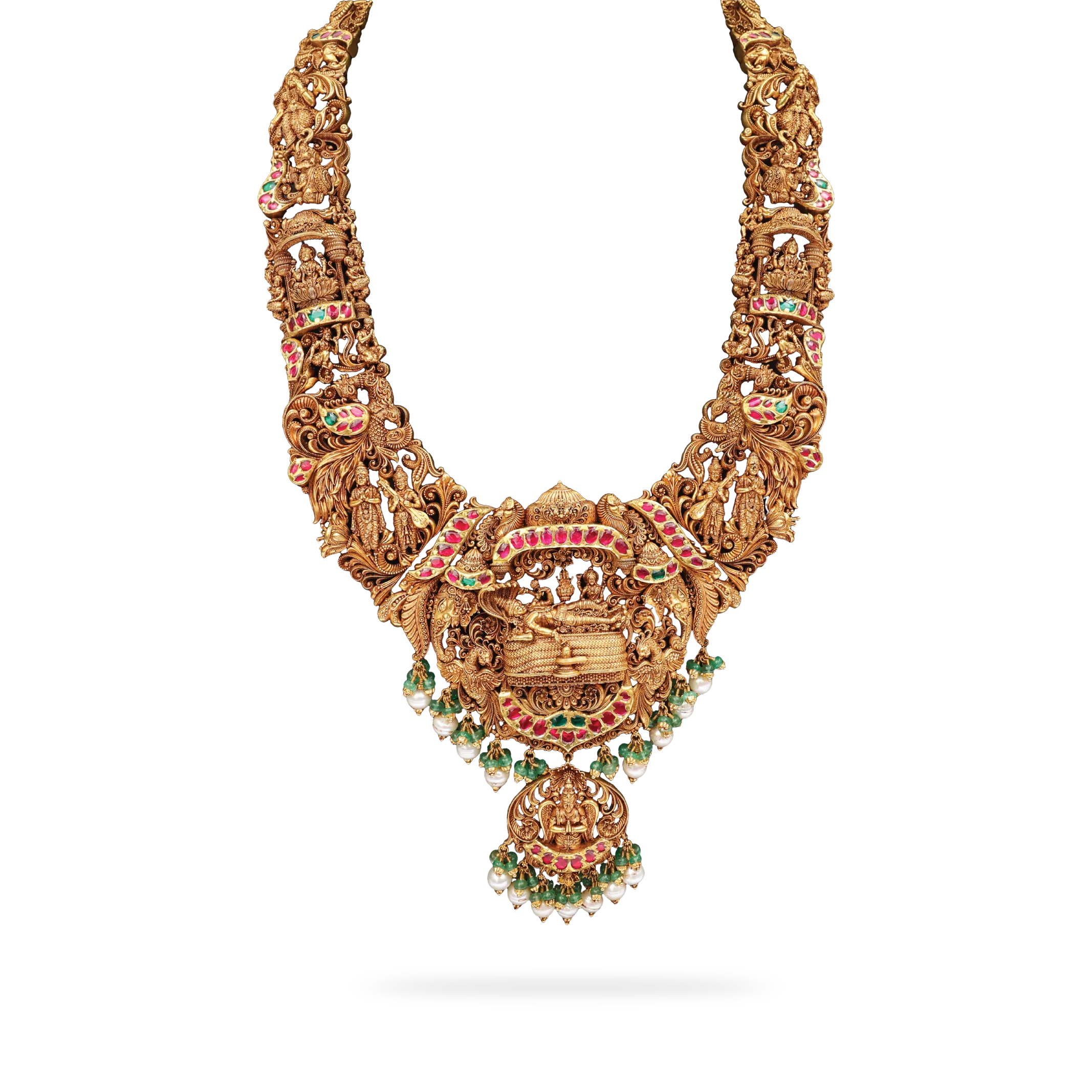
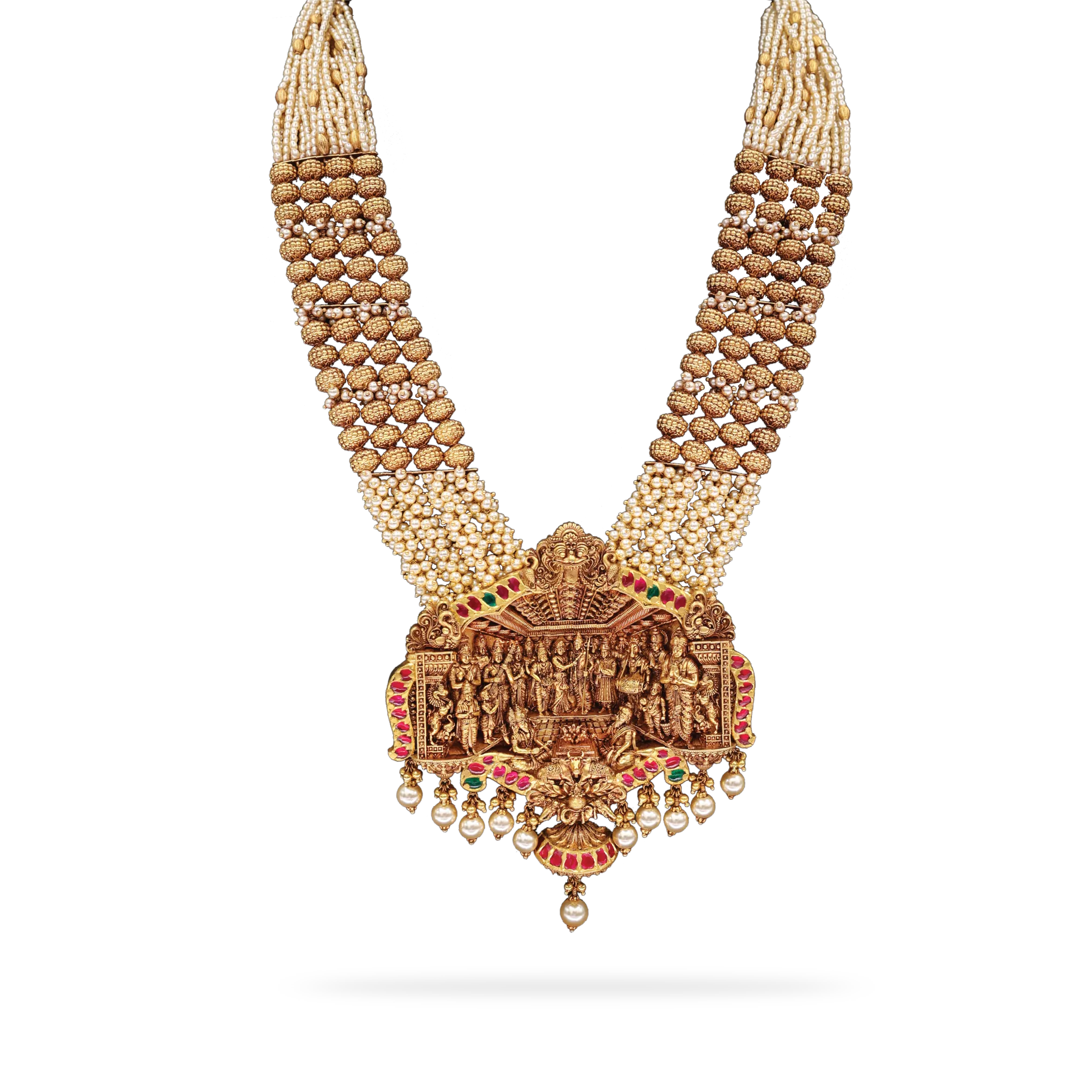
Kanjeevaram sarees pair naturally with warm gold, temple-inspired motifs, mango designs, coins, and traditional jhumkas . A broad zari border can carry a long necklace or layered haar, while a more restrained border may look better with a sculptural choker and a single pendant. Keep the blouse detail in view: a heavily embroidered blouse usually needs fewer competing necklace elements.
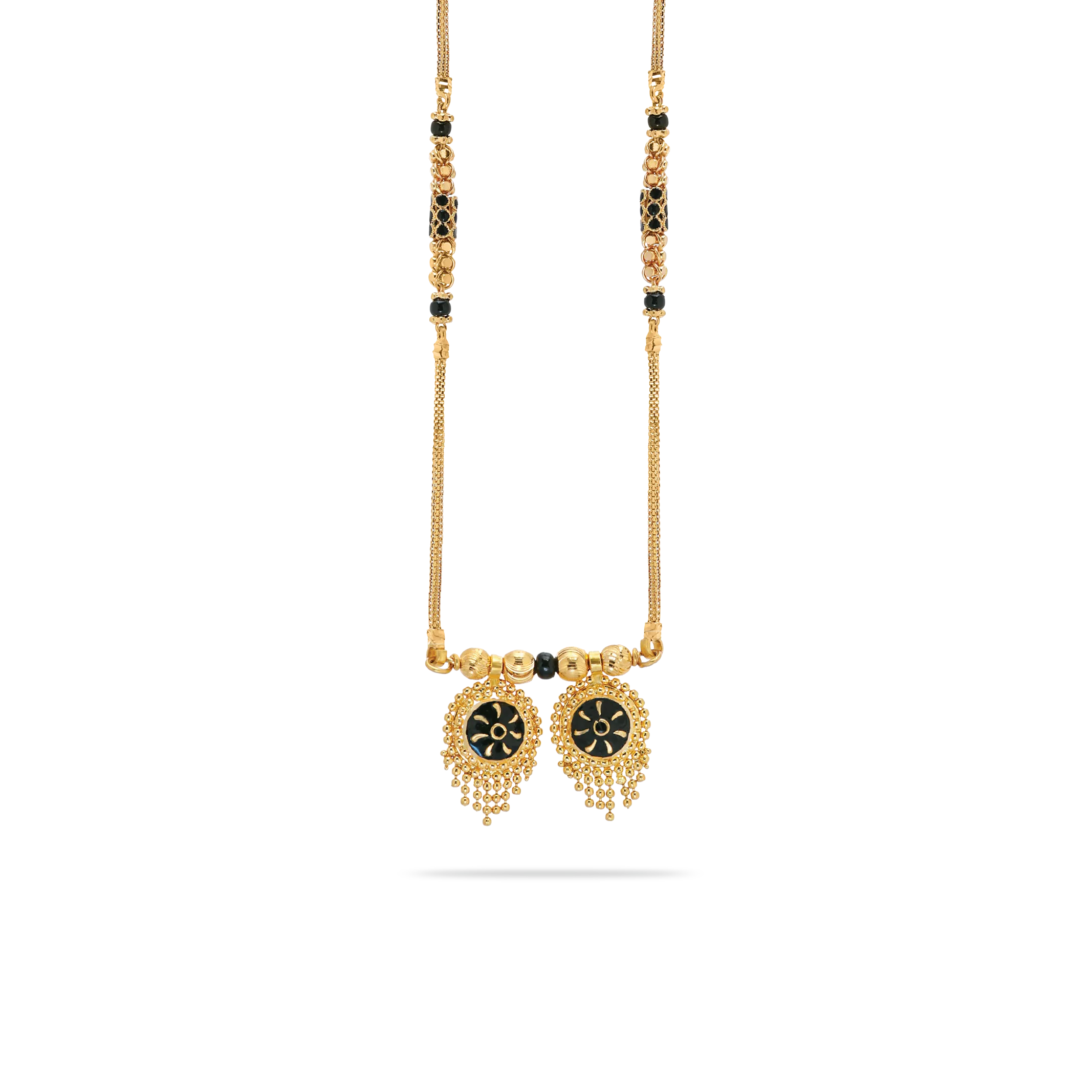
For a heritage bridal mood, repeat one motif across the set rather than mixing several unrelated patterns. A mango-shaped pendant echoed in the earrings or bangles can make the entire outfit feel considered. Timeless wedding jewellery can also help when you want to coordinate pieces across several ceremonies without making every look identical.
Styling Banarasi silk with kundan and polki pieces
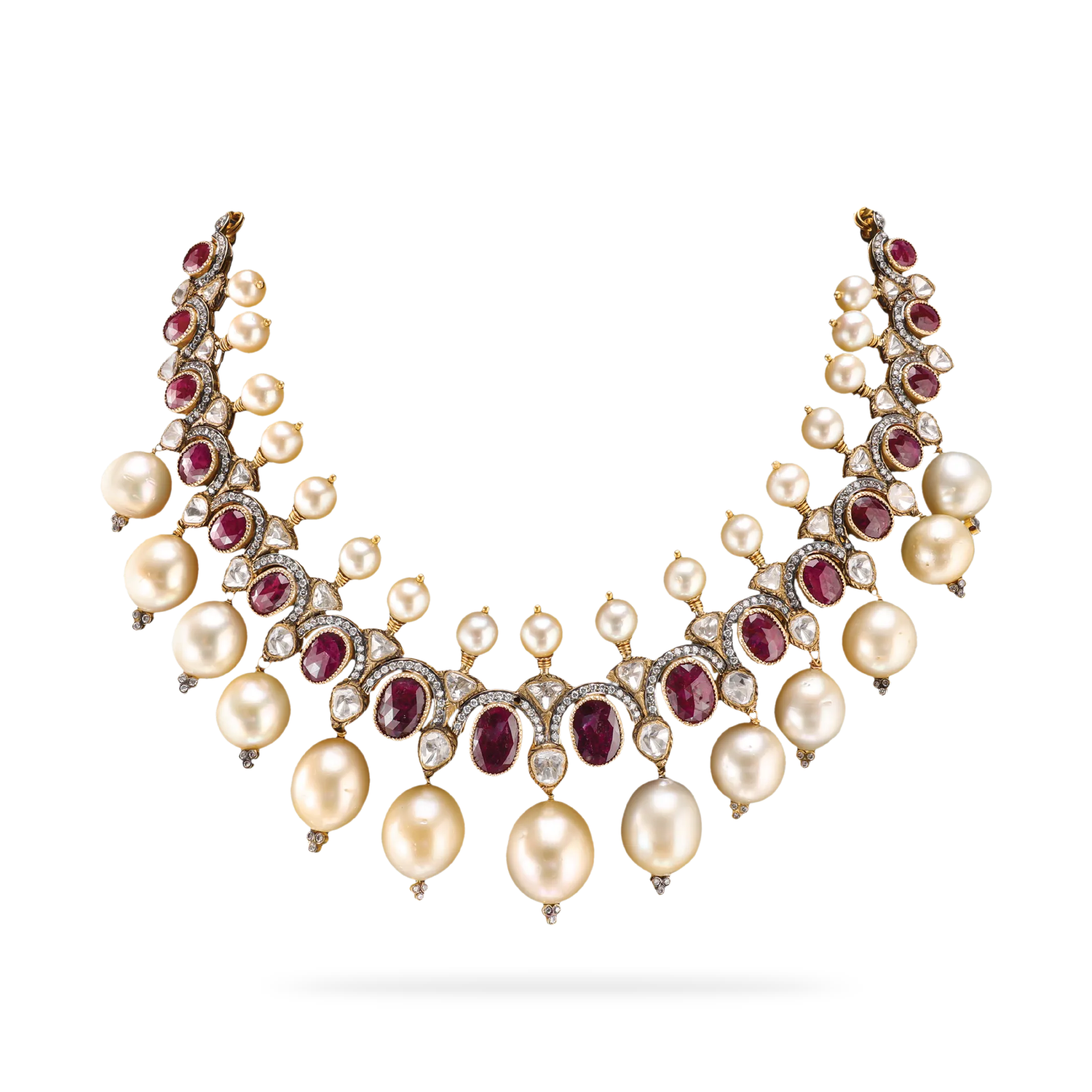
Banarasi silk has a rich, reflective surface, so kundan and polki can complement its ornate character beautifully. Choose a necklace whose stones sit clearly against the blouse rather than disappearing into a busy zari pattern. Ruby accents work well with deep red and wine shades, while emerald details bring freshness to green, pink, or antique-gold Banarasi sarees.
The safest approach is to let either the saree or the jewellery lead. If the pallu is densely woven, use a defined choker , medium-length necklace, and earrings with clean edges. These Banarasi styling ideas offer useful inspiration for combining polki, gold, pearls, and statement pieces without crowding the saree.
Choosing jewellery for Mysore silk and lightweight sarees
Mysore silk and other lightweight sarees often benefit from jewellery with a polished, refined finish. Medium-sized gold earrings, a delicate necklace, and a compact maang tikka can create bridal presence without pulling attention away from the saree’s smooth drape. If the saree has a narrow border, avoid a necklace that is much wider than the visible zari line.
Lightweight does not have to mean ordinary. A distinctive pendant, textured bangle stack, or pair of drop earrings can provide one clear focal point. This is especially useful for an intimate ceremony or a bride who prefers movement and ease over a heavily layered look.
Coordinating tissue, raw silk, and soft silk textures
Tissue silk catches light sharply, while raw silk has a more tactile, slightly irregular surface. Soft silk tends to look gentler and less formal. Match that character with finishes that either repeat the texture or provide a controlled counterpoint: matte antique gold suits raw silk, polished gold suits tissue, and delicate stones or pearls suit soft silk.
Do not try to match every surface exactly. A saree with a quiet texture can carry a detailed necklace, whereas a saree with a raised border may need simpler jewellery. The aim is a clean relationship between fabric, metal, and skin, not a set in which every element has the same level of shine.
Choose the right bridal jewellery set for your saree color
Color changes the mood of bridal jewellery as much as the weave does. Gold warms saturated shades, diamonds add clarity to jewel tones, and colored stones can either echo the saree or interrupt it attractively. Take a blouse swatch or a clear photograph when comparing pieces, since indoor lighting can make reds and purples look quite different.
Jewellery combinations for red, maroon, and burgundy sarees
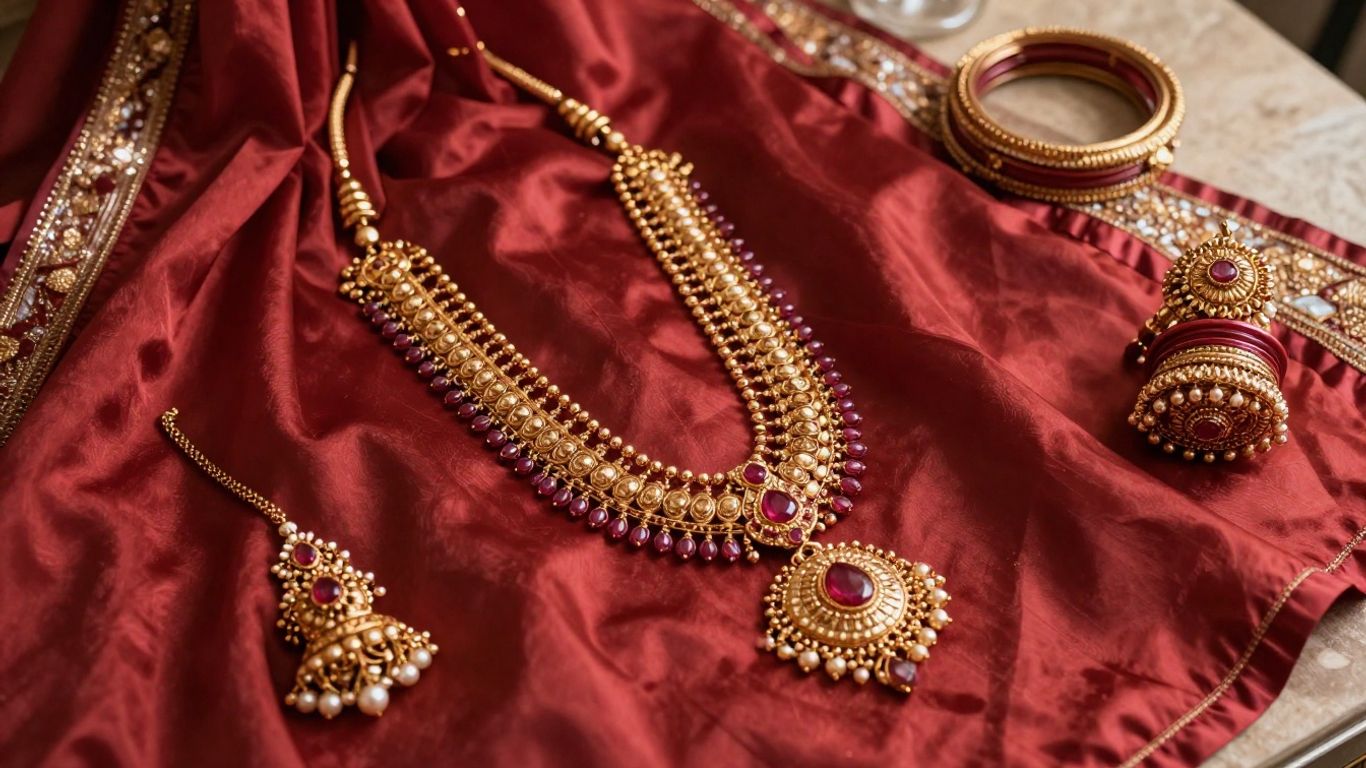
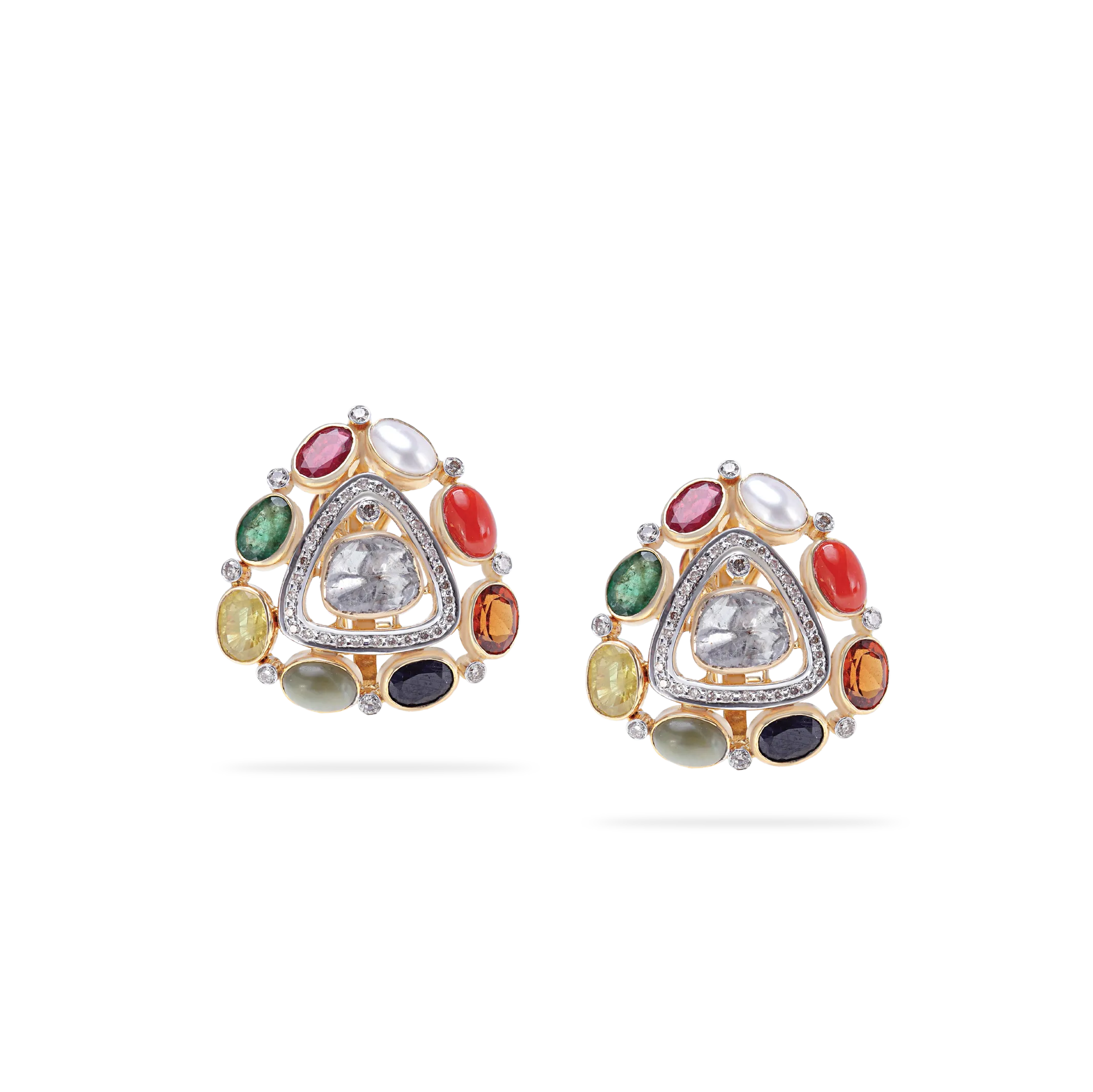
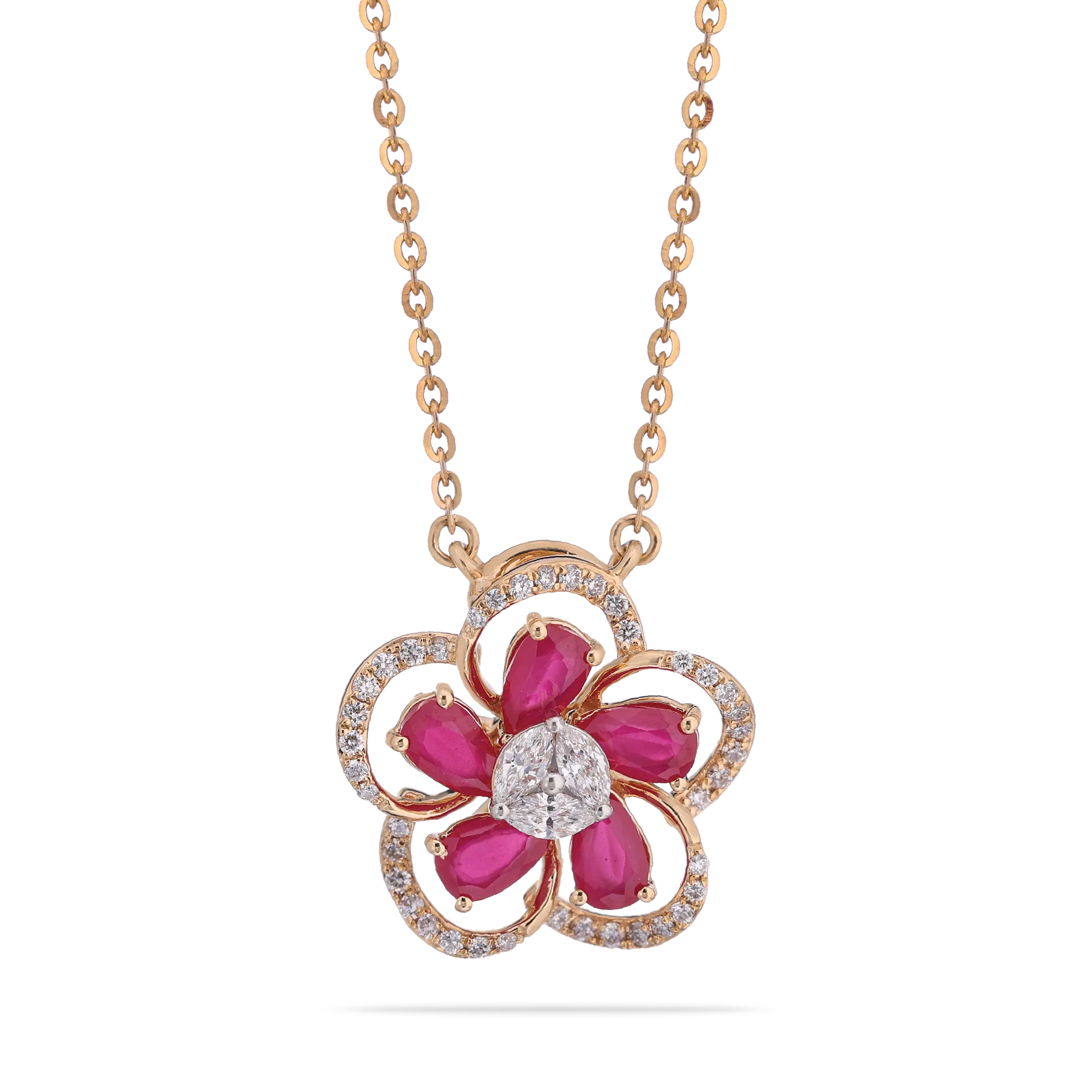
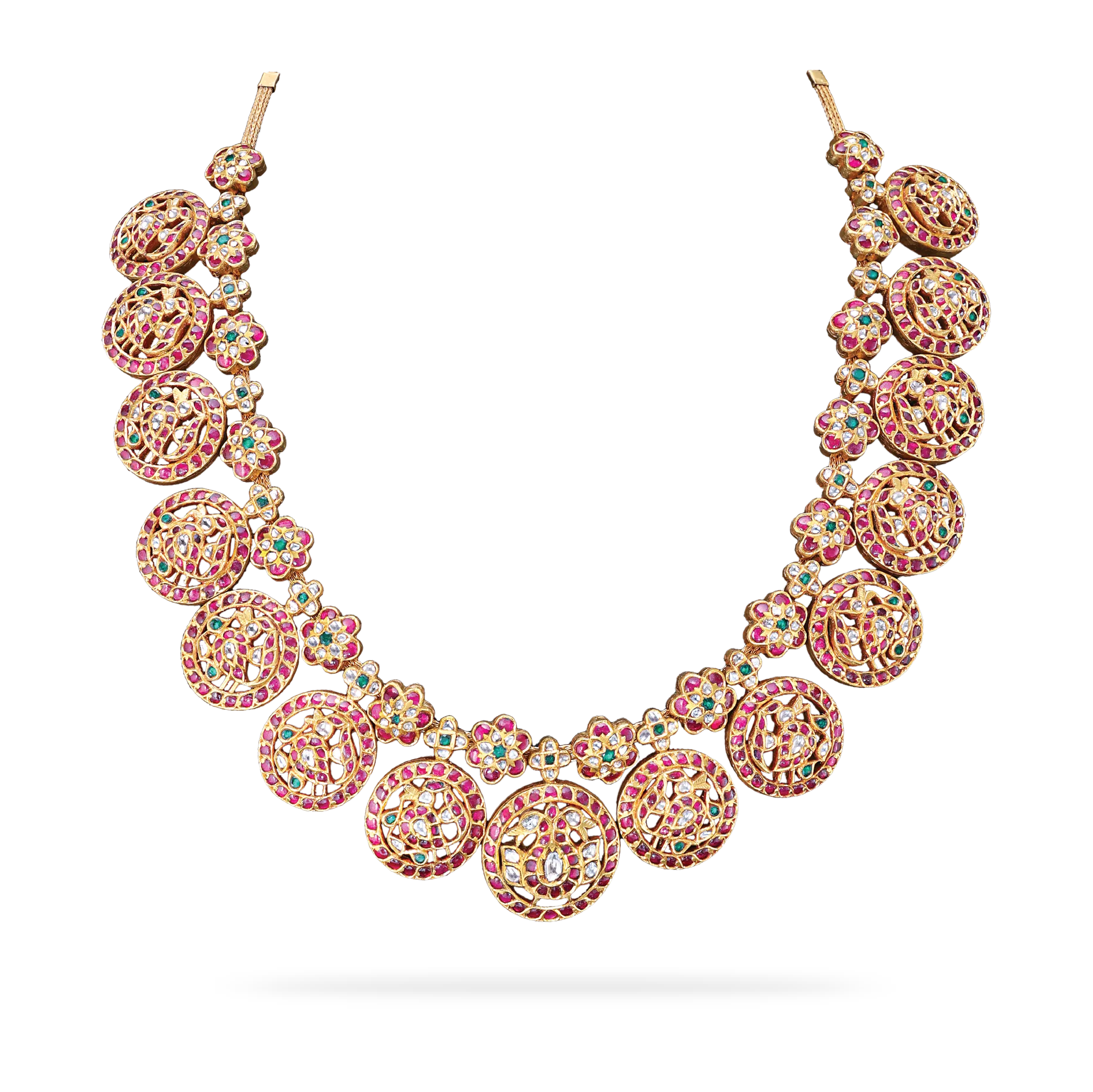
Red, maroon, and burgundy sarees are classic partners for yellow gold , rubies, kundan, and uncut-style stones. A ruby-and-gold combination creates a seamless traditional look, while uncolored stones give the saree more breathing room. With a very dark burgundy, antique gold can add depth without making the overall styling appear flat.
If the saree already contains a strong contrast border, repeat that secondary shade in only one or two jewellery details. For example, a green stone accent can connect a maroon saree to the blouse, but a full multicolor set may distract from the border.
Styling green, blue, and purple silk sarees
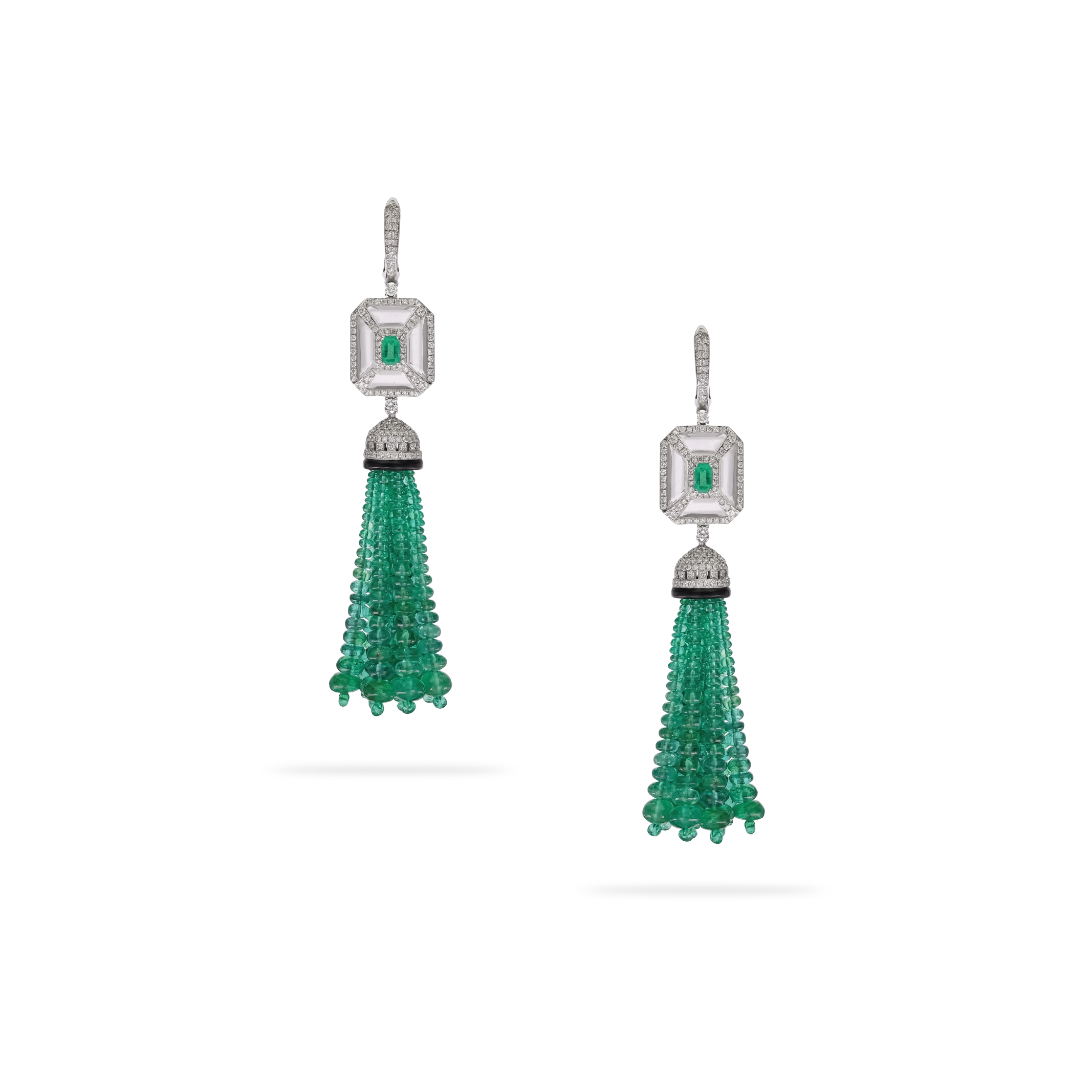
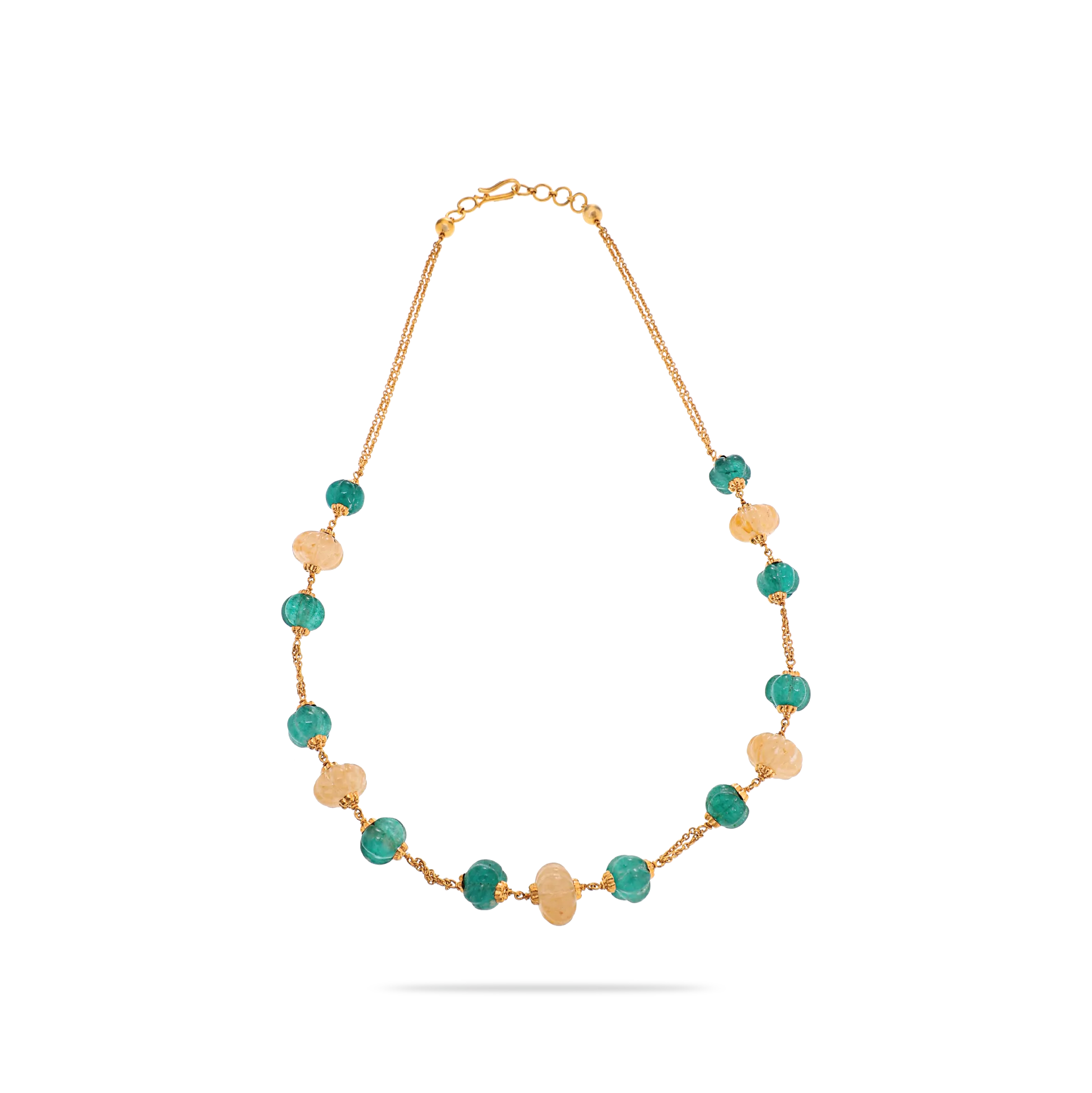
Emerald-like greens work well with yellow gold , antique finishes, rubies, and kundan. Blue silk can take diamonds, pearls, white stones, or gold with a restrained colored accent. Purple is more flexible than it first appears: antique gold creates a regal effect, while diamonds and pale stones make the shade feel lighter.
Use the intensity of the color as a guide. A vivid jewel-tone saree can support a substantial necklace, but a dusty or pastel version often looks more graceful with a lighter set. The blouse neckline should remain visible enough to keep the color combination from becoming visually dense.
Matching gold jewellery with yellow, orange, and pink sarees
Yellow and orange sarees generally harmonize with warm gold, pearls, kundan, and soft red or green stones. Pink silk can move in several directions: yellow gold gives it a traditional finish, diamonds keep it crisp, and rose-toned accents create a softer contemporary mood. Consider the undertone rather than relying only on the color name.
A bright yellow saree may need jewellery with a slightly muted finish, while a pale pink saree can welcome high-polish gold or diamonds. When the saree has a contrasting zari shade, use that detail as the bridge between the fabric and the jewellery.
Using contrast jewellery for modern bridal color palettes
Contrast is effective when it looks intentional. White stones with a deep green saree, emerald accents with pink, or antique gold with a cool blue can all work when the shape of the jewellery remains coherent. Keep the contrast to one dominant idea and repeat it in a small accessory, such as a bangle, hair ornament, or ring.
For a modern palette, reduce the number of competing motifs. A clean choker with geometric earrings may feel more polished than a traditional layered set if the saree itself has an unusual shade or minimal border. The contrast should frame the bride, not become the first thing people notice.
Build a balanced bridal jewellery combination
A bridal jewellery combination should feel complete from a distance and comfortable up close. The necklace, earrings, bangles, and headpiece need a shared language, but they do not all need to be equally elaborate. Start with one anchor piece, then add supporting pieces according to the saree, blouse, hairstyle, and ceremony length.
Layering necklaces without overwhelming the saree
Layering works best when each necklace has a distinct length and visual weight. A close choker can sit above a longer har, while a pendant or kasu-style strand can fill the middle without covering the entire blouse. Avoid layering two pieces with identical proportions; they tend to merge into one heavy band.
The saree’s pallu and border also affect the decision. If both are ornate, two well-spaced necklaces may be enough. If the saree is visually quieter, a longer layer can add bridal richness without looking excessive.
Selecting the right necklace length and neckline pairing
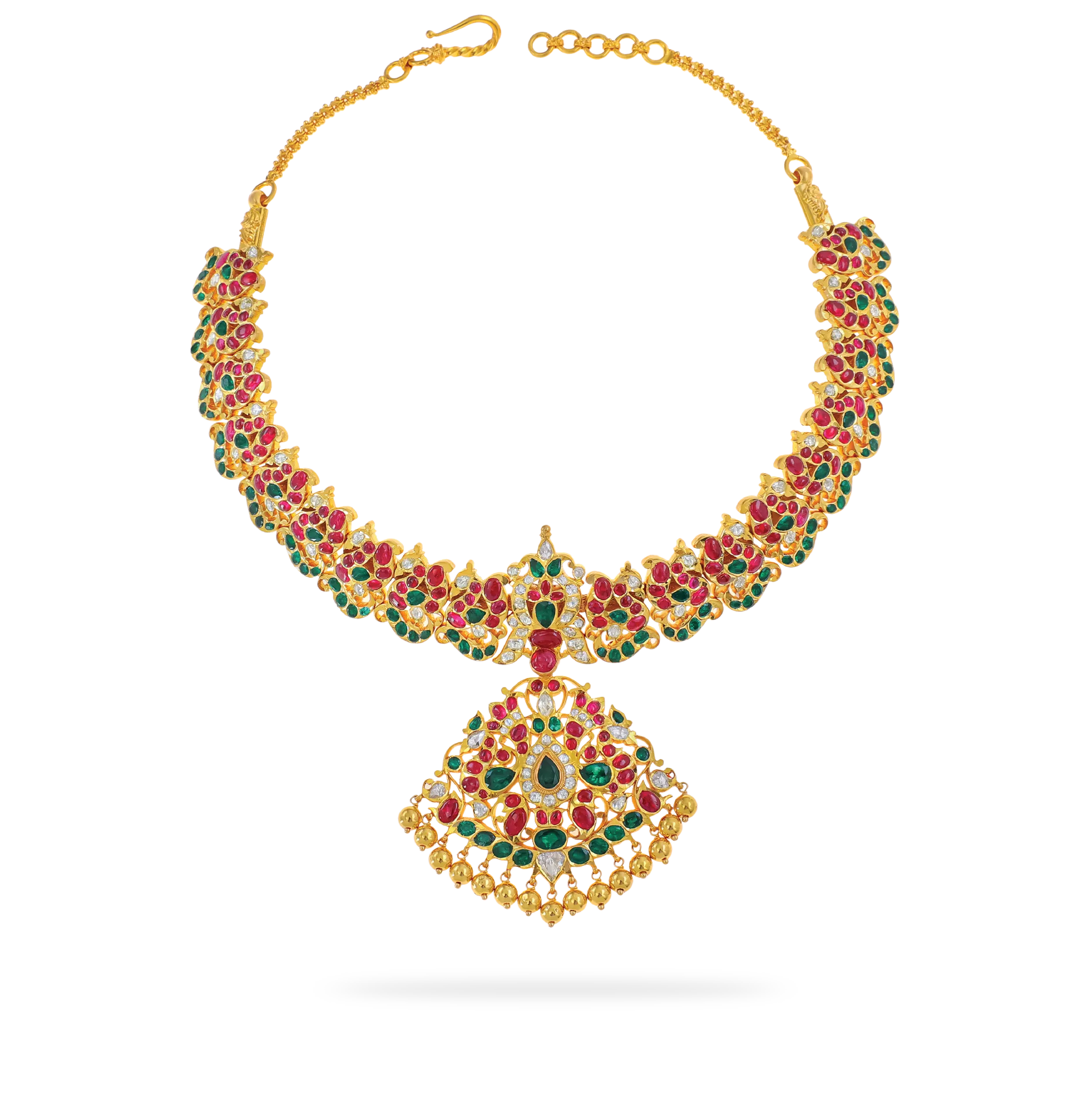
A high or closed blouse neckline often suits a choker , collar-style necklace, or a shorter pendant. A sweetheart, scoop, or moderately deep neckline can accommodate a longer pendant or a graduated set. High-neck embroidery should not be hidden under a necklace unless that overlap is part of the intended design.
Try the jewellery with the actual blouse, not only with the saree draped over a different neckline. Small changes in blouse height can alter the visible balance considerably. A useful rule is to preserve a little breathing room between the necklace and the strongest embroidered edge.
Coordinating earrings, bangles, waist belts, and rings
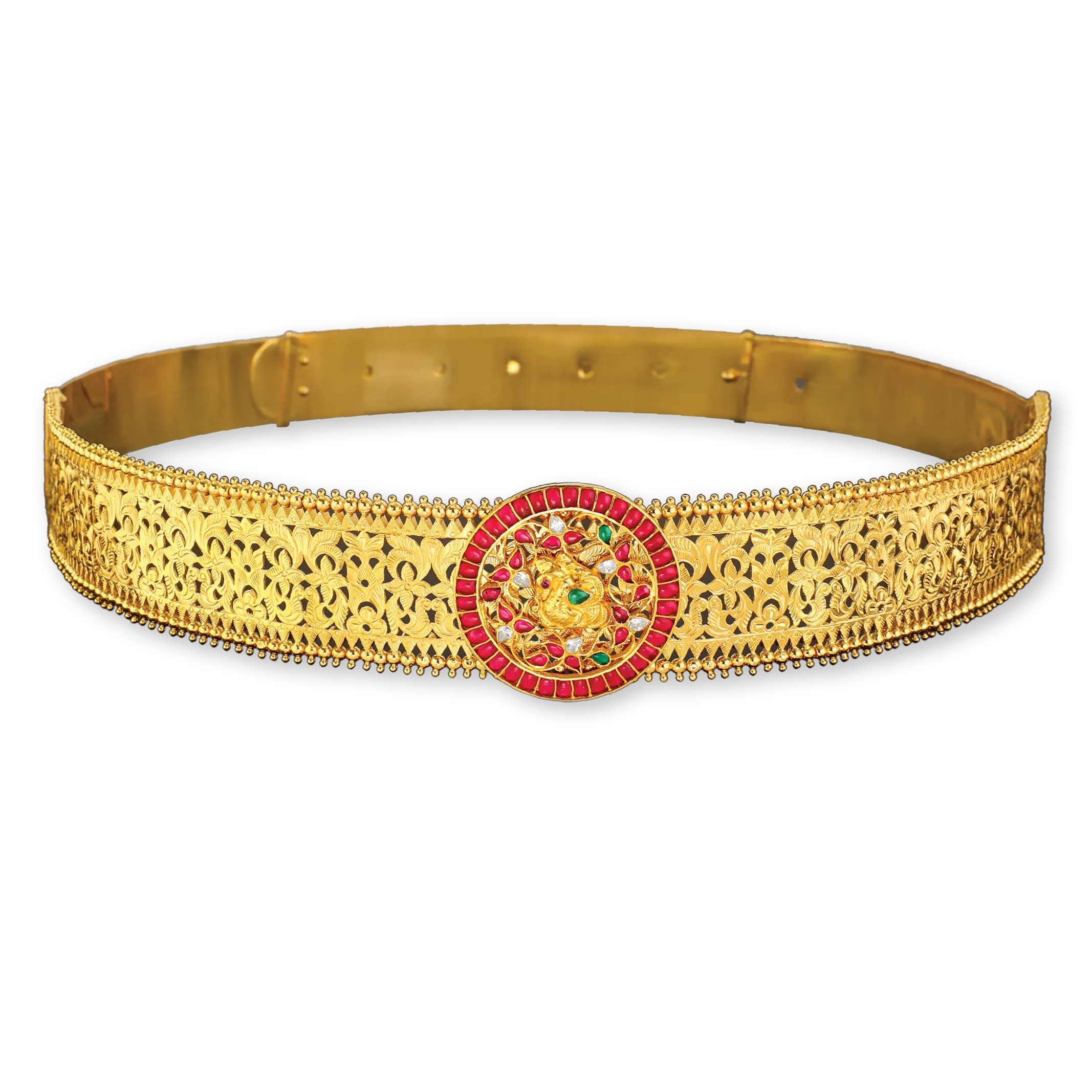
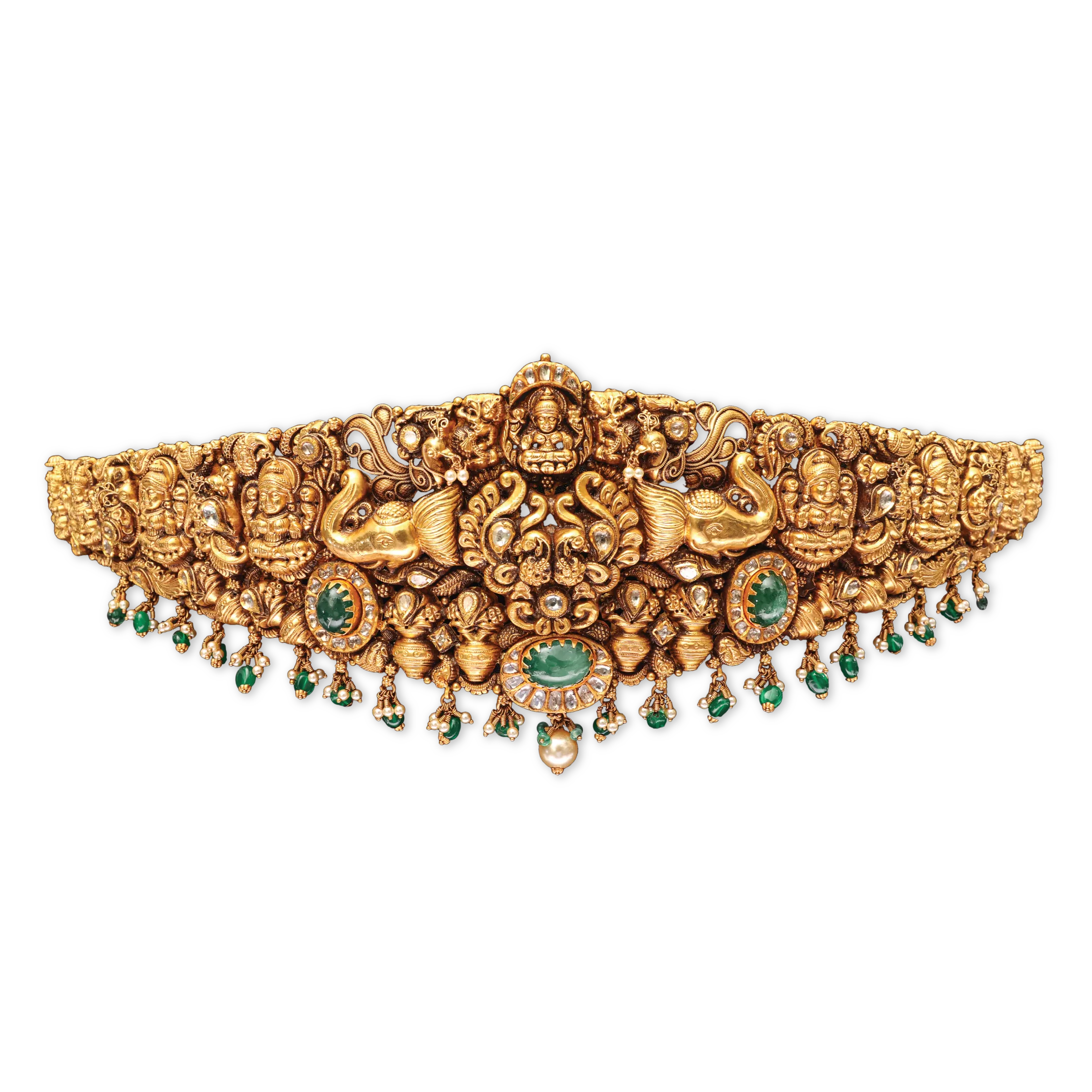
Once the necklace is chosen, build outward. Earrings should balance its width, bangles should echo its metal and finish, and the waist belt should connect the saree to the upper half of the look. Rings can be quieter because the hands are already active with bangles and ceremonial gestures.
Use this sequence when assembling the set:
- Choose the necklace as the primary focal point.
- Select earrings that frame the face without competing with it.
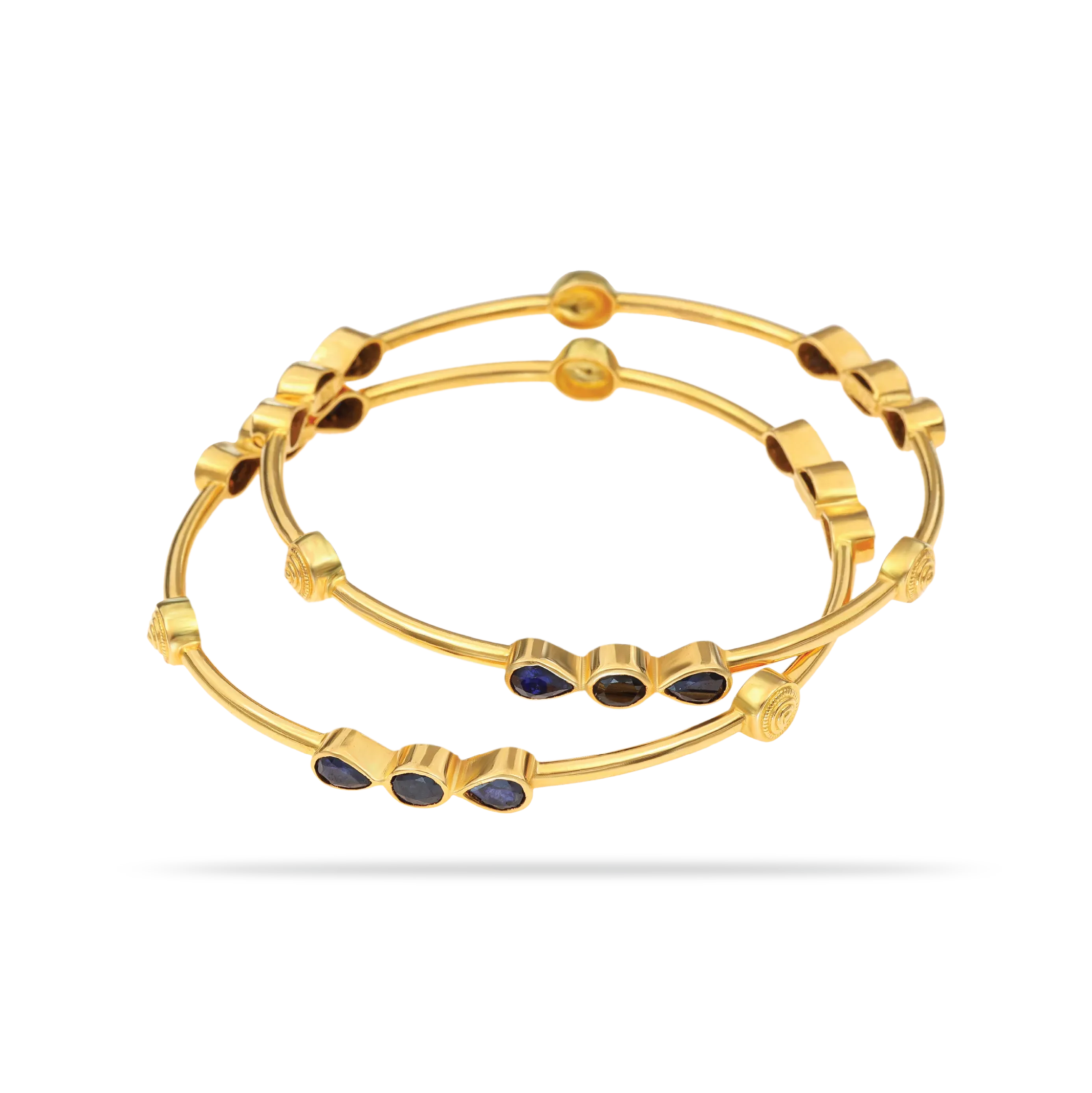
- Add bangles in a controlled mix of matching and simpler pieces.
- Use the waist belt and rings to repeat, rather than introduce, motifs.
This approach prevents every accessory from demanding attention at once. It also makes it easier to remove one piece if the final drape feels crowded.
Deciding when to add a maang tikka, nose ring, or armlet
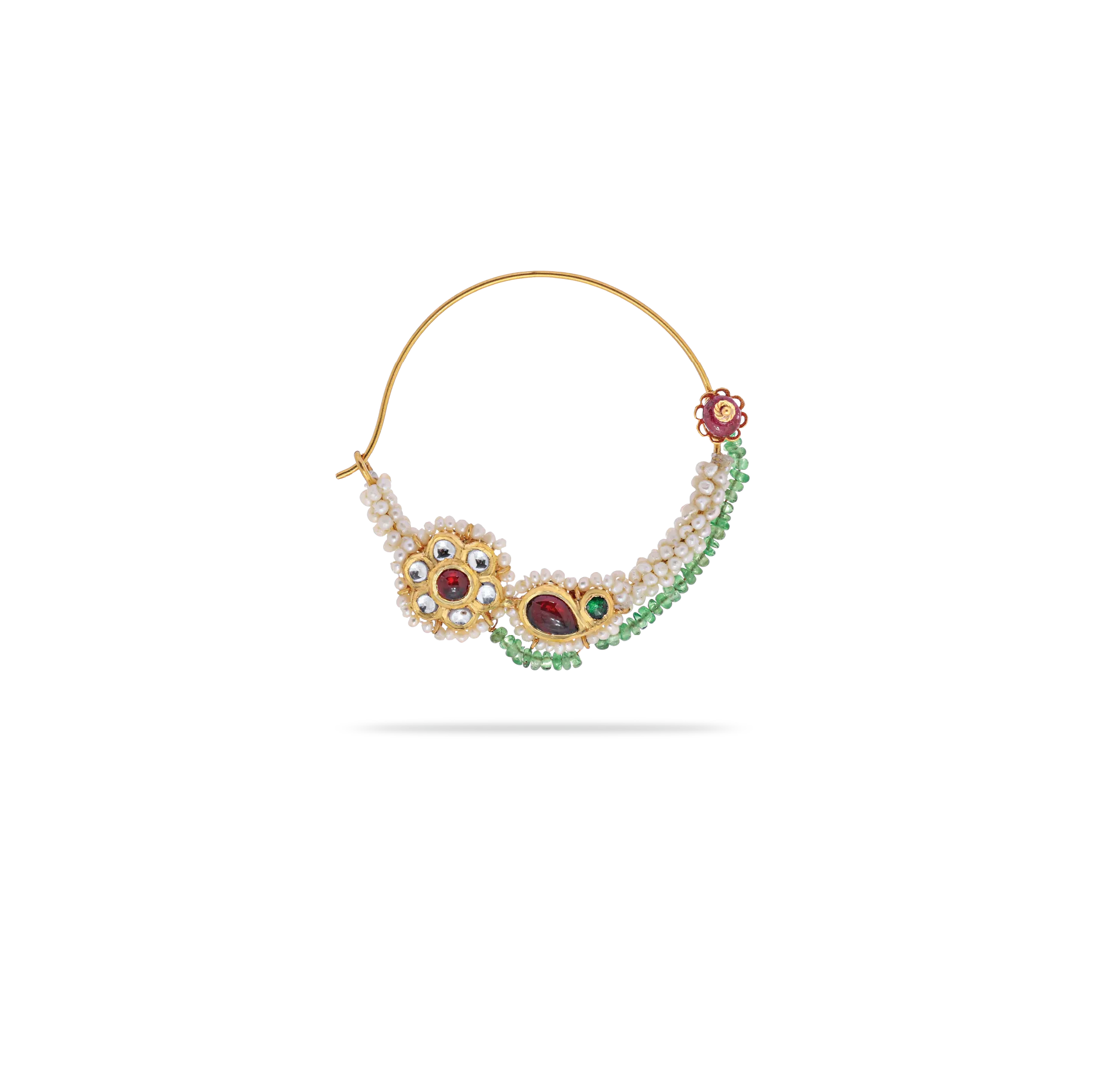
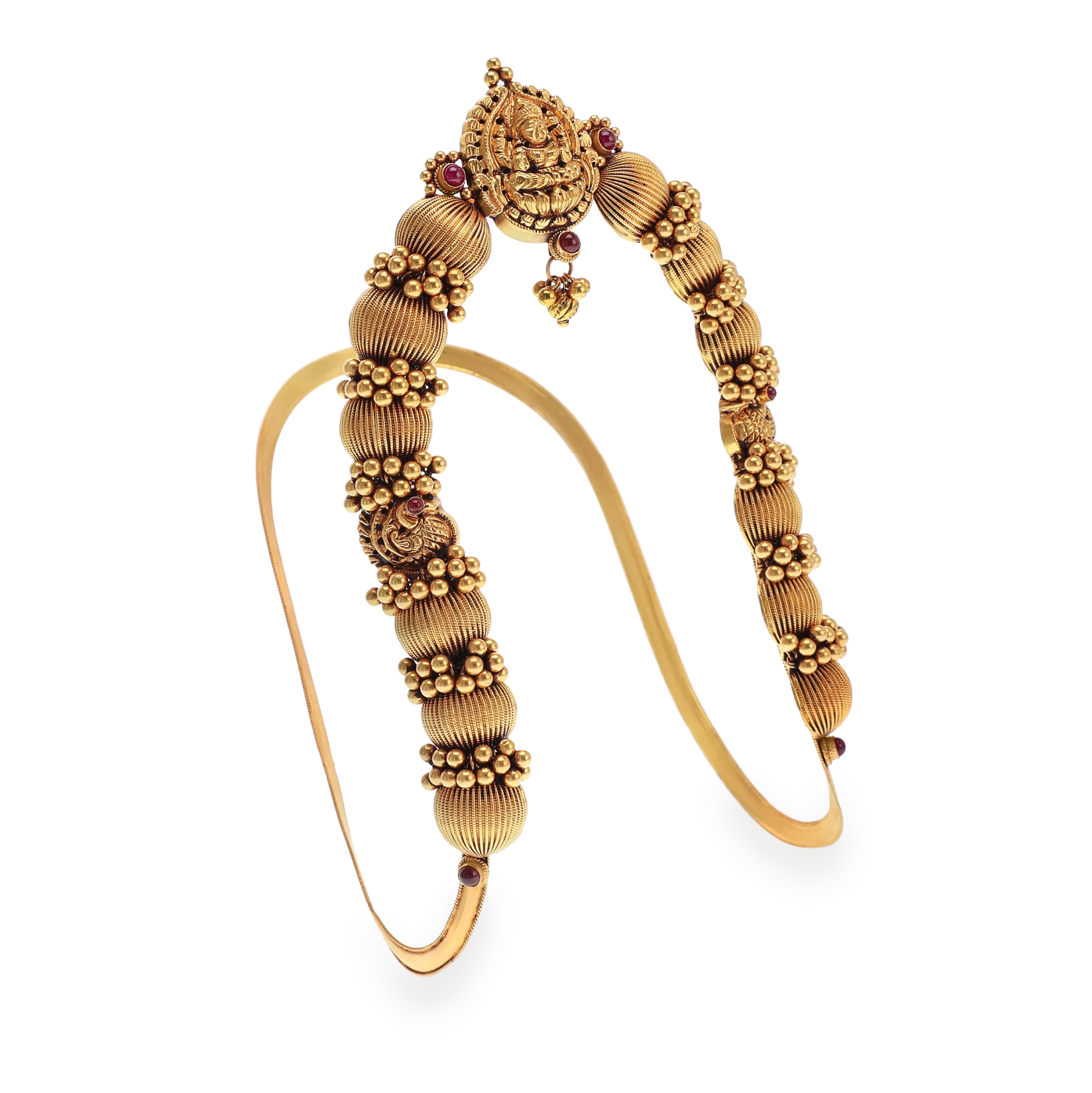
A maang tikka is most effective when its scale relates to the necklace and earrings. A nose ring or armlet can add a strong regional or ceremonial note, but neither is mandatory for a complete bridal look. Add them when they suit your styling, facial proportions, and comfort rather than treating them as a fixed checklist.
Hair placement matters too. A broad maang tikka needs a stable center parting, while an armlet should sit securely without pinching. Photograph the full look from the front and side before deciding whether these final details improve the composition.
Select metals, gemstones, and finishes
Metal and stone choices shape how the saree reads under daylight, indoor lighting, and photography. Yellow gold is warm and traditional, antique finishes add visual depth, and lighter contemporary finishes can make a layered look feel less formal. The right choice depends on the saree’s zari, blouse embroidery, skin tone, and the mood you want to carry through the day.
Comparing yellow gold , antique gold, and temple jewellery
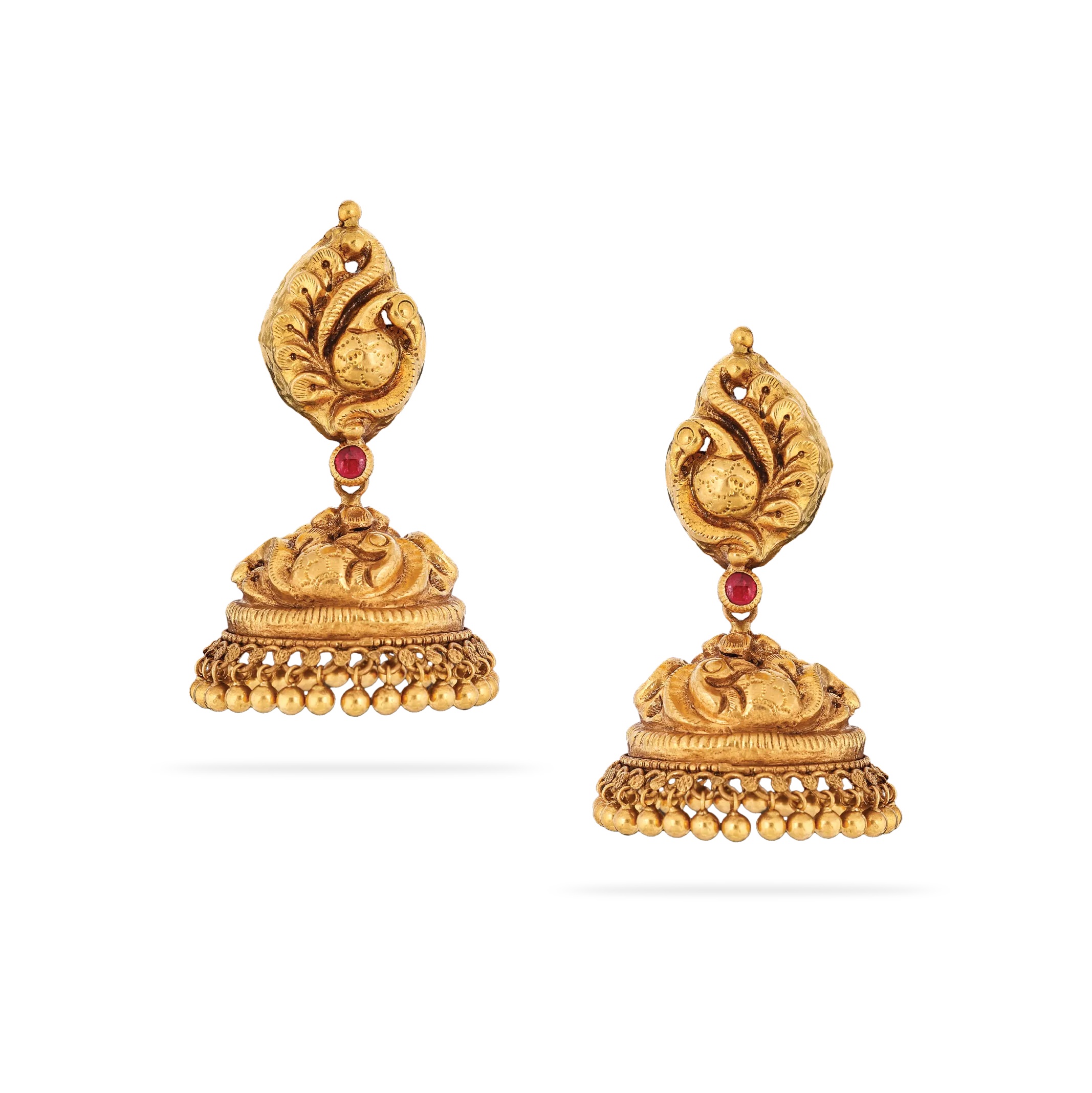
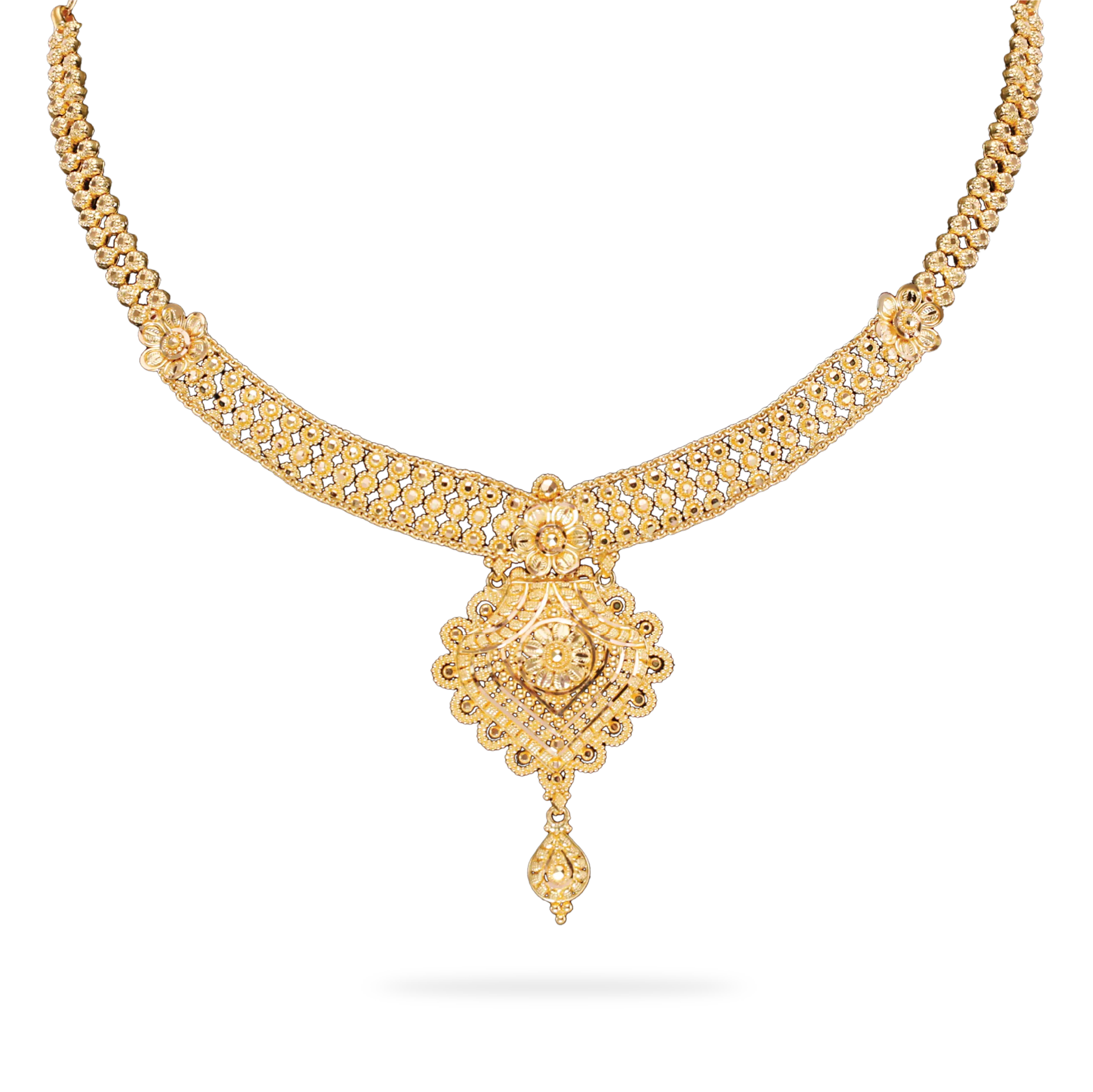
Yellow gold is versatile and works especially well with traditional silk sarees. Antique gold has a quieter, aged appearance that complements raw silk, dark jewel tones, and detailed borders. Temple jewellery brings recognizable motifs and a strong heritage character, making it a natural choice for a ceremonial South Indian bridal look.
Do not mix finishes casually. If yellow gold is the main metal, antique accents can be introduced through one statement piece, but an even distribution usually looks more deliberate. For broader guidance on choosing gold jewellery, consider purity, design, and the way a piece will be worn after the wedding.
When to choose kundan, polki, or diamond designs
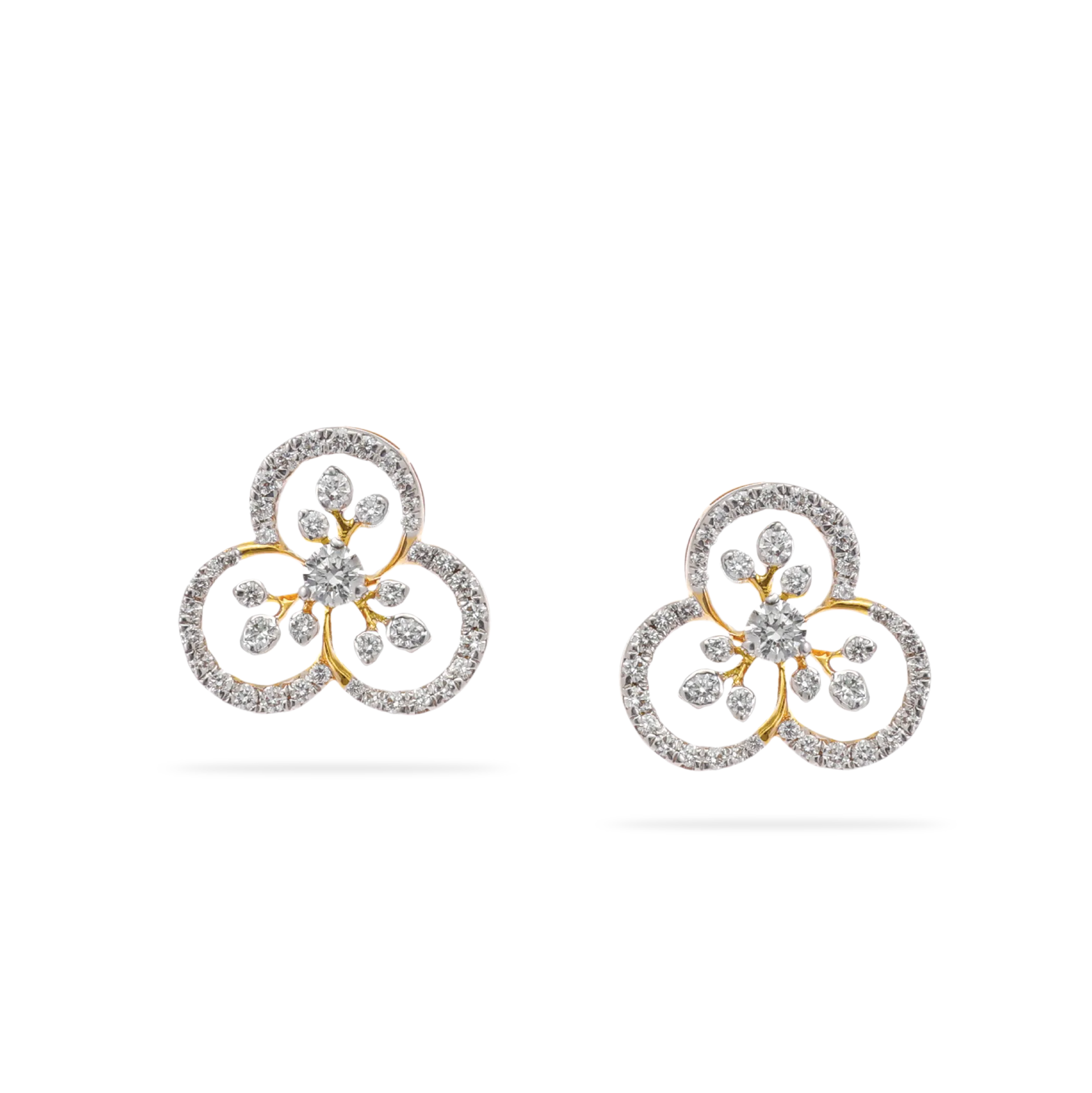
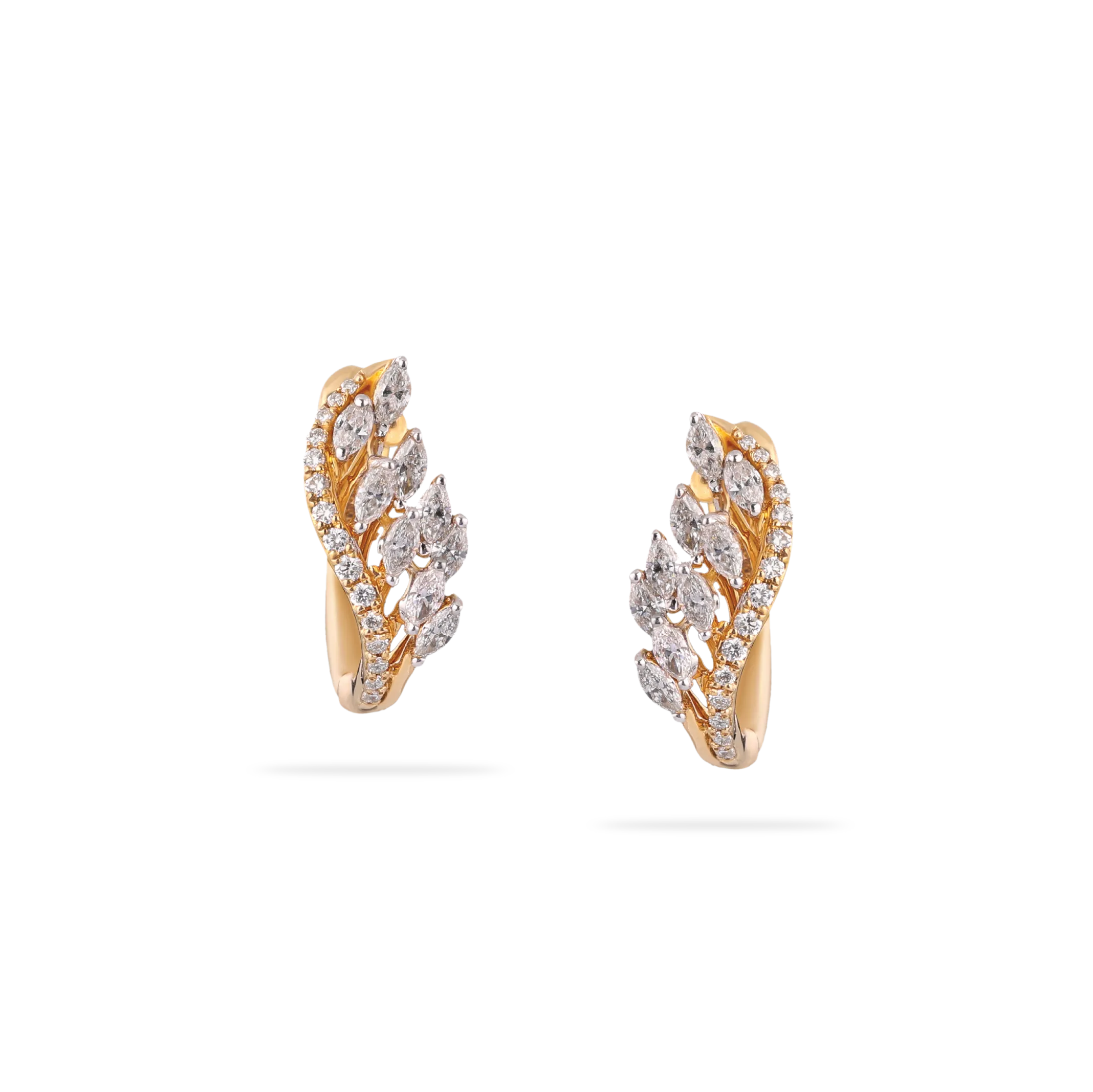
Kundan has a precise, luminous appearance that works with ornate sarees and bridal colors. Polki offers a more organic, uncut sparkle and can suit Banarasi silk, antique gold, and richly patterned blouses. Diamonds bring crispness and versatility, especially when the saree is already elaborate or the bride prefers a contemporary finish.
Think about the surface of the saree. A highly reflective tissue or zari may pair better with defined stones, while a textured raw silk can carry the softer irregularity of polki. The best choice is the one that remains visible without competing with the fabric.
Matching gemstones to saree borders and embroidery
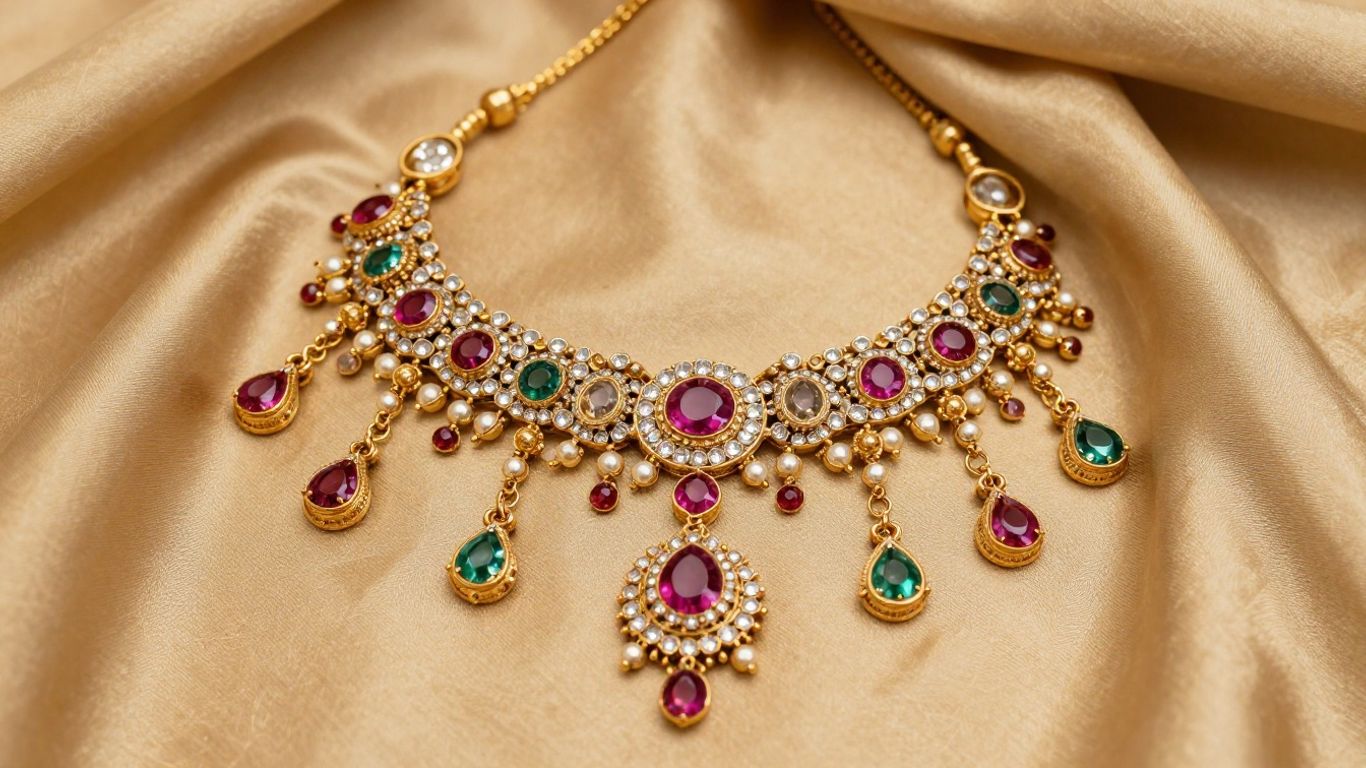
Gemstones can repeat a border color, connect the blouse to the saree, or create a measured contrast. Ruby tones pair naturally with red and maroon, emerald tones enliven pink and green, and pearls or white stones calm intense blue and purple. If embroidery includes several colors, select one lead stone instead of reproducing every thread in the jewellery.
Look at the stones at the distance people will see them. Tiny accents may disappear in photographs, while very large stones can dominate the face. A balanced set usually has one primary gemstone color and a neutral supporting element such as gold, white stones, or pearls.
Balancing traditional details with contemporary finishes
Traditional motifs can feel fresh when their proportions are edited. Try a classic pendant with streamlined earrings, or heritage bangles with a simpler necklace. Mixing old and new works best when the metal tone, scale, or stone palette provides one point of continuity.
For quality and documentation, buying gold jewellery should involve checking purity, price, and workmanship rather than choosing by appearance alone. A contemporary finish is still a meaningful purchase when its construction and documentation are clear.
Choose jewellery based on face shape and bridal styling
Jewellery sits within a larger frame made by the face, hair, blouse, and makeup. Face shape is not a strict rulebook, but it can help you choose proportions that feel balanced in photographs. The most flattering bridal jewellery for silk saree styling usually leaves some visual space around the face and follows the lines of the outfit.
Selecting earrings for round, oval, square, and heart-shaped faces
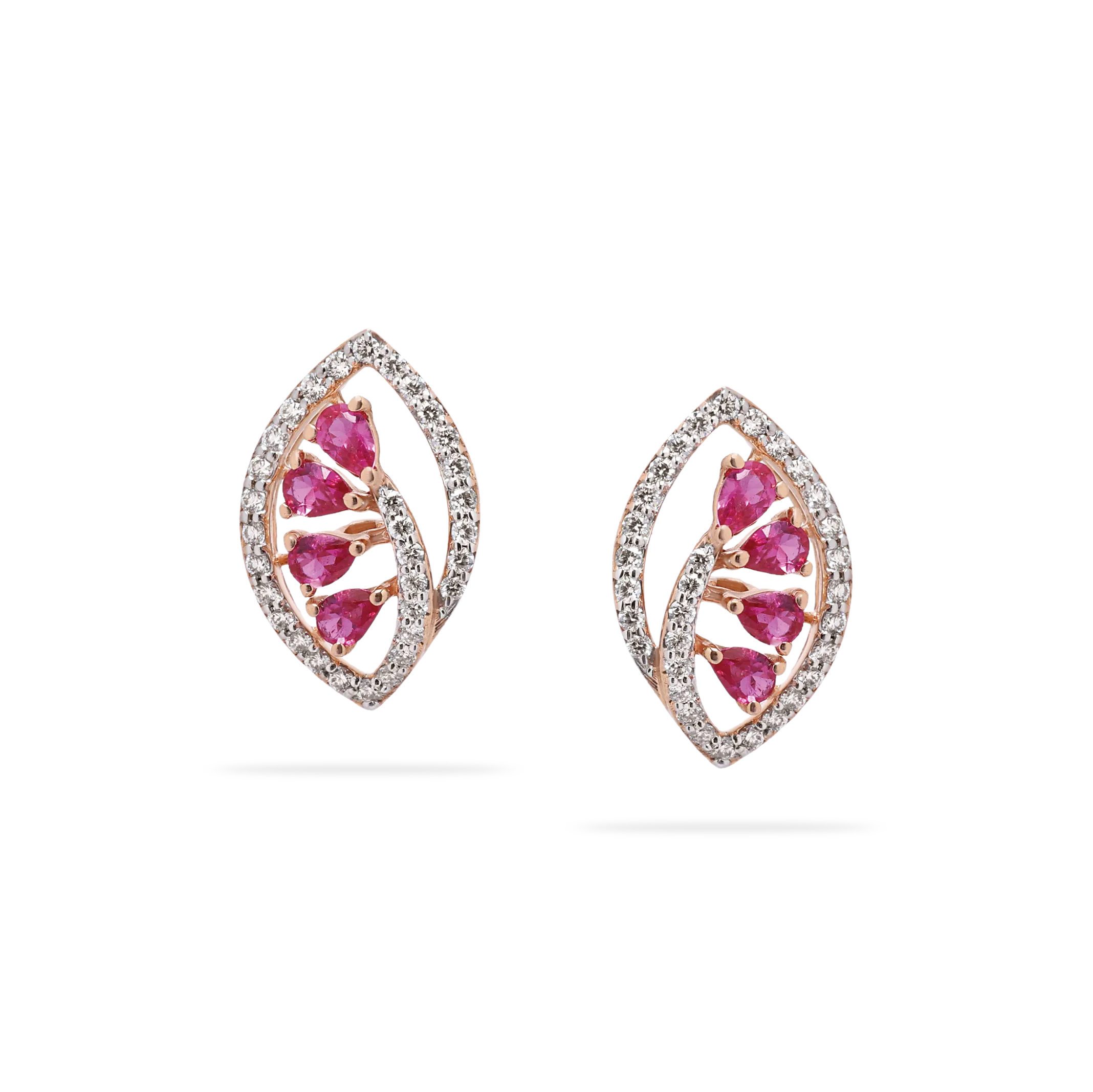
Long drops and narrow jhumkas can add length to a round face, while oval faces can carry many shapes, from chandbalis to studs and drops. Softly rounded earrings can balance a square face, and medium-width designs can support a heart-shaped face without making the chin appear narrower. Scale matters as much as shape, especially when the necklace is elaborate.
Try earrings with the hairstyle already planned. Hair pulled back exposes the full outline of the face, while flowers, braids, or loose sections change the amount of jewellery visible from the front.
Matching necklace designs to the blouse neckline
A necklace should follow the blouse rather than fight it. Chokers suit open necklines and traditional blouse shapes, while longer pendants often work with scoop or V-shaped necklines. If the blouse has dense embroidery, choose a necklace with a clear silhouette and enough open space to prevent visual confusion.
The goal is not always to fill the neckline. Sometimes the most elegant choice is a short necklace that leaves the embroidery visible, especially when the saree border and earrings already provide plenty of detail.
Coordinating jewellery with hairstyles and hair accessories
A center-parted braid, bun, or plait can support a maang tikka and traditional hair ornaments. A side-parted style may suit a smaller forehead piece or asymmetric earrings. Jasmine, decorative pins, and bridal veils should be considered alongside the jewellery so that the head does not become too busy.
Keep the strongest detail on one plane. If the braid is heavily decorated, the earrings and necklace can be slightly quieter. If the hair is simple, a more detailed tikka or pair of earrings can provide the needed finish.
Creating a balanced look with bridal makeup and accessories
Makeup should clarify the face beneath the jewellery. Defined eyes can carry a more delicate lip, while a bold lip may work best with simpler earrings or a less intricate tikka. The saree color, stone palette, flowers, and bindi should be considered together rather than selected independently.
A trial with full accessories is worthwhile. It reveals whether the jewellery casts shadows, whether the bindi is visible, and whether the makeup still looks fresh beside reflective metal and stones.
Plan comfort, quality, and budget before buying
A beautiful set has to work beyond the first mirror check. Wedding ceremonies can involve long periods of standing, movement, heat, and repeated photographs, so weight and fastening deserve as much attention as design. A calm buying process also leaves room to compare quality, documentation, and the complete cost.
Checking jewellery weight for long wedding ceremonies
Try on every major piece for several minutes, then move, sit, and turn your head. Notice pressure behind the ears, tightness at the neck, and whether a waist belt or armlet shifts. Earrings with secure backs and necklaces with dependable clasps are especially valuable during a busy ceremony.
Ask whether the weight is distributed or concentrated in one area. A slightly larger necklace may feel easier than a compact, dense piece, while long earrings may need support to remain comfortable through the reception.
Evaluating craftsmanship, hallmarks, and gemstone quality
Inspect joins, edges, clasps, stone settings, and the reverse of the piece. Neat finishing is easier to appreciate in person than in a photograph. Ask for relevant hallmark and purchase documentation, and clarify the care or repair process before completing the transaction.
For a structured approach, bridal jewellery buying guidance can help organize questions about materials, settings, finishes, budget, and documentation. These checks do not reduce the romance of the purchase; they help protect it.
Choosing between real, lightweight, and imitation jewellery
The choice depends on priorities, not on a single definition of bridal style. Real jewellery may offer long-term value and heirloom potential, lightweight designs can improve comfort, and imitation pieces can make an elaborate look possible at a lower initial cost. Consider how often each item will be worn after the wedding.
You can also combine categories thoughtfully. A fine necklace might be paired with lighter bangles or event-specific earrings, provided the finishes and proportions sit together naturally. Be clear about materials and care requirements for every piece.
Setting a budget for the complete bridal jewellery collection
Set the total budget before choosing individual pieces, then divide it according to importance and future wear. Many brides prioritize the necklace and earrings first, followed by bangles, a waist belt, head jewellery, rings, and optional ceremonial pieces. Leave a small margin for alterations, storage, or unexpected additions.
A wedding jewellery budget guide can help frame trade-offs between statement pieces, accessories, fine jewellery, and more affordable alternatives. The most sensible collection is one that feels special now and still makes sense for your wardrobe later.
Style bridal jewellery for different wedding functions
A wedding wardrobe rarely consists of one saree and one set. The ceremony may call for heritage gold, the reception may welcome sparkle, and pre-wedding events often reward lighter pieces. Planning these changes in advance lets the bride look distinct at each function without purchasing a completely unrelated collection.
Creating a traditional look for the wedding ceremony
For the main ceremony, begin with the saree’s strongest traditional cues. A temple-style necklace, substantial earrings, layered gold, bangles, and a matching waist belt can create a coherent heritage look when the saree has a broad zari border. Keep the number of motifs controlled so that the ensemble remains dignified rather than crowded.
The maang tikka, flowers, and bindi should complete the central composition. Choose secure fastenings and test the full arrangement during a draping trial, since ceremonial movement can shift even well-fitted pieces.
Choosing statement jewellery for the reception
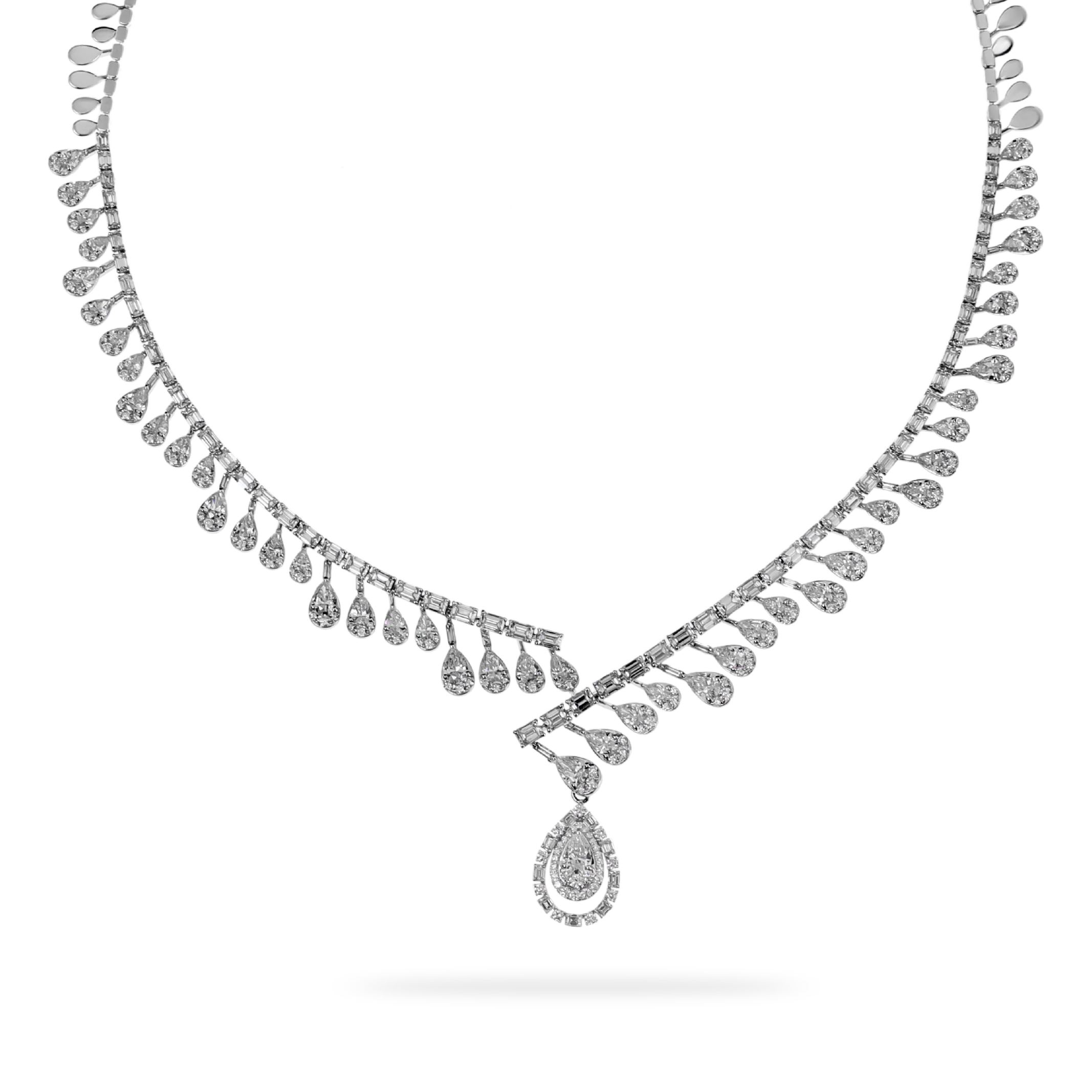
A reception offers more flexibility with diamonds, polki, sculptural gold, or a dramatic choker . Choose one statement element and let the remaining pieces support it. If the saree or blouse already includes shimmer, defined earrings and a clean necklace may photograph better than several layers of sparkle.
Change the mood through finish and silhouette rather than simply adding weight. A contemporary necklace over a traditional silk saree can look striking when the color relationship remains deliberate.
Styling lighter pieces for pre-wedding events
Pre-wedding events often involve more movement, conversation, and daytime light. Choose smaller earrings, a short necklace, a few bangles, or a delicate pendant set. Colorful stones, pearls, and polished gold can add personality without making the outfit feel like a second wedding look.
Lighter jewellery also gives you room to experiment with draping and blouse details. Keep the pieces easy to remove and secure, especially if the event includes dancing or outdoor photographs.
Reusing bridal jewellery after the wedding day
The most useful bridal jewellery can move into festive, family, and formal wardrobes. Wear a long necklace with a simpler saree, pair bridal earrings with a plain silk blouse, or separate bangles into smaller stacks. A versatile metal tone and classic silhouette make these combinations easier.
Store each piece carefully, keep documentation together, and clean it according to its material. When a set can be divided into several outfits, its beauty continues well beyond the wedding album.
Conclusion
The perfect bridal jewellery for silk saree styling comes from balance: the richness of the weave, the saree’s color, the blouse neckline, the bride’s features, and the practical demands of the day should all have a place. Choose a clear focal point, test the pieces in their real setting, and invest in quality and comfort where they matter most. The result will feel personal rather than prescribed, with enough versatility to remain meaningful after the ceremony.
Frequently Asked Questions
Which jewellery is best for a silk saree bridal look?
Traditional gold, temple-inspired pieces, kundan, polki, diamonds, and gemstone jewellery can all work. Choose according to the saree’s weave, border, color, blouse neckline, and the scale of the overall styling.
How many necklaces should a bride wear with a silk saree?
One well-chosen necklace is enough for many bridal looks. If you layer two or more, vary their lengths and weight, and make sure the blouse embroidery and saree border remain visible.
Should bridal jewellery match the saree color exactly?
Not necessarily. Repeating one saree color creates harmony, while a controlled contrast can add interest. Use the border, blouse, and zari as connections between the saree and the stones.
Is antique gold suitable for a traditional silk saree?
Yes. Antique gold can add depth to richly colored silk, raw silk, and heavily patterned sarees. It is particularly effective when the saree has a muted, dark, or heritage-inspired palette.
How can a bride keep heavy jewellery comfortable?
Try each piece before the wedding, check the fastening, and wear it while sitting, walking, and turning your head. Choose secure earrings, distribute weight across the set, and remove pieces that cause pressure during the trial.
What jewellery suits a heavily embroidered blouse?
A necklace with a clean outline, medium-sized earrings, and fewer layered elements usually work well. The jewellery should leave some embroidery visible instead of covering every detailed area.
Can bridal jewellery be worn after the wedding?
Yes. Separate a large set into individual pieces and pair them with simpler sarees, festive outfits, or evening clothing. Earrings, bangles, pendants, and shorter necklaces are often the easiest pieces to reuse.
Designer jewellery Bangalore: A practical guide to choosing, buying, and styling unique pieces
10 minute read
Related blogs:
November 20, 2025
The Timeless Elegance of the Tennis Bracelet: A Comprehensive Guide
Read More
November 20, 2025
The Ultimate Guide to Styling and Wearing a Choker Necklace
Read More
November 20, 2025
Find Your Perfect Engagement Ring: A Comprehensive Guide to Styles and Diamonds
Read More
November 20, 2025
The Timeless Elegance of a Diamond Tennis Bracelet: A Buyer's Guide
Read More









.webp)

.webp)