How to choose bridal jewellery for reception gown: A complete styling guide
August 28, 2026 | 10 minutes read
Key Takeaways
The right bridal jewellery for reception gown styling should feel connected to the dress, your features, and the way you plan to celebrate. Start with the neckline, then refine the look through metal, scale, comfort, and personal style.
- Match the necklace shape to the gown’s neckline rather than choosing pieces in isolation.
- Let the gown’s fabric, color, and embellishments guide your metal and gemstone choices.
- Balance statement jewellery with simpler pieces so the overall look feels intentional.
- Consider your hairstyle, makeup, movement, and photography before buying.
- Choose pieces that can become meaningful keepsakes after the reception.
Match jewellery to your reception gown neckline
Your neckline creates the visual space where a necklace, earrings, or pendant will sit. A beautiful piece can feel misplaced if it fights the gown’s shape, while a modest design can look remarkably polished when its proportions are right. Use the neckline as your starting point, then consider the effect you want around your face. For broader wedding-jewellery ideas, this guide to wedding necklace sets offers useful direction on pairing necklaces with gowns and other bridal outfits.
Choosing jewellery for strapless and sweetheart necklines
Strapless and sweetheart gowns leave the collarbone open, making them naturally receptive to necklaces. A short pendant, delicate drop, or rounded necklace can follow the curve of the bodice without interrupting it. If the gown is plain, a more noticeable necklace can add structure; if it is heavily worked, keep the necklace finer and let the earrings provide the sparkle.
A necklace that ends close to the top of the bodice usually feels more balanced than a long chain that disappears into the gown. Consider a pair of earrings with a similar softness, rather than selecting a necklace and earrings that are both large and ornate.
Styling halter and high-neck gowns
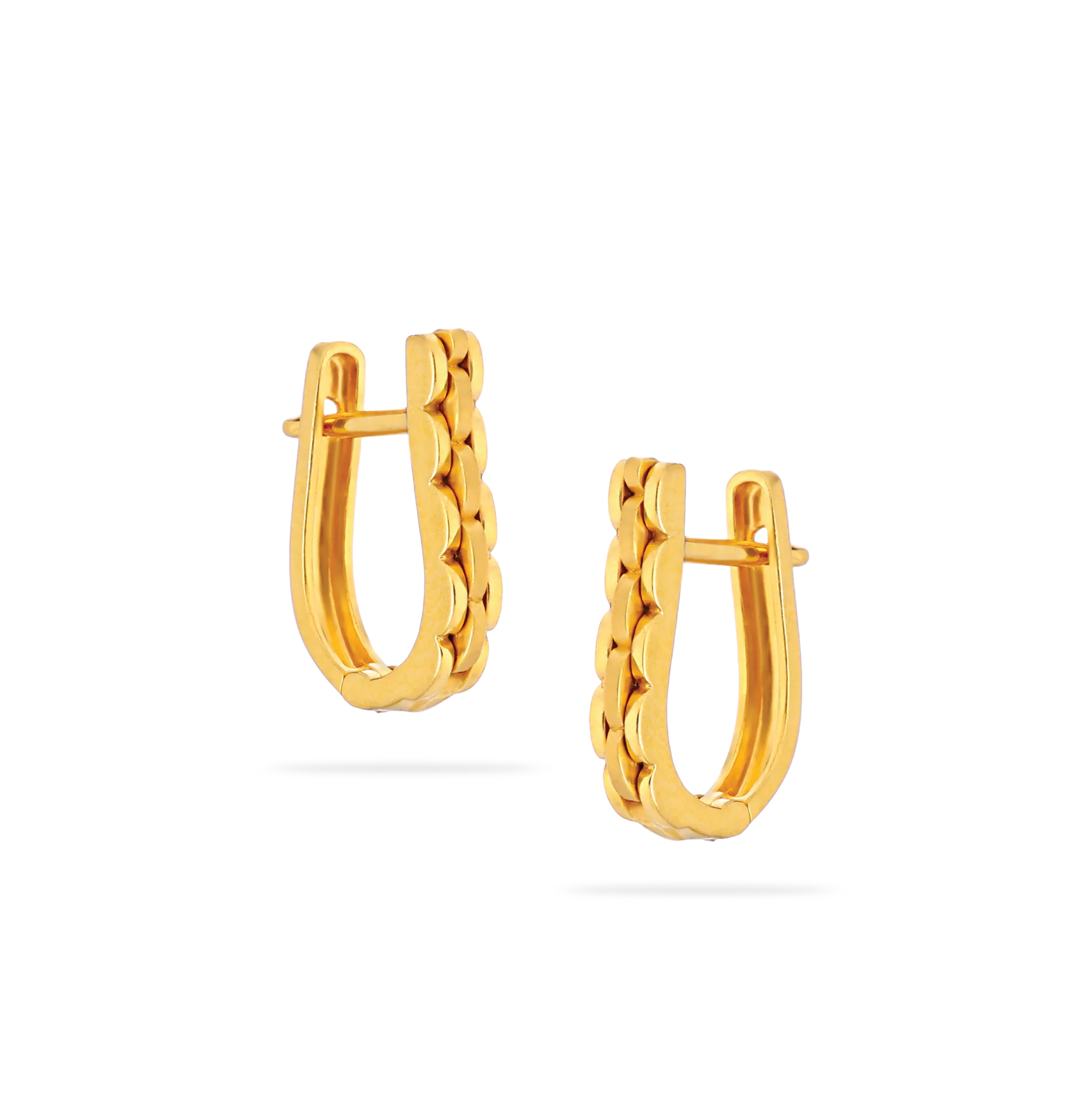
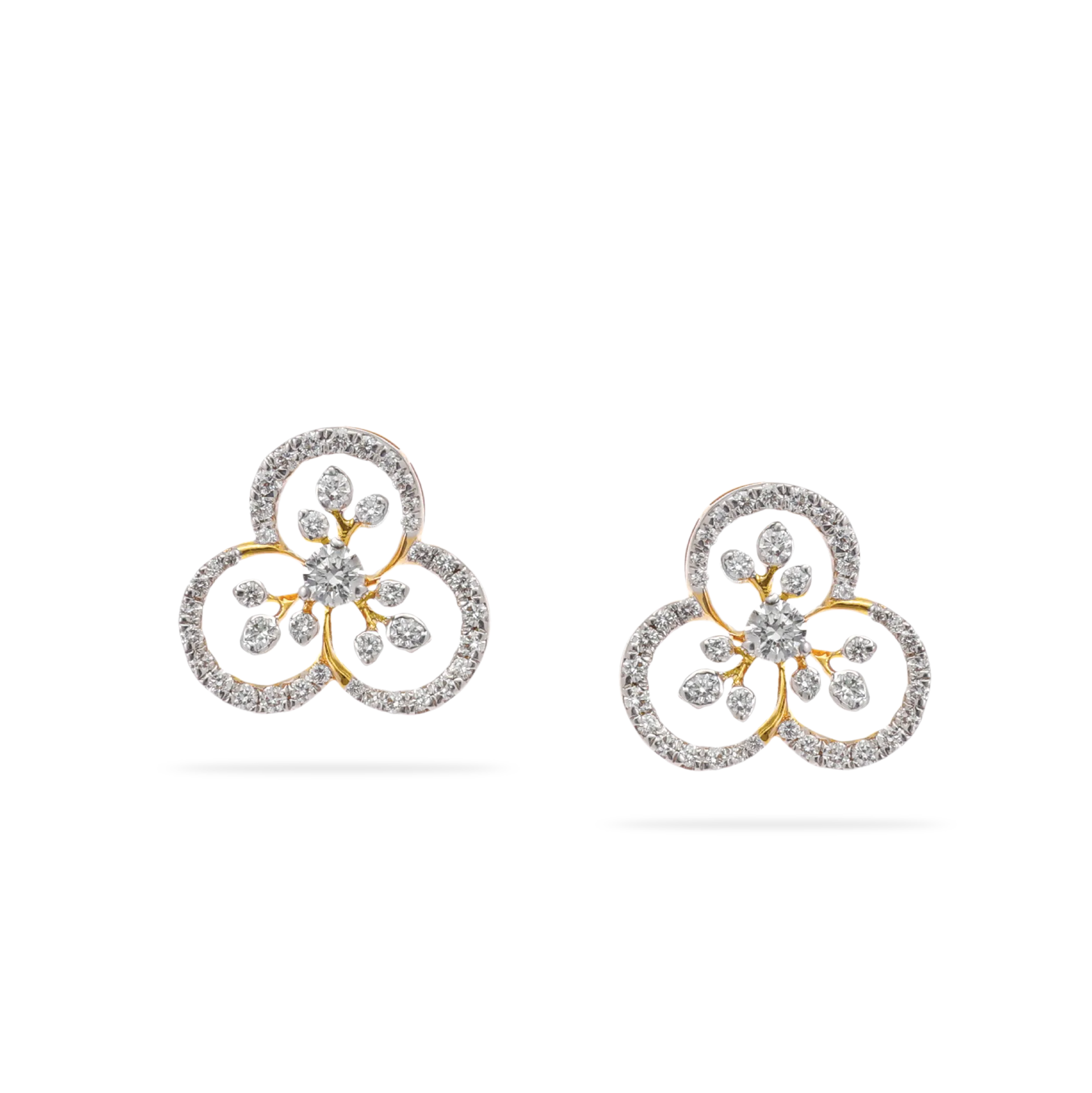
Halter and high-neck gowns already draw attention upward, so a necklace is often unnecessary. Instead, choose earrings that frame the face and perhaps a slim bracelet that adds polish without crowding the neckline. Small hoops, sculptural studs, or narrow drops can work well, depending on the gown’s level of drama.
If you love the idea of a necklace, test it carefully in a fitting. A very fine pendant may sit neatly below the high neckline, but anything bulky can make the bodice look busy. The aim is to keep the eye moving smoothly from the face to the dress.
Pairing jewellery with off-shoulder and bateau necklines
Off-shoulder necklines expose the shoulders and upper chest, but their horizontal line can be strong. A short necklace may echo that line, while a pendant with a gentle drop can add length. For a bateau neckline, earrings and a bracelet are often more elegant than a necklace because the dress already creates a clean frame across the collarbone.
Pearls, polished metal, and restrained crystal details can all suit these shapes. Try the jewellery with the gown while seated as well as standing, since the neckline may look different when you move through dinner, speeches, and dancing.
Balancing one-shoulder and asymmetrical designs
An asymmetrical gown needs breathing room around its most distinctive feature. With a one-shoulder neckline, skip the necklace or choose an extremely fine chain that does not compete with the diagonal line. Earrings can repeat a detail from the gown, while a bracelet on the uncovered arm can restore visual balance.
Avoid making both sides of the look equally elaborate. Let the gown’s asymmetry remain visible, and use one refined accent to guide attention back toward your face.
Coordinate jewellery with your gown’s fabric and embellishments
Neckline is only one part of the styling decision. The gown’s undertone, surface texture, and level of decoration determine whether jewellery looks softly integrated or visually disconnected. Bring fabric swatches or clear photographs when shopping, and compare pieces in the same lighting you expect at the reception.
A reception gown may be white, ivory, champagne, or a more unusual shade, and each can change how metal appears against the skin and fabric. The most successful combinations do not necessarily use identical colors; they share a clear sense of warmth, finish, or texture.
Matching metals to white, ivory, and champagne gowns
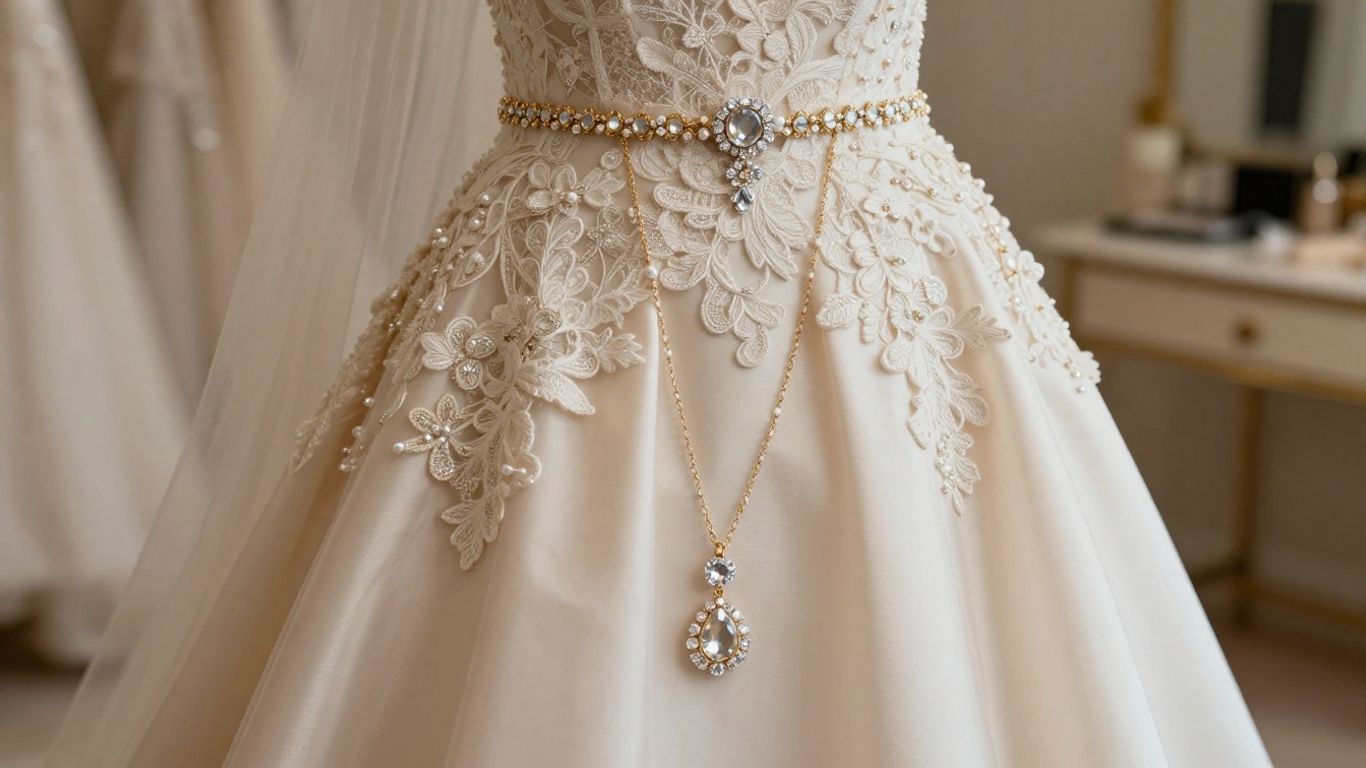
Bright white gowns often pair neatly with platinum, silver-toned metals, and cool gemstones. Ivory can be flattering with yellow gold , warm pearls, or mixed metals, though the exact result depends on the gown’s undertone. Champagne fabrics tend to welcome warmer golds, smoky stones, and softer finishes.
These are starting points rather than strict rules. Skin tone, lighting, and the gown’s beadwork matter just as much, so hold the jewellery beside the dress instead of judging it from a product photograph alone.
Complementing lace, satin, tulle, and velvet
Lace brings a delicate, patterned quality, so jewellery with graceful curves or fine detailing often feels more natural than severe geometric pieces. Satin has a smoother, more reflective surface and can support clean metal shapes or a single polished stone. Tulle is light and airy, while velvet has depth and visual weight; both call for jewellery that respects their different textures.
Think about finish as well as color. A matte or brushed surface may sit beautifully beside ornate lace, whereas high polish can echo satin’s sheen. Velvet can carry a stronger earring or cuff, provided the rest of the set remains edited.
Working with beading, sequins, and crystal details
When a gown already sparkles, identify one detail you want the jewellery to repeat. It might be the tone of the crystals, the shape of a bead, or the warmth of the embroidery. Repeating one element creates a connection without requiring every piece to look like part of a matching set.
The following quick guide can help when the gown includes several surface details:
| Gown detail | Jewellery direction | Useful restraint |
|---|---|---|
| Crystal beading | Clear stones or polished white metal | Choose one main sparkle point |
| Pearl accents | Pearls or softly luminous gemstones | Avoid mixing too many stone colors |
| Metallic embroidery | A related metal tone | Keep finishes consistent nearby |
| Dense sequins | Sleek earrings or a simple bracelet | Let the gown provide most of the shine |
After using the table, view the entire outfit from several feet away. If the jewellery disappears, add scale to one piece; if the gown loses its shape, remove an accessory before adding another.
Avoiding visual competition between the gown and jewellery
A useful rule is to decide whether the gown or the jewellery is the lead element. A heavily embellished gown may need only earrings and a bracelet, while a minimalist gown can support a more architectural necklace or dramatic earrings. This is where one clear focal point keeps the look composed.
Take a photograph in the reception hairstyle you expect to wear. Camera distance often reveals clutter that is less obvious in a mirror, especially around the neckline and shoulders.
Select the right bridal jewellery pieces
A complete set does not have to include every traditional category. The best choices are the pieces that fill the visual gaps in your outfit and remain comfortable for the full event. Consider what guests will see most often: your face during conversation, your hands during toasts, and your upper body in photographs.
Start by choosing one anchor piece. Once that decision is made, the remaining accessories can support it instead of competing for attention.
Choosing between a necklace, choker, and pendant
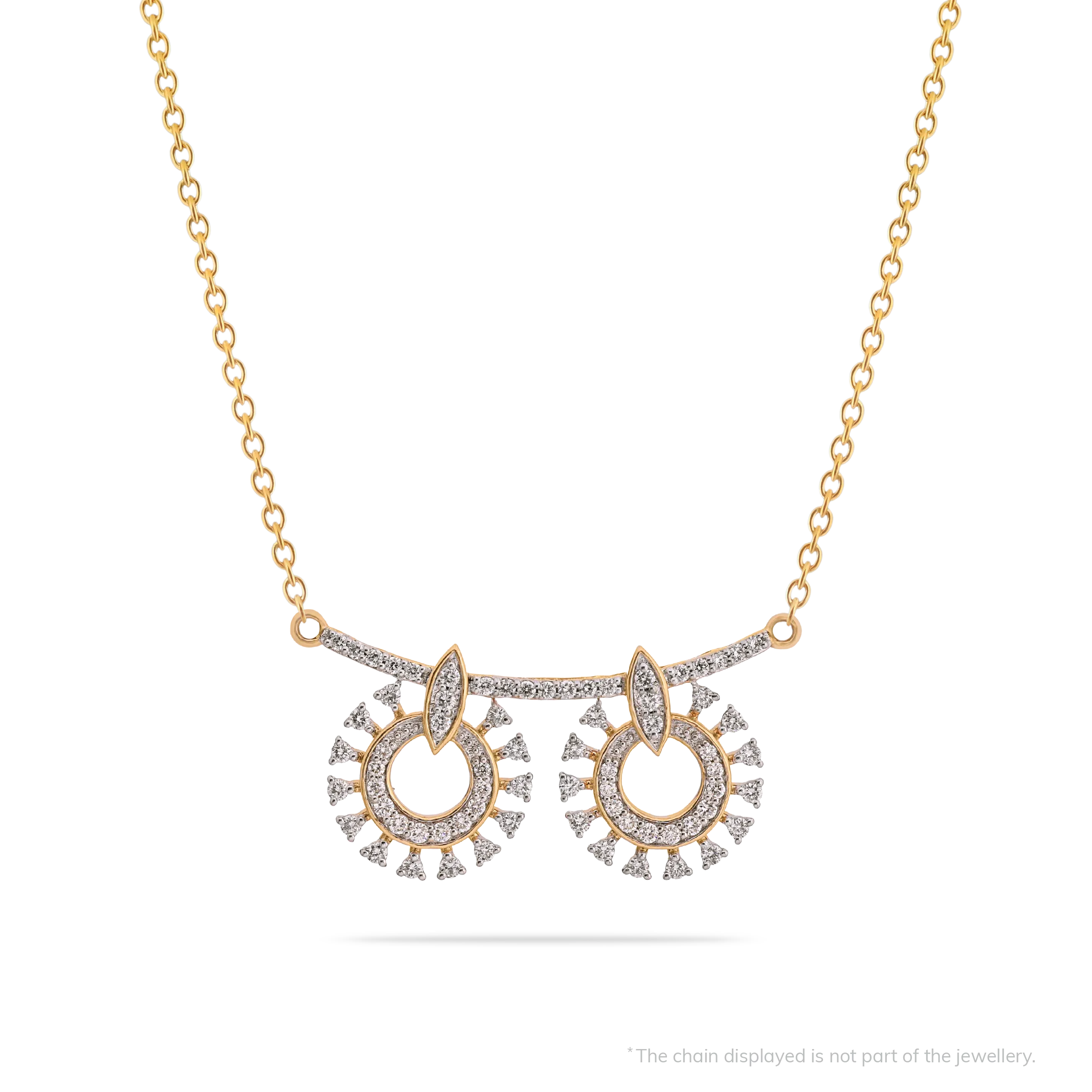
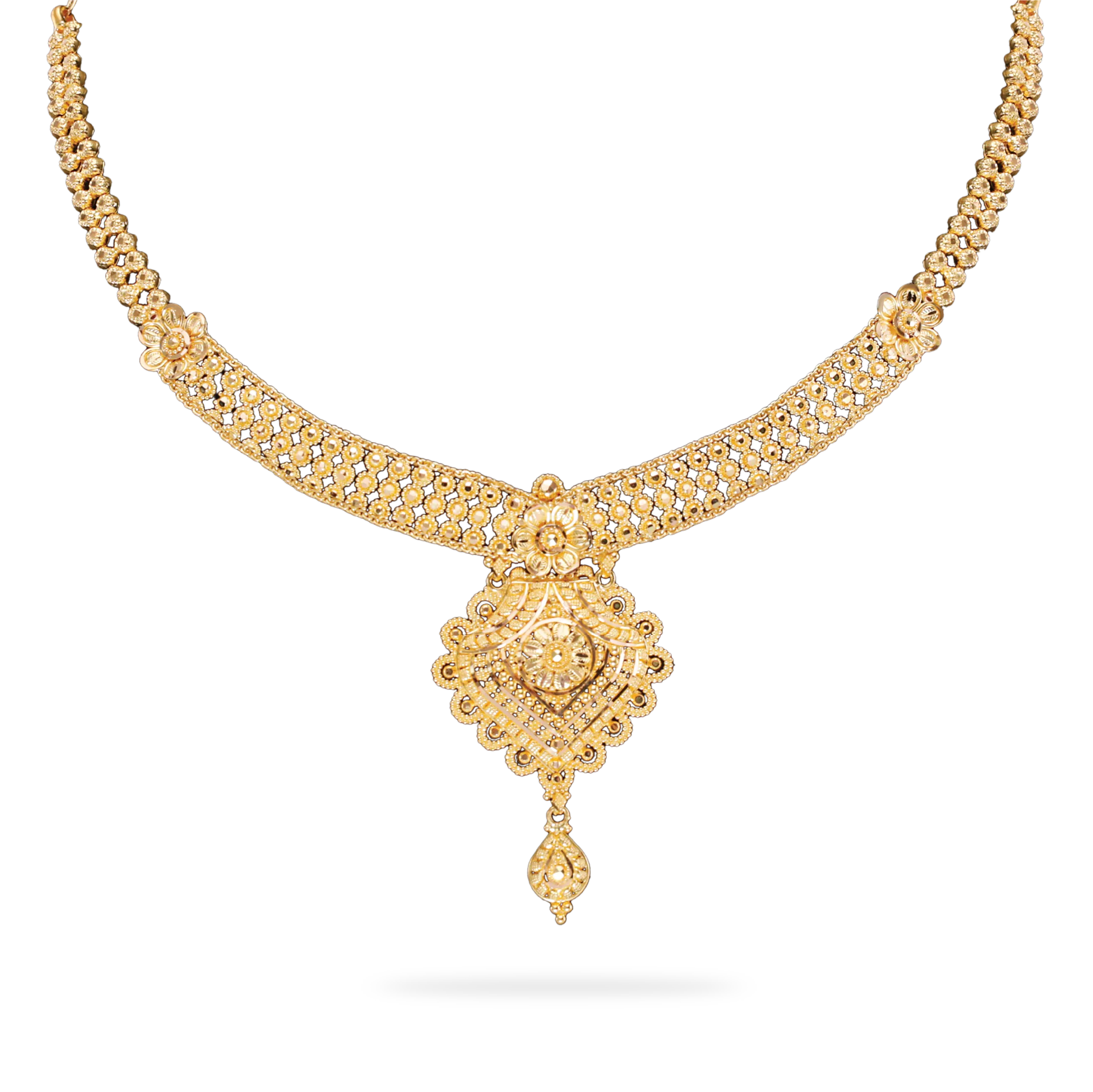
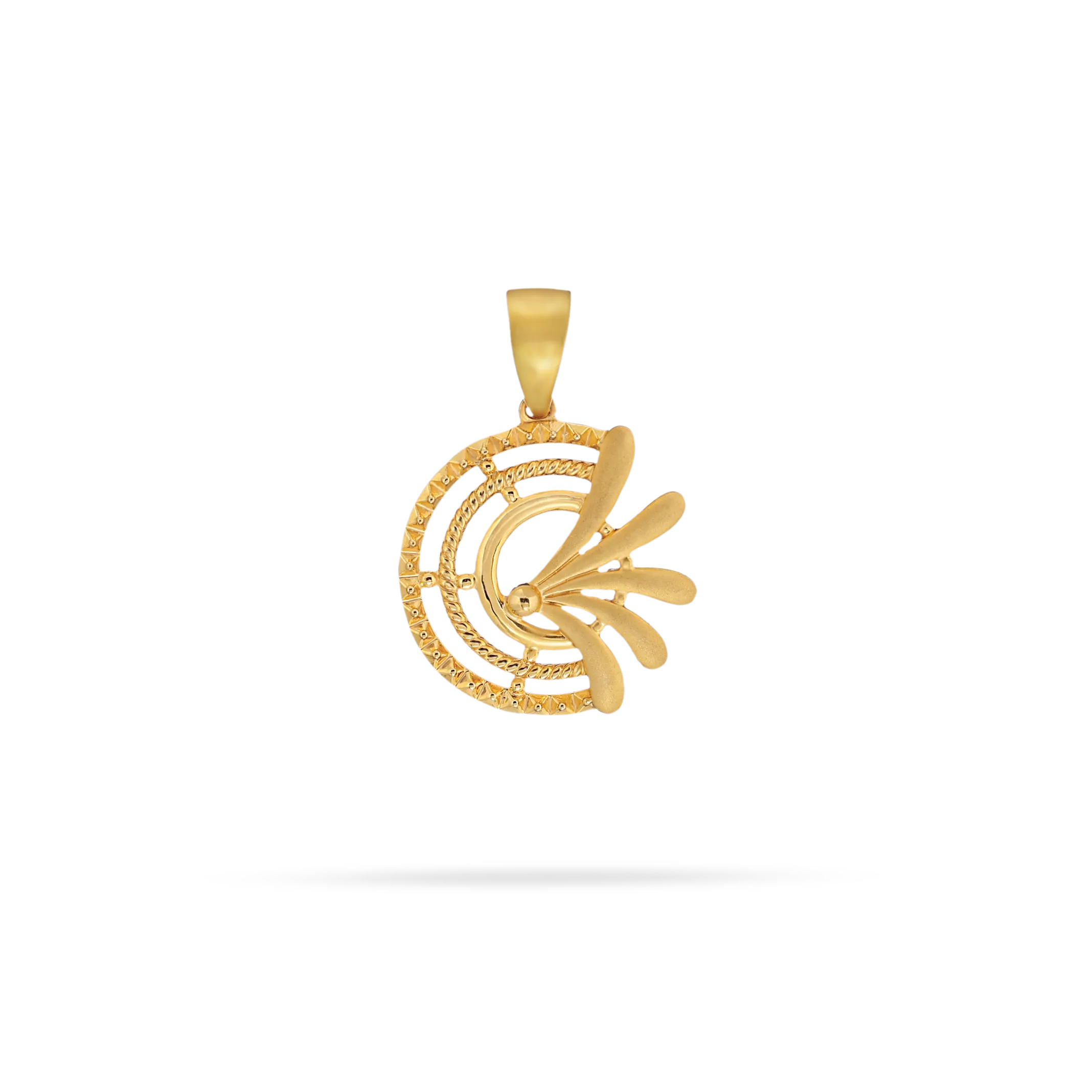
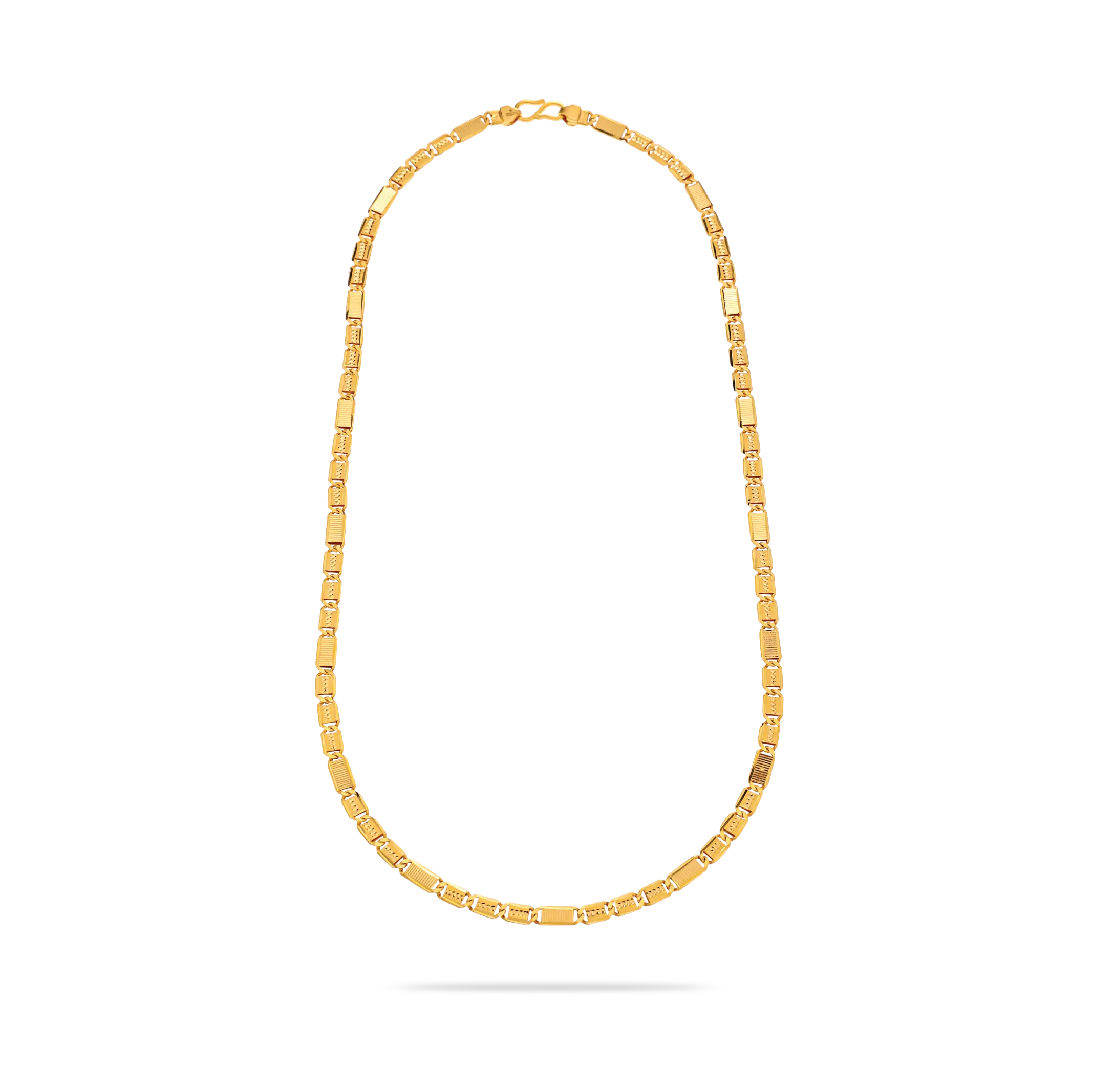
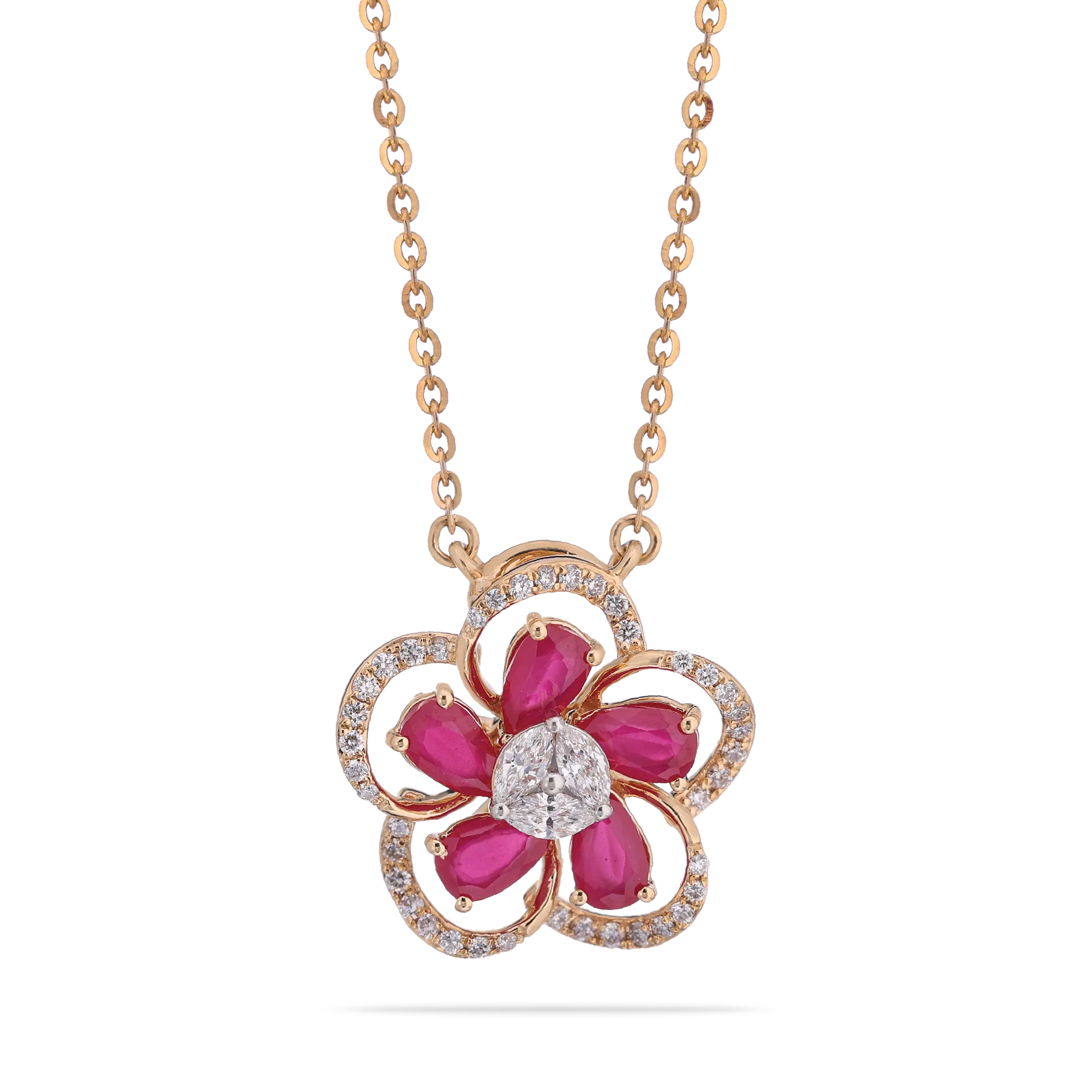
A necklace is often the most visible choice with an open neckline, but its length and width should relate to the gown’s shape. A choker works especially well with a bare collarbone or a modern reception dress, while a pendant introduces a vertical line that can lengthen the upper body.
Try each option while wearing the gown, not just a similar top. The same necklace may look graceful against a sweetheart neckline and awkward against a straight bateau line.
Finding earrings that suit your face and hairstyle
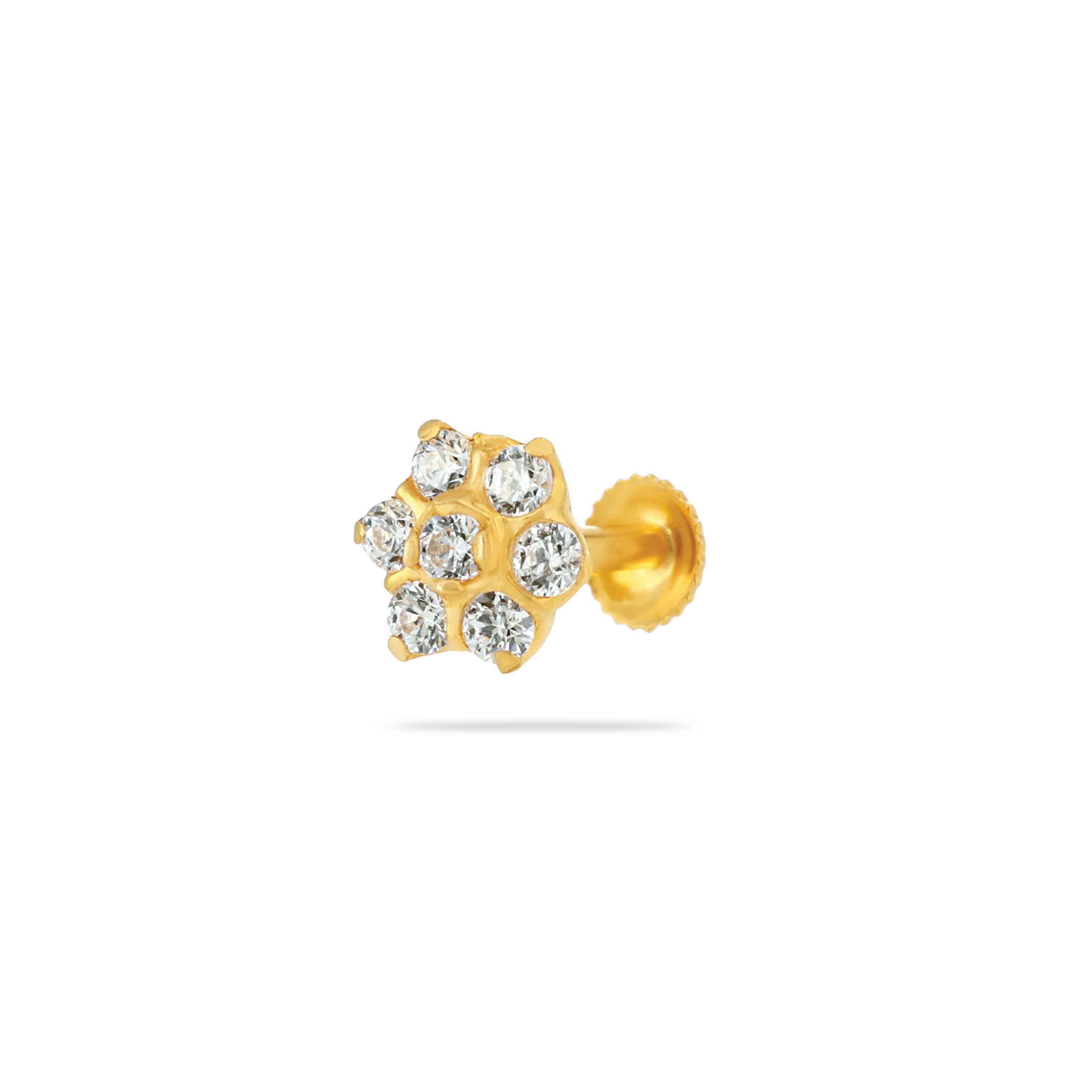
Earrings should frame the face without becoming uncomfortable or pulling at the ear. Rounder faces may enjoy longer, slimmer shapes, while angular faces can look lovely with rounded drops or softly curved designs. These are suggestions, not rules; your hairstyle and personal taste matter more than a fixed formula.
Check how the earrings look from the side and from a short distance. A pair that is subtle in person may photograph beautifully, while an elaborate design can become distracting once combined with a veil or hairpiece.
Deciding whether to wear a bracelet or bangles
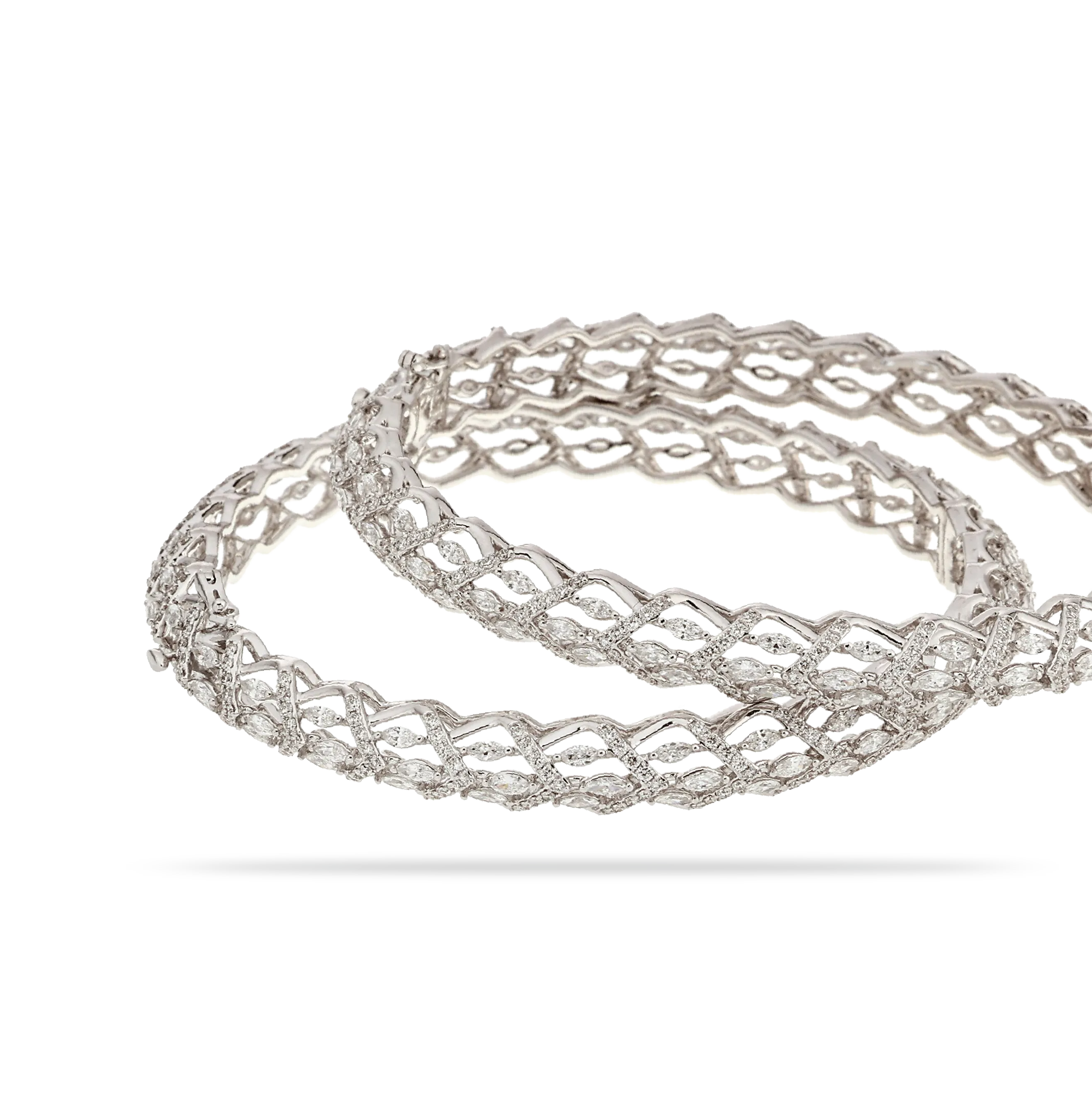
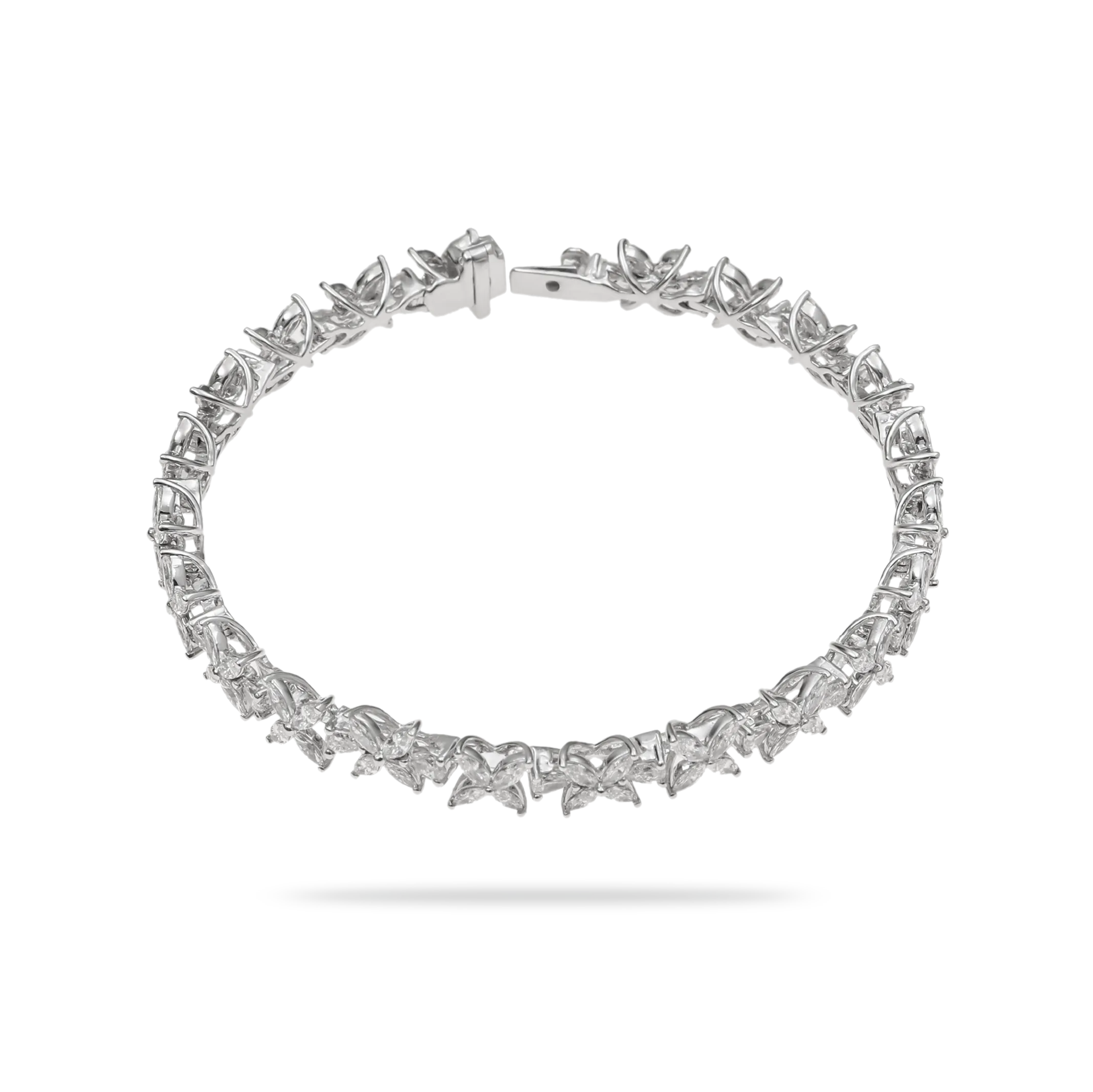
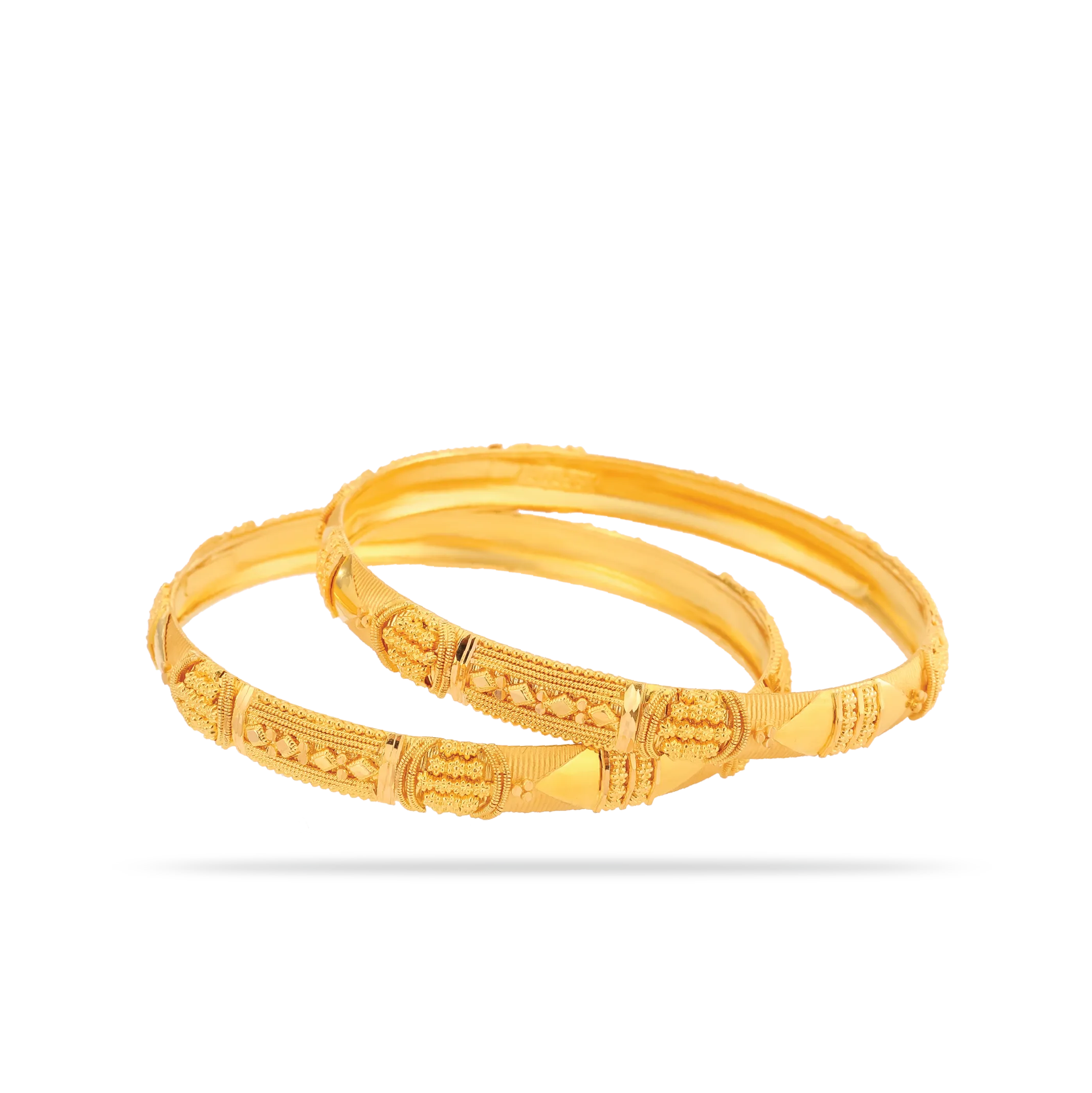
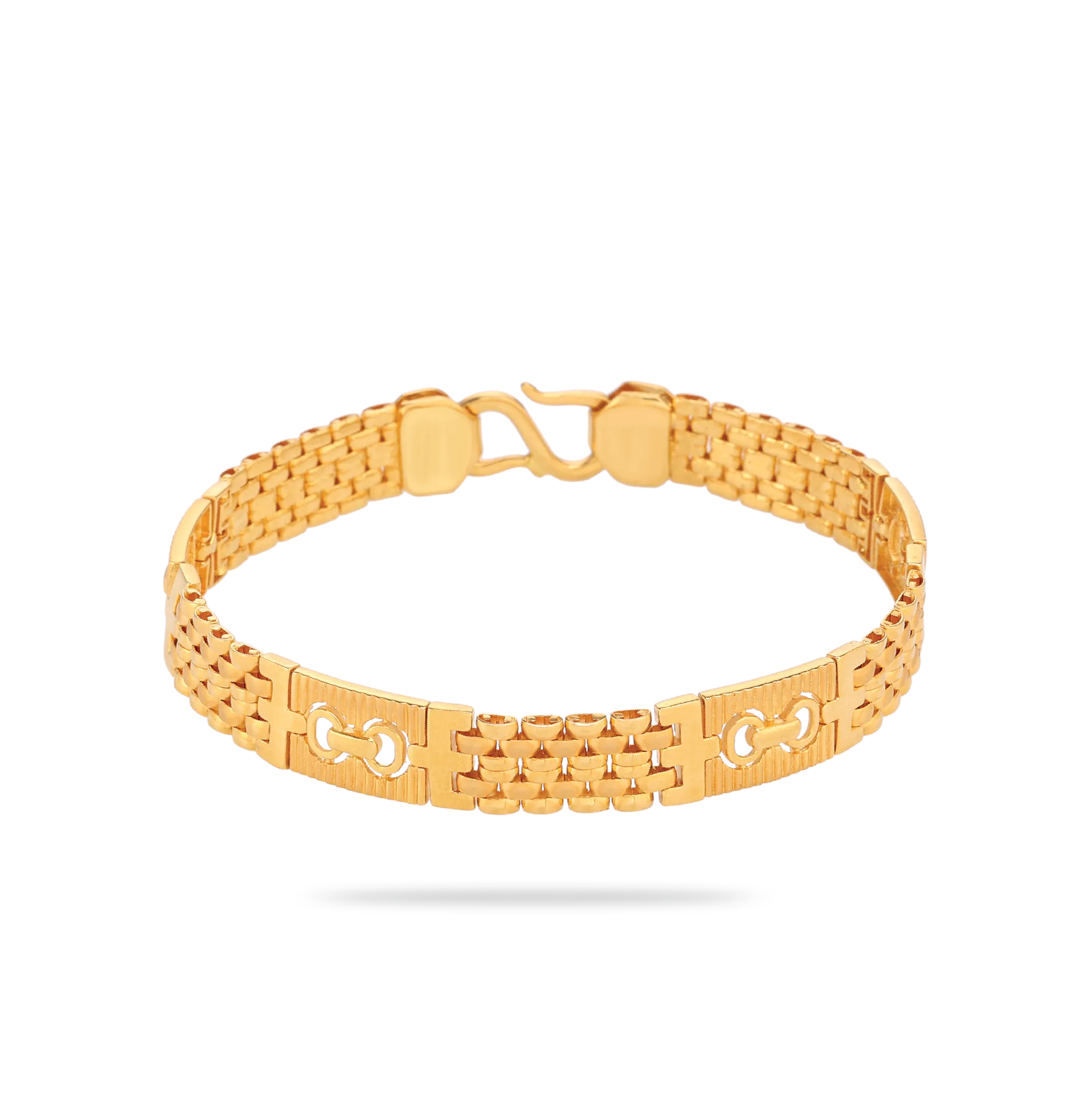
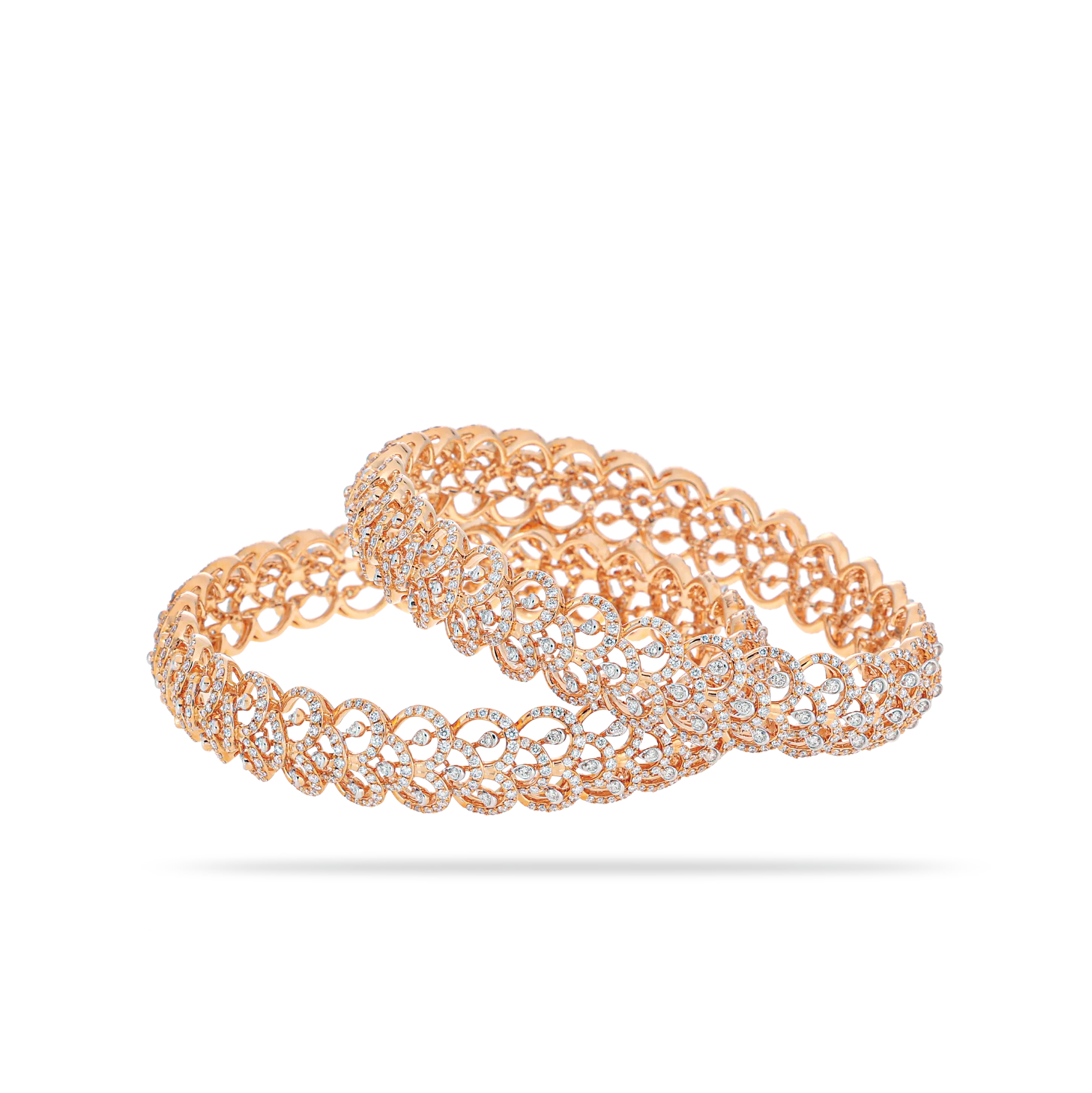
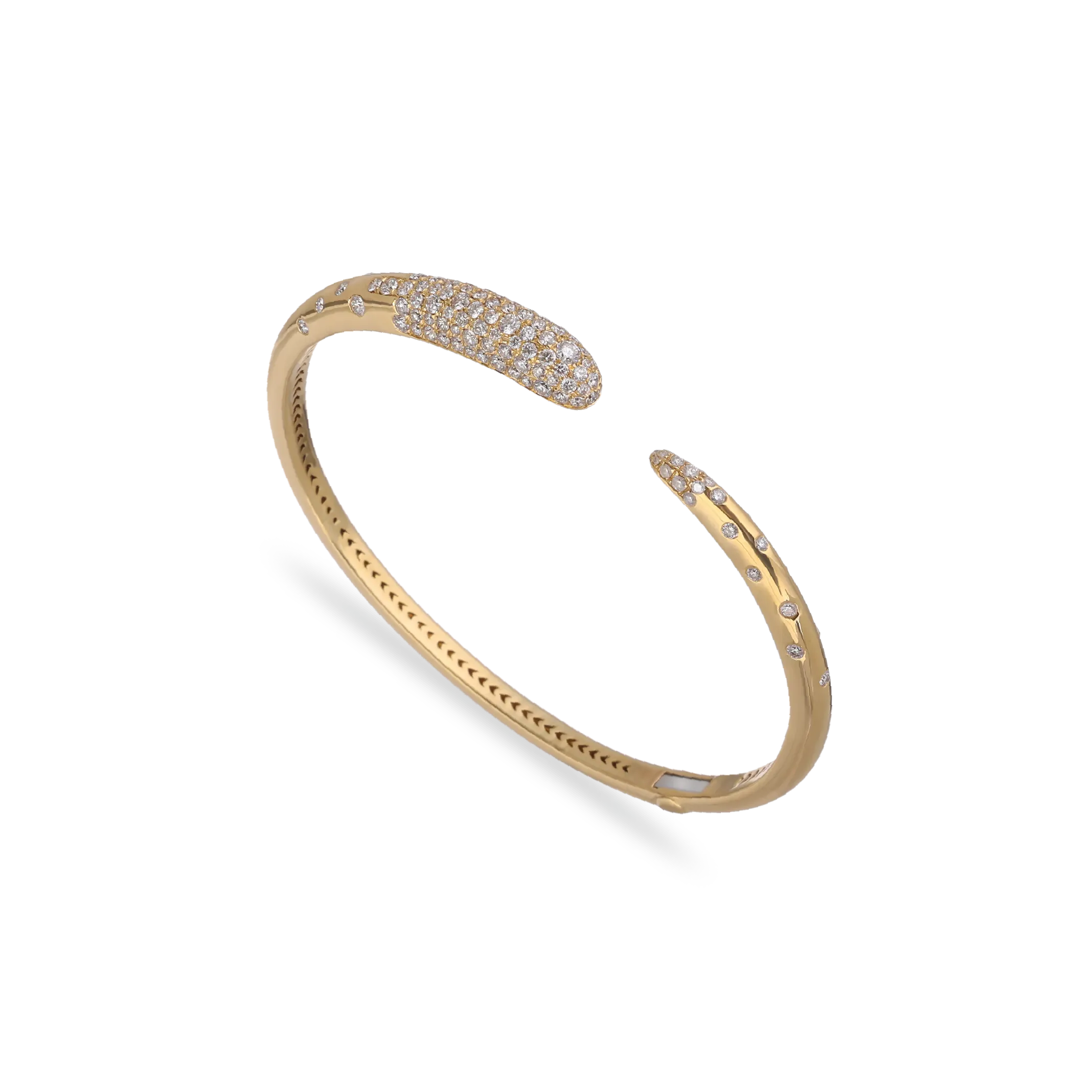
A bracelet adds a quiet finishing line to the wrist, particularly when the gown leaves the arms visible. Bangles bring movement and a more expressive sound and texture, but several stacked pieces may catch on fabric or feel heavy during dinner. Choose the amount of wrist jewellery according to the sleeve, cuff, and how freely you want to move.
If your engagement ring and wedding band are already detailed, a simple bracelet can preserve balance. A less ornate ring stack may allow a stronger cuff or a small group of bangles.
Adding rings, brooches, and other statement accents
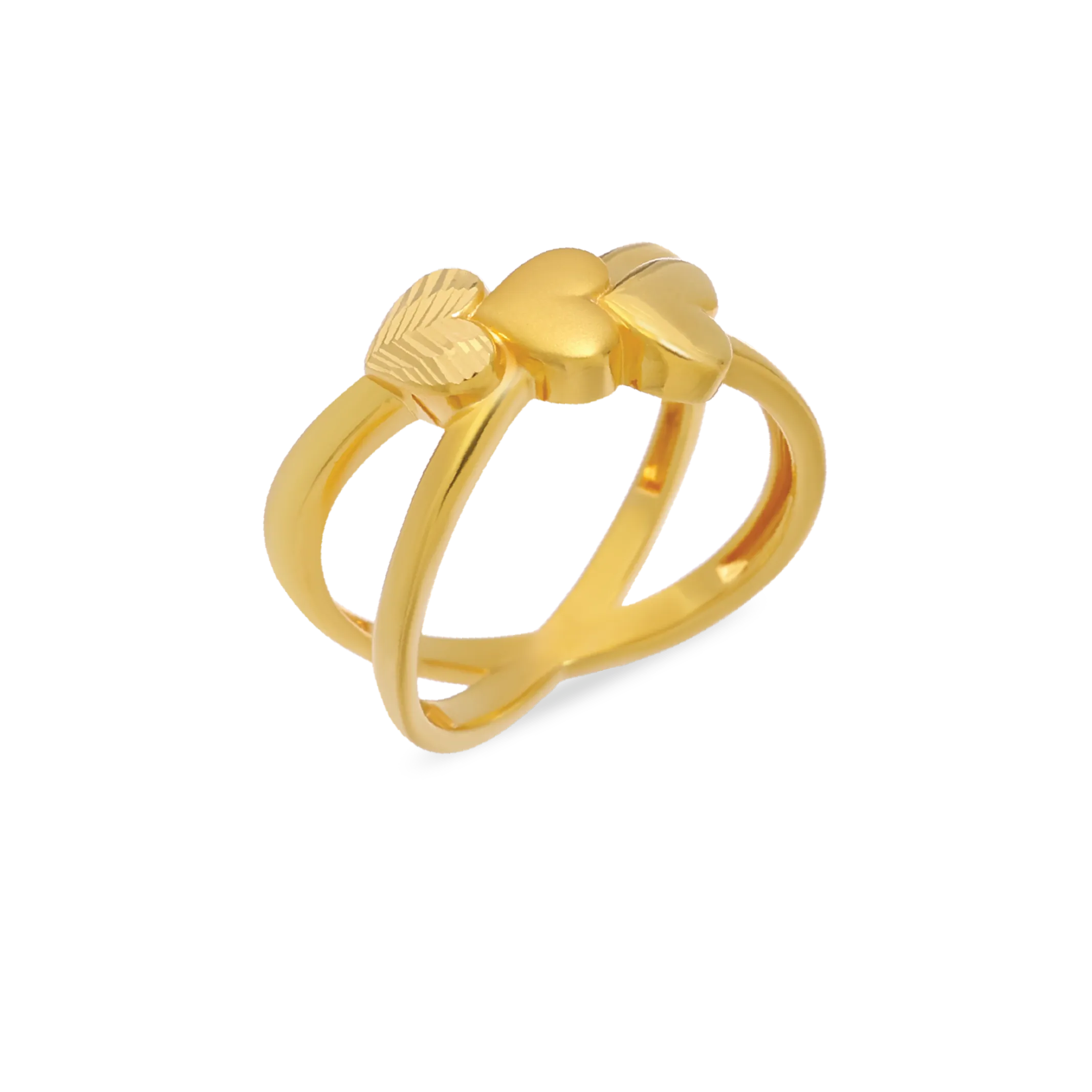
Rings, brooches, and decorative accents can make the reception look more personal. A brooch may work on a sash, wrap, or structured shoulder, while an additional ring can echo a gemstone already used elsewhere. These pieces should have a reason for being present rather than filling every available space.
For a heritage-inspired collection, C Krishniah Chetty & Co’s guidance on timeless wedding jewellery discusses balancing heritage designs with modern wearability. That same principle works for a reception gown: preserve the meaning of a traditional piece while giving the outfit enough space to breathe.
Build a cohesive reception jewellery set
Cohesion comes from relationships, not perfect duplication. Metals can share a temperature, gemstones can repeat a color, and finishes can create a quiet rhythm across the outfit. You may also use contrast deliberately, especially when a contemporary gown is paired with a meaningful traditional piece.
Lay the gown, shoes, hair accessories, rings, and jewellery together before the final fitting. Seeing everything at once makes it easier to spot a missing connection or an unnecessary extra.
Coordinating metals, gemstones, and finishes
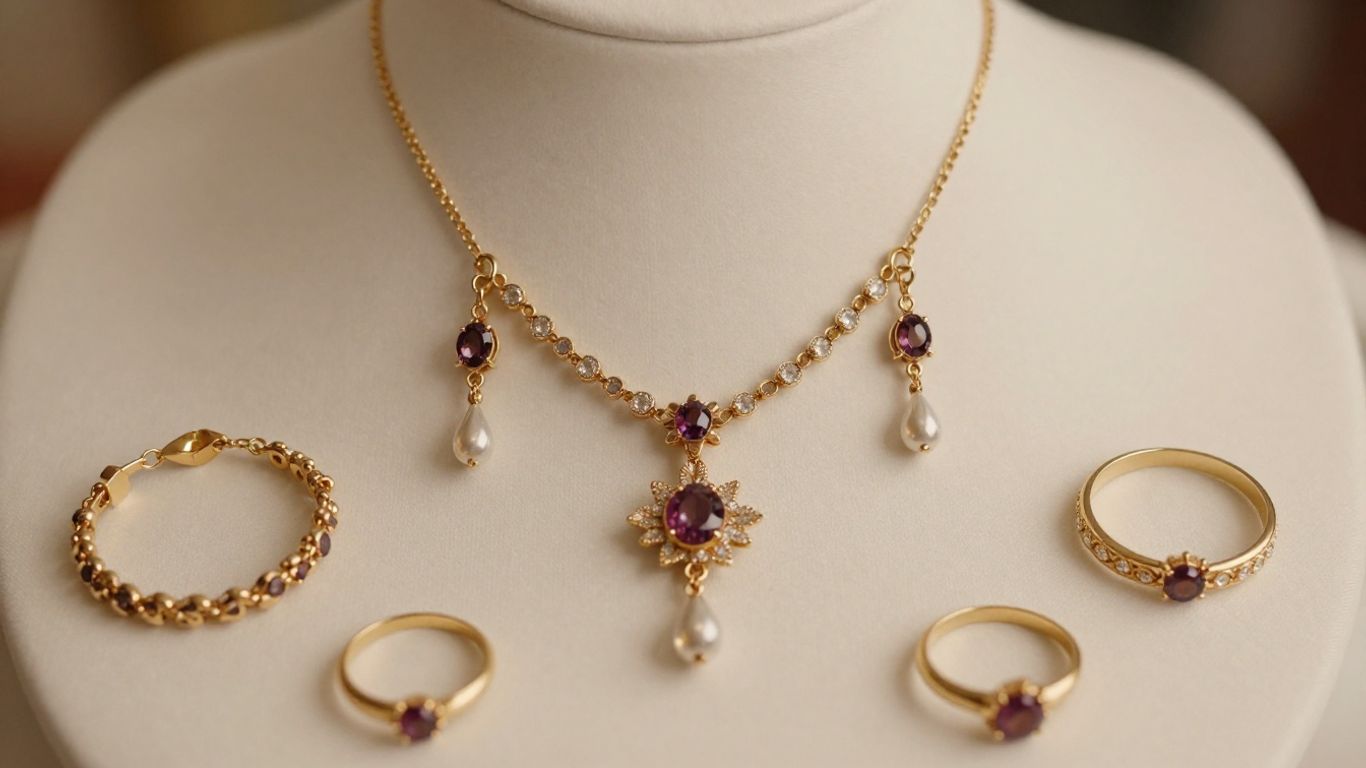
Begin with the metal that appears most prominently in the gown or your existing rings. White, yellow, and rose gold can be mixed, but the combination should look intentional. Repeating one metal in two or three places—perhaps earrings, bracelet, and hair accessory—usually gives mixed metals enough structure.
Gemstones need not be identical either. Similar clarity, color depth, or shape can bring different stones together. Finishes matter too: highly polished pieces feel more formal, while brushed or antique surfaces can soften a traditional look.
Mixing traditional and contemporary bridal styles
A modern gown can look striking with a traditional necklace, especially when its neckline leaves room for the piece to be seen. Conversely, a classic gown may benefit from streamlined earrings or a clean cuff. The bridge between the styles can be a shared metal, gemstone, or repeated motif.
The goal is not to make the old and new pieces compete. Give the traditional item enough prominence to feel intentional, then keep nearby accessories quieter.
Balancing statement pieces with minimalist accessories
Select one statement piece and decide what the eye should notice next. If the necklace is elaborate, studs or small drops may be enough; if the earrings are dramatic, a fine chain or bare neckline can provide relief. A statement bracelet may call for simpler rings and no brooch.
This approach also makes dressing easier. You can remove one supporting piece if the venue lighting, hairstyle, or photographs make the look feel fuller than expected.
Creating a polished look without matching every piece
Matching every item can make a set feel rigid. Instead, look for a shared visual thread: a warm metal, a pear-shaped silhouette, a pearl glow, or a similar level of refinement. Slight differences make the jewellery feel collected and personal rather than purchased as a costume.
When choosing fine pieces, C Krishniah Chetty & Co’s advice on coordinated bridal jewellery is relevant to this editing process: consider design aesthetics, metals, gemstones, craftsmanship, and realistic budgets together. Even when shopping elsewhere, those questions help you build a set with lasting logic.
Choose jewellery for your reception hairstyle and makeup
Jewellery is viewed alongside hair and makeup, so the final styling should be tested as one composition. Hair changes the amount of visible space around the ears and neck, while makeup changes how much contrast the face can carry. Share photographs of the gown and accessories with your beauty team before the reception trial.
Small adjustments can change the result dramatically. Moving an earring forward, loosening a few strands, or choosing a slightly quieter lip color may make the jewellery feel more natural.
Pairing jewellery with updos, buns, and ponytails
Updos, buns, and sleek ponytails expose the ears and neck, making earrings especially visible. This can be the right moment for a refined drop or an architectural stud. If the updo includes pins, pearls, or a comb, let the earrings relate to that accessory without copying it exactly.
A high ponytail creates movement, so lighter earrings may be more comfortable and less likely to tangle. Test the clasp and backing while turning your head, since a secure fit matters more once the dance floor opens.
Styling accessories with loose waves and hair-down looks
Loose waves and hair-down styles can partly hide earrings, particularly if the hair is thick or brushed forward. Medium-sized drops, hoops, or textured studs are easier to see than very delicate designs. Keep the necklace length in mind too, since hair can catch on chains and pendants.
If you want a quieter look, hidden sparkle can be lovely. Just make sure the earrings remain visible from the front and do not disappear entirely beneath the hair.
Coordinating earrings with veils, hair accessories, and tiaras
Veils and tiaras add their own lines and points of light. When one is elaborate, earrings with a clean silhouette often look more composed than another ornate piece. A simple veil may leave room for more decorative earrings, while a jeweled headpiece may call for a smaller necklace or no necklace at all.
Do a full movement test before the event. Walk, turn, sit, and lift your arms so you can see whether the veil, hair accessories, and jewellery catch on one another.
Matching jewellery scale to reception makeup
Strong makeup can support bolder jewellery, but the two should not both rely on intense contrast. With a defined eye or vivid lip, polished metal and a simple gemstone can look elegant. Softer makeup may welcome more texture or sparkle around the face.
Scale also depends on the venue. Large ballrooms and evening lighting can absorb delicate details, while an intimate reception may make an oversized earring feel especially prominent.
Shop for comfortable and practical bridal jewellery
A reception lasts for hours, and jewellery must work through greetings, meals, photographs, and dancing. Beauty matters, but so do weight, closure, fit, and the feel of the materials against your skin. Try pieces for longer than a few minutes whenever possible.
A practical shopping process also protects your budget. Compare craftsmanship, care requirements, documentation, and future wearability rather than judging value from appearance alone.
Considering weight, fit, and movement
Heavy earrings can become painful before the first dance, and a loose bracelet may slide at the wrong moment. Check the balance of each piece, the length of chains, and whether a ring catches on lace or beading. If you are unsure, wear the jewellery during a short walk and conversation at home.
Choose comfort before adding visual drama. A piece you can forget you are wearing will photograph and wear better than one you keep adjusting.
Selecting secure closures and skin-friendly materials
Inspect earring backs, necklace clasps, bracelet catches, and ring edges. They should close firmly without pinching. If your skin reacts to particular metals, ask about the material before ordering and allow time for a trial wear.
Bring a small repair or styling kit to the reception if appropriate. Spare backs, fashion tape, and a soft pouch can solve minor problems without disrupting the celebration.
Choosing pieces that photograph well indoors and outdoors
Photographs flatten some details and exaggerate others. Highly reflective surfaces may create bright spots under flash, while very fine jewellery can disappear in a wide group photograph. Ask your photographer for a quick test image during the fitting if possible.
Consider both the ballroom and outdoor areas. Jewellery should retain its character in warm indoor light, natural daylight, and close-up portraits without relying on excessive sparkle.
Setting a budget for investment and keepsake jewellery
Set a total jewellery budget before becoming attached to a single piece. Then decide which items deserve the greatest share: perhaps a necklace with long-term wearability, or earrings you expect to use for anniversaries and formal events. A wedding jewellery budget guide can help you separate statement pieces, everyday options, and accessories while keeping the wider celebration in view.
C Krishniah Chetty & Co’s wedding jewellery budget guide also frames the decision around overall wedding expenses, personal priorities, fine jewellery, and future wear. That perspective encourages thoughtful spending rather than treating the reception as a reason to buy more pieces than you will enjoy.
Style bridal jewellery for different reception themes
The reception setting can guide the final mood, but it should not override the gown or your personality. A ballroom, minimalist dinner, luxury evening party, and heritage-inspired celebration each invite different levels of polish and ornament. Use the theme as a filter, not a costume brief.
A cohesive theme often comes from repeated details in the room—metallic décor, candlelight, flowers, or textiles. Echo one of those details lightly through the jewellery and leave the rest to the gown.
Elegant jewellery for a formal ballroom reception
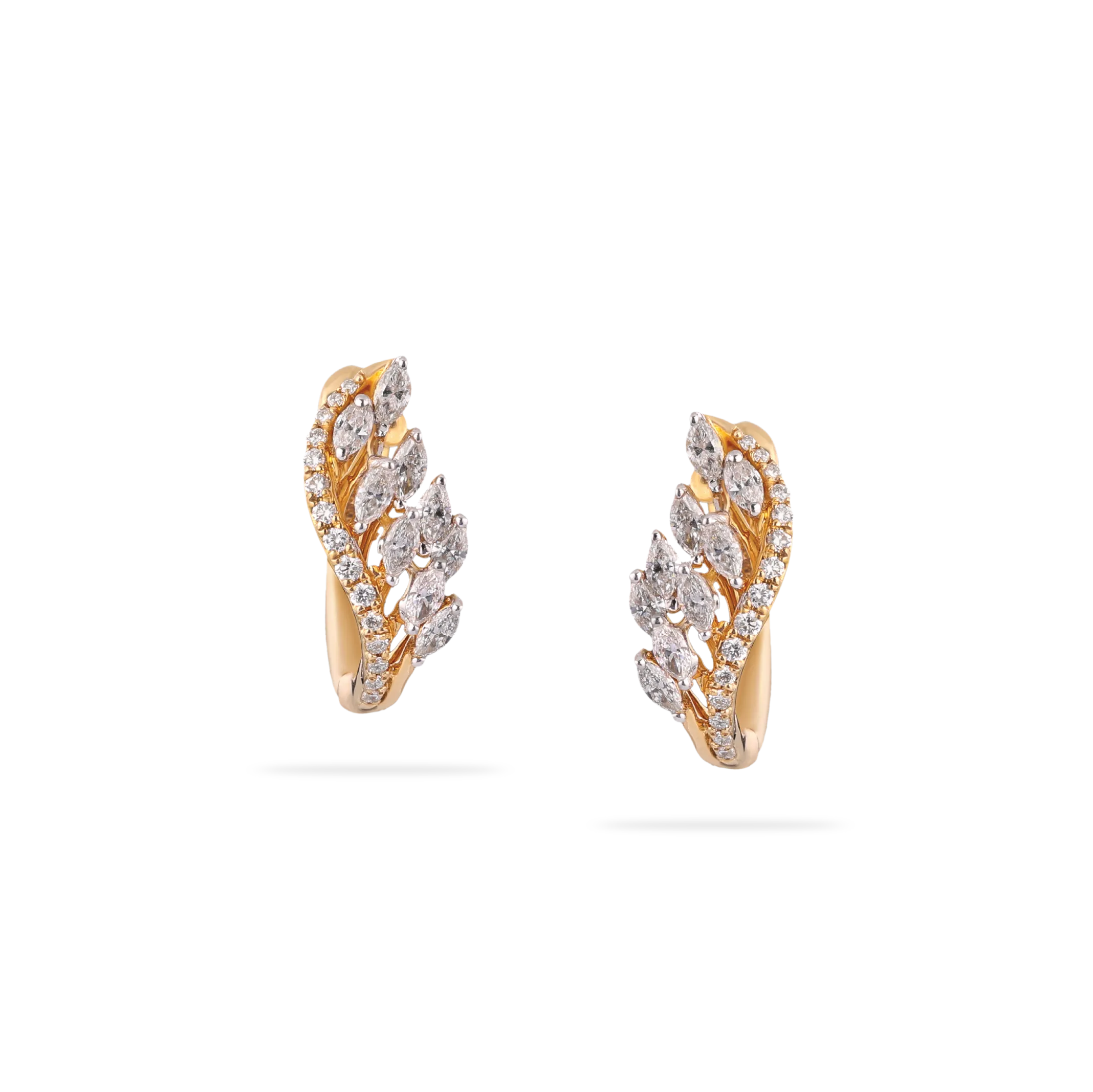
A formal ballroom reception can carry classic diamonds, pearls, refined chandeliers, or a graceful necklace. Choose pieces with clean finishing and enough presence for a spacious room. If the gown has a dramatic train or ornate bodice, let the jewellery remain edited so the silhouette stays in command.
A polished metal finish and a restrained color palette often look especially elegant beneath ballroom lighting. Test the pieces under flash as well as warm ambient light before making the final choice.
Modern pieces for a minimalist reception gown
A minimalist reception gown gives shape and proportion more room to speak. Consider a sculptural earring, a sleek choker , a single pendant, or a cuff with architectural lines. One unusual detail can feel more modern than a complete set of matching pieces.
Keep the palette focused. A simple gown can support mixed metals, but too many gemstones or competing textures may weaken its clean effect.
Glamorous accessories for a luxury evening celebration
Evening celebrations welcome richer sparkle, deeper stones, and more expressive silhouettes. A dramatic earring or substantial bracelet can work beautifully with satin, velvet, or a simple gown. Choose one or two luxurious points of focus rather than covering every surface with shine.
Consider how the accessories move under low light. A gentle drop, articulated fringe, or faceted stone may create more life than a piece that is simply large.
Cultural and traditional jewellery for a heritage-inspired look
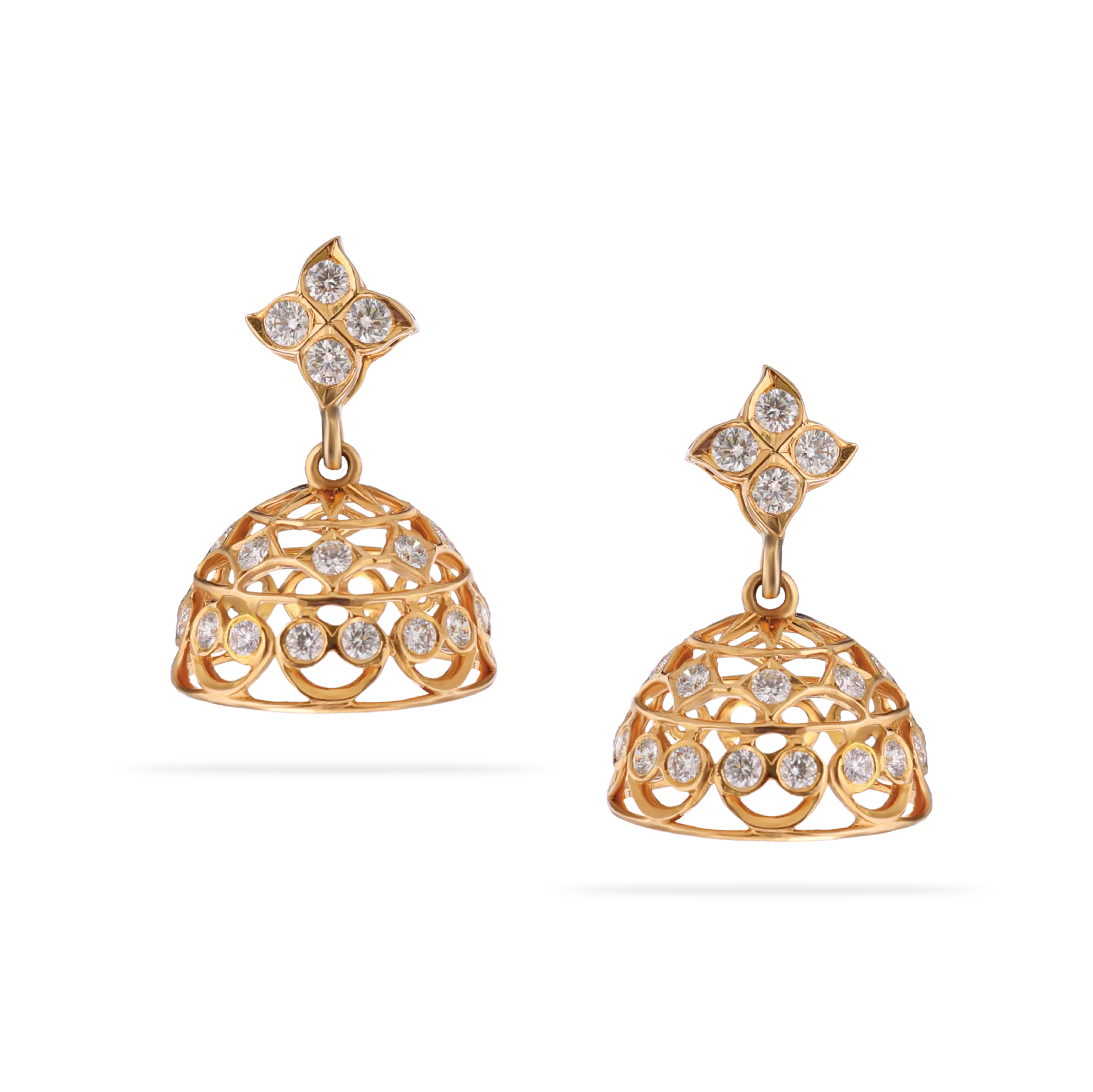
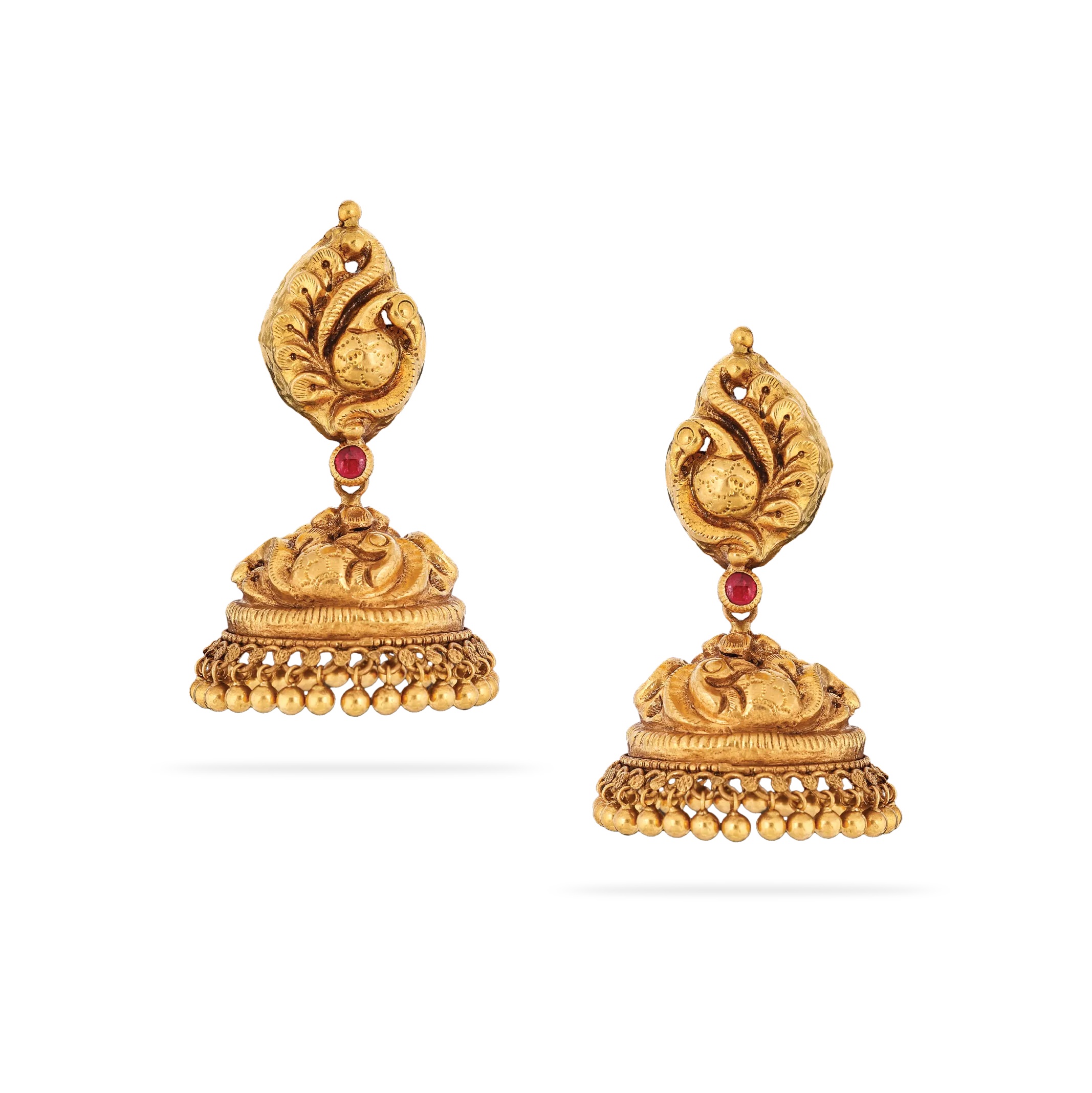
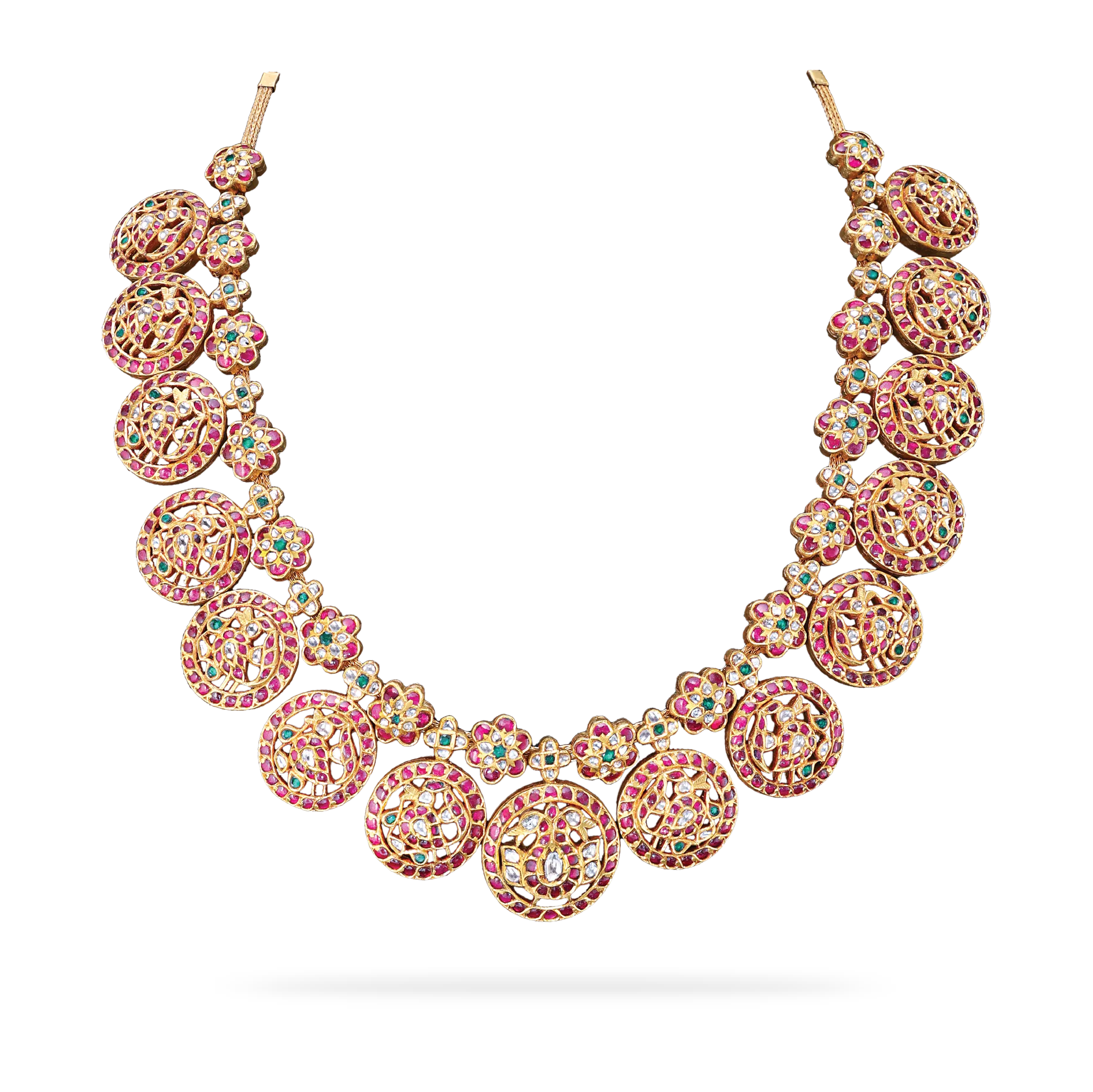
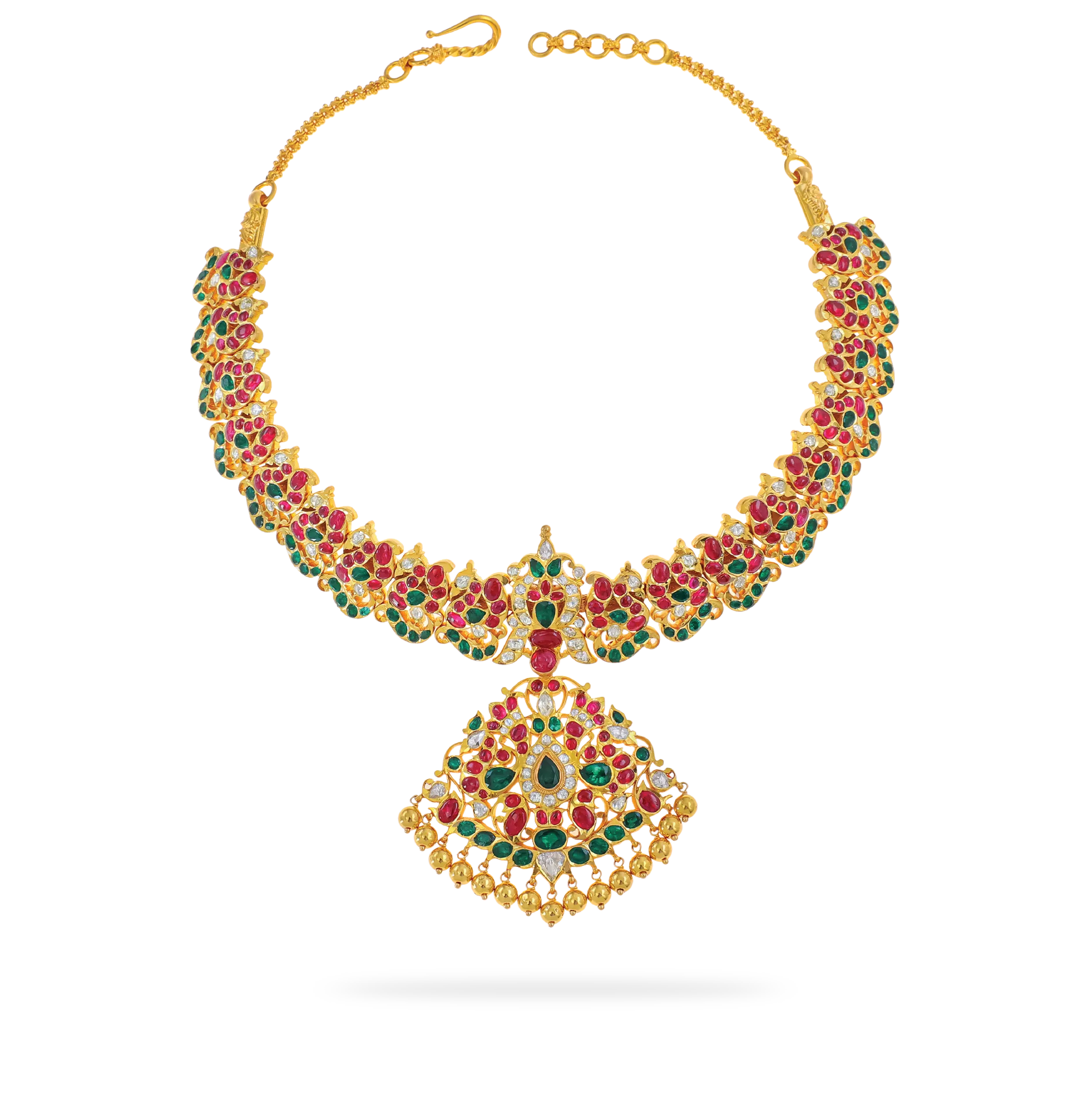
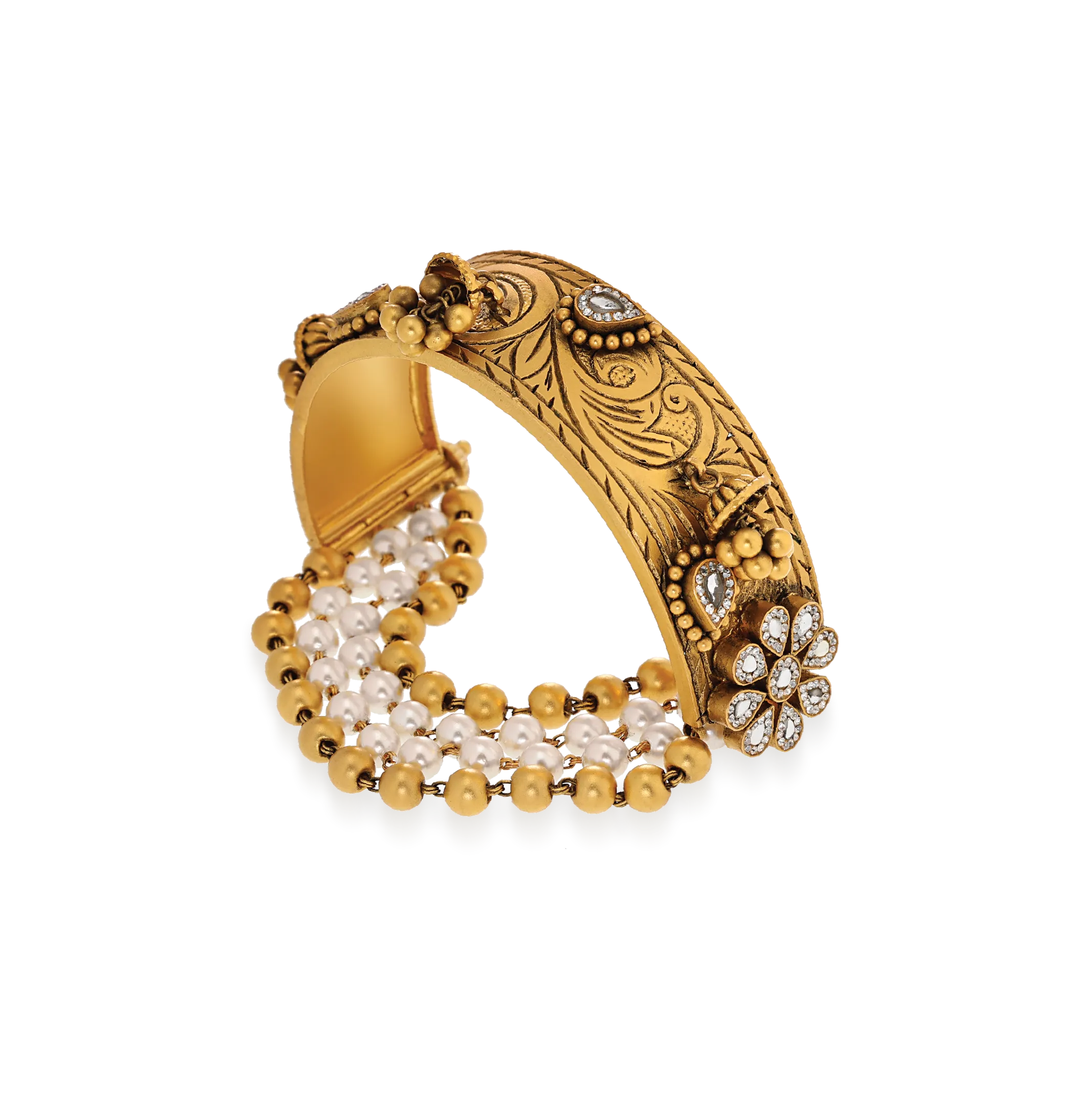
Traditional jewellery can bring family history and personal meaning into a reception outfit. Decide which piece carries the story, then style the gown and supporting accessories around it. Metal tone, motif, and scale should feel connected to the clothing without requiring an exact replica of every detail.
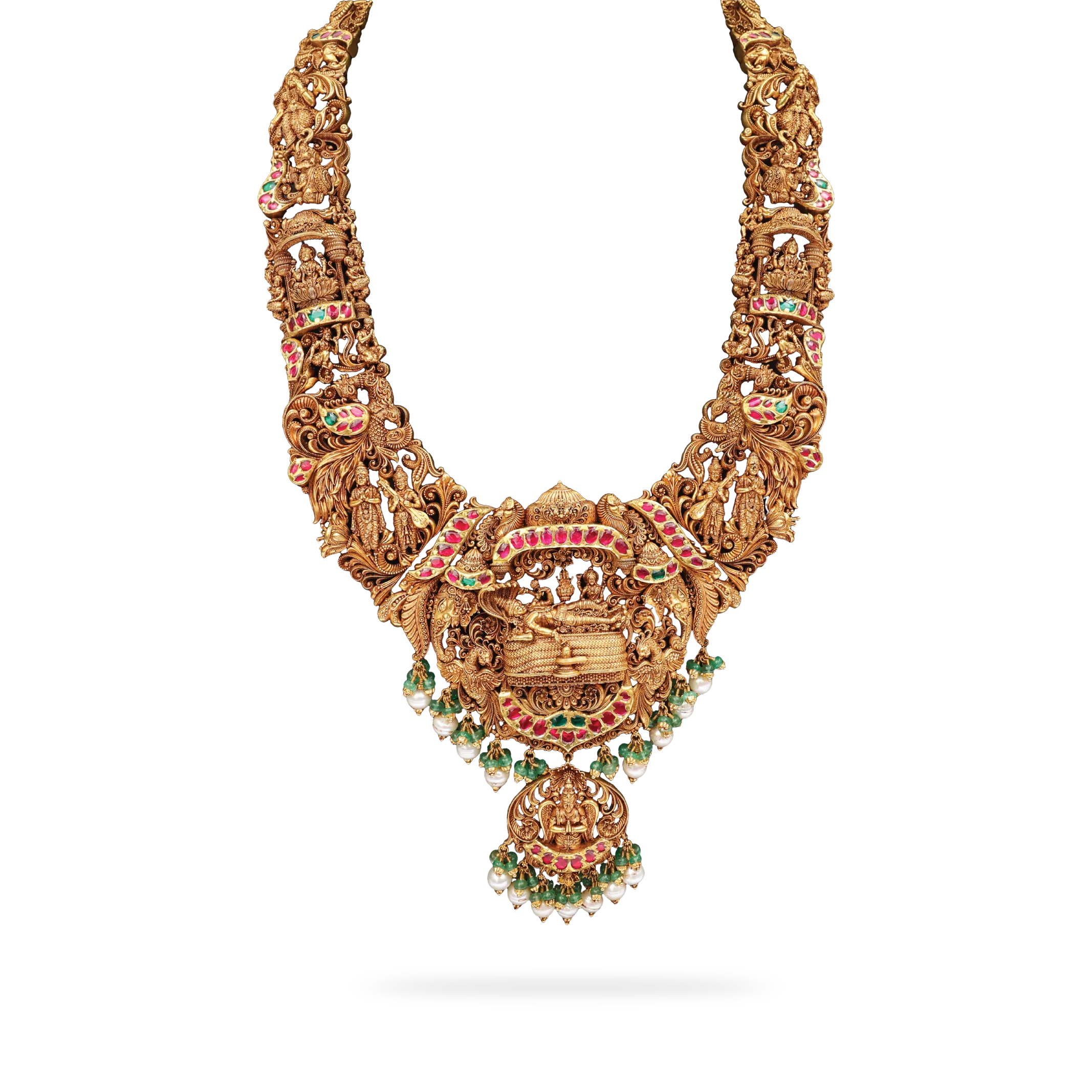
For broader inspiration, a guide to bridal shopping in Bengaluru discusses matching jewellery to outfits, understanding materials, comparing craftsmanship, and considering cultural traditions. Those checks are useful whether your heritage piece is antique, newly commissioned, or borrowed from family.
Conclusion
Choosing bridal jewellery for reception gown styling becomes simpler when you work from the gown outward: match the neckline, respect the fabric, choose a focal point, test the full look, and protect your comfort. The finished set should feel beautiful in photographs and natural enough to carry you through every conversation, toast, and dance.
Frequently Asked Questions
Should I choose my reception jewellery before or after my gown?
Choose the main jewellery after the gown, or at least once you know its neckline, color, fabric, and embellishment. This makes it easier to judge proportion and avoid buying pieces that disappear or compete with the dress.
Do I need a necklace with my reception gown?
No. A necklace is optional, especially with a high, halter, one-shoulder, or heavily embellished neckline. Earrings, a bracelet, or a hair accessory may complete the look more gracefully.
How many bridal jewellery pieces should I wear?
There is no fixed number, but most balanced looks have one focal piece and a few quieter supporting accents. Consider the gown, hairstyle, venue, and your comfort before adding another item.
Which metal is best for a white or ivory gown?
White gowns often work well with cool metals, while ivory can suit both cool and warm tones depending on its undertone. Compare the jewellery directly with the gown and existing rings rather than relying on general rules.
How can I keep bridal earrings comfortable all evening?
Choose a manageable weight, secure backing, and a shape that does not catch on your hair or veil. Wear the earrings during a trial for at least part of an evening so discomfort has time to appear.
Should my jewellery match my hair accessories exactly?
Exact matching is not necessary. Repeating a metal, finish, gemstone color, or design detail is usually enough to make the accessories feel connected while keeping the look personal.
Can I wear traditional jewellery with a modern reception gown?
Yes. A traditional necklace, bangle, or heirloom accent can look striking with a modern gown when it is given enough space. Keep the supporting pieces simpler and repeat one visual detail to connect the styles.
How to Choose Bridal Jewellery for Engagement Ceremony: A Complete Style Guide
10 minute read
Bridal jewellery for silk saree: A complete guide to choosing the perfect wedding look
10 minute read
Related blogs:
September 17, 2026
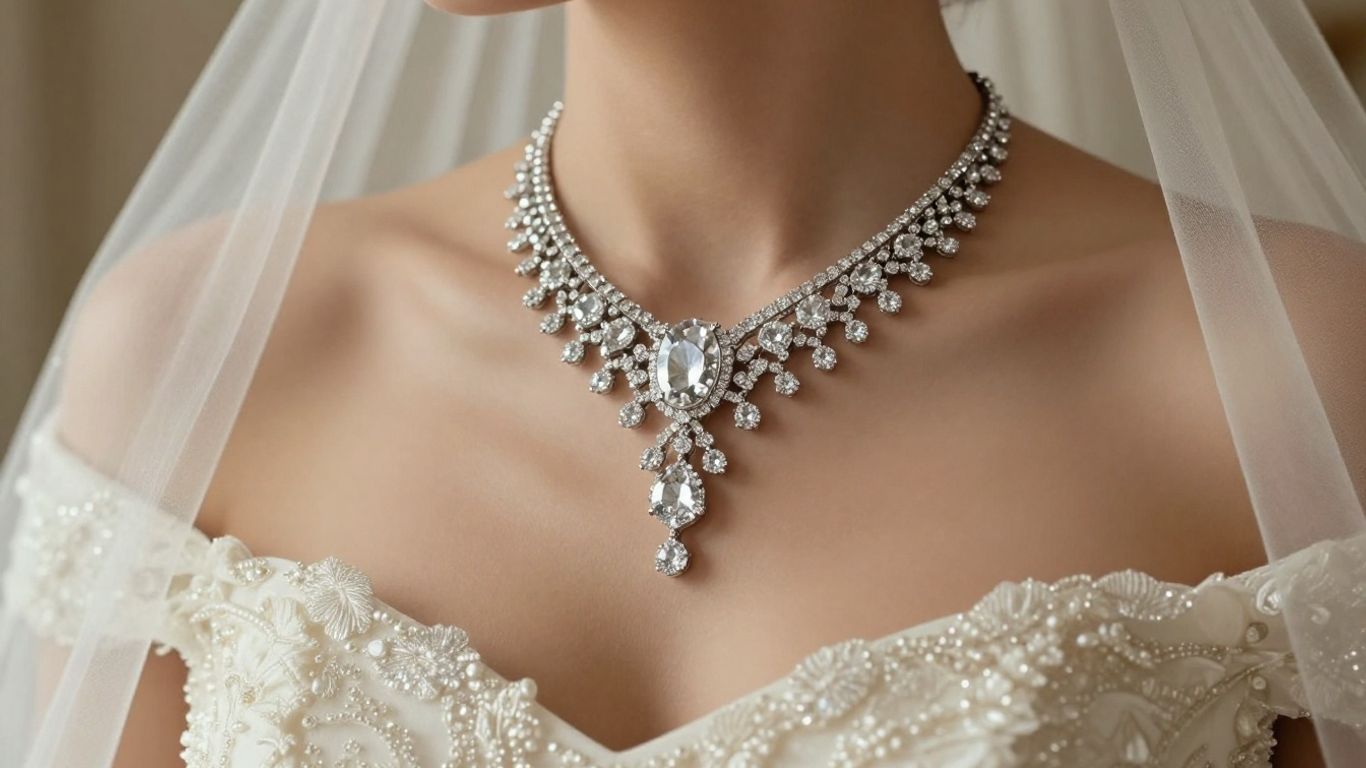
How to Choose the Perfect Diamond Necklace for Bride on Her Wedding Day
Read More
September 17, 2026
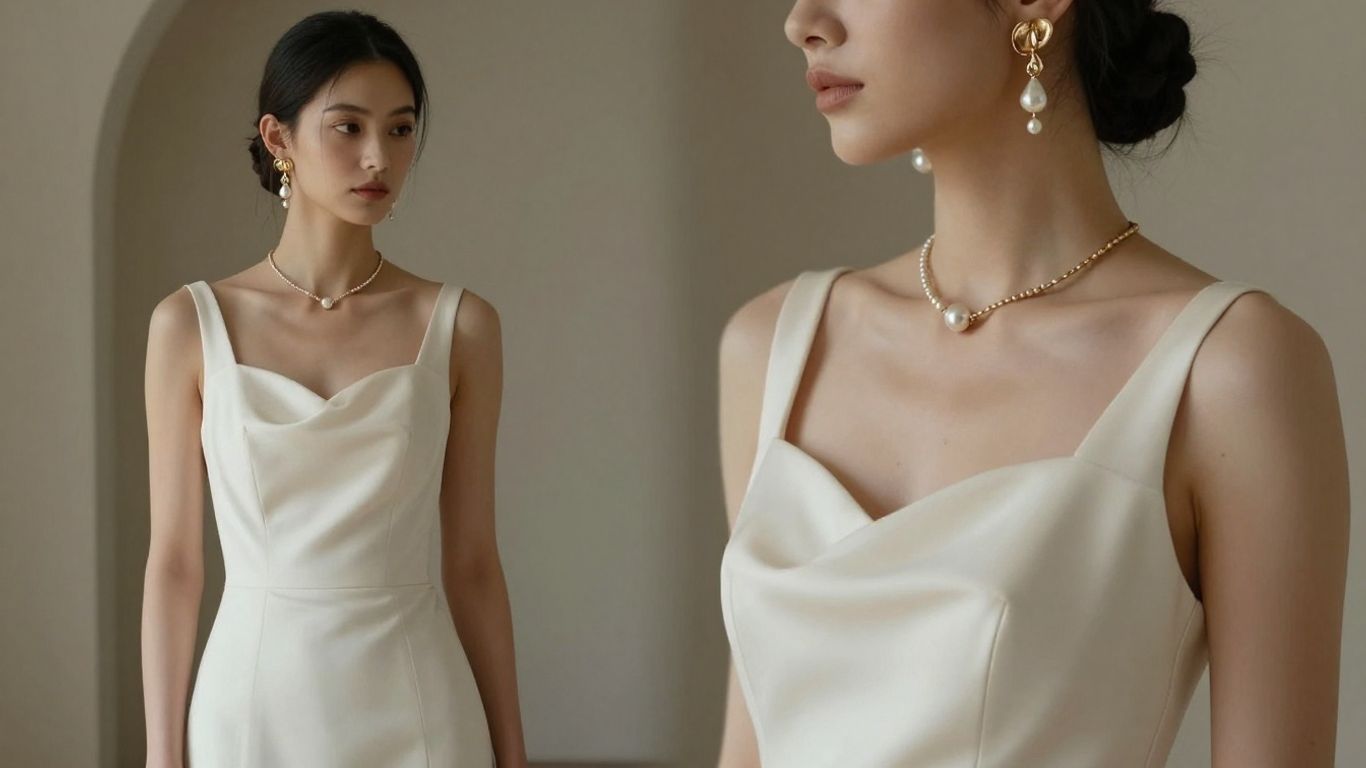
Wedding jewellery for modern brides: how to choose timeless pieces with contemporary style
Read More
September 17, 2026
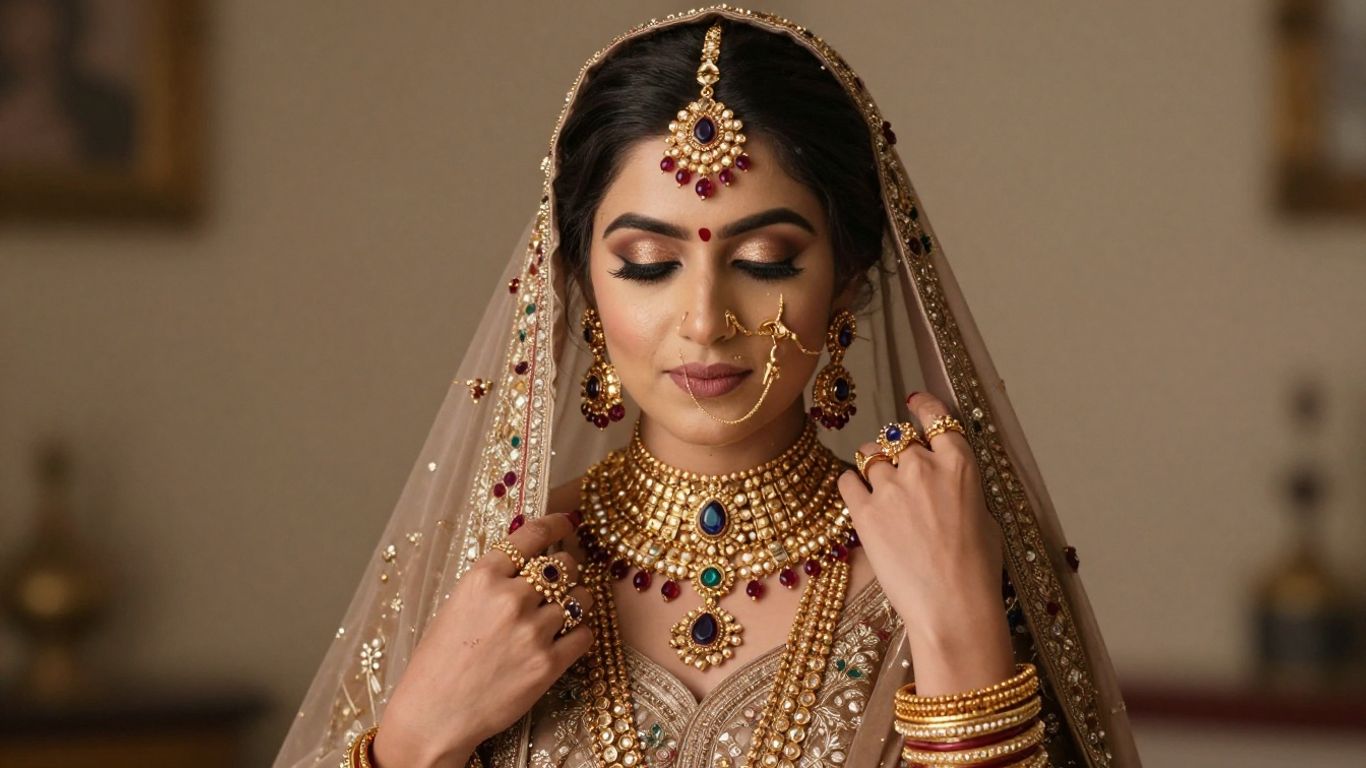
Wedding jewellery for traditional brides: A complete guide to choosing timeless bridal pieces
Read More
September 17, 2026
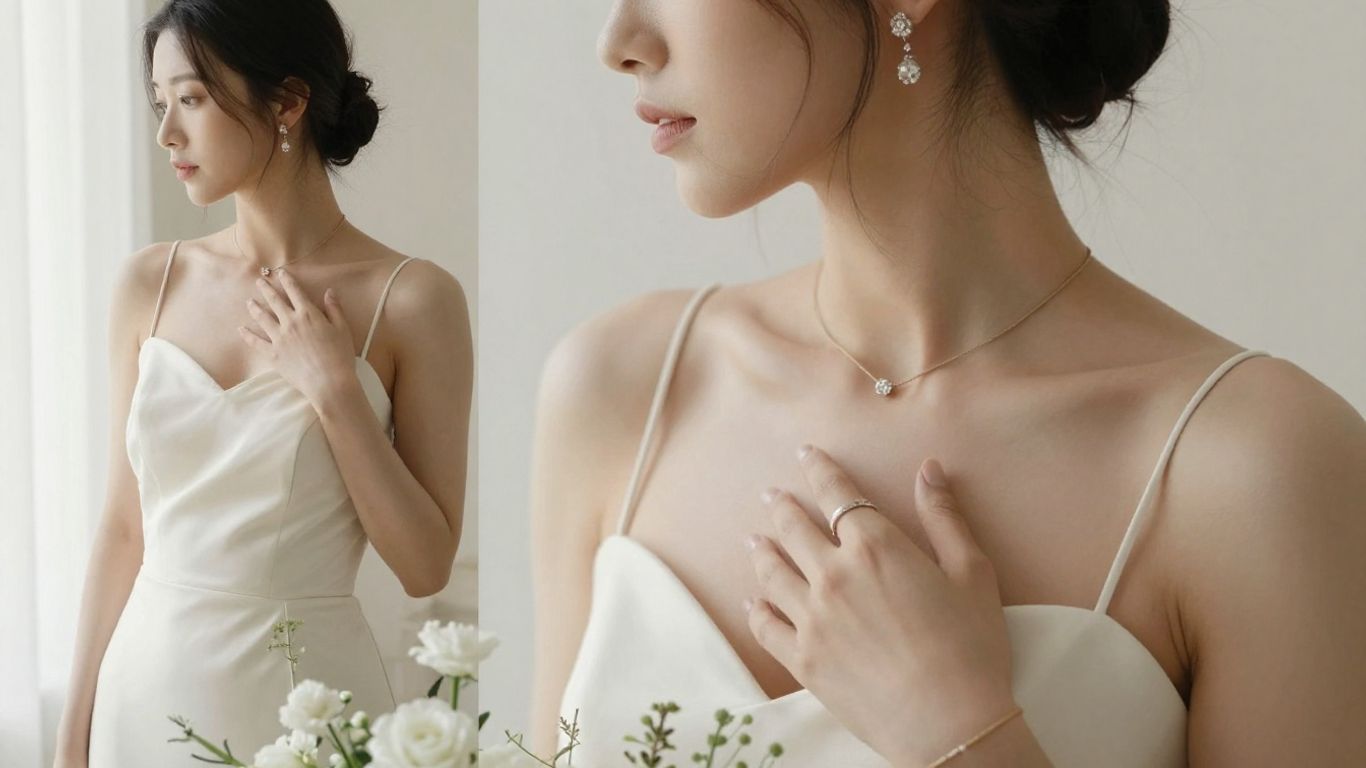
Wedding jewellery for minimalist brides: A complete guide to choosing timeless pieces
Read More









.webp)

.webp)