How to maintain diamond ring: A practical care guide
August 20, 2026 | 10 minutes read
Key Takeaways
A diamond ring stays beautiful when small habits protect both its stone and its setting. Regular cleaning, thoughtful storage, and timely repairs are more useful than trying to correct damage after it happens.
- Remove the ring before strenuous work, exercise, swimming, and chemical exposure.
- Handle it by the band so oils do not collect on the diamond.
- Clean it gently with mild soap, warm water, and a soft brush.
- Store it separately in a dry, secure, fabric-lined place.
- Arrange professional inspections when prongs, stones, or the band look uncertain.
Understand what affects your diamond ring’s condition
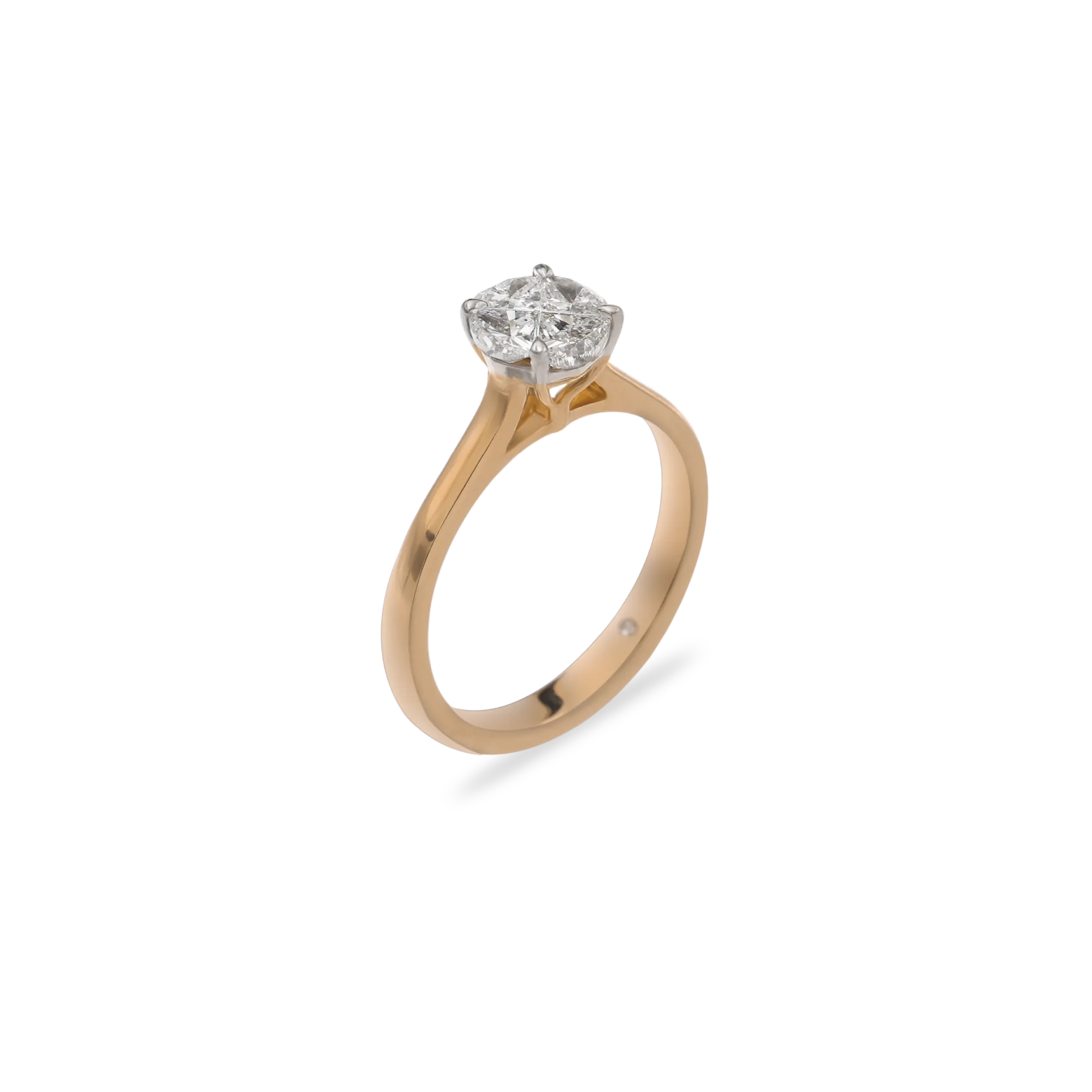
Learning how to maintain diamond ring jewelry starts with recognizing that the diamond is only one part of the piece. The band, prongs, gallery, and any accent stones all experience daily wear . Dust and product residue can hide small problems, while knocks can gradually affect the setting. A calm, consistent routine makes those changes easier to spot.
How everyday wear causes buildup and scratches
Skin oils, hand cream, soap, and cooking residue can settle beneath the stone and around the setting. Even a hard diamond can collect a film that reduces the way it returns light. The metal is more vulnerable to dents and scratches, particularly when the ring meets tools, countertops, or other jewelry. A quick visual check at the end of the day can reveal buildup before it becomes stubborn.
Why the setting and band need as much attention as the diamond
The setting holds the stone in place, so a loose prong or worn edge deserves as much attention as a dull-looking diamond. Check the underside of the ring, where debris often gathers and where thinning metal may be less obvious. A band that has changed shape can also put pressure on the setting. The setting is the ring’s security system, not merely a decorative frame.
How metal type and ring design affect maintenance
Gold, platinum, and other jewelry metals respond differently to scratches, polishing, and everyday contact. A high, open setting may catch on clothing, while pavé or closely set accent stones can collect fine particles between their edges. Delicate bands usually need more care around heavy lifting and impact than substantial designs. If you are choosing a new style, practical guidance on timeless ring design can help you weigh appearance alongside durability.
When ring insurance and documentation are worth considering
Insurance and accurate documentation may be sensible when the ring has substantial financial or sentimental value. Keep purchase records, laboratory reports, appraisal documents, and clear photographs together in a secure place. Update records when the ring is substantially altered or resized, and check what your policy actually covers. Documentation also helps a jeweler understand the original stone and setting if repair becomes necessary.
Build a safe daily care routine
Good daily care is mostly about knowing when the ring should come off. Taking it off for a few minutes is preferable to exposing it to a hard impact, a sticky product, or a drain. Create a predictable place for it before activities begin, rather than setting it down wherever you happen to be. These habits protect the ring and reduce the chance of misplacing it.
When to remove your ring during daily activities
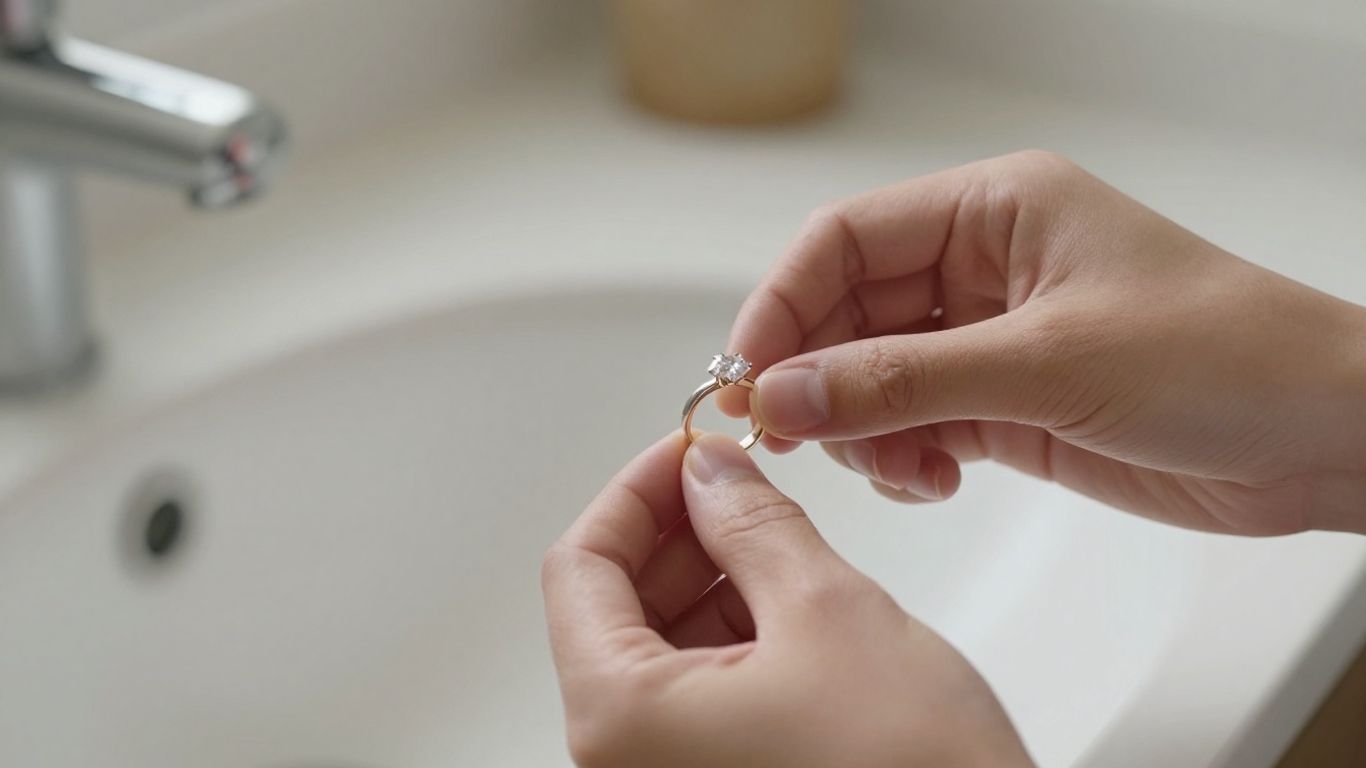
Remove the ring before lifting weights, gardening, moving furniture, kneading dough, or doing repairs. Pressure can bend a band or catch a prong, even when the activity seems routine. Sleeping and showering can also create avoidable snags and product buildup. Keep a small ring dish near the places where you most often remove it.
How to protect it from lotions, cosmetics, and household chemicals
Apply lotions and cosmetics before putting the ring back on, allowing residue to settle or absorb first. Household cleaners can leave deposits or affect some metals and finishes, so remove the ring before cleaning. Chlorine and other strong chemicals deserve particular caution. For a broader routine covering makeup, lotions, swimming, and chores, this engagement ring care guide offers a useful companion reference.
Why handling the ring by the band matters
Touching the diamond repeatedly transfers oil to its top and pavilion, where it can make the stone look cloudy. When removing or replacing the ring, hold the band between your fingers instead. Avoid pulling at the setting or lifting the ring by a delicate side detail. This simple adjustment keeps the stone cleaner and reduces unnecessary pressure on its mounting.
How to check for loose stones and damaged prongs
Under good light, look for a prong that seems shorter, lifted, or rough against fabric. Gently listen for movement only if you can do so without shaking the ring near a drain; a clicking stone is a reason to stop wearing it. Look for a gap, a bent band, or a stone that no longer sits level. Do not attempt to tighten anything at home.
Clean a diamond ring at home
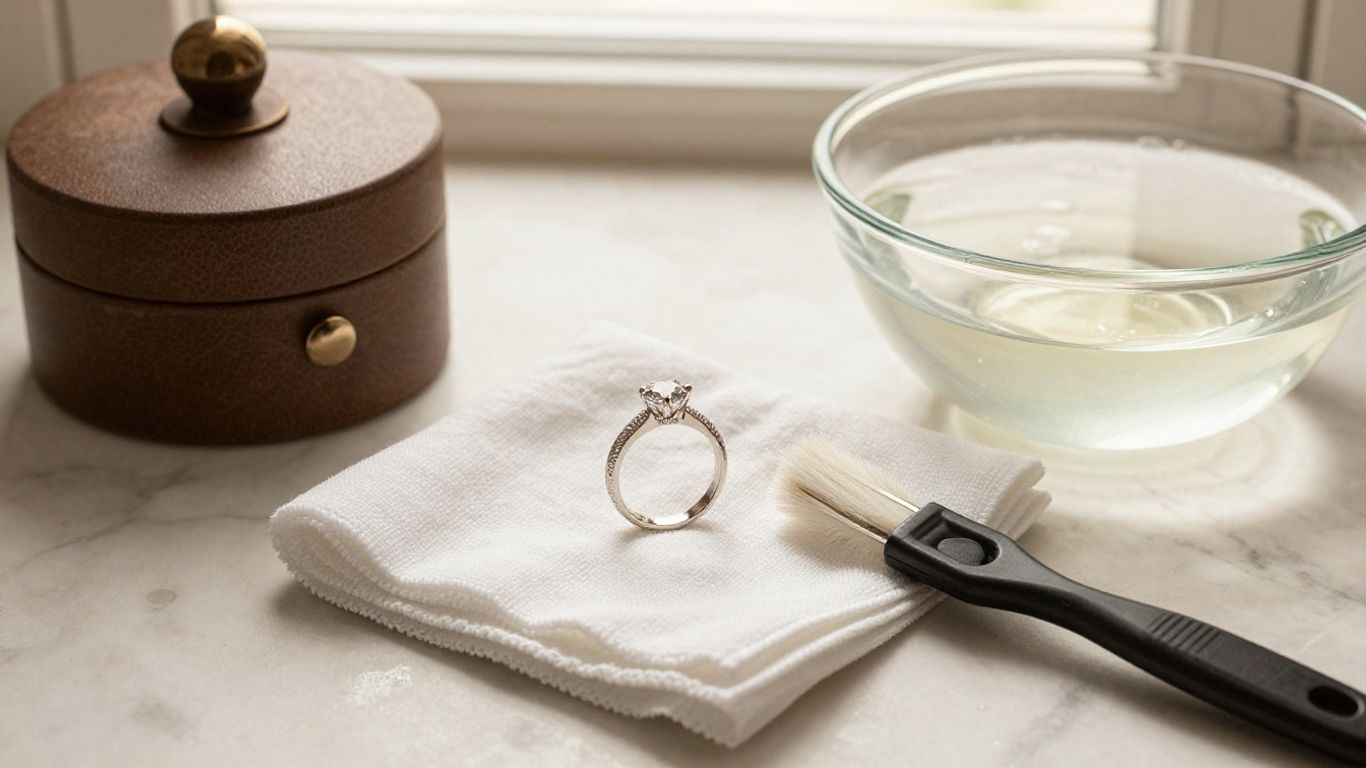
Home cleaning is appropriate when the ring is structurally sound and needs ordinary removal of oils and residue. Use a simple method, work over a safe surface, and allow enough time to rinse thoroughly. If you already suspect damage, cleaning should wait until a jeweler has examined the piece. Gentle consistency is safer than aggressive scrubbing.
Which mild cleaning solutions are safe
A small amount of mild dish soap in warm, not hot, water is a practical choice for many diamond rings. Avoid bleach, abrasive powders, strong solvents, and unknown jewelry dips unless a professional has confirmed they suit the ring’s materials. Some designs include gemstones or treatments that require different handling. The diamond jewellery cleaning guide also explains gentle soaking, brushing, rinsing, and drying for precious pieces.
How to use a soft brush without damaging the setting
Soak the ring briefly, then use a clean, very soft toothbrush to work around the underside and between the prongs. Let the bristles do the work; pressing hard can catch delicate details or push debris farther into a setting. Keep the brush reserved for jewelry and inspect it first for stiffness or trapped grit. Move slowly around accent stones rather than scrubbing across them.
How to rinse and dry the ring properly
Rinse the ring in a bowl of clean water or over a securely covered drain. Running water can carry a small stone away before you notice a problem. Pat the piece with a lint-free cloth, then let it air-dry fully before wearing it. Dry between and beneath the setting, where moisture can linger.
Cleaning mistakes that can dull or damage the ring
Ultrasonic machines, steam, boiling water, and abrasive cloths are not automatically safe for every ring. They may loosen a stone, mark a softer metal, or affect an included gemstone. Never use a household chemical simply because it cuts grease elsewhere. If you want more background on gentle methods for gold pieces, this gold jewelry cleaning advice can help you compare what to avoid.
Store your ring to prevent damage
Storage matters most during the moments when the ring is not on your hand. A stable place prevents falls, scratches, and the frantic search that follows an improvised storage decision. Keep the ring away from loose objects and from areas where it can be swept into a drain or discarded with tissue. A modest setup is usually enough if it is used consistently.
Choosing a secure place for everyday storage
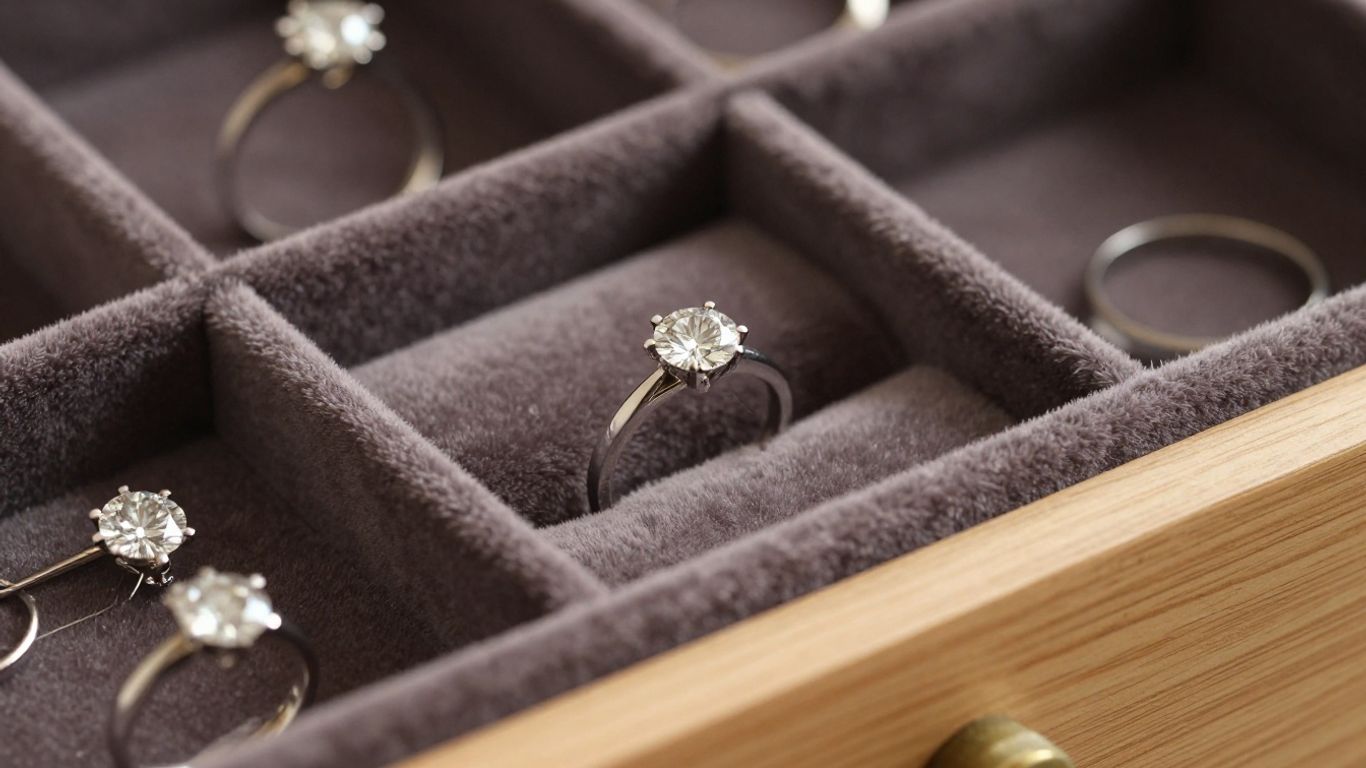
Choose a cool, dry location away from sinks, windowsills, and busy countertops. A small covered box or a dedicated drawer keeps the ring contained when you are cooking, cleaning, or sleeping. If several people share the space, make sure everyone knows the ring’s storage spot. Consistency is more protective than an elaborate container that you rarely use.
How to prevent scratches from other jewelry
Store the ring in its own compartment or pouch rather than dropping it into a mixed jewelry pile. Metal edges and stones can rub against one another, and chains can catch on prongs. Keep the diamond face from pressing against hard surfaces. Separating pieces also makes it easier to notice whether a ring has changed shape.
When a fabric-lined box or ring dish is appropriate
A fabric-lined box is best for longer storage because it cushions the ring and shields it from dust. A ring dish works well for short periods in a familiar, low-traffic place, such as beside a bedroom lamp. Choose one with raised edges and enough depth that the ring cannot slide away. For more ideas about containers and environmental controls, see this bridal jewelry storage guide.
Protecting the ring from moisture, heat, and sunlight
Avoid storing the ring in a humid bathroom, near a heater, or in direct sunlight for long periods. Heat and moisture can affect finishes, packaging, and some accompanying stones, even when the diamond itself remains stable. Let a damp ring dry before putting it away. Keep documentation in a separate, dry location rather than inside a box that may be exposed to spills.
Adjust care for work, exercise, and travel
A ring that is safe during a quiet afternoon may be vulnerable during a shift, workout, or trip. Think about impact, chemicals, loss, and temperature changes before deciding to wear it. Travel adds unfamiliar sinks, hotel rooms, beaches, and hurried routines. Planning where the ring will go can prevent a rushed decision later.
Why to remove your ring before sports and physical work
Sports and physical work expose the band and setting to impact, compression, and snagging. Gloves can catch on prongs, while weights and tools can flatten or distort a band. Remove the ring before those activities and place it in a secure container, not a loose pocket. If removing it is not practical, reconsider whether the activity can be done safely with jewelry on.
How swimming pools, hot tubs, and beaches affect jewelry
Pools and hot tubs expose jewelry to chemicals and make a lost ring difficult to recover. At a beach, sand can work into small spaces and the ring can slip off more easily in cold water. Put the ring away before entering the water, even if you plan to keep your hands above the surface. A secure hotel safe is preferable to a towel or swimsuit pocket.
Packing and wearing your ring safely while traveling
For travel, use a compact padded case that closes securely and keep it in your carry-on rather than checked luggage. Avoid leaving the ring beside a hotel sink or wrapped in tissue, where it can be forgotten. Consider wearing it only for planned occasions and storing it during transit. Carry a photograph and relevant documentation separately from the ring.
What to do if the ring is exposed to harsh chemicals
Remove the ring from the chemical exposure as soon as it is safe to do so. Rinse it with clean water if the substance and the ring’s materials make that appropriate, then dry it gently. Do not polish, scrape, or apply another chemical to counteract the first one. Have a jeweler assess any discoloration, looseness, or surface change before regular wear resumes.
Schedule professional inspections and cleaning
Home care removes ordinary residue, but it cannot reliably reveal wear inside a setting. A professional inspection gives a trained jeweler the chance to examine areas that are difficult to see or test safely at home. Keep a record of visits and repairs with the ring’s other documents. The right schedule depends on design, wear, and the jeweler’s advice.
How often to have the setting checked
Many owners choose a periodic inspection, often around every six to twelve months, while heavily worn or delicate rings may need more frequent attention. Follow any schedule supplied by the jeweler who made or sold the ring. Do not wait for a scheduled visit if a stone moves, a prong catches, or the band looks bent. A prompt check can prevent a small repair from becoming a lost-stone problem.
What a jeweler examines during an inspection
A jeweler may examine prongs, bezels, channels, the underside of the setting, the band’s thickness, and the alignment of the stones. They can also look for worn edges, cracks, looseness, and signs that the ring no longer fits as it should. Ask what was checked and whether any work is recommended. Clear notes make it easier to monitor gradual changes over time.
When professional cleaning is better than home cleaning
Professional cleaning is the safer choice when the ring has intricate pavé work, persistent buildup, unusual materials, or a suspected loose stone. It is also useful before an inspection because a clean setting is easier to evaluate. Ask what cleaning method will be used and whether the piece should be repaired first. Cleaning should never substitute for a structural check.
Signs that the ring needs repair or resizing
A ring that spins constantly, pinches, slips over the knuckle, or leaves unusual marks may need a fit assessment. Repair is also worth arranging when prongs snag fabric, the band is visibly thinner, or a stone sits crooked. Avoid postponing work because the diamond still looks bright. Surface sparkle does not confirm that the mounting is secure.
Respond to common diamond ring problems
Small problems become urgent when the ring continues to be worn without assessment. If something feels different, remove it and place it somewhere safe while you decide what to do. Do not test a suspected loose stone repeatedly or try to reshape the band with household tools. A jeweler can recommend the least disruptive repair after examining the piece.
What to do if a diamond feels loose
Stop handling the ring over open sinks, floors, or outdoor ground. Place it in a small fabric-lined container and contact a jeweler promptly. Avoid cleaning it, wearing it, or pressing the stone back into place. If the stone has not fallen out, keeping the ring still may improve the chance of preserving it until the inspection.
How to handle a bent prong or damaged band
A bent prong can catch on clothing and may no longer hold the diamond correctly. A damaged band can also place uneven pressure on the setting. Remove the ring, keep all visible pieces together, and arrange professional repair rather than bending the metal back yourself. Photograph the damage before handing the ring over if documentation is useful for your records.
Steps to take after losing a stone
Search the immediate area carefully without sweeping or vacuuming until you have checked the floor. Retrace recent movements, look inside clothing and bags, and contact the jeweler as soon as possible. Review your documentation and insurance policy, but do not assume coverage without checking its terms. If the setting is damaged, preserve the empty ring and avoid wearing it.
When to stop wearing the ring until it is repaired
Stop wearing the ring whenever a stone moves, a prong is bent, the band is cracked or badly distorted, or the ring catches repeatedly on fabric. Pain, swelling, or a sudden change in fit is another reason to remove it. Store it securely and seek advice before cleaning or wearing it again. Caution is inexpensive compared with replacing a missing diamond or repairing preventable damage.
Conclusion
A diamond ring needs steady, gentle attention rather than complicated treatment. Remove it when conditions are rough, clean it with mild materials, store it separately, and respond quickly to changes in the setting or fit. Those simple habits help preserve both its sparkle and the memories attached to it.
Frequently Asked Questions
How often should I clean a diamond ring at home?
A gentle home cleaning every week or two can help remove ordinary oils and residue, though the ideal rhythm depends on how often the ring is worn and what it encounters.
Can I wear my diamond ring in the shower?
It is better to remove it before showering because soap and conditioner can build up around the setting, and a wet ring is easier to drop or lose.
Should I sleep with a diamond ring on?
Removing it before sleep reduces snagging, pressure on the band, and the accumulation of skin oils and bedding fibers around the setting.
Is it safe to use toothpaste to clean a diamond ring?
No. Toothpaste can contain abrasive particles that scratch or wear jewelry metals, so use mild soap and warm water instead.
What should I do if my ring is too tight?
Remove it if possible without force and ask a jeweler to assess the fit. Swelling, heat, and discomfort can make a tight ring more difficult to remove later.
Can a diamond ring go in an ultrasonic cleaner?
Not every ring is suitable for ultrasonic cleaning. Loose stones, delicate settings, treated gems, and certain designs may be damaged, so ask a jeweler first.
How do I keep a diamond ring from getting scratched in storage?
Store it alone in a soft-lined compartment or pouch, away from other jewelry, hard surfaces, and loose objects that could rub against the band or stone.
Jewellery care after wedding: A complete guide to cleaning, storing, and protecting your bridal pieces
10 minute read
How to store bridal jewellery: A complete guide to protecting every precious piece
10 minute read
Related blogs:

September 17, 2026
How to Choose the Perfect Diamond Necklace for Bride on Her Wedding Day
Read More

September 17, 2026
Wedding jewellery for modern brides: how to choose timeless pieces with contemporary style
Read More

September 17, 2026
Wedding jewellery for traditional brides: A complete guide to choosing timeless bridal pieces
Read More

September 17, 2026
Wedding jewellery for minimalist brides: A complete guide to choosing timeless pieces
Read More










.webp)





.webp)