How to choose bridal bracelets for wedding day elegance
September 20, 2026 | 10 minutes read
Key Takeaways
A bridal bracelet should feel like a natural part of your wedding look rather than an afterthought. The best choice balances sparkle, proportion, comfort, and the character of your dress.
- Choose a bracelet style that suits your personal aesthetic and gown.
- Coordinate metal tones and sparkle levels with your other jewelry.
- Measure carefully and prioritize a secure, comfortable fit.
- Consider your venue, season, and wedding-day schedule.
- Invest in quality and care for the bracelet beyond the ceremony.
Understand bridal bracelet styles
Bridal bracelets for wedding celebrations range from barely-there chains to elaborate cuffs covered in stones. Start by noticing what kind of visual weight feels right for you, then consider how the bracelet will sit beside your bouquet, ring, and sleeve. A beautiful piece should add polish without making your wrist feel crowded.
Tennis bracelets for timeless sparkle
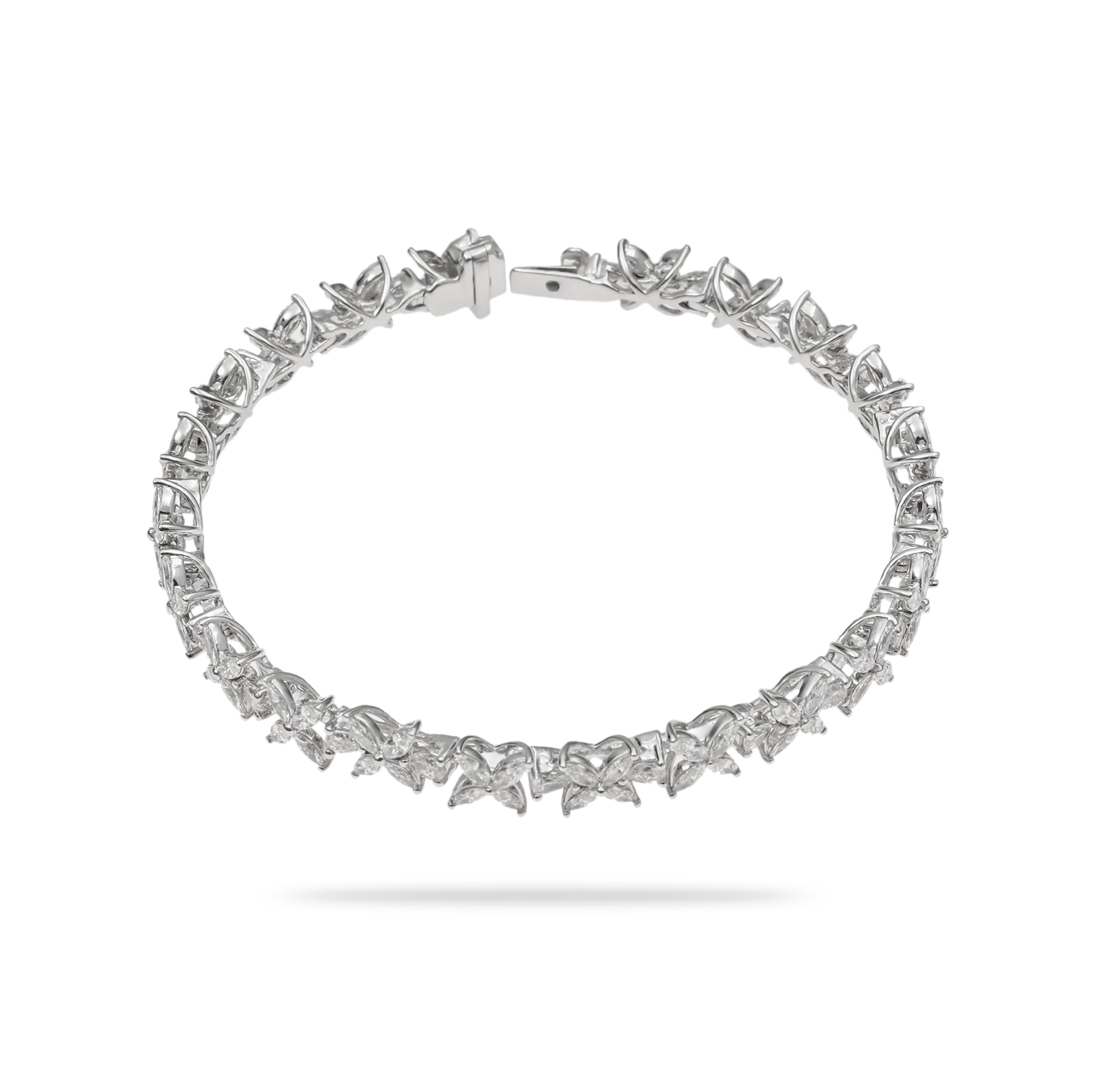
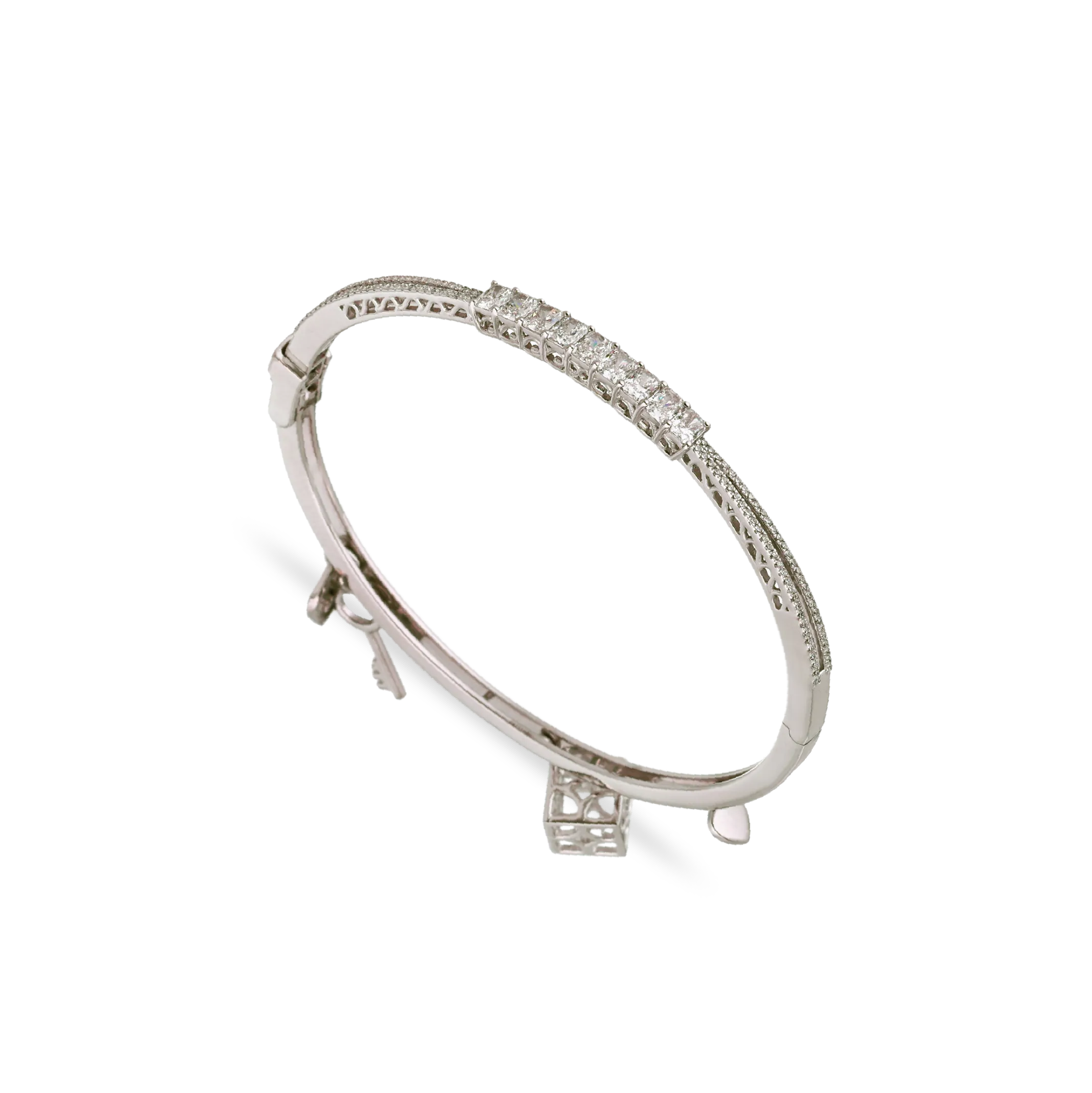
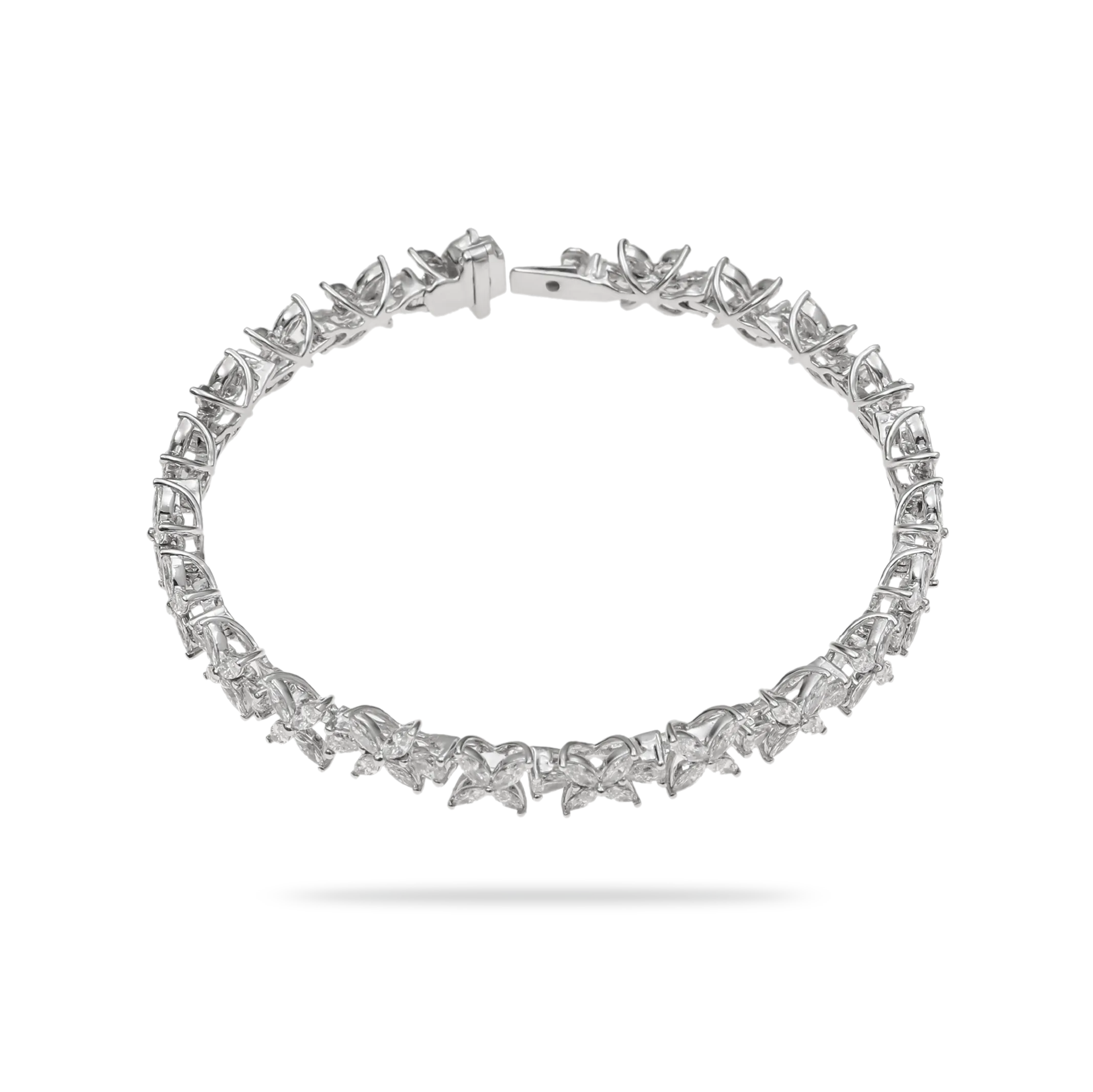
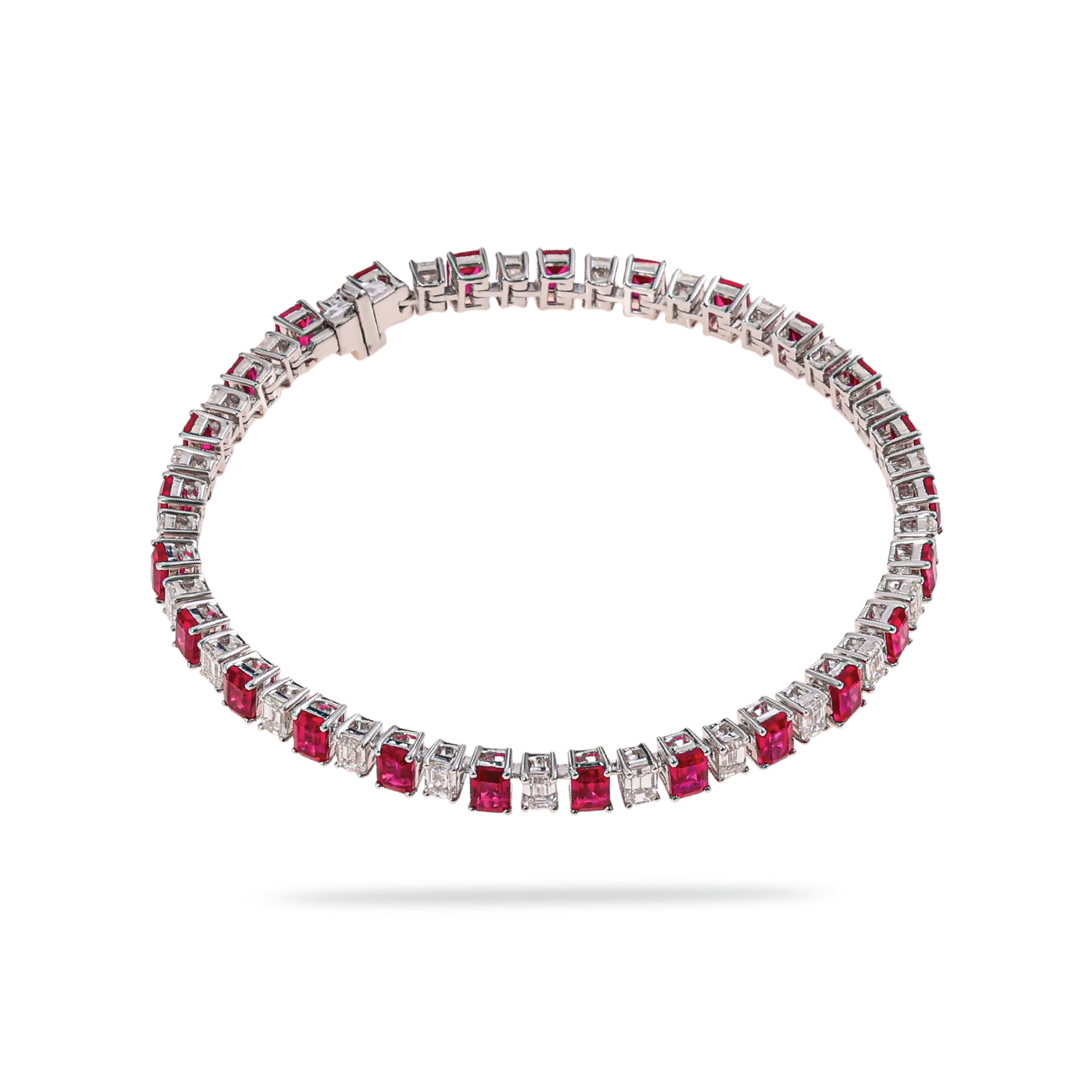
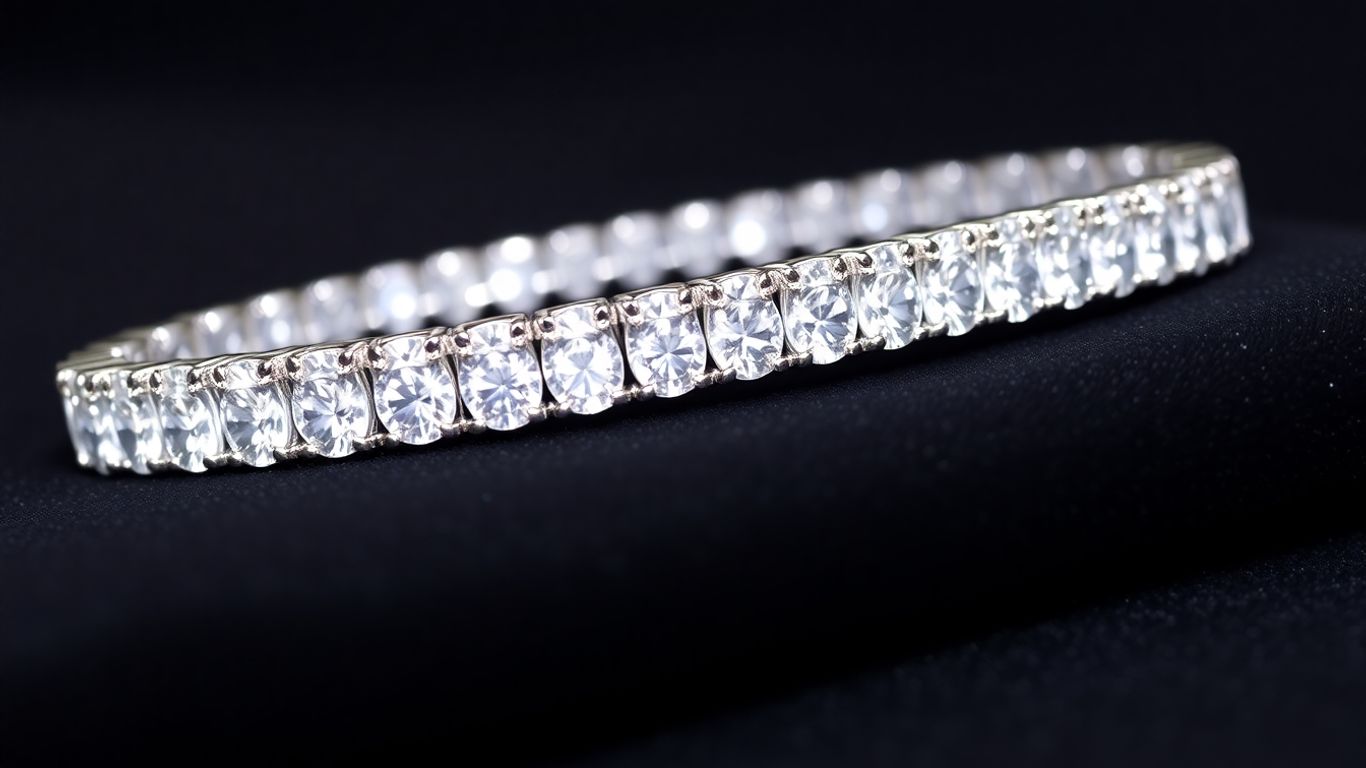
A tennis bracelet offers an even line of stones that catches light with every movement. It works especially well when the rest of your jewelry is refined, since its continuous sparkle can stand on its own without feeling overly ornate. Choose a slim setting for a quiet glow or a wider design when the gown and venue call for more drama.
Pearl bracelets for classic and romantic looks
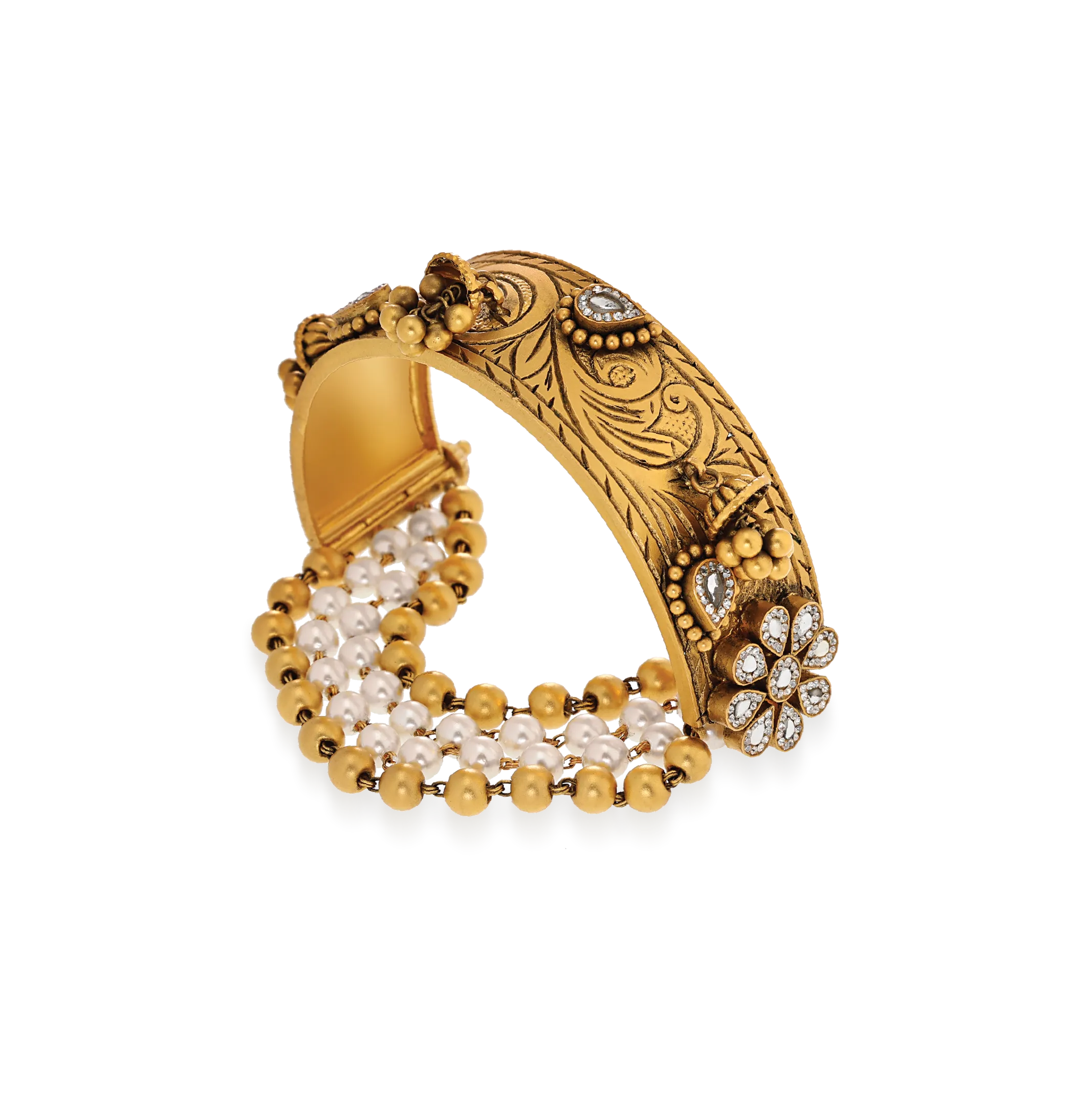
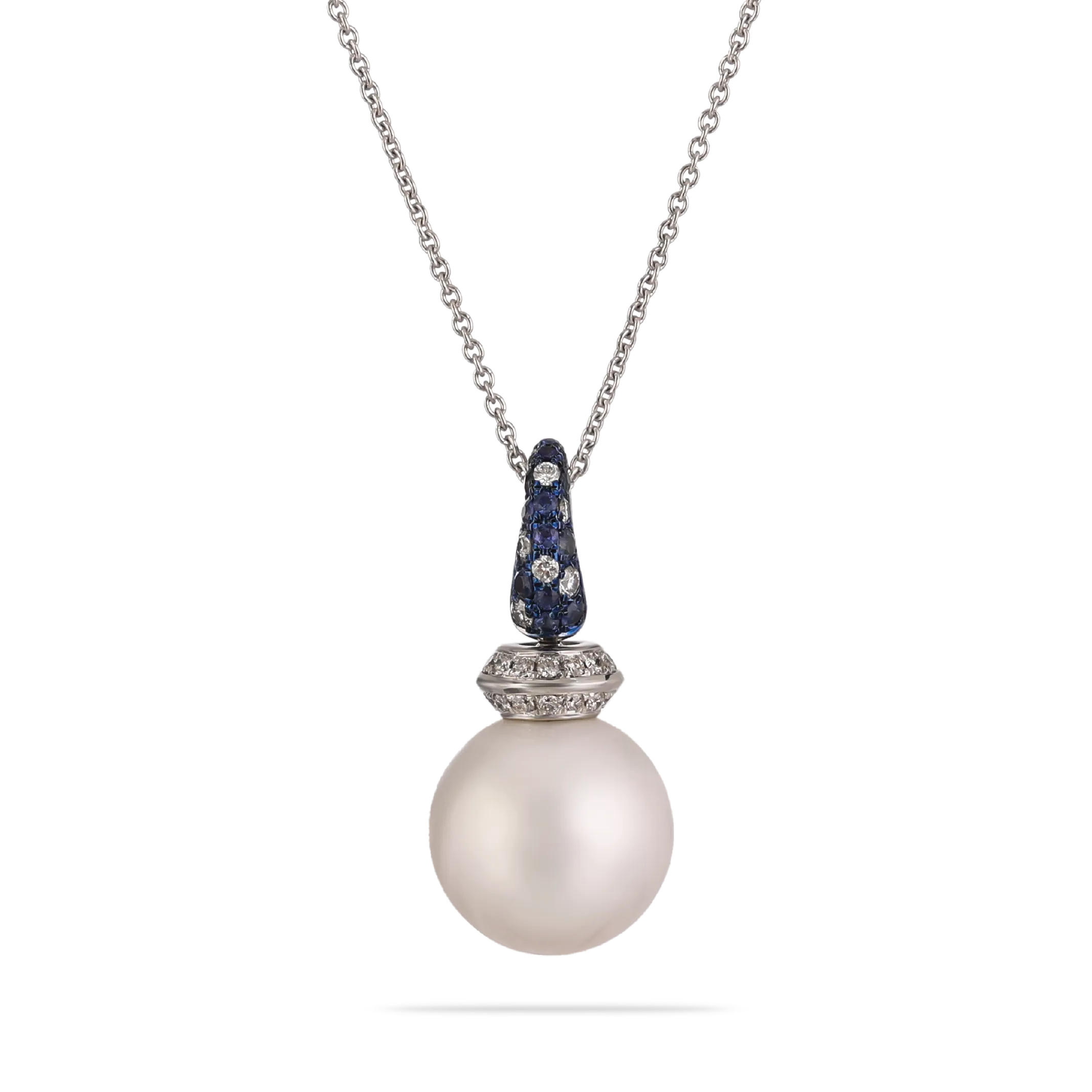
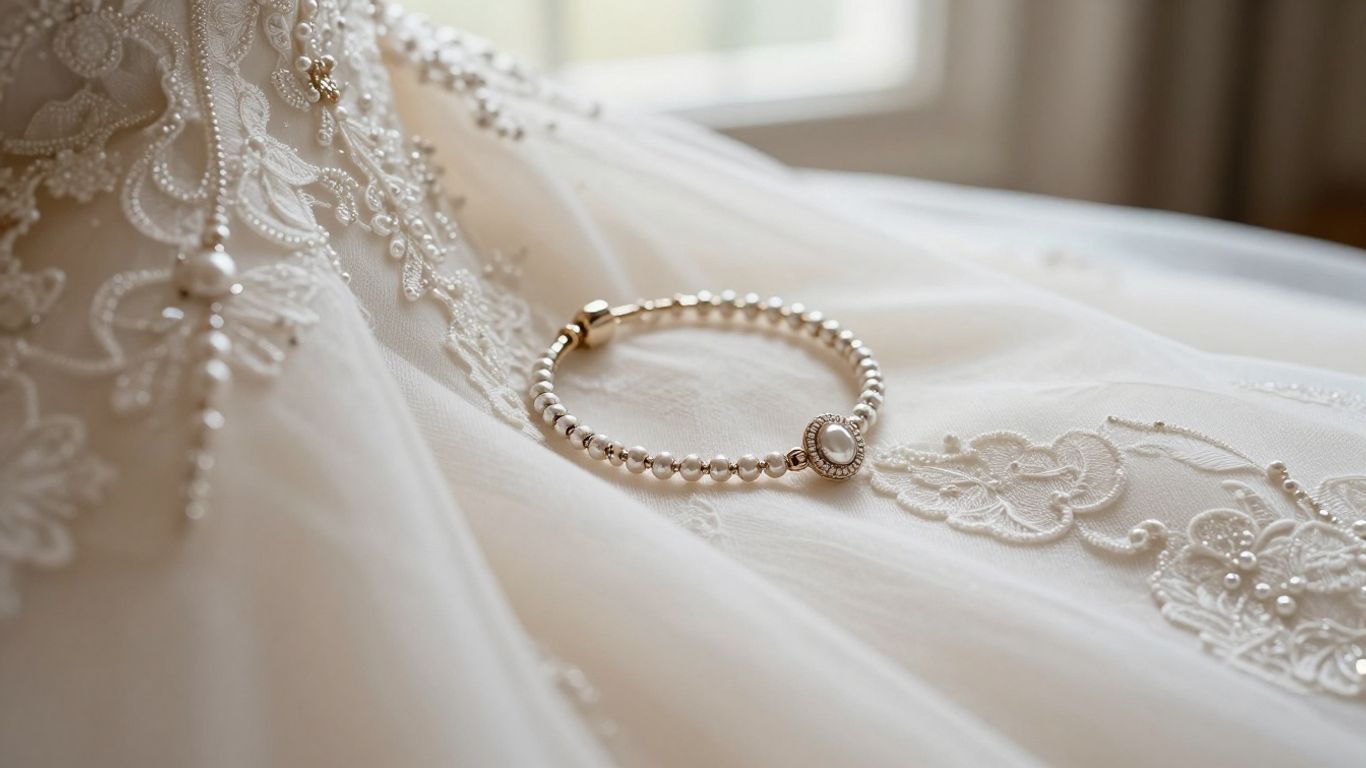
Pearls bring softness and a gentle sense of tradition to a bridal outfit. A single strand can suit a vintage or romantic gown, while pearls mixed with crystals or delicate metal details may feel more current. Look at the size and luster of the pearls in relation to your dress embellishment so the bracelet feels intentional rather than too sweet.
Cuff and bangle bracelets for modern brides
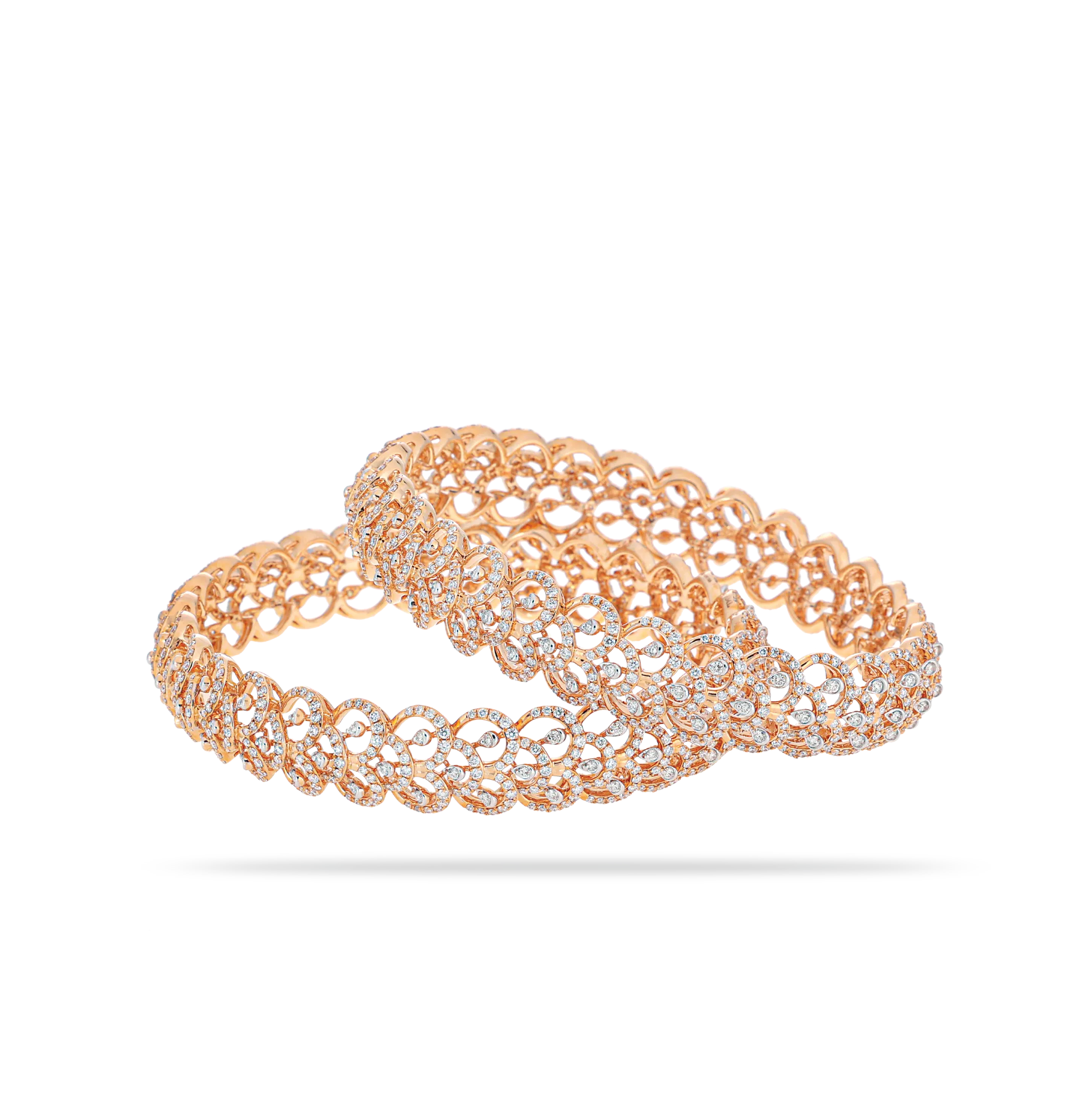
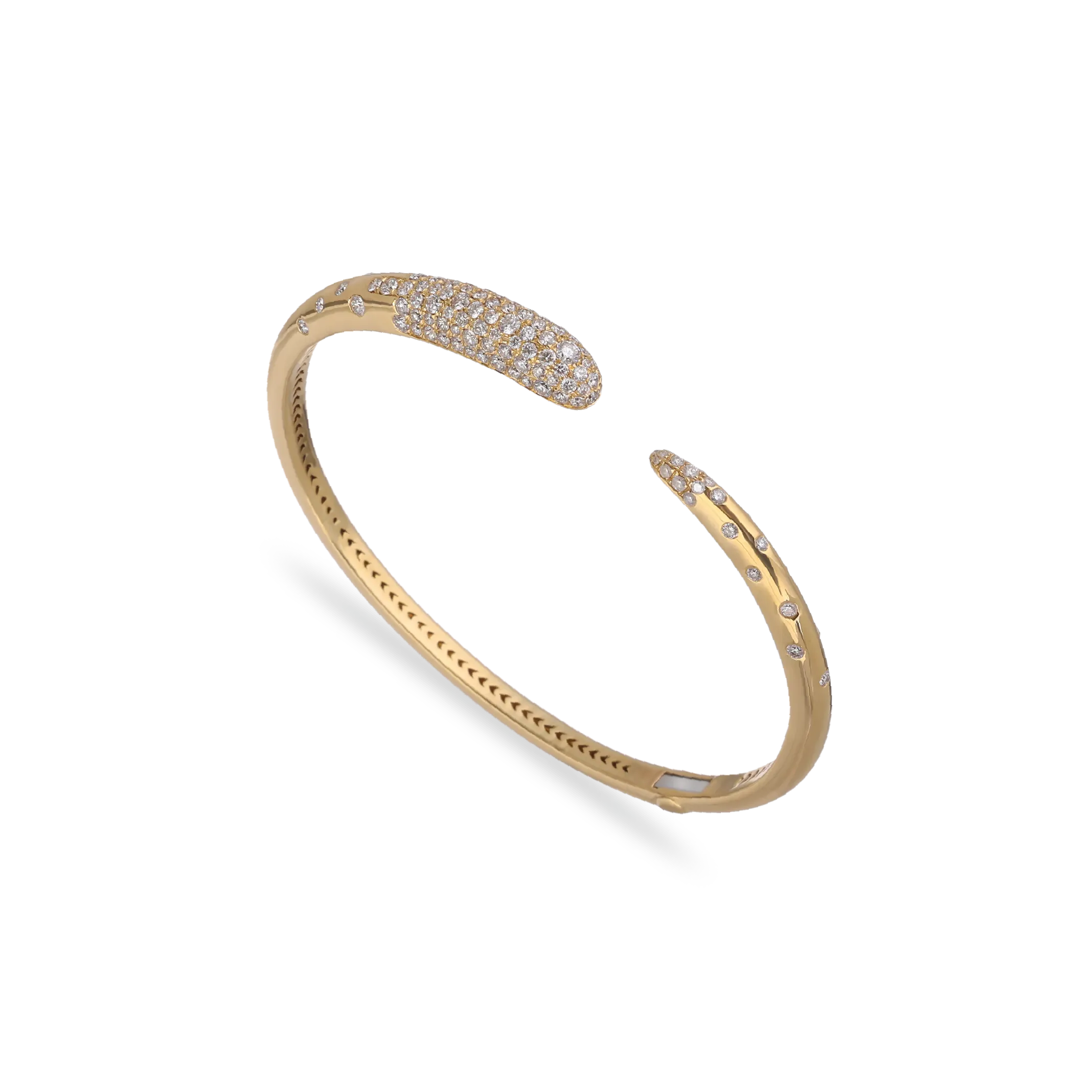
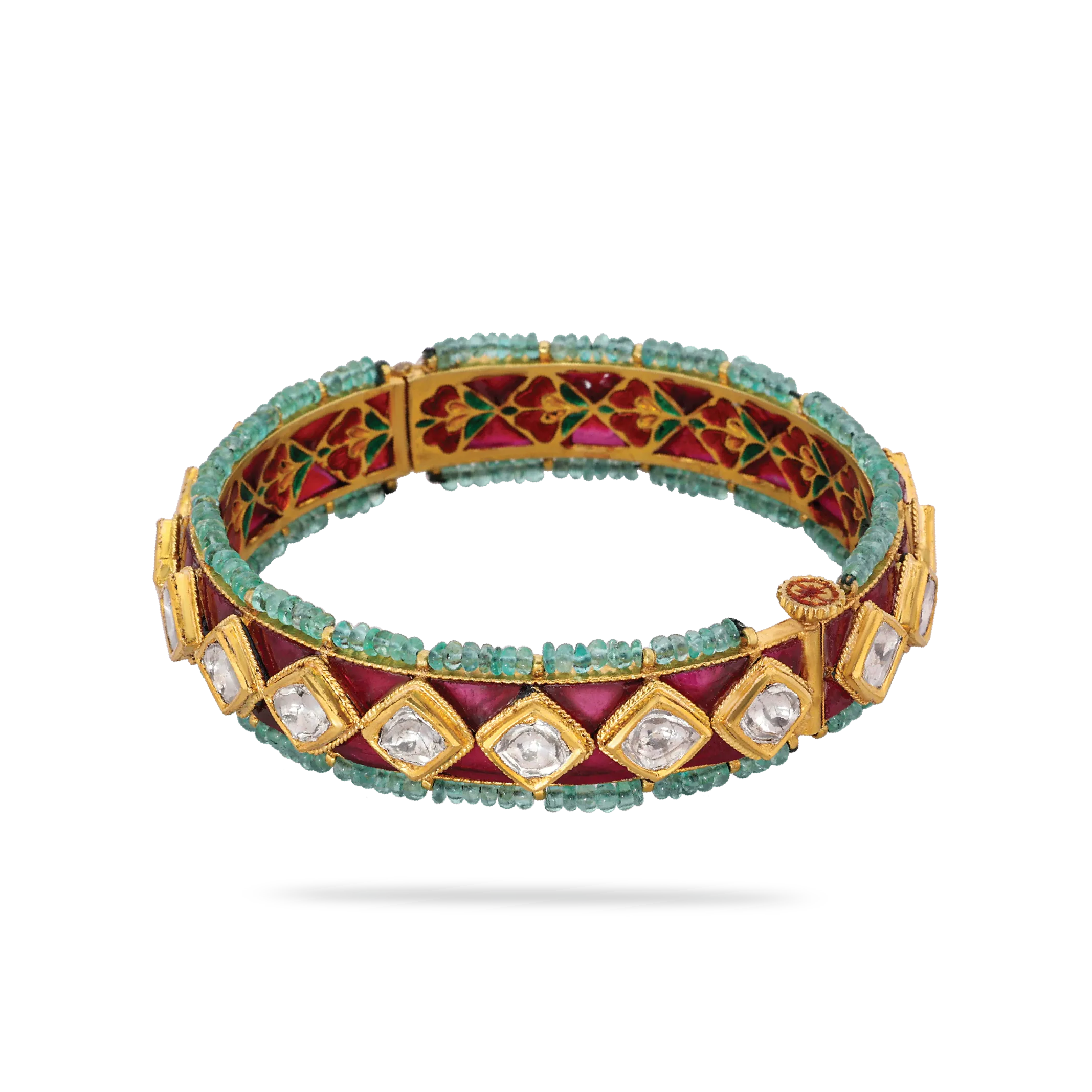
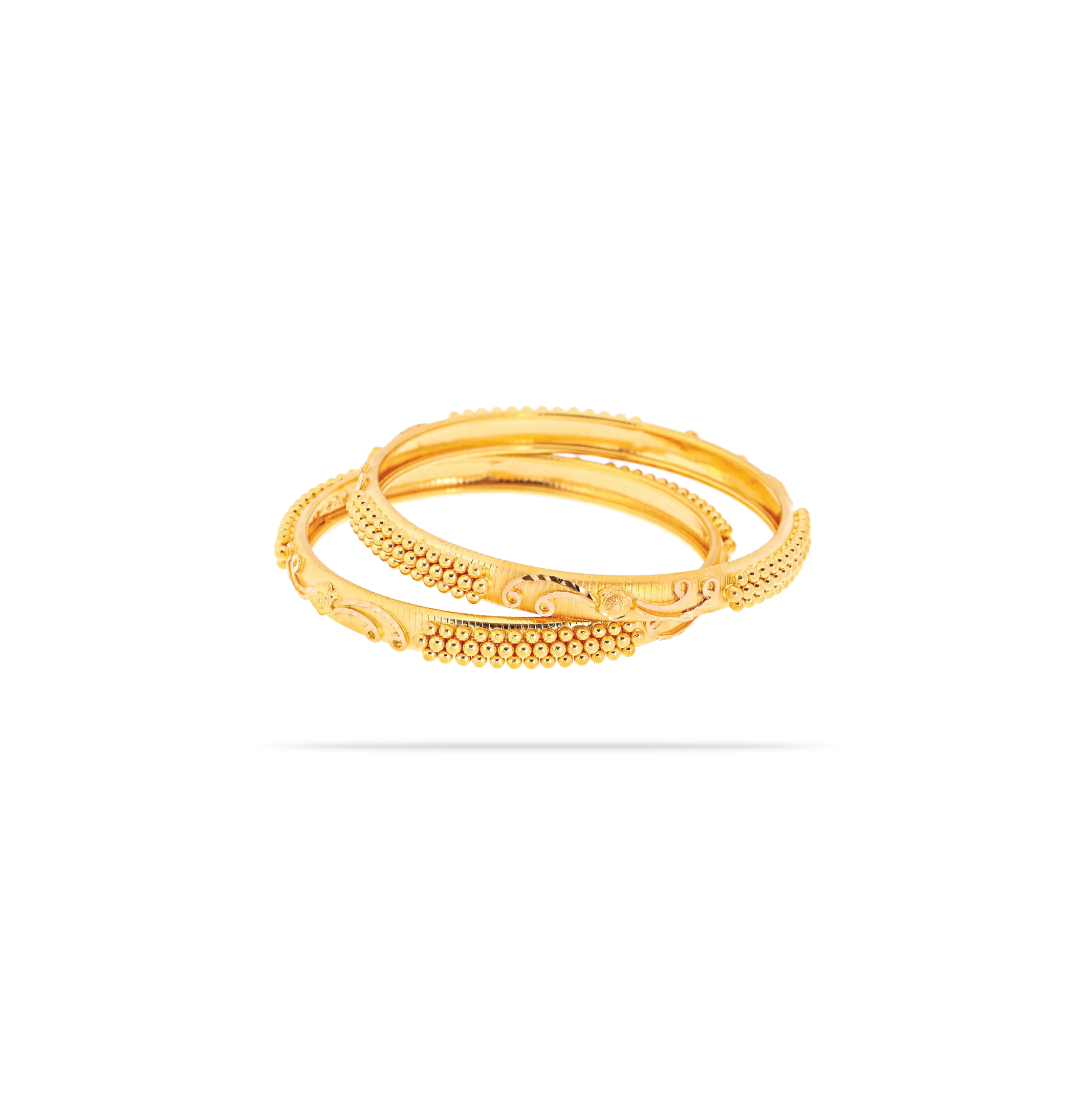
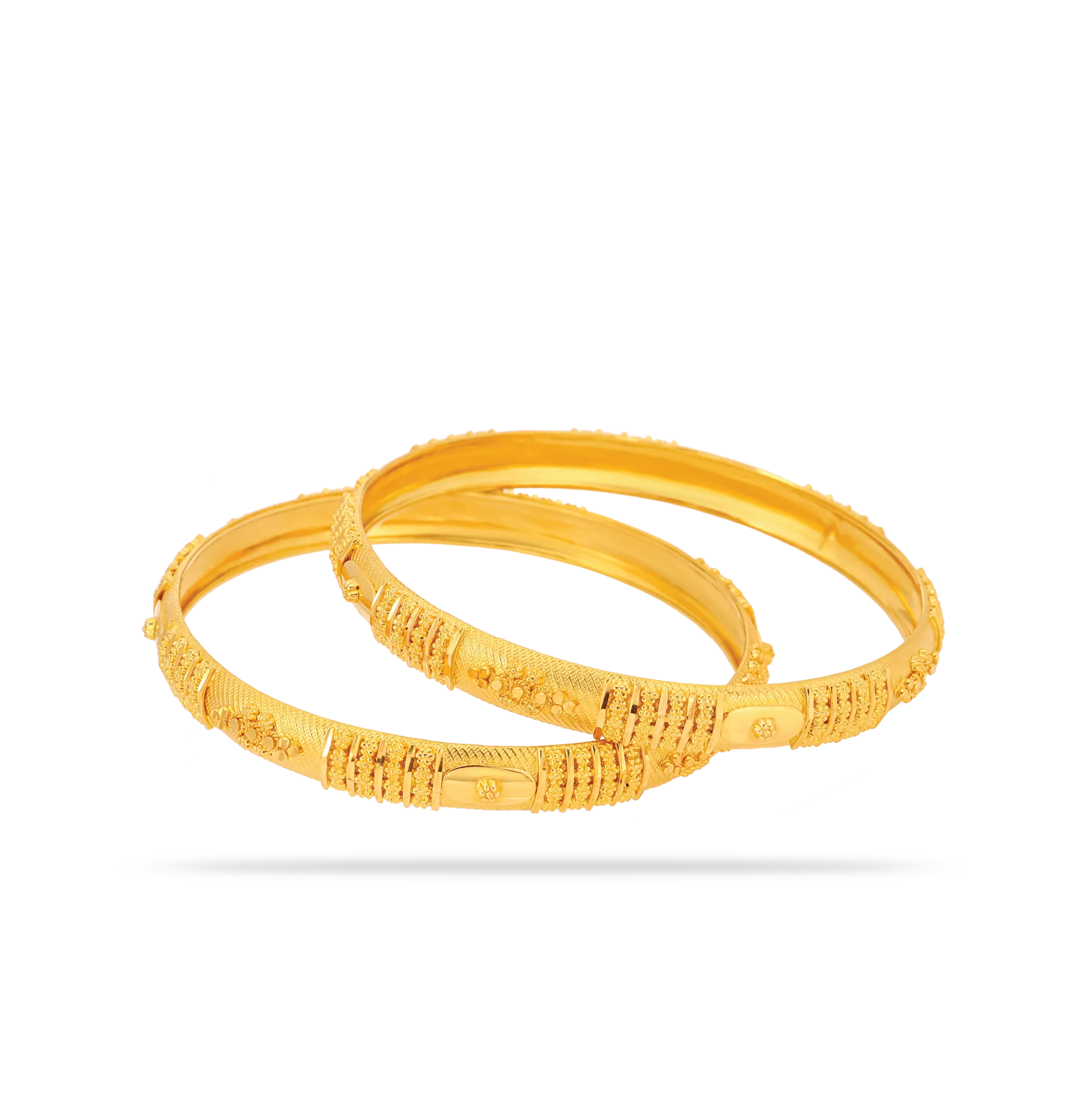
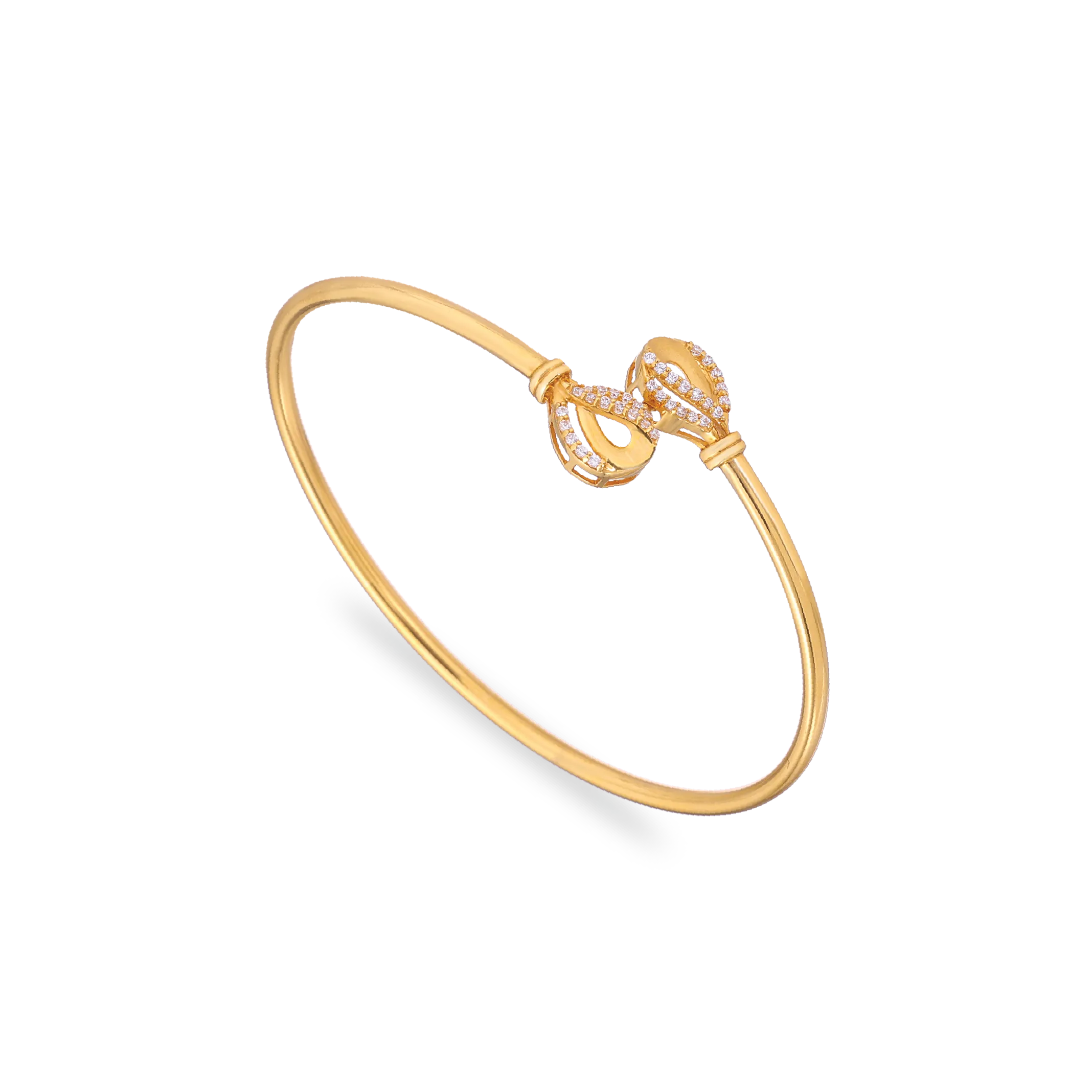
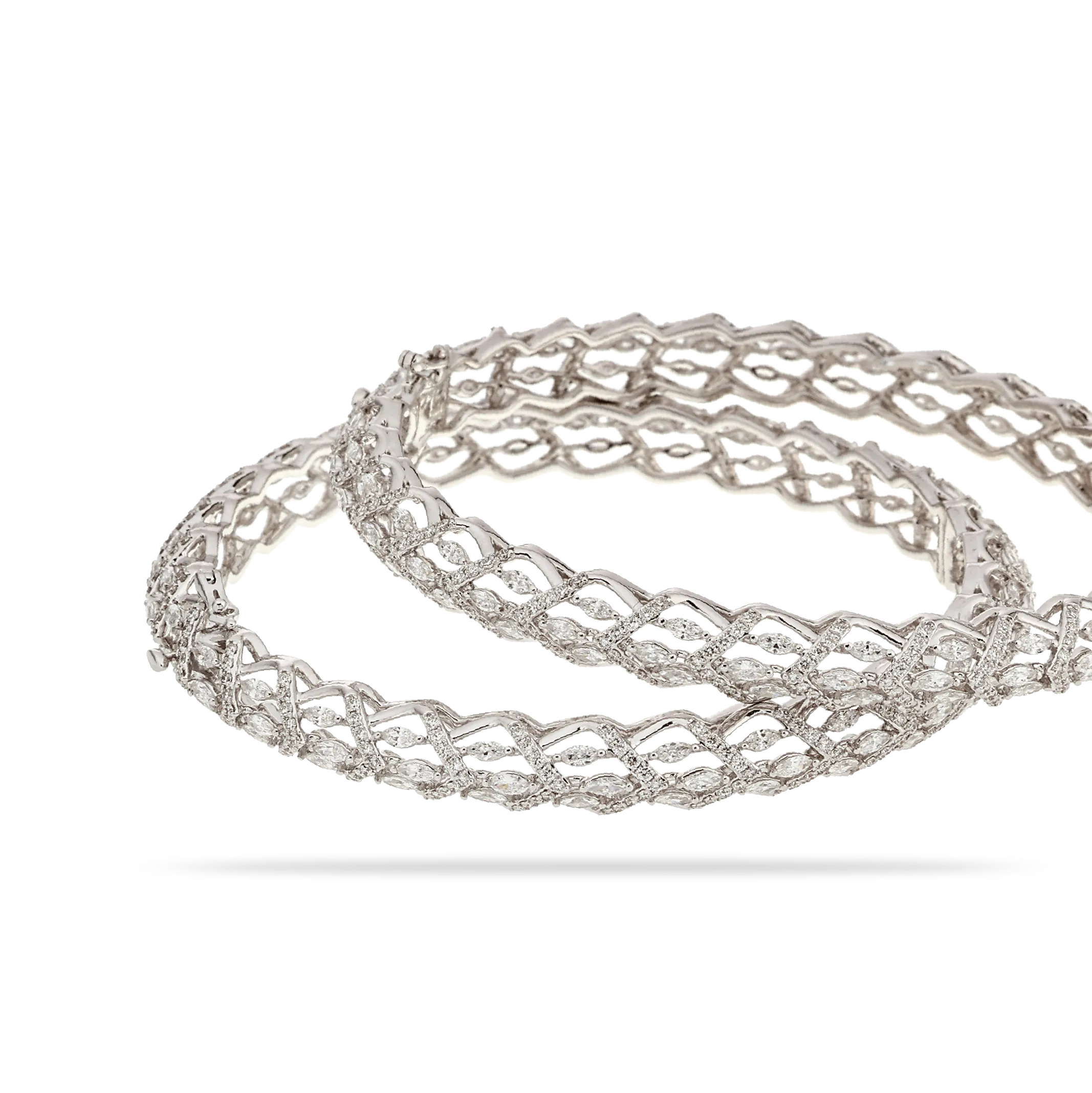
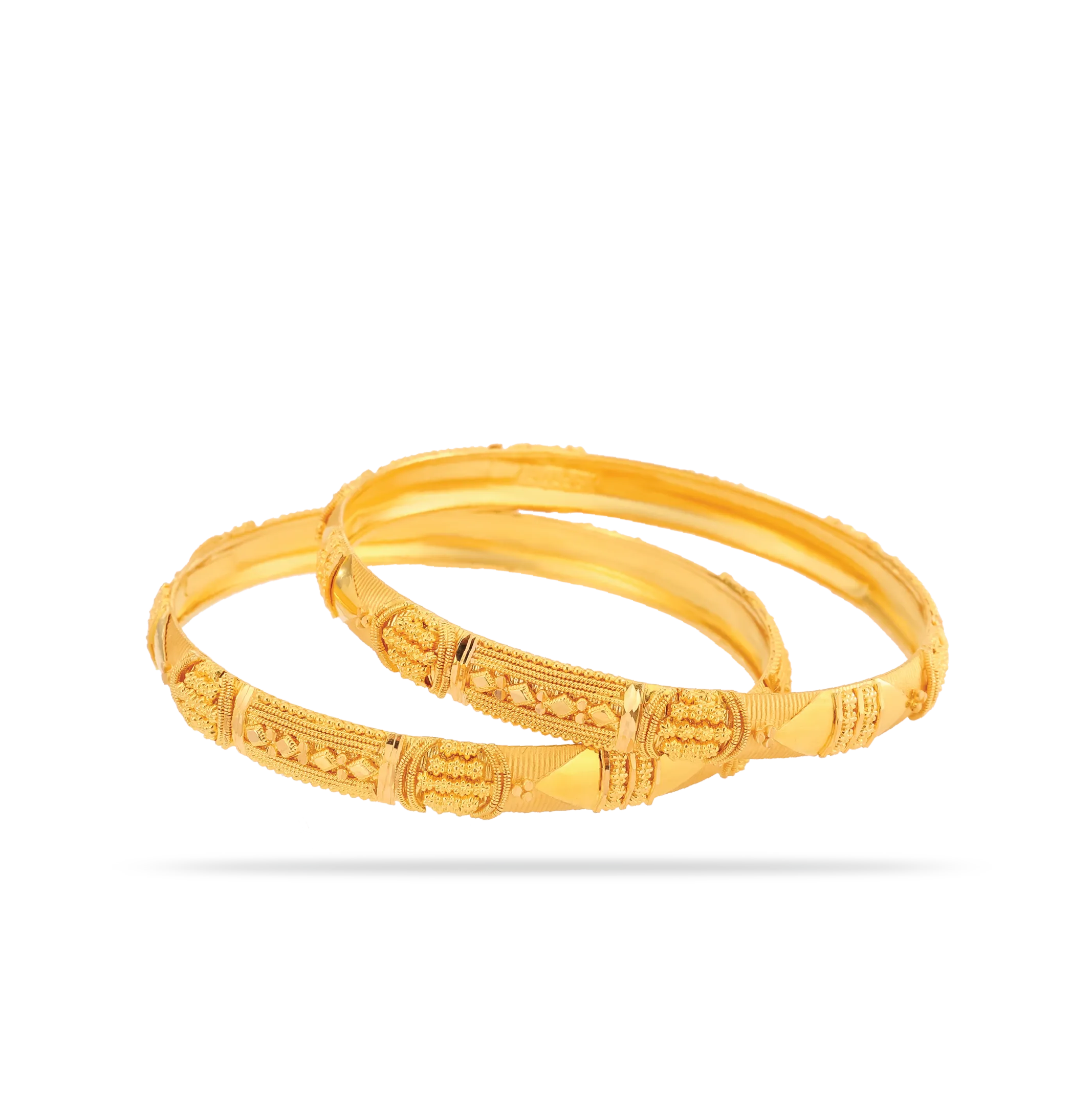
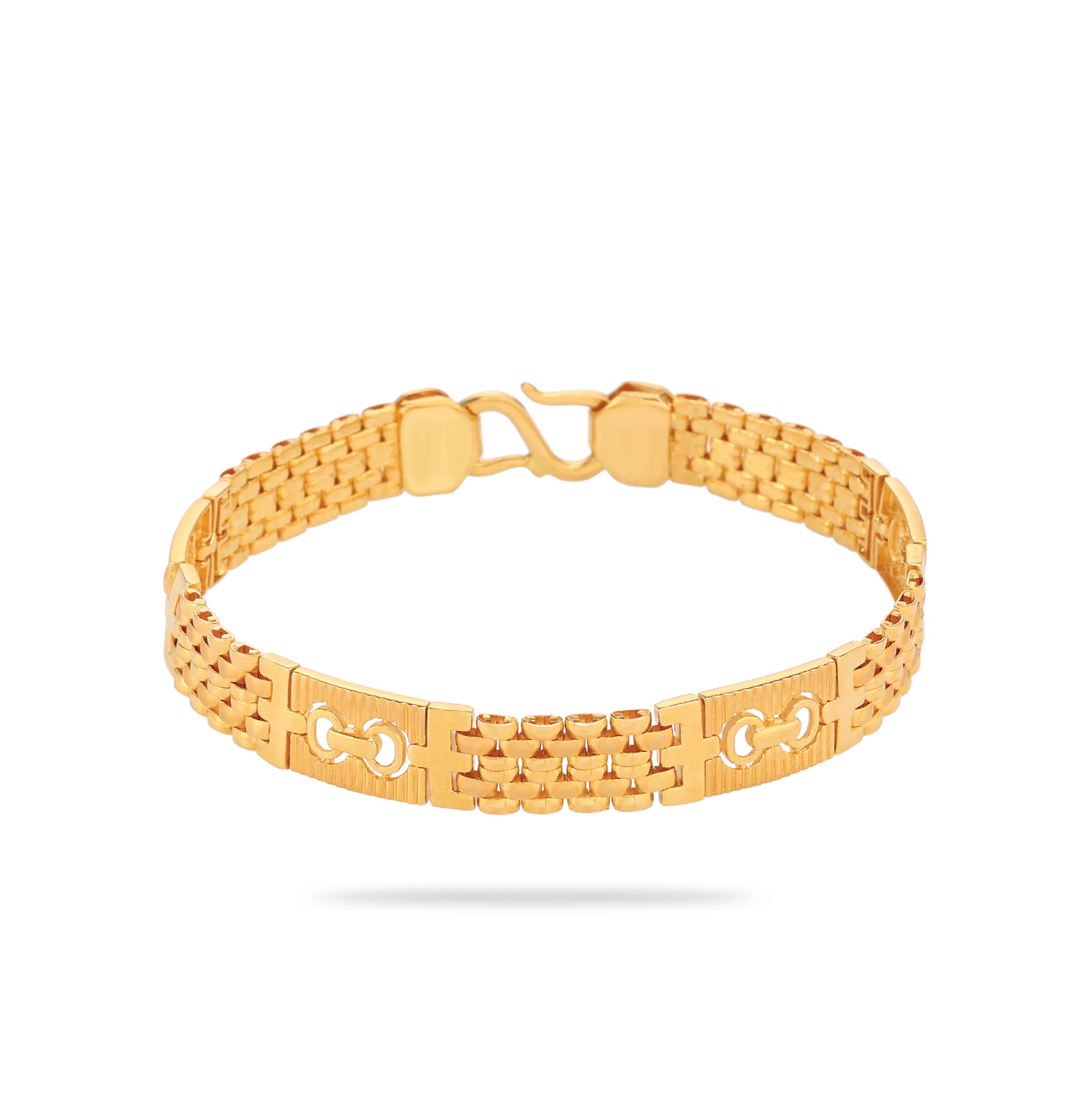
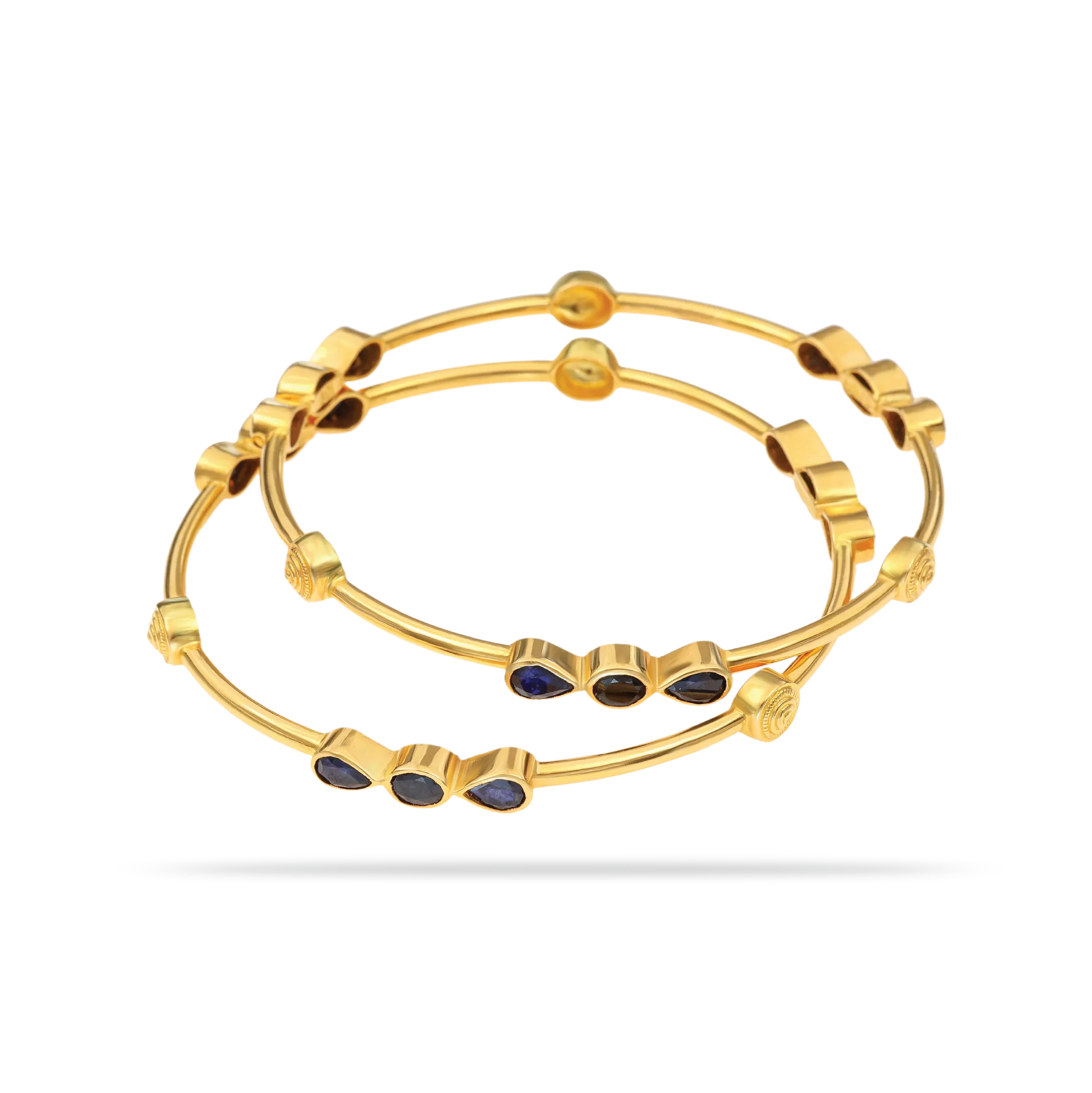
Cuffs and bangles create a stronger silhouette than a fine chain or narrow tennis bracelet. A polished cuff can complement a clean, architectural gown, while a slim bangle stack adds movement to a simpler dress. For brides drawn to traditional gold, a guide to bridal diamond bangles can also help clarify how proportion, construction, and fit affect the finished look.
Charm and chain bracelets for personal meaning
Charm and chain bracelets are appealing when sentiment matters as much as sparkle. A small initial, pearl, heart, or inherited charm can make the accessory feel connected to your story without overwhelming the gown. Keep the charms light and the chain secure, particularly if you expect to hug guests, dance, and carry flowers throughout the day.
Match your bracelet to your wedding dress
Your dress is the visual anchor, so the bracelet should respond to its fabric, silhouette, and level of decoration. Notice whether the gown feels airy, structured, vintage, or richly embellished before choosing a finish. The right proportion matters more than simply selecting the most glittering piece.
Neckline and sleeve considerations
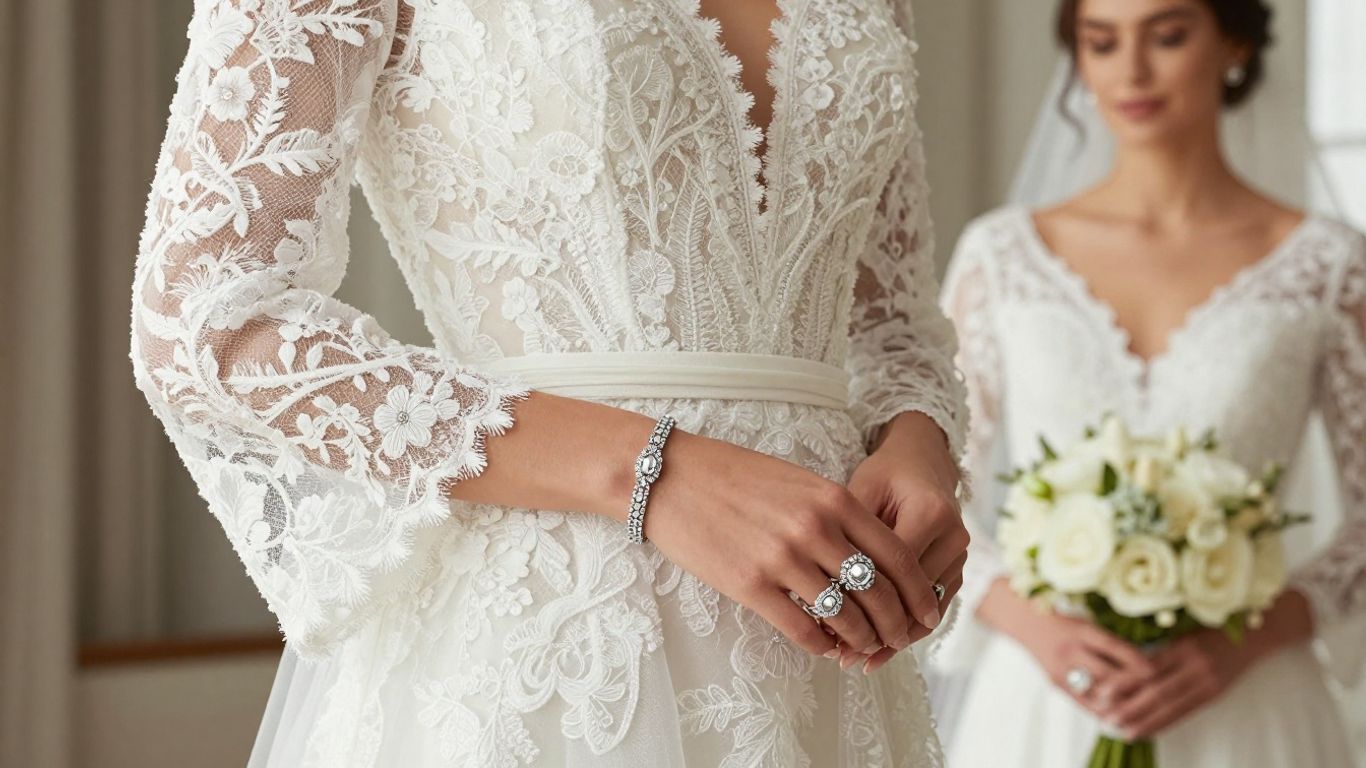
Although a bracelet sits away from the neckline, sleeves and cuffs directly affect how visible it will be. Long sleeves may call for a slim bracelet that slips neatly over the wrist, while sleeveless or short-sleeved gowns leave room for a more noticeable design. Make sure the bracelet does not disappear beneath fabric or compete with a heavily decorated cuff.
Coordinating with lace, beading, and embroidery
Study the shapes already present in the gown. Floral lace often pairs naturally with pearls or softly curved details, while geometric beading can take a streamlined crystal or metal design. If the dress has colored embroidery, a subtle gemstone accent may echo it, but repeating every detail is rarely necessary.
Balancing statement jewelry with a detailed gown
A richly decorated gown usually benefits from one clear focal point rather than several competing accessories. If the earrings or necklace are dramatic, choose a bracelet with a simpler profile; if the neckline is quiet, the wrist can carry more sparkle. A bridal jewelry guide focused on balancing ornate details can be useful when several heirloom or cultural pieces are part of the outfit.
Choosing bracelets for minimalist dresses
A simple crepe, satin, or column gown gives jewelry more room to speak. You might choose a single tennis bracelet, a sculptural cuff, or a fine chain with one meaningful detail. Keep the finish crisp and the scale deliberate so the bracelet adds character without changing the clean mood of the dress.
Coordinate bridal bracelets with other jewelry
Jewelry looks cohesive when its materials and visual language relate, even if every piece is not part of a matching set. Compare metal color, stone shape, surface finish, and scale before making a final choice. Lay the pieces together in natural light, since warm indoor lighting can disguise differences between finishes.
Creating a cohesive metal color
White metals create a cooler, sharper impression, while yellow gold feels warmer and more traditional; rose gold adds a soft blush. Match the bracelet to the metal that appears most prominently in your engagement ring or wedding band. If the dress has warm ivory tones, yellow or rose gold may blend beautifully, while bright white fabrics often suit cooler metals.
Pairing bracelets with engagement rings and wedding bands
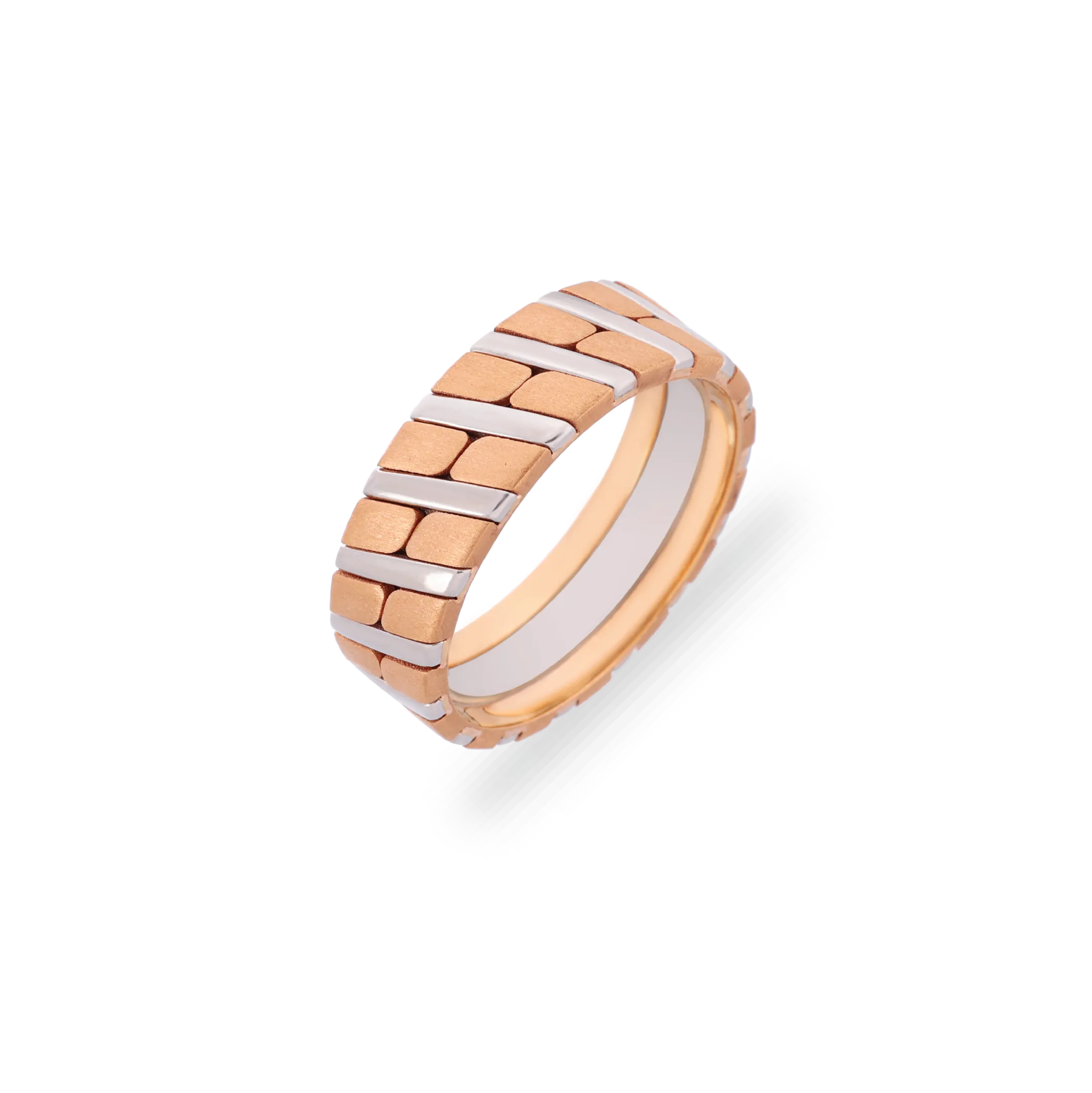
The bracelet does not need to duplicate the rings, but it should feel comfortable beside them in photographs and during hand gestures. Consider whether the ring stack is delicate, wide, ornate, or already visually busy. When the rings carry a strong center stone, a bracelet with a clear, uncomplicated line often creates the most graceful balance.
Matching earrings, necklaces, and hair accessories
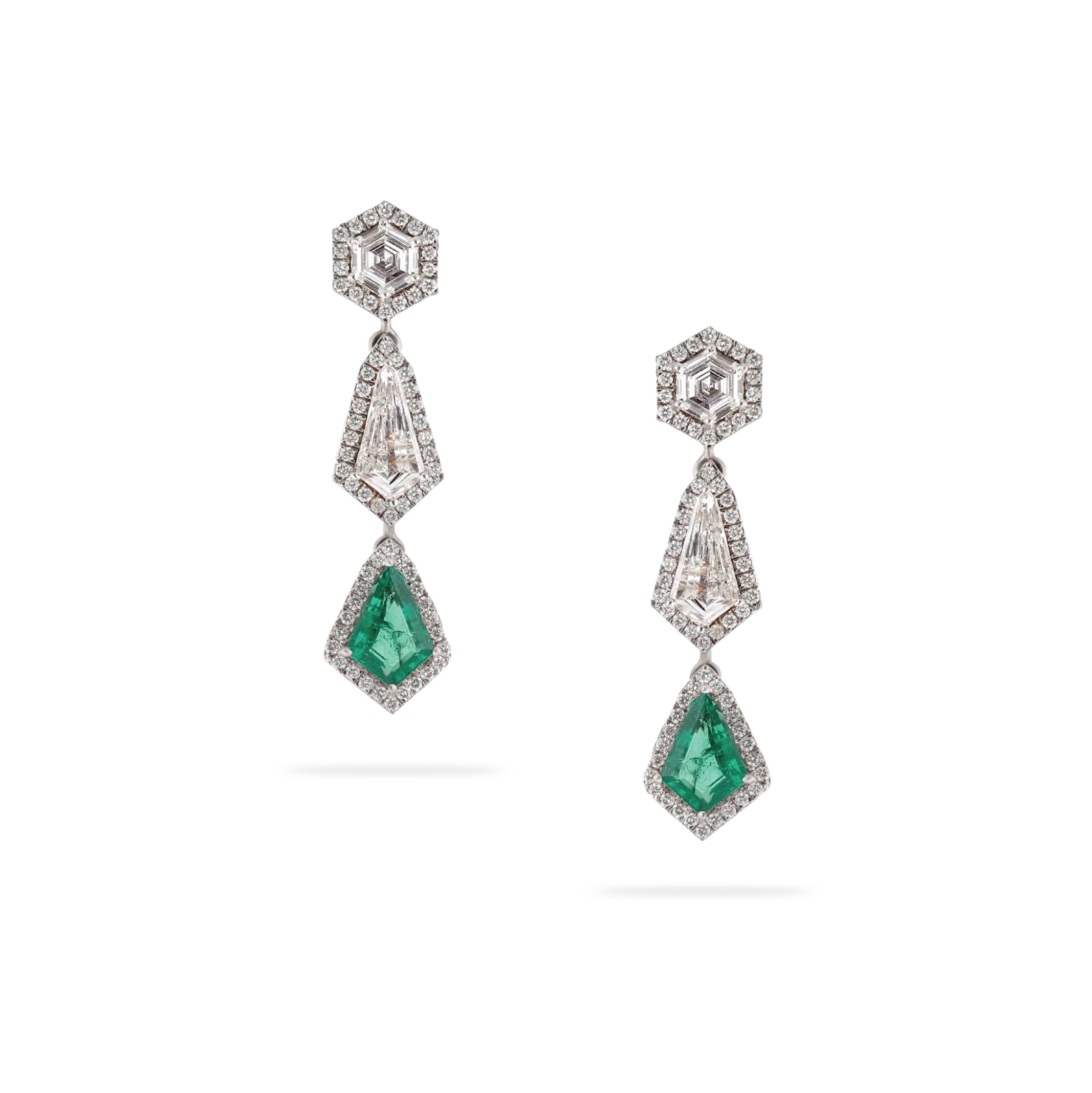
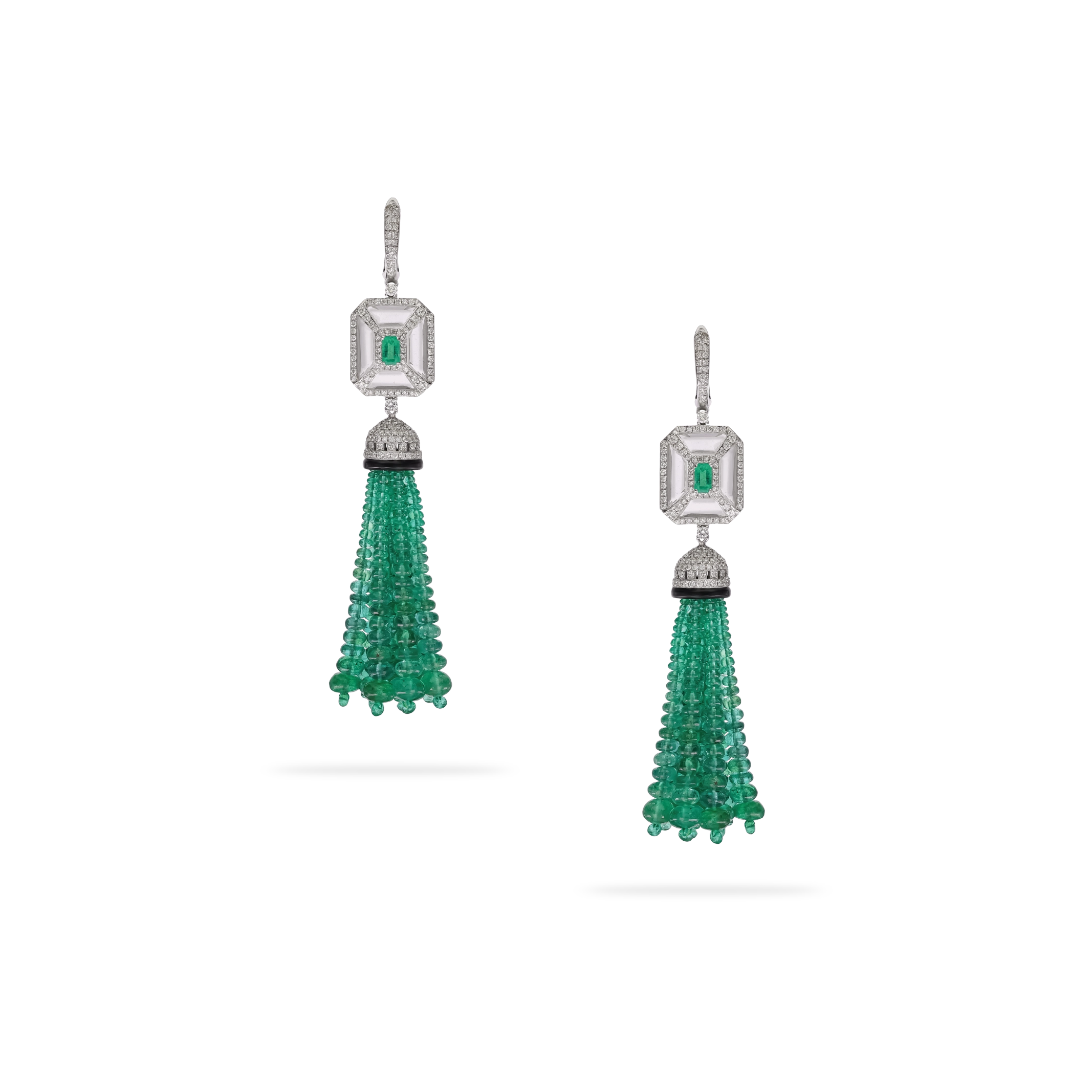
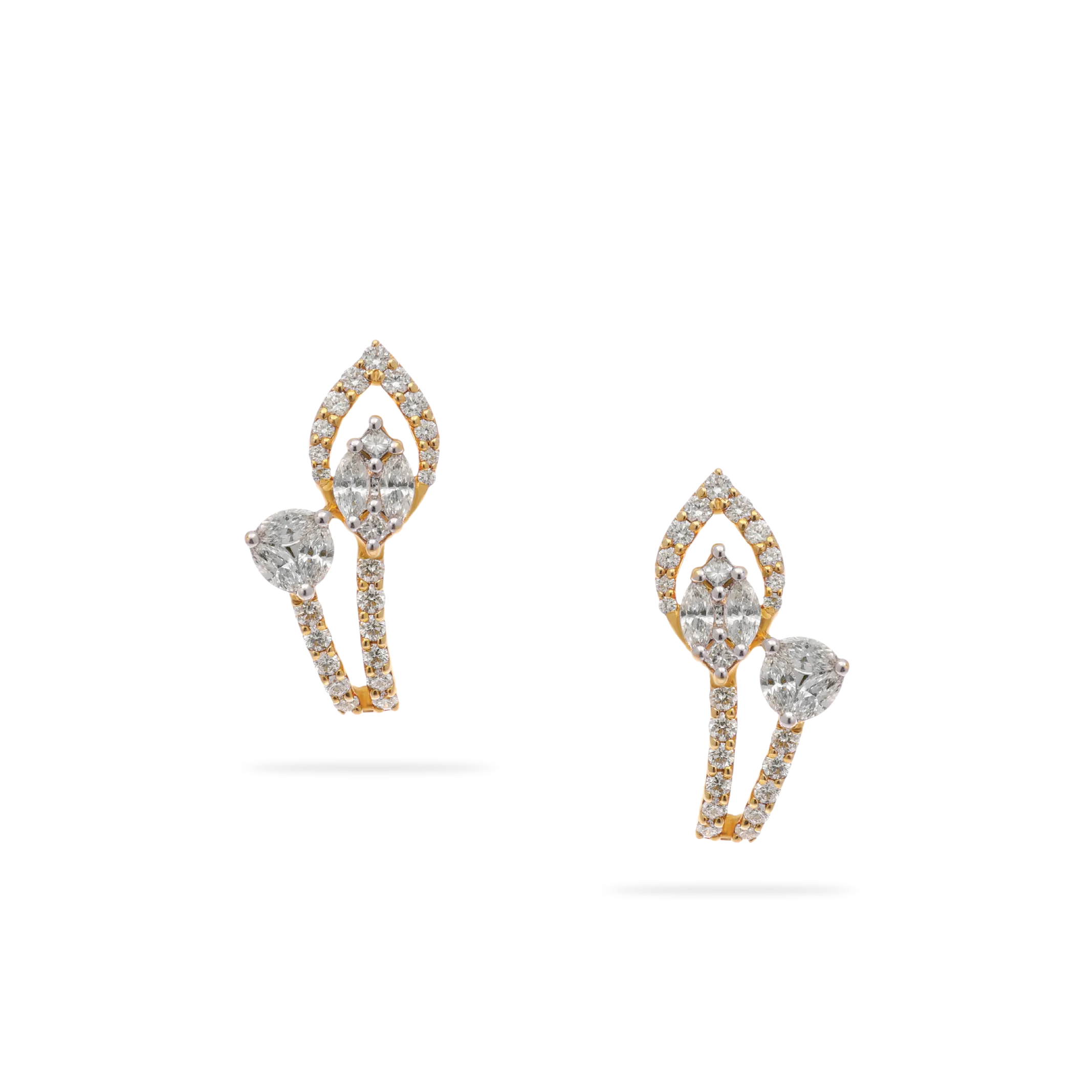
Think in terms of a shared detail rather than identical pieces. A pearl bracelet can quietly echo pearl drops, while crystal hair pins may be enough sparkle to support a simpler bracelet. For more guidance on proportion and finish, compare the approach used in bridal drop earrings with the scale you are considering for your wrist.
Mixing metals without looking mismatched
Mixed metals can look modern when one tone leads and the second appears as a deliberate accent. Repeat the secondary metal at least once elsewhere, perhaps in a ring detail or hair accessory, rather than scattering unrelated finishes throughout the outfit. A difference in metal color feels styled when the shapes and scale remain consistent.
Choose the right fit and comfort level
A bracelet that twists, pinches, or catches on clothing can distract you during an otherwise joyful day. Fit is especially important because wedding jewelry is often worn for many hours, including photographs, greetings, dinner, and dancing. Try the bracelet with the dress fabric or a similar sleeve whenever possible.
Measuring your wrist accurately
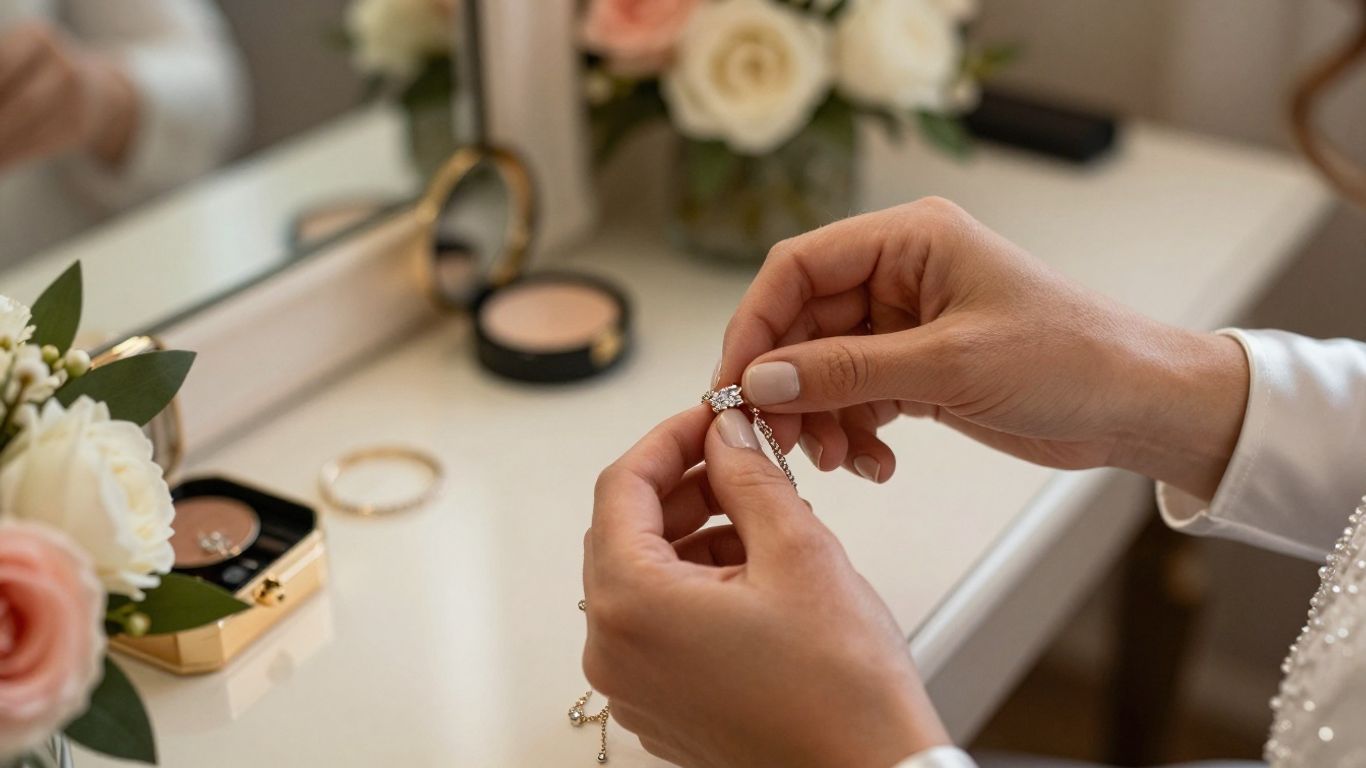
Measure around the wrist where the bracelet will sit, keeping the tape close but not tight. Add a small amount of ease for a flexible bracelet, and consider more room for a rigid bangle that must pass over the hand. If you are ordering remotely, measure twice and check the seller's sizing method, since inner circumference and wrist circumference are not always the same.
Selecting secure clasps and closures
A clasp should close smoothly and stay shut when your wrist moves naturally. Test lobster clasps, box clasps, hinged closures, and safety chains rather than judging them only by appearance. Ask a trusted person to check the fastening before the ceremony, and carry a tiny repair kit or spare clasp if the piece is especially sentimental.
Avoiding snagging on lace and delicate fabrics
Run a clean fingertip over the bracelet and inspect prongs, edges, charms, and chain links. Anything rough may catch on lace, tulle, beading, or a veil. These practical checks are easy to overlook, so use this short fitting sequence before committing to the accessory:
- Fasten and unfasten the clasp several times.
- Move your wrist as though holding a bouquet.
- Test the bracelet against a scrap of similar fabric.
- Check that stones and charms do not rotate into sharp edges.
After the test, you will have a better sense of whether the bracelet is genuinely wedding-ready or merely attractive in a jewelry box. A smooth profile and dependable closure are small details that make a noticeable difference.
Planning for all-day wedding wear
Wear the bracelet at home for a few hours before the wedding, especially if it is unfamiliar or has a substantial weight. Notice pressure points, skin irritation, and whether the piece shifts when you raise your arms. If you plan to change outfits, confirm that the bracelet works with each sleeve and does not interfere with gloves or other accessories.
Select bridal bracelets for your wedding style
The setting can guide your choice as much as the dress does. A formal ballroom, a windy beach, a garden ceremony, and a city loft each create different practical and visual conditions. Let the atmosphere inform the finish, but keep your own taste at the center.
Formal ballroom and black-tie celebrations
Formal venues can support more sparkle, architectural metalwork, and a larger silhouette. A tennis bracelet or refined crystal cuff may look especially polished under evening lighting. Keep the rest of the jewelry coordinated so the overall effect reads as elegant rather than heavily accessorized.
Beach and destination weddings
For a destination celebration, lighter pieces are often easier to wear and transport. Consider a slim gold chain, small pearls, or a bracelet with a secure closure that will not feel cumbersome in warm weather. Keep jewelry away from saltwater, sunscreen, and sand, which can dull finishes or work into delicate mechanisms.
Rustic, garden, and outdoor ceremonies
Outdoor weddings pair naturally with organic shapes, warm metals, pearls, and modest sparkle. A floral detail or textured bangle can echo the surroundings without becoming costume-like. Since grass, gravel, and uneven paths make movement less predictable, choose a bracelet that stays comfortably in place.
Modern city and minimalist weddings
A city wedding often suits clean lines, mixed textures, and a restrained palette. A sculptural cuff or narrow polished bangle can sharpen a simple silk dress, while a fine bracelet adds a quieter touch. Brides seeking a less-is-more approach may find minimalist bridal jewellery helpful when deciding how much sparkle is enough.
Shop for quality and value
A wedding bracelet can be a one-day accent, a future anniversary piece, or an heirloom for another generation. Shop with the intended life of the jewelry in mind rather than focusing only on the first impression. Ask about materials, construction, care, sizing, and return terms before placing an order.
Comparing precious metals and plated finishes
Solid precious metals generally offer lasting material value, while plated finishes can provide a particular color or look at a lower cost. Neither choice is automatically right for every bride, but the difference should be clear before purchase. Check for hallmarks or material descriptions, and consider how often you hope to wear the bracelet after the wedding.
Evaluating diamonds, crystals, and gemstones
Diamonds, crystals, and colored gemstones create different kinds of light and carry different care needs. Look closely at stone security, consistency, setting quality, and how the stones appear in both daylight and indoor lighting. A bracelet that photographs beautifully should still feel attractive at normal viewing distance.
Setting a realistic bridal jewelry budget
Set a total jewelry budget before falling for a particular style, then divide it according to the pieces that matter most to you. A bracelet may deserve more of the budget if it is your focal accessory or a planned heirloom. If the bracelet is meant to complement a necklace and earrings, leave room for a balanced ensemble rather than spending everything on one item.
Considering heirloom, rental, and custom options
An heirloom can bring emotional depth, while a rental may make a dramatic style accessible for one occasion. Custom work allows you to adjust metal, length, stones, and symbolism, though it requires more planning and careful approval of the final design. Whichever route you take, document the piece's condition and care instructions before the wedding.
Style and care for your wedding bracelet
The final styling decisions are often simple, but they help the jewelry feel connected to the whole celebration. Think about the bridal party, your outfit changes, and how the bracelet will be handled before and after the ceremony. A little preparation protects both the appearance and the memories attached to it.
Coordinating bracelets with bridesmaid jewelry
Bridesmaid jewelry can relate to the bridal bracelet through color, finish, or a small shared motif. The pieces do not have to be identical; varying the scale lets each person keep some individuality while still looking cohesive in group photographs. If the bridesmaids wear substantial accessories, a quieter bridal bracelet may create a pleasing distinction.
Layering multiple bracelets tastefully
Layering works best when the bracelets share at least one visual quality, such as metal color, stone type, or a repeated shape. Combine one focal piece with simpler companions rather than stacking several statement designs. Leave enough room for each bracelet to move naturally, and test the arrangement with your dress before the wedding day.
Storing and transporting jewelry safely
Transport the bracelet in a padded, compartmentalized case instead of a loose pouch where it can tangle with other pieces. Keep clasps closed, separate softer stones from harder ones, and assign one trusted person to handle the jewelry. Avoid leaving it in a hot car, a steamy bathroom, or an open makeup bag.
Cleaning and preserving the bracelet after the wedding
Follow the maker's care instructions, since stones and finishes do not all respond well to the same cleaning method. In general, wipe away cosmetics and perspiration with a soft cloth, allow the piece to dry fully, and store it away from humidity. Have a jeweler inspect delicate settings or stretched links before placing the bracelet into long-term storage.
Conclusion
Choosing an elegant bridal bracelet comes down to harmony: the piece should suit your dress, complement your other jewelry, feel secure on your wrist, and still seem like you. Give yourself time to test the fit and styling, and the final accessory will add a quiet moment of brightness to the wedding day without competing with it.
Frequently Asked Questions
Should a bridal bracelet match the engagement ring?
It does not need to match exactly, but coordinating the metal color, finish, or level of detail usually creates a more cohesive appearance. If the ring is ornate, a simpler bracelet may provide better balance.
Are pearls suitable for a wedding bracelet?
Yes. Pearls work well for classic, romantic, vintage, and understated bridal looks. Choose their size and finish according to the gown's embellishment and the scale of the other jewelry.
How tight should a wedding bracelet be?
It should sit securely without pinching or leaving deep marks. You should be able to move your wrist comfortably, and the bracelet should not slide excessively when you raise your arms or hold a bouquet.
What bracelet works with a long-sleeved wedding dress?
A slim bracelet or close-fitting bangle is often easiest to wear with long sleeves. Check that the piece does not catch on the cuff and that it remains visible rather than disappearing beneath the fabric.
Can I wear mixed metals as a bride?
Yes, provided the mix looks deliberate. Let one metal lead, repeat the secondary tone somewhere else, and keep the shapes or scale related so the combination feels coordinated.
How can I stop a bracelet from snagging on lace?
Inspect the bracelet for sharp prongs, rough edges, loose charms, and open links. Test it against similar fabric before the wedding and choose a smooth design if the gown has delicate lace or tulle.
Should I wear my bracelet during the entire wedding day?
That depends on comfort, weather, outfit changes, and the bracelet's security. Wearing it for a trial period beforehand will help you decide whether it can handle photographs, ceremony activities, dinner, and dancing comfortably.
Related blogs:
November 20, 2025
The Timeless Elegance of the Tennis Bracelet: A Comprehensive Guide
Read More
November 20, 2025
The Ultimate Guide to Styling and Wearing a Choker Necklace
Read More
November 20, 2025
Find Your Perfect Engagement Ring: A Comprehensive Guide to Styles and Diamonds
Read More
November 20, 2025
The Timeless Elegance of a Diamond Tennis Bracelet: A Buyer's Guide
Read More