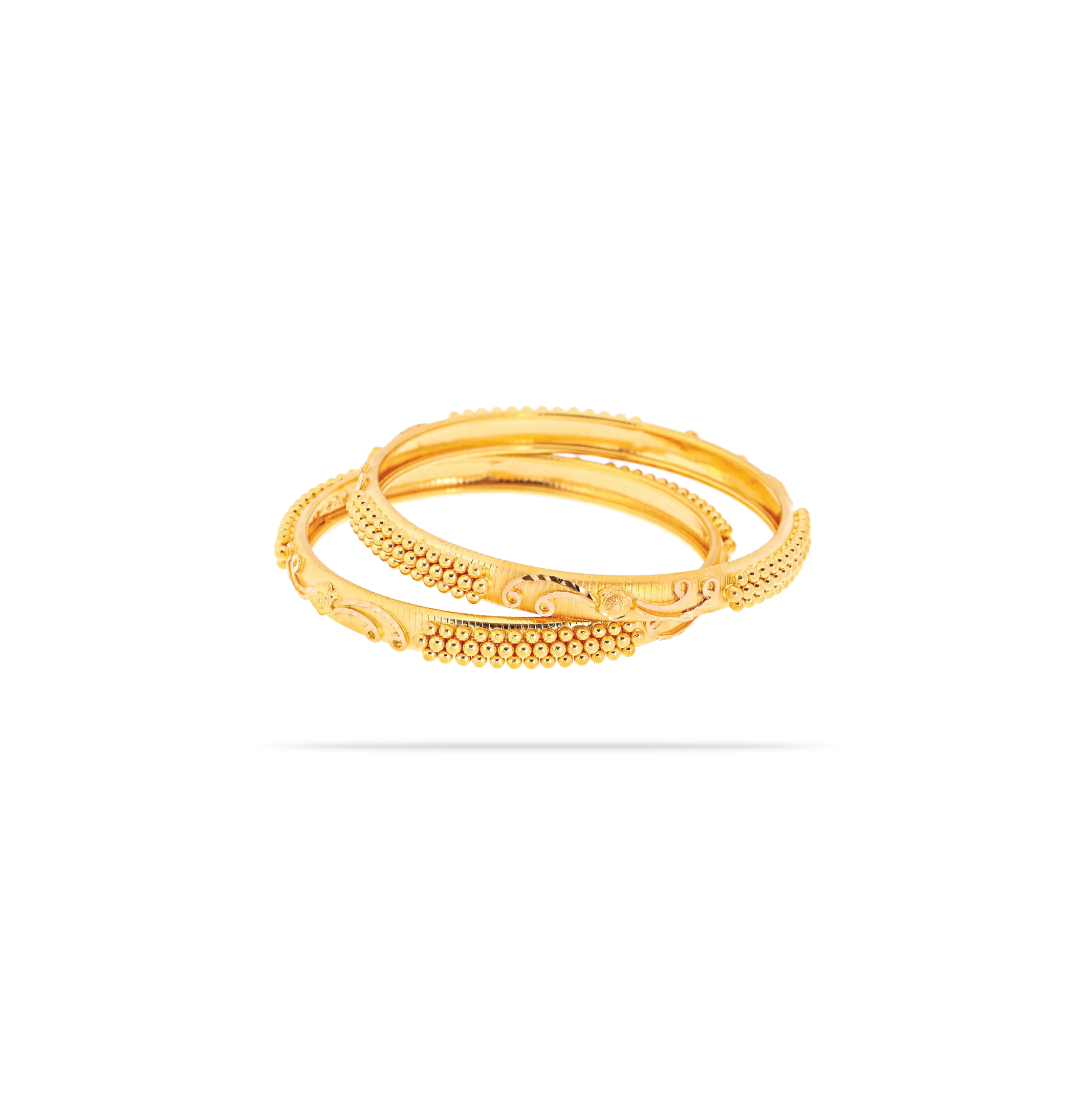
Bridal gold bangles: How to choose the perfect wedding set
September 20, 2026 | 10 minutes read
Key Takeaways
Choosing bridal gold bangles is easier when you begin with the overall wedding look, then narrow the decision to purity, fit, budget, and long-term wear. The right set should feel beautiful on the wedding day without becoming uncomfortable or impractical afterward.
- Decide whether your style is traditional, contemporary, or a thoughtful blend of both.
- Compare gold purity, color, weight, craftsmanship, and hallmark information.
- Measure carefully and leave enough room if you plan to stack bangles.
- Coordinate the bangles with your outfit and the scale of your other jewellery.
- Confirm the final price, policies, and care requirements before buying.
Understand bridal gold bangle styles
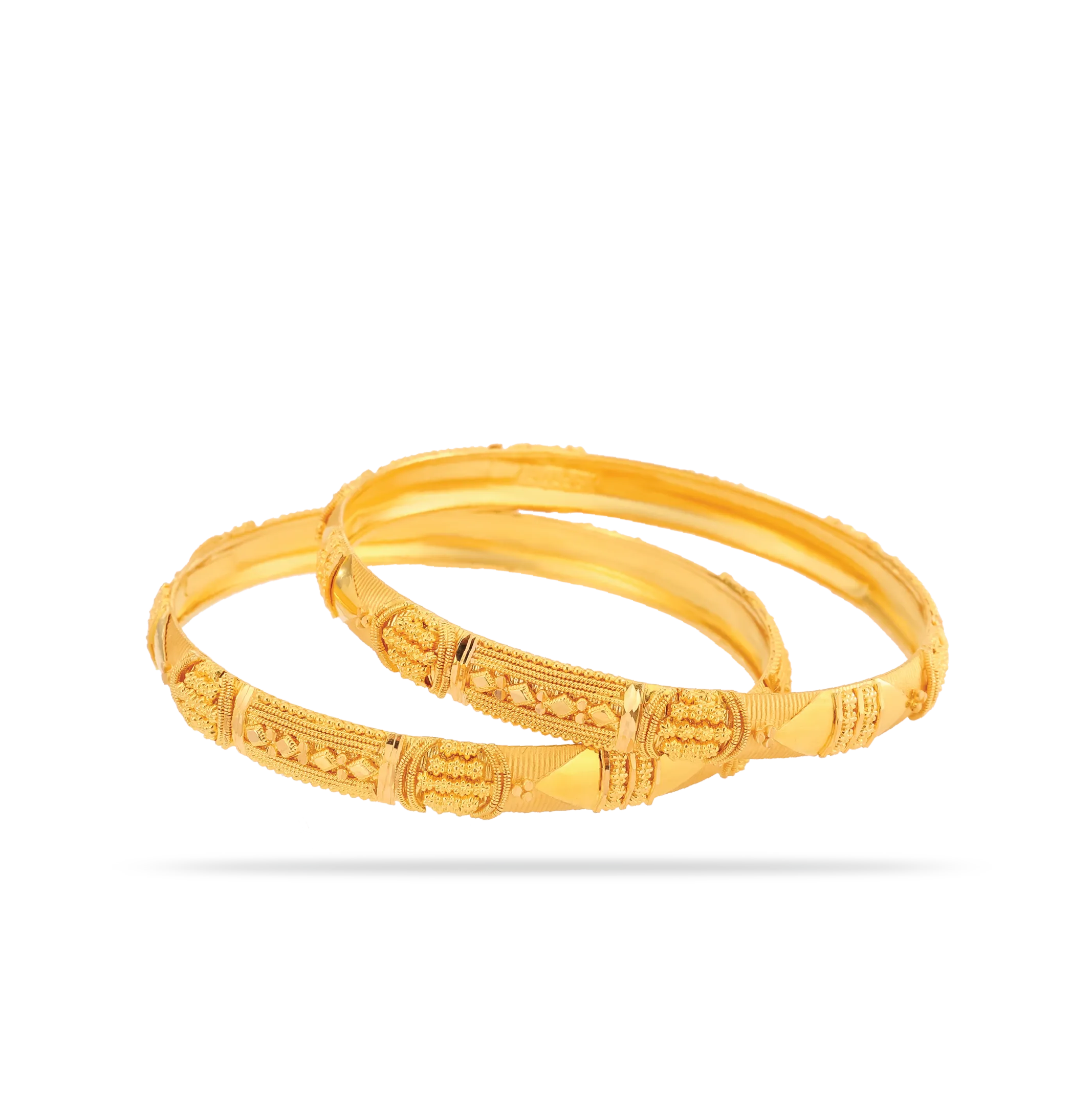
Bridal gold bangles can be delicate and polished, richly detailed, or arranged in a dramatic stack. Begin by considering the role you want them to play: a central statement, a cultural tradition, or a versatile part of your jewellery wardrobe. A clear direction will make the many available designs feel less overwhelming.
Traditional Indian bangle designs
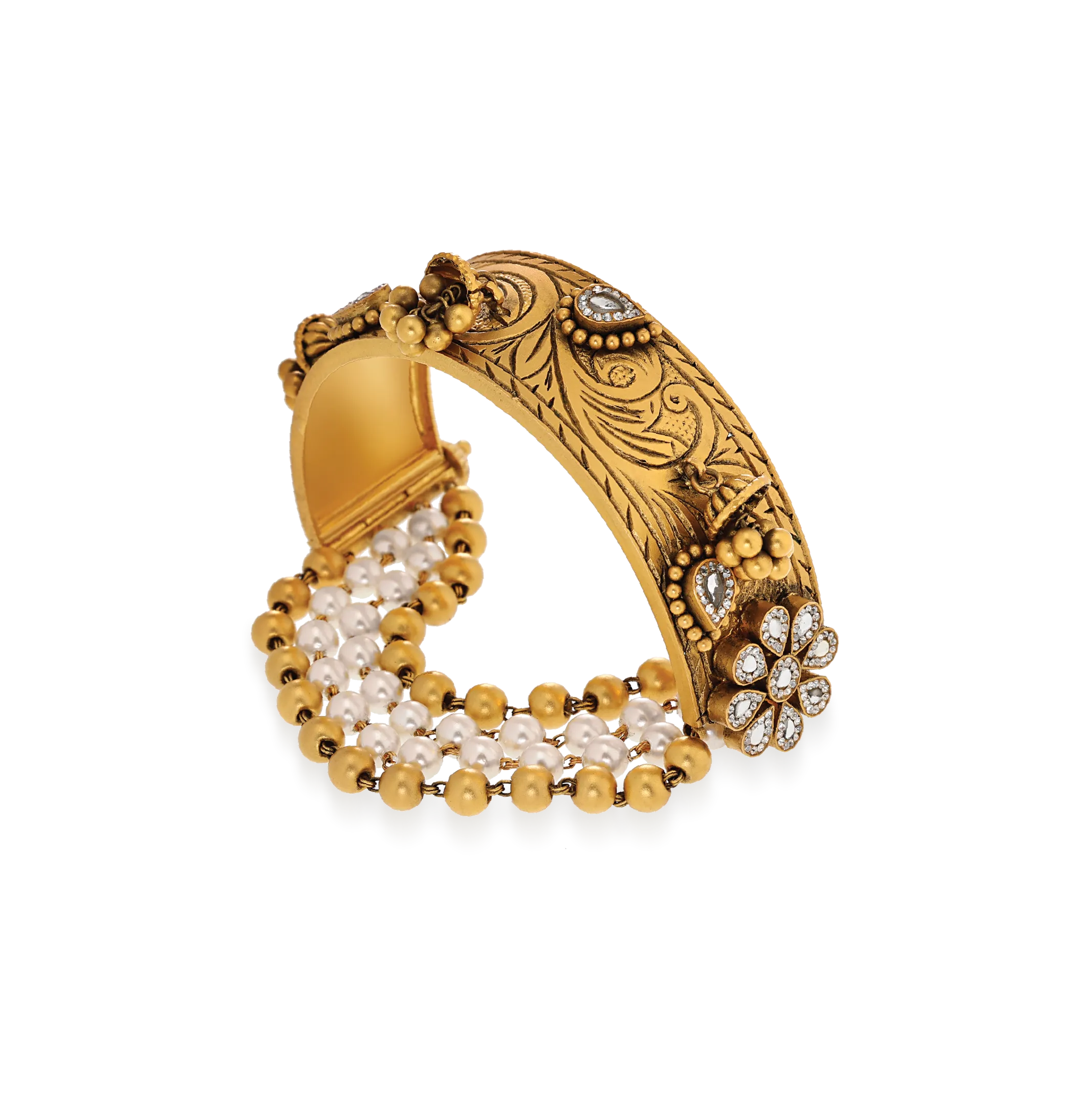
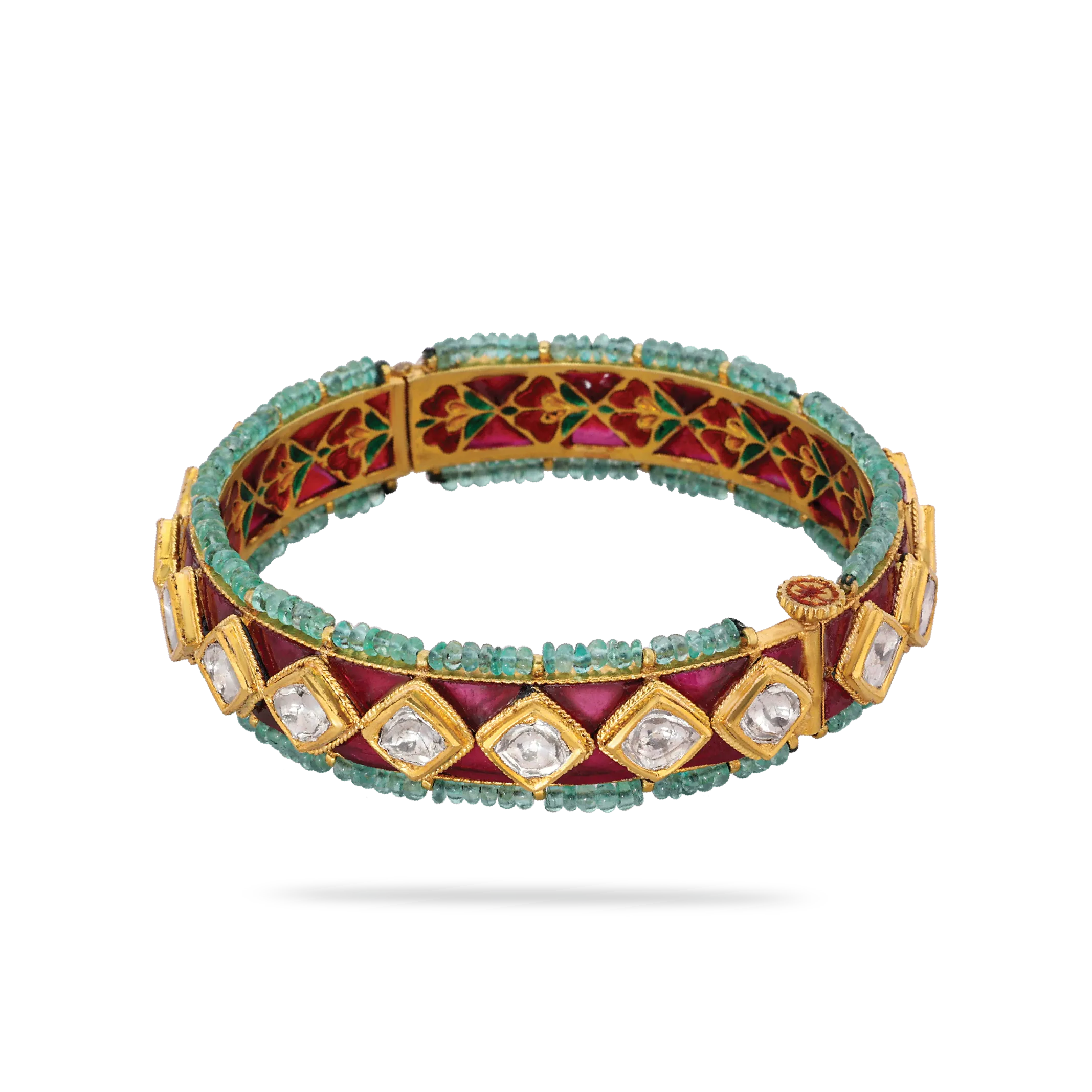
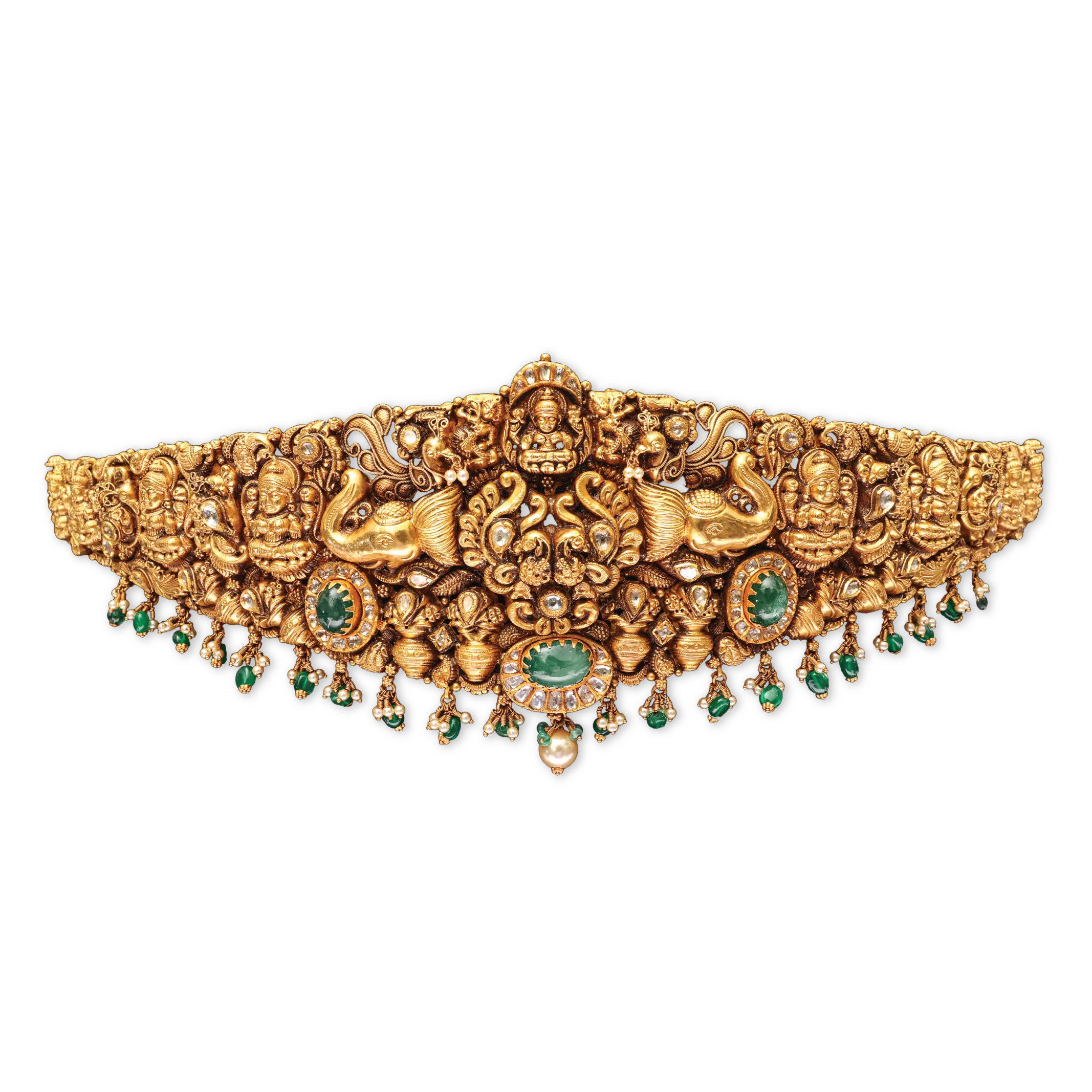
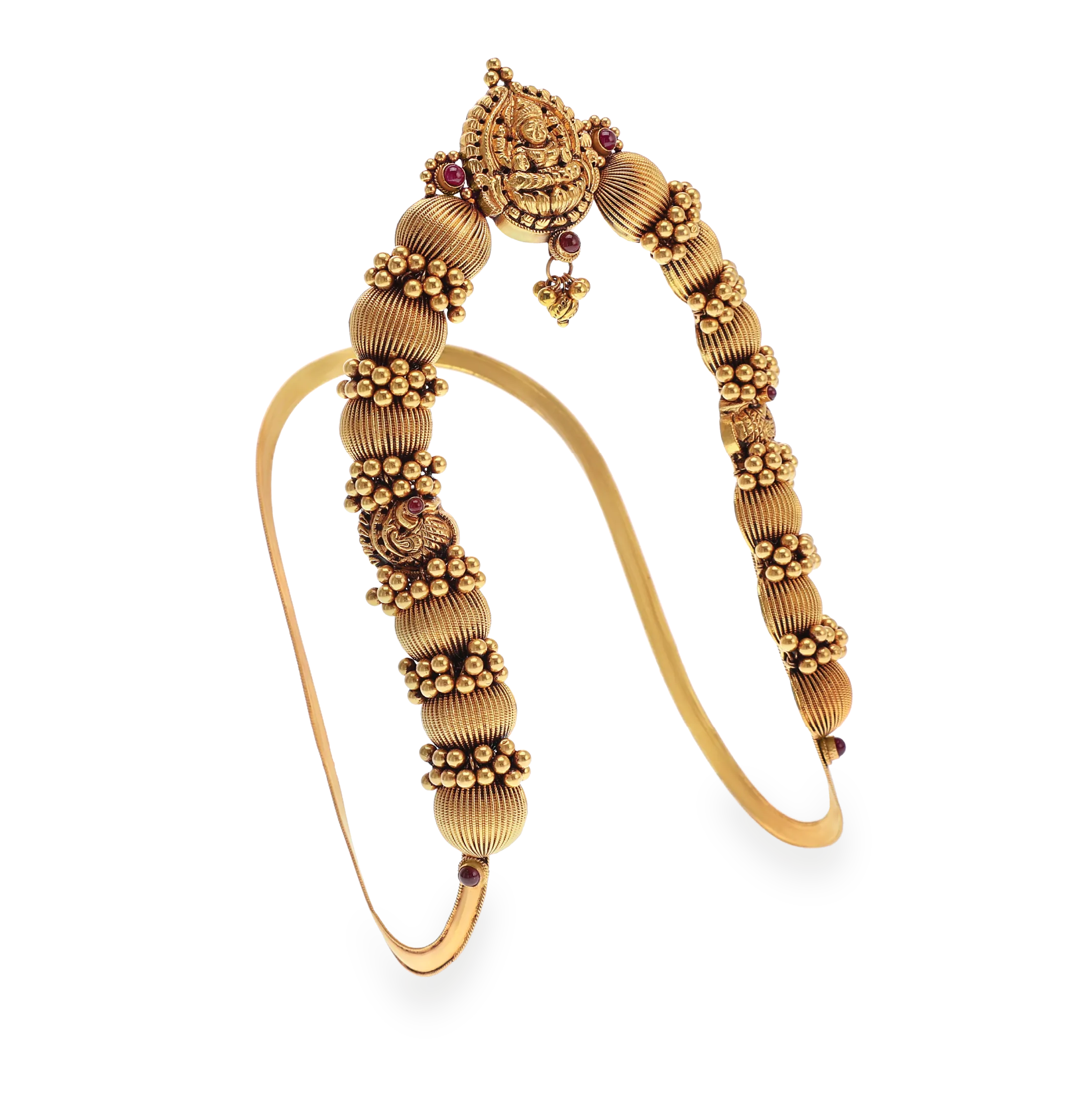
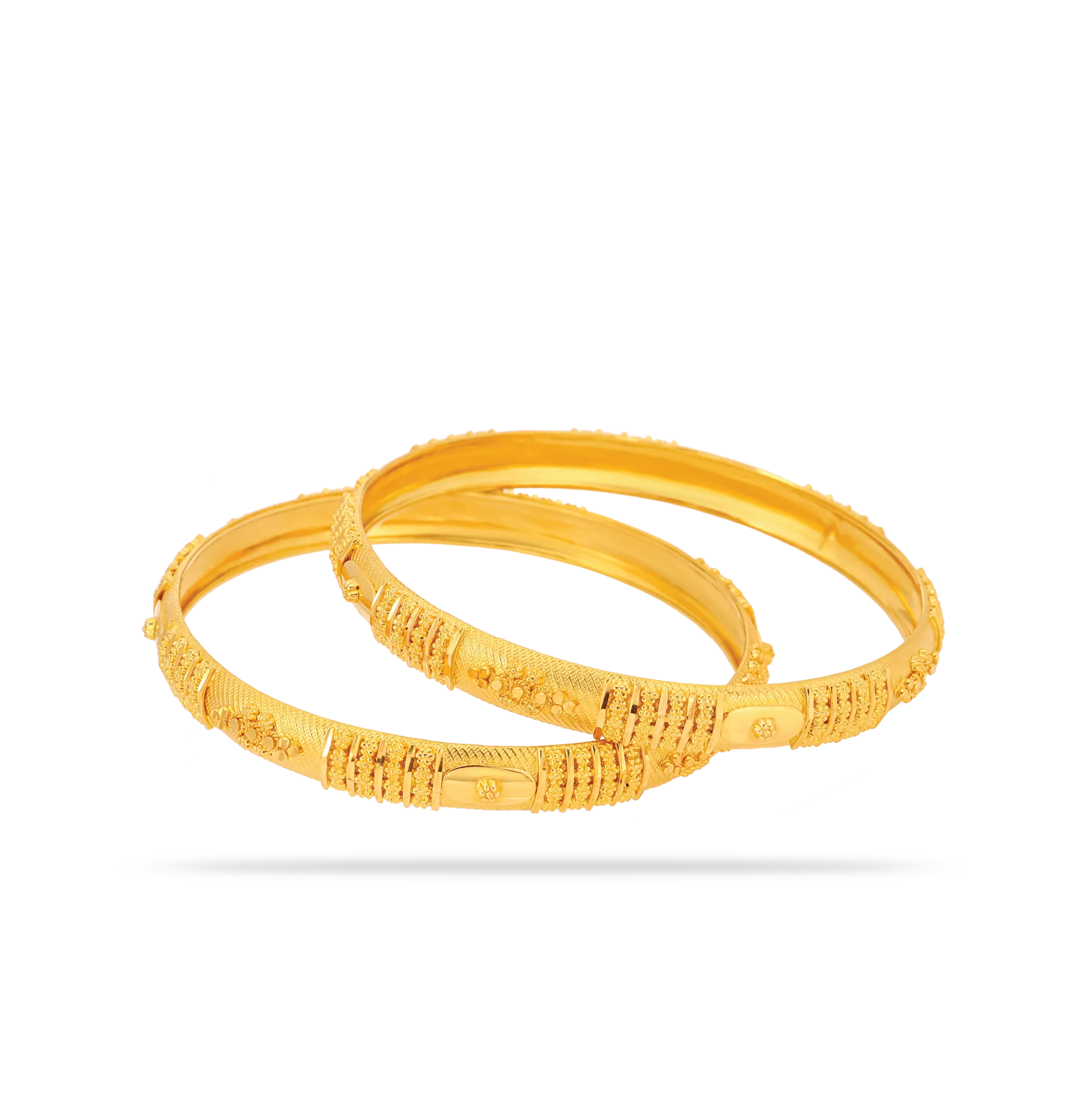
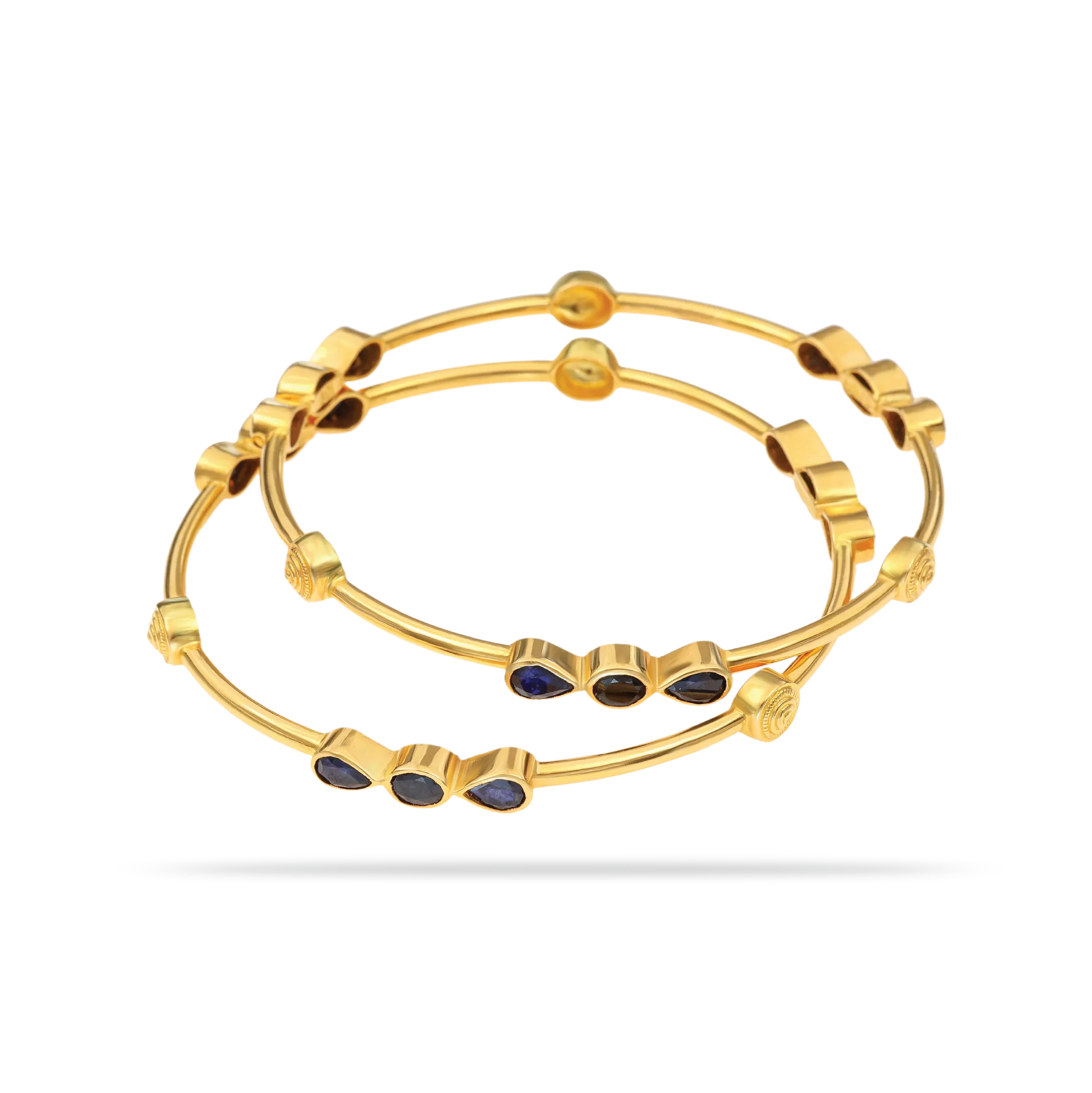
Traditional designs often draw on floral, temple-inspired, geometric, or regional motifs. Raised details, granulation, engraving, and coloured stones can give a pair a sense of history, while a simpler plain-gold profile keeps the look graceful and easy to wear. If heritage matters to you, notice which motifs feel personally meaningful rather than choosing detail simply because it is elaborate.
A traditional set can also anchor the rest of the bridal jewellery. The bridal jewellery guide from C Krishniah Chetty & Co discusses balancing heritage, personal style, metals, gemstones, comfort, and durability, all useful considerations when a bangle design carries cultural significance.
Contemporary bridal styles
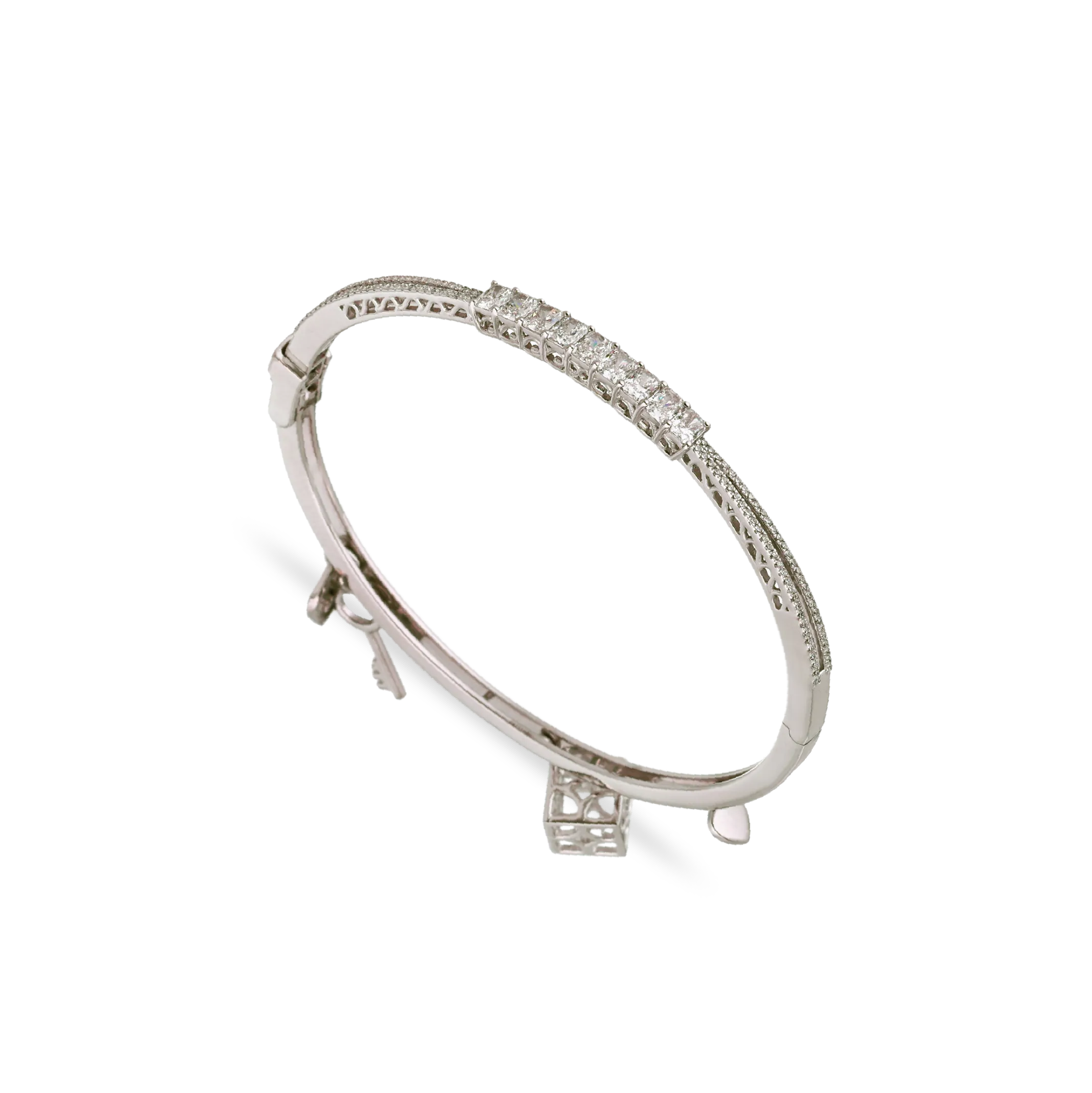
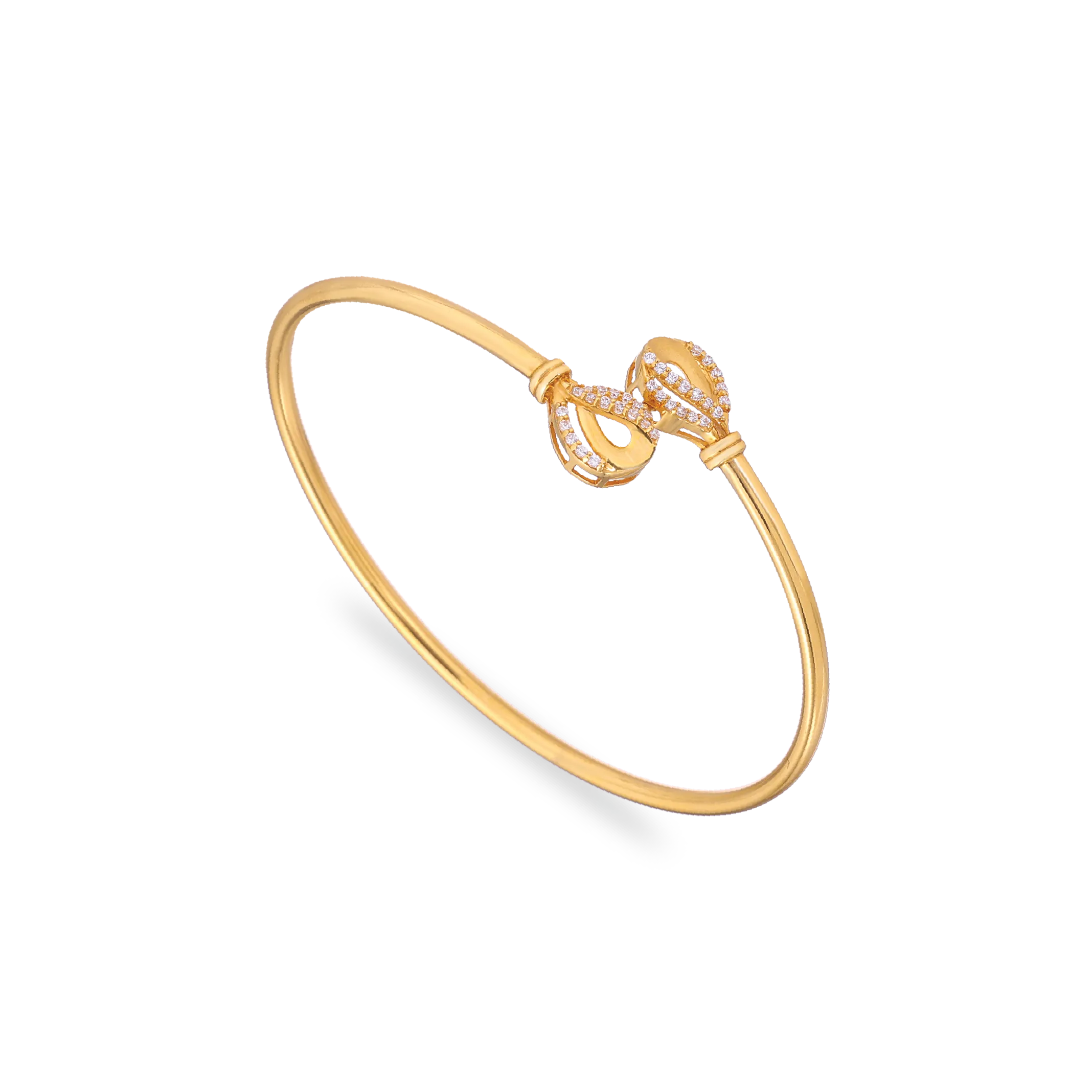
Contemporary bangles tend to use cleaner lines, open forms, mixed finishes, or restrained stone settings. Some have a sculptural silhouette that stands alone, while others are designed to sit neatly beside a watch-style bracelet or a slim diamond band. This approach suits a bride who wants a wedding piece that can return to her wardrobe for dinners, celebrations, and anniversaries.
Look closely at proportion. A wide, highly polished bangle can be modern without being stark, while a narrow textured design can feel current when layered with traditional pieces. The most successful combinations usually have one noticeable focal point and supporting bangles that do not compete with it.
Stackable bangles and kadas
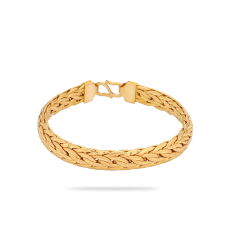
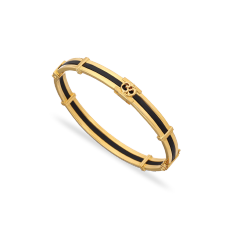
Stacking gives you flexibility, particularly when wedding events call for different levels of ornamentation. Slim bangles can create movement and rhythm, while a kada provides visual weight at the centre or edge of the stack. Before buying, check whether the edges are smooth enough to sit together without catching on one another.
Build the stack from a few related decisions rather than adding every attractive piece. You might repeat the same gold color, use one shared motif, or alternate plain and detailed surfaces. The result should look collected, not crowded.
Matching sets versus mix-and-match designs
A matching set offers immediate harmony and can simplify shopping, especially when the necklace, earrings, and bangles were designed to be worn together. Mix-and-match pieces allow more personality and may give you better wear after the wedding. Both approaches work when the scale, metal tone, and level of decoration feel intentional.
If you are unsure, photograph the pieces together in daylight. A picture often reveals whether one bangle is too dominant or whether the set needs a quieter element. It is also worth considering whether you prefer symmetry on both wrists or a more relaxed arrangement.
Choose the right gold purity and color
Gold choice affects appearance, price, strength, and the way a bangle may age with use. Karat is only one part of the decision; alloy composition, construction, thickness, and finish matter too. Ask to see the product details and hallmark information before treating a design as comparable to another.
Comparing 22K, 18K, and 14K gold
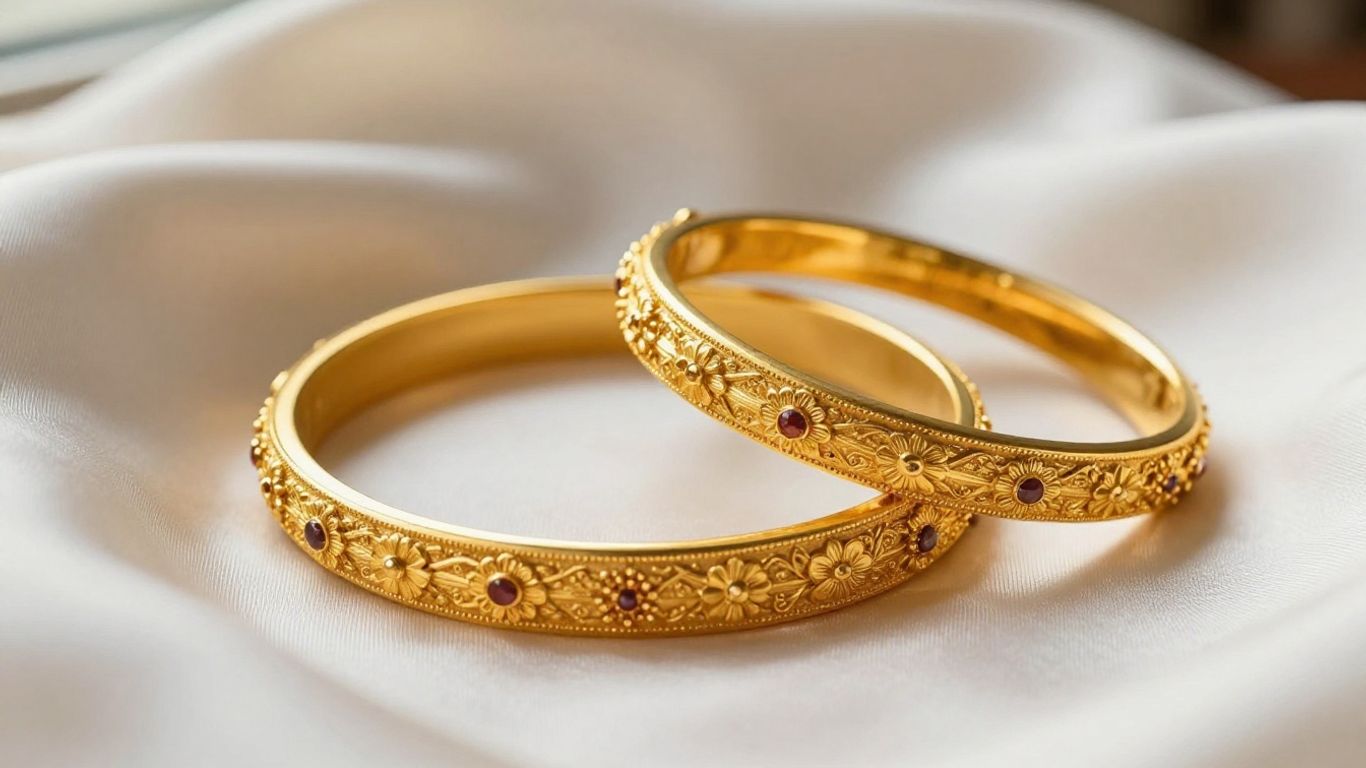
22K gold contains a higher proportion of gold and is valued for its rich yellow color and traditional appeal. 18K and 14K contain more alloy metals, which can support greater hardness and a broader range of finishes. The right choice depends on whether you place greater weight on gold content, color, daily durability, or budget.
Do not compare karat alone. Two bangles with the same karat can feel very different if one is substantially heavier, more reinforced, or built with a more complex clasp. A jeweller should be able to explain the metal content and construction in clear terms.
Yellow, white, and rose gold options
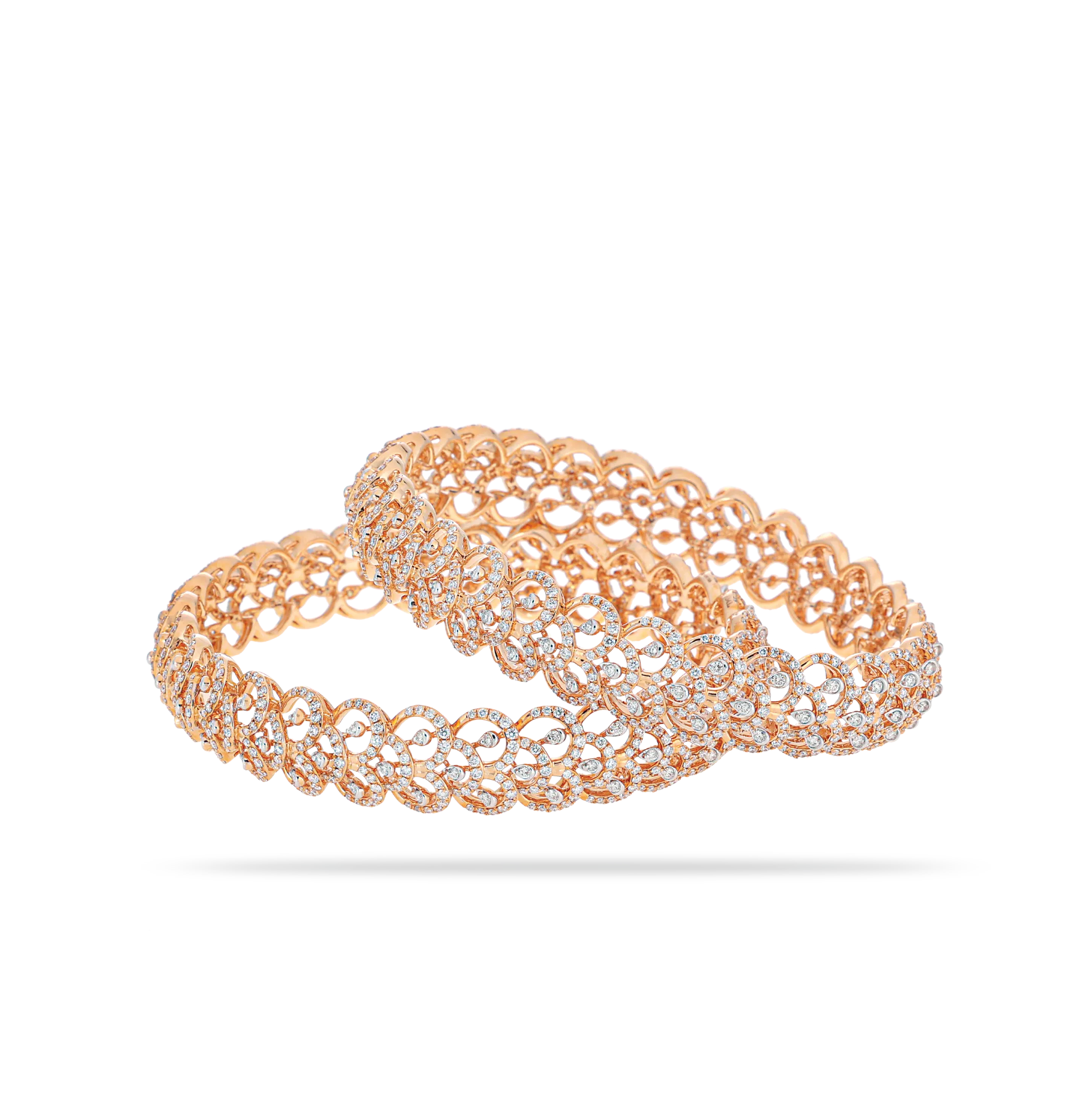
Yellow gold is the most traditional choice for many bridal wardrobes and works especially well with warm reds, maroons, saffron, and greens. White gold creates a cooler, more understated effect and can echo diamond or crystal details. Rose gold brings a softer blush tone that can complement dusty pink, champagne, peach, and neutral fabrics.
The decision does not have to be dictated by skin tone alone. Consider the metal of your engagement ring, wedding band, necklace, and earrings, then decide whether you want a coordinated set or a deliberate mixed-metal look. For broader jewellery styling ideas, the contemporary wedding jewellery guide covers modern metals, gemstones, finishes, focal points, and future wearability.
Balancing durability with gold content
Higher-purity gold is comparatively malleable, so a slender or highly detailed bangle may need more careful handling. Lower-purity alloys can be harder, but hardness does not make a piece immune to dents, scratches, or distortion. Thickness, shape, edge treatment, and how often you plan to wear the bangle should guide the practical choice.
A wedding-only piece can be selected differently from a bangle intended for frequent use. If you want one set for both, favour a well-supported design with comfortable edges and a finish that will not make ordinary marks immediately noticeable.
Understanding hallmarks and authenticity
A hallmark or certification mark can help identify fineness and provide confidence about the metal being sold. Ask what the marks mean in the market where you are purchasing, and make sure the invoice describes the karat, net gold weight, stones, and any other relevant details. Keep the paperwork with the jewellery after the wedding.
The final price should be explainable, not simply presented as one unexplained number. If a retailer cannot answer basic questions about purity, weight, or documentation, pause before placing an order.
Find a comfortable fit and suitable size
Beautiful bangles are rarely satisfying if they pinch, slide excessively, or interfere with movement. Sizing is especially important for a bridal stack because several pieces can create pressure where one bangle would not. Try the complete combination, or as close to it as possible, before making a final decision.
Measuring your wrist accurately
Measure the hand at its widest point if the bangle must pass over the knuckles, rather than measuring only the wrist. A flexible tape measure works well, and a strip of paper can be marked and measured with a ruler. Take the measurement more than once and share both the method and result with the retailer.
The correct internal diameter is not automatically the smallest one that passes over your hand. You need enough room for natural movement, but not so much that the bangle drops toward the forearm with every gesture. Your preferred fit also depends on whether you want a close, classic stack or a looser sound and movement.
Choosing between slip-on and hinged bangles
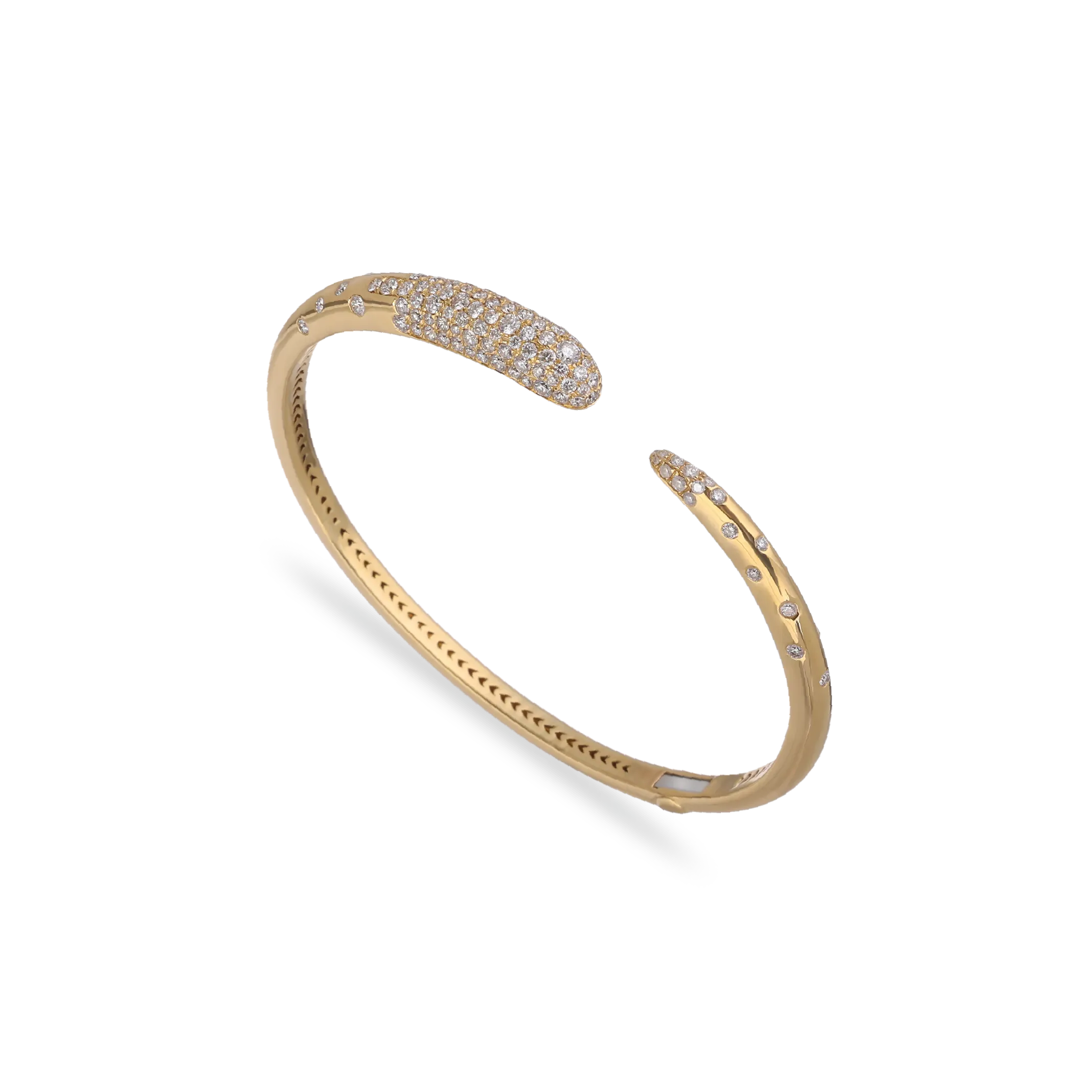
Slip-on bangles have a clean, uninterrupted look and are often comfortable once the right size is found. Hinged or clasped styles can be easier to put on and remove, especially if the design is wide or your hand makes traditional sizing difficult. Inspect the hinge and closure closely, since these areas receive repeated handling.
A closure should feel secure without creating a hard point against the skin. Ask whether it can be serviced if it loosens, and practise opening and closing it before the wedding rather than discovering the difficulty on the day.
Planning space for a stacked look
A stack needs a little breathing room between pieces so that the bangles can move without pressing into one another. Mix widths thoughtfully: several wide pieces may feel heavy, while too many very slim bangles may shift and tangle. If you plan to add family bangles or ceremonial pieces later, leave capacity for them now.
Use this quick planning sequence when trying on a set:
- Put on the widest or most structured bangle first.
- Add the pieces that will sit closest to the hand.
- Move your wrist, clasp a bag, and raise both arms.
- Remove any piece that catches, pinches, or changes the balance.
This small test is more revealing than a brief mirror check. It helps you see whether the stack remains comfortable through the ordinary movements that fill a long wedding day.
Avoiding tight or overly loose bangles
A tight bangle can leave marks and become difficult to remove if your hands swell in heat. An overly loose one may strike against other jewellery, slide into the hand, or catch on clothing. The ideal fit allows movement while keeping the design visually connected to the wrist.
Try the set at a similar time of day to when you expect to wear it, if possible. Tell the retailer about any swelling, sensitivity, or previous difficulty with bangles; small adjustments in size or construction can make a major difference.
Coordinate bangles with your bridal outfit
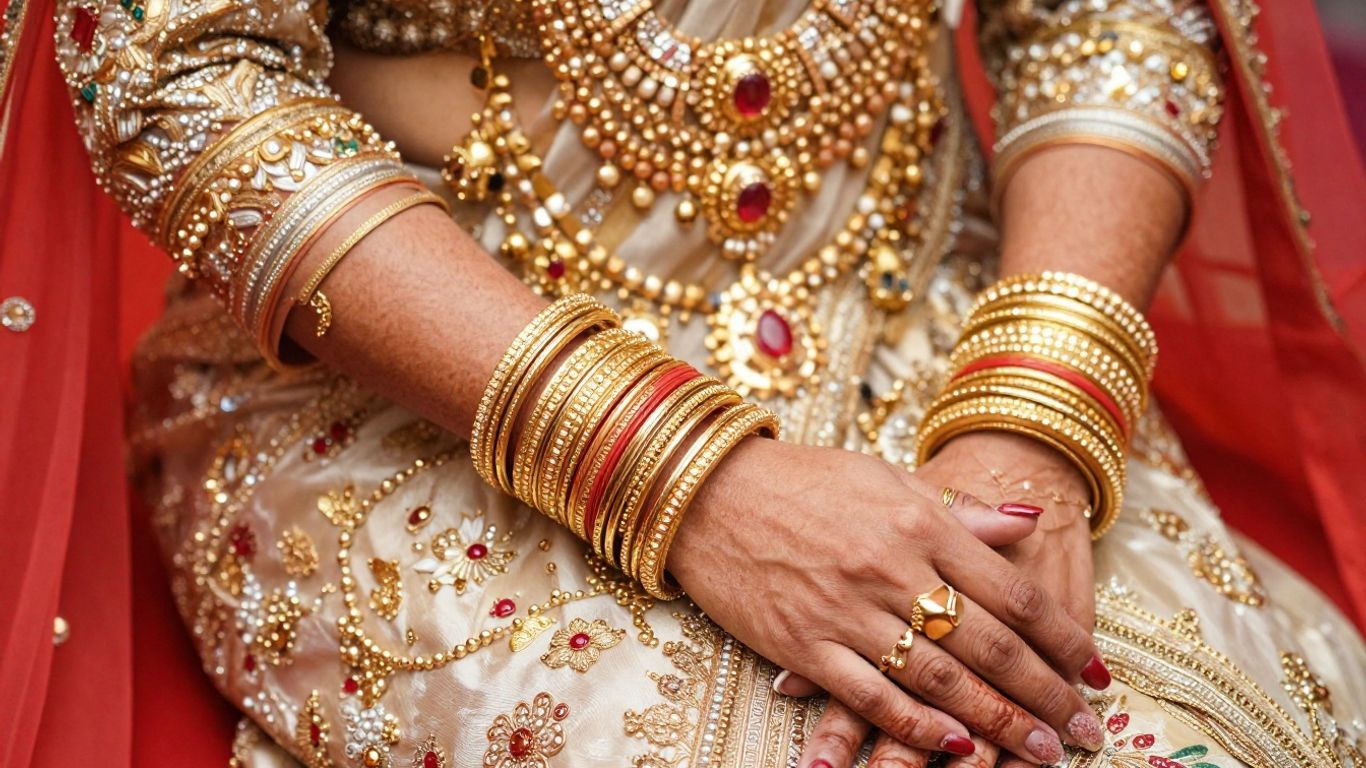
Bangles should complete the outfit rather than compete with its embroidery, neckline, or silhouette. Consider the fabric, colour, sleeve length, and visual density of the clothing before settling on the amount of gold. The same set can look delicate with a plain silk saree and overwhelming beside heavily embellished sleeves.
Matching bangles to lehengas and sarees
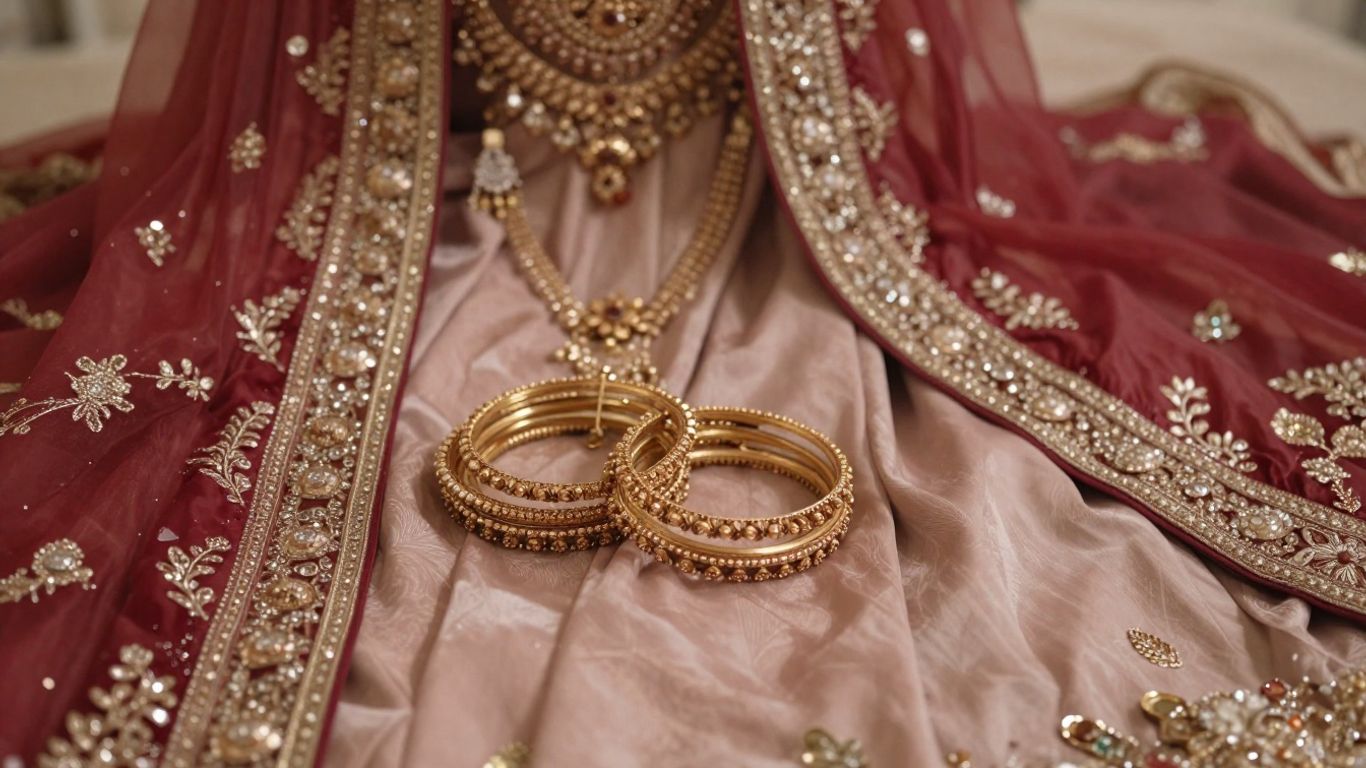
With a lehenga, use the embroidery as a guide to scale and texture. Fine sequin work may pair beautifully with polished or lightly detailed bangles, while dense zari, mirror work, or stonework may support a more substantial kada. For a saree, consider the border and blouse sleeve: repeating a motif or metal finish can make the full look feel connected.
Leave some visual space. If the outfit already has a strong sleeve, cuff, or border, a simpler bangle stack may photograph more clearly than another heavily patterned element. The bridal diamond bangles guide also considers budget, metal choice, comfort, fit, and coordination with wedding attire and an engagement ring.
Pairing gold with bridal colors
Yellow gold feels naturally at home with deep jewel tones and classic reds, but it can also warm ivory and muted neutrals. White gold suits cool pinks, icy blues, silver embroidery, and crisp white fabrics. Rose gold is especially appealing with soft blush, mauve, peach, and champagne palettes.
Colour matching does not need to be exact. Repeating one small accent, such as a ruby-toned stone or green detail, is often enough to link the bangles to the clothing without making the outfit look overly coordinated.
Combining bangles with bracelets and kadas
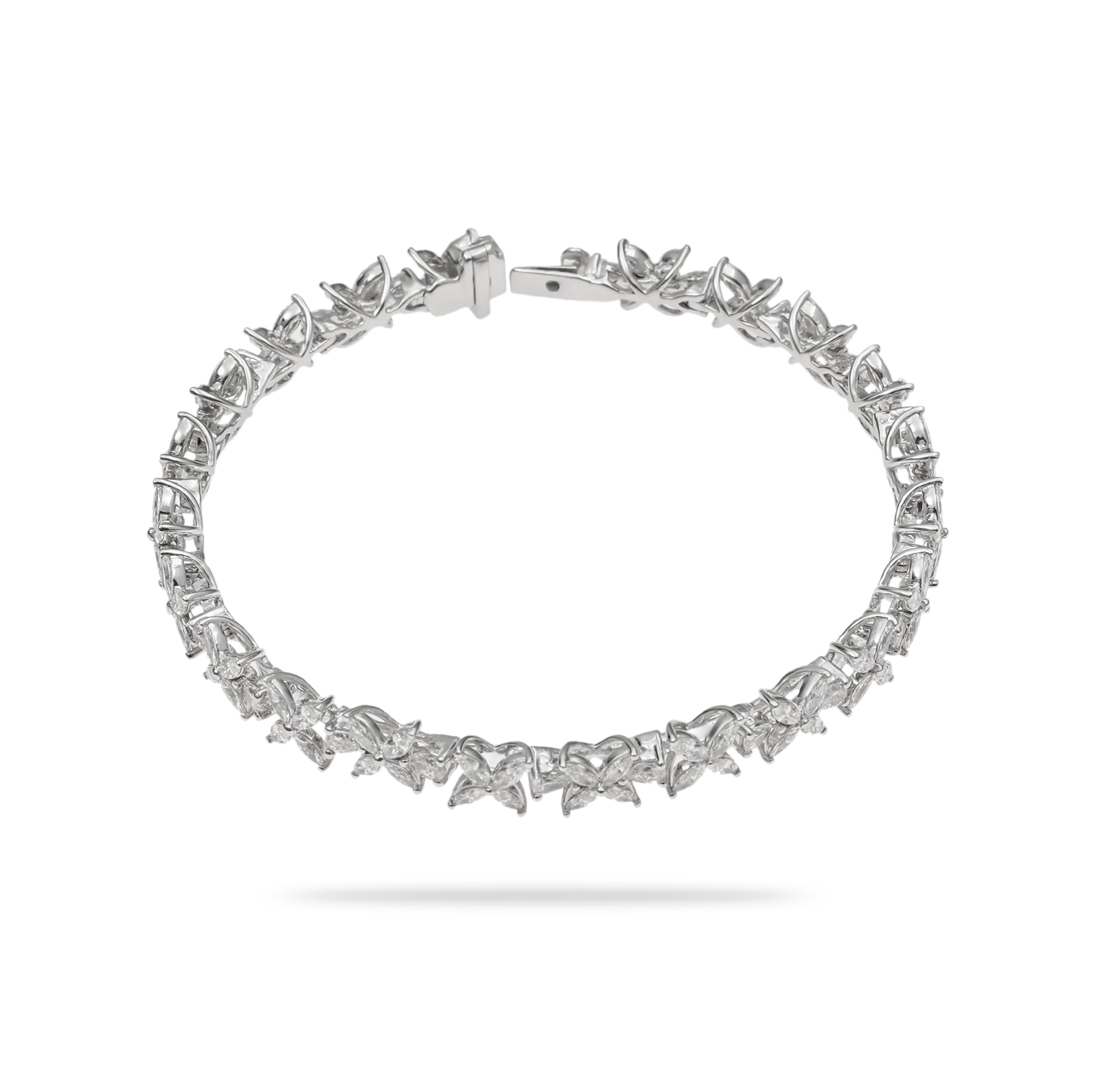
A bracelet can create a graceful break in a traditional bangle stack, while a kada can establish its outer edge and give the wrist a stronger silhouette. Avoid placing multiple wide pieces together unless the outfit and proportions can support them. The jewellery should still allow the hands to move naturally.
If you wear a bracelet with a clasp or a watch-like structure, check that it cannot rub against the bangles. Combining pieces is most successful when each item has a clear position and purpose.
Coordinating with earrings, necklaces, and rings
The largest piece of jewellery usually sets the scale for the rest. If your necklace is elaborate, consider quieter bangles; if the neckline is simple, the wrists can carry more ornament. Earrings, rings, and bangles should share at least one visual relationship, whether that is metal color, stone type, motif, or finish.
For a coordinated neckline, the bridal choker set guide discusses matching a choker to dress details and coordinating it with earrings, a tikka, and bangles. Keep the overall look balanced from a distance, since wedding photographs often show the complete ensemble rather than one piece alone.
Plan your bridal bangle budget
A realistic budget makes the selection process calmer and gives you a useful way to compare unlike designs. Decide whether the budget includes only the gold or also stones, making charges, taxes, delivery, resizing, and insurance. Then choose which qualities matter most if you need to make trade-offs.
Setting a realistic budget
Start with the amount you can spend comfortably, then divide it between the bangles and other essential wedding jewellery. It may be sensible to reserve a small margin for size changes, repairs, or a finishing detail that was not part of the initial quote. A lower budget does not require a generic design; it may simply call for less weight, fewer stones, or a simpler surface.
Ask for a written estimate early. Having the full figure in front of you helps prevent a beautiful design from quietly expanding beyond what you intended to spend.
Comparing weight, craftsmanship, and pricing
Gold weight is a useful reference, but it is not the whole value of a bangle. Handwork, construction, finishing, stone setting, and the complexity of a clasp can all affect the price. Compare like with like and ask which costs are included in the quoted amount.
A simple comparison can make those differences easier to see:
| Feature | What to compare | Why it matters |
|---|---|---|
| Gold content | Karat and net gold weight | Helps explain the metal value |
| Construction | Solid, hollow, hinged, or reinforced form | Affects feel, strength, and wear |
| Craftsmanship | Engraving, texture, setting, and finish | Influences detail and labour |
| Extra elements | Stones, enamel, or other decoration | Changes care needs and price |
The table is a starting point, not a substitute for examining the piece. A lighter bangle may be the better choice if its construction suits your lifestyle, while a heavier one may be preferable for an heirloom intended for occasional wear.
Evaluating gemstones and decorative details
Stones, enamel, engraving, and textured surfaces can make a bangle feel uniquely bridal, but they also add complexity. Ask whether the stones are securely set, whether the enamel is protected, and how the piece should be cleaned. Decorative details that look delicate may need more careful storage and handling.
Choose detail that will still make sense beyond the ceremony. A small coloured accent or refined pattern can carry the memory of the wedding without limiting the occasions on which you can wear the bangle.
Choosing heirloom-worthy designs
An heirloom design usually combines emotional meaning with sound construction and a style that can be understood across generations. It does not have to be the most ornate piece in the case. Comfortable proportions, enduring materials, and a story connected to the wedding may matter more over time.
Think about who might wear or inherit the bangles, and keep the purchase documents with them. A short note about the wedding date, design inspiration, or family significance can add value that no price tag captures.
Shop for bridal gold bangles with confidence
The final shopping stage is about verification as much as taste. Whether you buy in person or online, slow down enough to confirm what is included, how the bangle fits, and what happens if something goes wrong. A trustworthy purchase should leave you with clear answers and useful documentation.
Checking retailer reputation and certifications
Look for a retailer with a clear business identity, transparent product information, and recognised certification or hallmark practices relevant to your location. Reviews can reveal patterns in communication and after-sales service, but they should not replace checking the actual piece and paperwork. Ask direct questions about purity, weight, stones, and workmanship.
The seller should be comfortable explaining the product rather than rushing you toward a decision. If the answers change from one conversation to the next, treat that as a reason to pause.
Reviewing return, exchange, and resizing policies
Read the policy before paying, particularly for customised or made-to-order bangles. Check the time limit, exclusions, resizing costs, and whether a returned piece must be in unused condition. For a wedding purchase, also ask how quickly an adjustment can be completed.
Keep receipts, certificates, measurements, and written conversations together. These records can be valuable if you need an exchange, repair, insurance valuation, or future service.
Comparing online and in-store purchases
In-store shopping lets you assess weight, polish, comfort, closure quality, and the way several pieces sit together. Online shopping can offer a wider range and more time for comparison, but you must rely on accurate measurements, detailed photographs, and a clear return process. Video appointments can help, though they still cannot fully replace trying on the jewellery.
If you buy online, save the product page and specifications at the time of purchase. Confirm delivery timing well before the ceremony so there is room for inspection or adjustment.
Verifying making charges and final costs
Ask for a line-by-line invoice showing gold weight, karat, stone charges, making charges, taxes, and any service or delivery fees. Clarify whether the quoted gold price is fixed or linked to the rate on a particular date. A final total that cannot be reconciled with the estimate deserves another conversation.
The most useful question is simple: what exactly am I paying for? A transparent answer makes it easier to compare designs fairly and choose with confidence.
Care for bridal gold bangles after the wedding
Wedding jewellery deserves care even when it is worn only a few times a year. Gold can scratch, decorative elements can loosen, and repeated contact between pieces can alter a polished finish. A modest routine will help your bridal gold bangles remain ready for anniversaries and family celebrations.
Cleaning gold bangles safely
For plain gold , a soft lint-free cloth and gentle cleaning method recommended by your jeweller are usually safer than abrasive products. Avoid household chemicals, rough brushes, and improvised polishing compounds. If the bangle includes stones, enamel, or a hinged mechanism, ask for care instructions specific to that construction.
Dry the piece fully before storing it. Moisture left around a clasp, setting, or textured surface can make later cleaning more difficult.
Preventing scratches and damage
Remove bangles before swimming, exercising, gardening, cooking with harsh ingredients, or doing heavy household work. Keep them away from perfumes, hairspray, cosmetics, and cleaning chemicals where possible. Do not force a bangle over the hand or bend it to make it fit.
Have a professional inspect a frequently worn or valuable piece if a stone moves, a clasp feels weak, or the shape seems altered. Early attention is generally kinder to the jewellery than waiting for a small issue to become a break.
Storing bangles between occasions
Store each bangle in a soft pouch or a divided jewellery case so that pieces do not knock against one another. Wide designs should not be placed under heavy items, and hinged bangles should be closed according to the maker's instructions. Keep the storage area dry, cool, and away from direct sunlight.
If the set has multiple pieces, label or photograph the arrangement. That small step makes it easier to recreate the wedding stack without repeatedly handling every bangle.
Maintaining gemstones and enamel details
Gemstones and enamel can require different care from plain gold . Some stones are sensitive to heat, impact, or sudden temperature changes, while enamel may chip if it strikes another hard surface. Do not assume that a gold-safe cleaner is automatically safe for every decorative element.
Keep the original care guidance with the certificate and ask a jeweller before using an ultrasonic cleaner or steam. Gentle handling is particularly worthwhile for heirloom pieces whose value includes both material and family history.
Conclusion
The perfect bridal gold bangles are the ones that bring together personal meaning, a comfortable fit, honest value, and harmony with the rest of your wedding look. Take time to compare styles, verify the details, and test how the set moves with you; the result will be more beautiful because it is genuinely yours.
Frequently Asked Questions
How many bridal gold bangles should a bride wear?
There is no universal number. Choose according to cultural tradition, the width of each bangle, the outfit's embellishment, and what feels comfortable through the ceremony and celebrations.
Is 22K gold the best choice for bridal bangles?
22K gold is popular for its high gold content and rich yellow appearance, but 18K or 14K may suit someone who prioritizes added hardness, a different color, or a lower price. Construction and intended use matter alongside karat.
How should bridal bangles fit?
They should pass over the hand without force and rest securely without pinching. Leave enough room for natural movement, especially if you plan to wear several bangles together.
Can yellow gold and white gold be worn together?
Yes. Repeating one finish elsewhere in the jewellery can make mixed metals look deliberate. Keep the balance simple so the combination feels coordinated rather than accidental.
Are hinged bangles better than slip-on bangles?
Neither is automatically better. Hinged designs may be easier to put on, while slip-on bangles offer a continuous silhouette. Choose based on hand size, comfort, closure security, and how often you expect to wear the piece.
What should be included on a bangle invoice?
The invoice should clearly identify karat, net gold weight, stones or other decorative materials, making charges, taxes, and the final amount. Keep it with any hallmark or certification documents.
How should gold bangles be stored after the wedding?
Store them separately in soft pouches or divided compartments, away from moisture, chemicals, and heavy items. Have decorative or hinged pieces checked professionally if you notice looseness, damage, or a change in shape.
Related blogs:
November 20, 2025
The Timeless Elegance of the Tennis Bracelet: A Comprehensive Guide
Read More
November 20, 2025
The Ultimate Guide to Styling and Wearing a Choker Necklace
Read More
November 20, 2025
Find Your Perfect Engagement Ring: A Comprehensive Guide to Styles and Diamonds
Read More
November 20, 2025
The Timeless Elegance of a Diamond Tennis Bracelet: A Buyer's Guide
Read More