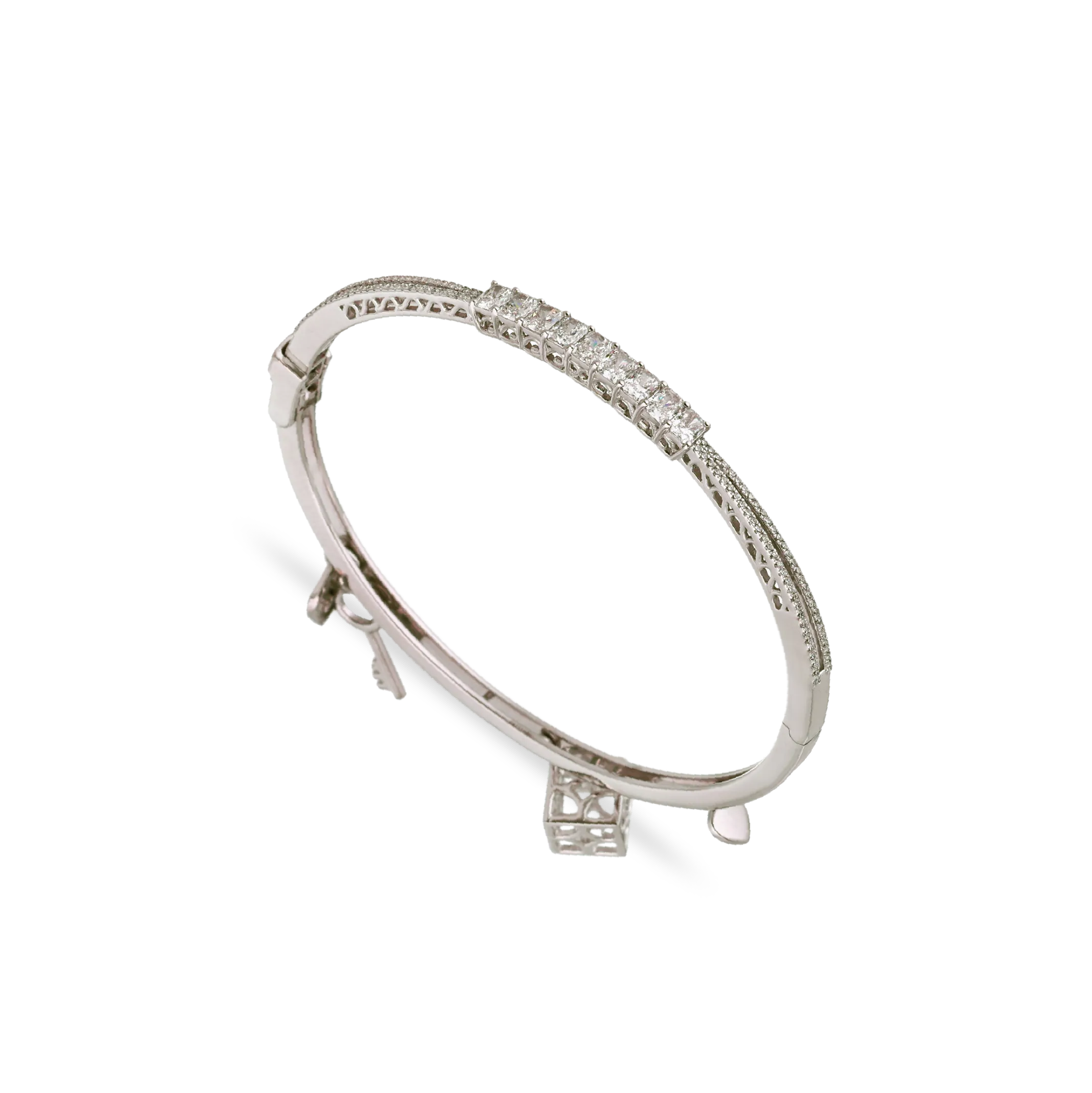
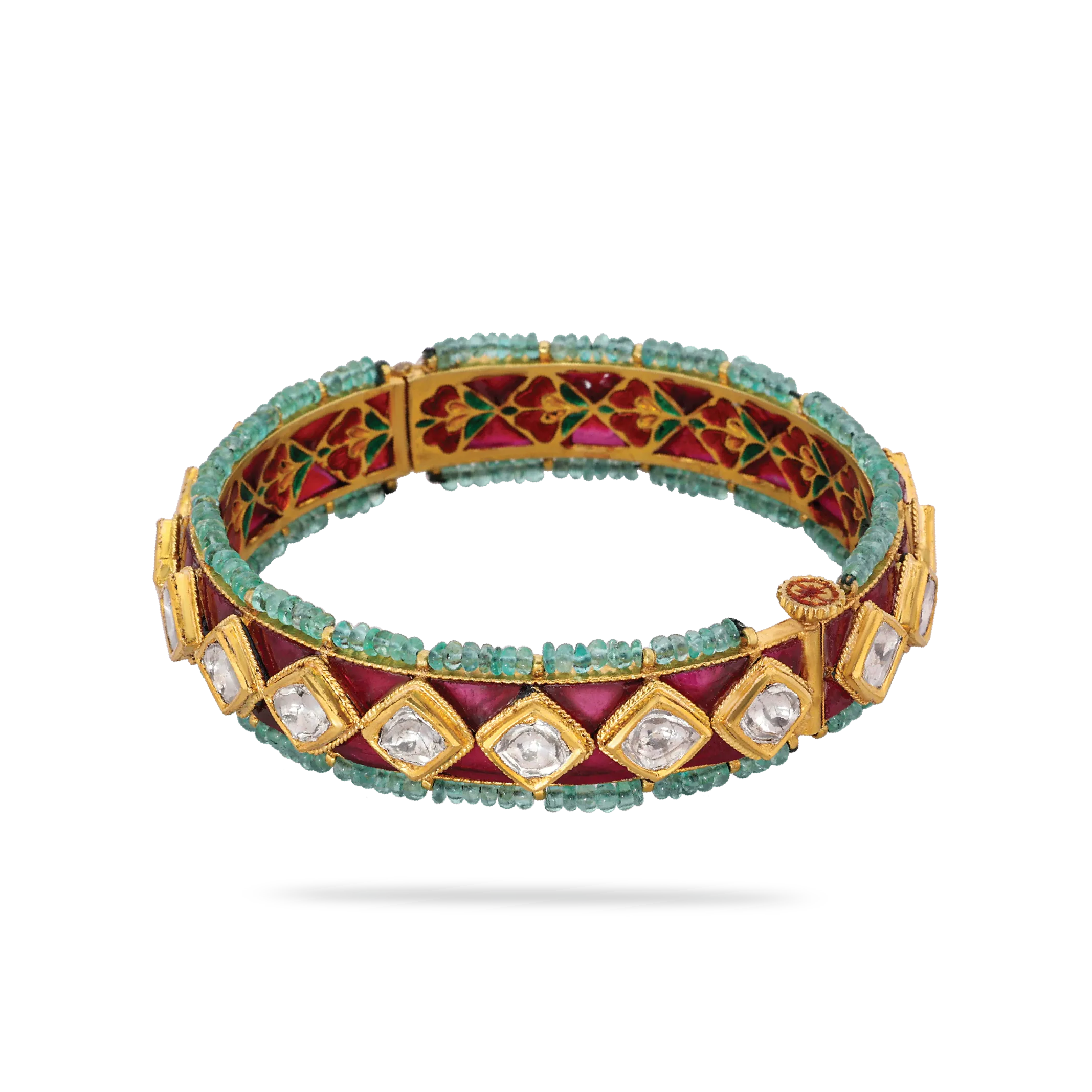
How to choose bridal diamond bangles for your wedding day
September 19, 2026 | 10 minutes read
Key Takeaways
Choosing bridal diamond bangles is easier when you decide on your budget, preferred metal, diamond priorities, and desired level of ornamentation before shopping. A beautiful pair should also feel secure, comfortable, and connected to the rest of your wedding-day jewelry.
- Set a spending range that includes customization, taxes, and possible resizing.
- Compare diamond quality, setting security, metal purity, and overall construction.
- Choose a style and scale that complement your dress, engagement ring, and cultural traditions.
- Measure carefully and test the bangle’s movement before committing to a stack.
- Shop early, keep the documentation, and plan for cleaning, storage, and insurance.
Set your budget and bridal jewelry priorities
A bangle can be a quiet finishing detail or one of the most noticeable pieces in a bridal ensemble. Before comparing designs, decide how much of your jewelry budget should go toward the bangle and what matters most to you: diamond presence, metal weight, craftsmanship, versatility, or sentimental value. This keeps a beautiful design from pulling you into an uncomfortable purchase. It also gives a jeweler a useful starting point.
Establish a realistic spending range
Begin with a range rather than a single fixed number. Diamond count, total carat weight, metal purity, construction, and whether the design is made to order can all influence the price. Look at several shapes and widths within your range, then ask what changes would preserve the look if the first option stretches too far.
It is sensible to leave room for the less visible parts of the purchase. A fitting appointment, protective packaging, taxes, and any additional work may affect the final total. A clear ceiling makes comparison calmer and helps you focus on the design rather than an unexpectedly high checkout figure.
Balance diamond size, quality, and metal choice
There is no single best balance of the 4Cs for every bride. A slightly smaller diamond with pleasing cut and color may give a livelier appearance than a larger stone chosen without considering how it looks in the setting. Metal choice also affects the character of the bangle: yellow gold feels warm and traditional, white gold and platinum appear cooler, and rose gold brings a softer contrast.
Think about where you want the eye to land. If the bangle has a strong sculptural shape, moderate stones may be enough. If it is slim and understated, consistent sparkle can matter more than a single prominent diamond. The best choice is the one that looks intentional beside your other jewelry.
Decide whether to buy one bangle or a coordinated set
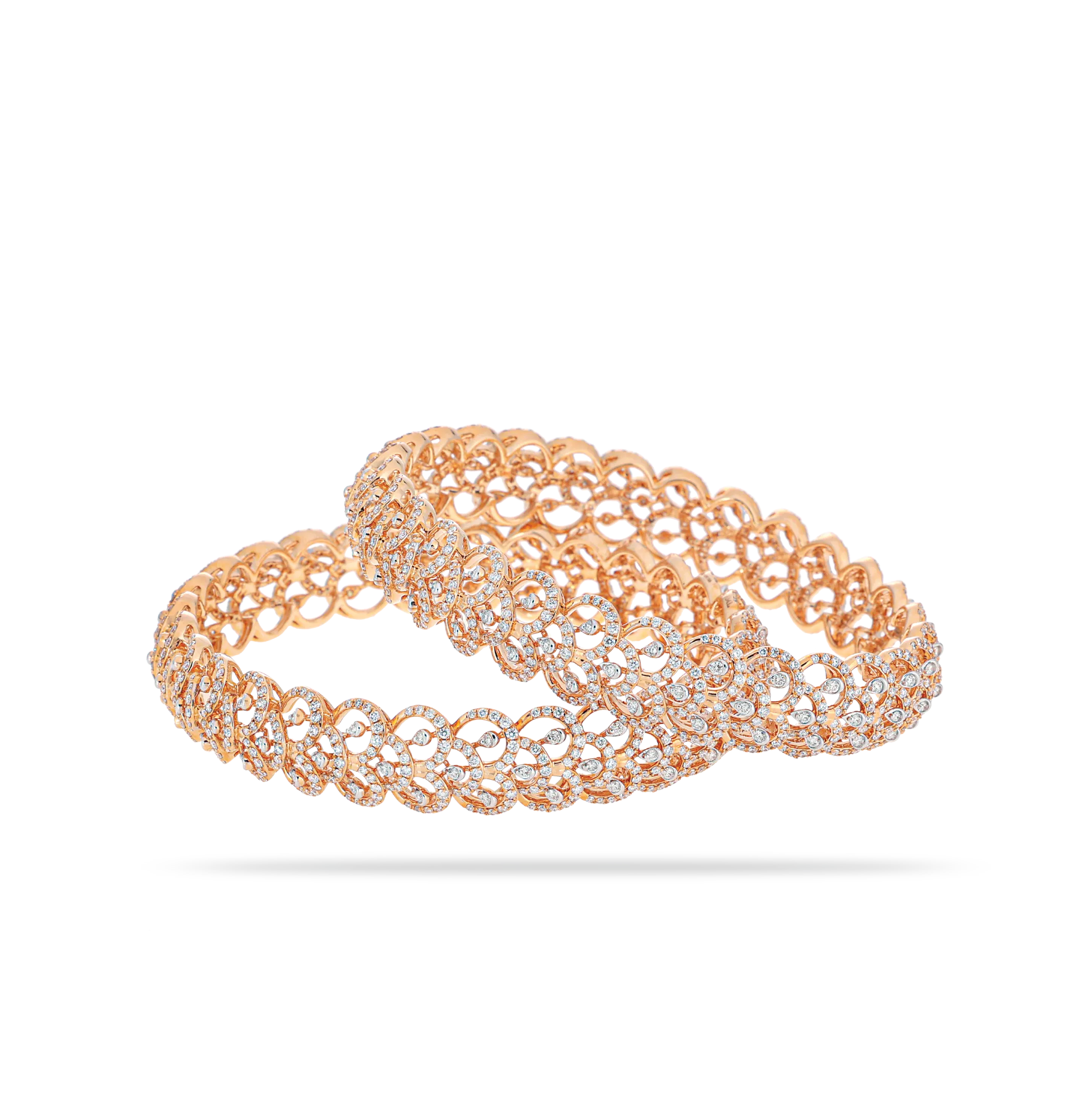
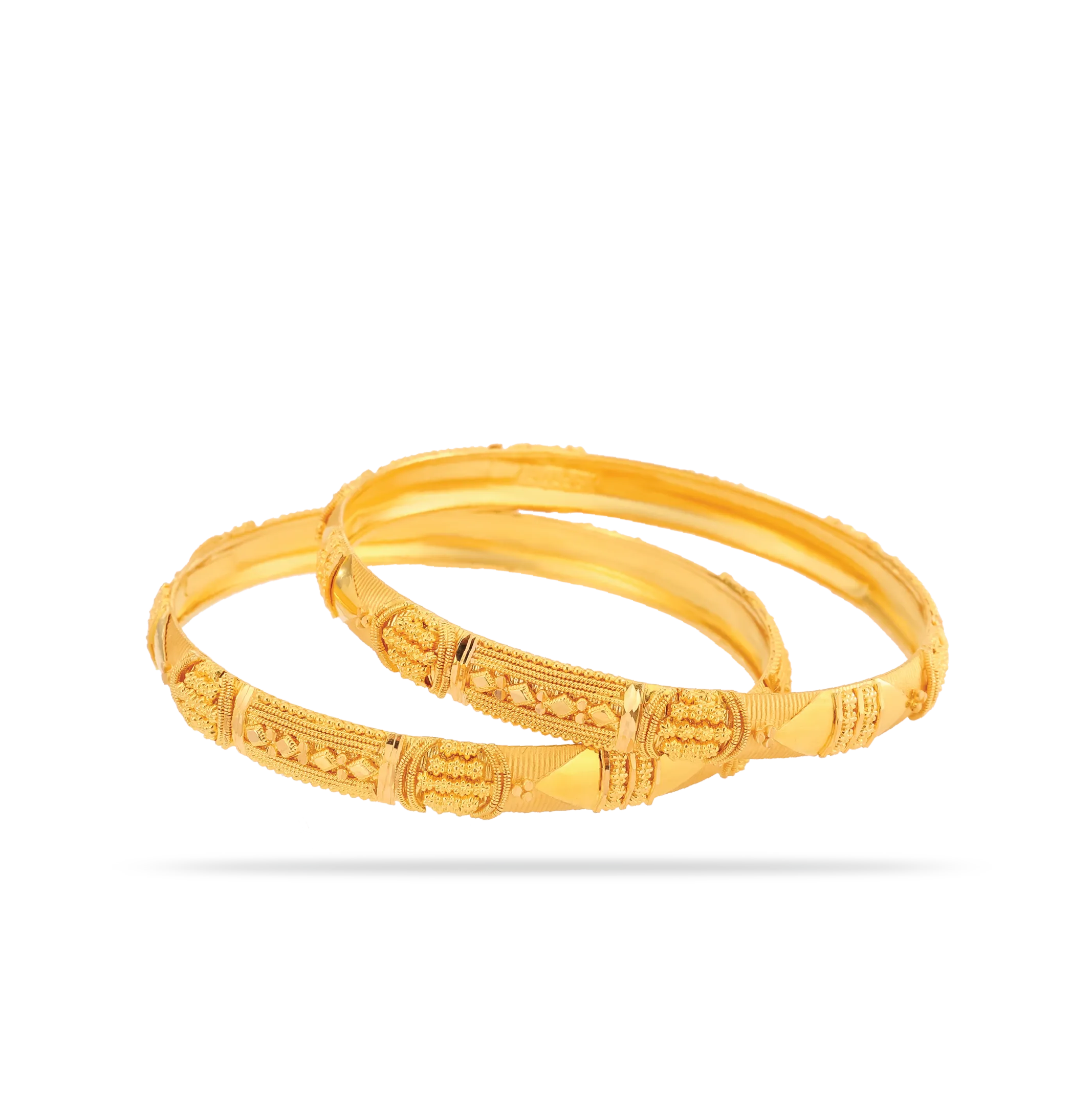
One well-proportioned bangle can look polished and remain easy to wear after the wedding. A coordinated pair or stack creates more movement and visual richness, but it also adds weight, cost, and decisions about spacing. Try the pieces together rather than judging each one in isolation.
Consider how often you expect to wear them afterward. A matched set may suit celebrations and traditional ceremonies, while a single flexible design could work with everyday clothing. If you are considering a broader bridal ensemble, this guide to bridal jewelry styling can help you think about the relationship between individual pieces.
Allow for taxes, customization, and resizing
Ask for a written estimate that separates the bangle, diamonds, metal, labor, taxes, and any requested changes. Custom engraving, an unusual size, a different clasp, or a modified stone layout may change both price and delivery time. Resizing is not equally simple for every construction, so ask about it before placing a deposit.
Also confirm what happens if the finished piece does not fit as expected. Knowing the adjustment process in advance is reassuring, especially when the design includes hinges, a continuous circle, or delicate pavé work.
Understand diamond quality and bangle construction
A bridal bangle has to be attractive at close range and dependable in motion. Hands brush against clothing, flowers, chairs, and other jewelry throughout a wedding day, so the setting and structure deserve as much attention as the diamonds. Consider sparkle, security, polish, and wearability together rather than treating them as separate buying decisions.
A useful comparison starts with the stones, then moves to how those stones are held and how the bangle opens or closes. The design should feel finished on the inside as well as the outside.
Compare the 4Cs for everyday bridal wear
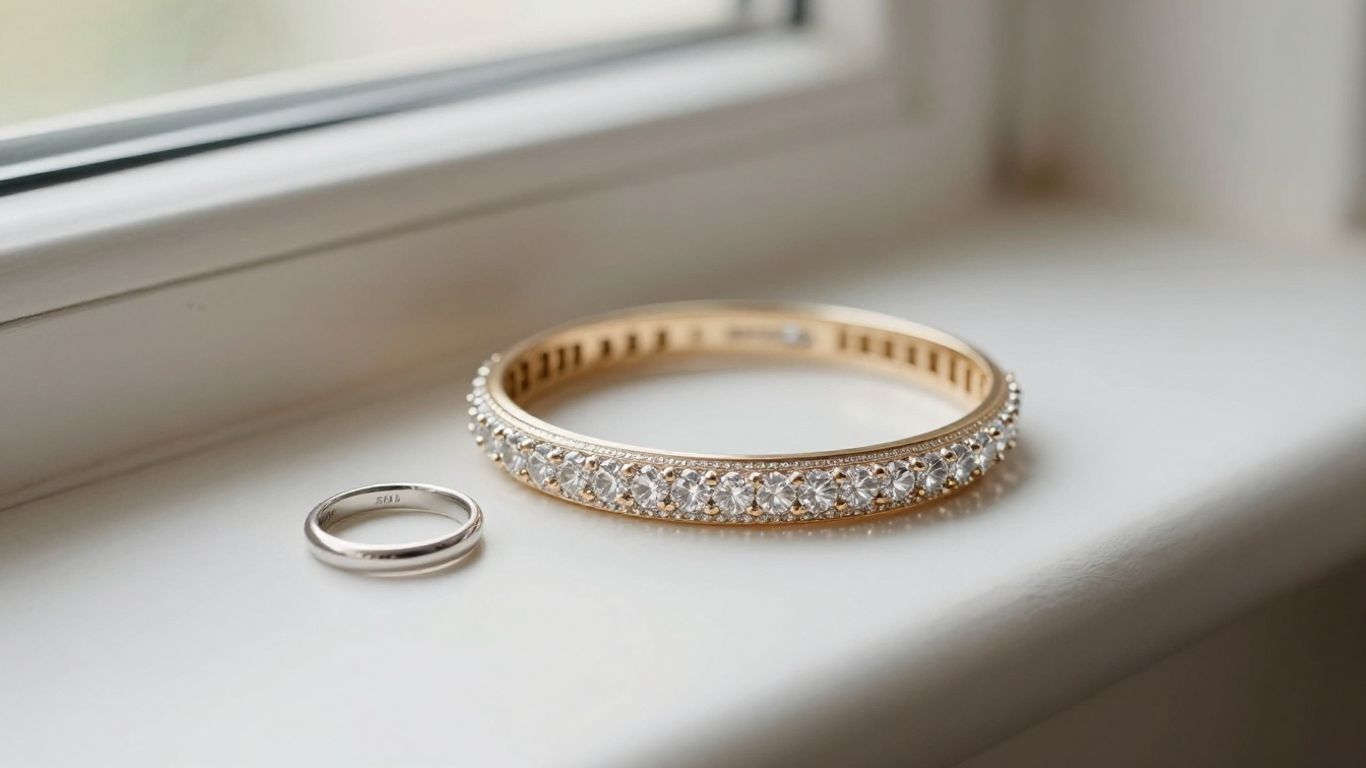
Cut has a strong influence on visible sparkle, while color and clarity affect how clean and bright a stone appears. Carat weight describes size, but a larger total weight does not automatically mean a more attractive bangle. For a piece worn close to the hand, consistency across the stones can be especially pleasing.
Ask whether the diamonds are matched in appearance and whether the grading information applies to individual stones or a larger group. Prioritize visible beauty and security over a specification that sounds impressive but is not noticeable in the finished piece.
Choose between natural and lab-grown diamonds
Natural and lab-grown diamonds are both diamond material, but they can differ in origin, pricing, and the story you want the jewelry to carry. Some couples value geological history, while others prefer the possibility of allocating more of the budget to size, design, or metal. Neither choice replaces the need to inspect cut, color, clarity, and setting quality.
Decide what matters most to you and ask for clear documentation. The bangle should feel right emotionally as well as look right on the wrist.
Evaluate diamond settings for security and sparkle
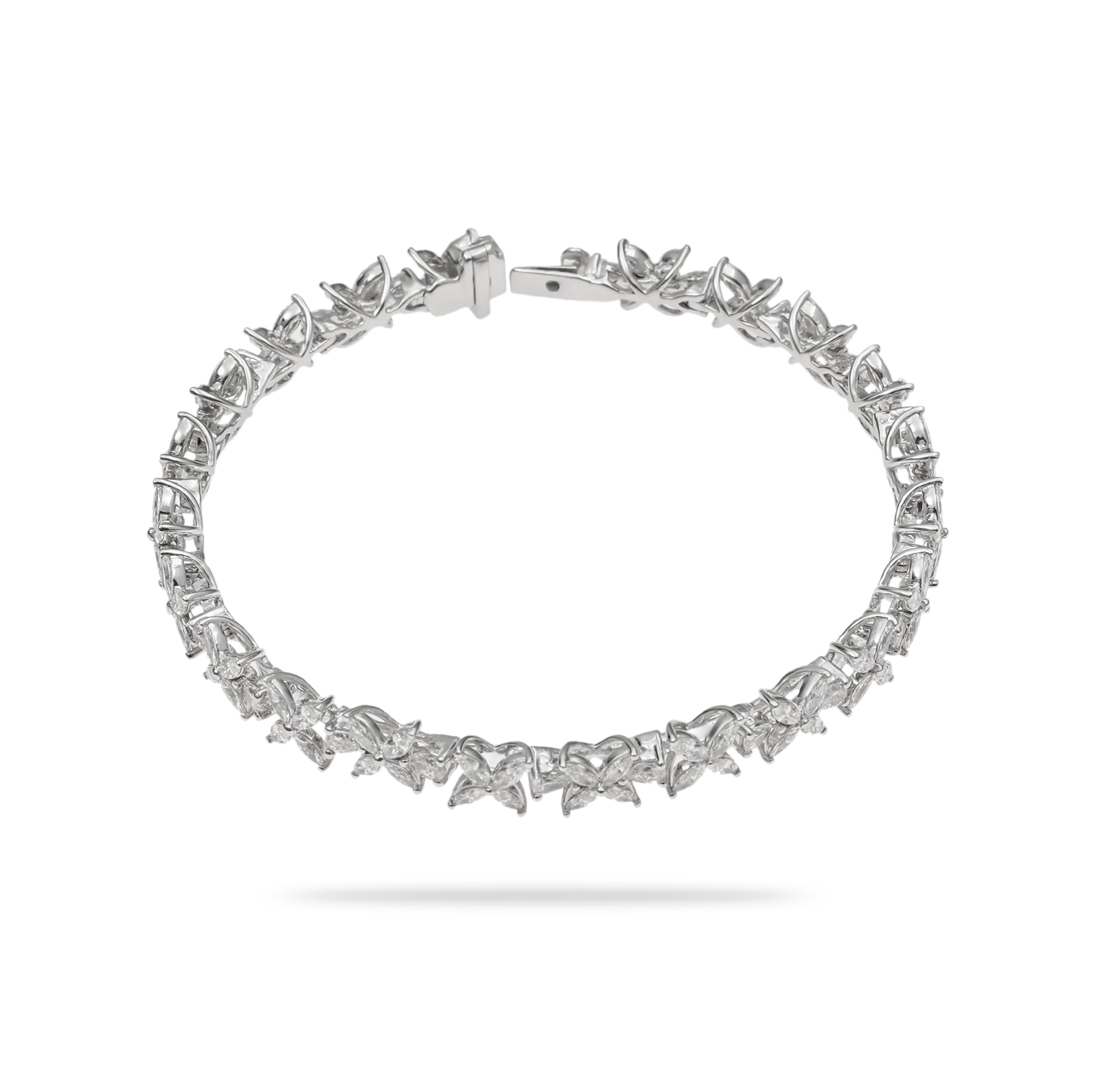
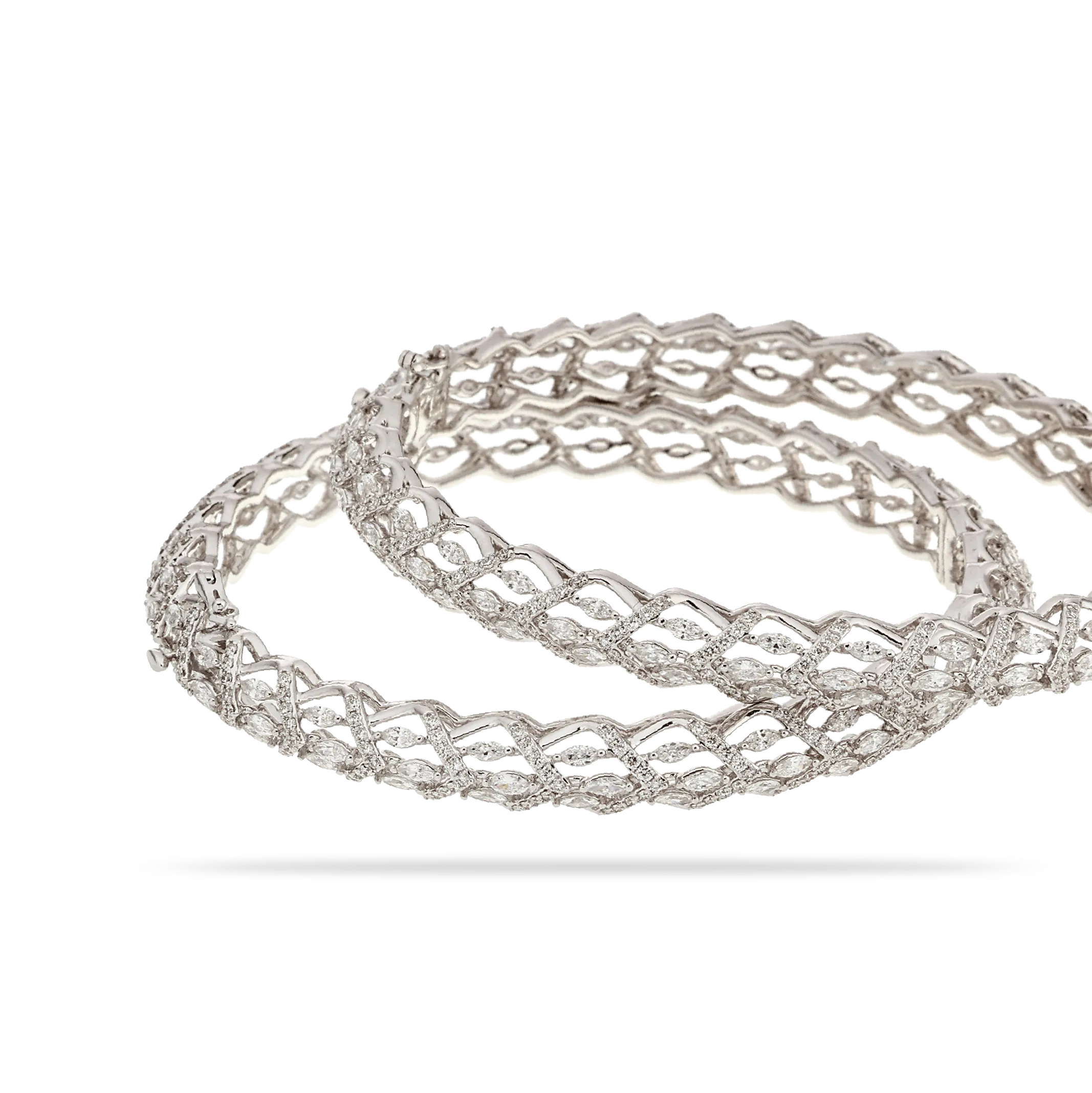
Prongs, bezels, channels, and pavé settings create different visual effects and maintenance needs. Prongs can show more of each stone, while channels offer a smoother surface; pavé can produce continuous sparkle but deserves careful inspection. Run a clean fingertip gently over the piece and look for snagging, uneven edges, or stones that appear loose.
A setting should hold the diamonds firmly without making the bangle look crowded. Ask how often the piece should be inspected, particularly if you plan to stack it with other bangles that may rub against its edges.
Check the bangle’s gold or platinum purity
Confirm the metal type and purity mark, and ask whether the mark is on the bangle itself or supplied only on accompanying paperwork. Gold purity affects color, value, and hardness, while platinum has a naturally dense feel and a distinct finish. The ideal choice depends on the design, your existing jewelry, and how frequently you expect to wear the piece.
Look closely at the interior finish as well. Smooth edges, even polish, and a comfortable inner surface are small details that become significant after several hours of wear.
Match the bangle style to your bridal look
The bangle should belong to the outfit rather than compete with it. Start with the overall mood of the ceremony, then consider the gown or sari, neckline, sleeve shape, embroidery, and other jewelry. A delicate diamond line can calm an ornate look, while a broader sculptural design may hold its own beside simpler clothing.
Photographs are useful, but try the complete combination in person whenever possible. Proportion can look very different under studio lighting than it does beside fabric and skin.
Select classic, modern, or traditional designs
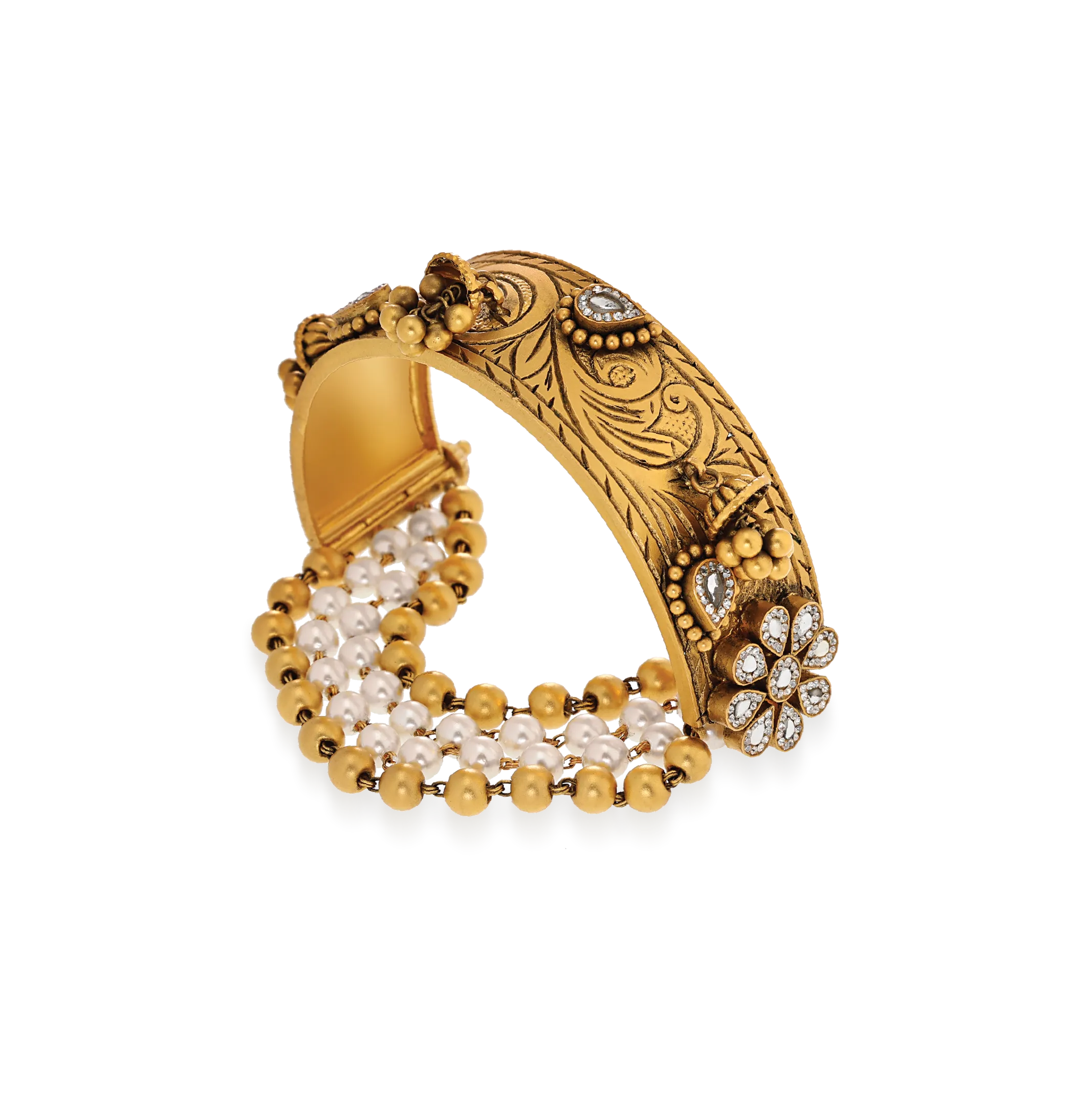
Classic designs often rely on balanced lines and restrained detailing, making them easier to wear beyond the wedding. Modern styles may use asymmetry, open forms, or architectural curves. Traditional designs can carry cultural meaning through motifs, engraving, goldwork, or a particular sense of scale.
Choose the category that feels like you, not merely the one that is currently prominent. A timeless bangle does not have to be plain; it simply needs a design language you will still enjoy years from now.
Coordinate the bangle with your wedding dress
Match visual weight before matching every detail. A heavily embellished dress may call for a cleaner bangle, while a minimal gown can support more texture or sparkle at the wrist. Sleeve length matters too: a wide cuff or ornate pair may disappear beneath a full sleeve, while a slim bangle can create a graceful transition.
Bring a fabric swatch or a photograph of the dress when shopping. A warm ivory gown, bright white silk, and richly colored traditional garment can each change how the same metal and diamond arrangement appears.
Choose between sleek, engraved, and embellished details
Sleek bangles are often easiest to layer and tend to move quietly from ceremony to later occasions. Engraving adds a personal detail that may be visible only when the bangle is removed, while embellishment creates stronger surface interest. Decide whether you want the piece to be noticed for its outline, its message, or its sparkle.
Details should have room to breathe. Too many competing textures can make a stack look busy, especially when earrings, necklaces, and rings are already elaborate.
Consider regional and cultural bridal styles
Bridal jewelry can express family tradition, regional identity, and ceremony-specific customs. Some brides prefer a diamond bangle to sit alongside gold bangles or heritage pieces; others want a more contemporary interpretation. Discuss the expected jewelry with family members early if tradition is part of the celebration.
A cohesive look does not require every piece to be identical. It can come from repeating a metal, motif, finish, or stone shape across the set.
Find the right fit and stacking combination
Fit is easy to underestimate when attention is focused on sparkle. A bangle that is too loose may slide, twist, or strike other pieces, while one that is too tight can feel restrictive and difficult to remove. The right size allows natural hand movement without constant adjustment.
Try the bangle with the clothing and other bangles you expect to wear. Your wrist may feel comfortable in a quiet fitting room but different after hours of movement, heat, and ceremony activity.
Measure your wrist and hand accurately
For a closed bangle, the hand often determines the required opening more than the wrist does. Measure at the widest part of the hand while bringing the fingers together as if putting on the piece. For hinged or cuff designs, wrist circumference and the opening mechanism matter more.
Have a jeweler confirm the measurement using the actual design. Width, interior shape, and flexibility can all affect fit, so a number alone should not be treated as a final answer.
Choose between hinged, slip-on, and cuff designs
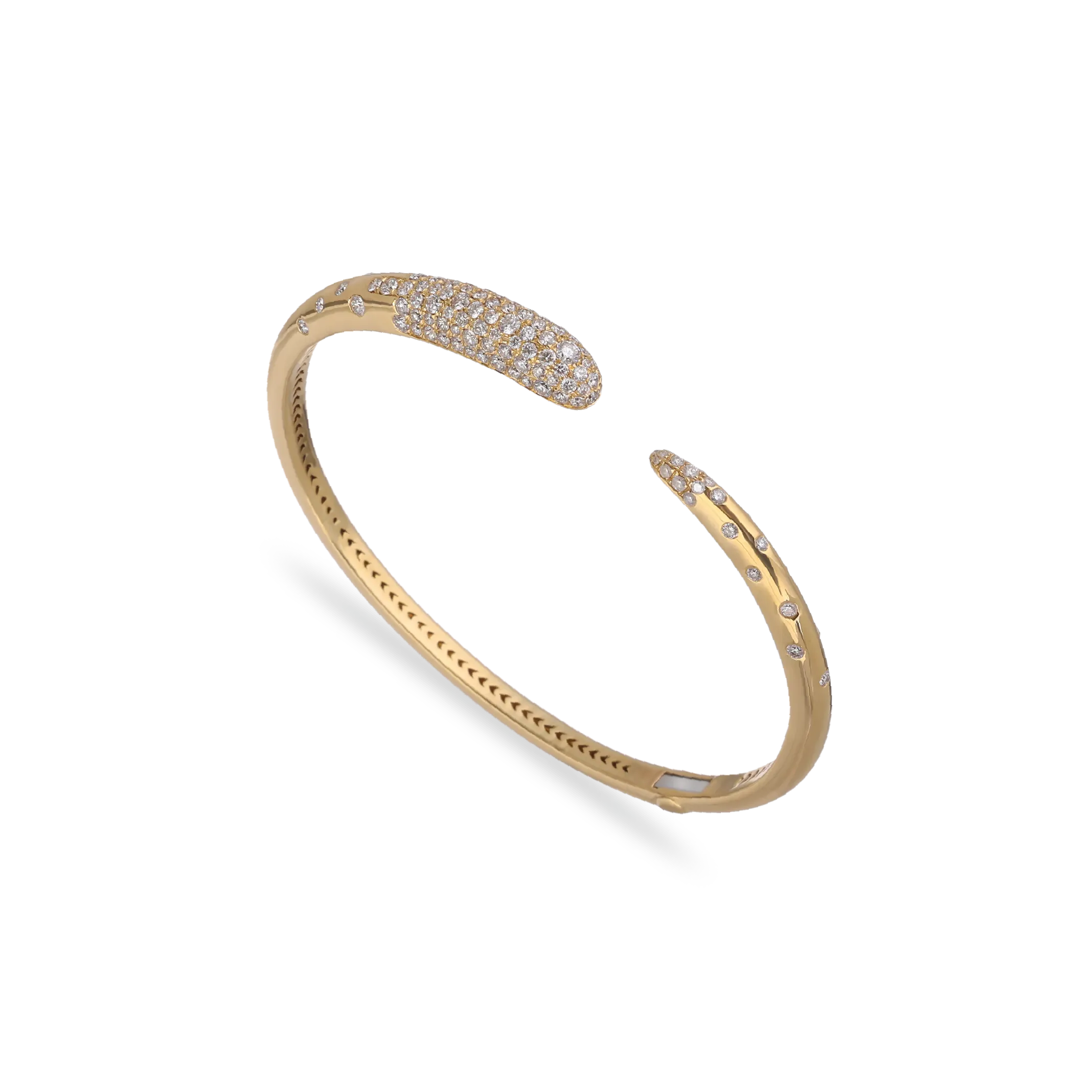
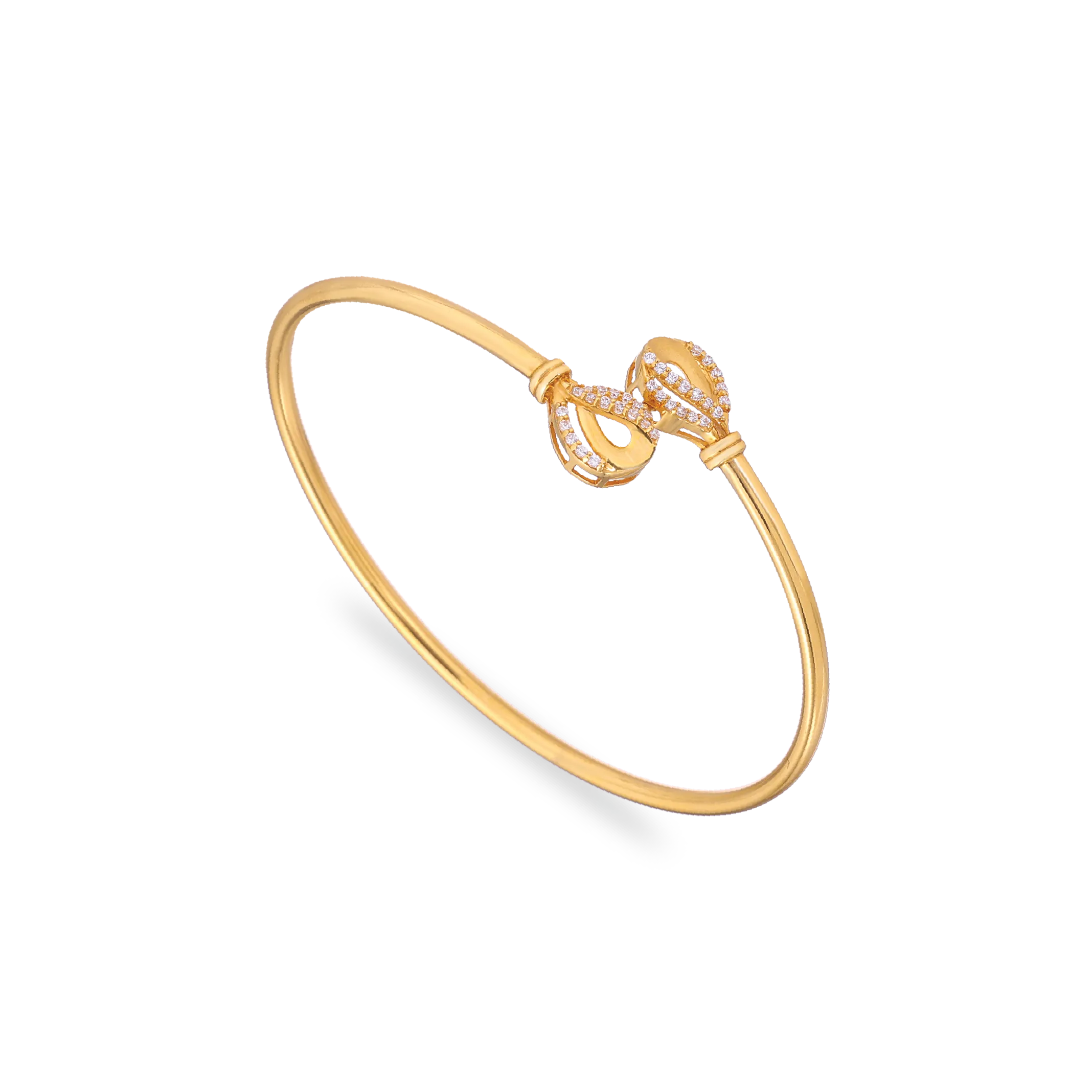
Hinged bangles can be easier to put on and remove, particularly when the opening is secure and smooth. Slip-on styles create a continuous look but need enough clearance over the hand. Cuffs may offer adjustability, although they should not be opened and closed casually if doing so could weaken the metal.
Test the mechanism several times. It should operate without catching, and the closure should feel definite rather than loose or overly difficult.
Plan how multiple bangles will layer together
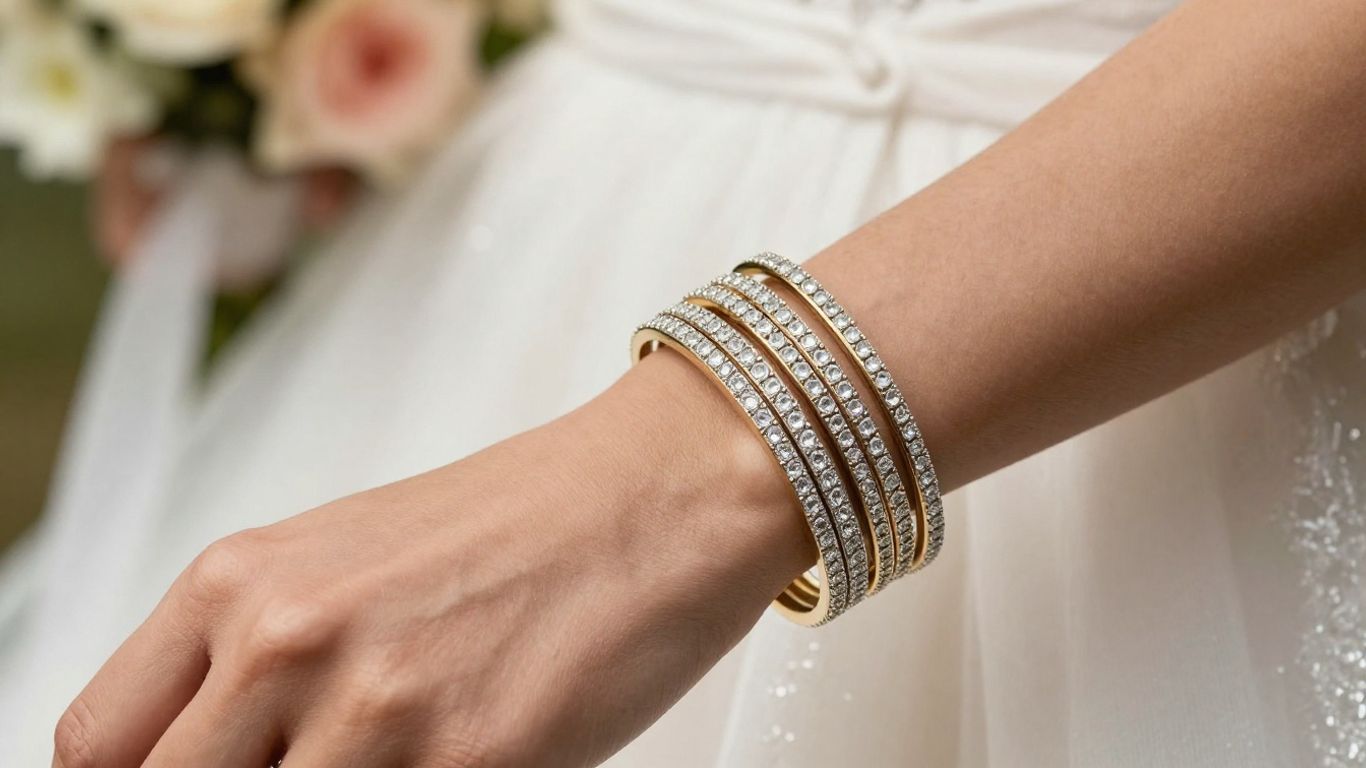
When stacking, vary width and texture with care. A slim diamond bangle may sit neatly beside a smooth gold piece, while two heavily detailed bangles can compete for attention and create friction. Lay the pieces together on a tray and photograph the arrangement from several angles.
A simple planning sequence can make the final stack more comfortable:
- Place the widest or most structured piece first.
- Add slimmer bangles that echo one metal or stone detail.
- Check that hinges, clasps, and raised settings do not collide.
- Leave enough visual space for the engagement ring and other bracelets.
After arranging the pieces, wear the combination while moving your hands naturally. If one bangle repeatedly catches or rotates into an awkward position, change the order rather than hoping it will settle during the ceremony.
Avoid excessive weight and uncomfortable movement
Weight accumulates quickly when several bangles are worn together. Lift your arms, clasp your hands, hold a bouquet, and sit with your wrists resting on a table during a fitting. These ordinary movements reveal pressure points and noise that a brief mirror check may miss.
Comfort is part of the design, not an afterthought. A slightly simpler stack that you can wear confidently through photographs, vows, and dinner will serve you better than an impressive arrangement you keep wanting to remove.
Coordinate metals and other bridal jewelry
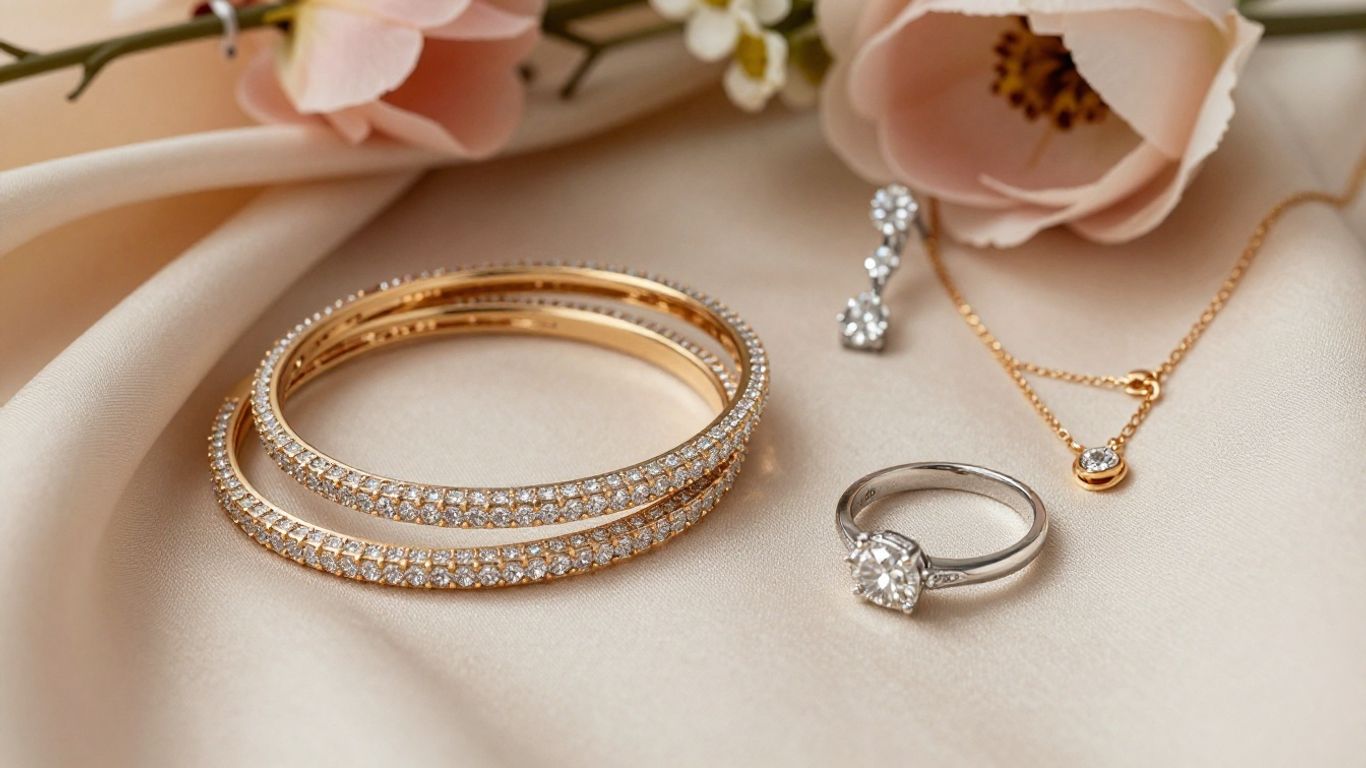
A bridal jewelry set can be mixed without looking accidental. The key is to repeat something deliberately: metal tone, diamond shape, finish, or level of formality. The bangle does not have to match every piece exactly, but it should have a visible relationship with the ring and the larger ensemble.
Take a photograph of your engagement ring and bring it when shopping. This makes subtle differences in color, width, and surface finish easier to judge.
Match the bangle with your engagement ring
Start with the ring because it will usually remain on your hand after the wedding. A bangle that echoes its metal or diamond shape creates continuity, while a contrasting metal can work when the contrast is repeated elsewhere. Pay attention to scale: a wide bangle beside a delicate ring may overwhelm it, while a very fine bangle can disappear.
Try both pieces on the same hand and view them from the side. Their relationship in profile can matter as much as their appearance from above.
Pair yellow, white, or rose gold with your accessories
Yellow gold brings warmth and pairs naturally with traditional goldwork. White gold and platinum create a cooler, brighter field for diamonds, while rose gold introduces a blush tone that can soften a modern stack. Mixing metals is perfectly workable when one tone clearly leads and the others appear as considered accents.
The dress and other accessories should guide the decision. If the necklace and earrings already use warm gold, a white-metal bangle can still work, but repeating a small white-metal detail elsewhere will make the choice feel intentional.
Coordinate with bracelets, bangles, and watch styles
If you plan to wear a watch or an additional bracelet, decide whether it belongs in the wedding-day stack or should stay on the opposite wrist. A watch with a strong case or bracelet can distract from a delicate diamond bangle. Conversely, a restrained watch may provide useful contrast after the ceremony.
Think about sound and movement as well as appearance. Pieces that knock together may become tiring, and sharp edges can mark softer metal or fabric.
Create a balanced look with earrings and necklaces
The wrist is only one part of the visual composition. Large earrings and a statement necklace may call for a quieter bangle, while simple studs and a bare neckline leave more room for wrist detail. Guides to bridal necklaces and earrings can be useful when you are building a coordinated look rather than selecting each piece separately.
Balance does not mean equal sparkle everywhere. It means the eye can move comfortably around the ensemble without one area feeling crowded.
Evaluate quality before you buy
A careful inspection can turn an attractive appointment into a confident purchase. Ask to see the bangle under bright and softer light, and handle it with clean hands if the jeweler allows. Look at the piece from the top, side, and interior, since construction problems are not always visible in a front-facing display.
Take notes while comparing options. Jewelry can begin to look similar after several appointments, and written details make the final decision more objective.
Review diamond certifications and grading details
Ask what grading documents accompany the diamonds and whether they identify the stones individually or describe a parcel. Review the stated shape, measurements, color, clarity, and carat information, then compare those details with the appearance of the finished bangle. Documentation should be clear enough for you to understand what you are buying.
If a term is unfamiliar, ask for an explanation rather than relying on an abbreviation. A good purchasing conversation should leave you more informed, not more rushed.
Inspect prongs, hinges, clasps, and finishing
Examine each prong for evenness and check that no sharp point catches on a soft cloth. Open and close hinges several times, test the clasp, and look for gaps or uneven joins. The bangle should feel smooth in the hand, with a finish that continues consistently around the interior and exterior.
Do not overlook the small components. A secure closure and clean finishing often matter more to long-term satisfaction than a minor difference in stone size.
Compare warranties, appraisals, and return policies
Read the warranty and return terms before paying, especially for a custom or high-value bangle. Ask what is covered, for how long, and whether inspections must be completed at particular intervals. An independent appraisal may also be useful for insurance, although it is not a substitute for the seller’s invoice and grading documentation.
Keep copies of every document together. The paperwork will be useful if the bangle needs service, valuation, or an insurance update later.
Verify customization and resizing options
Confirm which elements can be changed before production begins. Possible adjustments may include size, engraving, metal color, stone arrangement, or closure style, but not every design allows every modification. Ask how approval is handled and whether a revised sketch or written specification will be provided.
For resizing, find out whether the work affects the setting, finish, warranty, or delivery schedule. A clear answer is more valuable than a vague promise that the piece can be adjusted later.
Plan your purchase, care, and wedding-day wear
Timing affects both choice and peace of mind. Custom work, special sizing, documentation, and final polishing can take longer than expected, particularly when several jewelry pieces are being coordinated. Once you have chosen the bangle, plan a fitting and a trial wear well before the ceremony.
The piece should arrive with enough time for inspection, adjustment, and a quiet decision about how it will be worn. That buffer is especially helpful when your wedding schedule is already full.
Start shopping early for custom designs
Begin with enough time for design discussions, stone selection, production, quality checks, and possible revisions. Ask for milestone dates instead of relying only on a final delivery estimate. If the bangle is part of a larger set, coordinate the timelines so every piece can be tried together.
A final rehearsal with the dress, ring, and other jewelry can reveal issues that are difficult to predict from a sketch.
Schedule professional cleaning and inspection
Have the bangle inspected and cleaned according to the jeweler’s recommendations. Professional attention can identify loose stones, worn prongs, a weakened hinge, or a clasp that needs adjustment. Avoid assuming that a piece that looks bright is necessarily in perfect condition.
Before the wedding, ask whether the cleaning method is suitable for the metal, setting, and any additional stones. At home, use only care methods you have been advised are appropriate.
Store bridal diamond bangles safely after the wedding
After the celebration, separate the bangle from pieces that could scratch its surface or catch on its settings. A lined jewelry box with individual compartments is preferable to a loose pile, and a soft pouch can help when the piece is being transported. Keep it away from damp bathrooms, direct sunlight, and household chemicals.
If the bangle is part of a sentimental set, record where each piece is stored. A simple inventory makes future occasions easier and reduces the chance of misplacing a small component.
Protect the jewelry with insurance and documentation
Ask your insurer what documents and appraisal values are required before adding the bangle to a policy. Photograph the piece from several angles, save the invoice and grading information, and record any identifying marks. Update the valuation when appropriate, since replacement costs can change.
For wedding-day wear, put the bangle on after applying fragrance, lotion, and hairspray. Remove it before swimming, bathing, exercising, or doing tasks that could expose it to impact or chemicals.
Conclusion
The best bridal diamond bangles combine a thoughtful budget, secure construction, comfortable fit, and a style that belongs with the rest of your wedding jewelry. Give yourself time to compare, try the complete look, and ask direct questions about documentation and care. When the bangle feels beautiful and effortless on your wrist, it becomes more than a wedding accessory—it becomes a piece you can return to for years.
Frequently Asked Questions
How should I choose the right size for a bridal diamond bangle?
Measure according to the bangle’s construction. Closed slip-on styles need enough room to pass over the widest part of the hand, while hinged and cuff designs are usually fitted more closely to the wrist. Always test the actual piece if possible.
Are natural or lab-grown diamonds better for bridal bangles?
Neither is automatically better. Compare their origin, documentation, appearance, pricing, and the values that matter to you. In either case, examine cut, color, clarity, carat weight, and setting security.
Should my bangle match my engagement ring exactly?
Exact matching is optional. Repeating a metal, diamond shape, or level of formality can create harmony, while a deliberate contrast can also look elegant. Scale and comfort are more important than perfect duplication.
Is it better to buy one bangle or a set?
One bangle may be more versatile and comfortable, while a set can create a richer traditional or formal look. Consider your ceremony, expected future wear, budget, and tolerance for weight before deciding.
How early should I order a custom bangle?
Start as early as you can, allowing time for design approval, production, sizing, documentation, and any alterations. A final fitting before the wedding gives you useful room to resolve small issues.
How can I keep a diamond bangle safe on the wedding day?
Put it on after cosmetics and fragrance have dried, check the clasp or hinge, and avoid wearing it during activities involving water, chemicals, or heavy impact. Ask someone in your bridal party to help monitor it during outfit changes.
What documents should I keep after buying a bridal diamond bangle?
Keep the invoice, diamond grading documents, appraisal, warranty, care instructions, resizing records, and insurance information. Clear photographs and notes about identifying marks are also helpful for future servicing or claims.
Related blogs:
November 20, 2025
The Timeless Elegance of the Tennis Bracelet: A Comprehensive Guide
Read More
November 20, 2025
The Ultimate Guide to Styling and Wearing a Choker Necklace
Read More
November 20, 2025
Find Your Perfect Engagement Ring: A Comprehensive Guide to Styles and Diamonds
Read More
November 20, 2025
The Timeless Elegance of a Diamond Tennis Bracelet: A Buyer's Guide
Read More