How to keep gold jewellery shiny: A simple care guide
August 20, 2026 | 10 minutes read
Key Takeaways
Gold jewellery usually loses its glow because of residue, friction, moisture, or unsuitable cleaning. A gentle routine and a little attention to how each piece is made can keep it looking bright for longer.
- Remove gold jewellery before bathing, swimming, exercising, or using chemicals.
- Identify purity, plating, finishes, and gemstones before cleaning.
- Use lukewarm water, mild soap, and soft tools at home.
- Store each piece separately in a clean, dry, soft-lined space.
- Ask a professional to inspect loose stones, damaged settings, or stubborn discoloration.
Understand what affects gold jewellery’s shine
Gold is naturally luminous, but daily wear gradually covers that surface with oils, lotions, dust, and fine debris. The right care depends on more than color: purity, construction, plating, gemstones, and surface finish all matter. Once you know what you are cleaning, it becomes much easier to choose a safe method.
How gold purity changes cleaning needs
Karat tells you how much pure gold is present, while the remaining metal is made from other alloys. Higher-purity gold can be softer, so it may show dents or scratches more readily even though it is less likely to react with many substances. Lower-karat pieces may be harder, but their alloy content can affect how they respond to moisture and chemicals.
Before cleaning, check any maker’s instructions and look for a hallmark if you know the piece’s origin. A plain, solid-gold item is generally simpler to wash than a piece with a delicate setting or mixed materials.
Why alloys, plating, and finishes matter
Not every gold-colored piece has the same surface. Gold-plated jewellery has a thin outer layer that can wear through with repeated rubbing, while vermeil also relies on a gold layer over silver. Brushed, matte, hammered, or high-polish finishes can each change how marks and cleaning strokes appear.
If you are unsure whether a piece is solid gold or plated, treat it as delicate. Avoid testing the surface with scraping or strong chemicals; a jeweller can identify its construction without adding unnecessary wear.
How everyday residue dulls the surface
Skin oils and perspiration create a film that catches dust. Hand cream, sunscreen, perfume, makeup, and hair products can add another layer, especially around links, prongs, chain joints, and the underside of rings. The jewellery may not be dirty in an obvious way, but its reflections become softer and less even.
A short, regular cleaning routine is usually kinder than waiting until residue has hardened. For a broader walkthrough, the gold jewellery cleaning guide covers identifying karat, finish, and gemstones before using mild supplies.
When tarnish signals a deeper problem
A dull surface often needs only gentle washing, but persistent darkening, greenish marks, pitting, or an unusual change in color deserves more care. The issue could involve an alloy, worn plating, trapped moisture, or contact with a chemical rather than ordinary dirt.
Do not keep polishing when the appearance does not improve. Repeated rubbing may make the surface thinner or blur a deliberate finish, while a professional can determine whether the piece needs cleaning, refinishing, or repair.
Build habits that prevent dullness
Prevention does more for shine than an occasional intense polish. Gold jewellery stays cleaner when it spends less time in water, cosmetics, sweat, and situations where it can knock against hard surfaces. These small habits also make home cleaning quicker.
Remove jewellery before bathing and swimming
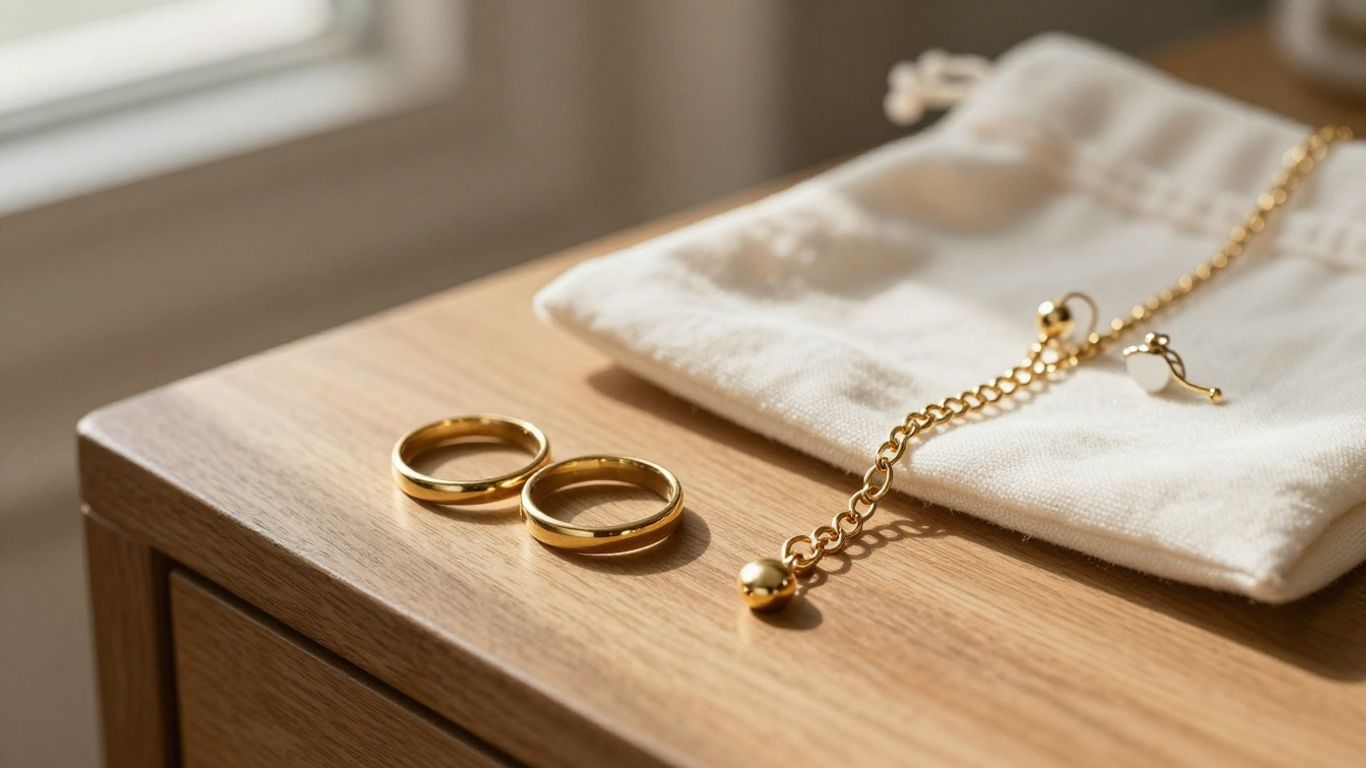
Take off rings, chains, bracelets, and earrings before bathing or swimming. Soap can settle into narrow spaces, while chlorine and salt water may affect alloys, finishes, settings, or nearby gemstones. Water can also loosen residue that later dries into a film.
Keep a small dish somewhere dry and away from the sink so removal becomes automatic. Dry hands and a consistent place are less likely to lead to a lost piece than leaving jewellery beside a pool or on a wet counter.
Protect pieces from lotions, perfumes, and cosmetics
Apply creams, perfume, hairspray, and makeup before putting on jewellery, then allow the products to settle. These substances can cling to metal and stones, making the surface look hazy and attracting more dust. The same principle applies to household cleaners and other chemical products.
For daily wear , the order is simple: finish your routine, wash or dry your hands, and add jewellery last. Removing it before cleaning the house or handling chemicals is even better.
Handle jewellery with clean, dry hands
Fingerprints are especially visible on polished gold, and damp hands can transfer soap or moisture into small joints. Pick up jewellery by the edges or chain rather than pressing repeatedly on its most visible surface. If you need to inspect a clasp or setting, do so over a folded towel.
These habits are modest, but less residue means less scrubbing. That matters because every unnecessary scrub adds friction to the finish.
Recognize activities that can cause scratches
Gold jewellery can be marked by contact with tools, countertops, ceramics, sand, and other jewellery. Remove it before gardening, lifting weights, moving furniture, or doing manual work. Rings and bracelets are particularly exposed because they meet hard surfaces throughout the day.
A useful pre-activity check is to ask whether the piece could snag, bend, or strike something. If the answer is yes, store it safely until the task is finished.
Clean gold jewellery safely at home
A careful home wash is suitable for many plain gold pieces, but it is not a universal treatment. Inspect the item first, especially if it has gemstones, hollow sections, glued details, plating, or a loose setting. C Krishniah Chetty & Co explains a gentle approach that starts with the piece’s karat, finish, and gemstones rather than assuming every item can be cleaned alike.
Prepare a gentle cleaning solution
Use a bowl of lukewarm water with a small amount of mild soap. The solution should feel lightly soapy, not concentrated or harsh. Avoid bleach, strong household cleaners, and improvised abrasive pastes, which can damage metal, stones, or surface treatments.
If the item has a gemstone, check that the stone is compatible with water and mild soap before soaking. When there is any doubt, skip the soak and ask a professional for advice.
Use the right tools and water temperature
Choose a soft brush, such as a clean, very soft toothbrush, and a lint-free or microfiber cloth. Lukewarm water loosens residue without the shock of very hot or cold water. Work over a bowl or towel rather than an open drain.
The basic sequence is deliberately unexciting: wet, wash gently, rinse, and dry. C Krishniah Chetty & Co’s home-cleaning guidance likewise focuses on mild soap, lukewarm water, a soft brush, and thorough rinsing and drying.
A small table can help match the tool to the task without encouraging excessive scrubbing:
| Care task | Suitable choice | What to avoid |
|---|---|---|
| Surface washing | Mild soap and lukewarm water | Bleach or strong cleaner |
| Fine details | Very soft brush | Stiff bristles |
| Final drying | Soft lint-free cloth | Rough paper or fabric |
| Work surface | Bowl or folded towel | Open sink or drain |
The goal is to lift residue, not scour the metal. If the piece still looks dull after one gentle pass, let it dry fully before deciding whether it needs professional care.
Clean delicate details without forcing them
Use light strokes around prongs, chain links, clasps, and engraved areas. Do not push a brush into a gap, pull at a snag, or try to dislodge compacted material with a pin. Force can bend a setting or turn a small problem into a repair.
For jewellery with intricate settings or softer gemstones, the diamond jewellery cleaning guide offers related advice on inspecting the piece and knowing when home cleaning is unsuitable. Keep the pressure low and stop if a stone moves or a component catches.
Rinse and dry jewellery thoroughly
Rinse away all soap with clean lukewarm water, taking care to keep a firm hold on the piece. Pat rather than rub, then leave it on a soft, dry cloth until moisture has reached the crevices. A cool, gentle stream of air may help, but avoid high heat.
Look closely at the underside and clasp once the piece is dry. Soap left behind can create the same cloudy appearance you were trying to remove, so drying is part of cleaning rather than an afterthought.
Polish without damaging the finish
Polishing should be a light finishing step, not a substitute for washing. A cloth can remove fingerprints and restore a little surface brightness, but it cannot safely correct worn plating, deep scratches, or structural damage. Gentle handling keeps the original texture and edges intact.
Choose a soft cloth for routine buffing
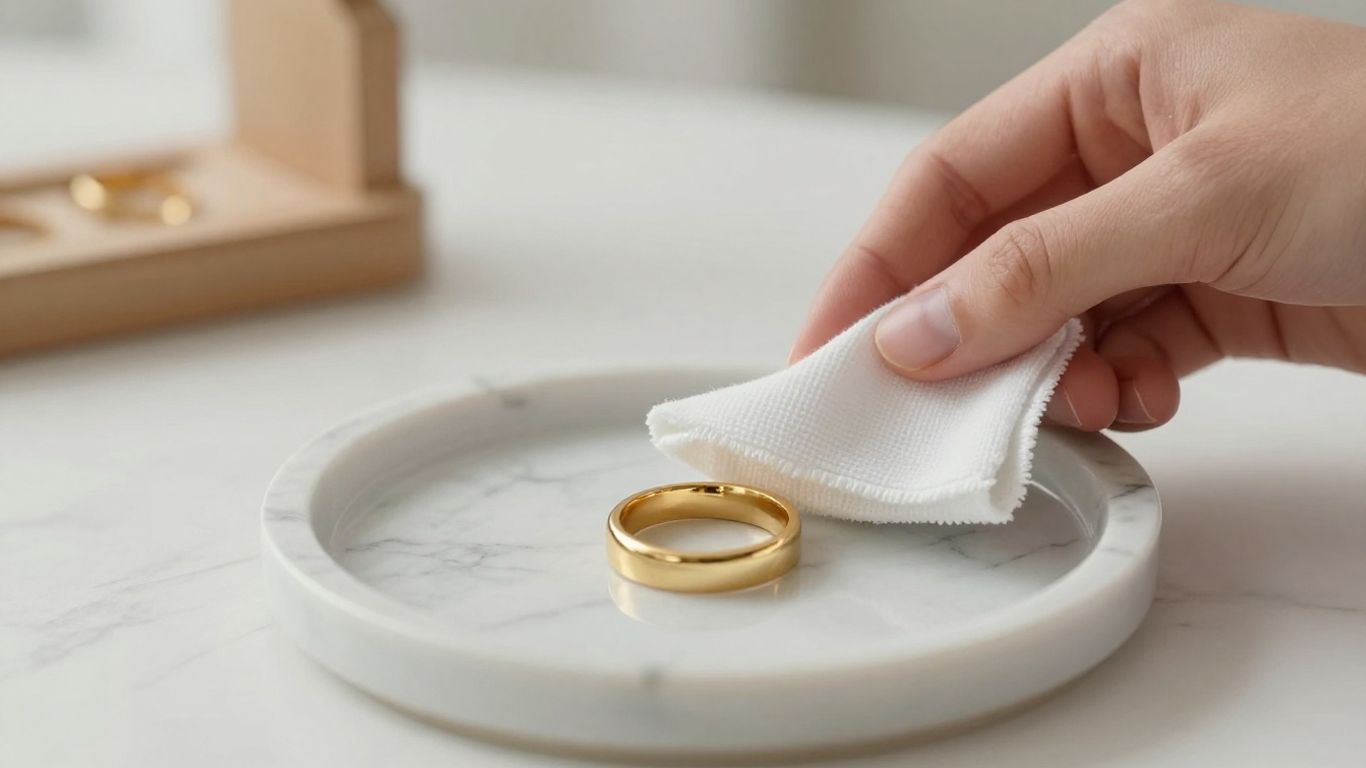
Use a clean, soft microfiber or jewellery cloth after wearing or washing a piece. Move in small, gentle passes and rotate to a clean section of cloth as it picks up residue. There is no need to press hard; the aim is to lift surface oils, not reshape the metal.
For a ring, pay attention to the underside after washing, then lightly buff the visible band. Chains should be supported rather than dragged across a table, which can create tangles and friction.
Avoid abrasive cleaners and rough materials
Toothpaste, scouring powders, rough towels, and stiff brushes can leave fine scratches that scatter light. Abrasive products may make a piece appear briefly brighter by removing material, but that is not gentle care. Strong chemicals can also affect alloys, gemstones, and finishes.
If a cleaner is not specifically known to be safe for the piece, do not experiment on the visible surface. Wash with mild soap or use a professional service instead.
Treat gold-plated and vermeil pieces carefully
Plated and vermeil jewellery needs a particularly light touch because the gold layer can thin with friction. Keep soaking brief unless the maker’s instructions say otherwise, avoid repeated brushing, and never use abrasive polish. Pay attention to high-contact areas such as ring edges, bracelet links, and chain clasps.
When the base metal begins to show through, more buffing will not restore the coating. Professional replating or replacement may be the appropriate route, depending on the item.
Know why aggressive polishing can remove detail
Heavy polishing can soften engraved lines, flatten crisp edges, and change a matte or brushed finish into an uneven shine. It may also make scratches more visible by creating inconsistent areas across the piece. This is particularly risky for heirlooms and finely detailed designs.
Think of polishing as maintenance between deeper cleanings. If the surface has deep marks or an unfamiliar finish, stop at a gentle cloth and have the jewellery assessed.
Store jewellery to preserve its shine
Storage protects the finish when jewellery is not being worn. A clean piece can become scratched, tangled, or damp in a crowded drawer, and those problems are often harder to correct than ordinary residue. A simple storage system also makes it easier to notice changes in a clasp or setting.
Keep each piece separate to prevent scratches
Store rings, chains, bangles, and earrings apart from one another. Gold can be scratched by harder materials and can also mark another gold surface when pieces rub together. Close clasps before putting chains away, but do not force a stiff clasp.
For bridal heirlooms, the bridal jewellery storage guide recommends individual soft-lined compartments and explains why the storage environment matters. Separation is especially helpful for pieces with protruding stones or fine links.
Control moisture and exposure to air
Choose a cool, dry place away from bathrooms, windows, radiators, and direct sunlight. Moisture can remain trapped in links and settings, while repeated temperature changes may encourage condensation. Let jewellery dry completely before storing it.
Do not seal damp pieces in airtight plastic. If a storage box feels humid, move it to a drier location and check the lining for residue or odor.
Use suitable pouches, boxes, and compartments
Soft fabric pouches and fabric-lined boxes cushion jewellery without rubbing it against hard surfaces. Compartments keep chains from tangling and prevent stones from knocking into neighboring pieces. Untreated paper and rough materials are poor long-term choices because they can hold moisture or abrade the finish.
Keep the arrangement practical enough that you will use it every day. A beautiful box that leaves pieces piled together is less useful than a simple organizer with room for each item.
Check clasps and settings during storage
Before putting jewellery away, glance at prongs, bezels, clasps, and jump rings. Notice whether a stone moves, a clasp opens too easily, or a chain link looks stretched. Early attention can prevent a piece from failing while it is being worn.
Keep valuable pieces documented with photographs and relevant purchase or appraisal information. Storage is not only about shine; it is also a quiet opportunity to monitor condition.
Know when gold jewellery needs professional care
Home care works best when the piece is sound and the residue is ordinary. A jeweller should take over when the jewellery is damaged, unusually delicate, heavily soiled, or made with materials that may react poorly to water or vibration. C Krishniah Chetty & Co’s cleaning advice also identifies professional attention as the safer choice for delicate or damaged items.
Identify loose stones and damaged settings
Stop cleaning if a stone rattles, spins, or shifts under very light touch. A bent prong, open clasp, cracked mount, or stretched link can worsen during brushing or rinsing. Place the piece in a soft pouch and arrange an inspection rather than wearing it until it has been checked.
Do not try to tighten a setting with household tools. Even a small adjustment can affect how securely a stone sits.
Deal with heavy buildup or persistent discoloration
Thick buildup around a setting may need tools and techniques that are difficult to use safely at home. Persistent discoloration can also indicate worn plating, a reaction involving an alloy, or damage to the surface. If a mild wash and soft cloth make no difference, repeated attempts are unlikely to help.
Bring the piece to a professional and describe what it has been exposed to. That information can help distinguish residue from a finish or structural issue.
Understand when ultrasonic cleaning is unsafe
Ultrasonic cleaning is not automatically suitable for every piece. Loose stones, fragile settings, fractures, soft or treated gemstones, hollow jewellery, and some delicate constructions can be harmed by vibration or may lose a component. A professional should assess the item before recommending this method.
When you do not know the stone treatment or construction, choose a gentler inspection instead of assuming that a powerful cleaner is better.
Schedule professional cleaning and inspection
A professional cleaning is useful when jewellery is worn heavily, has intricate details, or has not been checked for a long time. The jeweller can examine settings, clasps, links, and surface condition while removing buildup that a soft brush cannot reach. Ask what cleaning method is appropriate before work begins.
Regular inspections are especially sensible for engagement rings, heirlooms, and pieces worn every day. They help preserve both the appearance and the parts that keep the jewellery secure.
Conclusion
Learning how to keep gold jewellery shiny is mostly a matter of gentle consistency: wear it thoughtfully, wash it with mild materials, dry it well, and store it separately. When a piece looks unusually discolored or feels damaged, professional care is safer than more polishing.
Frequently Asked Questions
How often should gold jewellery be cleaned?
Clean frequently worn pieces whenever residue is visible, and give them a gentle wash as part of a regular routine. Occasional pieces may need cleaning only when they look dull or feel coated.
Can gold jewellery be cleaned with dish soap?
A small amount of mild soap diluted in lukewarm water is commonly suitable for many plain gold pieces. Avoid concentrated formulas, bleach, degreasers, and harsh additives, and check the item for delicate stones or finishes first.
Is hot water safe for gold jewellery?
Lukewarm water is the safer general choice. Very hot water can stress some stones, treatments, settings, or construction details, particularly when combined with sudden temperature changes.
Can I wear gold jewellery in the shower?
It is better to remove it before showering. Soap, shampoo, moisture, and residue can collect in settings and links, gradually making the surface look dull.
How should gold-plated jewellery be polished?
Use a clean, soft cloth with very light pressure and avoid abrasive products. Plating can wear through, so repeated polishing or brushing may shorten the life of the visible gold layer.
Why does my gold jewellery look dull after cleaning?
Soap residue, incomplete drying, fine scratches, worn plating, or an unsuitable finish may be responsible. If one gentle cleaning does not improve the appearance, stop experimenting and seek an assessment.
Should I use an ultrasonic cleaner on gold jewellery?
Not without confirming that the piece and its stones are suitable. Ultrasonic vibration can be unsafe for loose stones, fragile settings, treated or soft gemstones, hollow designs, and damaged jewellery.
How to protect gemstone jewellery: A practical care guide for lasting beauty
10 minute read
Jewellery care after wedding: A complete guide to cleaning, storing, and protecting your bridal pieces
10 minute read
Related blogs:

September 17, 2026
How to Choose the Perfect Diamond Necklace for Bride on Her Wedding Day
Read More

September 17, 2026
Wedding jewellery for modern brides: how to choose timeless pieces with contemporary style
Read More

September 17, 2026
Wedding jewellery for traditional brides: A complete guide to choosing timeless bridal pieces
Read More

September 17, 2026
Wedding jewellery for minimalist brides: A complete guide to choosing timeless pieces
Read More









.webp)




.webp)