How to protect gemstone jewellery: A practical care guide for lasting beauty
August 20, 2026 | 10 minutes read
Key Takeaways
Gemstone jewellery lasts longer when its care matches the stone, setting, and way you wear it. Small habits—gentle cleaning, separate storage, and regular inspections—can prevent expensive damage.
- Learn the difference between hardness and toughness before choosing how you wear a piece.
- Keep gemstones away from harsh chemicals, sudden heat, prolonged sunlight, and strong impacts.
- Use mild soap, lukewarm water, and a soft cloth only when the stone’s care needs allow it.
- Store every piece separately in a soft-lined compartment or pouch.
- Ask a jeweller to inspect fragile, valuable, treated, or visibly damaged jewellery.
Understand what makes gemstone jewellery vulnerable
Gemstones are natural materials, but they are not equally suited to daily wear . A stone may resist scratches yet still split after a sharp impact, or appear sturdy while being sensitive to heat and chemicals. Learning the basic differences helps you decide when a ring should come off and when a pendant can be worn more freely.
Hardness, toughness, and why they affect everyday wear
Hardness describes how well a gemstone resists scratches, while toughness describes how well it withstands breaking, chipping, or splitting. These qualities are not interchangeable. A hard stone can still have vulnerable edges or internal features, so a gemstone’s position in a ring, bracelet, or pendant matters as much as its name.
A ring usually receives more knocks than earrings or a necklace. Look closely at pointed corners, thin girdles, raised settings, and stones that sit close to the edge of a band. These areas deserve extra caution even when the gemstone itself is considered durable.
How heat, chemicals, and sunlight can damage gemstones
Sudden temperature changes can stress some stones, while high heat may affect treatments, inclusions, or the materials holding a gemstone in place. Chemicals from cleaners, chlorine, perfume, hairspray, cosmetics, and lotions can dull surfaces or damage sensitive stones. Strong sunlight may also fade certain colors over time.
A useful rule is to put jewellery on after personal-care products have dried and to remove it before cleaning. For a broader reminder about protecting gemstone jewellery from household chemicals and temperature extremes, see this gemstone jewellery care guide.
Identifying treatments that need extra care
Some gemstones are treated to improve their color, clarity, stability, or appearance. Treatments can include filling, dyeing, coating, heating, or impregnation, and the safest cleaning method may differ from that of an untreated stone. If you do not know whether a piece has been treated, avoid soaking it or exposing it to heat until a qualified jeweller confirms the care instructions.
Keep any purchase documents, laboratory reports, or care cards with the jewellery. They may identify the stone and treatment, making future cleaning and repairs safer.
Recognizing early signs of chips, loosened settings, and surface wear
Inspect jewellery in bright, even light before wearing it. A cloudy patch, a new scratch, a sharp edge, a rattling stone, or a prong that catches on fabric can signal a problem. Clasps that feel loose and chains that have become unusually thin also deserve attention.
Do not keep wearing a piece that snags, clicks, or allows the gemstone to move. A small setting problem can become a lost stone after one more impact, especially on a ring worn every day.
Clean gemstone jewellery without causing damage
Cleaning should restore brightness without adding stress. The safest approach depends on the gemstone, its treatment, the metal, and the construction of the setting. When in doubt, choose the gentlest option first and stop if the stone, finish, or setting reacts unexpectedly.
Choosing a safe cleaning method for the stone
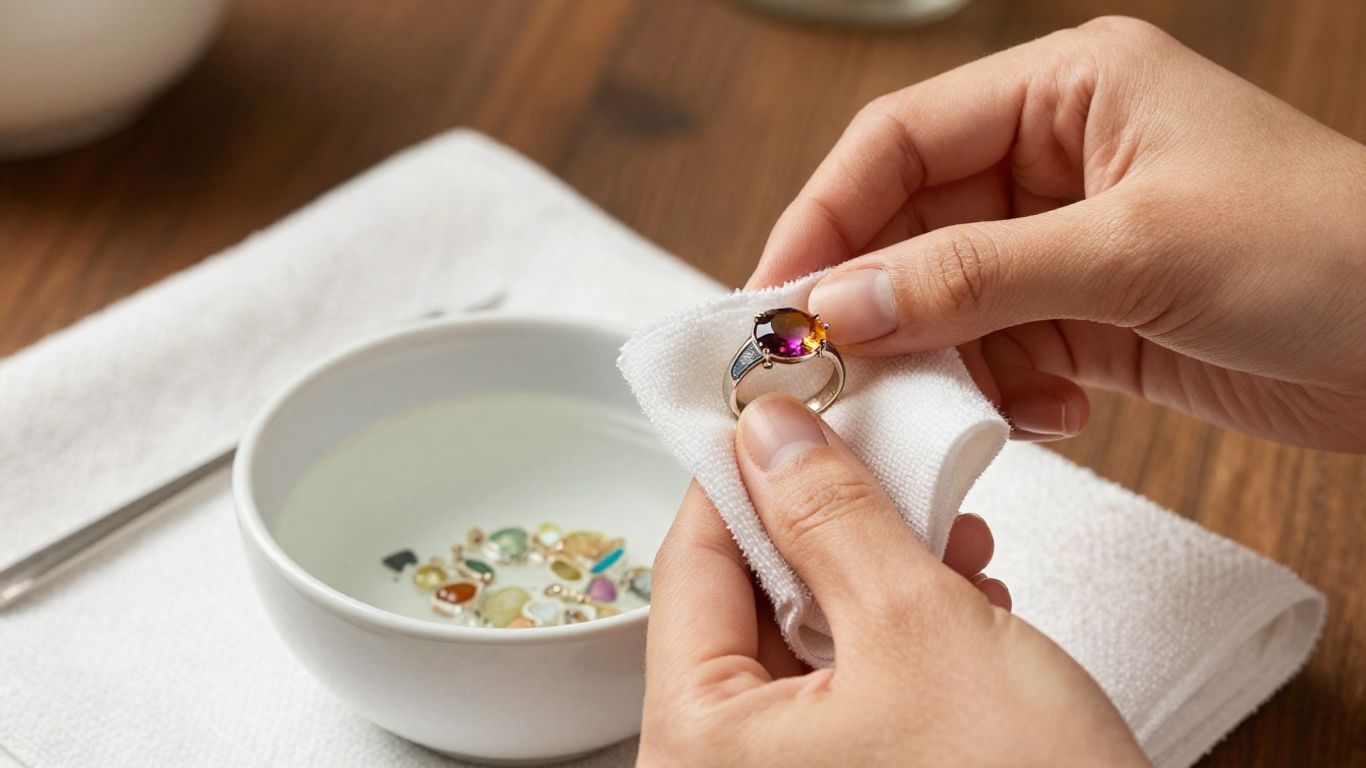
Start by identifying the gemstone and checking its care instructions. A soft, damp lint-free cloth is a sensible first choice for delicate or uncertain pieces. For stones known to tolerate gentle washing, use a small amount of mild soap and lukewarm water rather than abrasive powders, whitening products, or household cleaners.
A soft brush can reach behind a setting, but pressure should remain light. A guide to cleaning diamond jewellery at home can also be useful when a piece combines diamonds with a gemstone setting, provided you follow the more delicate stone’s restrictions.
When mild soap and lukewarm water are appropriate
Mild soap and lukewarm water are often suitable for durable, untreated gemstones in secure settings. Prepare the solution in a bowl rather than over an open drain, and clean with a soft cloth or very soft brush. Rinse carefully with lukewarm water, avoiding a forceful stream that could loosen a small component.
Do not assume that every colorful stone can be soaked. Porous, soft, treated, glued, or heavily included gemstones may need only a brief wipe. The gentler method is usually the better choice when the stone’s history is unclear.
Why ultrasonic and steam cleaners can be risky
Ultrasonic vibration can worsen a pre-existing fracture, loosen a stone, or affect certain treatments and settings. Steam introduces heat and moisture at pressure, which may be unsuitable for porous or delicate gems. These machines are not automatically safe simply because a piece looks sturdy.
Professional jewellers can decide whether a particular item is appropriate for ultrasonic or steam cleaning. At home, avoid both methods when the gemstone is soft, treated, fractured, porous, glued, or unidentified.
Drying and polishing jewellery without trapping moisture
After cleaning, pat the piece dry with a soft, clean cloth. Pay attention to the underside of the setting, the clasp, and the spaces between beads, where moisture can linger. Let the jewellery air-dry fully before putting it into a pouch or box.
Polish gently rather than rubbing hard for extra shine. If residue remains around a setting, repeat a mild wipe instead of using a sharper tool. Gentle drying prevents trouble that may otherwise appear later as tarnish, discoloration, or trapped moisture.
Protect gemstone jewellery during everyday activities
Most damage happens during ordinary routines rather than dramatic accidents. Rings meet countertops, bracelets strike desks, and necklaces catch on clothing or hair. Building a habit of removing jewellery at the right moments is more effective than trying to repair damage after it occurs.
When to remove rings, bracelets, and necklaces
Remove jewellery before gardening, lifting heavy objects, cleaning, cooking with messy ingredients, or doing hands-on work. Rings are particularly exposed because the setting can take a direct blow or collect grit beneath the stone. Bracelets and necklaces should come off when they may snag, stretch, or rub against rough surfaces.
Put each piece in a temporary pouch or a designated dish rather than leaving it beside a sink. This prevents a protective habit from turning into a lost-item problem.
Preventing damage from cosmetics, lotions, and household cleaners
Perfume, hairspray, sunscreen, lotions, and makeup can leave films on gemstones and may affect sensitive surfaces or treatments. Household cleaners can be more aggressive, especially when they contain bleach, ammonia, acids, or abrasive particles. Apply personal-care products first, wash your hands if needed, and wear jewellery last.
If a piece has already been exposed, wipe it with a suitable soft cloth rather than layering on more cleaner. Keep jewellery away from bottles and work surfaces where spills are likely.
Protecting jewellery during exercise, swimming, and bathing
Take jewellery off before exercise, swimming, hot tubs, and bathing. Sweat, salt, chlorine, soap, heat, and repeated movement can affect both gemstones and metal. Water also makes fingers slippery, increasing the chance that a ring will fall down a drain or disappear outdoors.
For active routines, store pieces in a small, closed container before you begin. A few seconds of preparation is easier than searching for a dropped earring or dealing with a damaged clasp.
Reducing impacts, friction, and contact with hard surfaces
Avoid stacking pieces when their stones or settings can touch one another. Hard surfaces such as stone counters, ceramic basins, and metal furniture can chip a gemstone or bend a delicate setting. Even repeated light friction may wear down a finish or create small scratches.
These simple precautions are especially useful for rings and bangles:
- Keep hands clear of hard surfaces when wearing raised stones.
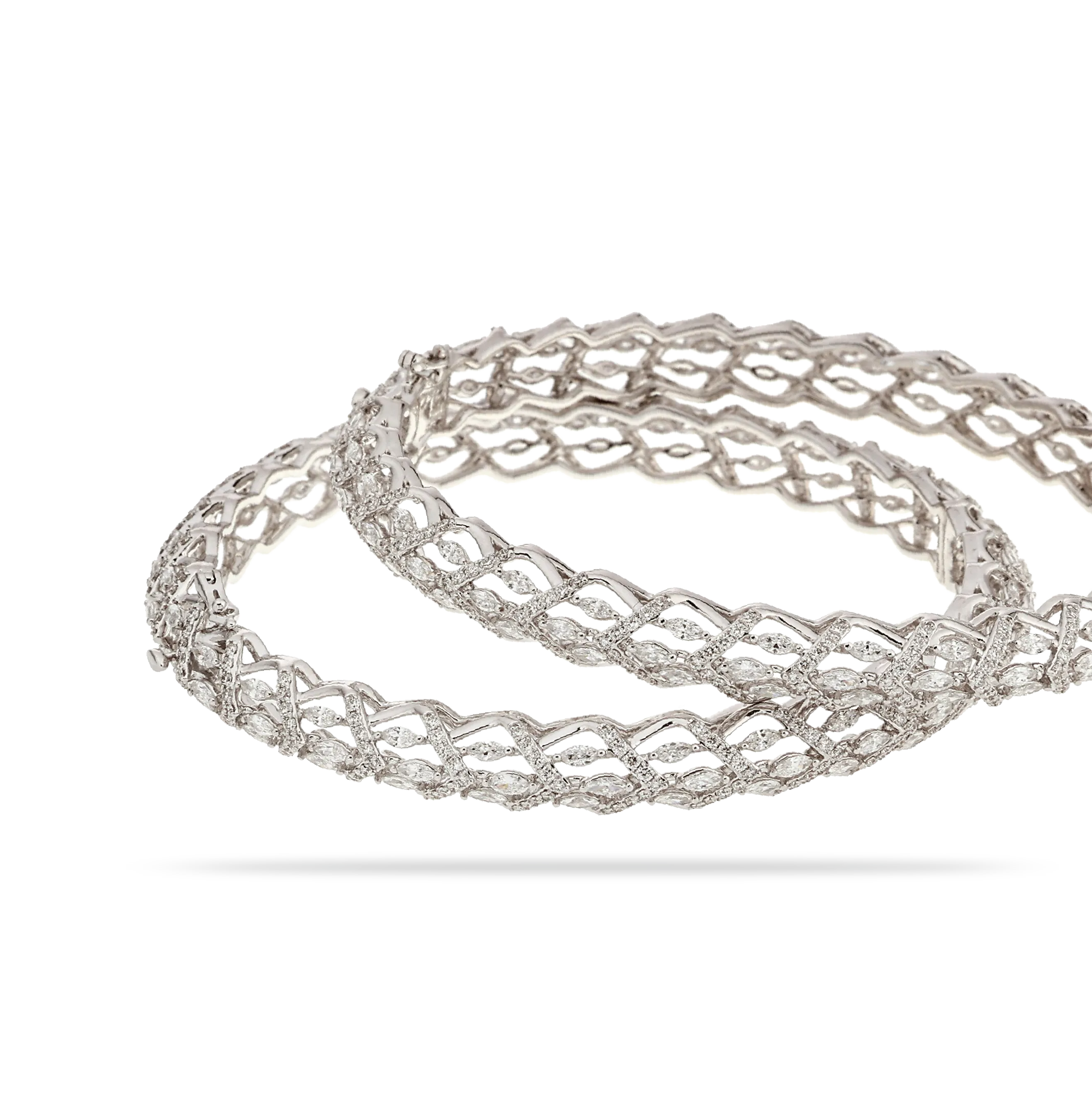
- Remove bangles before carrying, lifting, or moving objects.
- Avoid wearing several pieces that knock together as you move.
- Check that prongs and clasps are not catching on clothing.
The goal is not to keep jewellery hidden away. It is to match each piece to an activity where it can remain secure and comfortable.
Store each piece to prevent scratches and deterioration
Good storage protects jewellery while it is not being worn. A drawer full of tangled chains and loose rings creates friction, pressure, and avoidable scratches. Clean and dry each piece before storage, then give it a separate place where the setting cannot catch on another item.
Separating gemstones from one another
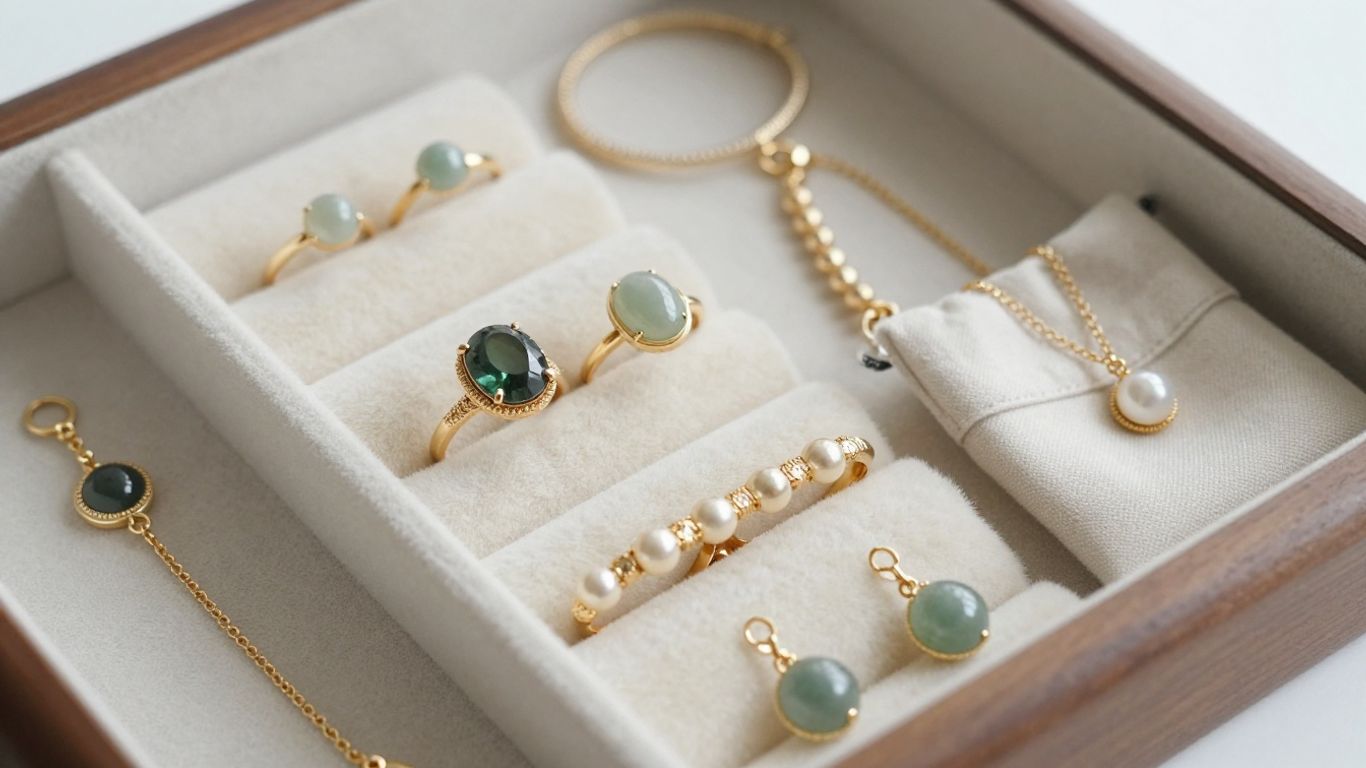
Gemstones can scratch one another, and a sharp setting can mark a softer stone or damage a delicate strand. Keep rings, earrings, pendants, and bracelets apart rather than placing them in one shared pile. Pearls and other softer materials need particular distance from harder stones.
A useful gemstone storage guide offers a reminder to protect pieces from scratches, sunlight, humidity, and chemicals. The same principle applies whether your collection contains one treasured ring or many inherited pieces.
Using soft-lined boxes, pouches, and compartmented organizers
Choose a box with soft lining and separate compartments, or use individual fabric pouches. Avoid loose plastic bags that trap moisture, rough paper, and containers with unfinished wood or sharp edges. A necklace roll can help keep chains flat, while small compartments stop earrings and rings from shifting into one another.
Do not pack a piece tightly around its prongs. The storage surface should support the jewellery without pressing against raised stones or delicate closures.
Controlling humidity, heat, and direct sunlight
Store jewellery in a cool, stable, dry place away from windows, radiators, bathrooms, and kitchen steam. Strong light can affect some gemstone colors, while excessive humidity may contribute to tarnish or deterioration in certain materials. Avoid abrupt changes in temperature as well.
Storage conditions should reflect the stone. Some gems should not dry out completely, while others should be kept away from moisture, so generic storage products are not suitable for every collection.
Preventing chains from tangling and settings from catching
Close clasps before storing chains, then lay them flat or use a dedicated necklace holder. Place prongs and sharp edges away from fabrics that may snag. Before closing a box, check that no chain is trapped beneath a lid or twisted around another piece.
This small routine makes jewellery easier to inspect and reduces the pulling that causes fine chains, jump rings, and clasps to weaken.
Adapt care to different gemstone types
There is no single universal cleaning recipe for gemstone jewellery. Opal, pearl, turquoise, amber, coral, and other softer or porous materials can respond very differently from diamonds or sapphires. The safest care plan starts with the specific stone and then accounts for its treatment and setting.
Extra precautions for softer stones such as opal and pearl
Opal and pearl can be scratched, dried out, or affected by chemicals more easily than many durable gemstones. Keep them away from perfume, hairspray, cosmetics, chlorine, and rough fabrics. Do not soak them unless a qualified professional has specifically approved that method.
Wipe delicate stones with a soft, slightly damp cloth and let them dry naturally. Pearl strands should also be handled carefully so that silk, knots, and clasps are not pulled during wear or storage.
Caring for porous or treated gemstones
Porous stones can absorb liquids, oils, and chemicals, sometimes changing their appearance or weakening a treatment. Filled, dyed, coated, or impregnated gems may react to heat, solvents, ultrasonic cleaning, or steam. Avoid home experiments when the stone’s treatment is unknown.
Use a dry or barely damp cloth unless the care instructions say otherwise. If the piece needs deeper cleaning, tell the jeweller that the gemstone may be treated so the method can be selected appropriately.
Protecting diamonds, sapphires, and other durable stones
Durable stones generally tolerate more everyday wear, but they are not indestructible. Diamonds, sapphires, and similar gems can still chip at vulnerable points, loosen a setting, or scratch other materials. Their metal mountings also collect oils and grit, particularly beneath the stone.
Clean them only with a method suited to the complete piece, not just the center stone. A durable gemstone in a fragile setting still needs cautious handling, especially when worn as a ring.
Checking manufacturer or jeweller care recommendations
Care cards, purchase records, laboratory reports, and a jeweller’s advice can resolve uncertainty about a gemstone’s identity or treatment. Follow those instructions before using a cleaning solution, storing a piece in a special environment, or exposing it to heat. If advice conflicts, pause and ask a qualified professional to assess the jewellery directly.
This is also a good time to record which pieces are suitable for frequent wear and which should be reserved for occasional occasions.
Maintain gemstone jewellery and prepare for travel
Protection continues after cleaning and storage. A quick inspection can catch a loose prong or worn clasp before a trip, while thoughtful packing reduces movement and impact in transit. Valuable jewellery also deserves clear records, so its condition and ownership are easier to establish if something goes wrong.
Inspecting prongs, clasps, and settings at home
Use bright light and, if helpful, a clean magnifying glass to look at prongs, bezels, hinges, clasps, and connecting rings. Gently touch the gemstone with a fingertip to see whether it moves; do not poke it with a sharp object. Check for gaps, bent metal, snagging edges, and unusual looseness.
Inspect frequently worn rings more often than occasional earrings or pendants. If anything feels different, set the piece aside until it can be checked.
Knowing when professional cleaning or repair is needed
Professional attention is appropriate when a gemstone moves, a prong is bent or missing, a clasp will not close securely, or a stone has a chip or crack. It is also wise after a significant impact, even if the damage is not immediately visible. A jeweller can clean areas that are difficult to reach and assess whether a treatment limits the available methods.
Do not attempt to glue a loose stone or reshape a setting at home. Temporary fixes can make a later repair more difficult and may affect the gemstone.
Packing jewellery securely for trips
Travel with jewellery in a compact case that has individual, soft-lined sections. Close clasps, protect pointed settings, and keep each piece from rubbing against another. Do not place jewellery loose in a suitcase pocket, where pressure and movement can cause damage.
Carry valuable pieces with you rather than checking them with luggage. At your destination, keep the case in a secure location and avoid leaving jewellery in a humid bathroom.
Documenting, insuring, and safely transporting valuable pieces
Photograph each valuable item from several angles and keep receipts, appraisals, reports, and repair records together. Check whether your insurance covers travel, loss, theft, and accidental damage, since policies differ. For heirlooms, a current valuation may be useful even when the jewellery is worn only occasionally.
A written inventory also makes routine inspections easier. Record the gemstone, metal, identifying marks, and any known treatment or repair so that future care is based on evidence rather than guesswork.
Conclusion
The best way to protect gemstone jewellery is to combine gentle handling with stone-specific knowledge. Remove pieces before risky activities, clean only with an appropriate method, store them separately, and treat any change in a setting as a reason to pause. These modest habits help preserve both the beauty of the gemstone and the meaning attached to the jewellery.
Frequently Asked Questions
Can I clean all gemstone jewellery with soap and water?
No. Mild soap and lukewarm water may suit some durable, untreated stones, but porous, soft, treated, glued, or unidentified gemstones may need a dry or barely damp cloth instead. Check the care instructions first.
Should I wear gemstone rings while showering?
It is safer to remove them before showering. Soap residue, heat, moisture, and slippery fingers can affect the jewellery or increase the chance of losing it down a drain.
Are ultrasonic cleaners safe for gemstones?
Not always. Ultrasonic cleaning can worsen fractures, loosen settings, or affect treatments. Ask a qualified jeweller before using an ultrasonic cleaner, especially for delicate or treated stones.
How should I store pearl and opal jewellery?
Keep pearls and opals separate from harder gemstones and store them in a soft-lined space away from chemicals, strong sunlight, and sudden temperature changes. Avoid soaking them unless a professional has approved it.
How often should I inspect gemstone jewellery?
Inspect frequently worn pieces regularly, and check them before travel or special occasions. Look for loose stones, bent prongs, worn clasps, chips, cracks, and edges that catch on fabric.
Can sunlight damage gemstones?
Prolonged or strong sunlight can fade some gemstone colors and may affect certain treatments. Store jewellery away from direct sunlight and ask for stone-specific advice when color stability is a concern.
What should I do if a gemstone feels loose?
Stop wearing the piece and place it in a secure, separate container. Do not glue or reshape it yourself; take it to a qualified jeweller for inspection and repair.
Diamond certification guide: How to read a report and buy with confidence
10 minute read
Related blogs:
September 17, 2026
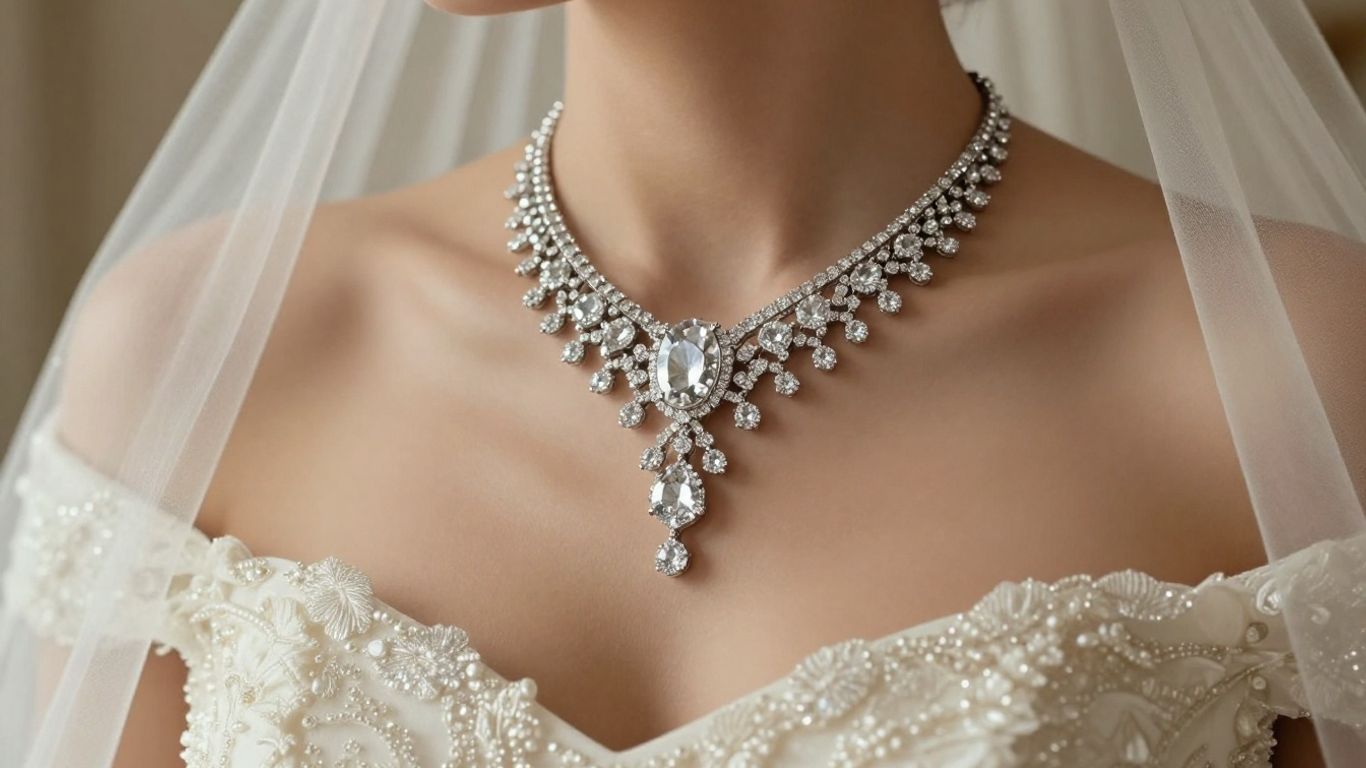
How to Choose the Perfect Diamond Necklace for Bride on Her Wedding Day
Read More

September 17, 2026
Wedding jewellery for modern brides: how to choose timeless pieces with contemporary style
Read More

September 17, 2026
Wedding jewellery for traditional brides: A complete guide to choosing timeless bridal pieces
Read More
September 17, 2026
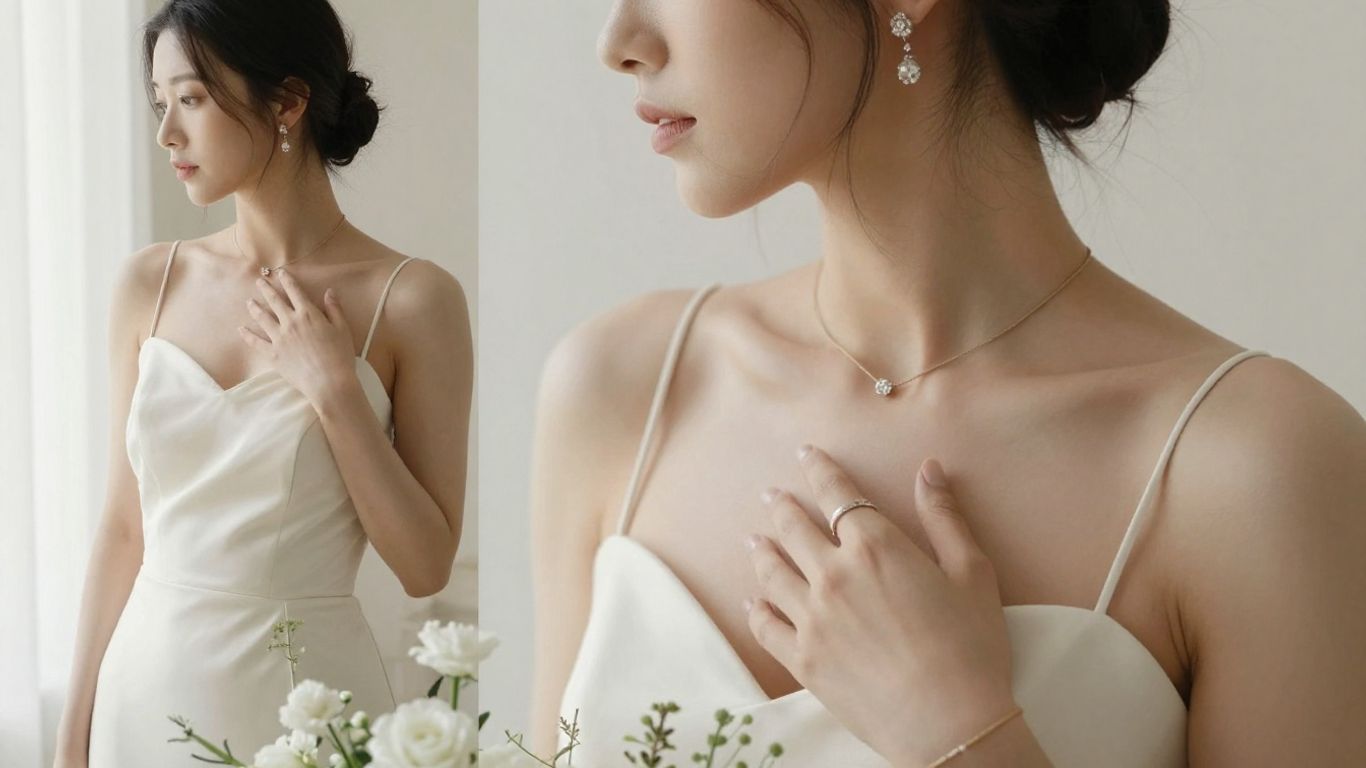
Wedding jewellery for minimalist brides: A complete guide to choosing timeless pieces
Read More









.webp)
.webp)