Diamond certification guide: How to read a report and buy with confidence
August 21, 2026 | 10 minutes read
Key Takeaways
A diamond report gives you a common reference point, but it is only one part of a thoughtful purchase.
- Certification records a diamond’s measurable characteristics.
- An appraisal estimates value for a particular purpose, such as insurance.
- The 4Cs help compare stones, while appearance still requires careful examination.
- Report numbers, inscriptions, and online records should agree.
- A reputable seller should provide complete, consistent documentation.
What diamond certification means
Diamond certification is the independent grading of a stone by a gemological laboratory. The resulting report describes characteristics such as carat weight, color, clarity, cut, proportions, and identifying details. It gives buyers a shared language for comparing diamonds. This diamond certification guide also helps clarify what the report cannot tell you.
Certification versus appraisal
A grading report describes a diamond’s observed characteristics; an appraisal assigns an estimated monetary value for a stated purpose. Those purposes can include insurance replacement, estate planning, or resale discussion. A report is generally more useful when comparing stones before purchase, while an appraisal may be requested after ownership.
The two documents should not be treated as interchangeable. A report does not promise that a diamond will sell for a particular amount, and an appraisal is not a substitute for independent grading. Ask which document you are being shown and who prepared it.
How independent grading laboratories work
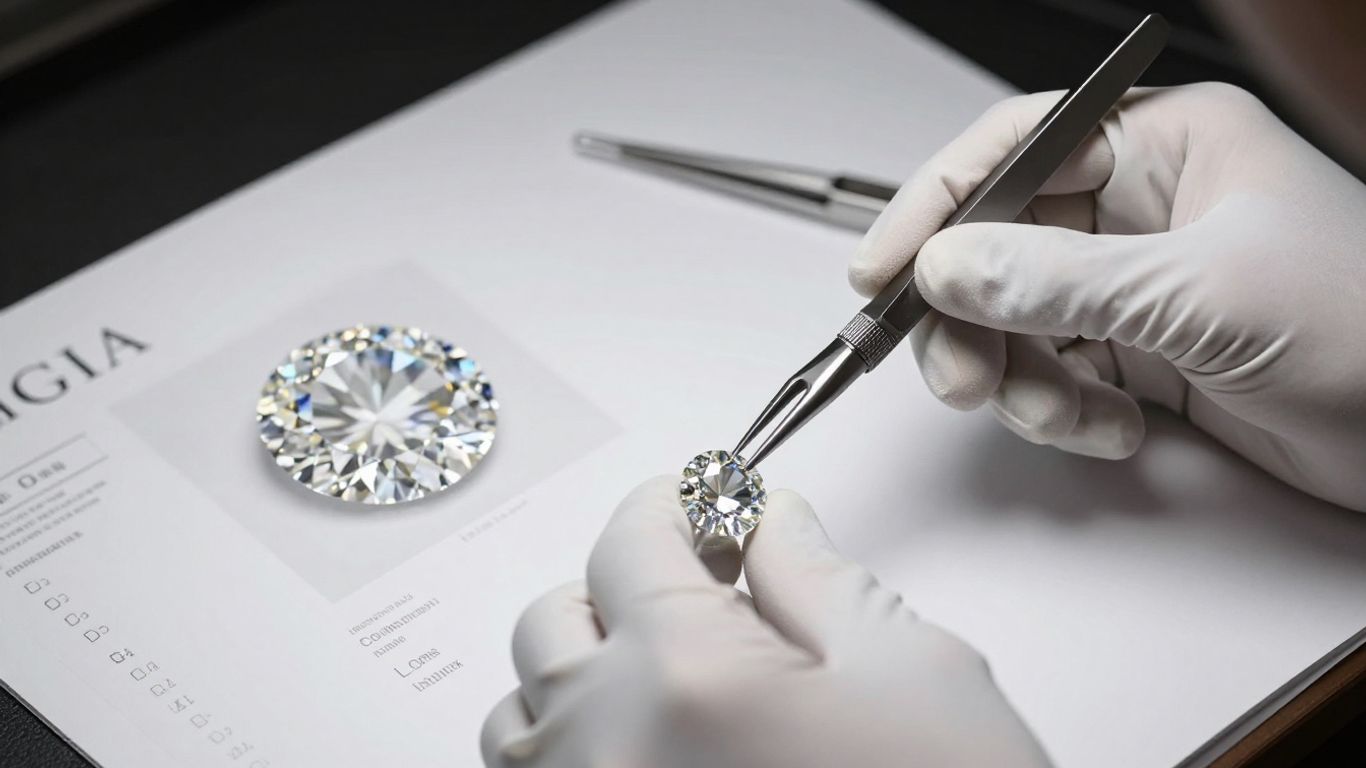
An independent laboratory examines a diamond using controlled procedures and trained gemologists. The stone is assessed against grading standards, then the findings are recorded in a report that can usually be identified by a unique number. Because the laboratory is separate from the retail transaction, its role is to document the stone rather than market it.
The process still involves professional judgment. Two laboratories may use similar terminology yet differ in strictness or report format, which is why the laboratory’s reputation and the report’s details matter when comparing stones.
Why a certificate matters when buying a diamond
A report reduces uncertainty at the point of purchase. It lets you check whether the diamond offered matches the stated 4Cs and provides a reference for future insurance, resale, or jewelry records. It also makes comparisons more meaningful than relying on adjectives such as “excellent” or “premium.”
For a broader introduction to reports and grading bodies, you can read this diamond certification overview alongside the document supplied with the stone. The report should support your decision, not pressure you into accepting a price without seeing the diamond itself.
What a diamond report does and does not guarantee
A report confirms documented characteristics under the laboratory’s grading system. It does not guarantee that every viewer will find the diamond beautiful, that the setting is well made, or that the asking price is fair. Nor does it replace checking for durability concerns, treatments, or a secure mounting.
A report is evidence, not a promise. Read it as a reliable reference point, then combine it with visual inspection, seller transparency, and sensible return terms.
The major diamond grading laboratories
Several established laboratories issue diamond reports, and their documents can differ in terminology, scope, and market acceptance. Buyers should compare the authority of the laboratory as well as the grades printed on the page. The best choice depends partly on the diamond, the seller, and how much independent documentation you want.
GIA certification and grading standards
GIA is widely recognized for its diamond grading system and its reports are frequently used as a benchmark in the trade. A GIA report typically records the 4Cs and additional identifying characteristics, depending on the report type. Buyers should still read the actual document rather than assume that every report includes identical fields.
A useful beginner-friendly GIA grading explanation can help decode terms such as color, clarity, cut, and carat weight. The report’s laboratory name matters, but the individual grade and the diamond’s appearance matter too.
IGI certification and report features
IGI issues reports for diamonds and can document whether a stone is natural or laboratory-grown, along with its graded characteristics and identifying details. Report formats may vary by stone type and report purpose. Before relying on any document, confirm what kind of diamond it covers and review its comments carefully.
The key habit is to use the report as a complete document. Do not focus only on a headline grade while overlooking treatments, fluorescence, proportions, or wording that qualifies the identification.
AGS reports and cut-quality analysis
AGS reports are associated with detailed attention to diamond cut and light performance, particularly in materials and grading approaches used for round brilliant diamonds. Buyers may encounter AGS documentation in older inventories or through sellers who retain those reports. Check the report date and format, since laboratory programs and report availability can change over time.
When cut is central to your decision, compare the report’s proportions and supporting information with what you see in the stone. A cut grade is helpful, but it cannot replace viewing the diamond in suitable lighting.
Comparing consistency, reputation, and market acceptance
Laboratory names influence how easily a report is understood by retailers, insurers, and future buyers. That does not mean a report from a less familiar laboratory is automatically inaccurate, but it may require more scrutiny and can be treated differently in pricing discussions.
Consider three questions before committing: Is the report verifiable? Does the seller explain the laboratory and report type clearly? Does the diamond itself appear consistent with the documented grades? Those questions are more useful than treating a single laboratory name as the whole decision.
How to read a diamond certificate
A certificate can look dense at first, but most information falls into a few practical groups. Start with identity, then review the 4Cs, proportions, and comments. Reading in that order helps you notice discrepancies before becoming attached to a particular grade.
Identifying the report number and diamond details
Look for the report number, issue date, shape and cutting style, measurements, and whether the report identifies the stone as natural or laboratory-grown. The report should also describe any laser inscription or other identifying feature when applicable. Compare the spelling and numbers carefully with the seller’s listing.
The report date deserves attention because a document may describe the diamond accurately at the time of examination without reflecting a later recheck, repair, or updated report. Ask the seller to explain any gap between the document and the current listing.
Understanding the 4Cs grading section
The 4Cs are color, clarity, cut, and carat weight. Color grades describe body color in many white diamonds, clarity records the presence and visibility of internal or surface characteristics, cut evaluates workmanship and performance factors, and carat weight records mass rather than visual size.
A grade is meaningful only within its scale and report context. For example, a clarity grade is not a simple statement that a diamond is attractive or unattractive. It summarizes characteristics assessed under professional viewing conditions.
Interpreting proportions, measurements, and symmetry
Measurements show the diamond’s dimensions, while proportions describe relationships among features such as table, depth, crown, and pavilion. Symmetry addresses how consistently those features are arranged. Together, these details can help explain why two diamonds with similar 4Cs grades look different.
Use proportions as a screening tool rather than a rigid formula. Shape, facet pattern, viewing distance, and lighting all affect appearance. If the stone is a fancy shape, visual balance and outline deserve especially close attention because standardized cut grading may be more limited.
Checking fluorescence, treatments, and additional comments
Fluorescence describes the diamond’s reaction to long-wave ultraviolet light. It is not automatically good or bad; its relevance depends on the stone’s color, strength of fluorescence, and appearance in normal conditions. Additional comments may identify treatments, clarity characteristics, or other qualifications that deserve a seller’s explanation.
Do not skip the small print. A treatment can affect care, durability, disclosure, and price, so it should be understood before purchase rather than discovered later.
How the 4Cs affect a diamond’s value
The 4Cs provide a framework for comparing quality, but they do not operate independently. A small difference in one grade can affect price sharply in one market and barely at all in another. Shape, cut precision, rarity, and overall visual appeal also influence what buyers are willing to pay.
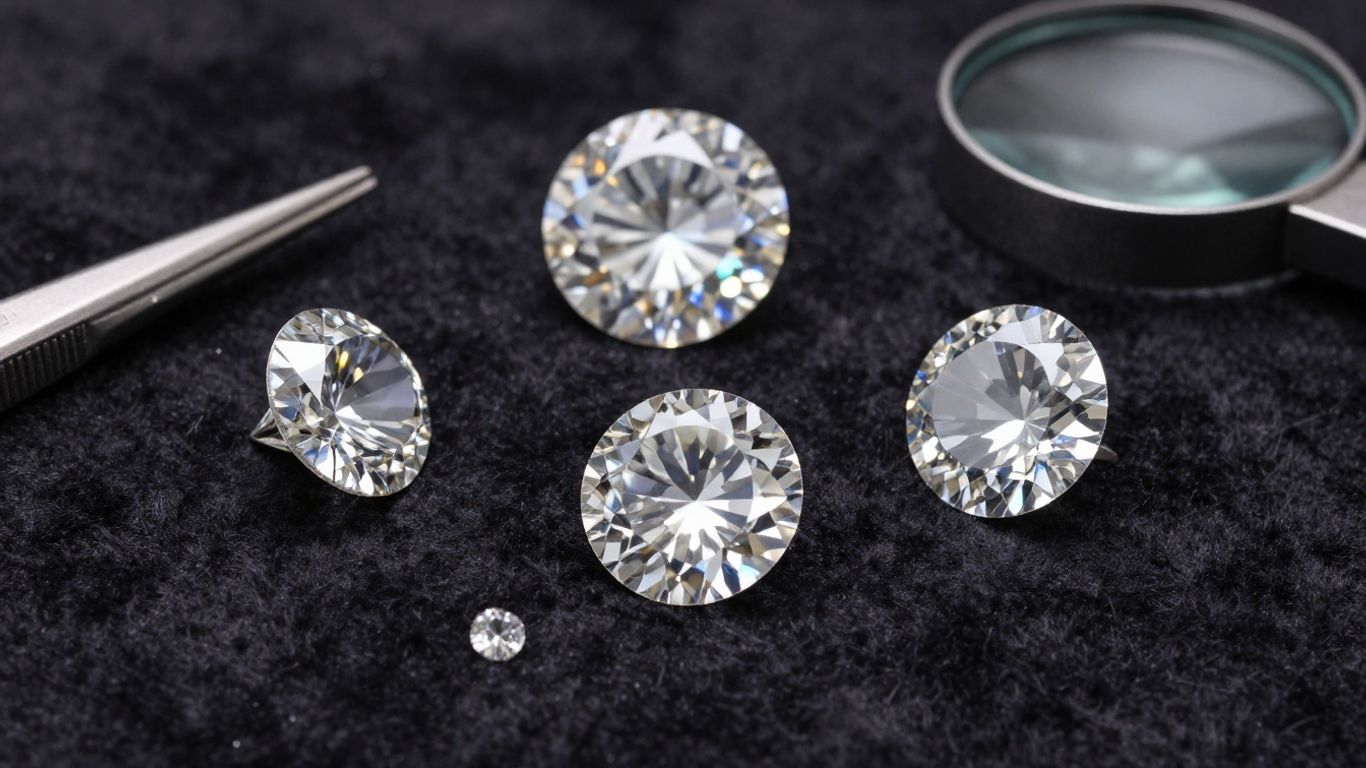
Color grades and visible differences
Color grades are arranged on a scale, but neighboring grades may look quite similar once a diamond is mounted or viewed under ordinary lighting. Metal color and setting style can also affect how warm or cool the stone appears. Paying for a higher grade is not always the best use of a fixed budget.
Look for a point at which the diamond appears pleasing to you. A slightly lower documented grade may offer better value if the difference is not visible in the intended setting.
Clarity grades and inclusions
Clarity concerns inclusions inside a diamond and blemishes on its surface. Their size, position, number, relief, and effect on transparency all matter. Two diamonds carrying the same clarity grade can therefore look quite different to the unaided eye.
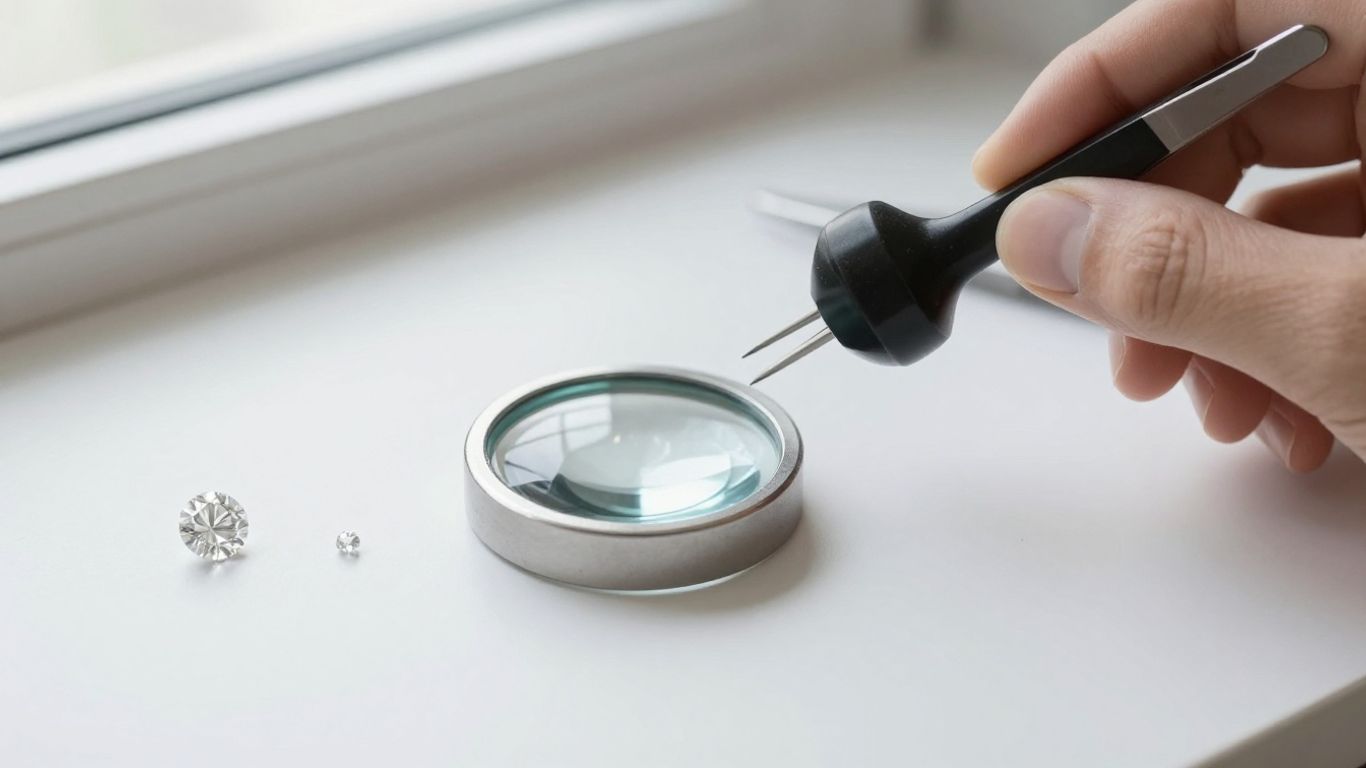
Ask to inspect the stone magnified and without magnification. Eye-clean appearance, rather than the label alone, may be the practical priority, provided the diamond has no durability concern that the grade conceals.
Carat weight versus face-up size
Carat weight measures how much a diamond weighs, not how large it appears from above. Depth, girdle thickness, shape, and cutting choices can make stones with the same weight look different in a setting. A well-proportioned diamond may provide stronger visual presence than a heavier stone with excess depth.
When comparing options, put the measurements beside the carat weight. This simple habit helps separate actual face-up spread from the number that appears most prominently in a listing.
Cut quality, sparkle, and proportions
Cut has a direct relationship with brightness, fire, scintillation, and the way a diamond handles light. Polish, symmetry, facet arrangement, and proportions work together, so a strong cut grade is a useful starting point rather than the final verdict. A diamond can meet a stated grade and still appeal to you less than another stone with a similar report.
A visual comparison is especially valuable here. View diamonds in more than one lighting environment and check for darkness, haziness, uneven patterning, or areas that fail to return light.
A compact comparison can make the trade-offs easier to see:
| 4C | What it records | What to check visually | Common value question |
|---|---|---|---|
| Color | Body color grade | Warmth in the chosen setting | Is a higher grade visible? |
| Clarity | Inclusions and blemishes | Eye-clean appearance and durability | Are the characteristics distracting? |
| Carat weight | Diamond mass | Face-up spread and proportions | Is the size advantage real? |
| Cut | Workmanship and light behavior | Brightness, contrast, and sparkle | Does it perform in varied light? |
This table is a starting map, not a substitute for looking at the stone. The most satisfying purchase usually balances documented quality with the appearance, size, and setting you actually want.
How to verify a diamond certificate
Verification should happen before payment, not after a problem appears. A careful check compares the physical diamond, the laboratory’s database, and the seller’s written description. Small inconsistencies are worth pausing over, even when the overall offer seems attractive.
Matching the report to the laser inscription
If the diamond has a microscopic laser inscription on its girdle, the number should match the report. The inscription can be difficult to see without magnification, so ask the seller or an independent jeweler to show it to you. Confirm that the shape, measurements, and identifying details also appear consistent.
An inscription is useful evidence, but it is not the only check. A copied number or altered document can still create confusion, which is why the online record matters too.
Using the laboratory’s online verification tool
Enter the report number into the issuing laboratory’s official verification service. Check that the returned data matches the physical diamond and the document in your hand. Pay attention to report type, date, natural or laboratory-grown identification, and any comments about treatments.
Save a copy of the verified record with your purchase documents. If the number cannot be found or the database information differs, ask for a clear explanation before proceeding.
Comparing the report with the seller’s listing
Read the listing line by line against the report. Shape, carat weight, color, clarity, cut, measurements, fluorescence, and treatment disclosures should align. Marketing language may simplify the facts, but it should not contradict them.
If a listing highlights a grade that the report does not show, ask why. A transparent seller should be able to explain whether the wording refers to a different report, a seller opinion, or a mistake that needs correction.
Spotting altered, outdated, or misleading documentation
Warning signs include blurry scans, missing pages, mismatched numbers, unexplained report dates, and claims that cannot be found in the laboratory record. Be cautious when a seller refuses inspection or offers only an in-house document for a significant purchase.
You can also request an independent examination before the return period ends. That extra step is especially sensible when the stone is expensive, treated, mounted in a complex setting, or supported by unfamiliar paperwork.
How certification affects diamond buying decisions
Certification helps turn a vague search into a set of comparable choices. It can clarify where your money is going, but it should not dictate every preference. Start with the look, size, shape, and setting you want, then use the report to test whether the stone meets those priorities.
Choosing a grading laboratory for your budget
A widely recognized laboratory may make comparison and future documentation simpler, while a report from another laboratory may come at a different overall price point. The sensible choice depends on the diamond’s value, your tolerance for uncertainty, and the quality of the seller’s disclosures.
Do not compare laboratory names in isolation. Compare the report’s completeness, verifiability, grading language, and the diamond’s asking price as a package.
Balancing certificate grades with visual appearance
A report cannot record every part of your personal response to a diamond. Brightness, pattern, scintillation, transparency, and presence can be judged only by seeing the stone. Videos and photographs help, but they are not always consistent enough to replace direct examination.
Shortlist stones by their documented characteristics, then choose among them with your eyes. This keeps the certificate in its proper role: a filter and reference, not a beauty score.
Understanding natural, lab-grown, and treated diamonds
The report should identify whether the diamond is natural or laboratory-grown and disclose relevant treatments. These categories can differ in origin, pricing, availability, and buyer preference. A report gives you the terminology needed to ask informed questions, but it does not tell you which choice is personally right.
Make sure the report type matches the stone being offered. If a seller uses broad language such as “real diamond” without explaining origin or treatment, ask for precise documentation.
Evaluating certified diamonds for custom jewelry
When a certified diamond will be placed in custom jewelry, consider the setting as carefully as the stone. The design affects how much of the diamond is visible, how its color reads, and how securely it is held. Measurements and shape also need to suit the jeweler’s planned mounting.
Plan for care from the beginning. A practical diamond jewelry cleaning guide can help you understand gentle at-home cleaning and when professional attention is safer, especially around intricate settings or softer companion gemstones. Keep the report with the finished jewelry’s records.
Common diamond certification mistakes to avoid
Most certification mistakes come from treating a document as either meaningless paperwork or an absolute guarantee. It is neither. The report is strongest when it is authentic, understood, matched to the diamond, and considered alongside the seller’s policies and the stone’s visible qualities.
Relying on a retailer’s in-house grading
A retailer’s description can be useful for presentation, but an in-house opinion may not have the independence or market recognition of a respected external laboratory report. This is particularly important when the price reflects specific color, clarity, or cut claims.
Ask whether the document is an independent laboratory report and whether its number can be verified. If not, treat the stated grades as seller information rather than equivalent certification.
Assuming every certificate has equal authority
The word “certified” does not by itself tell you who graded the diamond, what standards were used, or how the report will be regarded later. Read the issuing laboratory, report type, date, and scope. A document that looks official may still be incomplete for the purchase you are considering.
Authority is contextual. A modest stone and a significant investment may justify different levels of documentation, but neither should be supported by vague paperwork.
Paying for grades without examining the diamond
A high grade can be expensive without producing a visible advantage that matters to you. Examine the diamond face-up, from the side, and under different lighting. Check whether the proportions create the brightness and balance you expected.
Use the following sequence to keep the process grounded:
- Read the report before focusing on the price.
- View the diamond without magnification.
- Compare it with at least one similar stone.
- Ask about return, warranty, and treatment disclosures.
These steps protect you from buying a grade on paper while overlooking the actual stone. They also make conversations with a jeweler more specific and productive.
Buying a diamond with missing or inconsistent documentation
Missing reports, mismatched inscriptions, and conflicting listings should never be brushed aside as harmless administrative errors. Ask for corrected documentation and verify it independently. If the explanation remains unclear, walk away or obtain a second opinion before paying.
Keep the final report, invoice, appraisal if obtained, and care records together. Good documentation supports future maintenance and makes the history of the jewelry easier to understand.
Conclusion
A diamond certificate gives a purchase structure: it records measurable facts, supports comparison, and helps expose inconsistencies. Read it carefully, verify it against the stone, and then judge the diamond in real light and in the context of your intended jewelry. Confidence comes from combining reliable documentation with clear questions and your own considered eye.
Frequently Asked Questions
Is a diamond certificate the same as an appraisal?
No. A certificate or grading report describes a diamond’s characteristics, while an appraisal estimates monetary value for a particular purpose.
Which details should I check first on a diamond report?
Start with the report number, issue date, diamond identity, natural or laboratory-grown designation, and measurements. Then review the 4Cs and additional comments.
Does a certificate guarantee that a diamond will sparkle?
No. It records grading information, but sparkle also depends on proportions, facet pattern, lighting, and your own visual assessment.
Can two diamonds with the same 4Cs look different?
Yes. Cutting precision, proportions, clarity characteristics, shape, and light performance can make similarly graded diamonds appear noticeably different.
How do I verify a diamond report number?
Use the issuing laboratory’s official online verification service and compare the returned information with the physical diamond and seller’s listing.
Should I buy a diamond without an independent report?
You can, but doing so creates more uncertainty about the stone’s identity and quality. For a significant purchase, independent documentation is generally the safer reference.
Does carat weight tell me how large a diamond will look?
No. Carat weight measures mass. Face-up size also depends on measurements, depth, girdle thickness, shape, and cutting proportions.
Related blogs:
September 17, 2026
How to Choose the Perfect Diamond Necklace for Bride on Her Wedding Day
Read More

September 17, 2026
Wedding jewellery for modern brides: how to choose timeless pieces with contemporary style
Read More
September 17, 2026
Wedding jewellery for traditional brides: A complete guide to choosing timeless bridal pieces
Read More

September 17, 2026
Wedding jewellery for minimalist brides: A complete guide to choosing timeless pieces
Read More









.webp)
.webp)