How to choose the right bridal jewellery showroom in Bangalore
August 27, 2026 | 10 minutes read
Key Takeaways
Choosing a bridal jewellery showroom in Bangalore becomes easier when you decide what you need before comparing stores. Focus on ceremony, budget, authenticity, comfort, service terms, and long-term wear.
- Match jewellery to each wedding function and outfit.
- Set a complete budget, including making charges and taxes.
- Compare design range, craftsmanship, reviews, and consultation quality.
- Verify purity, hallmarking, diamond reports, and invoices.
- Confirm delivery, resizing, exchange, storage, and care arrangements.
Define your bridal jewellery needs before visiting showrooms
A showroom visit is more useful when you arrive with a clear sense of your wedding schedule and personal style. Consider the jewellery needed for the engagement, ceremony, reception, mehendi, sangeet, and future celebrations. You do not have to decide every design in advance, but a rough direction will help you compare pieces without feeling overwhelmed.
Match jewellery to your wedding ceremonies
Each function may call for a different level of ornamentation. Traditional gold can feel right for the main ceremony, while diamonds or a lighter necklace may suit a reception outfit. Think about the clothes, rituals, photography, and hours of wear before choosing a piece purely for its display appeal.
A wedding jewellery planning guide can help you map rings, necklaces, bangles, earrings, and other essentials across the celebrations. This avoids buying several pieces that serve the same purpose while leaving a practical gap elsewhere.
Set a realistic budget for the complete bridal set
Start with the total amount you can comfortably spend, then divide it among essential, statement, and optional pieces. Include the metal weight, stones, making charges, taxes, alterations, and any custom work. Keeping a small reserve is sensible because fittings and last-minute additions can change the final figure.
Ask each showroom for comparable details rather than comparing only the displayed price. A lower-looking number may reflect a different metal purity, stone quality, weight, or charge structure, so the full invoice matters more than the first quote.
Decide between gold, diamond, Kundan, Jadau, and temple jewellery
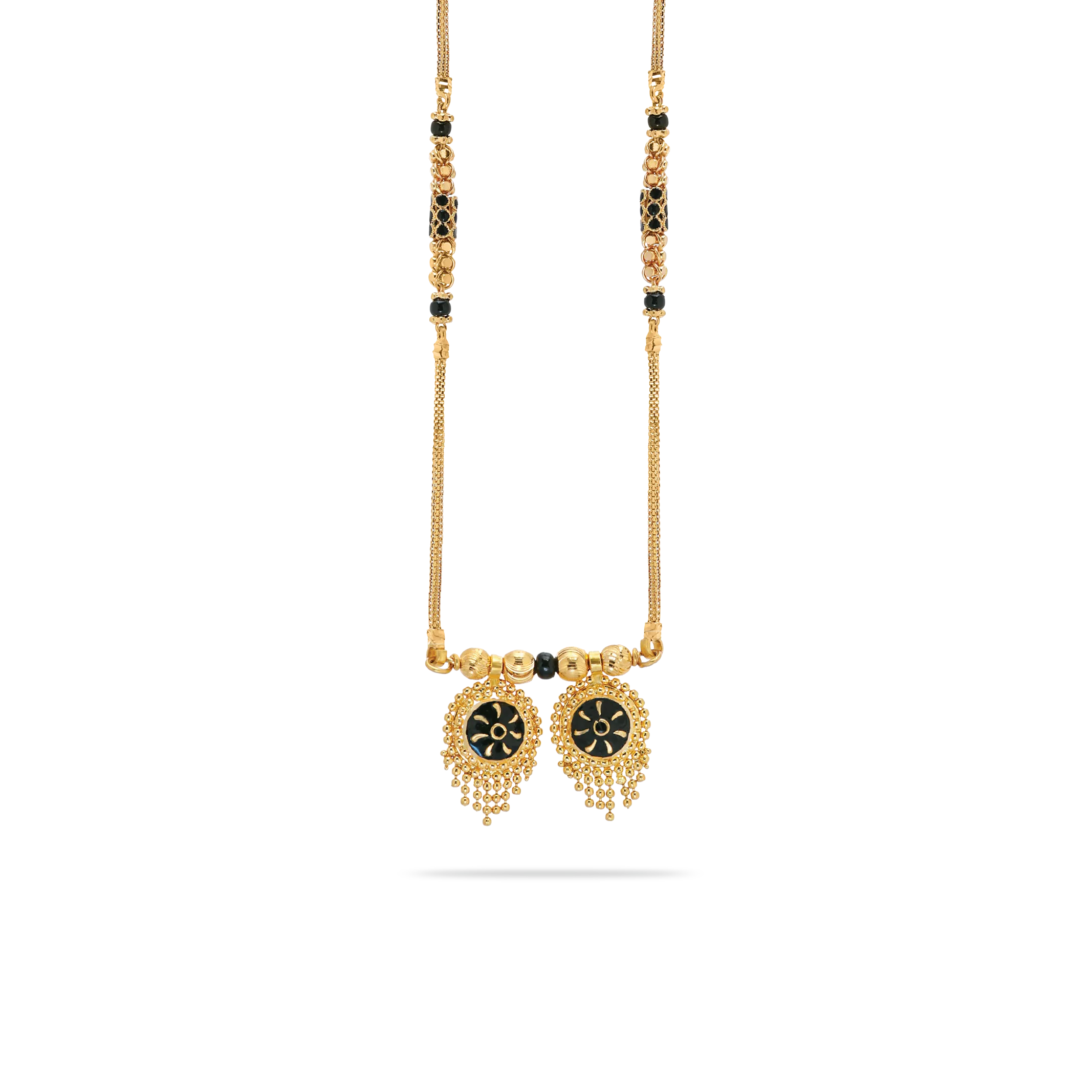
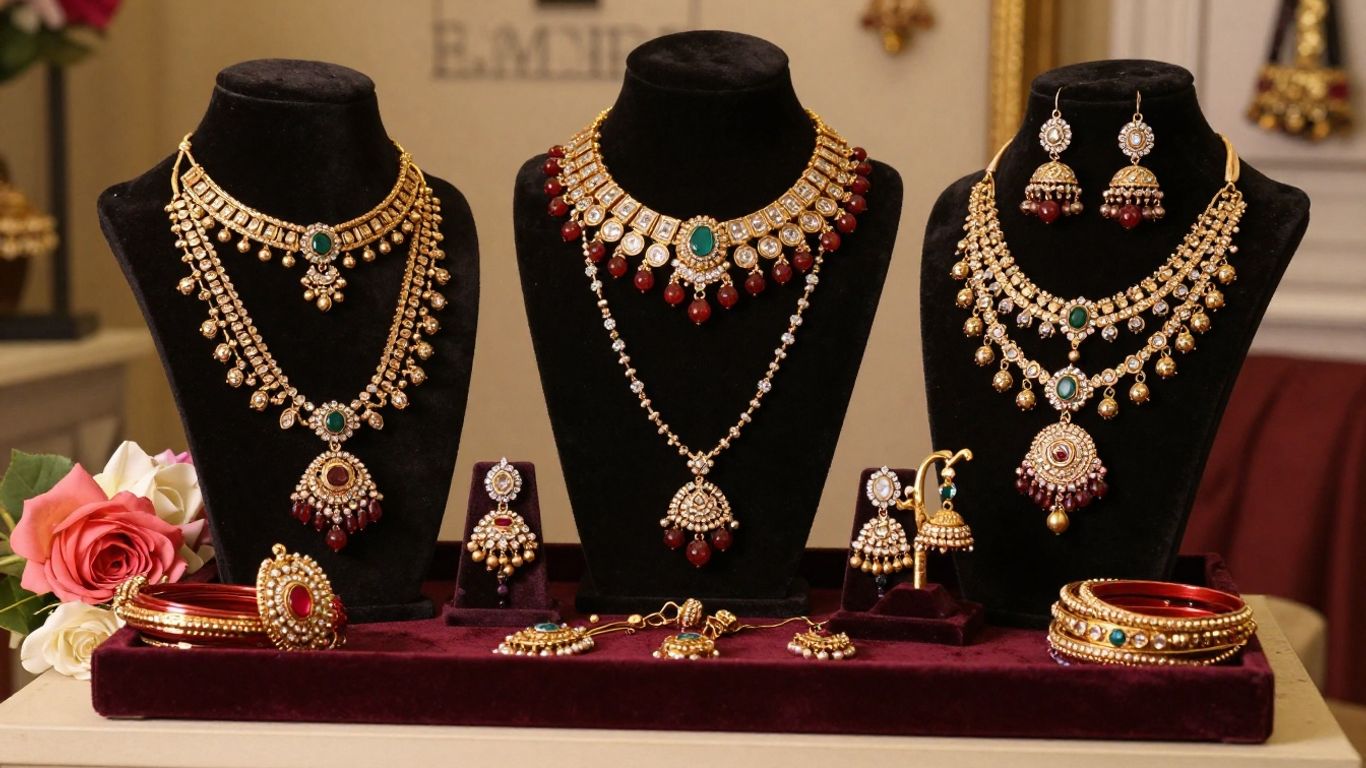
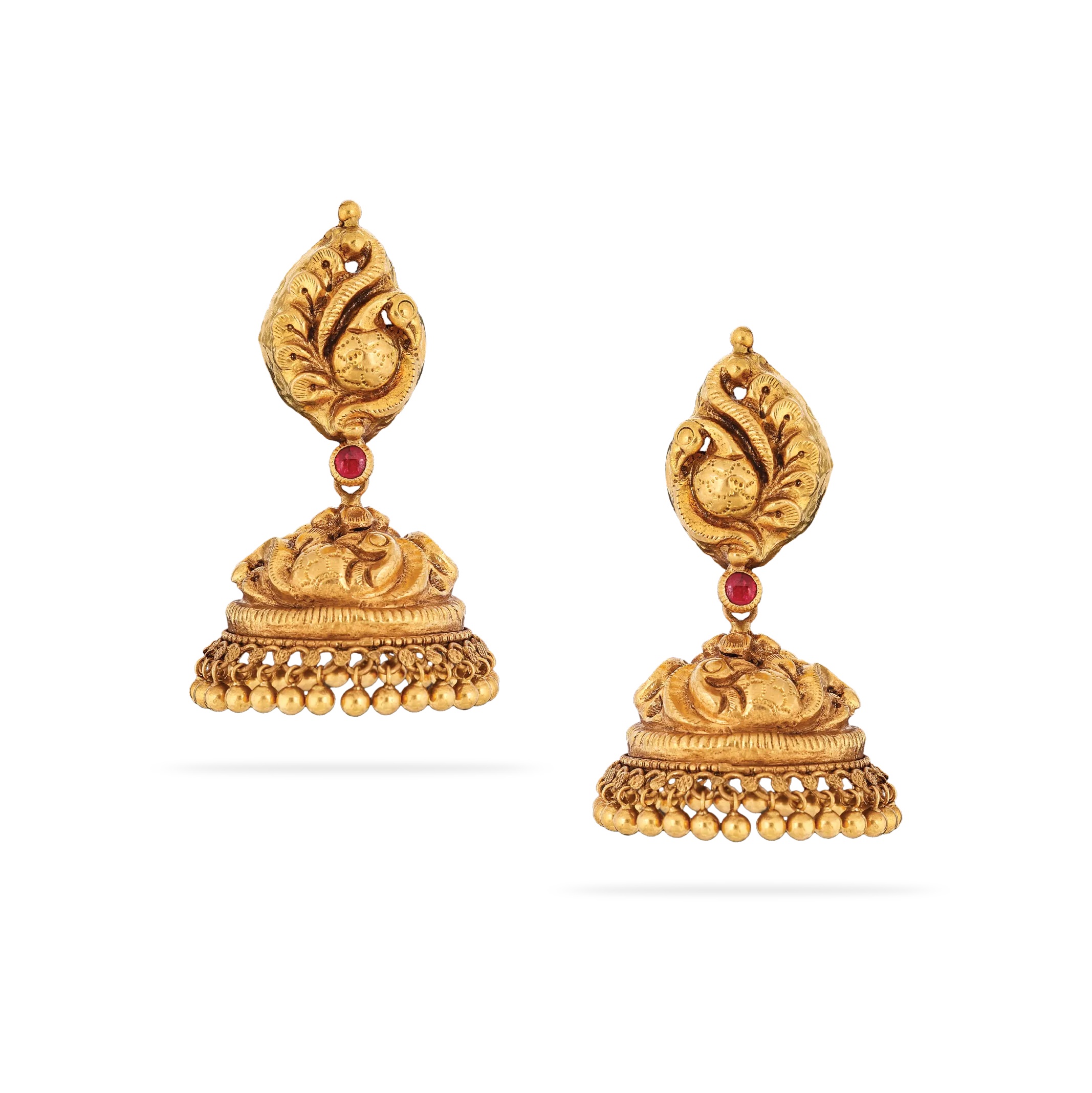
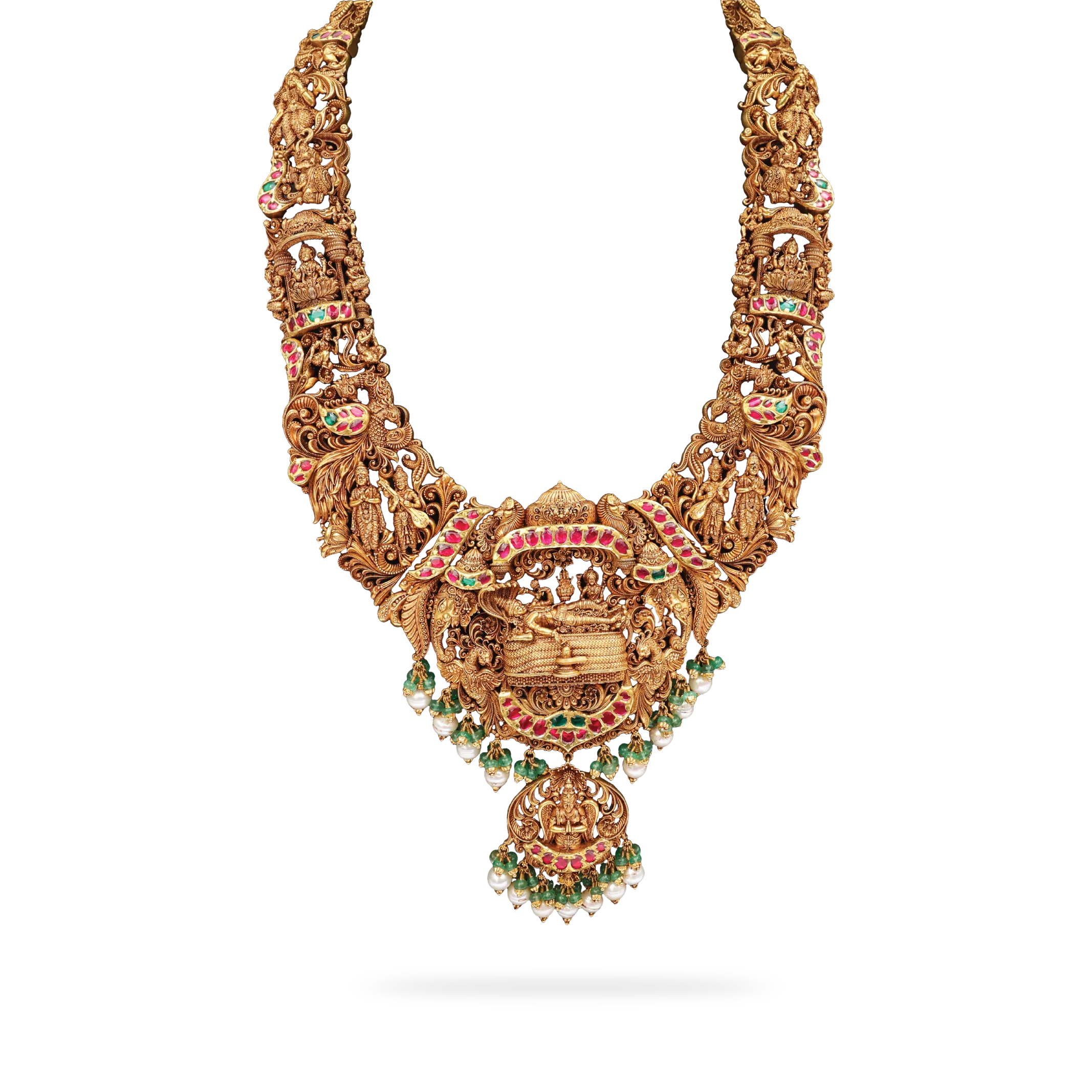
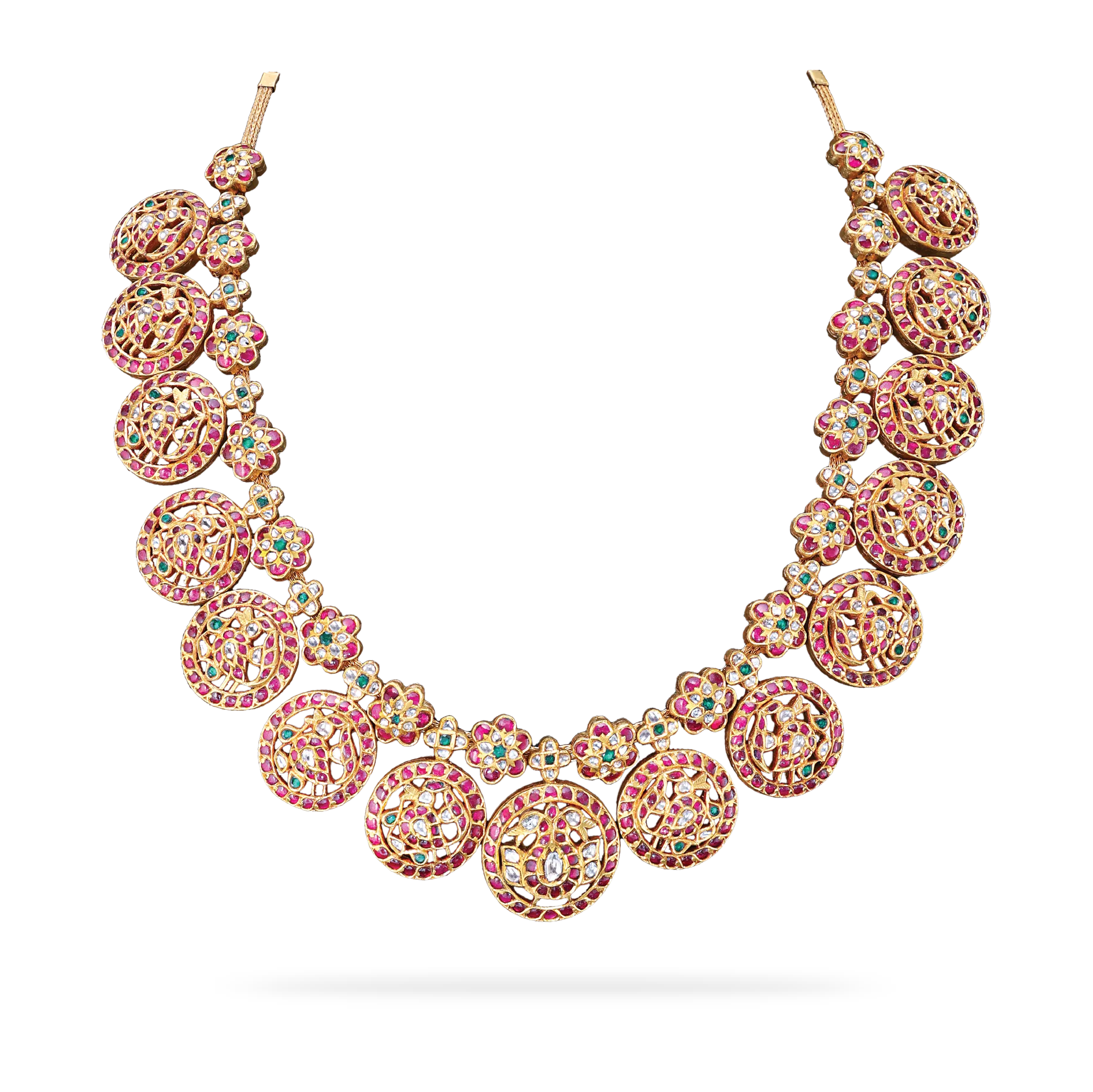
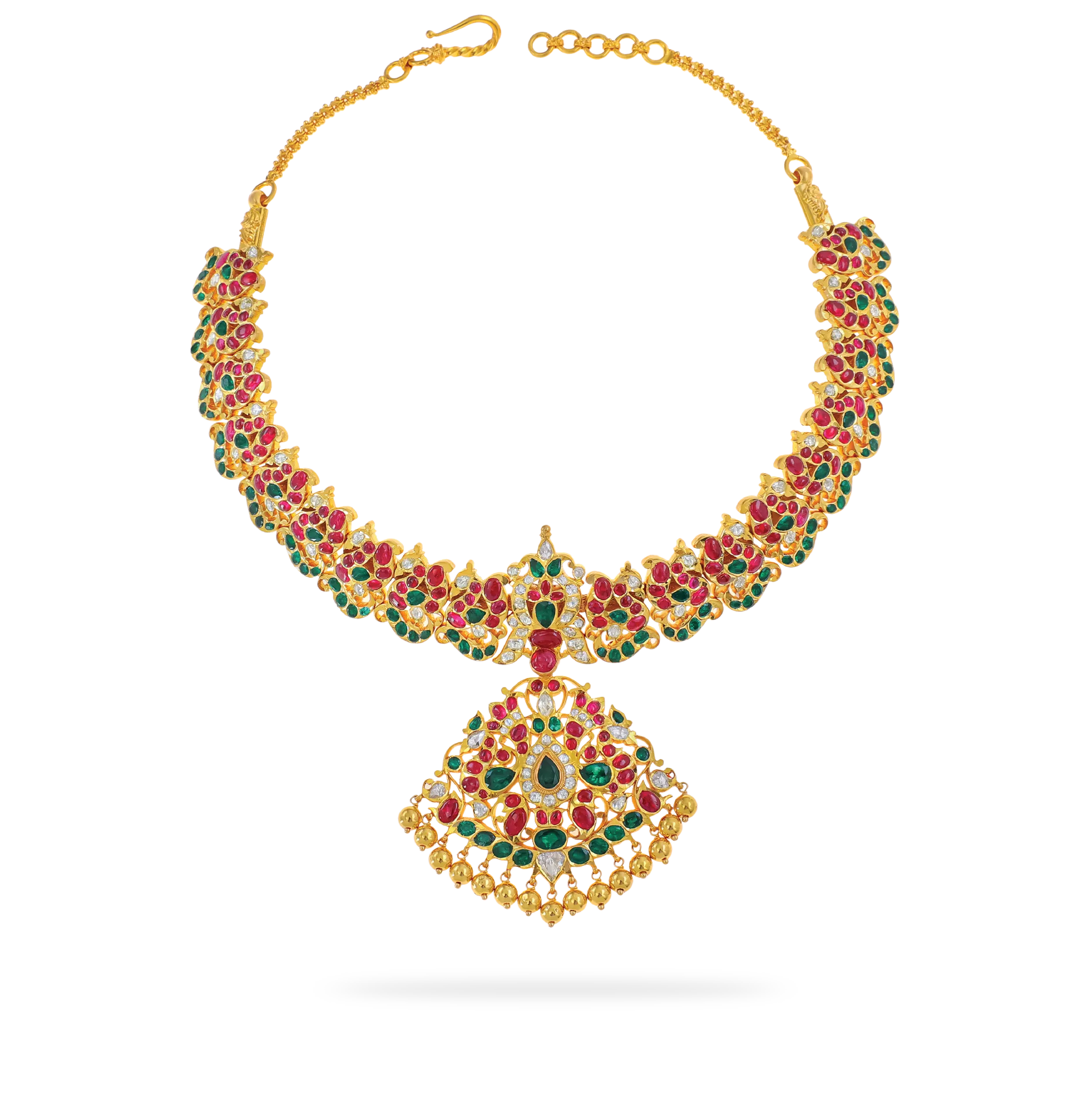
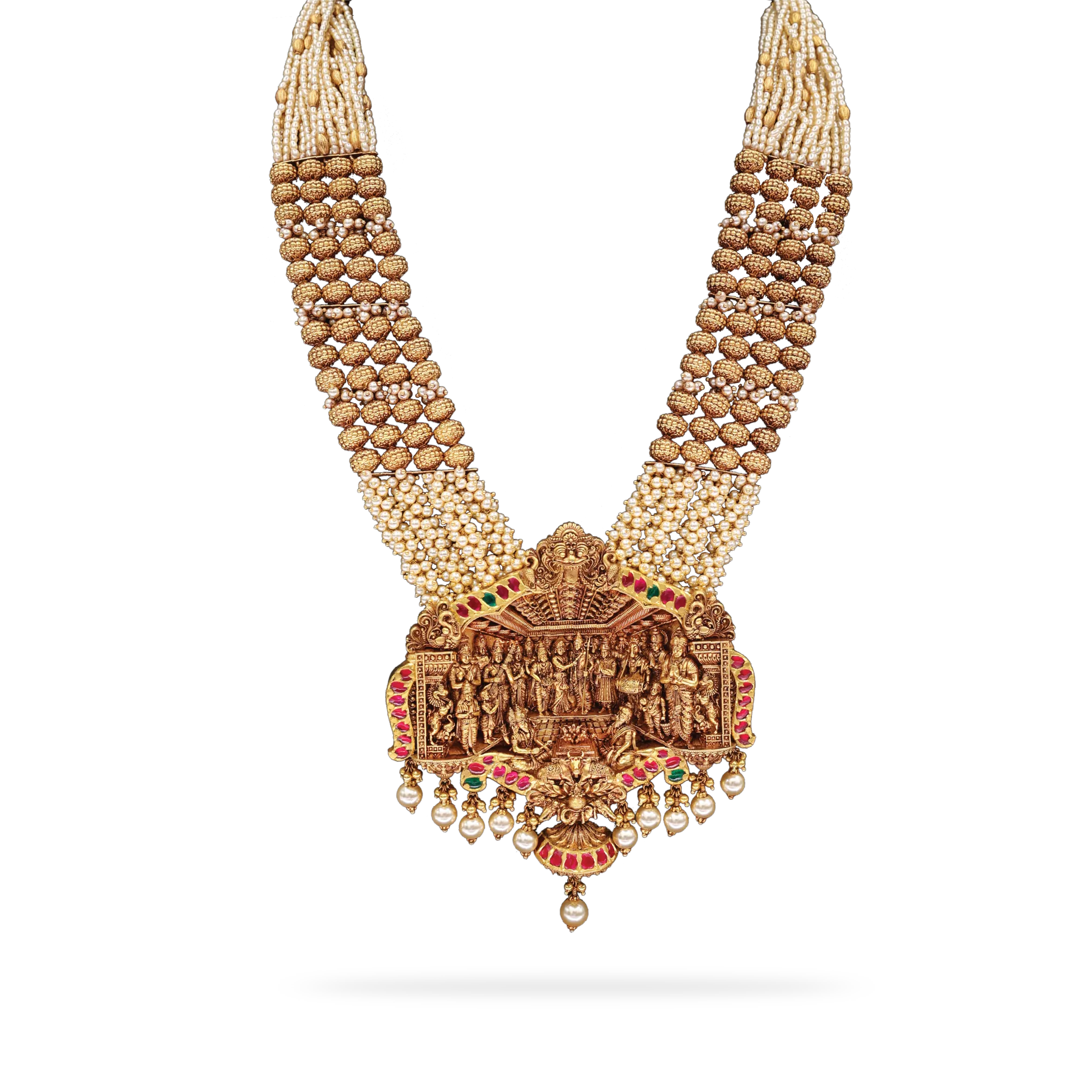
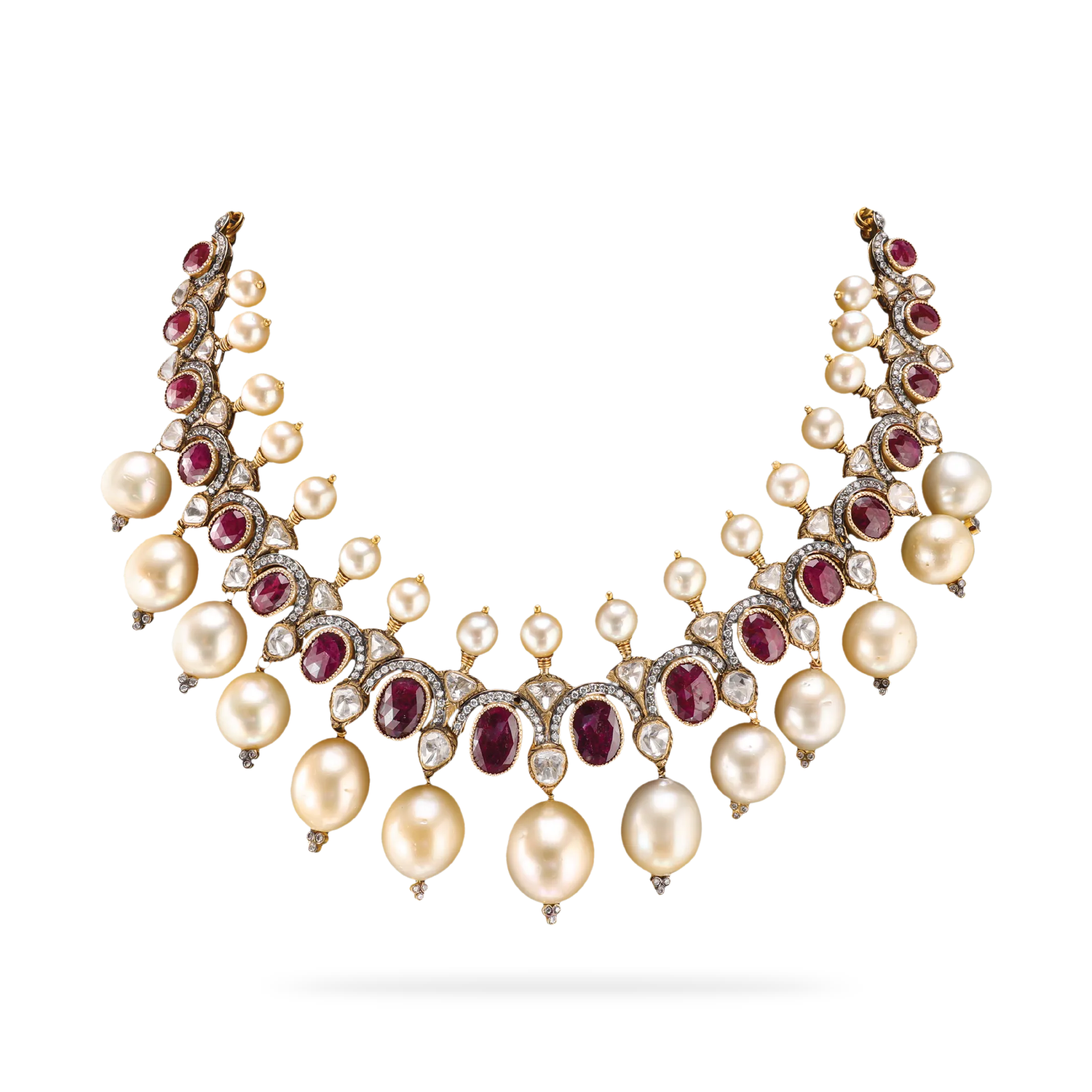
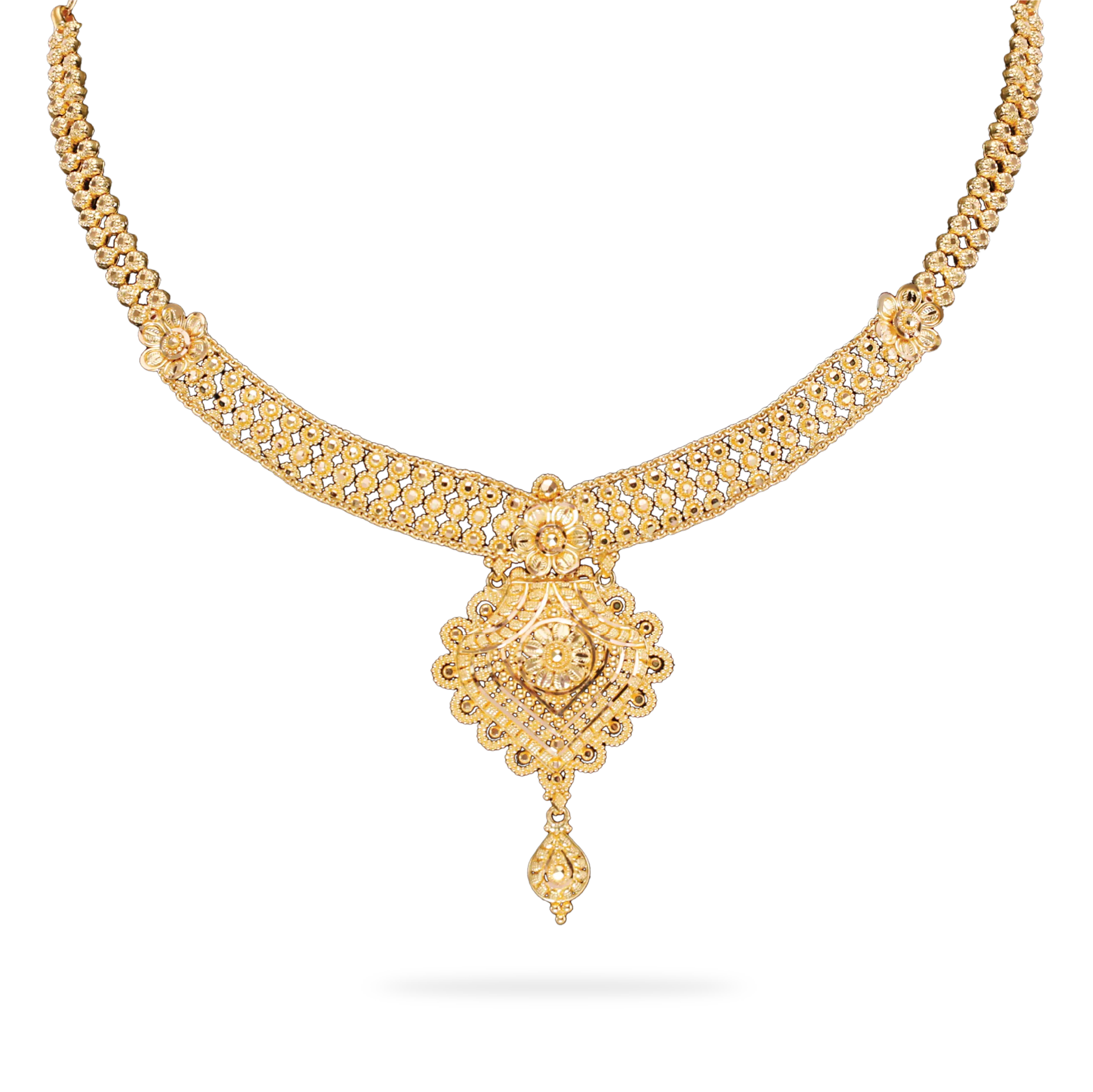
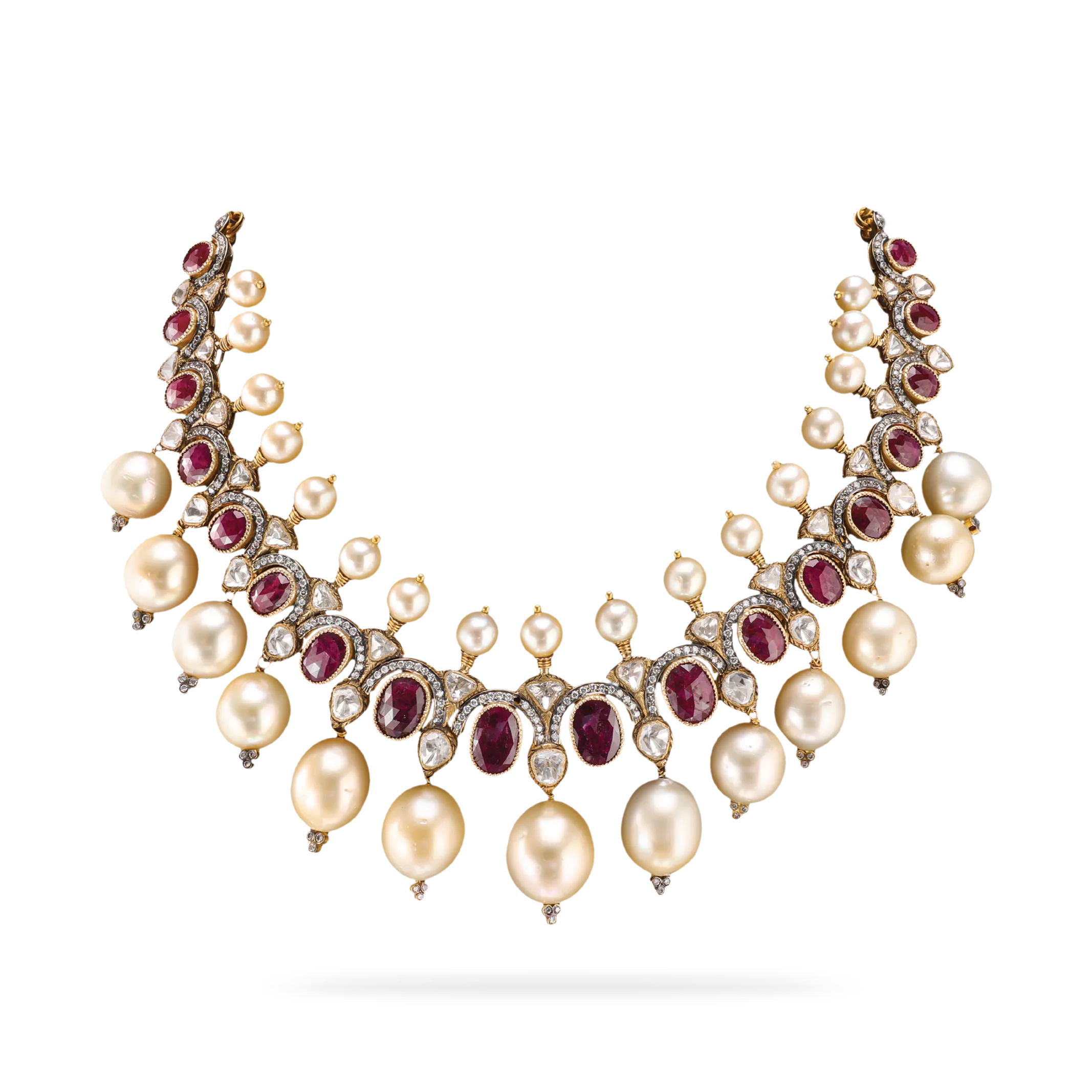
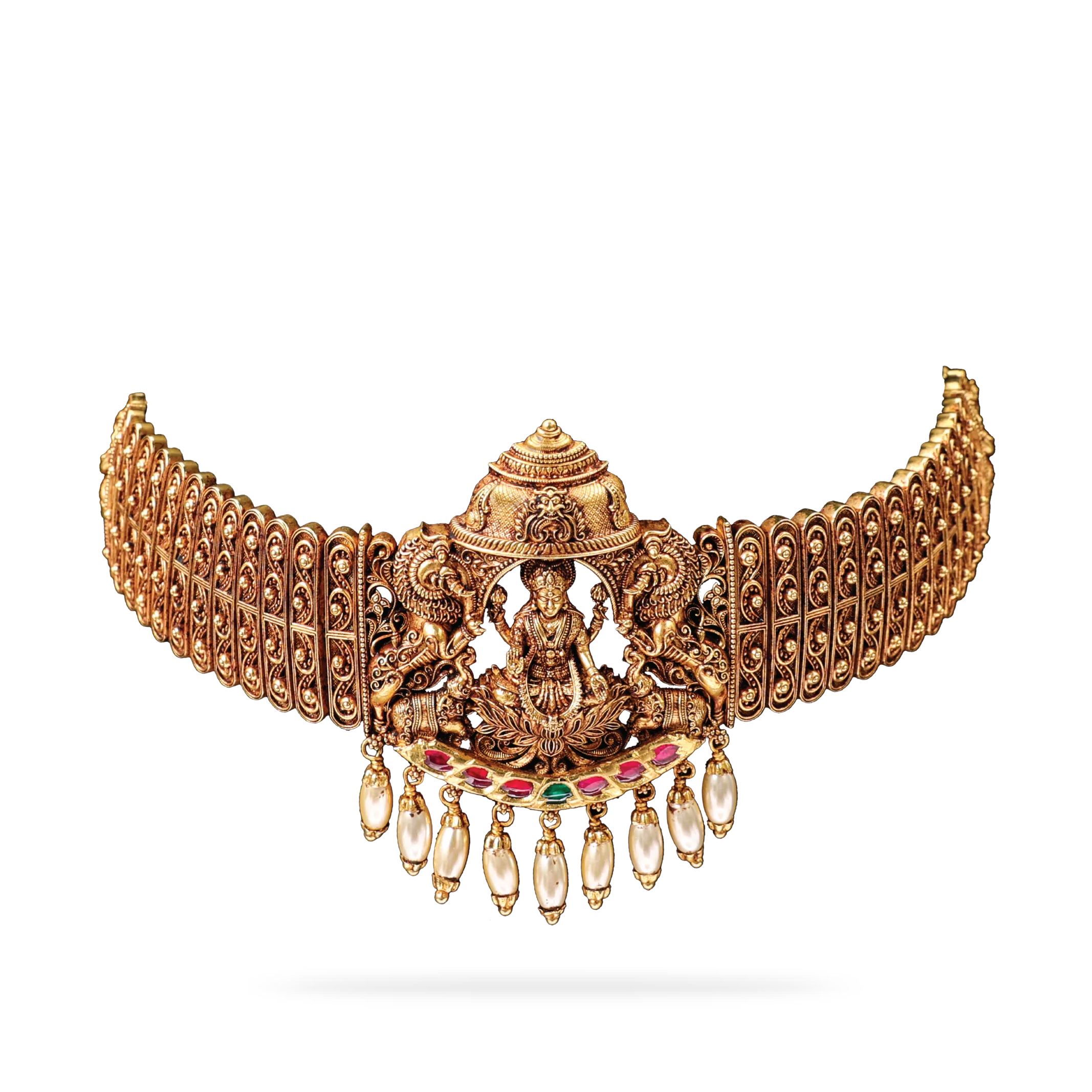
Material and design language should follow both the ceremony and your wardrobe. Gold and temple jewellery often complement silk sarees and traditional rituals, while diamond pieces can sit comfortably with reception gowns or modern lehengas. Kundan and Jadau bring a more ornate, heritage feel, but their scale and weight deserve a careful trial.
It is also worth considering how often you will wear a piece after the wedding. A necklace that works with one saree may be emotionally perfect, but a simpler design could become a more useful part of your long-term collection.
Create a priority list for essential and statement pieces
Make a short list before entering a showroom. Separate the pieces you genuinely need from those you would buy only if the design and price feel right. This gives you room to enjoy the experience without allowing a dramatic display piece to consume the entire budget.
A useful priority list might include:
- One primary necklace suited to the wedding ceremony.
- Earrings and a maang tikka that work with the chosen hairstyle.
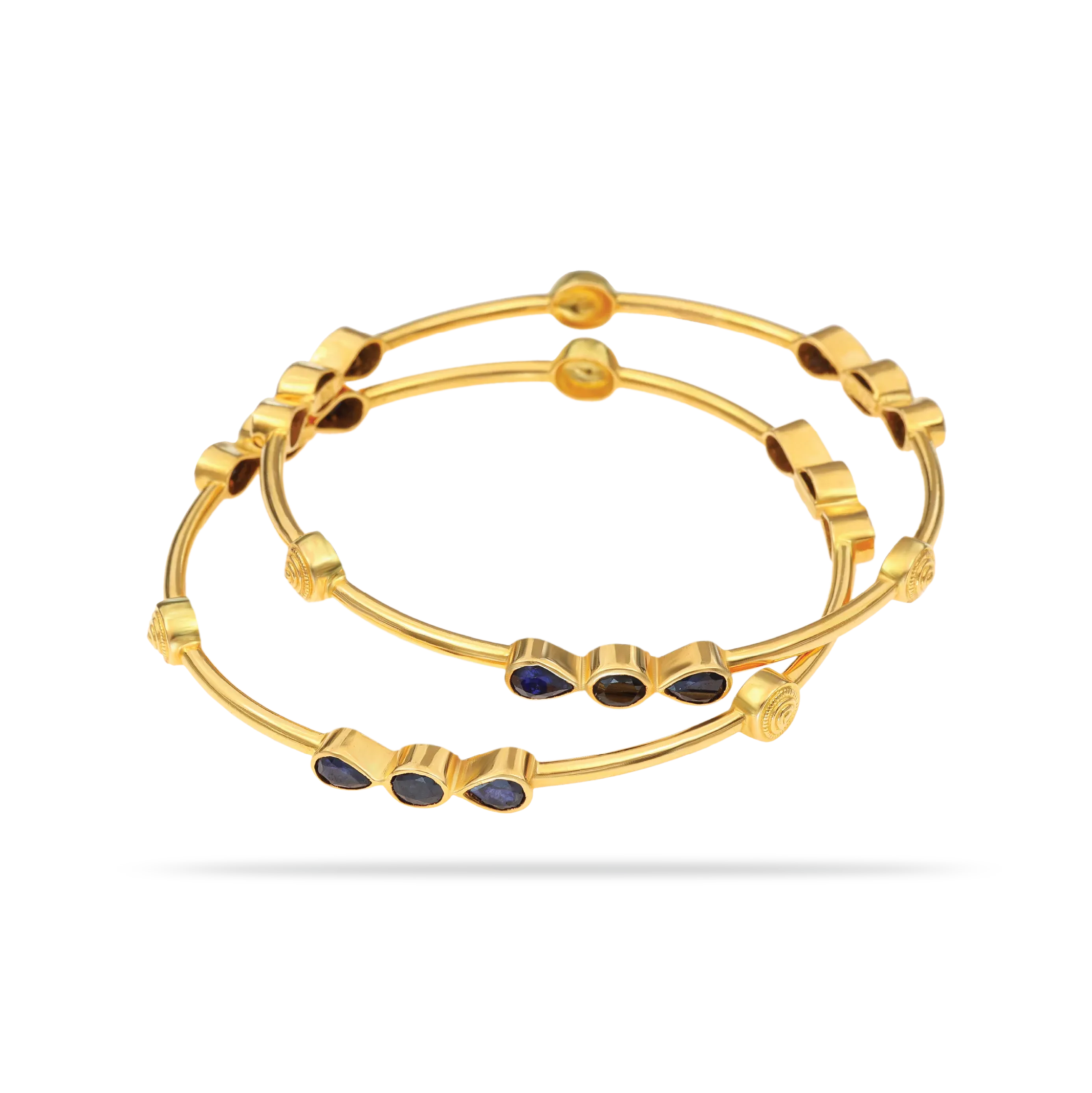
- Bangles or bracelets that can be worn beyond the wedding.
- A reception or engagement piece with a lighter silhouette.
- One statement item reserved for the outfit that needs it most.
After making the list, bring photographs or sketches of your outfits when possible. The showroom conversation becomes more specific, and you can judge proportion rather than relying on memory.
Compare bridal jewellery showrooms in Bangalore
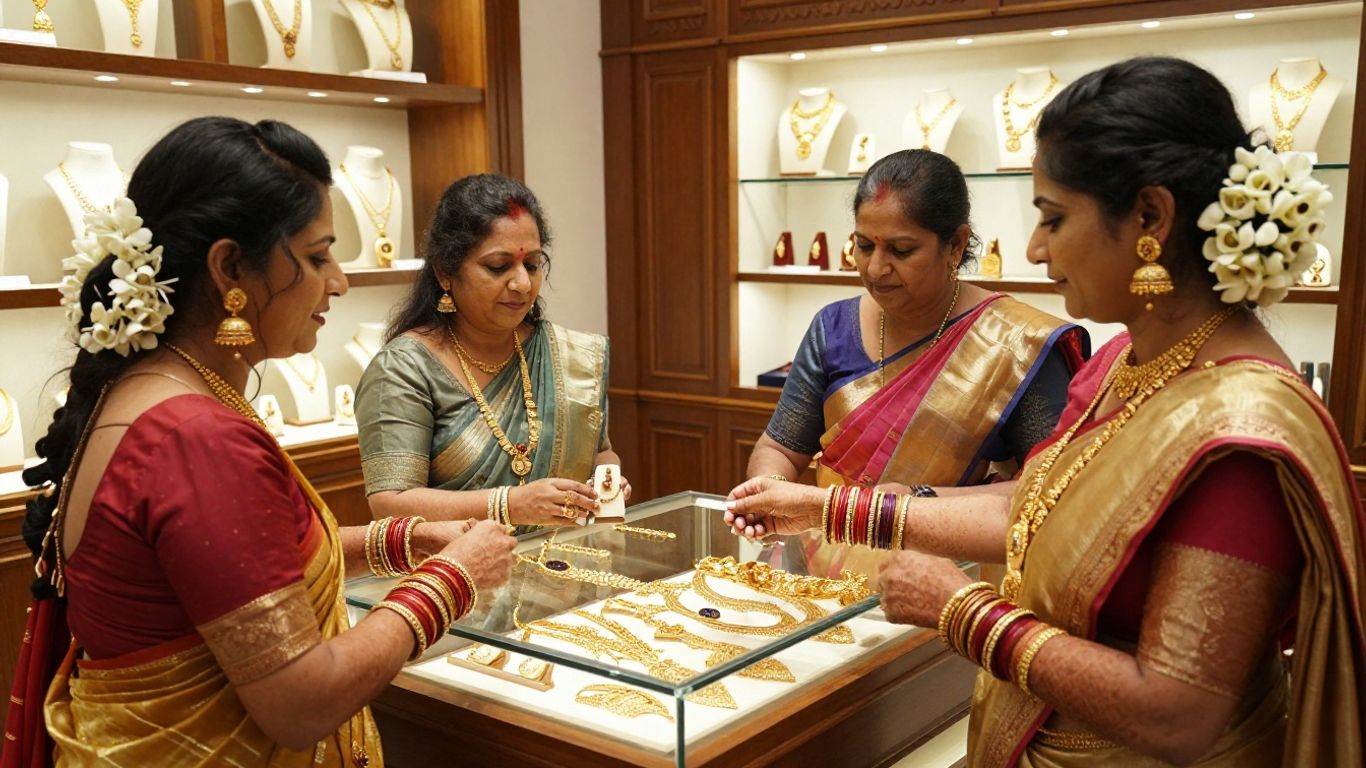
The right bridal jewellery showroom in Bangalore should offer more than an attractive display. You are also assessing how clearly the team explains materials, pricing, fittings, timelines, and after-sales support. Visit with enough time to try pieces properly, and compare like with like instead of rushing between several counters.
Assess reputation, reviews, and customer experiences
Look for patterns in customer feedback rather than relying on one enthusiastic review or one complaint. Comments about billing clarity, delivery, repairs, fitting, and communication are particularly useful for a wedding purchase. You can also ask people you trust how the showroom handled changes after the sale.
A long history alone does not guarantee the right experience, but it can be a helpful starting point when combined with recent reviews and an in-person consultation. Notice whether the staff answer direct questions patiently or steer the conversation only toward higher-priced pieces.
Check the range of bridal collections and design styles
A useful showroom should let you compare silhouettes, proportions, stone treatments, and levels of detail within your budget. Look for enough variety to test your initial preference: a traditional design may look different once paired with your blouse neckline, while a contemporary set may be more versatile than expected.
For more ideas on balancing heritage and current design, browse this guide to timeless wedding jewellery. Use inspiration as a way to refine your taste, not as a reason to copy a look that does not feel comfortable or personal.
Evaluate showroom location, appointments, and service quality
Practical service can make several visits much less stressful. Ask whether appointments are available, how many family members can attend, whether private consultations are offered, and whether the showroom can arrange fittings or design discussions. Location matters too, especially when you may need to return for resizing or collection.
An appointment-only consultation can be useful when you want focused guidance and a quieter setting; a private bridal jewellery appointment is one example of the kind of service arrangement shoppers may encounter. Regardless of the format, judge the consultation by how well it responds to your needs.
Compare pricing, making charges, and customization options
Request an itemized quotation for pieces that are similar in metal, weight, and stone quality. Ask how making charges are calculated and whether customizations alter the timeline or price. If a design is modified, make sure the final sketch, measurements, stone details, and agreed price are recorded before production begins.
A simple comparison can keep the conversation grounded:
| Comparison point | What to ask | Why it matters |
|---|---|---|
| Metal | What purity and net weight are listed? | It clarifies the value of the gold content. |
| Stones | Which stones are included and documented? | It prevents assumptions about quality or origin. |
| Charges | How are making charges and taxes calculated? | It makes quotes easier to compare. |
| Custom work | What changes are possible and when will they be ready? | It helps protect your wedding timeline. |
Once the figures are written down, compare the overall proposal rather than choosing the cheapest headline price. Clear answers and consistent documentation are part of the value of a showroom experience.
Understand bridal jewellery quality and authenticity
Beautiful presentation should invite closer inspection, not replace it. Before paying an advance, ask to see the relevant marks, reports, and product details for every important piece. A calm, transparent explanation is a better sign than pressure to decide immediately.
Verify gold purity and hallmarking
Check the karat information, hallmark, net gold weight, and any applicable identification details on the product and invoice. Ask the salesperson to explain what is included in the gross weight when stones, beads, or other materials are present. These details help you understand exactly what you are paying for.
For a practical explanation of karats and marks, see this guide to gold purity and hallmarking. Keep the invoice safely, since it may be needed for future servicing, valuation, or an exchange conversation.
Check diamond certification and grading details
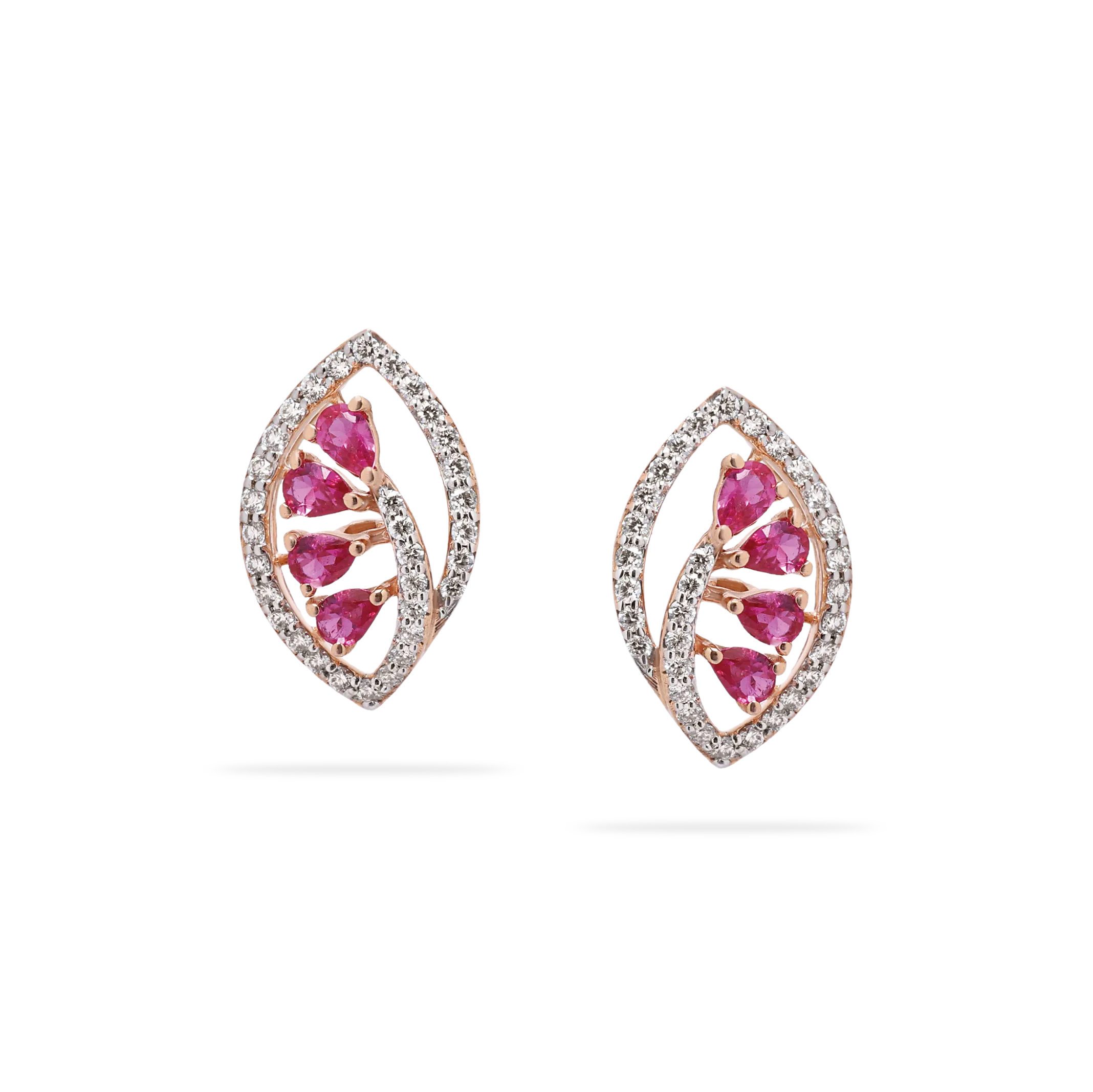
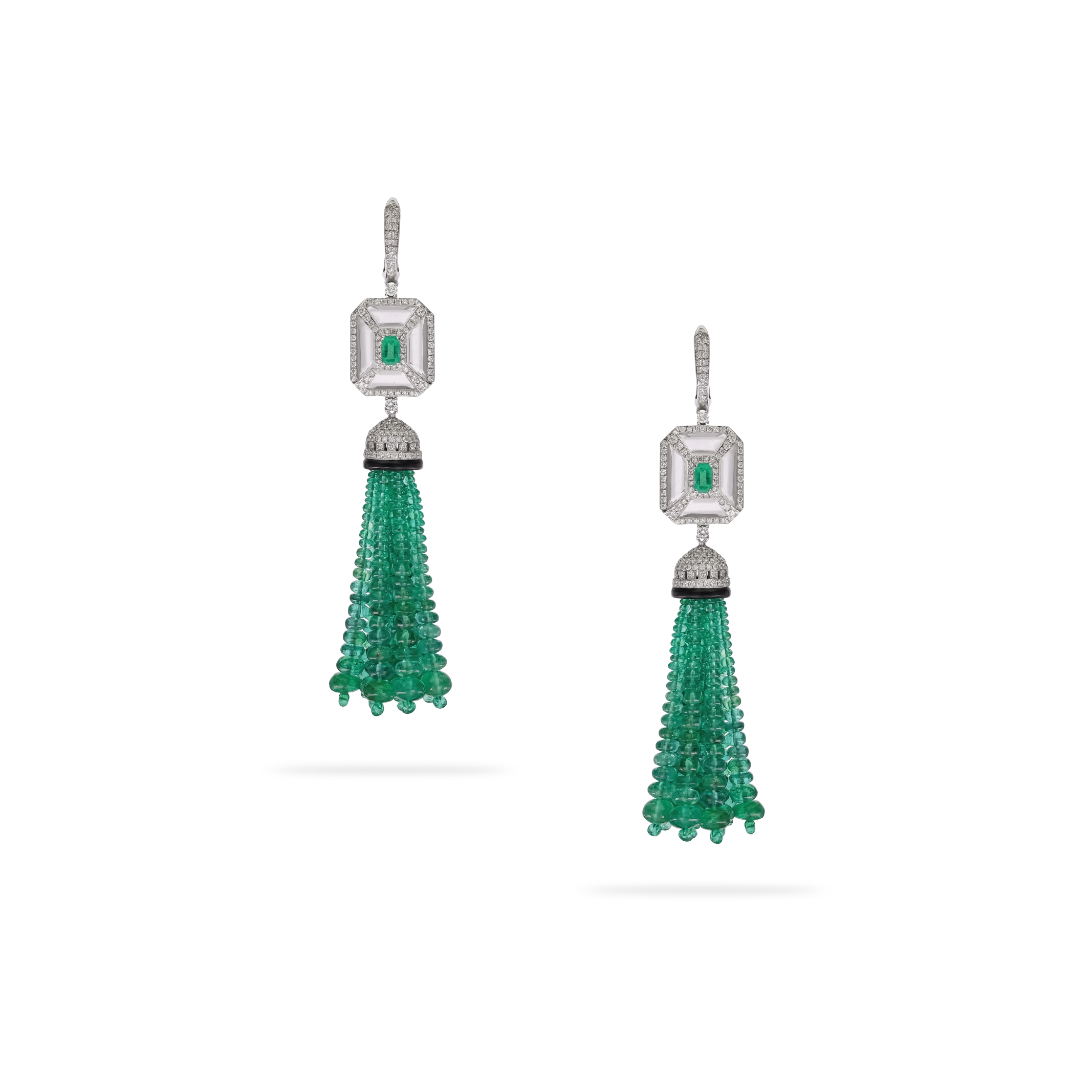
For diamond jewellery, ask whether a grading report accompanies the stone and whether the report details match the piece you are viewing. Review the stated cut, colour, clarity, and carat information, and ask whether the diamond is natural or lab-grown when that distinction affects your decision.
Certification is only useful when it is connected clearly to the purchased stone. Take a moment to compare the report number, measurements, and description with the invoice and product documentation before approving the final order.
Examine gemstones, settings, and craftsmanship
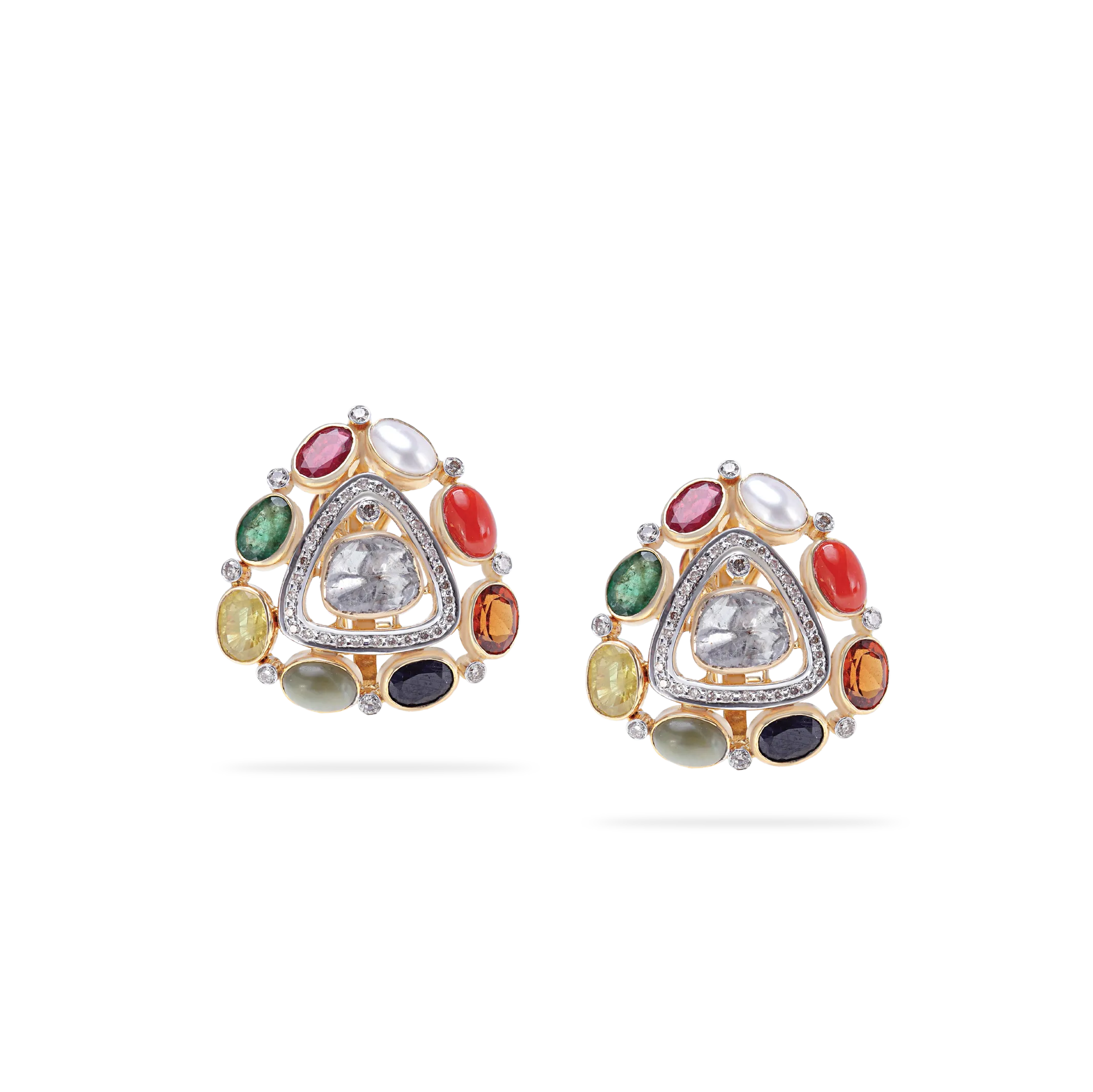
Look closely at prongs, clasps, joints, backs, edges, and the way stones sit in their settings. Try earrings for balance and necklaces for weight and movement. Gemstones can vary in colour and character, so ask what is disclosed about treatments or composition rather than assuming every stone is untreated.
Craftsmanship also shows in small practical details. A necklace that lies neatly, a bangle that closes securely, and earrings that do not pull painfully are more valuable for a bride than a piece that looks impressive only under showroom lighting.
Request transparent invoices and product documentation
Your paperwork should describe the item sufficiently to identify it later, including metal purity, gross and net weight, stone details, charges, taxes, and the final amount. If the piece is made to order, retain the design approval and promised delivery date as well.
Read the documents before making the final payment, and ask for unfamiliar terms to be explained in plain language. Good records turn a verbal understanding into something you can check when the jewellery is collected or serviced.
Choose jewellery for each wedding function
A bridal collection feels more coherent when every piece has a role. The ceremony may call for tradition and visual richness, while smaller events often reward movement, comfort, and colour. Planning by function also helps you avoid wearing the same heavy combination from morning to night.
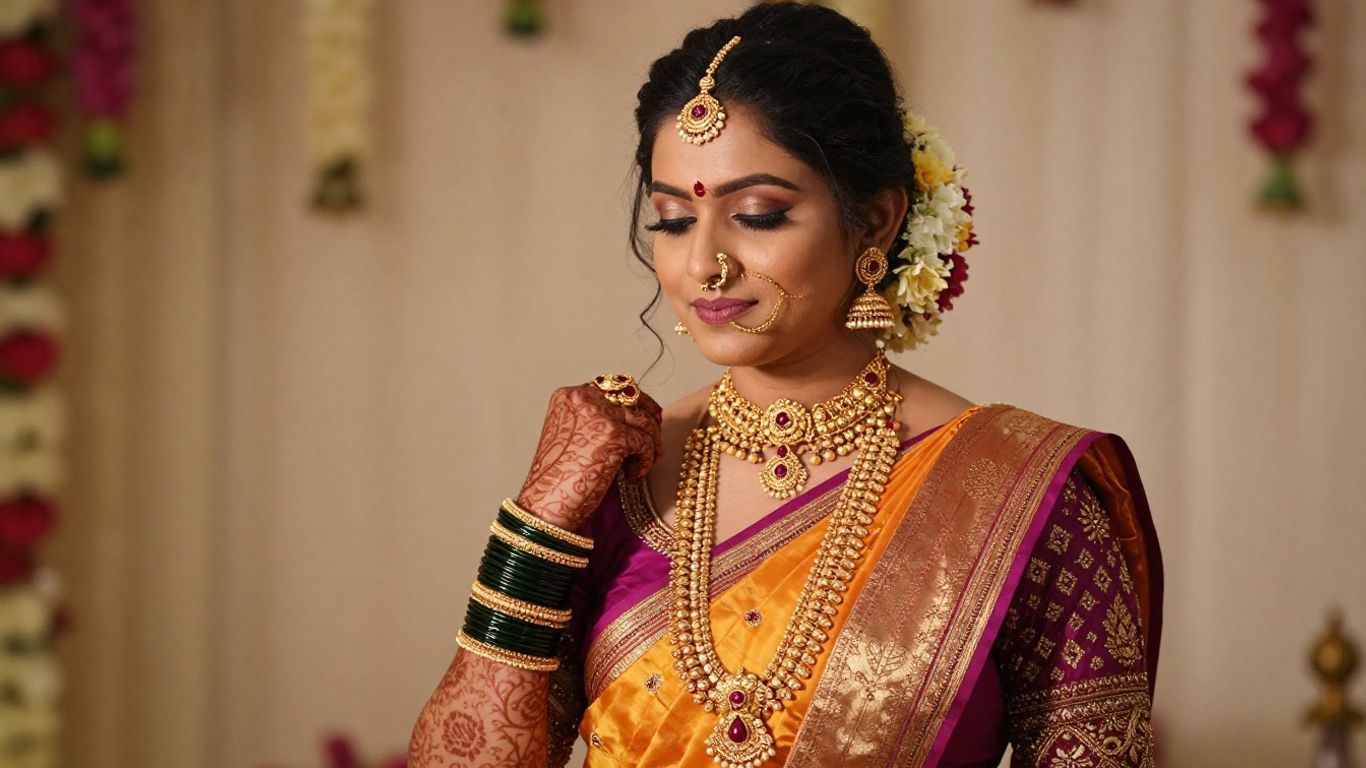
Select engagement and reception jewellery
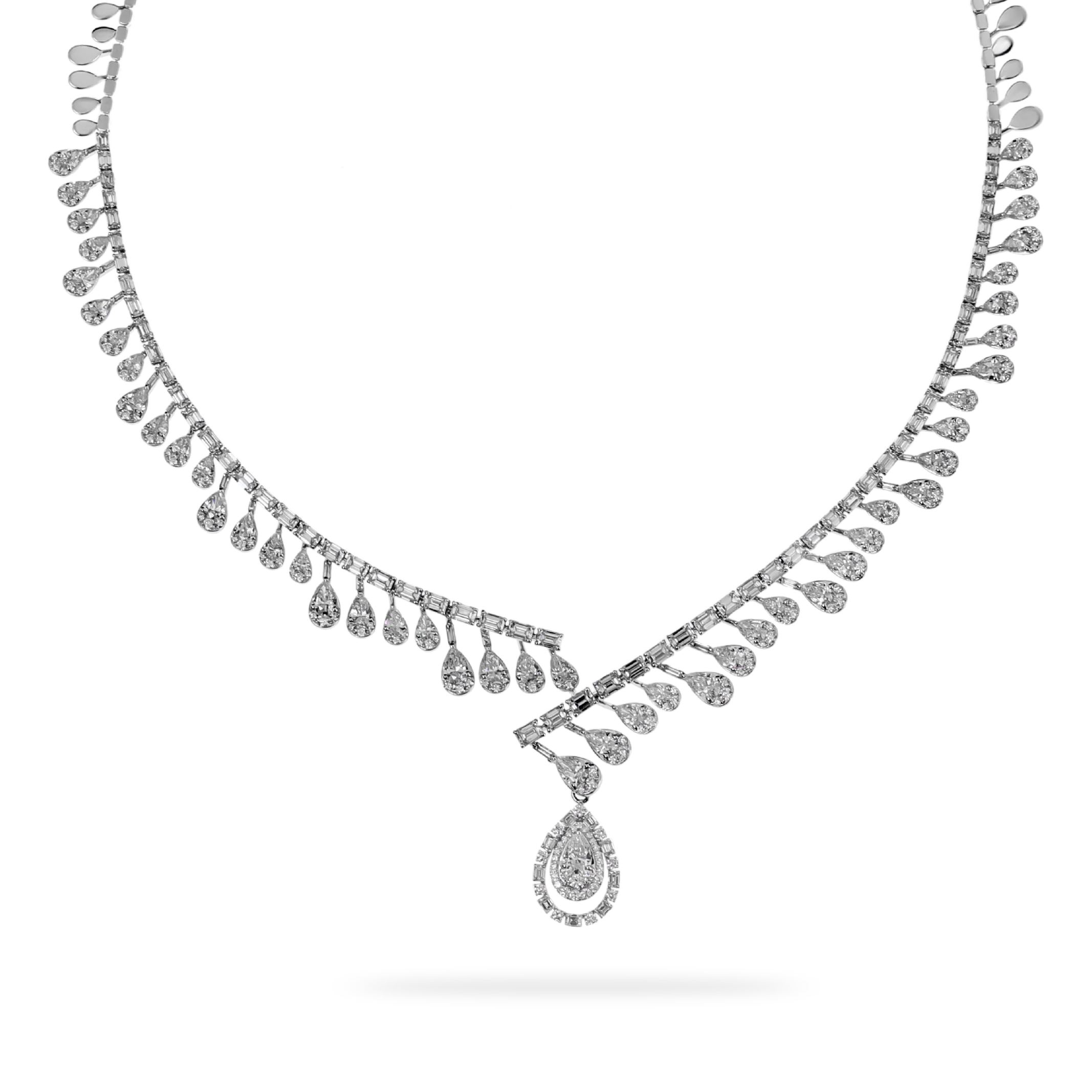
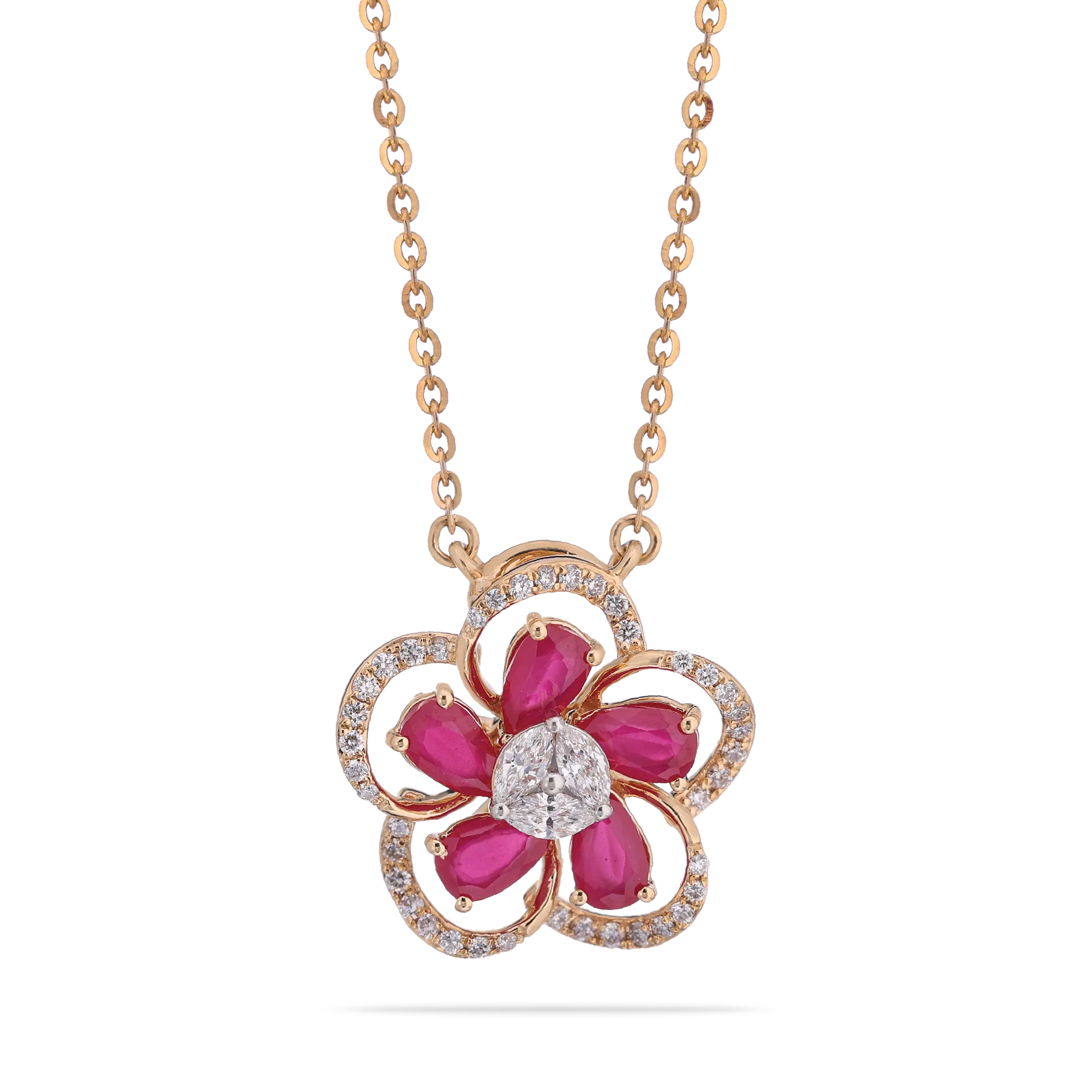
Engagement and reception looks often allow more flexibility than the main ceremony. A diamond ring, pendant, choker, or elegant earring can carry the look without competing with a heavily embroidered outfit. Consider the neckline and lighting at the venue, since certain settings photograph differently from intricate antique-style surfaces.
Choose one focal point and let the remaining pieces support it. This usually creates a cleaner appearance than pairing a large necklace, oversized earrings, dramatic tikka, and elaborate hair jewellery without considering their proportions.
Plan traditional pieces for the wedding ceremony
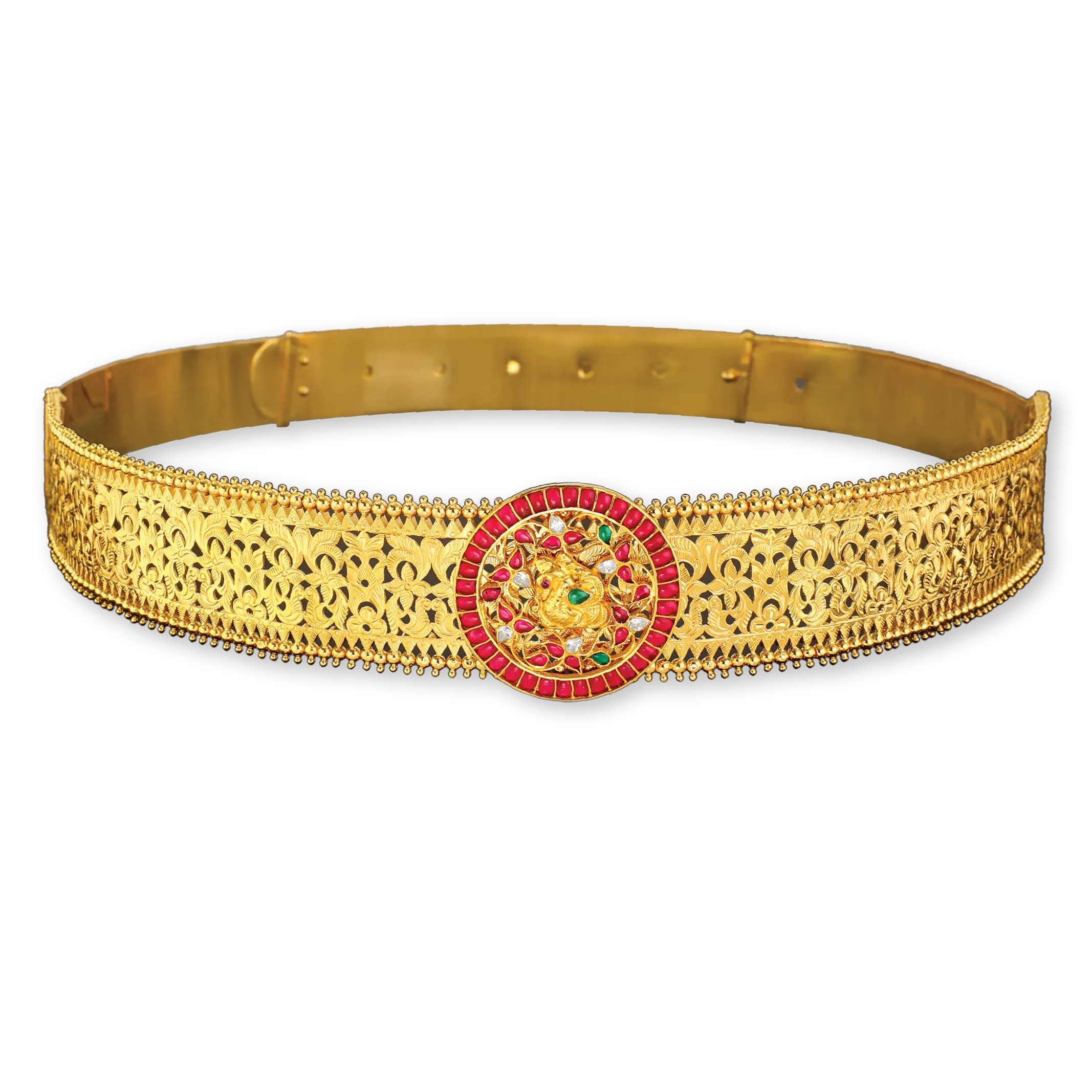
For the central ceremony, begin with the outfit and family customs. Long necklaces, temple-inspired forms, bangles, waist ornaments, and hair accessories can create a strong traditional profile, but they should still allow you to sit, move, and participate in rituals comfortably.
Try the complete combination, including the blouse, dupatta or saree drape, and hairstyle if possible. A wedding necklace set guide offers useful ways to think about layering and neckline balance before you commit to a particularly elaborate arrangement.
Coordinate jewellery for mehendi and sangeet events
Mehendi and sangeet jewellery can be lighter, more colourful, or more playful. Choose pieces that will not catch on embroidery or interfere with dancing, hand movements, or mehendi designs. Earrings, stackable bangles, delicate chains, and floral-inspired details can add interest without making the outfit feel crowded.
Comfort is especially important for events that last several hours. Test clasps, chains, and earring backs in advance, and avoid introducing an untested piece on the day itself.
Build a versatile set for post-wedding occasions
A thoughtful bridal purchase should have life after the wedding. Look for earrings, bangles, pendants, or detachable elements that can work with festive sarees, workwear, family celebrations, or formal dinners. Versatility may come from scale, interchangeable components, or a design that is traditional without being tied to one outfit.
Before buying, imagine at least three occasions where you might wear the piece. If you can see it only with the bridal outfit, treat it as a special statement purchase and price it accordingly.
Personalize your bridal jewellery collection
Personalization is not limited to engraving or a fully custom design. It can mean selecting a different chain length, changing a stone colour, adjusting proportions, or combining old and new pieces thoughtfully. The goal is a collection that feels connected to you rather than assembled from unrelated trends.
Adapt designs to your bridal outfit and neckline
Bring fabric swatches, blouse photographs, or a sketch of the outfit when discussing necklaces. A high neckline may suit a shorter collar or pendant, while an open neckline can accommodate layering if the lengths are clearly separated. Match the jewellery’s visual weight to the embroidery so neither element disappears.
Check the back and side views as well as the front. Brides are photographed from many angles, and a comfortable, well-balanced design will look considered throughout the ceremony.
Choose pieces that suit your face shape and hairstyle
Earrings and maang tikkas change the frame of the face, while the hairstyle affects how visible the jewellery will be. Try rounded, elongated, delicate, or broader shapes rather than assuming one category will suit you. Take photographs in natural and indoor light to see how the proportions read.
The best choice is usually the one that feels balanced when you smile, turn, and speak. A piece that constantly needs adjusting will distract you, no matter how beautiful it looked in the case.
Combine heirloom jewellery with contemporary designs
Family jewellery can carry memories that no new purchase can replace. Start by identifying one heirloom as the visual anchor, then choose newer pieces that repeat a metal tone, motif, or stone colour without imitating it exactly. Have older items inspected before wearing them so weak clasps or settings can be addressed.
This approach allows tradition and personal style to sit together naturally. It also keeps the overall look from becoming too busy, particularly when the heirloom already has substantial detail.
Explore custom orders, engraving, and design modifications
Custom work can be meaningful, but it requires more decisions than selecting a ready piece. Ask for a drawing, material specifications, stone details, dimensions, revised price, and production timeline. For engraving, confirm the spelling, placement, character limit, and whether the change affects future resizing or repair.
Agree on what happens if the finished piece differs from the approved design. Written confirmation is useful here, especially when the order is placed several months before the wedding.
Finalize your purchase with confidence
The final stage is less glamorous but just as important as choosing the design. Read every term, check the finished piece in person, and allow time for adjustments before the wedding. A showroom that explains its process clearly gives you a better chance of receiving exactly what you approved.
Confirm resizing, repairs, exchange, and return policies
Ask what can be resized, which repairs are covered, and whether exchange or return terms differ for custom-made jewellery. Clarify time limits, deductions, conditions, and the documents you must present. For rings and bangles, confirm whether future adjustments are practical for the selected design.
Do not rely on a general assurance that service is available. Request the policy in writing and keep it with the invoice, design approval, and certification documents.
Understand delivery timelines and advance payment terms
Record the order date, promised completion date, fitting appointment, and collection process. Ask whether the timeline includes stone sourcing, production, quality checks, and possible alterations. If you are paying an advance, understand the cancellation terms and how any balance will be calculated.
Build a buffer before the wedding rather than scheduling collection in the final few days. That leaves time to correct a fitting issue or resolve a documentation question without adding unnecessary pressure.
Arrange safe storage, insurance, and post-purchase care
Decide where each piece will be stored before you bring it home. Separate soft or delicate surfaces, keep clasps closed, and use individual pouches where appropriate. Ask how the materials should be cleaned, especially when diamonds, gemstones, enamel, or heirloom finishes are involved.
For a longer care routine, read these bridal jewellery care tips. Consider insurance or a valuation for high-value pieces, and keep photographs and documents in a secure, accessible place.
Use a final checklist before collecting your jewellery
Collection day is the moment to inspect the actual pieces, not just the order summary. Try on anything that needs fitting and compare the finished jewellery with the approved design. Confirm that all documents and boxes are included before leaving the showroom.
Use this final check:
- Match the product details, weight, and purity with the invoice.
- Check diamond or gemstone reports and identification numbers.
- Inspect clasps, prongs, hinges, backs, and surface finishes.
- Try on rings, earrings, necklaces, and bangles for comfort.
- Confirm care instructions, service terms, and collection records.
Once these points are settled, photograph the pieces and paperwork for your records. Store everything securely, and keep the jewellery away from perfumes, harsh chemicals, and hurried handling until the wedding day.
Conclusion
The best bridal jewellery showroom in Bangalore is the one that helps you make a considered choice: designs should suit your ceremonies and wardrobe, while purity, paperwork, pricing, comfort, and service terms remain clear. Give yourself time to compare, ask direct questions, and choose pieces you will still enjoy wearing long after the celebrations end.
Frequently Asked Questions
How early should I start shopping for bridal jewellery?
Start several months before the wedding, especially if you need custom work, multiple fittings, or coordinated pieces for several ceremonies. Earlier planning gives you time to compare designs and solve unexpected delays.
How much bridal jewellery should I buy?
Buy according to your ceremonies, wardrobe, budget, and future use rather than aiming for a fixed number of pieces. A smaller, well-coordinated collection can be more useful than several items with overlapping purposes.
What should I compare between jewellery showrooms?
Compare design range, craftsmanship, purity information, stone documentation, pricing, making charges, customization, consultation quality, delivery timelines, and after-sales policies. The complete purchase terms matter as much as the display collection.
How can I verify gold jewellery quality?
Check the stated karat, hallmark, net gold weight, and invoice details. Ask what the gross weight includes and make sure the product markings and paperwork correspond to the item you are purchasing.
What diamond documents should I ask for?
Ask for the applicable grading report and compare its identifying details with the diamond and invoice. Review the stated cut, colour, clarity, carat information, and whether the stone is natural or lab-grown when relevant.
How do I choose jewellery that will be comfortable?
Try pieces on while moving, sitting, turning, and speaking. Check earring weight, necklace length, bangle movement, ring fit, and clasp security, since wedding jewellery may be worn for many hours.
What should I do after buying bridal jewellery?
Keep invoices, reports, policies, and design approvals together. Store each piece safely, follow material-specific care instructions, and arrange insurance or a valuation when the value and circumstances make that appropriate.
Custom jewellery Bangalore: A complete guide to designing personalised pieces
10 minute read
Related blogs:
November 20, 2025
The Timeless Elegance of the Tennis Bracelet: A Comprehensive Guide
Read More
November 20, 2025
The Ultimate Guide to Styling and Wearing a Choker Necklace
Read More
November 20, 2025
Find Your Perfect Engagement Ring: A Comprehensive Guide to Styles and Diamonds
Read More
November 20, 2025
The Timeless Elegance of a Diamond Tennis Bracelet: A Buyer's Guide
Read More









.webp)
.webp)