How to choose the perfect bridal long necklace set for your wedding day
September 18, 2026 | 10 minutes read
Key Takeaways
A bridal long necklace set should complement your gown, proportions, and personal style without becoming difficult to wear. Thoughtful choices about length, materials, and coordination will help the jewelry feel like part of the look rather than an afterthought.
- Match the necklace silhouette to your neckline and dress details.
- Choose a length that flatters your proportions and moves comfortably.
- Coordinate metals, stones, and finishes with your existing rings.
- Keep the necklace, earrings, veil, and hair accessories visually balanced.
- Order early so you have time for try-ons, adjustments, and safe packing.
Understand what makes a bridal long necklace set wedding-ready
A wedding-ready set feels intentional from every angle. The necklace should suit the formality of the ceremony, sit comfortably for several hours, and work with the gown rather than compete with it. A useful starting point is to define whether your look is classic, romantic, modern, traditional, or deliberately understated.
Defining features of long bridal necklaces
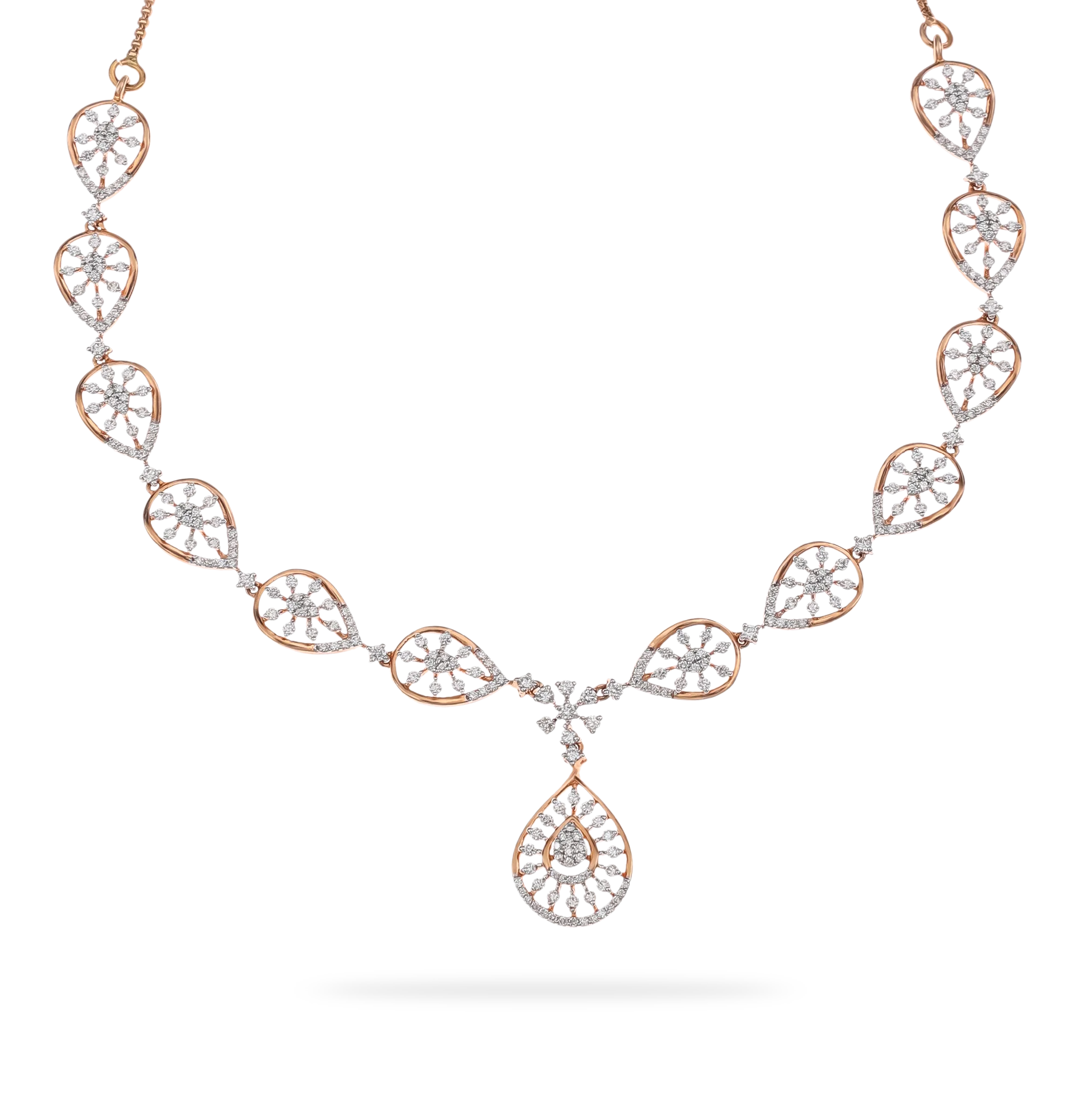
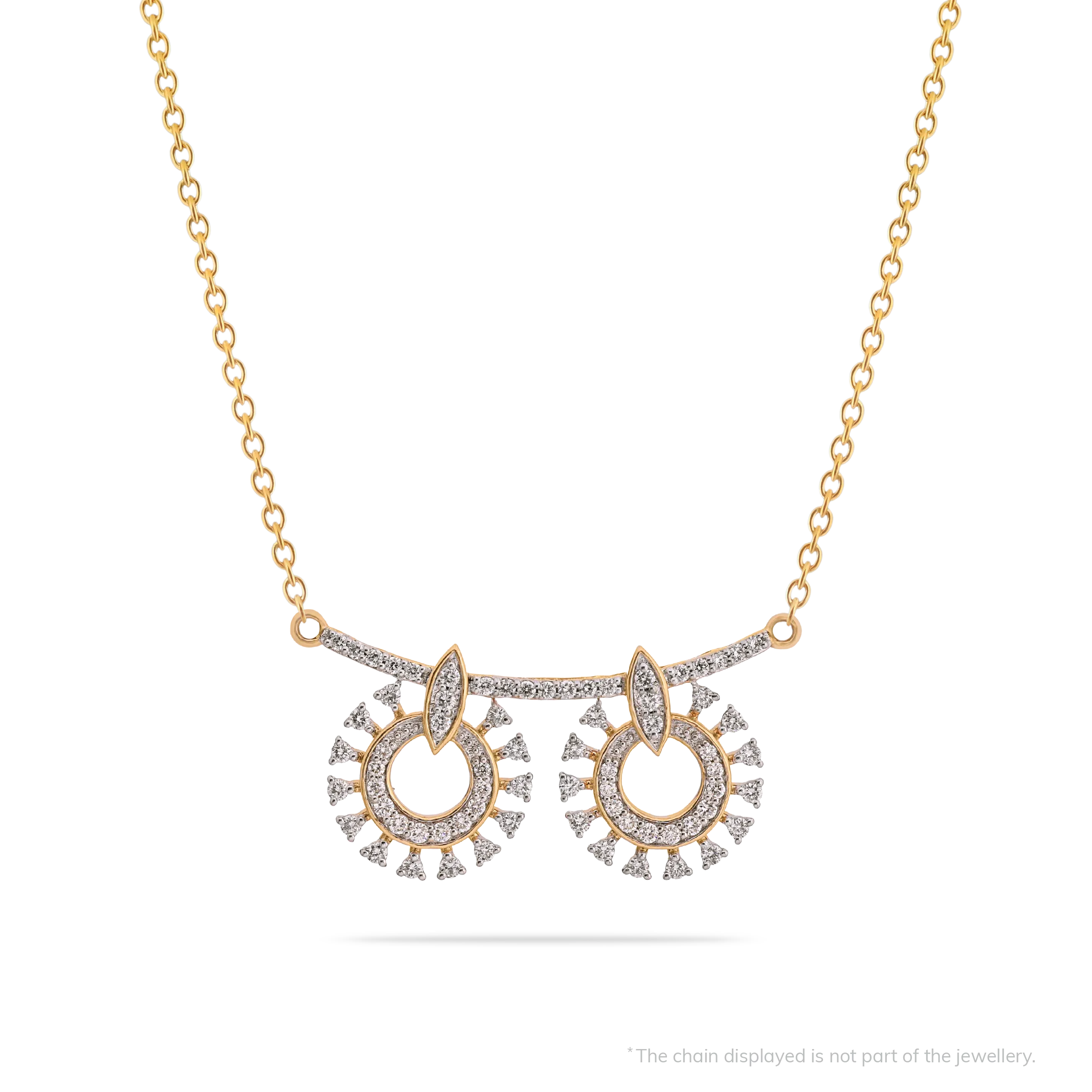
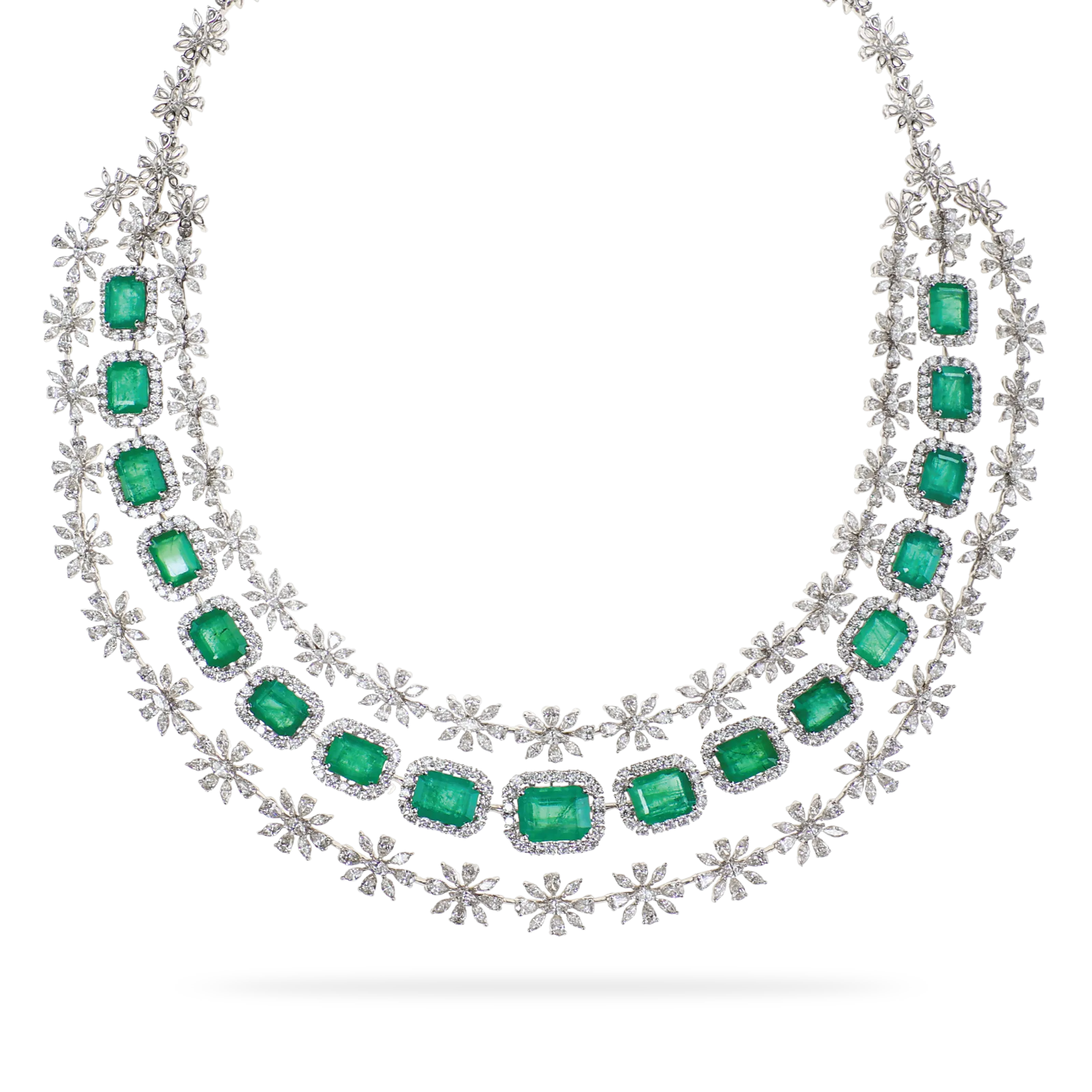
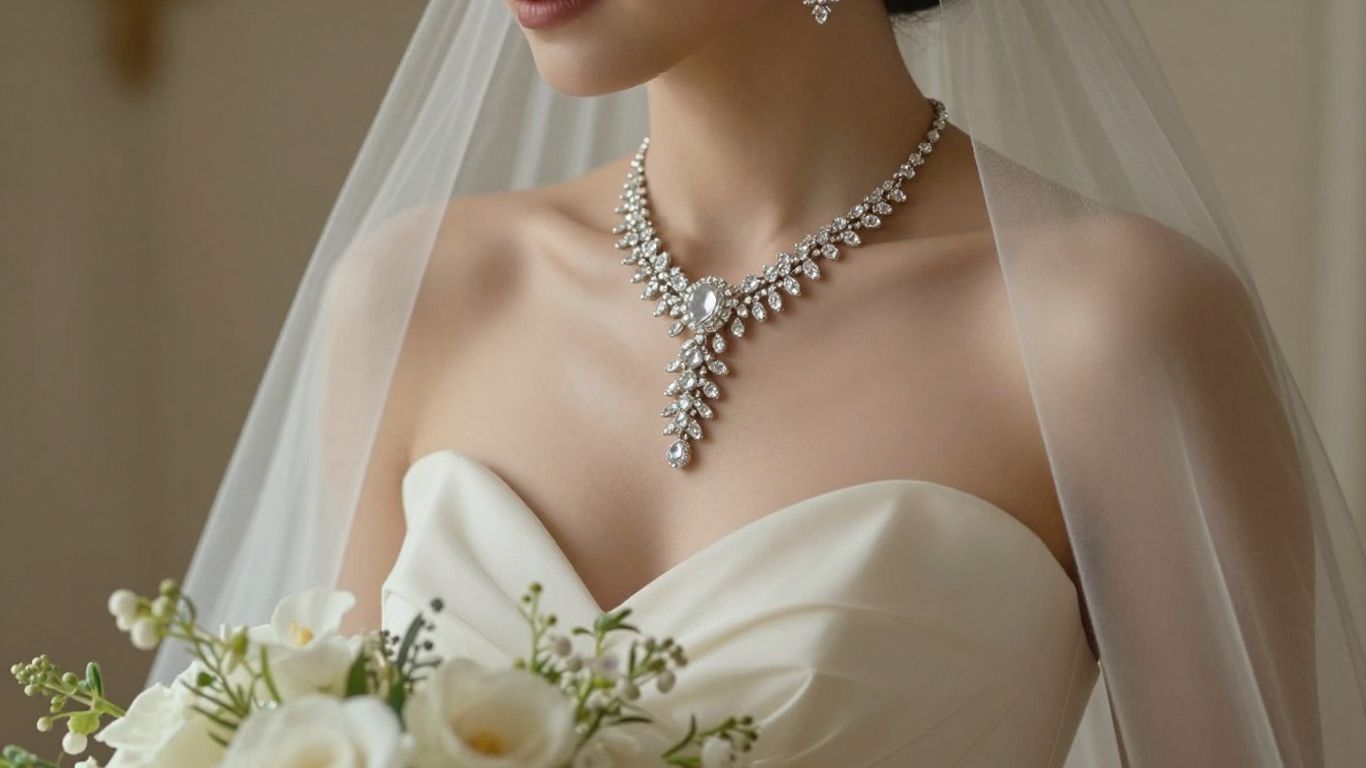
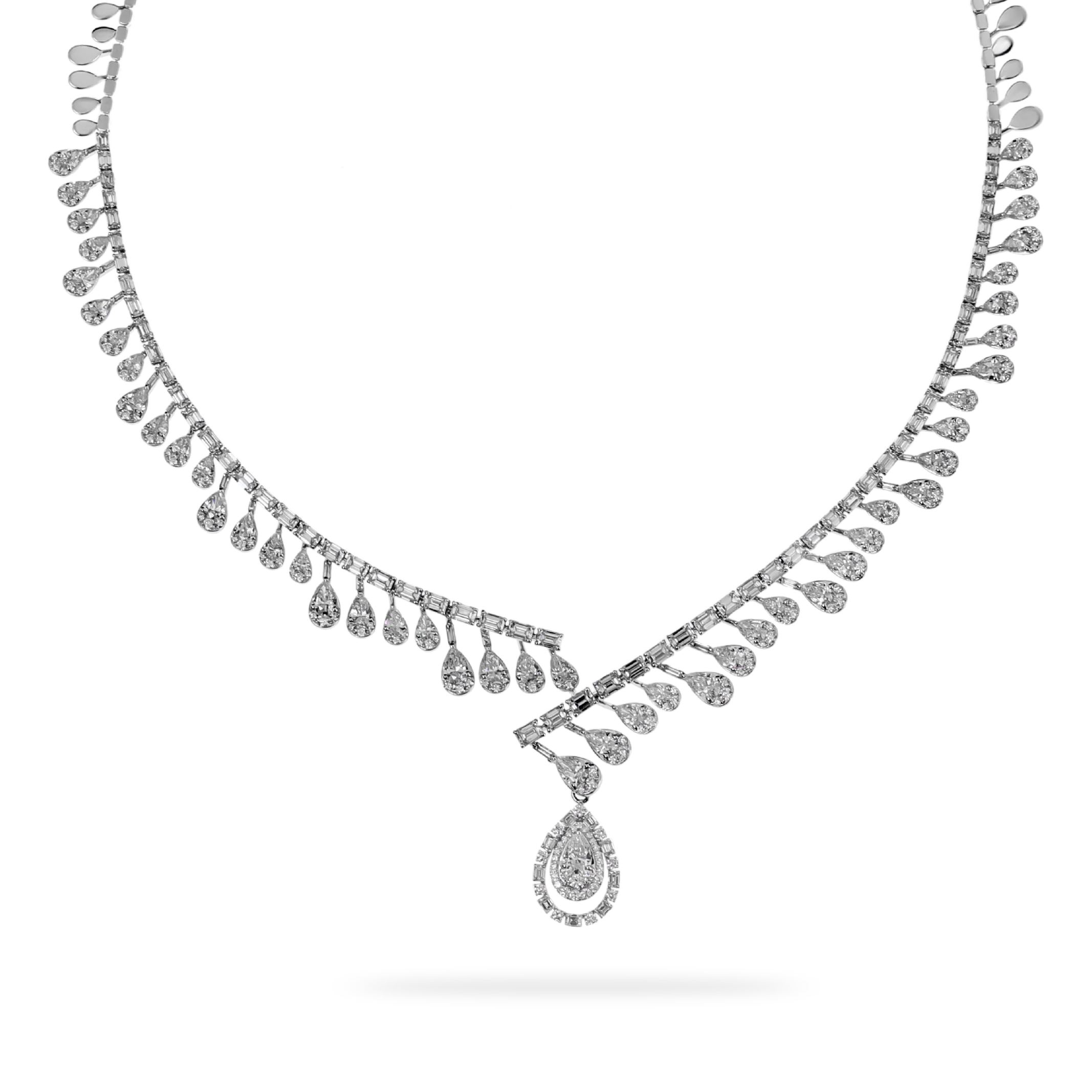
Long bridal necklaces usually create a vertical line through the center of the outfit. That line may come from a pendant, a lariat drop, graduated stones, or several delicate strands. Look for a scale that feels special in photographs but does not cover the most beautiful detail on your bodice.
A long style can be especially effective when the dress has an open neckline or a simple front. For further ideas on proportions and necklace shapes, the diamond necklace guide offers a useful reference point for bridal styling.
Necklace, earring, and accessory combinations
A necklace set often includes matching earrings, but the combination still needs editing. A dramatic pendant usually pairs best with smaller earrings, while a fine necklace can support more movement around the face. Bracelets, rings, and hair accessories should repeat one or two design details rather than copy every element.
The goal is one clear focal point, supported by quieter pieces. That focal point might be the necklace, the earrings, the veil, or an ornate dress neckline—not all four at once.
Matching the set to your bridal style
Your jewelry should sound like the rest of your wedding look. Pearls and soft crystal details can suit a romantic gown, while clean geometric lines feel at home with a modern silhouette. If your outfit includes heritage-inspired details, warmer metal tones and more substantial forms may feel more natural than a very delicate contemporary set.
For a more layered direction, browse this layered necklace styling guide for ideas about combining length, metal, and visual weight without losing harmony.
Balancing elegance with wearability
Beauty matters, but wedding jewelry also has a practical job. You may hug guests, move through photographs, dance, and sit through a long reception while wearing it. Check whether the pendant catches on lace, whether the chain twists when you turn, and whether the earrings remain comfortable after several hours.
Try the complete set with your hairstyle and dress fabric before making a final decision. Jewelry that looks slightly simpler in a close-up can be the better choice when it stays in place and lets you enjoy the day.
Choose the right necklace length and silhouette
Length changes the entire impression of a bridal long necklace set. A necklace that ends above the bust can look polished and controlled, while a longer pendant draws the eye downward and adds movement. Consider the dress neckline, your torso length, and where you want the visual emphasis to land.
Comparing long necklaces, lariats, and layered designs
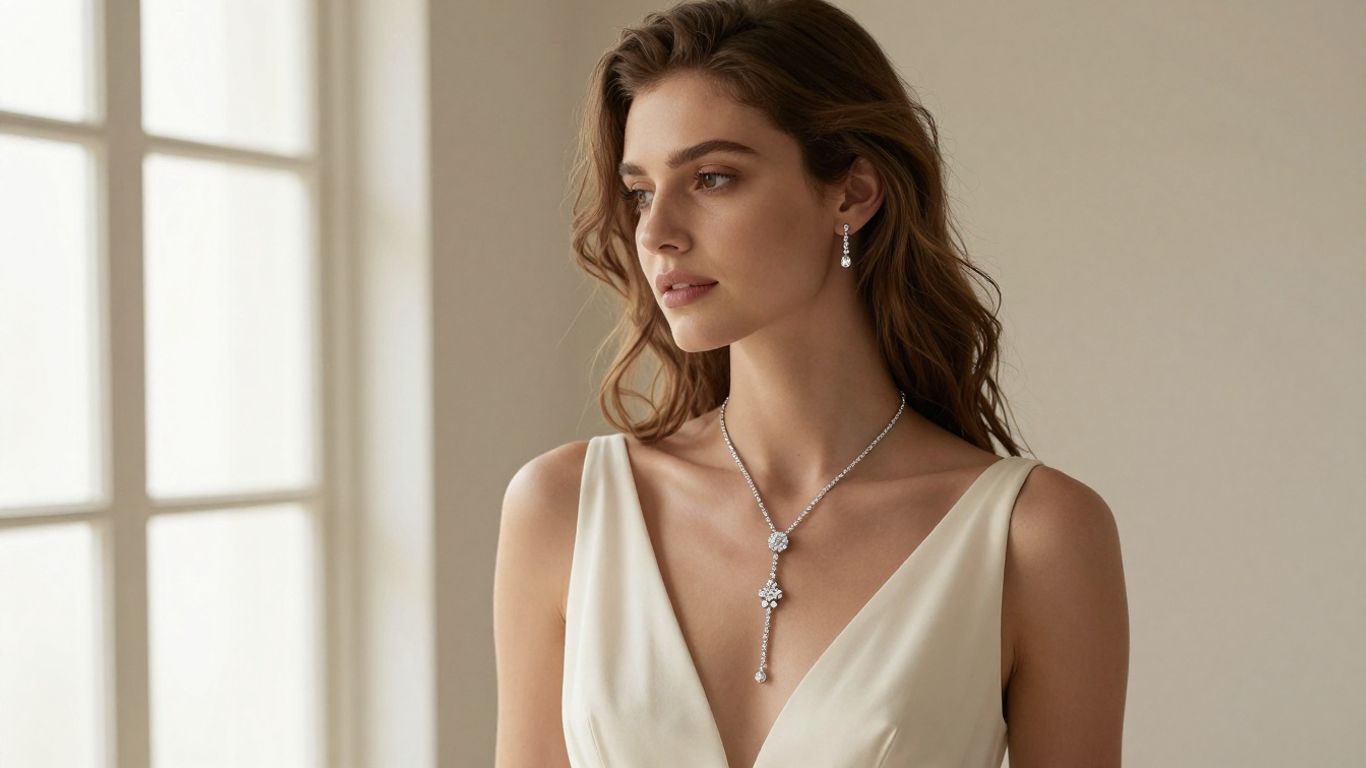
A traditional long necklace often has a defined pendant or central drop. A lariat leaves more open space and can create a graceful, elongated line, while layered designs add texture and richness. The right option depends on whether your dress already provides visual complexity.
If the gown is heavily embellished, one long strand may look more refined than several competing layers. With a simple crepe or satin dress, carefully spaced layers can add interest without requiring a large pendant.
Selecting a length for different necklines
Open necklines give a long necklace room to breathe, but the lowest point should still feel deliberate. A sweetheart neckline can support a pendant that follows its center, whereas a deep V may work best with a drop that echoes the angle. A square neckline often benefits from a necklace that softens its architectural edges.
Use this simple comparison when trying on options:
| Dress neckline | Long-necklace direction | Main consideration |
|---|---|---|
| Sweetheart | Centered pendant or soft drop | Keep the pendant above the bodice detail |
| Plunging V | Lariat or elongated pendant | Echo the neckline without extending too low |
| Square | Fine layered or rounded design | Soften the clean horizontal line |
| Simple high neckline | Usually minimal or no necklace | Let earrings or hair jewelry lead |
The table is only a starting point. Your actual pendant placement, fabric, and body proportions matter more than a strict rule, so test the necklace with the gown whenever possible.
Using pendant placement to flatter your proportions
Pendant placement can make the torso appear longer or bring attention toward the face. A drop that rests near the upper bust may feel balanced on a longer torso, while a shorter wearer may prefer a more compact vertical line. Try sitting, standing, and turning sideways to see whether the pendant stays in the intended position.
Photographs are helpful here because a necklace can look different from the front, three-quarter angle, and side. Ask someone to take quick phone images in natural light before you commit.
Avoiding tangling, heaviness, and awkward movement
Long jewelry needs a little more testing than a short necklace. Fine chains can twist, layered strands can catch on one another, and a large pendant can pull the neckline out of balance. Check the clasp, the spacing between strands, and the way the necklace moves when you walk.
Before the wedding, practice wearing it for at least an hour. Notice these potential trouble spots:
- A pendant that flips when you bend or sit.
- Chains that catch on hair, lace, or beading.
- Earrings that become uncomfortable before the event ends.
- A clasp that is difficult to fasten without help.
Small adjustments can make a large difference. A jeweler or seamstress may be able to suggest a safer length or a discreet way to keep the necklace centered.
Match the jewelry to your wedding dress
The dress should guide the jewelry, not merely provide a background for it. Start with the neckline, then consider the fabric, embellishment, and overall formality. The most successful pairing usually repeats a detail from the gown while leaving enough contrast for the necklace to be visible.
Coordinating with sweetheart, strapless, and plunging necklines
Sweetheart and strapless dresses create an open frame around the collarbone, making them natural partners for a long necklace. A pendant can fill that space without requiring a wide collar-style piece. For a plunging neckline, choose a drop that follows the line of the dress but stops well before the waist.
Avoid placing a busy pendant directly over dense bodice decoration. If the gown already has a central motif, a slim chain or restrained lariat may frame it more successfully.
Styling jewelry with high-neck and illusion-neck dresses
High-neck and illusion-neck dresses often provide their own decoration. In these cases, a necklace may become unnecessary or visually crowded. Consider earrings, a bracelet, or a hair ornament as the primary accessory instead.
If you still want a long necklace, look for a very light design that sits over a plain section of fabric. The necklace should appear integrated, not layered on top of lace simply because a set came with the dress.
Pairing metals with white, ivory, champagne, and blush gowns
Color temperature can guide your metal choice, though it does not have to dictate it. Bright silver can sharpen a crisp white gown, while gold-tone jewelry often warms ivory, champagne, and blush fabrics. Mixed metals can work when they are repeated thoughtfully elsewhere in the look.
The wedding jewellery styling guide is helpful when you are balancing metal choices, gemstones, and a contemporary or heritage-inspired aesthetic.
Balancing embellishments, lace, and beading
Study the gown from a few feet away rather than focusing only on close-up details. Fine lace may need a smooth, uncomplicated necklace, while a plain dress can carry more sparkle. Beading, embroidery, and sequins each create texture, so the necklace should either echo that texture gently or provide calm contrast.
Lay the jewelry on a clean garment or photograph it beside the dress. This simple test reveals whether the set disappears, dominates, or sits comfortably in the middle.
Select materials, colors, and details
Materials affect more than appearance. They influence weight, shine, comfort, maintenance, and how naturally the set works with your engagement ring and wedding band. Choose based on the full day of wear, not only on how the pieces look in a product photograph.
Comparing sterling silver, gold-tone, and crystal finishes
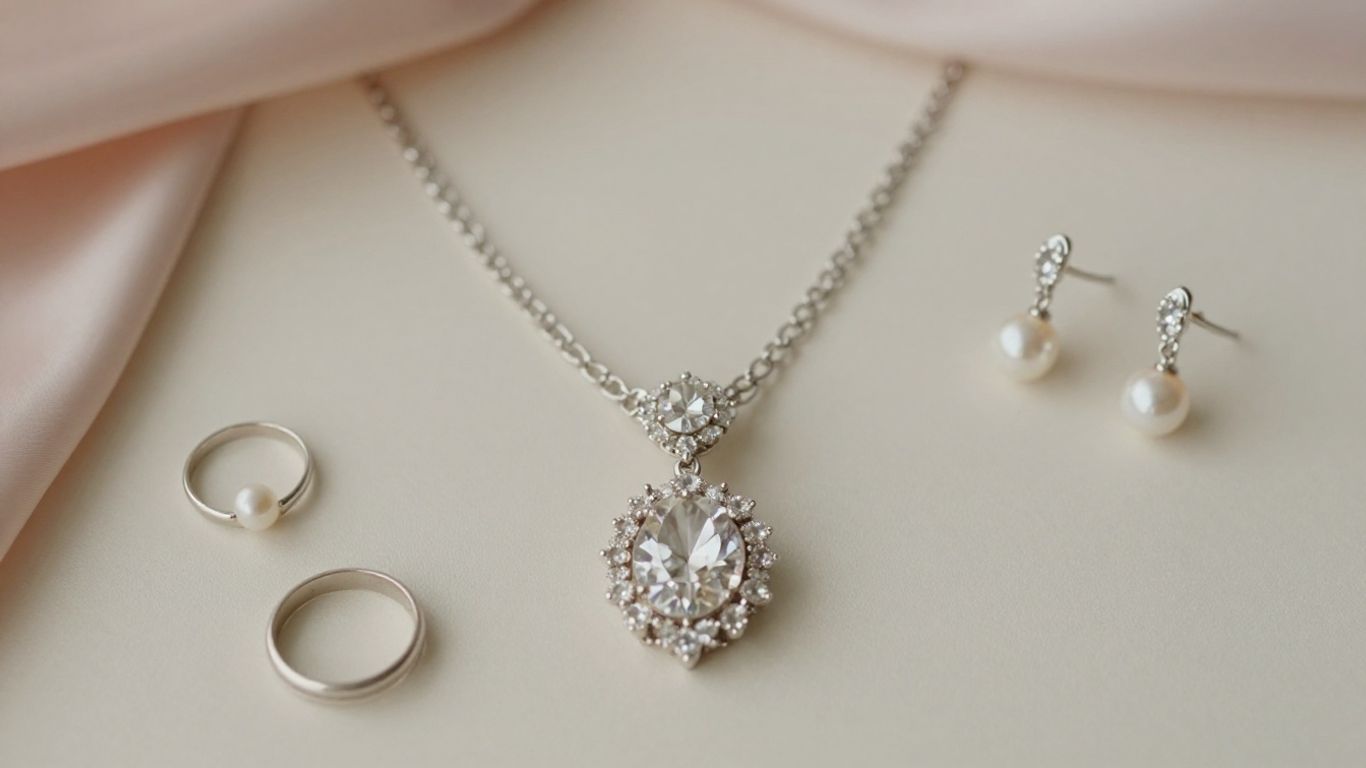
Sterling silver has a cool, clean appearance and often suits bright white gowns. Gold-tone finishes bring warmth and can connect naturally with ivory or champagne fabrics. Crystal finishes add sparkle, but the amount and size of the stones determine whether the effect feels delicate or theatrical.
Compare the finish with your ring stack and dress under daylight as well as indoor lighting. A piece that looks softly luminous in a showroom may appear much brighter under reception lights.
Choosing pearls, rhinestones, cubic zirconia, or gemstones
Pearls bring softness and a traditional sense of occasion, while rhinestones and cubic zirconia create more direct sparkle. Gemstones can introduce color or meaning, especially when they echo a family piece or wedding palette. There is no universally bridal stone; the best choice is the one that suits your dress and feels like you.
Think about scale as carefully as material. A few larger stones can be more elegant than many tiny stones packed into a busy arrangement.
Matching the set to your engagement ring and wedding band
Your necklace does not need to match every ring exactly, but it should not appear unrelated. Repeat the dominant metal, echo a stone shape, or choose a finish that bridges two different pieces. If your rings are highly detailed, a quieter necklace can keep the hands and neckline from competing.
Take a photograph of the rings beside the necklace in neutral light. It is easier to notice clashes in tone or scale in an image than when each piece is viewed separately.
Considering skin sensitivity and jewelry durability
Ask about the metal composition and finish before purchasing, especially if your skin reacts to certain alloys. Also inspect the chain, clasp, stone settings, and earring backs. Jewelry worn for a wedding should survive movement, dressing, photographs, and careful storage afterward.
A test wear is worthwhile. If you notice itching, pinching, discoloration, or pressure during a short trial, do not assume the problem will disappear during a full wedding day.
Build a cohesive bridal jewelry look
A cohesive look is not the same as wearing a perfectly matching set from head to wrist. It is a conversation between proportion, texture, color, and shine. Choose one leading piece, then let the remaining accessories support its shape and mood.
Coordinating earrings with a long necklace
Earrings should relate to the necklace without repeating its entire design. Long earrings and a long pendant can make the face and torso feel visually busy, particularly with an updo. Small drops, studs, or modest hoops may provide enough connection while leaving the necklace in charge.
With a simpler necklace, more movement around the face can work beautifully. Try the earrings and necklace together while wearing your intended hairstyle, because hair changes how much metal and sparkle is visible.
Deciding whether to add a bracelet or hair accessory
Add another accessory only if it fills a genuine gap. A bracelet can finish a sleeveless look, while a hairpiece may be the better choice when the neckline is already ornate. If the necklace has several layers or a large pendant, skipping one additional piece often makes the entire outfit feel more polished.
Consider the practical details too. A bracelet should not catch on gloves or delicate fabric, and a hair accessory should stay secure through photographs and dancing.
Keeping the veil, headpiece, and necklace from competing
The veil and headpiece occupy the same visual territory as earrings and the upper necklace. If the veil has lace or beaded edging, a simpler necklace can preserve clarity. If the veil is plain, a more detailed necklace may have room to shine.
Try the complete arrangement in a full-length mirror. The right choice is often obvious once every element is visible at once rather than evaluated individually.
Creating a consistent look for bridesmaids and attendants
Bridesmaid jewelry can coordinate with the bridal set without being identical. Repeat a metal, stone color, or general silhouette, then adjust the scale to suit each person and dress neckline. Comfort matters for attendants as much as it does for the bride.
A small shared detail—such as a pearl accent or a simple crystal finish—can make the group look considered while preserving each person’s individuality.
Shop for and prepare your bridal long necklace set
Shopping well means assessing the set as both an accessory and a physical object. Read measurements, examine fastening details, and consider how the pieces will travel to the venue. A beautiful necklace is not a successful choice if it arrives too late, sits incorrectly, or cannot be worn comfortably.
Setting a budget without sacrificing quality
Set a total jewelry budget before browsing, including possible alterations, replacement backs, shipping, and storage. Within that amount, prioritize the necklace construction and the pieces you will wear most often. A simpler, well-finished set can look more convincing than a highly ornate one with weak closures or uneven stones.
The bridal jewelry guide can help you think about the full set, including necklaces, earrings, bangles, and rings, rather than treating each item as an isolated purchase.
Checking closures, measurements, and product photos
Product photos should be read alongside the measurements. Look for the total drop, chain width, pendant size, earring length, and clasp style. Zoom in on stone settings and connections, and check whether the model’s proportions are similar enough to give a useful impression.
Ask questions when a listing is unclear. Exact measurements are much more reliable than phrases such as “long,” “statement,” or “delicate.”
Ordering early for try-ons and alterations
Order early enough to try the jewelry with your actual dress, shoes, hairstyle, and veil. This gives you time to shorten a chain, replace an earring back, exchange an unsuitable finish, or change direction entirely.
Keep packaging and purchase details until the look is confirmed. A final try-on should include sitting, walking, hugging, and turning so that comfort is tested as carefully as appearance.
Storing, cleaning, and transporting the set safely
Store each piece separately in a soft pouch or lined compartment to reduce scratches and tangling. Follow the maker’s care instructions, and avoid exposing unknown finishes to perfume, hairspray, lotion, or water. Before transporting the set, fasten clasps and place delicate pendants flat.
Pack the jewelry in your carry-on or another secure personal bag rather than loose in a suitcase. On the wedding day, ask one trusted person to keep the set together and help with fastening it.
Conclusion
The perfect bridal long necklace set is the one that suits your dress, reflects your style, and remains comfortable from the first photograph to the last dance. Compare length, neckline, metal, sparkle, and practical construction as a complete picture, then give yourself enough time to test the final combination before the wedding.
Frequently Asked Questions
How long should a bridal long necklace be?
The best length depends on your neckline, torso, pendant placement, and the details on your gown. Try several lengths with the dress and choose the one that creates a balanced vertical line without falling awkwardly over embellishment.
Can I wear a long necklace with a strapless wedding dress?
Yes. Strapless dresses often leave enough open space for a long necklace, especially a centered pendant or gentle lariat. Keep the design proportional to the bodice and avoid covering an important central detail.
Should my bridal necklace match my earrings exactly?
Not necessarily. Matching one feature, such as metal tone, stone shape, or finish, is usually enough. If both pieces are elaborate, the overall look may feel crowded, so consider making one accessory quieter.
Is a long necklace suitable for a high-neck wedding dress?
It can be, but many high-neck dresses already have strong visual detail. Earrings, a bracelet, or a hair accessory may create a cleaner result. If you choose a necklace, select a light design and try it over the dress fabric first.
Which metal works best with an ivory gown?
Gold-tone metals often complement ivory warmly, while silver can create a cooler contrast. The right choice also depends on your rings, stones, dress embellishments, and whether you prefer a blended or intentionally contrasting look.
How can I stop a long necklace from tangling?
Choose a secure, well-spaced design, store each strand separately, and test the necklace while walking and sitting. If it still twists, a jeweler may be able to adjust the length or improve the fastening arrangement.
When should I buy my bridal jewelry?
Buy it early enough for a complete dress try-on and any needed alterations. This also leaves time for exchanges, comfort testing, cleaning, and safe transport planning before the wedding day.
Related blogs:
November 20, 2025
The Timeless Elegance of the Tennis Bracelet: A Comprehensive Guide
Read More
November 20, 2025
The Ultimate Guide to Styling and Wearing a Choker Necklace
Read More
November 20, 2025
Find Your Perfect Engagement Ring: A Comprehensive Guide to Styles and Diamonds
Read More
November 20, 2025
The Timeless Elegance of a Diamond Tennis Bracelet: A Buyer's Guide
Read More









.webp)
.webp)