How to choose a bridal layered necklace set for your wedding look
September 18, 2026 | 10 minutes read
Key Takeaways
A well-chosen bridal layered necklace set should feel intentional, comfortable, and in step with the dress rather than competing with it.
- Start with the neckline, then choose necklace lengths and scale.
- Match the metal, stones, and finish to the dress and engagement ring.
- Test the complete jewelry look before the wedding day.
- Check measurements, construction, comfort, and return details before buying.
- Store the set carefully so it remains wearable after the celebration.
Understand the structure of a bridal layered necklace set
A layered necklace set combines two or more necklaces, or several connected strands, to create depth around the neckline. The best sets have a clear visual rhythm: one layer frames the collarbone, another adds detail, and a longer piece may guide the eye toward the center of the dress. Begin by considering the space available on the bodice, not just the necklace itself.
How multiple necklace lengths create a balanced look
Different lengths keep the layers from becoming one dense band of metal and stones. A short choker or collar can sit close to the neck, while a medium strand follows the collarbone and a longer pendant or drop creates a lower focal point. The gap between layers does not need to be identical, but it should look deliberate.
Before ordering, lay similar-length chains on a flat surface or use ribbon against a dress photo. This simple exercise shows whether the strands will separate naturally or bunch together when you move. A useful necklace sizing guide also reminds shoppers to measure where the necklace should fall rather than relying only on a standard length chart.
Common bridal necklace styles and silhouettes
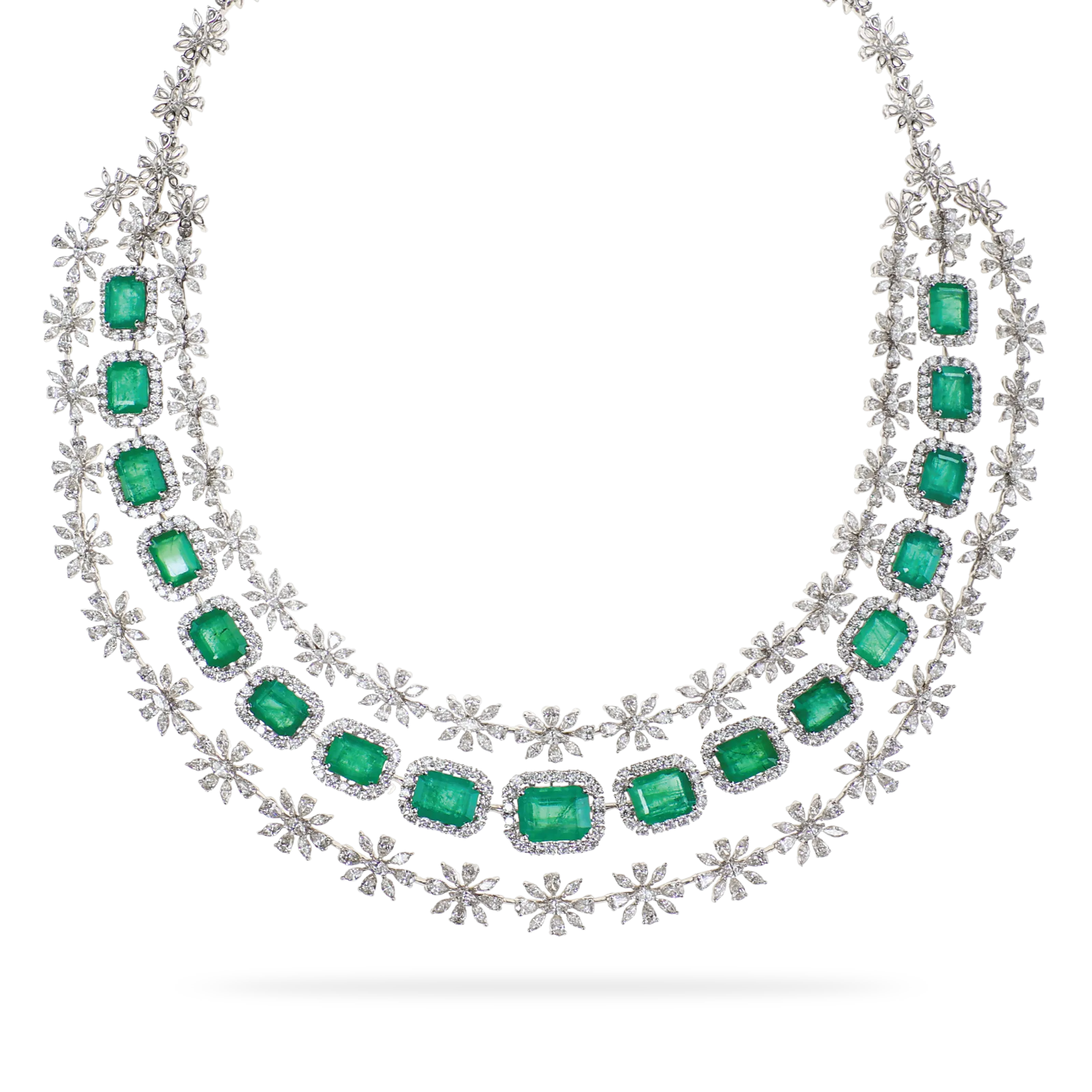
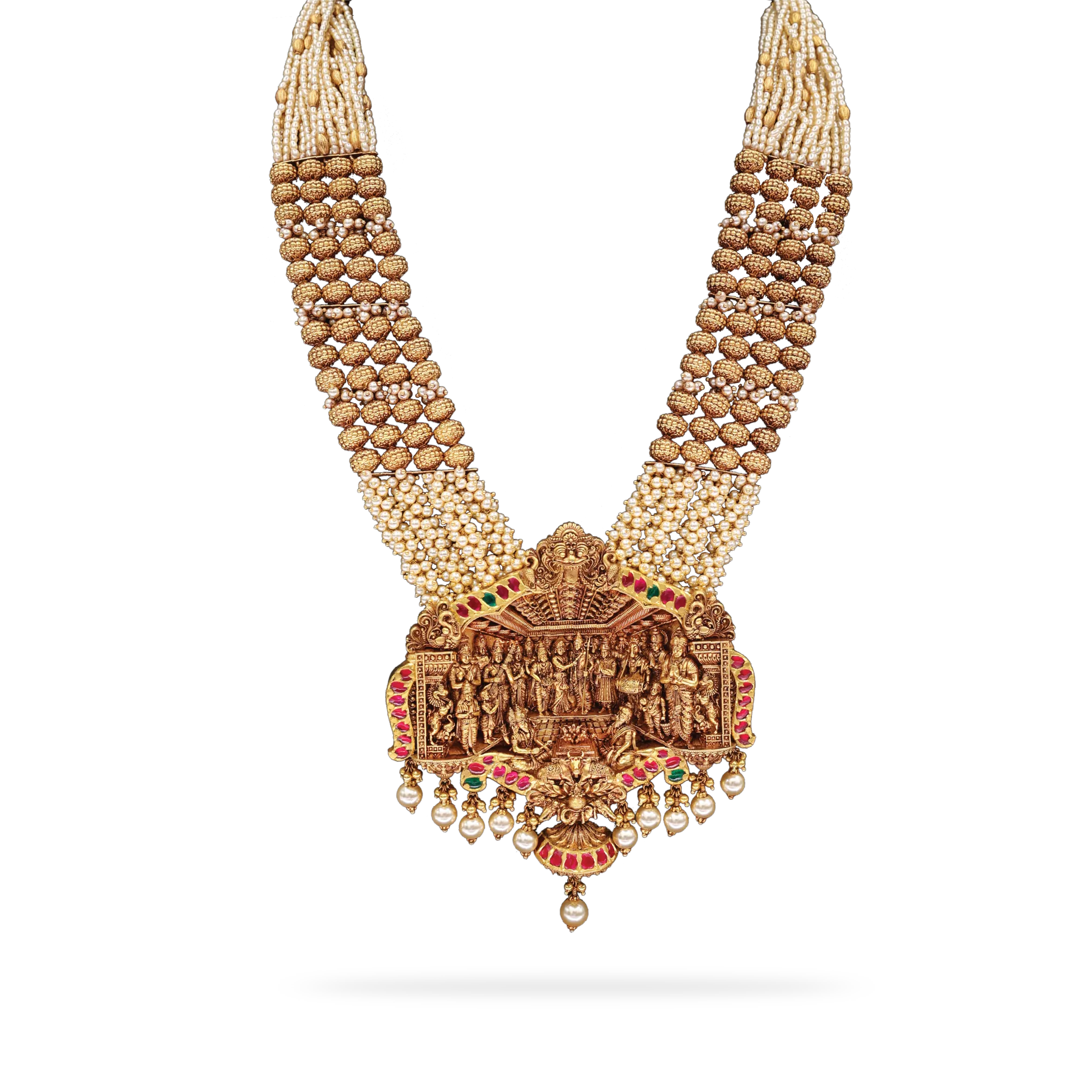
Layered sets range from fine chains with small pendants to ornate collars covered in crystals, pearls, or colored stones. Some have a symmetrical bib shape, while others mix a simple chain with a single focal pendant. Traditional multi-strand pieces can sit higher and wider, especially when paired with ceremonial clothing.
The silhouette should echo the dress. A clean pendant arrangement works well with a simple gown, while a broad, embellished set may suit a heavily worked bodice or a traditional bridal outfit. If the necklace already has strong width, keep the surrounding jewelry quieter.
Choosing between delicate, statement, and traditional designs
Delicate layers suit brides who want movement and a lighter visual effect. Statement designs make the necklace one of the main features of the outfit, so they need more open space around the neckline and fewer competing details. Traditional designs often carry their own sense of proportion and ceremony, making them especially useful when the outfit includes cultural motifs.
Think about how you normally wear jewelry. A dramatic set can be beautiful for the ceremony, but a refined layered arrangement may feel more natural in photographs, at the reception, and after the wedding. The right choice is the one that feels special without making you feel disguised.
Matching the set to your neckline and dress details
Neckline shape determines where the necklace will sit and how much of it will remain visible. Strapless and sweetheart necklines often leave room for layered sparkle, while high necklines may call for a shorter, flatter arrangement or no necklace at all. V-neck dresses can work with a pendant that follows the center line, provided it does not disappear into the fabric.
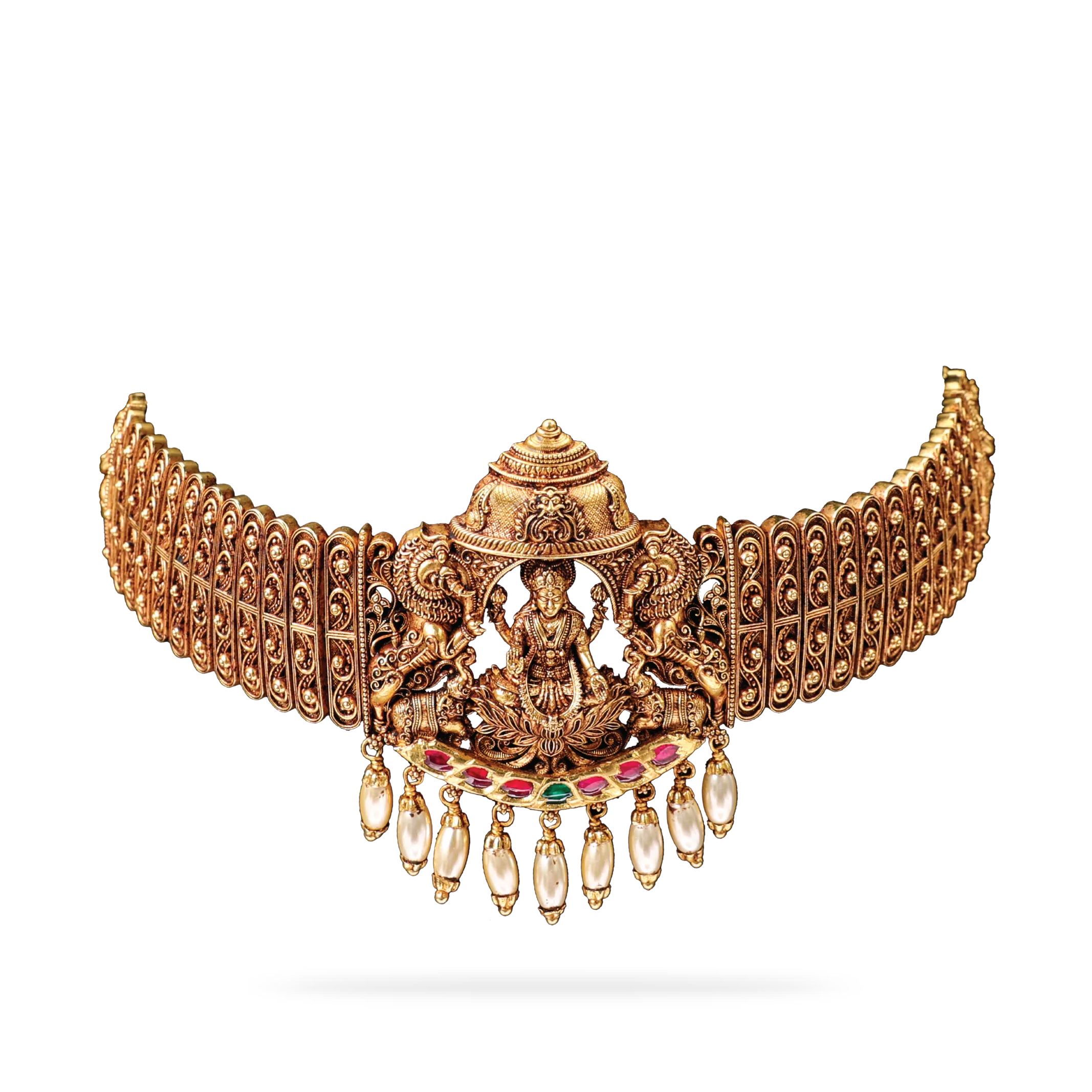
Also examine lace, embroidery, beading, and sleeve details. A necklace should either repeat a small element from the dress or provide calm contrast. For more ideas about balancing a choker with earrings and other accessories, C Krishniah Chetty & Co offers a bridal choker set guide that discusses neckline, face shape, and coordination.
Match the necklace set to your wedding style
Your venue, clothing, flowers, and overall mood can guide the jewelry choice more reliably than a passing trend. A city ceremony may suit polished metal and restrained sparkle, while a garden celebration can welcome softer shapes and organic color. The necklace should belong to the same visual story as the wedding, even if it remains the brightest detail.
Classic jewelry for timeless ceremonies
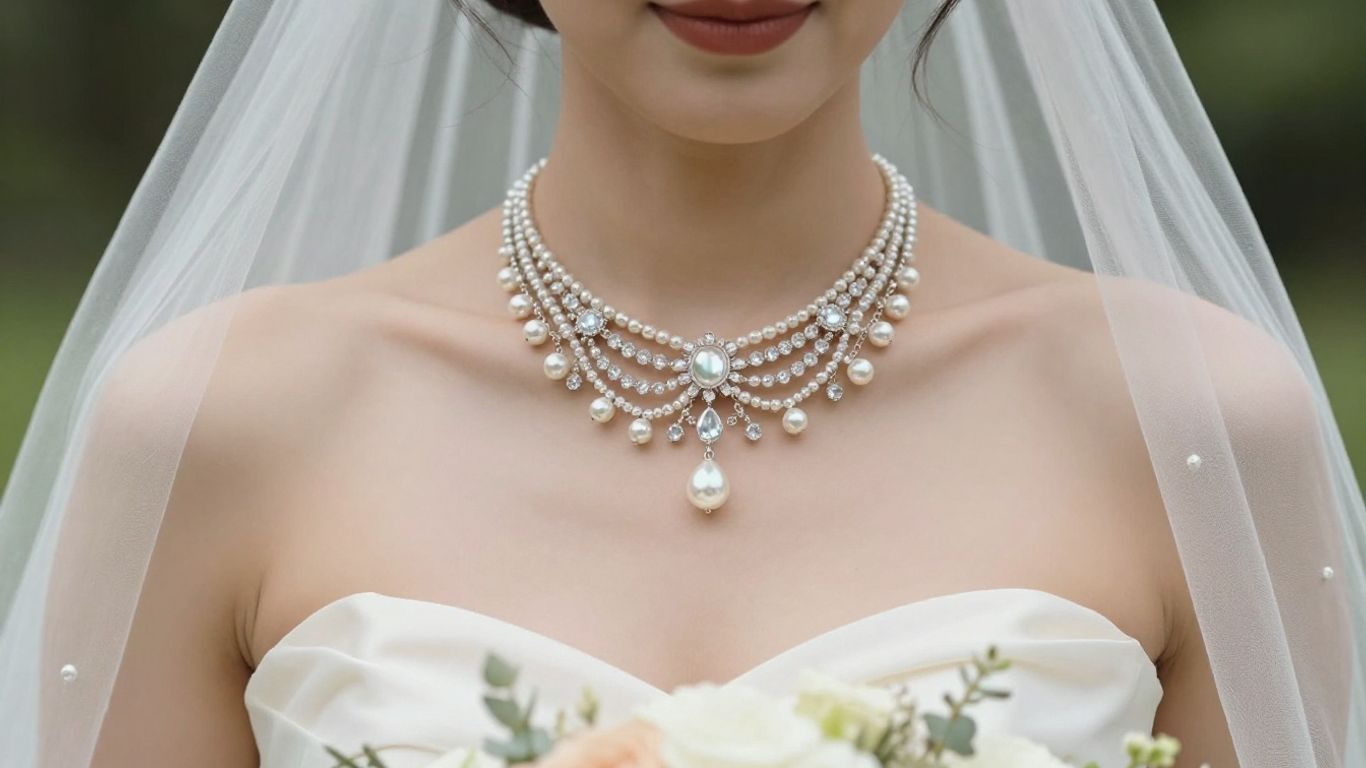
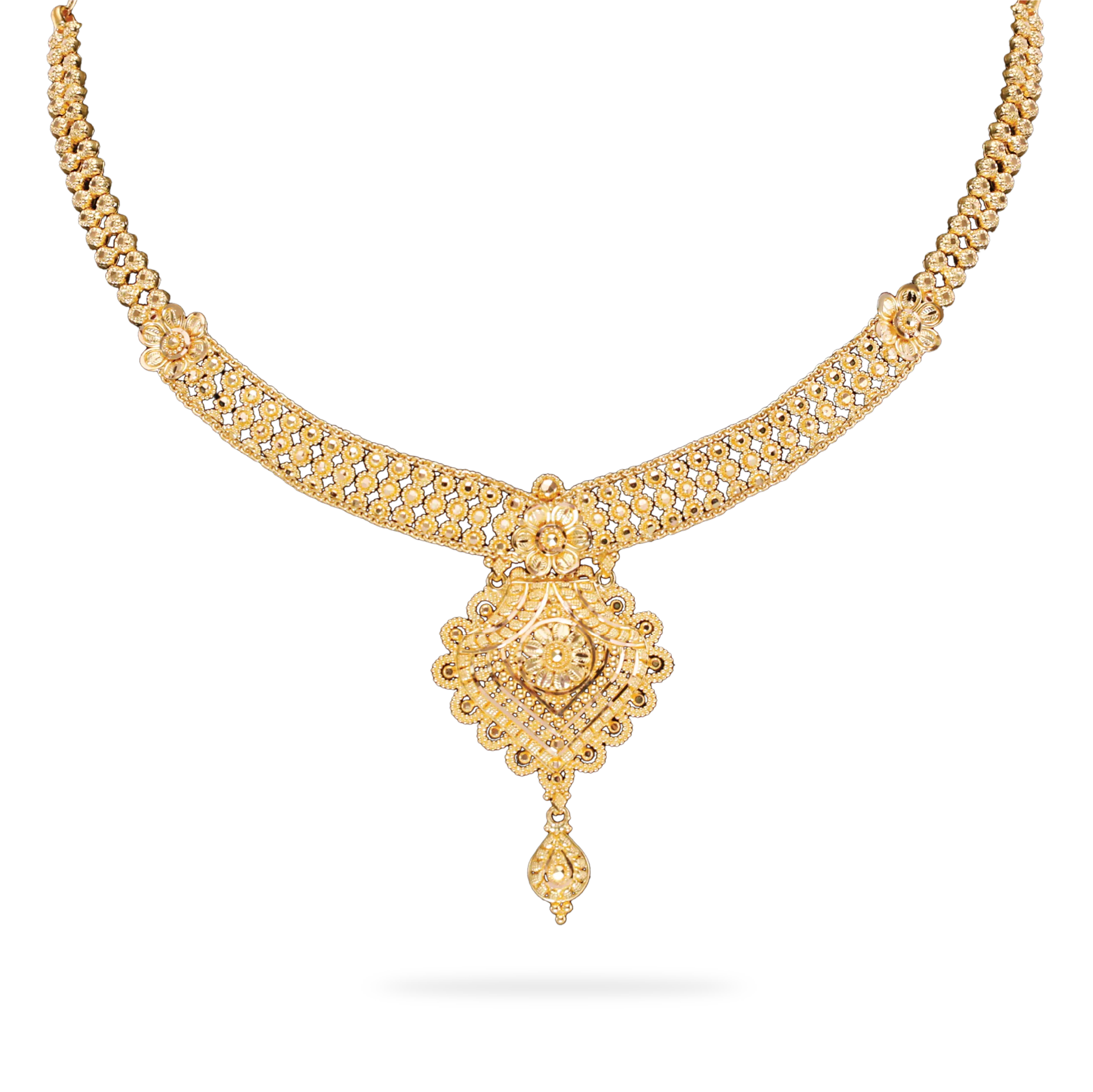
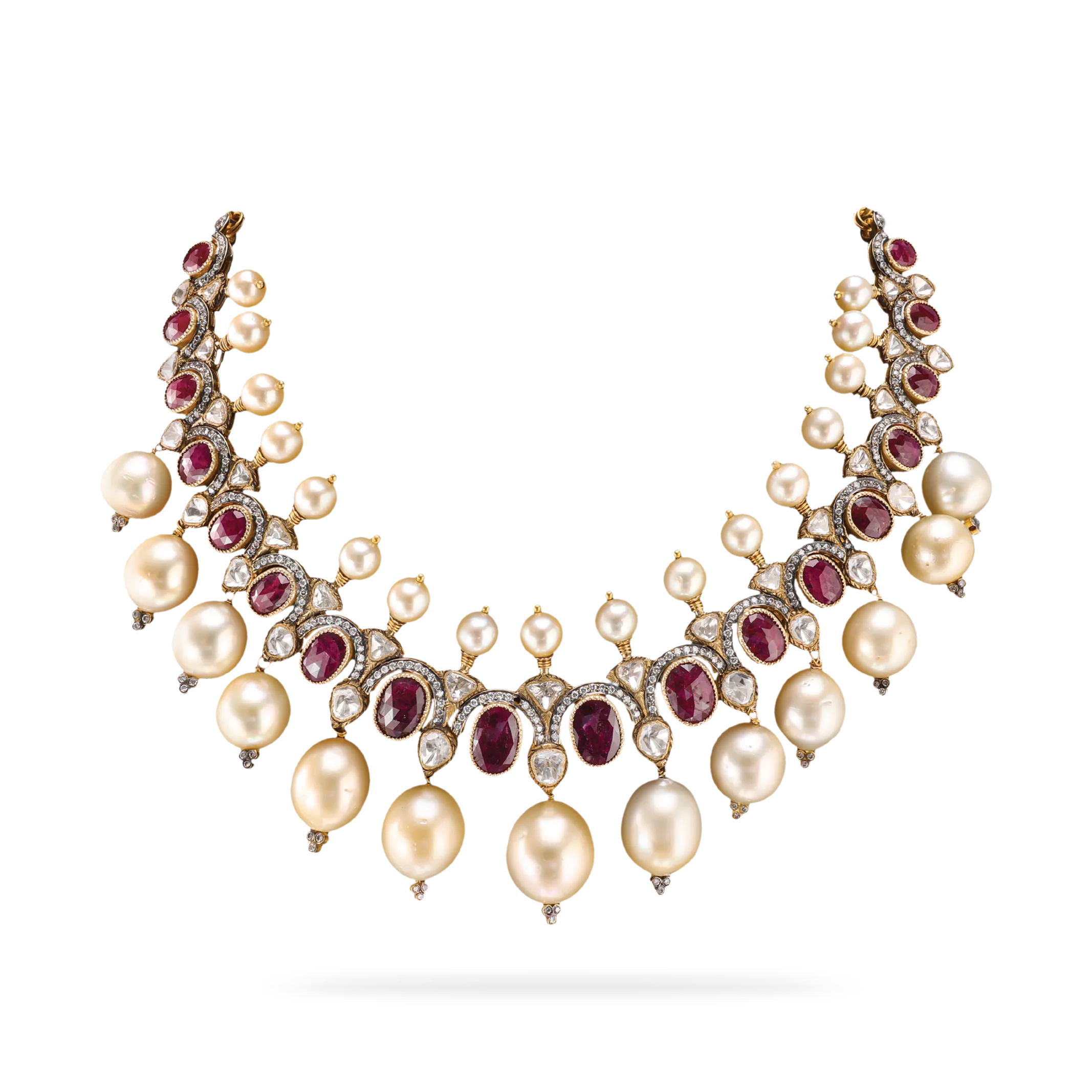
For a formal ceremony, consider clean lines, pearls, clear stones, or a traditional gold finish. Classic jewelry tends to photograph well because its shapes remain legible from a distance and do not depend on one particular fashion moment. A modest layered set can also make a detailed gown feel more finished without adding visual noise.
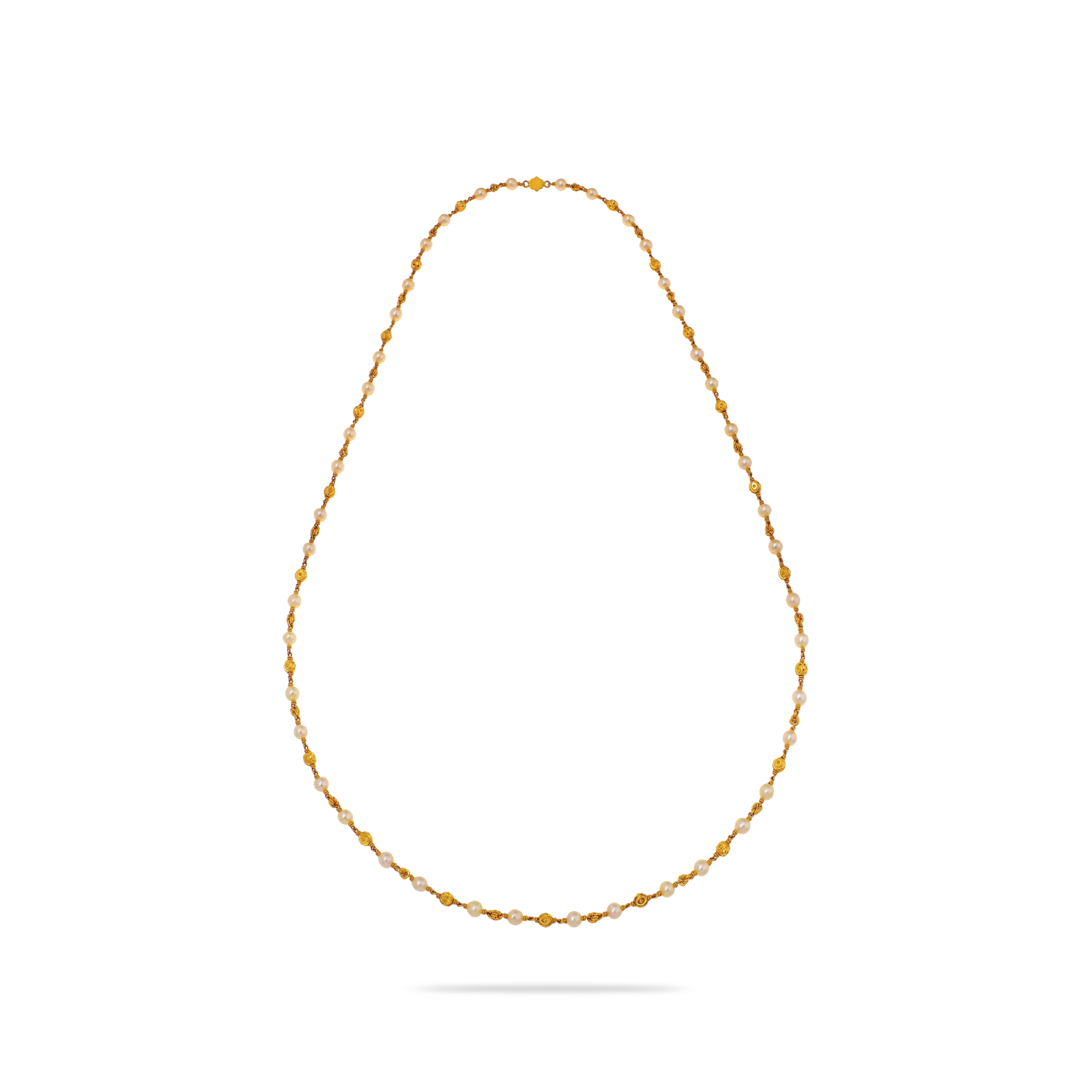
Choose one recurring detail, such as a rounded pearl, a polished yellow-gold surface, or a simple diamond-like accent. Repeating that detail in the earrings or hairpiece creates continuity without requiring every piece to match perfectly.
Glamorous crystal and rhinestone designs
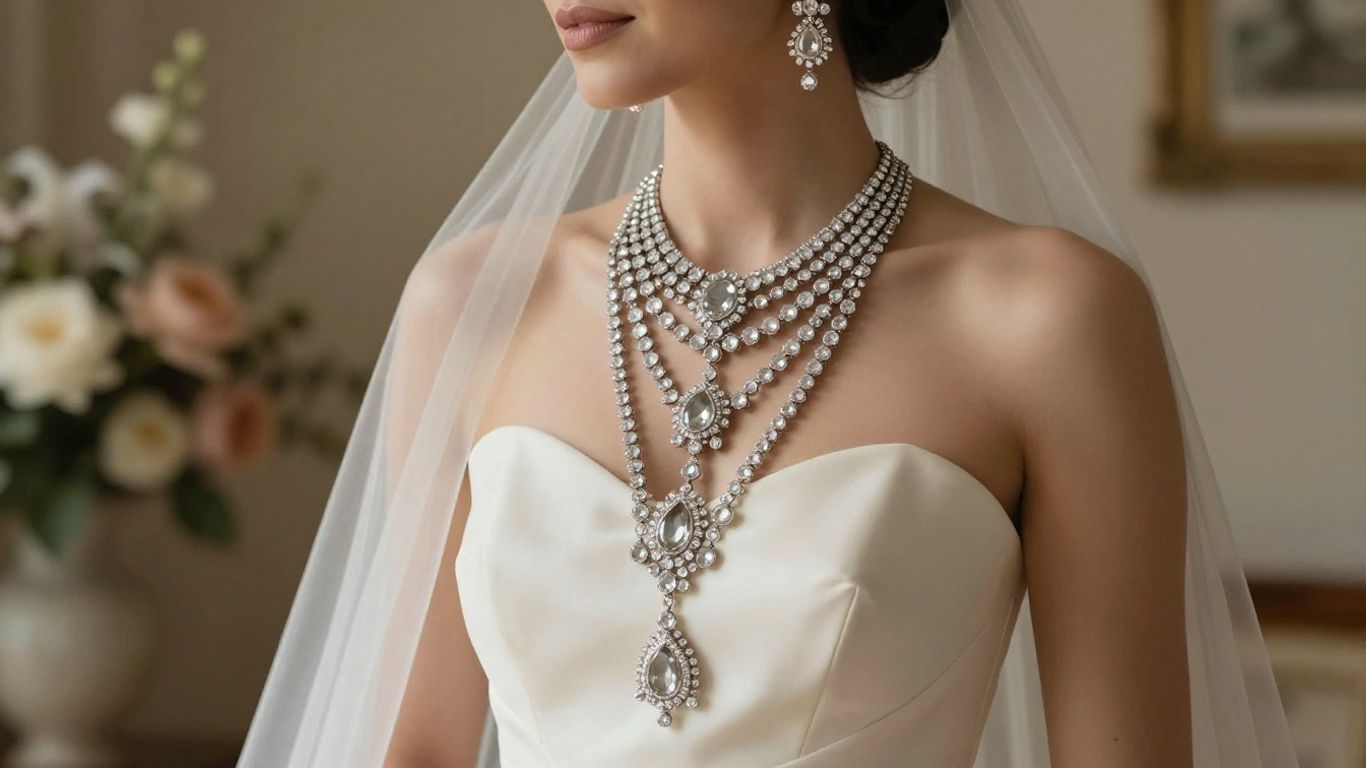
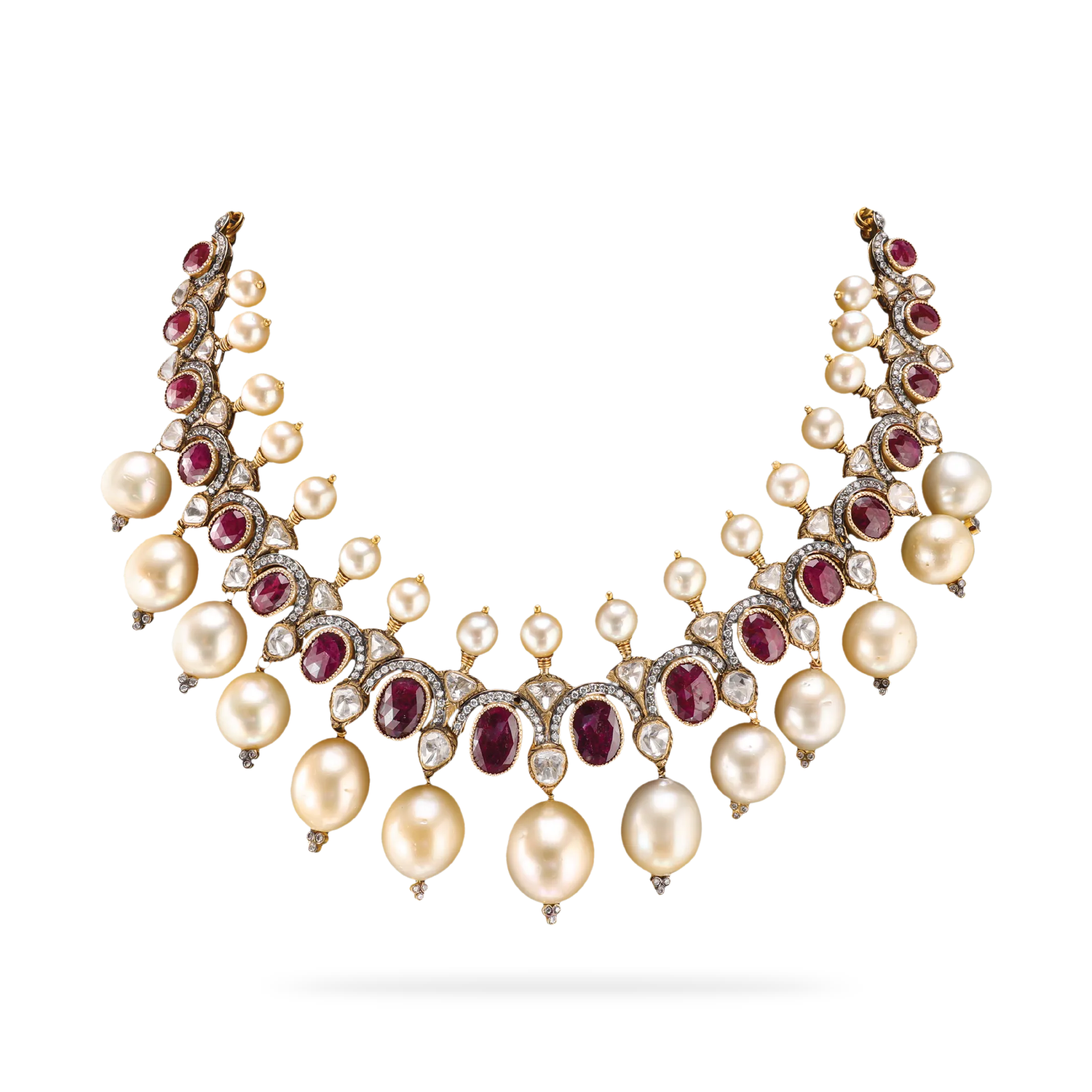
Crystal and rhinestone layers bring bright reflection to evening receptions and ballroom settings. They can be especially effective with satin, crepe, or a minimally embellished gown, where the necklace supplies texture and light. If the dress already contains extensive beadwork, look for a narrower set with controlled sparkle.
A glamorous necklace does not need to be oversized. A fine chain with a few concentrated stones may catch light more gracefully than a dense arrangement. Check the back and clasp as carefully as the front, since long ceremonies make comfort part of the design.
Bohemian and garden wedding options
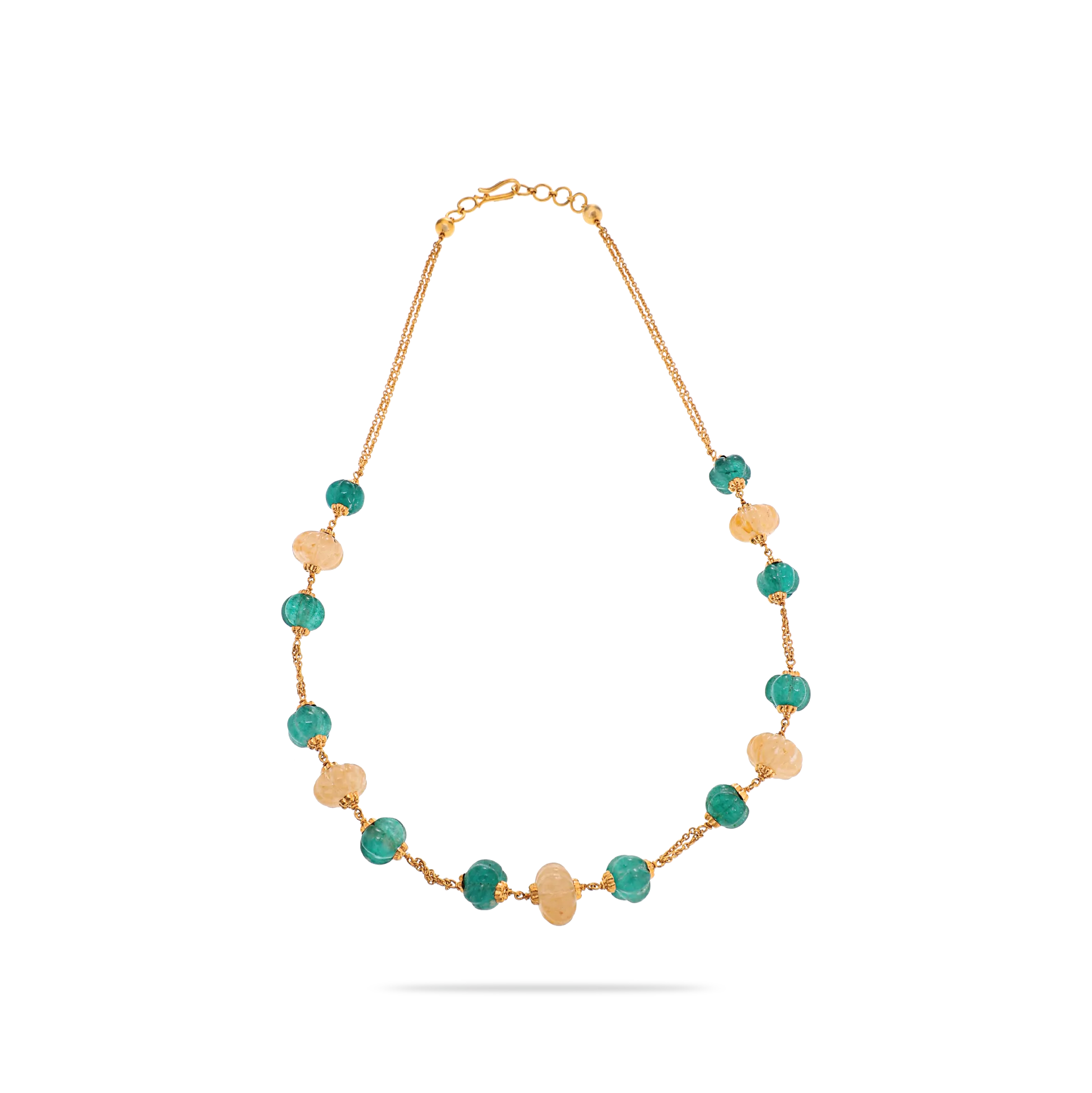
Outdoor weddings often pair naturally with softer metals, irregular stones, floral motifs, pearls, or warm antique finishes. Layered chains with varied textures can feel relaxed, especially with flowing fabric, lace, or a simple neckline. Avoid choosing a piece merely because it is labeled bohemian; focus instead on whether its shapes suit the dress and surroundings.
Keep the layers light if the ceremony involves wind, movement, or a flower-heavy bouquet. A necklace that catches repeatedly on lace or hair can become distracting. Small charms or organic forms work best when there is still a clear central shape.
South Asian and culturally inspired layered sets
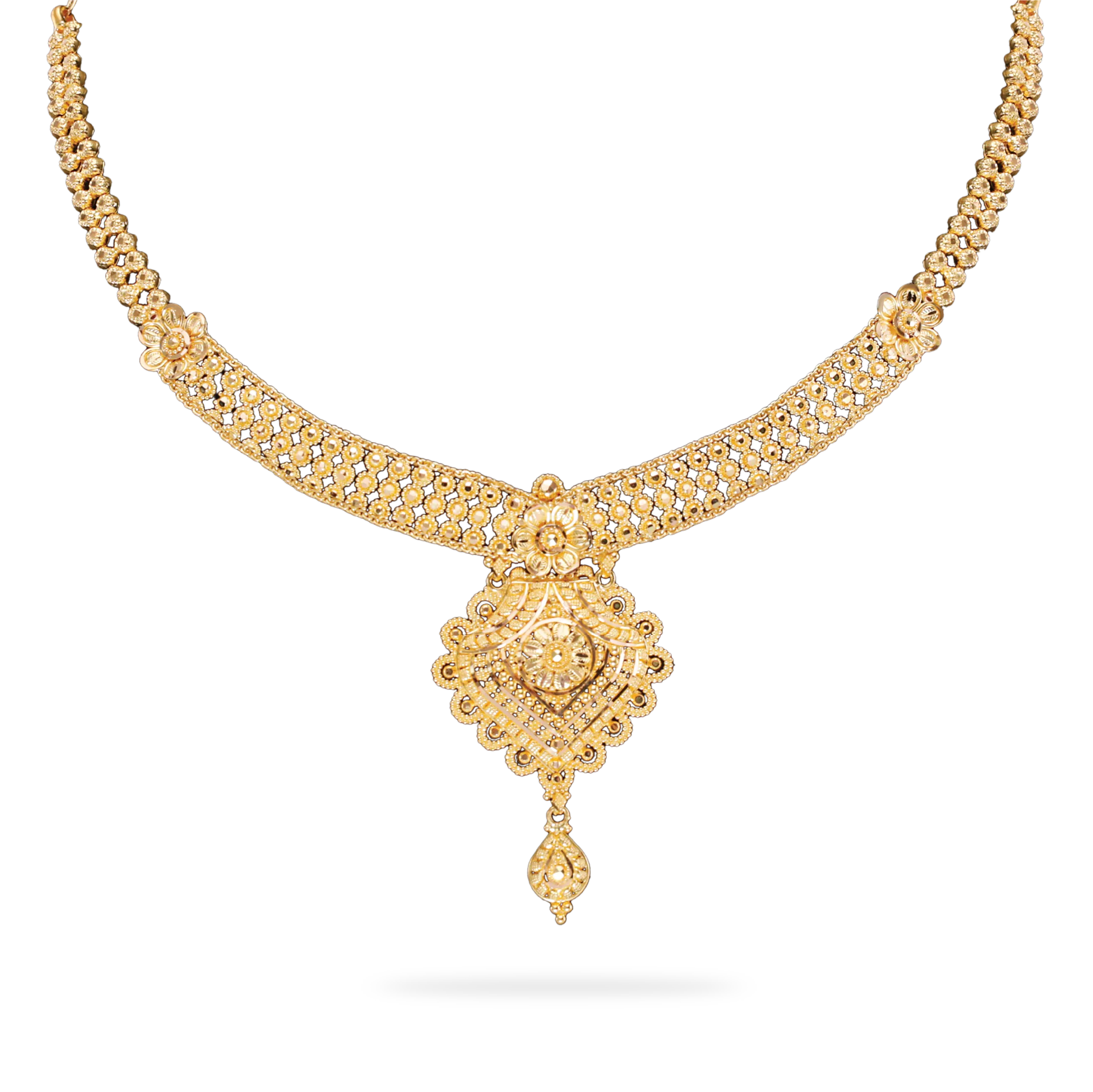
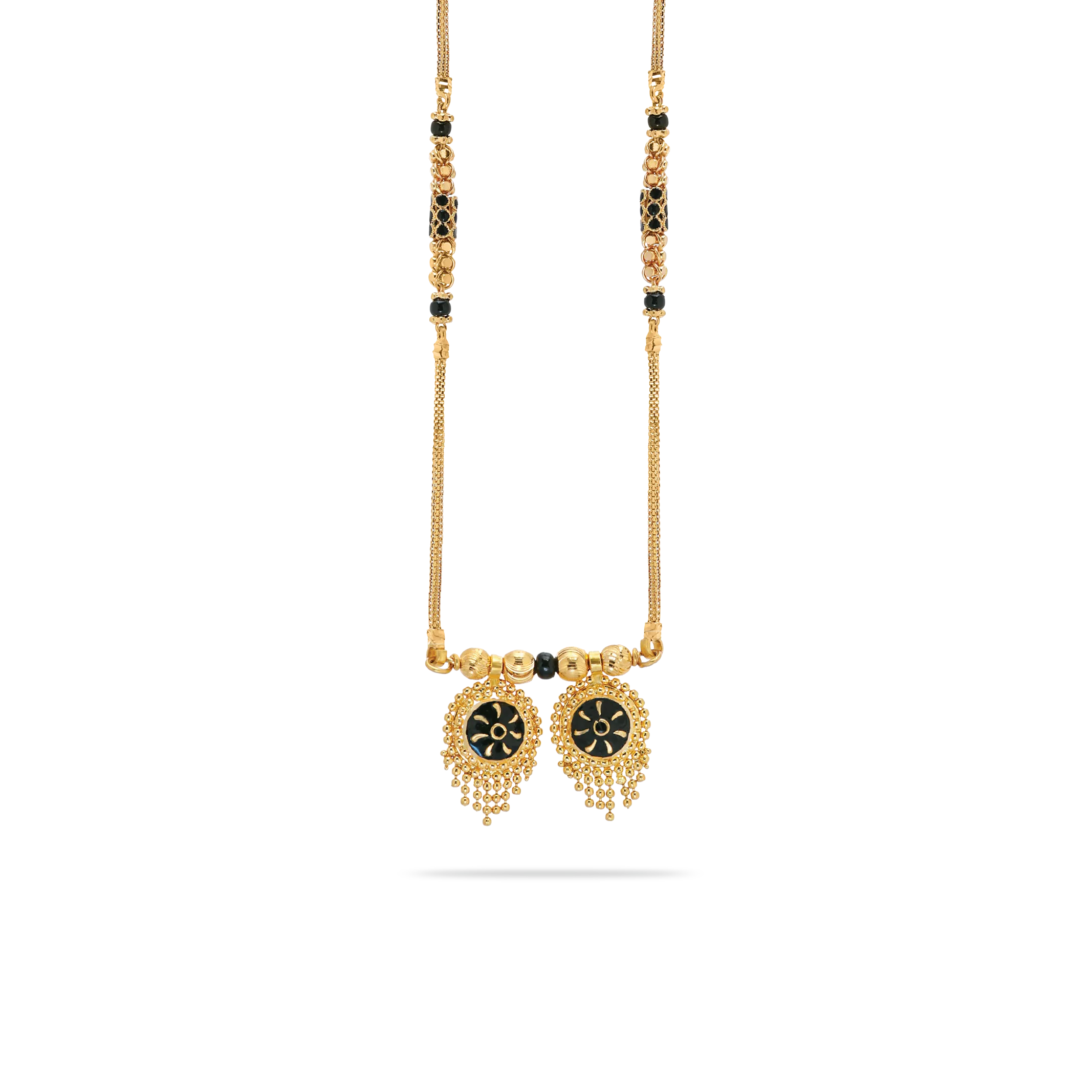
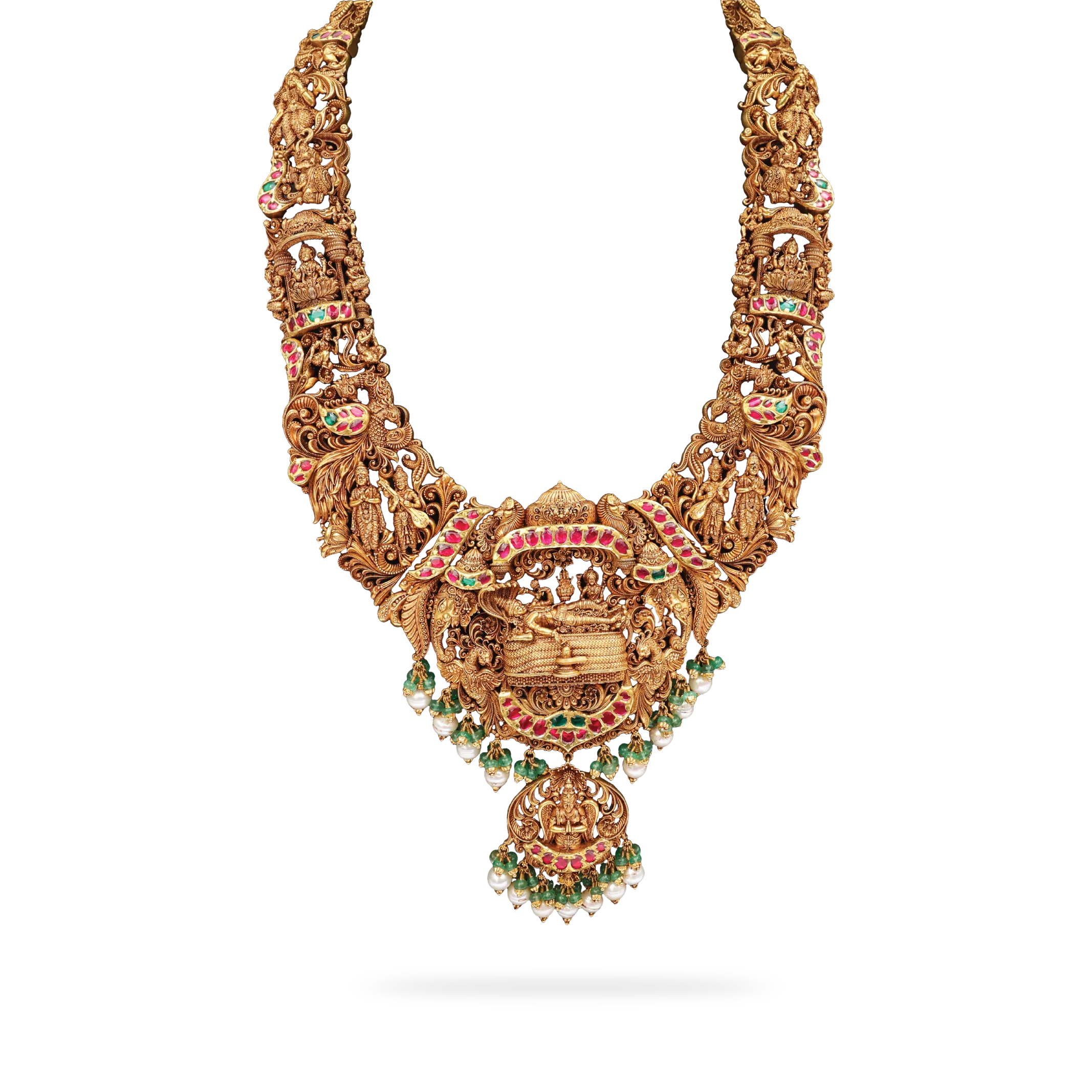
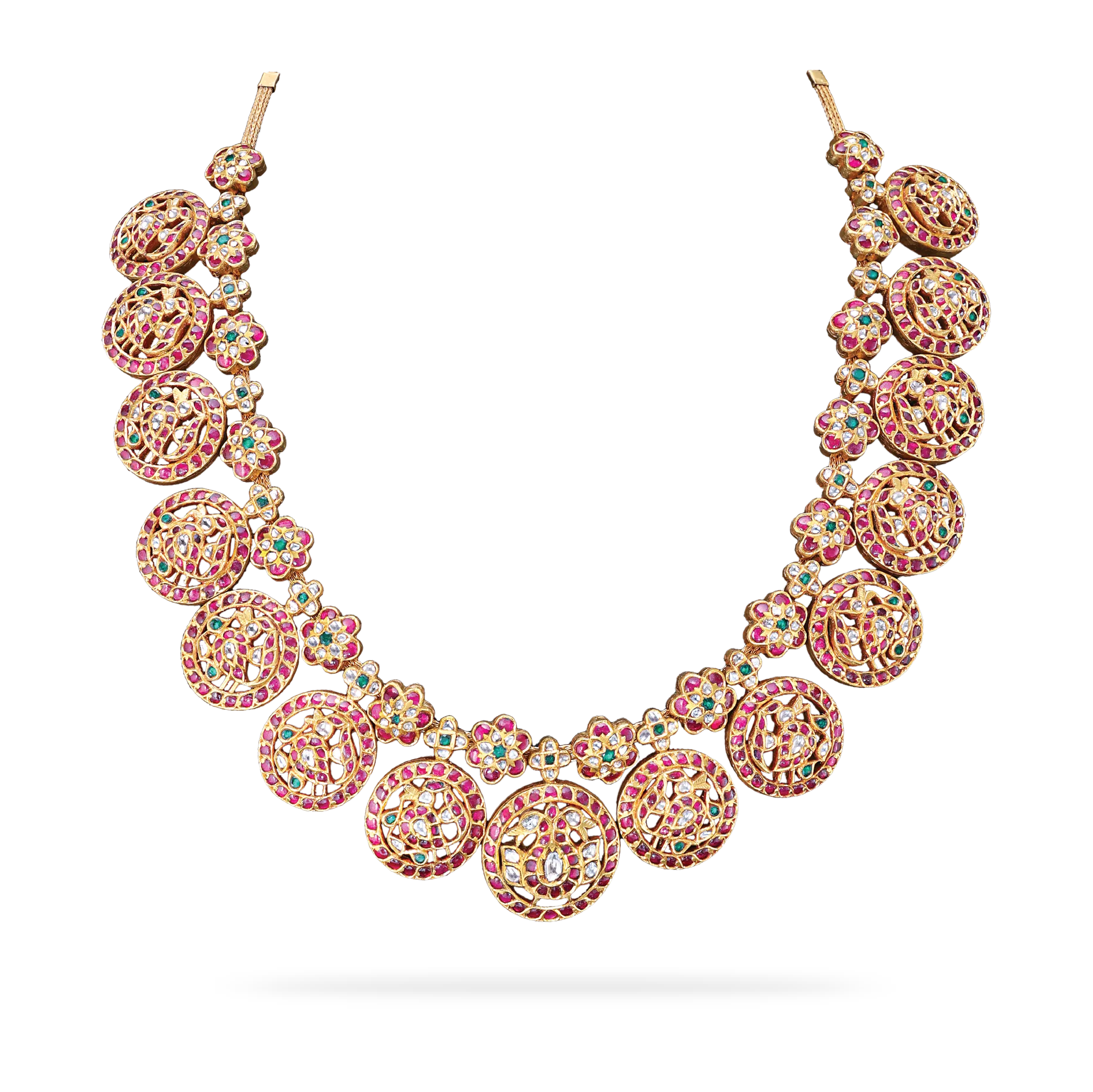
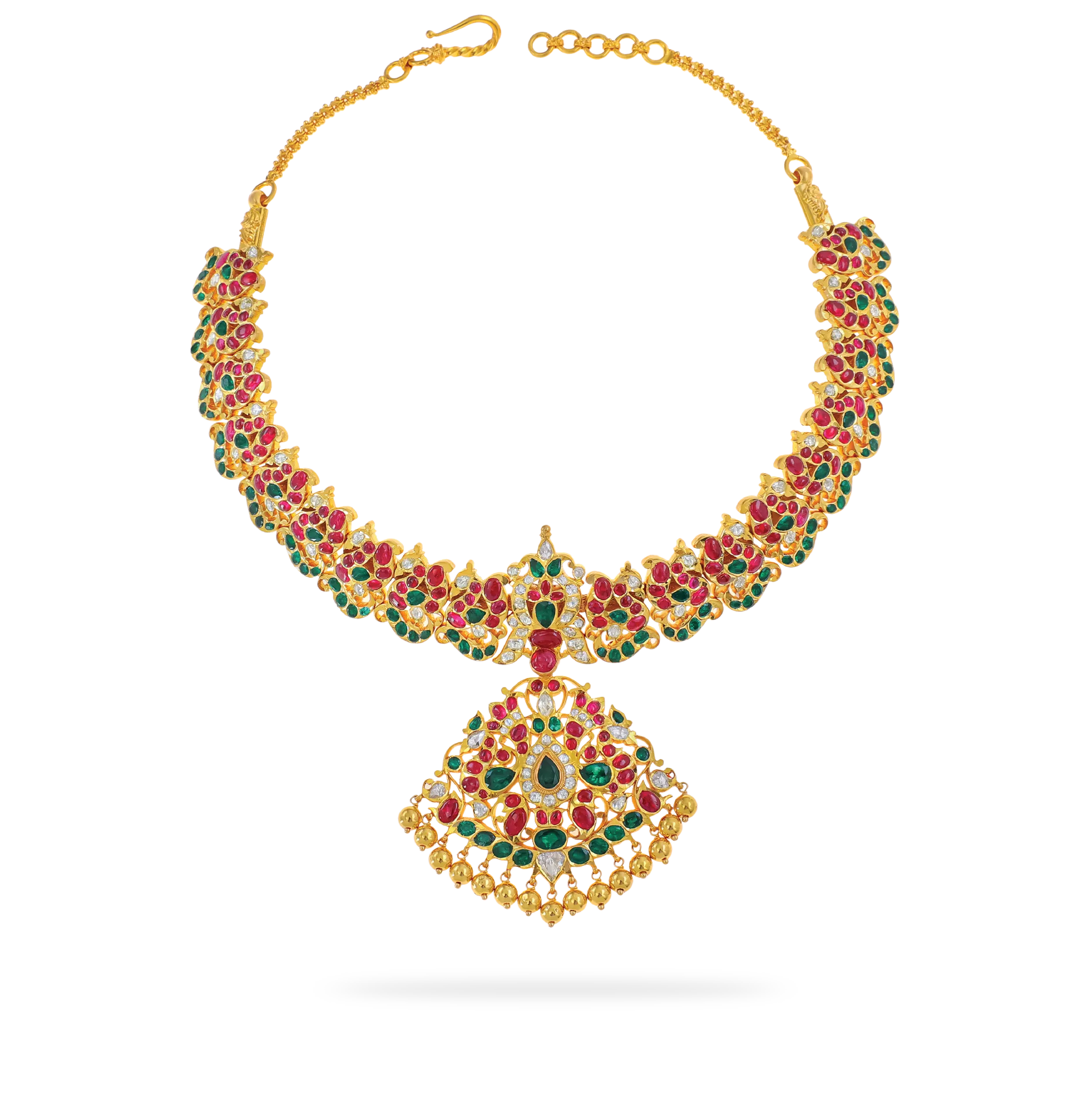
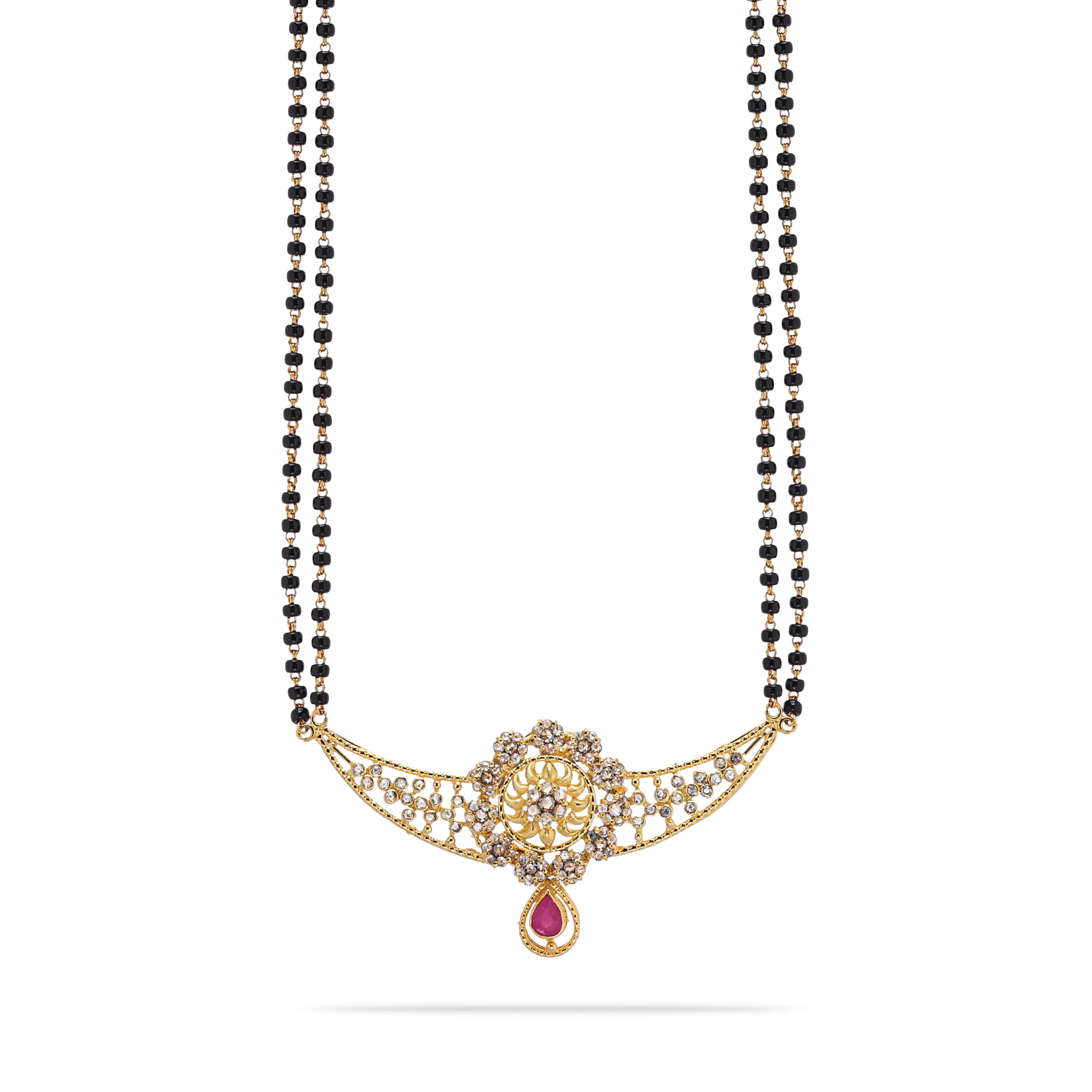
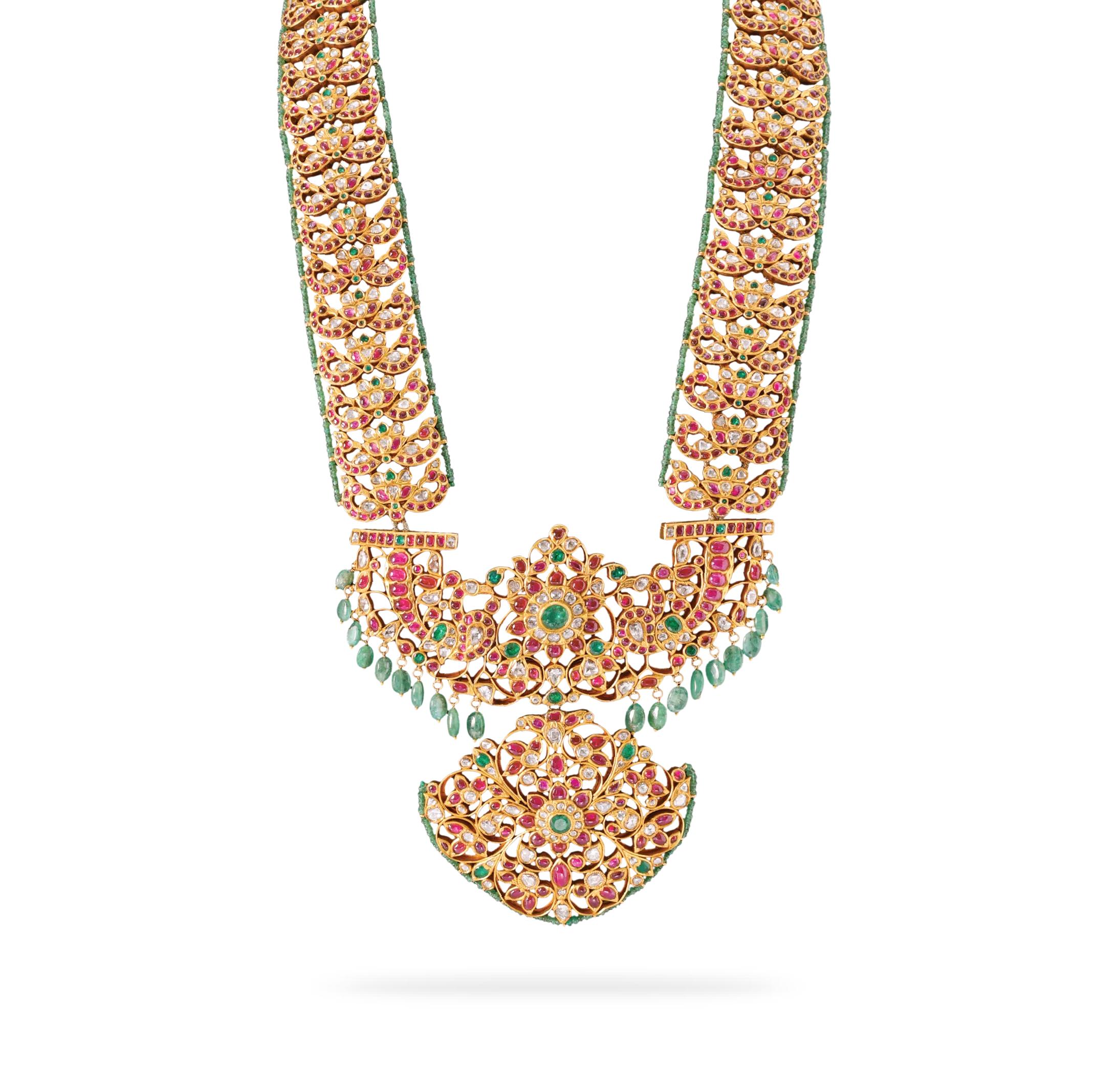
South Asian and culturally inspired sets can include several coordinated strands, vivid stones, pendant forms, and matching earrings. Their scale may be designed for sarees, lehengas, or other richly detailed clothing, where a delicate Western-style chain could disappear. Cultural meaning and family tradition should have as much weight in the decision as color and proportion.
When a set is especially elaborate, let it establish the focal point and simplify other accessories. Inaury’s layered necklace sets are described as double- and triple-strand South Asian and Desi jewelry designs, including AD stone and multi-strand statement styles. Use that kind of reference for inspiration, then assess the actual measurements against your outfit.
Choose metals, stones, and finishes
The material palette affects how the necklace looks beside the dress, ring, skin tone, and other jewelry. Yellow gold feels warm and traditional, silver and white-toned metals feel crisp, and rose gold can add softness. Stones change the mood too, from quiet pearls to bright crystal and saturated gemstones.
Choose the palette as a group rather than making each decision separately. A necklace that looks perfect online may feel too cool beside a warm ivory gown or too bright beside a vintage ring. Ordering swatches, borrowing similar pieces, or taking photos in daylight can reveal those differences early.
Comparing gold, silver, rose gold , and mixed metals
Gold tones tend to blend beautifully with ivory, champagne, and richly colored fabrics. Silver and white metals often suit bright white gowns and cool-toned embellishment, though the best choice is ultimately personal. Rose gold adds a blush-like warmth and can soften a highly polished look.
Mixed metals can work when one finish clearly leads and the second appears as an accent. Randomly combining several finishes may make the layers look unrelated. Notice the metal in the engagement ring, veil details, shoes, and hair accessories before choosing a dominant tone.
Selecting crystals, pearls, gemstones, or cubic zirconia
Crystals and cubic zirconia provide high sparkle, while pearls offer a softer, more diffuse glow. Gemstones can introduce color or cultural significance, and they may connect the necklace to flowers, embroidery, or family jewelry. Consider the lighting at the ceremony as well as the appearance in close-up photographs.
A stone-heavy necklace can be beautiful, but it may feel visually heavy when combined with ornate earrings. If the dress is already colorful, clear stones or pearls may create a calmer finish. If the dress is simple, a controlled gemstone accent can give the look personality.
Coordinating the necklace with your engagement ring
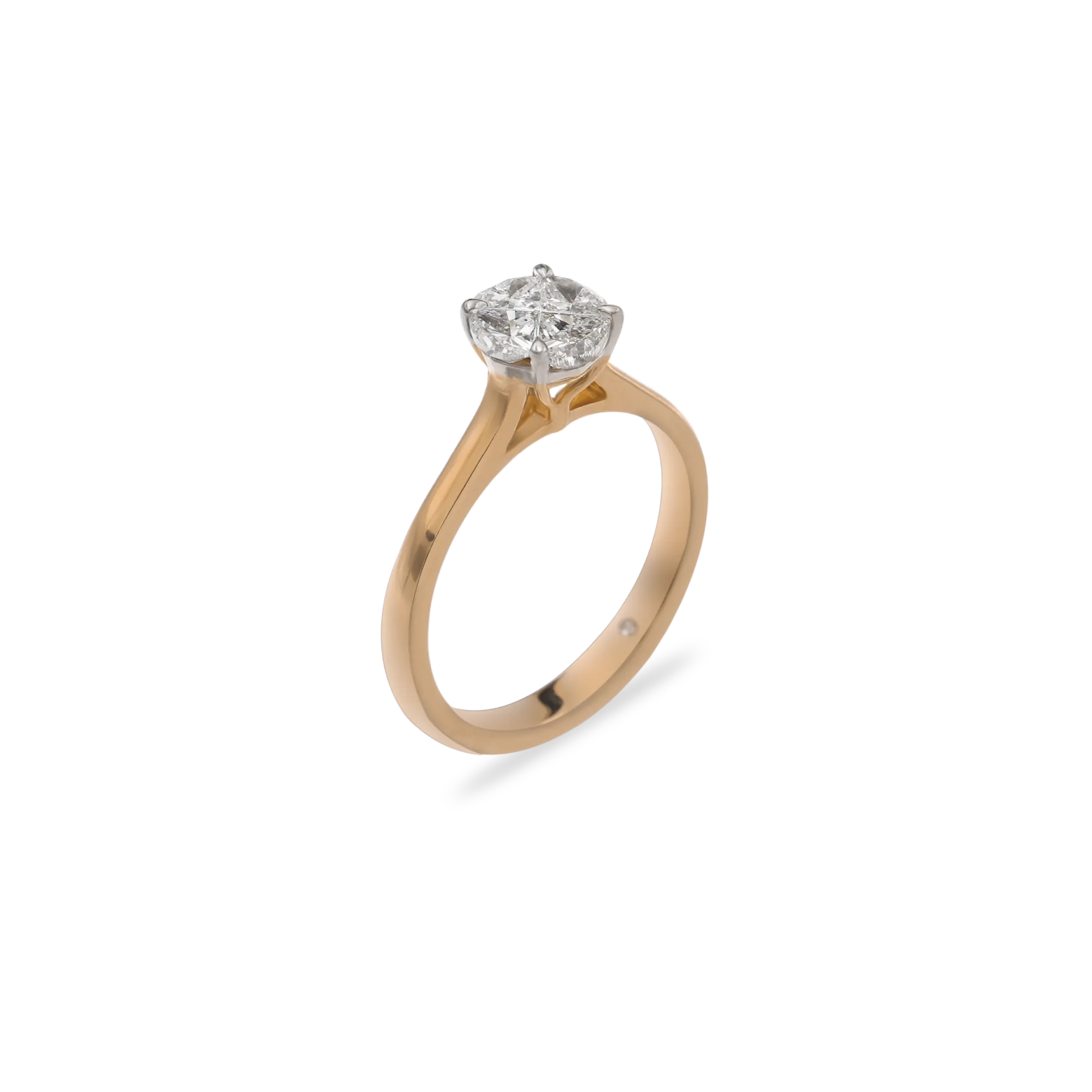
The necklace does not need to duplicate the engagement ring, but the two should feel related. Compare their metal tones, stone shapes, and degree of detail. A clean ring may sit comfortably beside a more decorative necklace, whereas two highly intricate pieces can compete for attention.
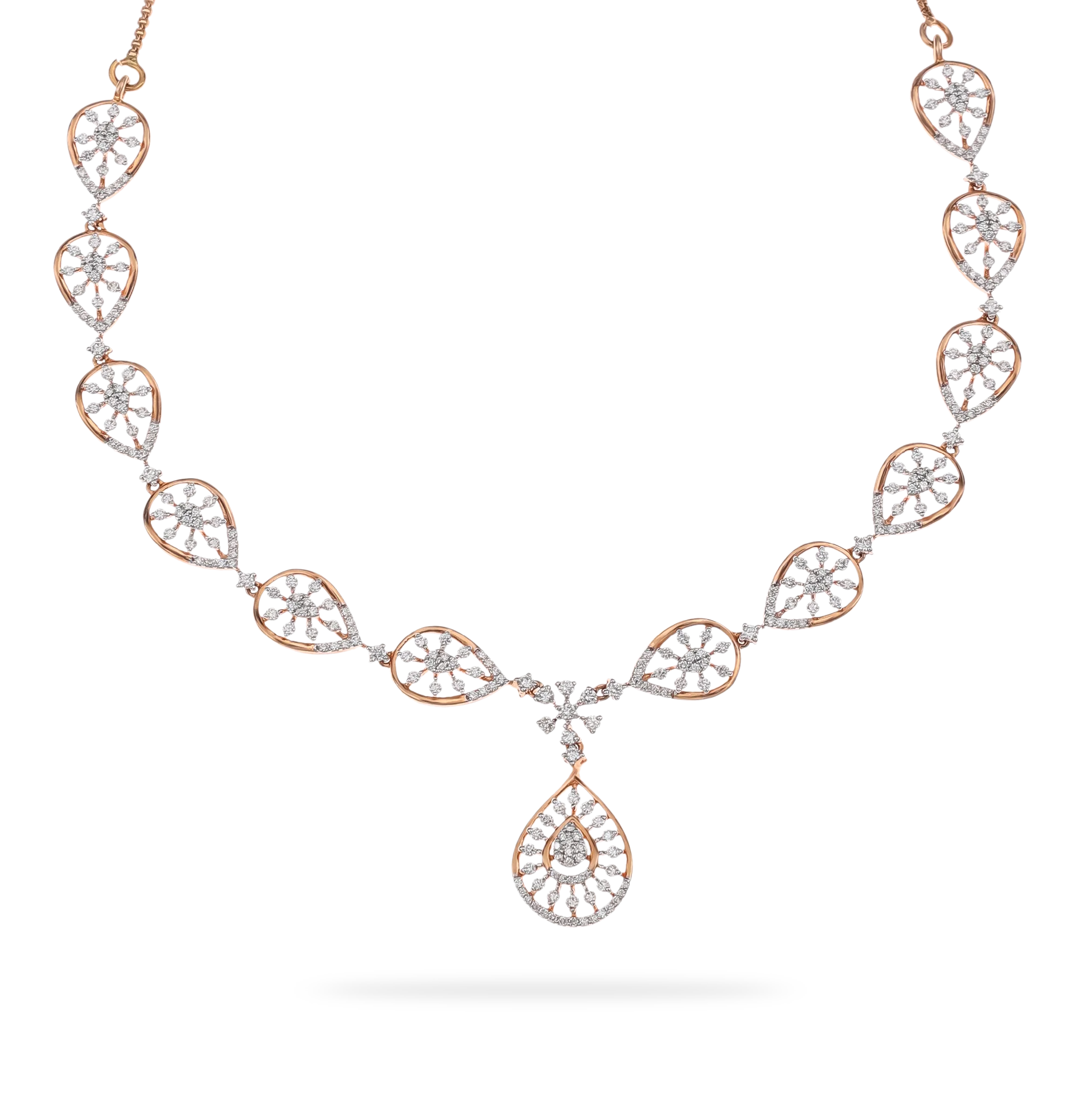
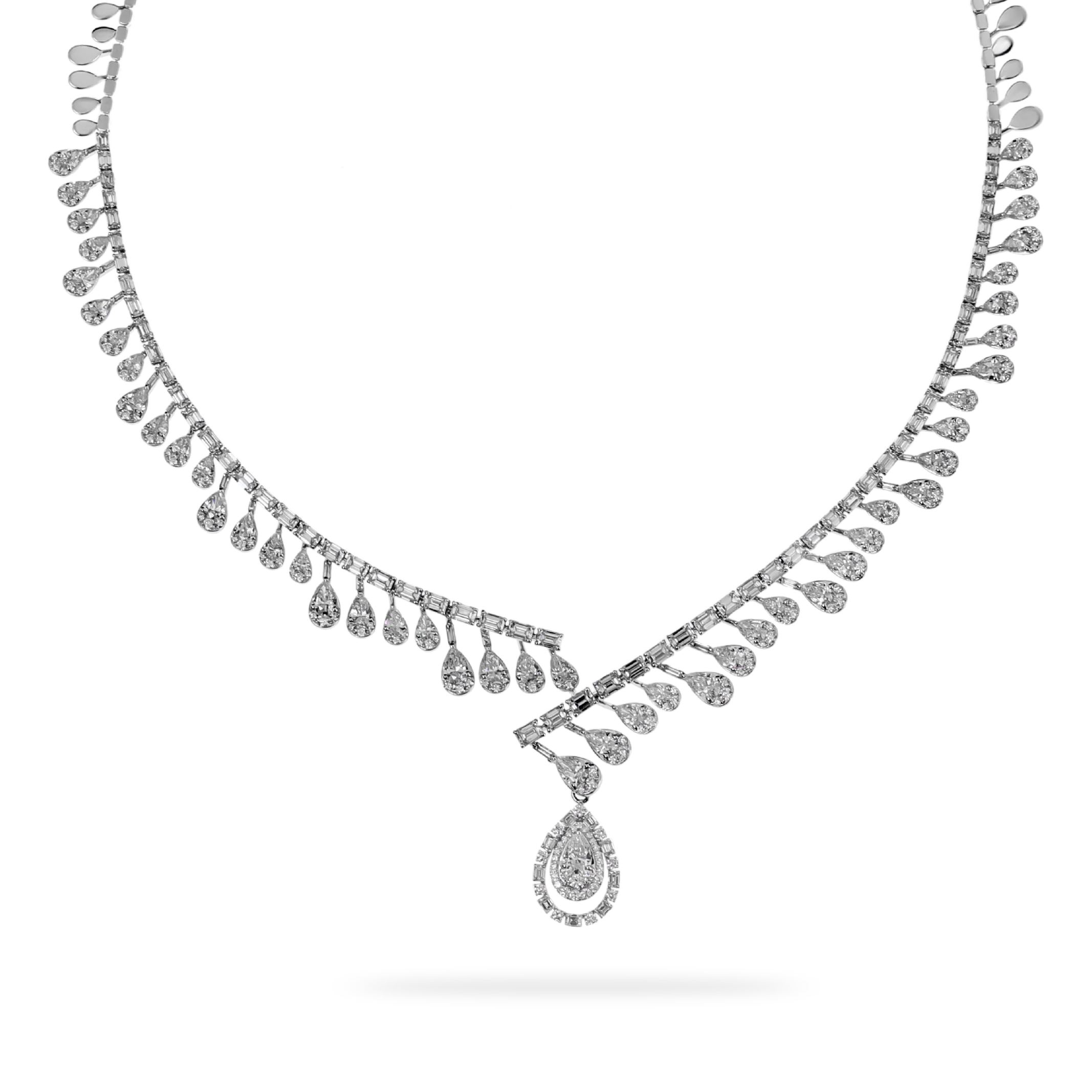
C Krishniah Chetty & Co’s diamond necklace guide discusses coordinating necklace styles with a dress neckline and other jewelry. The same principle applies to a layered set: identify which piece is the anchor, then let the remaining jewelry support it.
Balancing shine, color, and overall visual weight
Visual weight comes from more than size. Dark stones, dense settings, broad chains, and high contrast all make a necklace feel stronger. When several of those qualities appear together, choose simpler earrings and a quieter hair accessory.
A practical way to compare options is to photograph the set beside the dress in natural light. Look at the image from several feet away, then zoom in to inspect tangles and uneven spacing. A clear focal point usually looks more polished than equal intensity everywhere.
| Necklace character | Dress pairing | Supporting jewelry |
|---|---|---|
| Fine and delicate | Minimal or softly detailed gown | Small studs or slim drops |
| Bright and crystal-covered | Simple satin, crepe, or evening dress | Refined bracelet, restrained hairpiece |
| Broad and traditional | Saree, lehenga, or ornate ceremonial outfit | Coordinated earrings and bangles |
| Warm and organic | Lace, garden, or relaxed outdoor look | Pearl, floral, or matte-finish accents |
The table is a starting point rather than a rulebook. If the dress is exceptionally detailed, reduce the necklace scale; if the gown is spare, let the set carry more of the styling interest.
Find the right fit and proportions
A necklace can be beautiful in a product photograph and still sit incorrectly on your body or dress. Fit affects comfort, symmetry, movement, and the way every layer appears in photographs. Measure before shopping, and think about how the necklace will behave when you turn, hug, sit, and dance.
Measuring necklace lengths before you buy
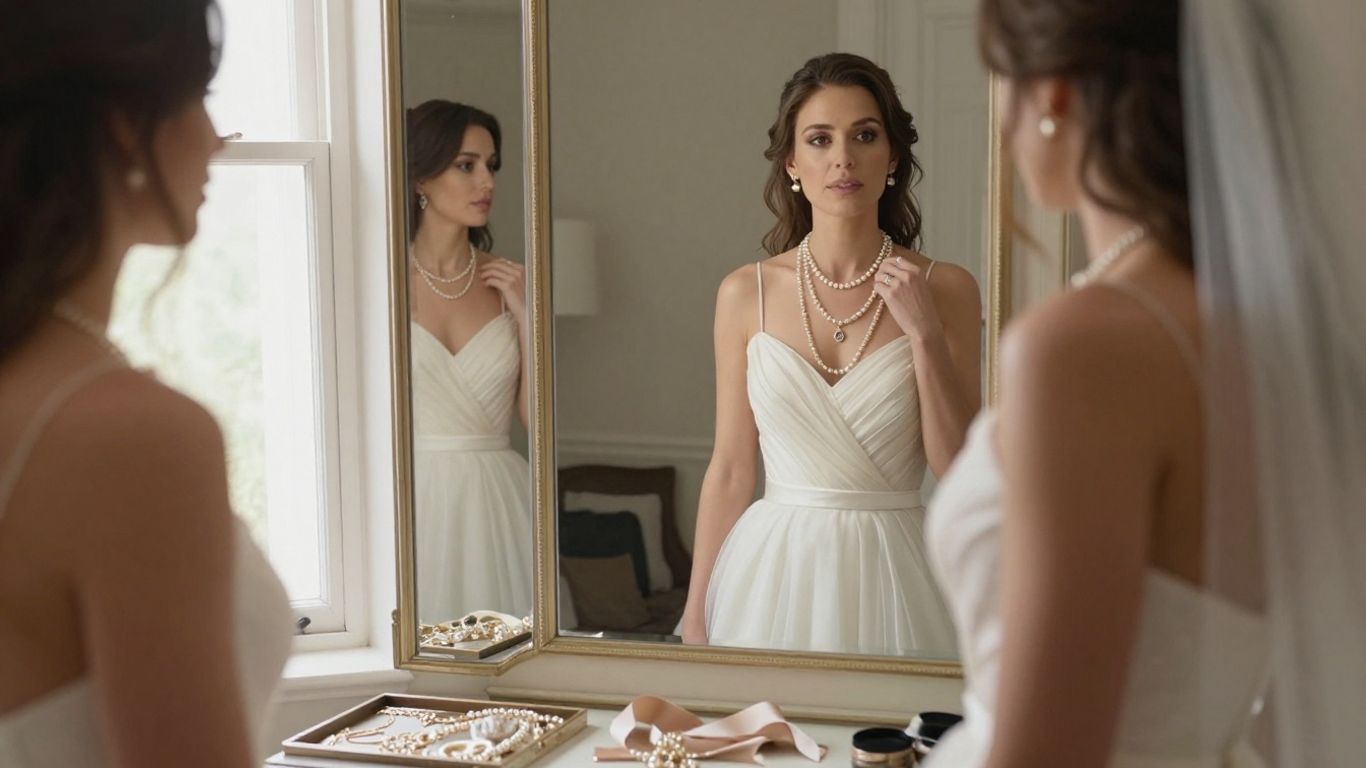
Use a soft measuring tape around the neck and mark the point where you want each layer to fall. If you do not have a tape, a piece of string can be measured afterward with a ruler. This is more dependable than assuming that a named length will sit the same way on every person.
Measure while wearing a similar neckline or the actual dress if possible. Account for an extender, pendant drop, and the space taken up by a choker . Product listings should provide chain length and, ideally, pendant dimensions; if they do not, ask before ordering.
Adjusting layers for comfort and symmetry
Clasps and extenders can help you shift the layers slightly, but they cannot fix a fundamentally unsuitable arrangement. Fasten the set at home and move your head from side to side. The strands should remain separate enough to read clearly without pressing into the skin.
Try the necklace with the hairstyle, veil, and earrings planned for the ceremony. Hair can catch on chains, while a veil comb or high collar may push the necklace forward. Make small adjustments rather than pulling one layer tight, which often makes the whole set look uneven.
Choosing proportions for petite, tall, and plus-size brides
Body proportions are useful guidance, not restrictions. Petite brides may prefer fewer layers or finer chains, while taller brides can often carry longer drops and broader arrangements. Plus-size brides may find that a wider necklace or more generous spacing looks balanced, but personal style matters more than a size label.
The most reliable test is the relationship between the necklace, neckline, and face. Take a full-length photo and a close portrait, since a set can look balanced in one view but crowded in the other. Altering the spacing or choosing an adjustable set may be enough to improve the result.
Avoiding tangling, overlapping, and neckline clutter
Tangles usually come from similar chain weights, insufficient spacing, rough edges, or too much movement between strands. Choose layers with visibly different lengths and inspect how their clasps sit at the back. If the pieces are sold separately, test them together before the wedding rather than assuming they will cooperate.
For a quick pre-purchase check, look for:
- Noticeably different lengths between adjacent layers.
- Smooth edges around stones, settings, and chain links.
- A clasp that can be fastened without help.
- Enough space for the neckline and any dress embellishment.
These details are small, but they determine whether the necklace remains graceful after several hours. If the layers still overlap heavily while you walk or turn, simplify the set instead of trying to force the pieces apart.
Coordinate the full bridal jewelry look
The necklace is one part of the bridal arrangement, not the entire composition. Earrings, bracelets, hair jewelry, veil, ring, and even the bouquet appear together in photographs. Decide which piece should draw attention first, then choose supporting accessories with a similar level of refinement.
Pairing earrings with a layered necklace
When the necklace is wide or highly detailed, studs or modest drops usually create a cleaner balance. A delicate necklace can support larger earrings, especially with an updo or a simple neckline. Repeating one stone or metal finish is often enough to make the pairing feel intentional.
Consider movement as well as appearance. Long earrings may catch on a veil or brush the shoulder, while heavy pieces can become uncomfortable during a long ceremony. Try turning your head and smiling in the full set before committing.
Deciding whether to add a bracelet or hair jewelry
A bracelet is useful when the sleeves and bouquet leave the wrists visible. If the dress has long sleeves, gloves, or extensive cuff detail, it may be better to let the necklace and earrings carry the jewelry story. Hair jewelry should relate to the necklace without copying every shape.
One additional accessory often completes the look; several can flatten the hierarchy. If you add a tiara, comb, tikka, or pins, compare its shine and scale with the necklace in photographs rather than judging each piece in isolation.
Matching the set to the veil and other accessories
Veils can conceal the necklace during part of the ceremony, add texture around the shoulders, or catch on protruding stones. Check the veil edge, comb, and fastening points against the necklace. A smooth, low-profile set may be preferable when the veil is heavily decorated.
Shoes, hairpieces, and even the bouquet ribbon can introduce another finish or color. They do not need to match exactly, but they should not create unrelated focal points. Keep the strongest contrast near the face unless the dress design clearly leads elsewhere.
Creating a cohesive look for bridesmaids and wedding events
The bride’s jewelry should remain distinct, while bridesmaid accessories can echo a metal, stone, or general level of simplicity. Matching every piece can feel overly coordinated, especially when attendants have different necklines and hairstyles. A shared color or silhouette is usually more flexible.
For engagement parties, showers, and receptions, consider whether the wedding set can be divided into smaller combinations. Wearing one layer with simple earrings may give the jewelry a useful life beyond one day and help you decide which pieces truly feel like you.
Shop for quality, comfort, and value
Price alone does not tell you whether a set will work for a wedding. Construction, weight, clasp design, plating, stone security, and aftercare all affect the experience. Read the listing carefully and ask questions before the return window closes.
Checking materials, clasps, chains, and construction
Look for clear information about the base metal, plating or finish, stone type, dimensions, and closure. Inspect close-up photographs for rough prongs, uneven settings, and thin links that may not support a heavier pendant. A secure clasp matters especially when the set includes several connected layers.
Think about the hours of wear. A necklace that feels heavy after ten minutes may become genuinely uncomfortable during the ceremony and reception. If possible, choose an arrangement with smooth surfaces at the neck and no sharp points near lace or hair.
Evaluating photos, measurements, and customer reviews
Product photos should show the front, back, clasp, and a useful scale reference. Compare the stated measurements with a ruler or ribbon placed against your own neckline. Reviews are most helpful when they discuss fit, weight, color accuracy, packaging, and how the necklace behaved during wear.
Be cautious with photographs that show only a close crop or use intense lighting. Ask for additional measurements if the listing is vague. A few minutes of careful comparison can prevent an expensive last-minute replacement.
Choosing hypoallergenic options for sensitive skin
Sensitive skin deserves attention before the wedding day, not after irritation begins. Ask which metals touch the skin, whether the piece is plated, and whether the seller offers a suitable alternative. Even a necklace described as hypoallergenic should be tested early if you know you react to particular finishes.
Wear the set for a short period at home, then inspect the skin and your comfort level. Keep the test separate from the final week if possible, so there is time to return or replace the piece without stress.
Planning the budget and comparing bridal jewelry sets
Set a budget that includes alterations, shipping, taxes, replacement parts, and any matching earrings or hair accessories. Compare complete sets with individual pieces, since a lower headline price may not include the items needed to create the intended look.
Value also includes repeat wear. A versatile set with adjustable layers may serve future celebrations, while a highly specific ceremonial piece may be worth buying for its meaning alone. Choose knowingly rather than treating cost as the only measure.
Style and care for the wedding day
The final styling session should happen before the ceremony, with the real dress or a close substitute. This is when you discover whether the necklace sits under the veil, catches in the hair, or disappears against the bodice. Preparation gives you time to simplify without making a rushed decision.
Testing the complete look before the ceremony
Wear the necklace, earrings, ring, hair accessories, and veil together for at least part of a trial. Sit, stand, turn, and walk while someone photographs you from the front and side. Check the set in daylight and indoor light because stones and finishes can change character.
Ask one trusted person what they notice first. If the answer is the necklace when that was not your intention, remove one layer or reduce the supporting jewelry. A trial is useful precisely because it allows honest adjustment.
Preventing tarnish, snags, and necklace movement
Apply perfume, hairspray, and body products before putting on the jewelry, allowing them to dry first. Keep chains away from rough lace, loose threads, and hair that can catch in links. A discreet piece of fashion tape or a small stabilizing loop may help with movement, but test it on a spare fabric first.
Avoid twisting the layers tightly to stop them moving. Correct spacing, a suitable clasp, and a comfortable fit are safer solutions. Have a small emergency kit with spare fasteners, a soft cloth, and a way to store the necklace between events.
Packing and storing the set safely
Transport each layer in a separate soft pouch or compartment, with chains fastened before packing. Do not place heavy items on top of stones or delicate links. If the set has a long pendant, wrap it loosely rather than bending it sharply.
Assign one person to carry the jewelry if you are traveling to the venue. Keep the set away from moisture, cosmetics, and open bags. A simple inventory photo can make it easier to confirm that every piece is returned after the reception.
Preserving the jewelry after the wedding
Clean the set according to its material and stone type rather than using one product on everything. A soft, dry cloth is a safe starting point for many pieces, but plated finishes and delicate stones may require more specific care. Store the necklaces separately so they do not scratch or tangle.
Keep the purchase details, care instructions, and any repair information together. If the set carries family or cultural meaning, record when and how it was worn. Good storage turns a wedding accessory into something you can revisit and wear thoughtfully in the years ahead.
Conclusion
Choosing a bridal layered necklace set becomes easier when you treat it as part of the whole outfit: begin with the neckline, establish a comfortable proportion, coordinate the materials, and test every piece before the wedding day. The most memorable set is not necessarily the largest one, but the one that feels beautiful, secure, and unmistakably yours.
Frequently Asked Questions
How many layers should a bridal necklace set have?
Two or three layers are usually enough to create dimension without crowding the neckline. The right number depends on the dress, the spacing between strands, and the visual weight of the stones and chains.
Should a bridal necklace match the engagement ring?
It should coordinate with the engagement ring, but it does not need to be identical. Similar metal tones, stone colors, or levels of detail can create a connected look while allowing the necklace to have its own character.
Can I wear a layered necklace with a high neckline?
You can, but the arrangement needs careful planning. A shorter, flatter set may sit above the fabric, while a high neckline with heavy embellishment may look better without a necklace so the earrings or hair jewelry can lead.
How do I stop layered necklaces from tangling?
Choose noticeably different lengths, test the clasp positions, and check the set while walking and turning. Separate pouches for storage and a trial with the actual dress can also reveal movement problems early.
Are pearls suitable for a layered bridal necklace?
Yes. Pearls offer a softer glow and work with classic, garden, vintage, and culturally inspired looks. Their size and number should be balanced against the dress embellishment and the scale of the earrings.
What should I check before buying a bridal necklace set online?
Review the materials, chain lengths, pendant dimensions, clasp type, close-up photographs, return policy, shipping timing, and customer comments about comfort. Measure your desired neckline position rather than relying only on the product name.
How should I store my bridal necklace after the wedding?
Fasten each chain, place pieces in separate soft pouches, and keep them dry and away from cosmetics. Follow the care instructions for the specific metal and stones, and avoid storing multiple necklaces together where they can scratch or knot.
Related blogs:
November 20, 2025
The Timeless Elegance of the Tennis Bracelet: A Comprehensive Guide
Read More
November 20, 2025
The Ultimate Guide to Styling and Wearing a Choker Necklace
Read More
November 20, 2025
Find Your Perfect Engagement Ring: A Comprehensive Guide to Styles and Diamonds
Read More
November 20, 2025
The Timeless Elegance of a Diamond Tennis Bracelet: A Buyer's Guide
Read More









.webp)
.webp)