How to budget for bridal jewellery: A practical guide to setting your spend
September 24, 2026 | 10 minutes read
Key Takeaways
A thoughtful jewellery budget is less about following a standard number and more about deciding what matters to you. Plan around your finances, the rest of your look, and the costs that can be easy to overlook.
- Start with your overall wedding budget and set a jewellery cap you can afford without relying on credit.
- Prioritize the pieces that best suit your outfit, personal style, comfort, and future plans.
- Compare materials, craftsmanship, and what each set includes rather than judging by price alone.
- Weigh buying against renting, borrowing, or wearing heirlooms, including any related fees or repairs.
- Track costs and timing from the first quote through the wedding day.
Set a realistic bridal jewellery budget
A jewellery budget works best when it fits into the wedding finances you already have, rather than becoming a separate wish list. Start with the costs you know, then decide what feels comfortable for the finishing touches. There is no single correct amount to spend; the right figure is one that leaves room for other priorities. For practical ideas on balancing your look and your finances, C Krishniah Chetty & Co publishes a wedding jewellery budget guide.
Start with your overall wedding budget and other attire costs
Look at the full wedding budget before deciding how much to spend on jewellery. Your dress or other wedding attire, shoes, tailoring, hair, and makeup all compete for the same pool of money, so account for them first. Then decide what remains for jewellery without assuming every accessory is essential. Thinking about how to budget for bridal jewellery this way can help you set a figure that feels grounded rather than arbitrary.
Decide what you can comfortably spend without relying on credit
Choose an amount you can pay from available funds without borrowing or putting other essential expenses at risk. A beautiful piece can feel less special if its cost creates stress after the celebration. If you are sharing the expense with family or a partner, talk through who is contributing and what each person is comfortable paying. Keep the plan based on confirmed funds, not a possible gift or a future change in circumstances.
Set a target amount and a firm spending cap
A target gives you room to compare options, while a firm cap helps prevent a series of small upgrades from quietly changing the total. It can be useful to write down both figures before shopping: the amount you hope to spend and the most you are willing to spend. For example, you might use a simple comparison like this to make the difference clear:
| Budget marker | What it means | How to use it |
|---|---|---|
| Starting estimate | A first working amount | Adjust after listing attire and accessory costs |
| Target spend | The amount you would like to stay near | Use it to compare suitable options |
| Firm cap | The highest amount you are willing to pay | Do not exceed it for optional upgrades |
| Remaining balance | Money left after confirmed purchases | Keep it available for outstanding costs |
Once these figures are written down, revisit them when a new option catches your eye. The cap is most useful when it is decided before you are in the moment of choosing.
Leave room for taxes, shipping, and last-minute changes
The listed price may not be the final amount you pay. Check whether taxes, delivery, alterations, resizing, or other fees will be added, and keep a small reserve for a change that becomes necessary closer to the wedding. C Krishniah Chetty & Co's guide is not the only resource to consider; another jewellery spending guide also flags taxes, shipping, and customization as costs to account for. Treat the amount you can spend on the piece itself as lower than your total cap if extra charges still need to be covered.
Prioritize the pieces that matter most to you
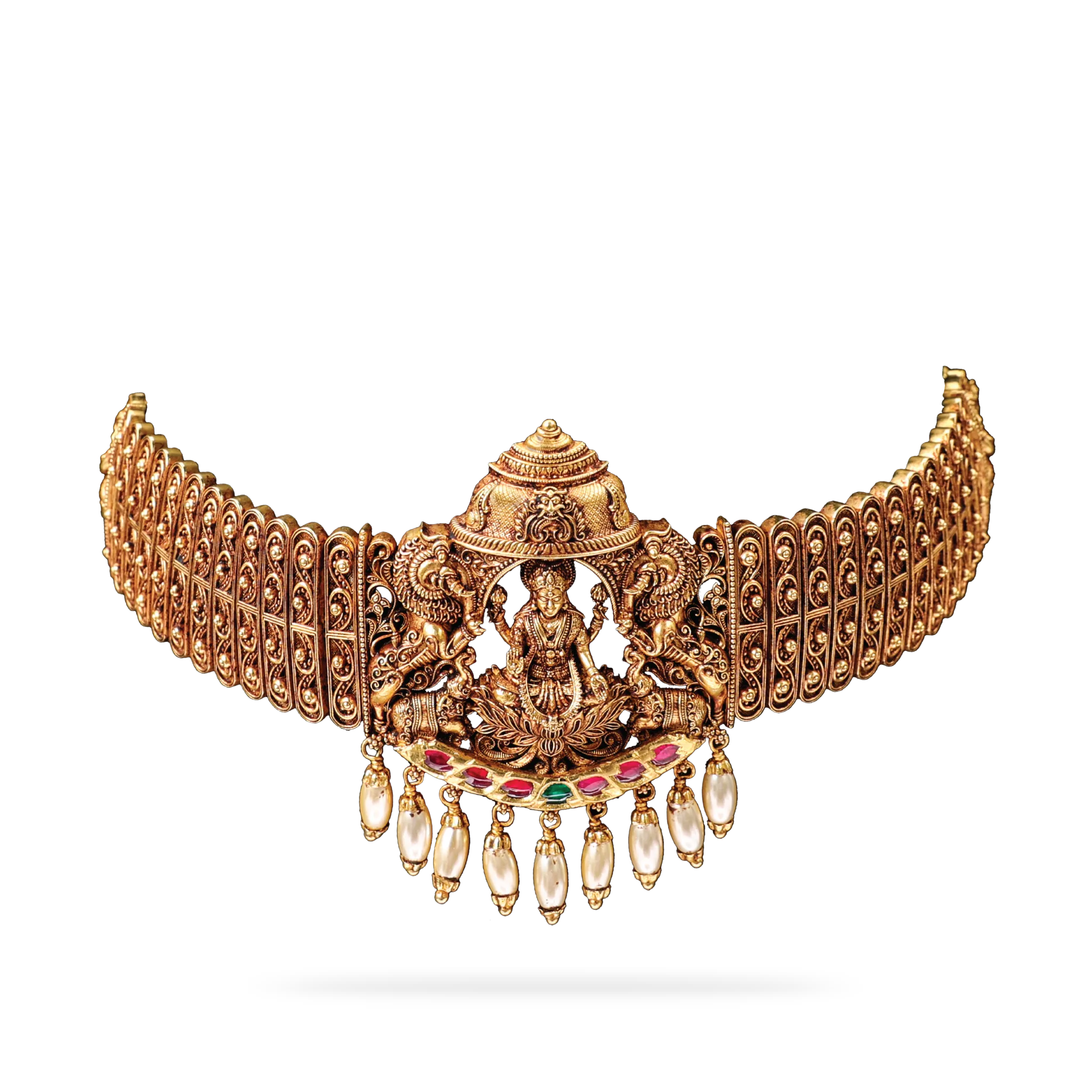
The best bridal jewellery plan does not require wearing every possible accessory. Start with the pieces that feel most like you, then consider how they work together with your outfit and the overall impression you want. A few carefully chosen accents can feel more considered than a full set chosen only because it is sold together. C Krishniah Chetty & Co offers timeless bridal jewellery guidance on balancing personal style with the look of the occasion.
Choose which pieces will have the biggest impact on your look
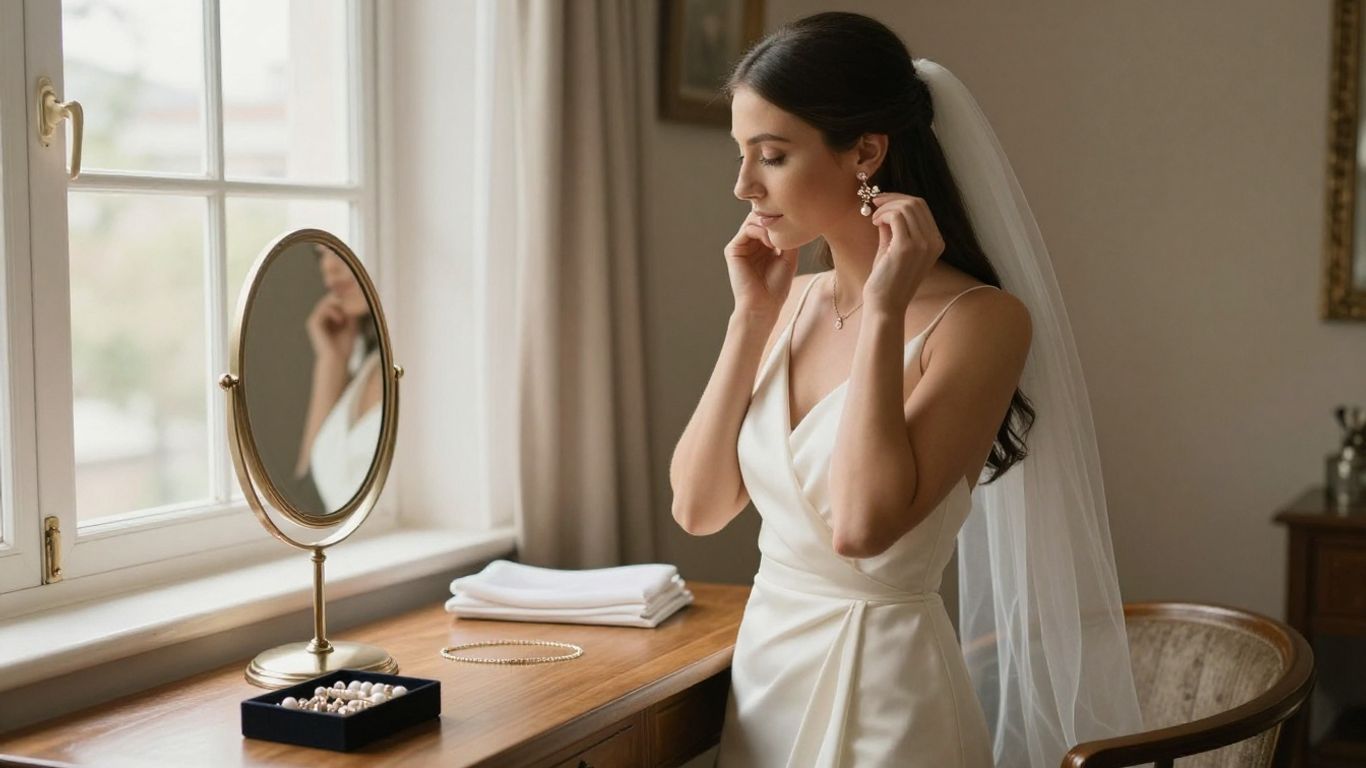
Decide where you want the eye to go: your face, neckline, hands, or perhaps a meaningful heirloom. If the dress has detailed embroidery or a dramatic neckline, a more restrained choice may give the outfit room to breathe. If the silhouette is simple, one distinctive piece might become the focal point. Choose based on the whole look, rather than assuming you need a necklace, earrings, bracelet, and hair accessory all at once.
Match jewellery choices to your dress, neckline, and hairstyle
A necklace sits differently with a high neckline than it does with a strapless or V-shaped dress, and earrings are more visible when hair is worn up. Bring a photo of your outfit or try pieces with the actual garment if possible; small differences in length and proportion can change how everything feels together. The bridal look guide from C Krishniah Chetty & Co discusses coordinating jewellery with a dress and hairstyle. Use that as a starting point, then trust what feels balanced on you.
Decide whether you need a coordinated set or just a few accents
A matching set can make choosing easier, but it is worth checking whether you genuinely want every piece in it. If you are weighing a set against separate purchases, compare the total and think about how often you would wear each item afterward. A quick checklist can help keep the decision focused:
- Identify the one piece you most want to wear on the day.
- Note which accessories your outfit already makes unnecessary.
- Check whether the pieces in a set can be worn separately later.
- Compare the cost of the complete set with buying only the items you need.
That comparison can make a set feel worthwhile—or show that two individual accents are the better fit. Either choice can look complete when it has been made intentionally.
Make trade-offs based on comfort, personal style, and rewear potential
A piece may look striking in a display case but feel too heavy or distracting after several hours. Consider whether it stays secure, whether the metal or finish feels comfortable against your skin, and whether you can imagine wearing it again. Spending more on one versatile piece may make sense if it suits your everyday style, while an inexpensive accessory can also be a good choice if it meets your needs for the day. Your budget should reflect your preferences, not someone else’s idea of what a bride must wear.
Understand what affects bridal jewellery prices
Two pieces that look similar from a distance can have very different prices, and a higher price does not automatically make one the right choice for you. Materials, construction, design, and what is included all contribute to the total. Ask what you are paying for and whether those qualities matter to your plans. Comparing details, rather than relying on a single label, makes it easier to judge value.
Compare metals, gemstones, pearls, and alternative materials
Start by identifying the actual materials in each piece. Precious metals and natural gemstones can cost more than plated finishes or alternatives, but the right choice depends on your budget, preferences, and how often you expect to wear the jewellery. Pearls, crystals, and other materials can create very different effects and price points. Ask for clear details about metal content and stones so that you are comparing like with like.
Consider how craftsmanship and brand names influence cost
Design complexity, the time involved in making a piece, and the finish can all affect its price. Brand names may influence cost too, but the name alone does not tell you whether the design, materials, or workmanship suit your priorities. Look closely at the settings, joins, closures, and overall finish, and ask what care or documentation comes with the purchase. A considered choice is one whose details justify its place in your budget for you.
Look at the difference between fine jewellery and fashion jewellery
Fine jewellery and fashion jewellery are not interchangeable categories, and each can suit a different purpose. Fine jewellery may use precious metals and gemstones, while fashion pieces can offer a broader range of designs and price points. Compare the materials, care instructions, and expected use instead of assuming that one category is always the better value. If you are choosing something mainly for one event, your priorities may differ from those for a piece you hope to wear often.
Check what is included in sets, such as matching earrings or a necklace
Before buying a set, confirm exactly which pieces are included and whether any item shown in a photograph is sold separately. Also check if the set price represents a saving compared with buying the pieces individually, and whether every included item works with your outfit. When comparing two options, write down the details rather than relying on memory:
| Comparison point | Option A | Option B |
|---|---|---|
| Pieces included | Confirm each item | Confirm each item |
| Materials | Check metal and stones | Check metal and stones |
| Extra costs | Note fees and taxes | Note fees and taxes |
| Wear after the wedding | Consider likely use | Consider likely use |
A simple side-by-side view can reveal that the less expensive set is not the better fit if it includes pieces you will not wear. Judge the full package against what you actually want.
Compare buying, renting, borrowing, and heirlooms
Buying is only one way to complete a bridal look. Renting, borrowing, or wearing a family piece can all be meaningful options, depending on availability, condition, and what matters to you. Consider both the immediate cost and the care or responsibilities attached to each choice. Making the comparison early gives you time to sort out fit, cleaning, and return arrangements.
Weigh the long-term value of buying pieces you can wear again
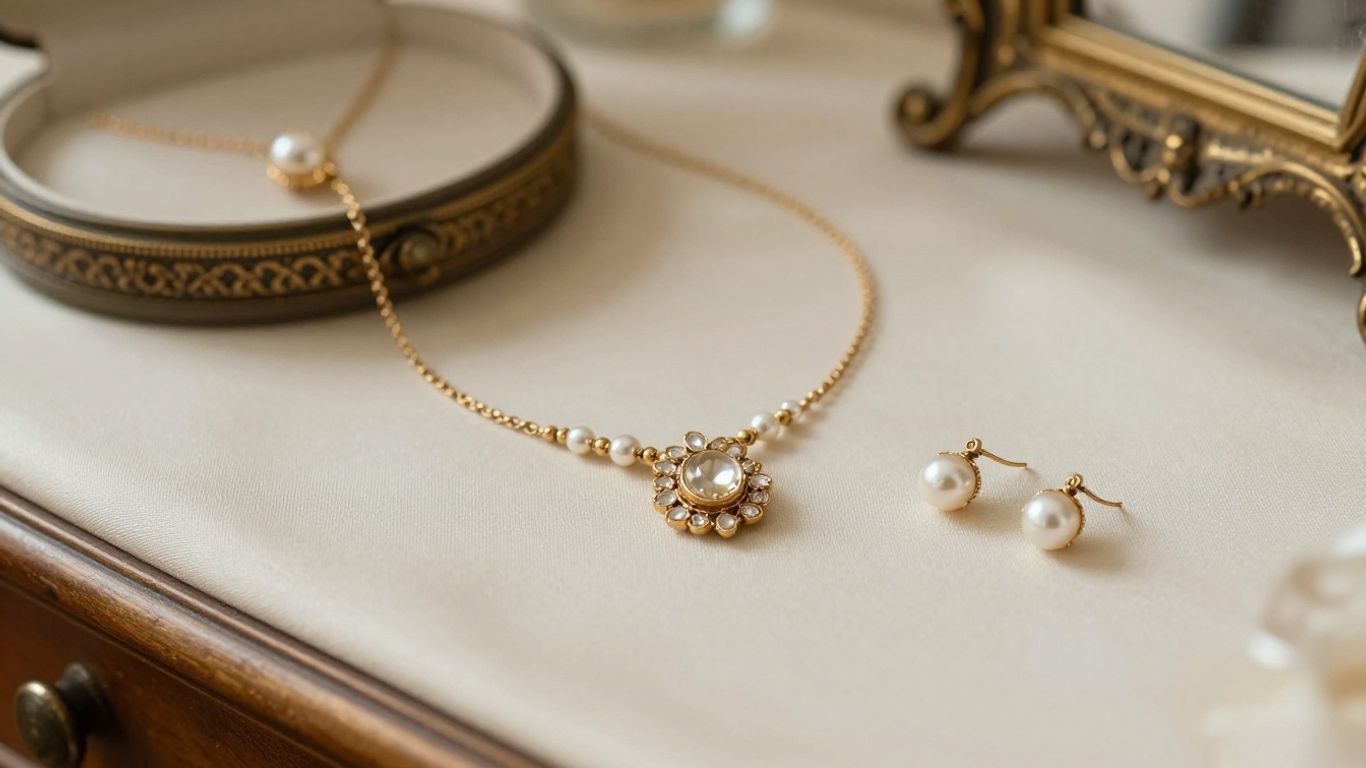
If you expect to wear a piece beyond the wedding, think about its place in your wardrobe and whether it works with clothes you already own. That future use can be part of its value, though it does not mean you should spend beyond your cap. A design that suits your usual taste may be a better buy than one chosen only for a single outfit. Consider how you will store and care for it, too.
Check rental fees, deposits, and return conditions
A rental can make a special design accessible without paying its full purchase price, but the total may include a rental fee, deposit, shipping, or cleaning charges. Read the return deadline and conditions carefully, especially if the wedding schedule involves travel. Find out what happens if an item is damaged or returned late before you commit. Compare that final cost with buying or borrowing rather than looking only at the advertised fee.
Ask family about borrowing meaningful pieces
A family member may have a piece that would bring personal meaning to your wedding look. Ask early, explain how you hope to wear it, and make sure the owner is comfortable with the arrangement. Agree on when and how it will be returned, and discuss any handling or cleaning expectations beforehand. A borrowed item can be a lovely choice, but it should also feel manageable for the person lending it.
Include cleaning, resizing, or repairs when using heirloom jewellery
An heirloom may need attention before it is ready to wear. Check its condition well in advance and ask a qualified jeweller what cleaning, repair, or resizing might involve; delicate or older pieces can need careful handling. Agree with the owner before making any changes, particularly if the item is not yours. Adding these costs and lead times to your comparison helps avoid a last-minute surprise.
Shop strategically and compare options
Shopping is easier when you arrive with a clear idea of your priorities and a few questions. Research styles and broad price ranges first, then compare options that fit your budget instead of browsing without limits. Keep track of the details that can change the real cost, including service terms and delivery timing. A little preparation can make a store visit feel calmer and more useful.
Research styles and price ranges before visiting stores
Save a few examples of the shapes, materials, and proportions you like, but stay open to trying something slightly different. Knowing a general price range helps you decide whether a piece is a realistic possibility before you fall in love with it. Read product descriptions closely and note any questions about materials or included pieces. Use inspiration as a guide to your taste, not as a rule that you have to reproduce exactly.
Compare total prices, return policies, and warranties
A fair comparison includes more than the sticker price. Ask for the full amount with taxes and any additional charges, then review the return or exchange window and the terms of any warranty. Find out whether alterations or repairs are covered, and keep the answers with your receipt or quote. The lowest initial price may not be the simplest option if its policies do not give you enough flexibility.
Ask about customization fees and delivery timelines
If you are considering a change to a design, ask what it will cost and how it affects the delivery date. Custom work can require additional time, and the expected completion date should leave room for trying the piece and addressing any fit or finish concerns. Confirm the details in writing so you have a record of the agreed price and schedule. Avoid leaving a custom order until the final weeks if there is any uncertainty about timing.
Try pieces with your outfit before making a final decision
A photo can help you narrow choices, but trying jewellery with your outfit gives you a better sense of scale and comfort. Check that closures feel secure, lengths sit as intended, and the pieces work together when you move. If a full try-on is not possible, bring a clear photograph and measurements of the neckline or sleeves. Pause before buying and consider whether you still like the choice when it is viewed as part of the whole look.
Keep spending on track from selection to wedding day
Once you have started shopping, small decisions can add up quickly. A clear record of quotes, purchases, and remaining funds makes it easier to see where you stand. Keep dates and care arrangements in the same place so they do not become separate last-minute tasks. The goal is not to monitor every detail obsessively, just to keep the plan visible and usable.
Track quotes, purchases, and remaining budget in one place
Use a notebook, spreadsheet, or budgeting app to record each item’s quoted and final price, what you have paid, and what remains. Add expected costs such as taxes, shipping, cleaning, or adjustments so the balance is realistic. Give each quote a date and note what it includes; a total without details is hard to compare later. This simple record helps you notice when an optional extra would push the budget off course.
Confirm delivery dates and allow time for exchanges or repairs
Check the expected delivery date before placing an order and ask how much time you have to report a problem or request an exchange. Once the item arrives, inspect it promptly and try it with your outfit rather than setting it aside until the wedding week. If anything needs attention, you will have more choices when there is time to act. Keep packaging and paperwork until you are sure the piece is right.
Store and insure valuable pieces when appropriate
Decide where jewellery will be kept between purchase and the wedding, especially if it is valuable or borrowed. Use a secure, dry place and avoid leaving pieces loose together, where they may become scratched or tangled. For higher-value items, check whether your existing insurance provides relevant coverage and what documentation it requires. These steps should be proportionate to the piece and the circumstances, not a reason to worry about every accessory.
Revisit your spending cap before adding optional accessories
An extra bracelet or hairpiece can seem like a small addition, but several small purchases can meaningfully change the total. Before saying yes, check your remaining balance and ask whether the piece adds something you truly want or simply completes a set out of habit. If a new purchase requires raising the cap, reconsider the rest of the plan rather than letting the limit drift. A final pause can protect both your budget and your confidence in the choices you have made.
Conclusion
A bridal jewellery budget is a personal plan, not a rulebook. When you set a comfortable limit, choose the pieces that matter, and compare the full cost of each option, you can create a look that feels like you without losing sight of the wider wedding budget.
Frequently Asked Questions
How much should I budget for bridal jewellery?
There is no universal amount that suits every wedding. Start with your overall budget and other attire costs, then set a target and a firm cap that you can afford comfortably.
Should bridal jewellery match the wedding dress?
It should feel harmonious with the dress, but it does not have to match every detail. Consider the neckline, fabric, embellishment, hairstyle, and the overall balance you want.
Do I need to buy a complete bridal jewellery set?
No. A coordinated set can be convenient, but a few carefully chosen pieces may suit your outfit and budget better. Compare what is included with what you genuinely plan to wear.
Is it better to rent or buy wedding jewellery?
It depends on the cost, how often you expect to wear the piece, and the rental terms. Compare fees, deposits, return conditions, and future use before deciding.
Can I wear family heirloom jewellery at my wedding?
Yes, if the owner is comfortable lending it and it is in suitable condition. Ask early about cleaning or repairs, agree on handling, and allow time for any needed work.
What extra costs should I include in a jewellery budget?
Allow for taxes, shipping, customization, resizing, cleaning, or repairs when they apply. Confirm the final price and delivery terms before committing to a purchase or rental.
When should I buy bridal jewellery?
Shop early enough to compare options, receive the pieces, and arrange any exchanges, adjustments, or repairs. Custom pieces and heirlooms may need additional time, so confirm timelines before you decide.
Luxury wedding jewellery shopping guide: How to choose pieces for your wedding day
10 minute read
10 best bridal jewellery investment pieces for timeless style and lasting value
10 minute read
Related blogs:
November 20, 2025
The Timeless Elegance of the Tennis Bracelet: A Comprehensive Guide
Read More
November 20, 2025
The Ultimate Guide to Styling and Wearing a Choker Necklace
Read More
November 20, 2025
Find Your Perfect Engagement Ring: A Comprehensive Guide to Styles and Diamonds
Read More
November 20, 2025
The Timeless Elegance of a Diamond Tennis Bracelet: A Buyer's Guide
Read More