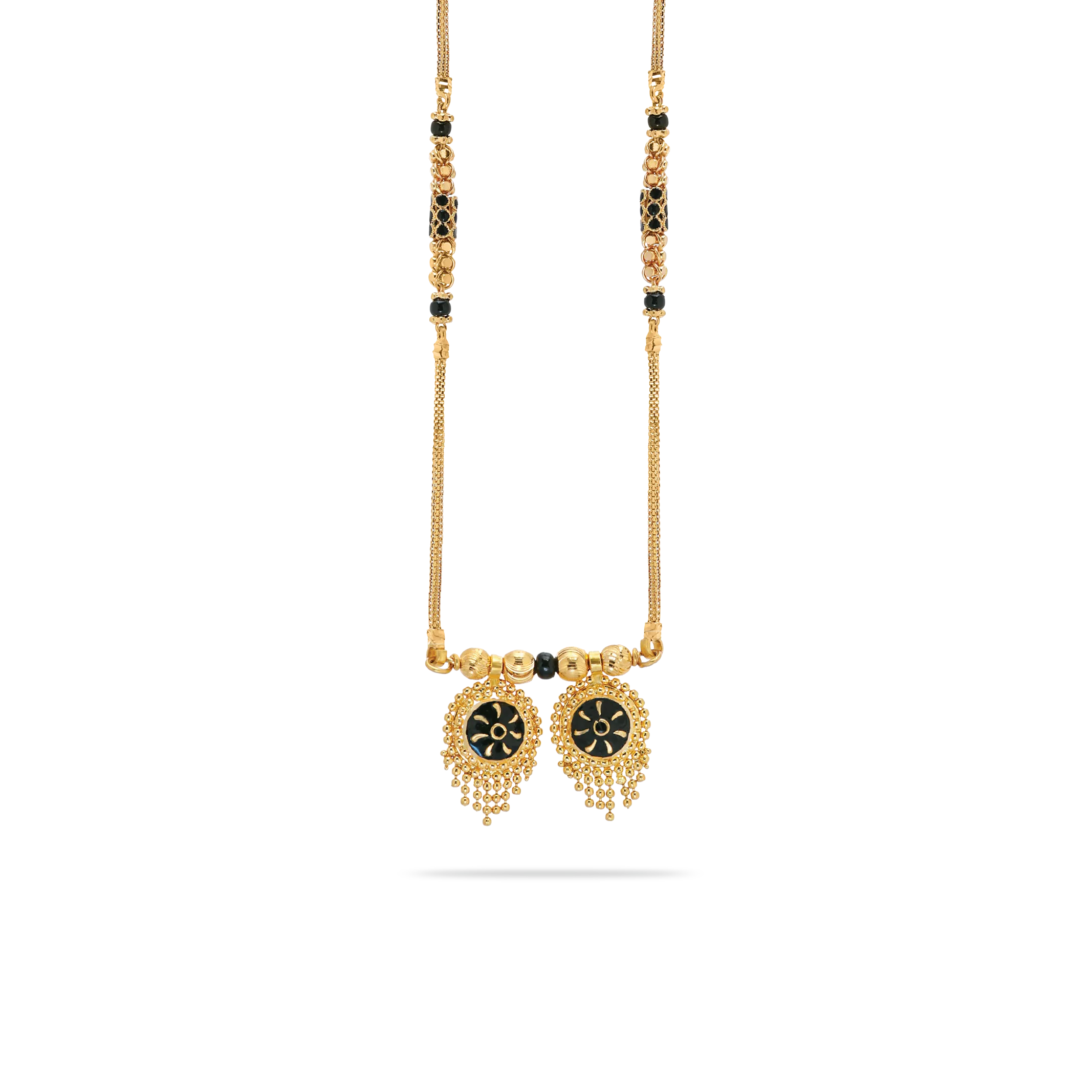
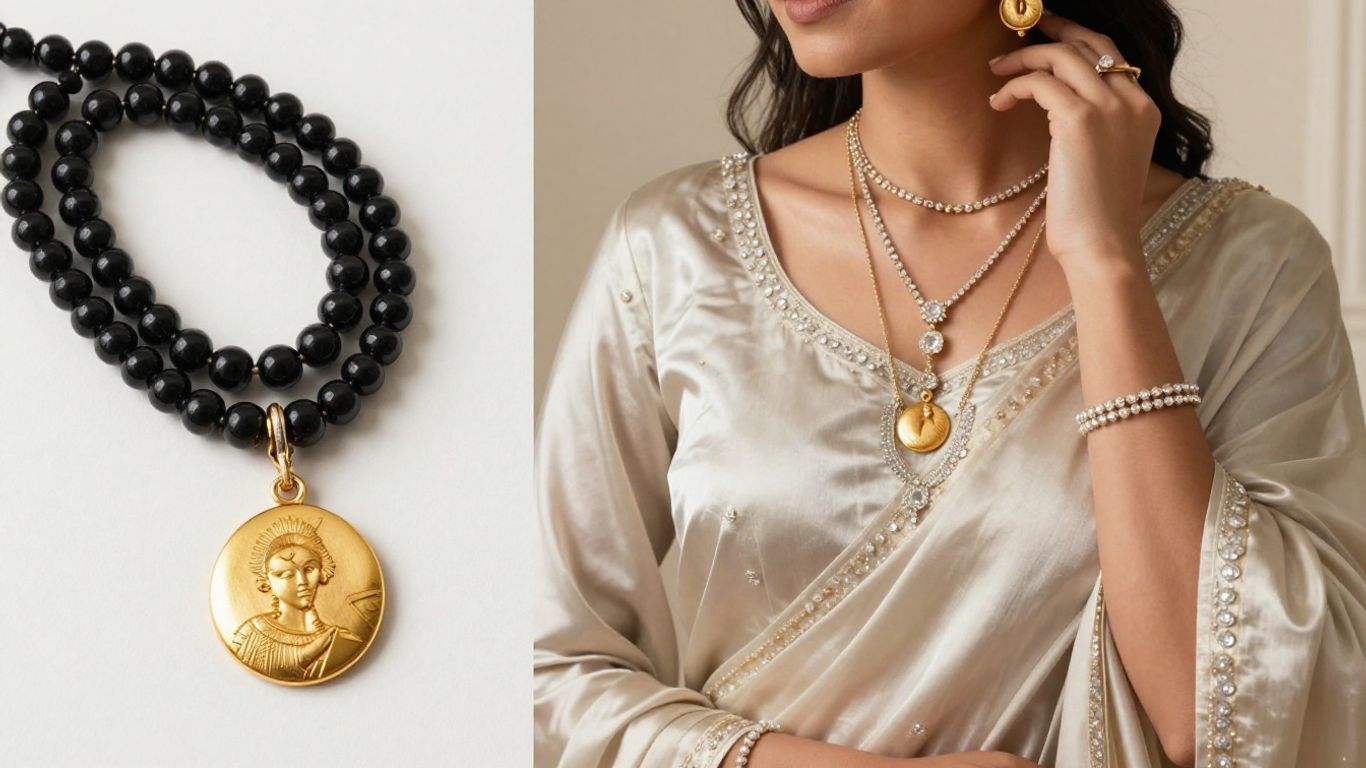
Diamond mangalsutra for modern brides: A guide to choosing the perfect design
August 19, 2026 | 10 minutes read
Key Takeaways
A diamond mangalsutra for modern brides can honor tradition while feeling completely personal. The best choice balances symbolism, comfort, craftsmanship, and the way you actually dress and live.
- Choose a design that reflects both your heritage and personal style.
- Consider pendant shape, diamond details, gold color, and chain proportions together.
- Prioritize comfort, secure closures, and durable settings for regular wear.
- Coordinate the mangalsutra with your bridal outfit, neckline, and other jewelry.
- Review certifications, pricing, customization, warranties, and care requirements before buying.
Understand the meaning behind a modern mangalsutra
A mangalsutra carries emotional and cultural meaning, but its appearance does not have to remain fixed in time. Modern designs may use familiar black beads and gold while introducing cleaner lines, lighter chains, or a diamond-focused pendant. The right piece should feel connected to the ceremony and natural in the life that follows.
How traditional symbolism shapes contemporary designs
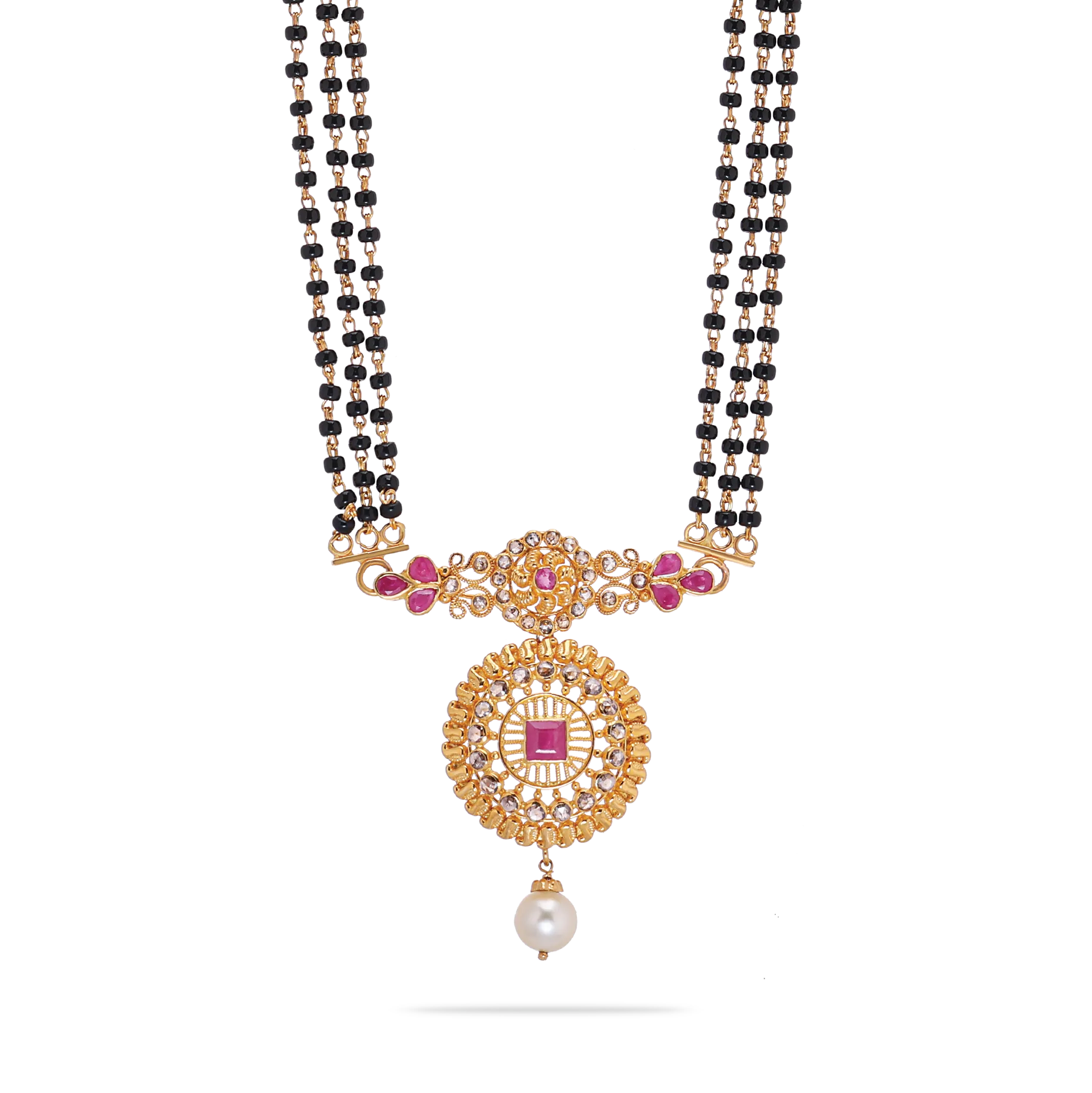
Traditionally, the black beads and gold elements are associated with marriage, protection, commitment, and family heritage. Their arrangement varies by community and region, so there is no single visual formula that suits every bride. Contemporary designers often retain these recognizable details while refining the proportions and simplifying the pendant.
A thoughtful starting point is to ask which elements your family considers essential. C Krishniah Chetty & Co offers a comprehensive guide covering black beads, gold, regional traditions, and ways to coordinate a mangalsutra with wedding attire.
Why diamonds appeal to today’s brides
Diamonds add brightness without requiring an elaborate pendant. A small solitaire can create a quiet focal point, while several carefully placed stones can give a traditional silhouette a more polished finish. Their clean sparkle also makes the necklace easier to wear with both Indian and Western wardrobes.
The appeal is often practical as well as visual: a diamond mangalsutra can move from a wedding ceremony to a dinner, office outfit, or family celebration without feeling out of place. Personal meaning matters most when the design still feels like something you will want to wear.
Balancing cultural significance with personal style
Personal style can shape the pendant, chain length, gold color, and level of sparkle without erasing the necklace’s significance. Some brides prefer a familiar bead pattern with a contemporary diamond centerpiece; others choose a slender, discreet design that sits close to the collarbone. Neither approach is more authentic than the other.
Try describing your preferred jewelry in three words, such as delicate, warm, and understated. Then compare those words with the customs you want to preserve. This keeps the decision grounded in both identity and appearance rather than in a passing trend.
Choosing a mangalsutra for weddings and everyday wear
A wedding-day piece may be larger or more detailed because it needs to hold its own beside bridal clothing and layered jewelry. An everyday mangalsutra usually benefits from a lighter pendant, a manageable chain, and settings that do not catch on fabric. If you want one necklace for both purposes, look for a balanced design rather than the most ornate option.
A convertible or removable pendant can also make one piece more flexible, provided the attachment feels secure. Think about how often you expect to wear it after the wedding, not only how it looks in ceremony photographs.
Explore diamond mangalsutra styles
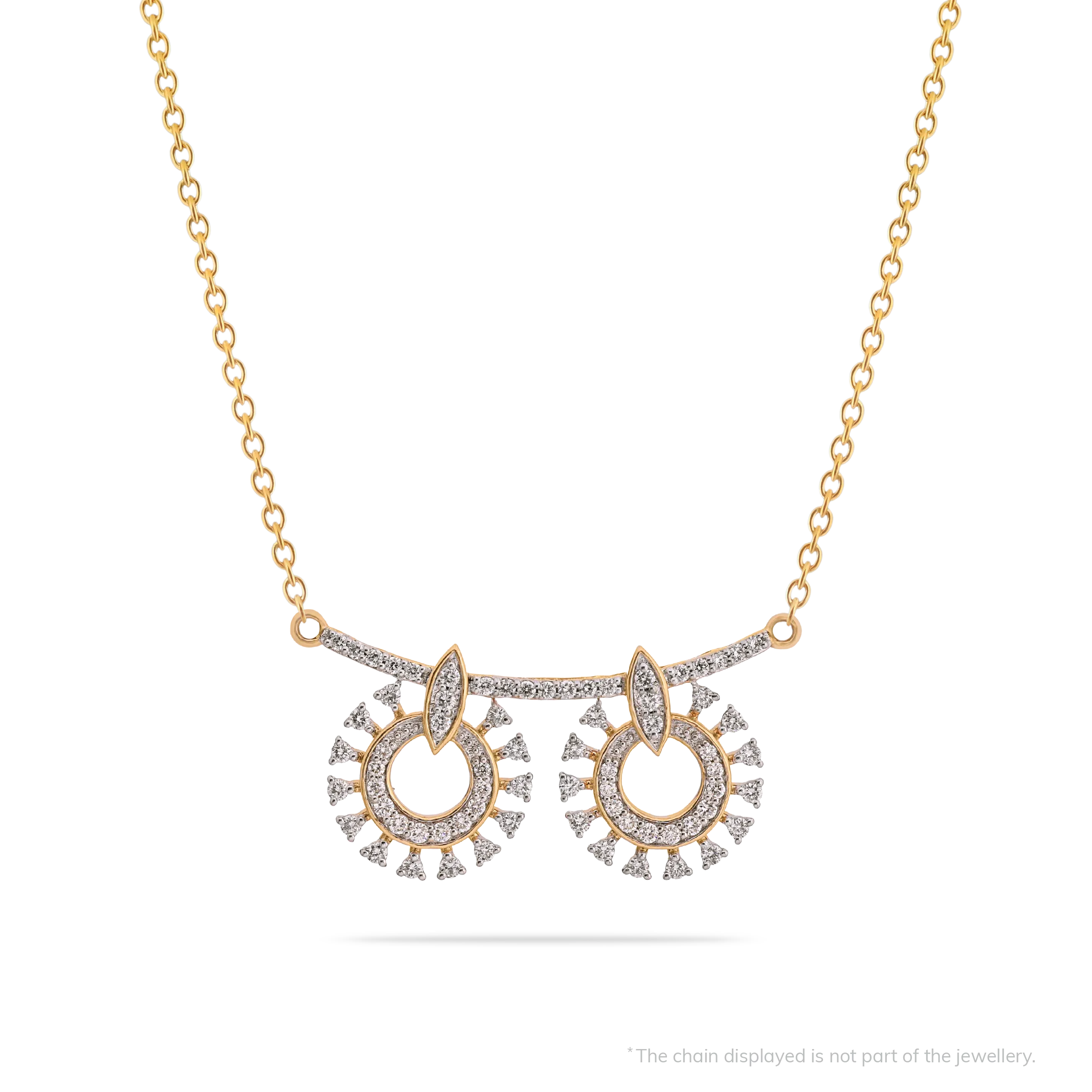
Style is where the search becomes enjoyable. A diamond mangalsutra for modern brides may be barely there, sharply geometric, softly organic, or confidently dramatic. Looking at these families of design helps you recognize what attracts you before you become distracted by individual details.
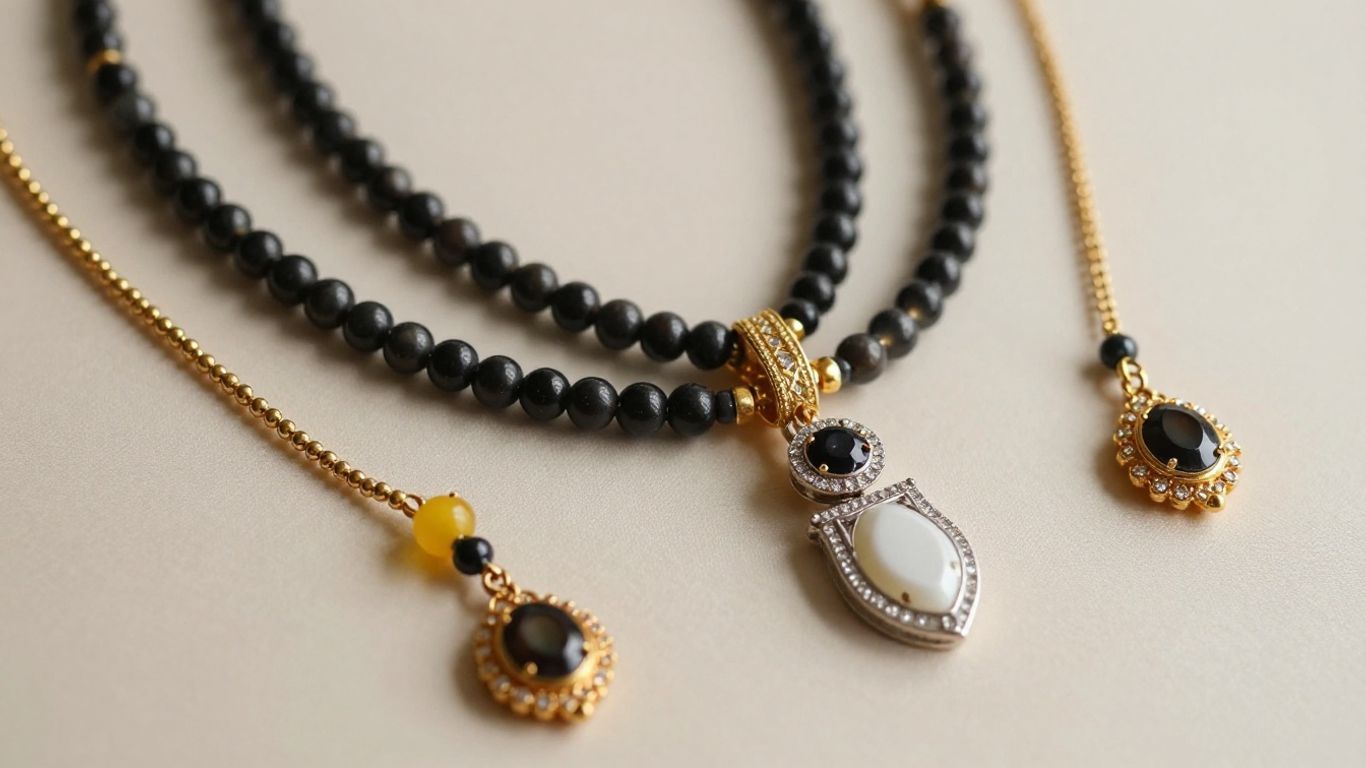
Choose the visual scale that feels comfortable first, then refine the stone and metal choices. Modern mangalsutra ideas can be useful when comparing minimalist solitaires, delicate chains, geometric pendants, and pieces intended for everyday or bridal wear.
Minimalist pendants for understated elegance
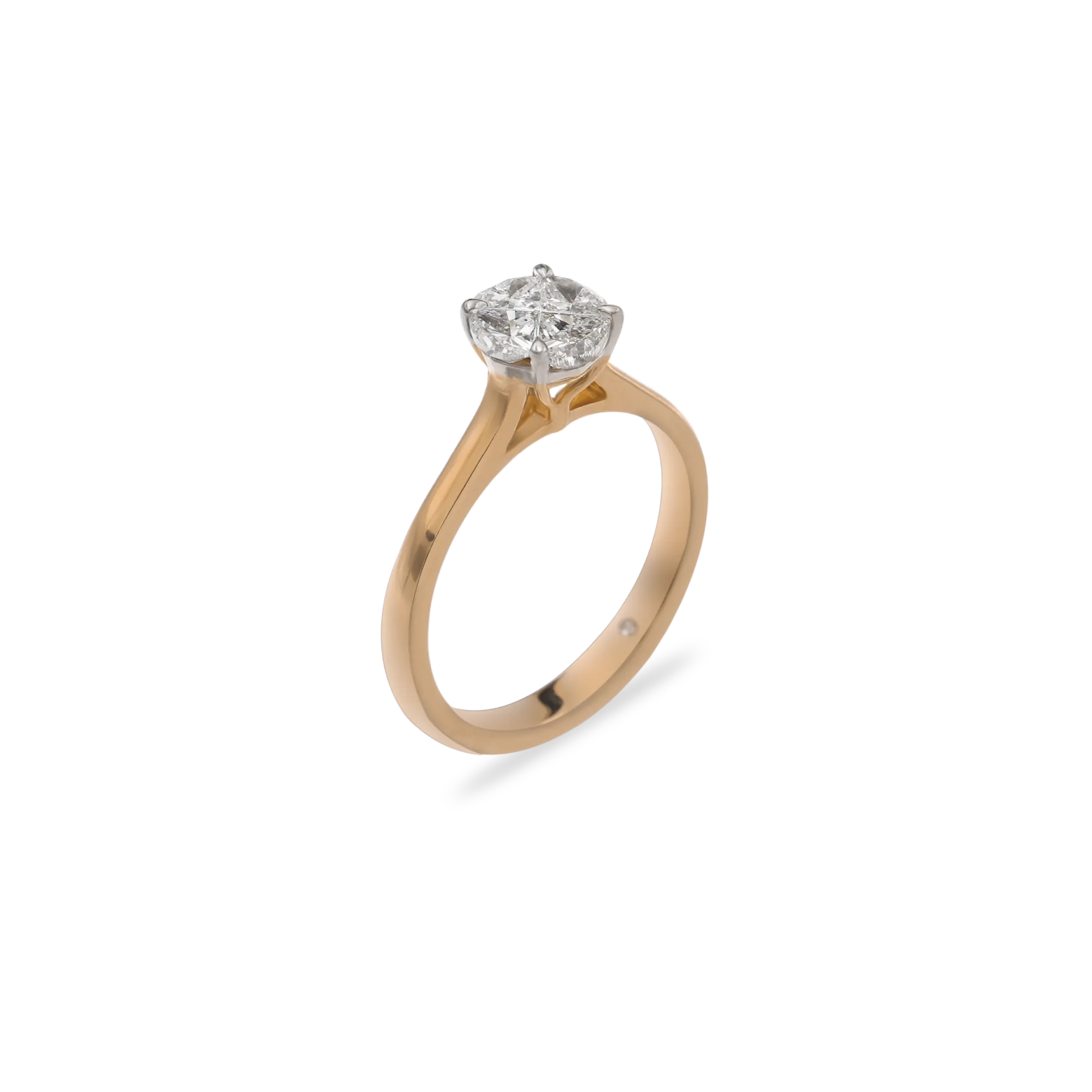
Minimalist pendants rely on proportion rather than ornament. A single diamond, a slim bezel, or a small circular motif can look refined against a simple chain and remain easy to pair with workwear. These designs are especially appealing if you usually wear small earrings or prefer jewelry that does not dominate an outfit.
Check the pendant from several angles. A clean front view is appealing, but the back, bail, and setting should also sit smoothly against the skin and clothing.
Geometric patterns for a contemporary look
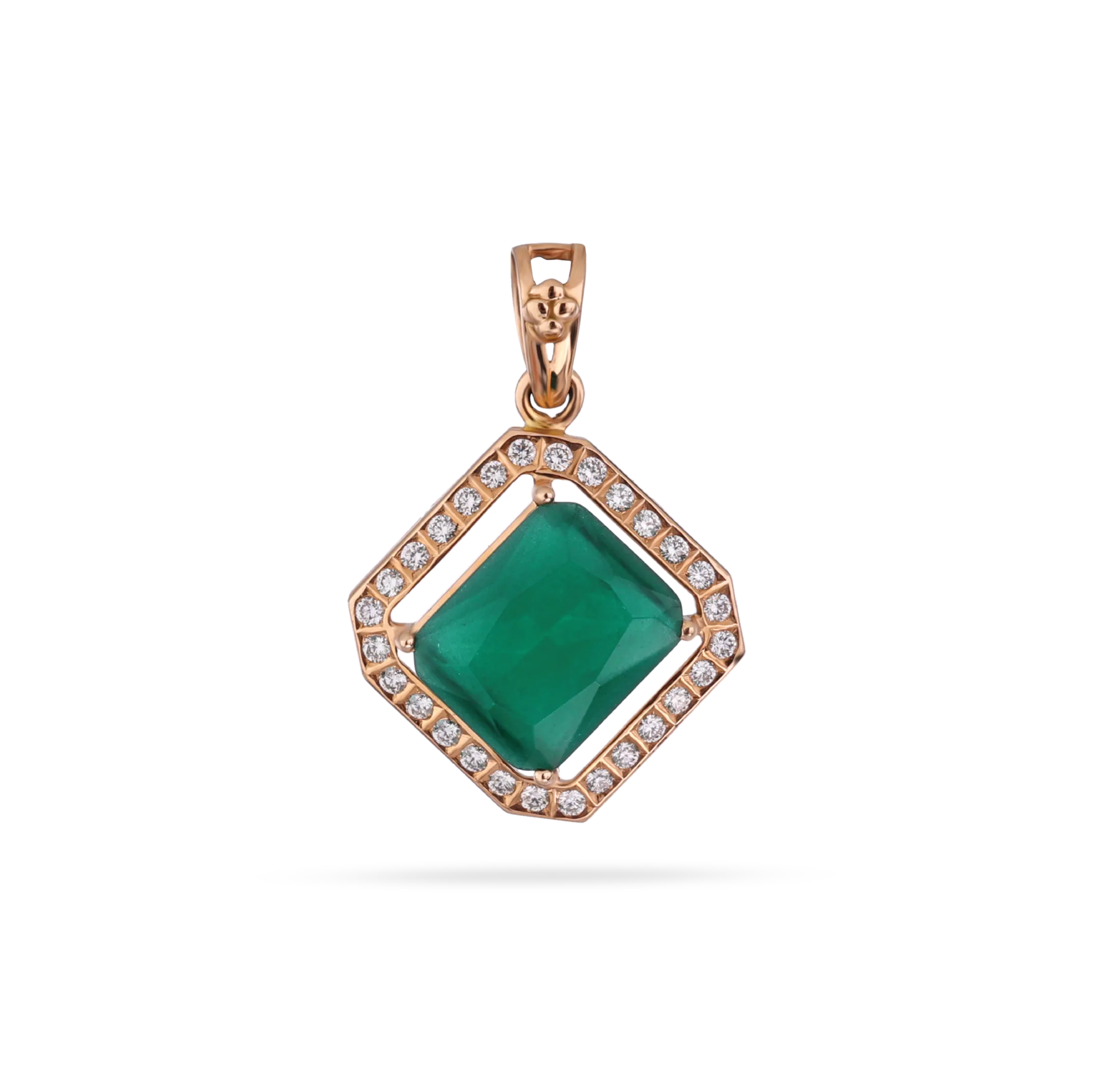
Squares, bars, circles, and abstract symmetrical forms give a mangalsutra a crisp, modern character. Geometry can also make a small pendant appear visually substantial without adding much weight. Choose softer curves if your wardrobe is romantic, or sharper lines if you favor tailored clothing.
A geometric piece works well when its scale echoes another detail in your look, such as a structured neckline, angular earrings, or a clean-edged clutch. Repetition creates harmony without requiring a perfectly matching set.
Floral and nature-inspired designs
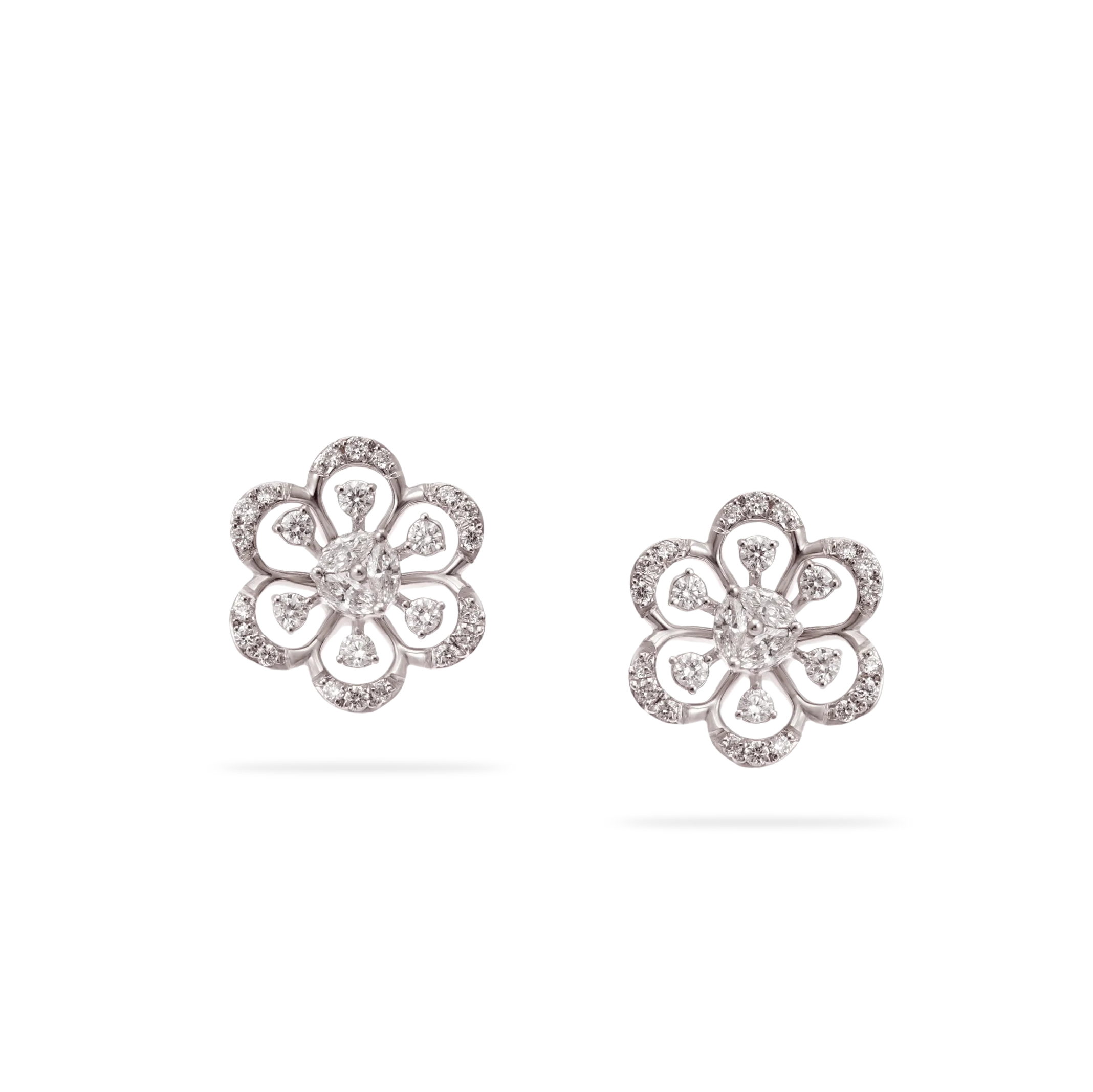
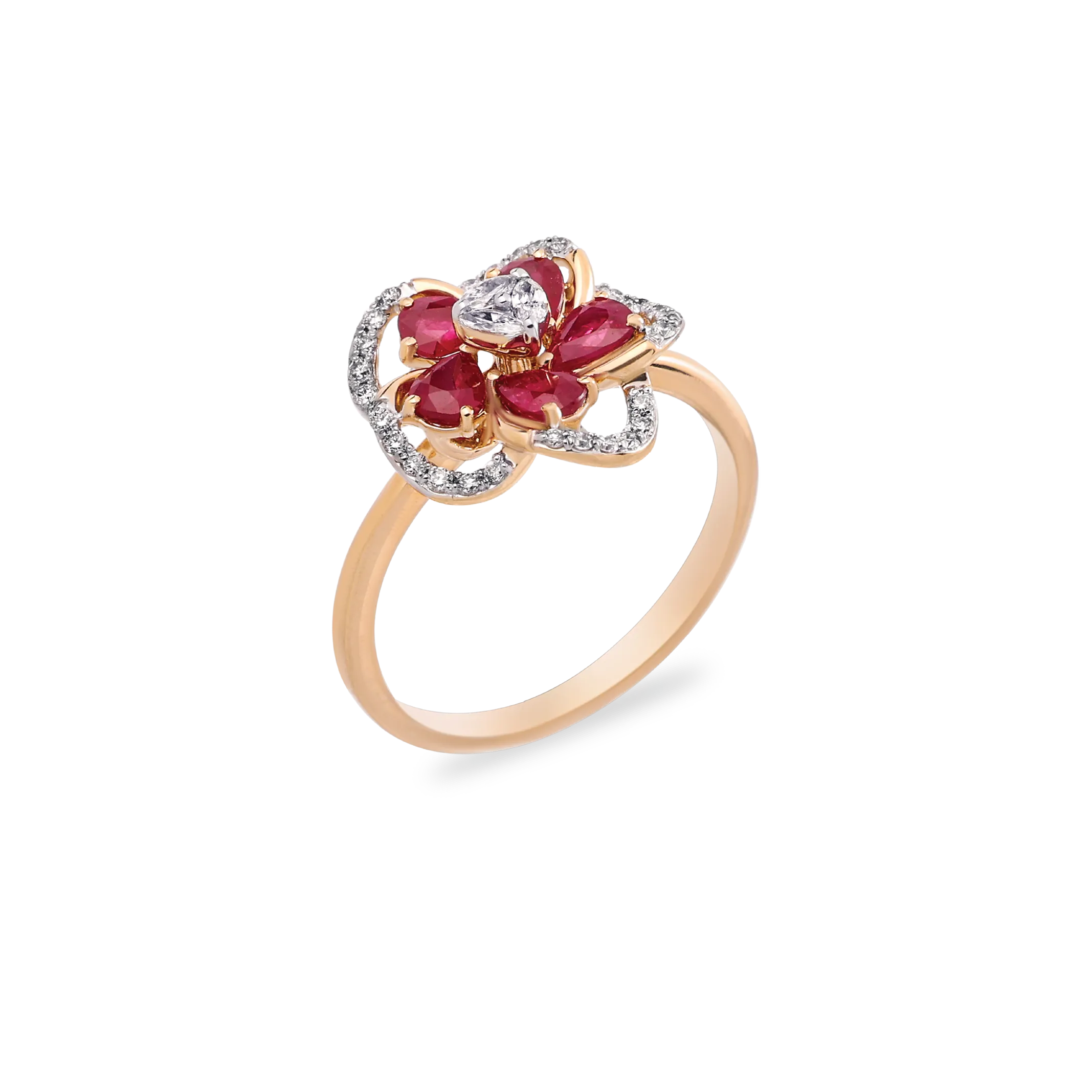
Floral motifs bring softness and movement to the traditional necklace format. Petals, leaves, vines, and subtle openwork can make the pendant feel feminine without becoming overly ornate. They suit brides who want a design with a little storytelling and a connection to natural forms.
Look closely at the spaces between the motifs. Open areas can keep a floral pendant light, while dense pavé work gives it a richer bridal presence. The best choice depends on whether you want airiness or visual fullness.
Statement mangalsutras for bridal occasions
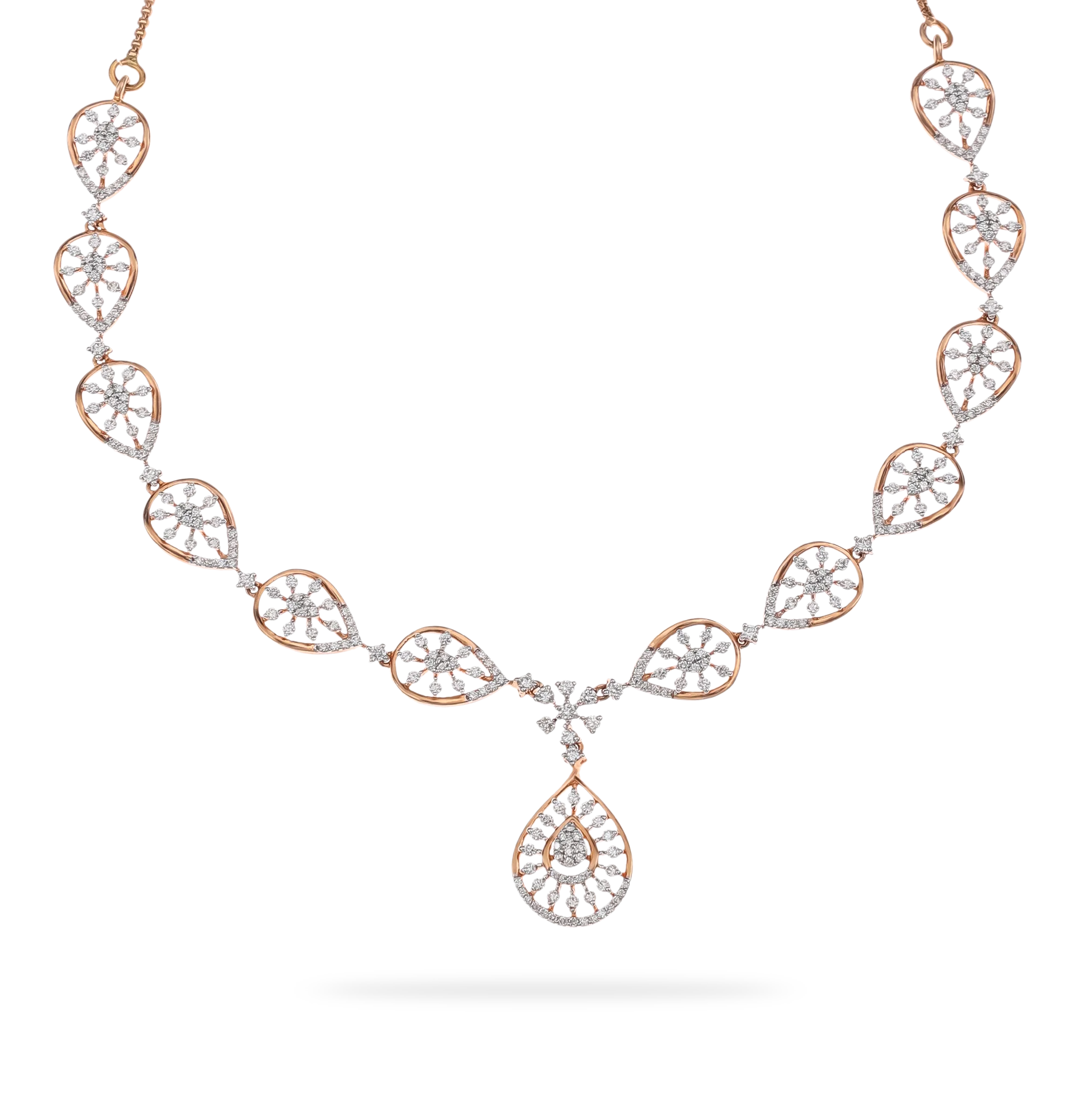
A statement mangalsutra can anchor a bridal look when the outfit and other jewelry are relatively restrained. Larger pendants, layered chains, or generous diamond details create presence in photographs and during the ceremony. Even then, the necklace should remain comfortable enough for the hours you will spend wearing it.
Before choosing a dramatic design, map out the rest of your jewelry. If the necklace is already the focal point, simpler earrings and a lighter maang tikka may create a more balanced result.
Choose the right diamond and gold details
Small technical choices change the way a mangalsutra looks and wears. Diamond shape affects sparkle and personality, while gold color changes the contrast against the black beads and your skin tone. Chain construction and metal purity influence comfort, longevity, and price, so they deserve the same attention as the pendant.
Diamond shapes, cuts, and sparkle
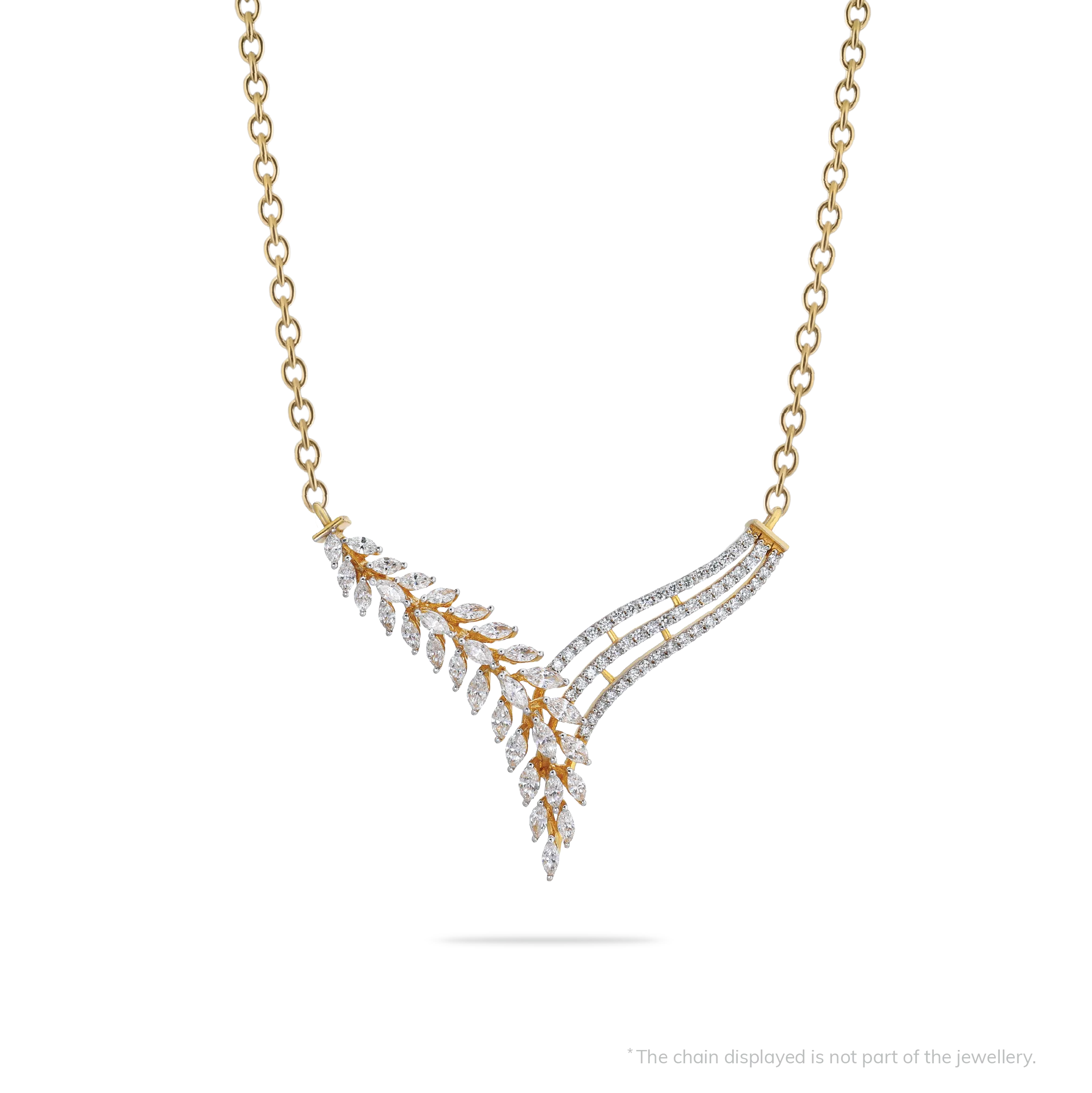
Round diamonds usually offer familiar brilliance, while pear, oval, and marquise shapes can make a pendant feel more directional or distinctive. Cut quality affects how lively a stone appears, but a larger carat weight is not automatically the most attractive choice. Look for balanced sparkle, clean setting work, and a scale that suits the pendant.
Ask whether the listed diamond information covers the center stone, the total carat weight, or both. Understanding that distinction makes comparisons between designs much clearer.
Gold colors and their visual impact
Yellow gold creates a warm, traditional contrast with black beads. White gold has a cooler, more seamless appearance around bright diamonds, while rose gold introduces a softer blush that can feel distinctly contemporary. Your existing jewelry and usual clothing colors are useful guides, but personal preference should lead.
If you wear mixed metals, a two-tone pendant may connect the mangalsutra to the rest of your collection. Otherwise, staying with one gold color often gives a smaller design a cleaner, more intentional appearance.
Chain patterns, bead placement, and proportions
The chain should support the pendant rather than compete with it. Compare single and double strands, bead size, spacing, and how the necklace rests when you turn your head or bend forward. A very delicate pendant can disappear on a heavy chain, while a substantial pendant may make a fine chain look unbalanced.
The following comparison can help narrow the visual direction before you try pieces on:
| Detail | Subtle everyday effect | More formal effect |
|---|---|---|
| Pendant scale | Small and close to the body | Larger and more noticeable |
| Bead spacing | Fine, restrained rhythm | Stronger traditional presence |
| Chain structure | Light single strand | Layered or fuller construction |
| Diamond layout | Solitaire or minimal accents | Cluster, halo, or broader pavé |
Use the table as a starting point, not a rulebook. The necklace should still feel balanced on your frame, especially when worn with the blouse or dress you have chosen.
How metal purity affects quality and price
Gold purity describes the proportion of gold in the alloy, while the remaining metals affect hardness, color, and working properties. Higher purity can carry a higher material price, but value also depends on weight, craftsmanship, diamond quality, and the construction of the clasp and setting.
Read the product details carefully and confirm the hallmark or purity information with the jeweler. A transparent explanation of what is included in the price makes it easier to compare two pieces that look similar in photographs.
Find a design that suits your lifestyle
A necklace can be beautiful and still be wrong for daily life. Consider your commute, work environment, exercise habits, clothing, and how often you remove jewelry. The ideal design should feel secure during ordinary movement, not require constant adjustment, and remain easy to clean.
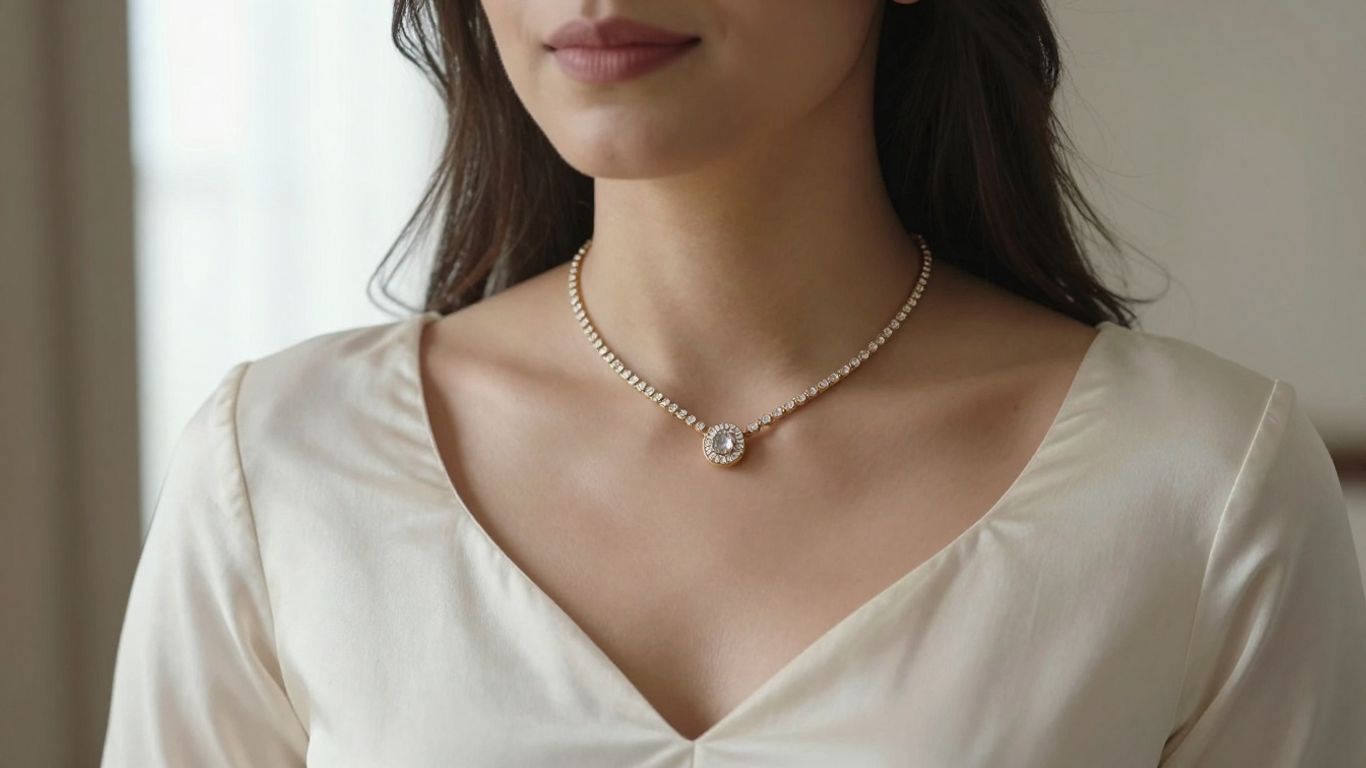
For practical guidance on chain lengths, pendant sizes, comfortable designs, and maintenance, explore daily-wear mangalsutra guidance. It is sensible to treat wearability as a design requirement rather than an afterthought.
Lightweight options for daily wear
A slim chain and modest pendant are usually easier to wear for long hours. Minimal beadwork and a low-profile setting can also reduce snagging on scarves, sweaters, and hair. If you rarely remove your jewelry during the day, even a small difference in weight becomes noticeable over time.
When comparing pieces, hold the pendant in your hand and check whether it feels balanced. A light necklace can still look elegant when the diamond placement and proportions are carefully considered.
Durable settings for active routines
Active routines call for settings with protected edges and secure stone placement. Bezel and low-profile designs may be practical for people who move frequently, travel often, or work with their hands, though every setting should be assessed by a qualified jeweler. Avoid choosing solely by appearance if the pendant will encounter regular friction.
For everyday use, prioritize a well-finished bail, sturdy links, and a clasp that closes decisively. These details are easy to overlook in a product photograph but matter in real wear.
Versatile styles for work and special events
A versatile mangalsutra often has a medium-scale pendant and a restrained chain. It can sit neatly over a blouse, disappear beneath a high neckline, or add polish to a dress without looking like an occasion-only jewel. A removable pendant or adjustable length can increase that flexibility.
For a small wardrobe, choose a gold color that already appears in your earrings, watch, or bracelets. The necklace will then feel integrated rather than reserved for one particular outfit.
Comfortable lengths and secure closures
Necklace length affects both comfort and visibility. A shorter style can suit open necklines and professional clothing, while a longer chain may work better with traditional outfits or layered bridal jewelry. Try sitting, walking, and turning your head while wearing a sample if possible.
Before purchase, check the closure with one hand and inspect the extension chain or adjustment points. A secure fit should feel reassuring without pressing into the neck or shifting the pendant to one side.
Match your mangalsutra to your bridal style
The necklace should belong to the whole bridal composition, not compete with it. Fabric, embroidery, neckline, hairstyle, and the scale of your other jewelry all affect how the pendant will read. Start with the mood of the outfit, then select a design that supports it.
Designs for traditional wedding looks
Traditional silk, brocade, and richly embroidered outfits can carry a mangalsutra with stronger bead definition or a more substantial gold pendant. Classic proportions often feel especially natural when paired with heritage earrings and a traditional hair arrangement. A diamond accent can add light without changing the overall character.
If your ceremony includes regional customs, confirm the preferred bead arrangement, length, or pendant form with your family or stylist. Respecting those details can make the modern elements feel more intentional.
Pairing a mangalsutra with contemporary outfits
With a clean saree, pantsuit, gown, or other contemporary outfit, a compact pendant can act as a personal signature. Geometric designs and white or rose gold may blend easily with modern tailoring, while yellow gold can provide a warm point of contrast. The key is to let the necklace have enough visual space.
A guide to modern mangalsutra styling offers additional ideas for pairing contemporary designs with everyday wardrobes and special occasions. Keep the rest of the look edited when the pendant has a strong silhouette.
Coordinating it with other bridal jewelry
Coordination does not mean every piece must match exactly. Instead, repeat one or two elements: a gold color, diamond shape, finish, or motif. If the mangalsutra has a prominent pendant, choose earrings that frame the face without adding another competing centerpiece.
Consider the order in which jewelry will be worn during the ceremony. A necklace that layers comfortably with the bridal haar or other chains will look more composed and be easier to manage throughout the event.
Selecting a design that complements your neckline
A V neckline can echo a pointed or elongated pendant, while a round neckline often works well with circular or compact forms. High necklines may call for a longer chain or a pendant that sits clearly above the fabric. These are styling suggestions, not strict rules.
Take a quick photograph in the actual blouse or dress if you can. Seeing the necklace against the final neckline often reveals whether the scale, length, and contrast feel right.
Shop smart for a diamond mangalsutra
Shopping well means evaluating the necklace beyond its first impression. Ask for clear information about the diamonds, gold, craftsmanship, fit, and after-sales support. A calm comparison is more useful than rushing toward the largest stone or most elaborate pendant.
Comparing craftsmanship, certifications, and warranties
Look for clearly stated diamond details, metal purity, hallmark information where applicable, and a certificate when one is provided for the stone or piece. Examine the symmetry of the pendant, the smoothness of its edges, and the finish inside the chain. Warranty terms should explain what is covered and for how long.
A jeweler’s written documentation should match the piece you receive. Keep invoices, certificates, and service records together so future inspections or repairs are straightforward.
Understanding diamond and gold pricing
The final price may include gold weight, diamond carat weight and quality, labor, design complexity, taxes, and any customization. Two pendants with similar dimensions can differ substantially because their stone specifications and construction are different. Ask for a breakdown rather than relying on a single headline price.
For broader context on comparing styles, metals, and diamond jewelry choices, diamond jewelry buying guidance can help you frame the questions you want to ask. A transparent quote makes the purchase feel considered rather than confusing.
Checking fit, customization, and return policies
Confirm the available lengths, bead pattern, pendant dimensions, and whether the clasp or chain can be adjusted. If you are ordering remotely, check how measurements are described and whether a virtual consultation or in-person fitting is available. Custom work may have different timelines and return conditions.
Read the return policy before placing the order, particularly for personalized pieces. It should be clear who pays for resizing or alterations and what happens if the delivered fit differs from the stated measurements.
Caring for your mangalsutra over time
Remove the necklace before swimming, bathing, exercising, or applying perfumes and lotions. Store it separately in a soft pouch so the chain and pendant do not rub against harder jewelry. Wipe it gently with a clean, dry cloth after wear.
Arrange periodic professional checks for the clasp, links, and diamond settings. With simple habits and timely maintenance, a meaningful mangalsutra can remain part of your wardrobe for many years.
Conclusion
Choosing a diamond mangalsutra for modern brides is ultimately a personal exercise in balance: preserve the details that matter to your tradition, then make room for your own taste, routine, and future wardrobe. When comfort, proportion, quality, and meaning come together, the necklace becomes more than a wedding accessory—it becomes a piece you can keep choosing, day after day.
Frequently Asked Questions
What makes a mangalsutra suitable for modern brides?
A modern mangalsutra usually combines familiar cultural elements with updated proportions, lighter construction, contemporary motifs, or restrained diamond details. Suitability depends on the bride’s customs, style, comfort, and intended frequency of wear.
Should I choose a minimalist or statement mangalsutra?
Choose a minimalist style if you want everyday versatility and a low-profile feel. A statement design may be better for a grand bridal outfit or occasional wear, especially when the rest of your jewelry is intentionally simple.
Which gold color is best for a diamond mangalsutra?
Yellow, white, and rose gold can all work well. Consider your existing jewelry, wardrobe colors, skin tone, and whether you prefer warm contrast or a cooler, more seamless appearance around the diamonds.
What diamond shape works best in a mangalsutra pendant?
Round shapes offer familiar brilliance, while oval, pear, and marquise diamonds create a more distinctive silhouette. The best choice depends on the pendant design, desired sparkle, and scale of the necklace.
How do I choose the right mangalsutra length?
Think about your neck, preferred necklines, pendant size, and whether you will layer the necklace with other bridal pieces. Try a similar length while sitting and moving to check comfort and visibility.
Can I wear a diamond mangalsutra every day?
Yes, provided the design suits regular movement and is cared for properly. Lightweight construction, secure closures, protected settings, and a comfortable length are especially useful for daily wear .
What should I check before buying one?
Review diamond and gold details, craftsmanship, measurements, certification or hallmark information, warranty coverage, customization terms, delivery timing, and the return policy. Keep all purchase documents for future care or service.
Bridal mangalsutra styles: A guide to choosing the perfect design for your wedding
10 minute read
Related blogs:
September 17, 2026
How to Choose the Perfect Diamond Necklace for Bride on Her Wedding Day
Read More
September 17, 2026
Wedding jewellery for modern brides: how to choose timeless pieces with contemporary style
Read More
September 17, 2026
Wedding jewellery for traditional brides: A complete guide to choosing timeless bridal pieces
Read More
September 17, 2026
Wedding jewellery for minimalist brides: A complete guide to choosing timeless pieces
Read More









.webp)
.webp)