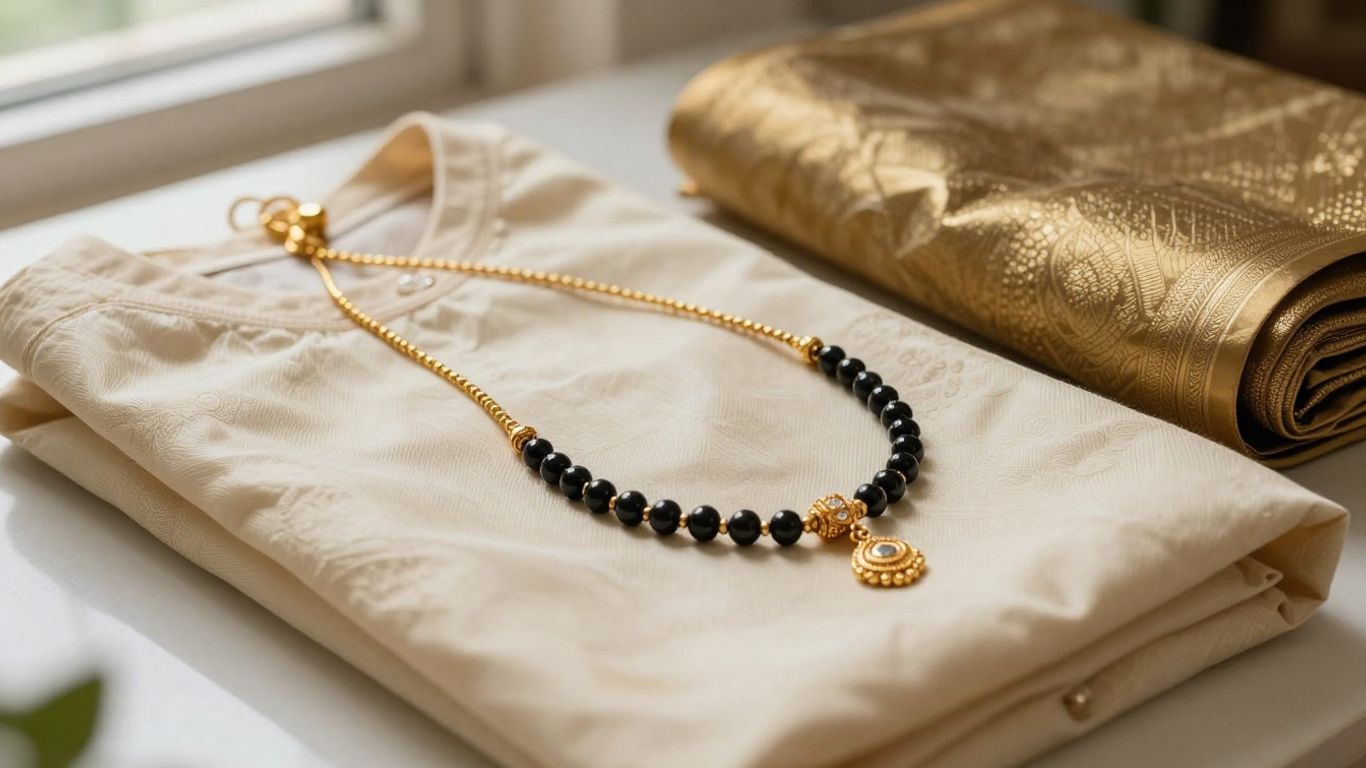
How to choose an elegant mangalsutra for daily wear
August 18, 2026 | 10 minutes read
Key Takeaways
An elegant mangalsutra for daily wear should feel meaningful, comfortable, and easy to style. Use the design, materials, fit, and seller information together rather than judging a piece by appearance alone.
- Choose a pendant and chain that suit your daily clothes and routine.
- Prioritize lightness, smooth edges, secure fittings, and a comfortable length.
- Compare metal tones, bead quality, stone settings, and maintenance needs.
- Check purity, hallmarking, certification, returns, warranties, and resizing support.
- Buy from a trusted jeweler whose product information is clear and verifiable.
Understand what makes a mangalsutra suitable for everyday use
A mangalsutra for everyday wear needs to balance personal meaning with practical design. It should sit comfortably through work, errands, travel, and relaxed evenings without feeling out of place. The best choice is rarely the most elaborate one; it is the piece you can wear naturally and often. Start by considering how its length, weight, and visual detail fit into your actual routine.
Balance traditional symbolism with modern styling
For many wearers, the black beads and gold elements remain central to a mangalsutra’s identity, even when the silhouette becomes slimmer or more contemporary. Modern styling can appear through a small pendant, a clean geometric outline, mixed metal tones, or a restrained row of beads. The result should still feel personally and culturally meaningful rather than like an ordinary necklace with decorative beads added to it.
If you want visual inspiration before comparing individual pieces, browse these modern mangalsutra ideas. They can help you notice which details feel current while keeping the familiar character of the form. Try to separate a passing trend from a design you would still enjoy wearing several years from now.
Choose a practical chain length and pendant size
Chain length changes where the pendant rests and how it interacts with a neckline. A shorter style can sit close to the collarbone and work neatly with office shirts, crew necks, and simple dresses, while a longer chain may suit sarees, kurtas, and layered styling. The pendant should be proportional to the chain and your frame, not so large that it pulls forward or catches on clothing.
Before buying, measure a necklace you already enjoy wearing and compare that measurement with the product’s stated length. Also check whether the listed length includes the pendant or refers only to the chain. These small distinctions prevent an online purchase from feeling unexpectedly short or heavy.
Consider comfort for long hours of wear
A daily piece should have a smooth reverse side, rounded edges, and a clasp that is easy to fasten without being flimsy. Weight matters too, especially if you are accustomed to very light jewelry or plan to wear the mangalsutra for most of the day. Comfort over long hours is a better test than a quick try-on in front of a mirror.
Pay attention to how the pendant moves when you bend, walk, or reach forward. A design that stays reasonably centered is often more comfortable than one that constantly twists. If you have a sensitive neck, examine the finish and ask whether any part of the piece may rub against the skin.
Match the design to your daily wardrobe
Think about the clothes you reach for most often. A small solitaire-style or bar-shaped pendant may blend with neutral workwear, while a more detailed motif can bring interest to plain cottons and festive Indian outfits. If your wardrobe includes both Western and traditional clothing, choose a shape with enough restraint to transition between the two.
Color also affects versatility. Yellow gold feels warm and familiar, white gold creates a cooler, quieter effect, and rose gold can add softness. The right tone is the one that works with your existing earrings, bangles, watches, and other necklaces rather than forcing you to rebuild your jewelry wardrobe.
Explore elegant mangalsutra designs for different personal styles
There is no single definition of elegance in a mangalsutra. Some people prefer a nearly invisible daily accent, while others want a pendant that becomes the focal point of an outfit. Looking at designs by visual character makes the choice less confusing than searching only by price or carat weight. Consider how much shine, movement, and symbolism you want the necklace to carry.
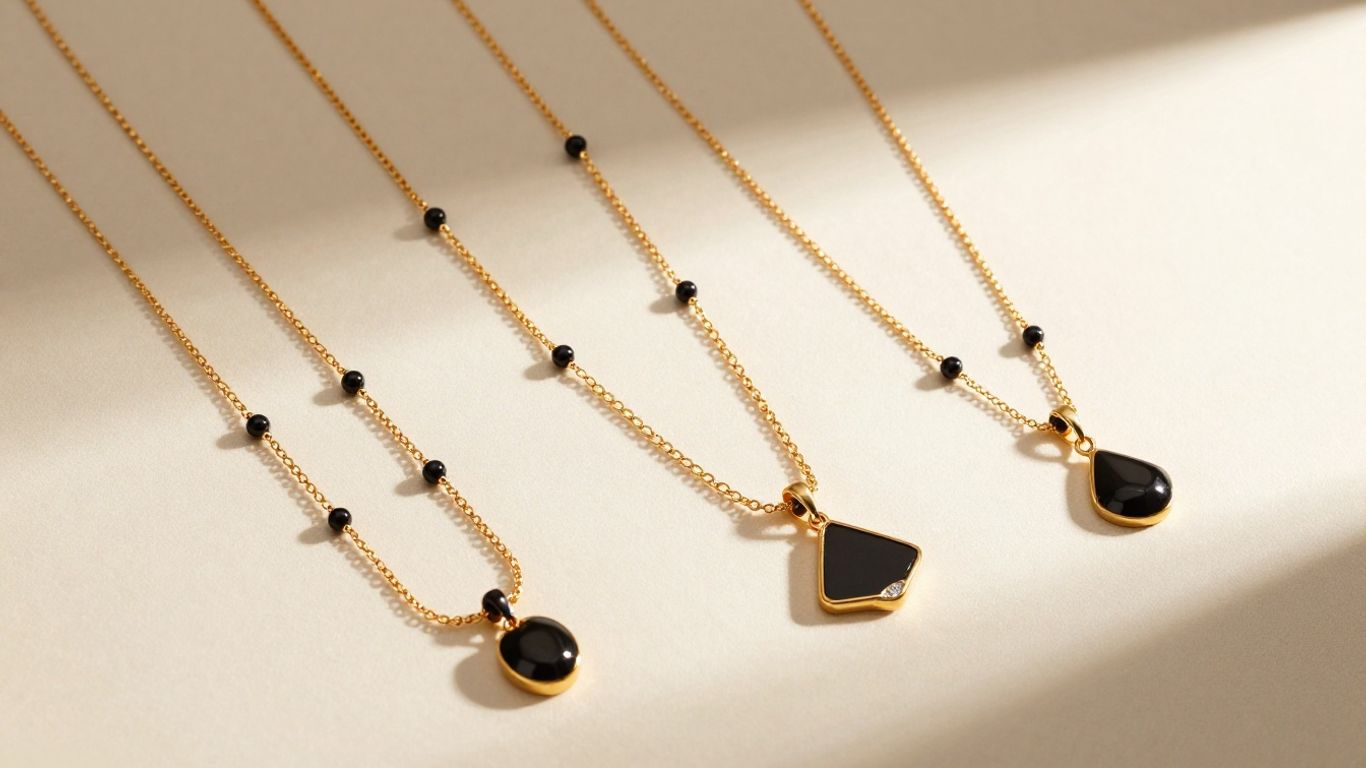
A useful starting point is the amount of attention you want the piece to attract. From there, compare the pendant’s outline, the placement of black beads, and the way the chain frames your neckline.
Minimal pendants for understated elegance
Minimal designs often use a tiny diamond, a slim bar, a round disc, or a simple symbolic shape. They suit wearers who want the mangalsutra to remain part of an outfit instead of dominating it. Because there are fewer decorative elements, the quality of proportion and finishing becomes especially visible.
A restrained pendant can also be a practical first choice if you wear other jewelry every day. It leaves room for small hoops, a watch, or a delicate bracelet without creating too many competing points of shine. Look for a chain that is fine but not fragile and a pendant with enough substance to remain balanced.
Diamond and bezel-set designs for a refined look
Diamonds can add sparkle without requiring a large pendant. A bezel setting, which surrounds the stone with metal, creates a neat outline and a smooth surface that is often well suited to daily movement. Other settings may offer more visible brilliance, but they should be checked carefully for exposed edges or raised points that could catch on fabric.
The Alia Mangalsutra is described as an 18K solid gold design with five bezel-set diamonds, four black beads, and a total diamond weight of 0.5 carats. It is available in yellow, white, or rose gold , so it offers a useful example of how a traditional bead arrangement can be paired with a more refined, structured pendant treatment. When comparing similar styles, focus on the setting security and dimensions rather than sparkle alone.
Geometric patterns for a contemporary appearance
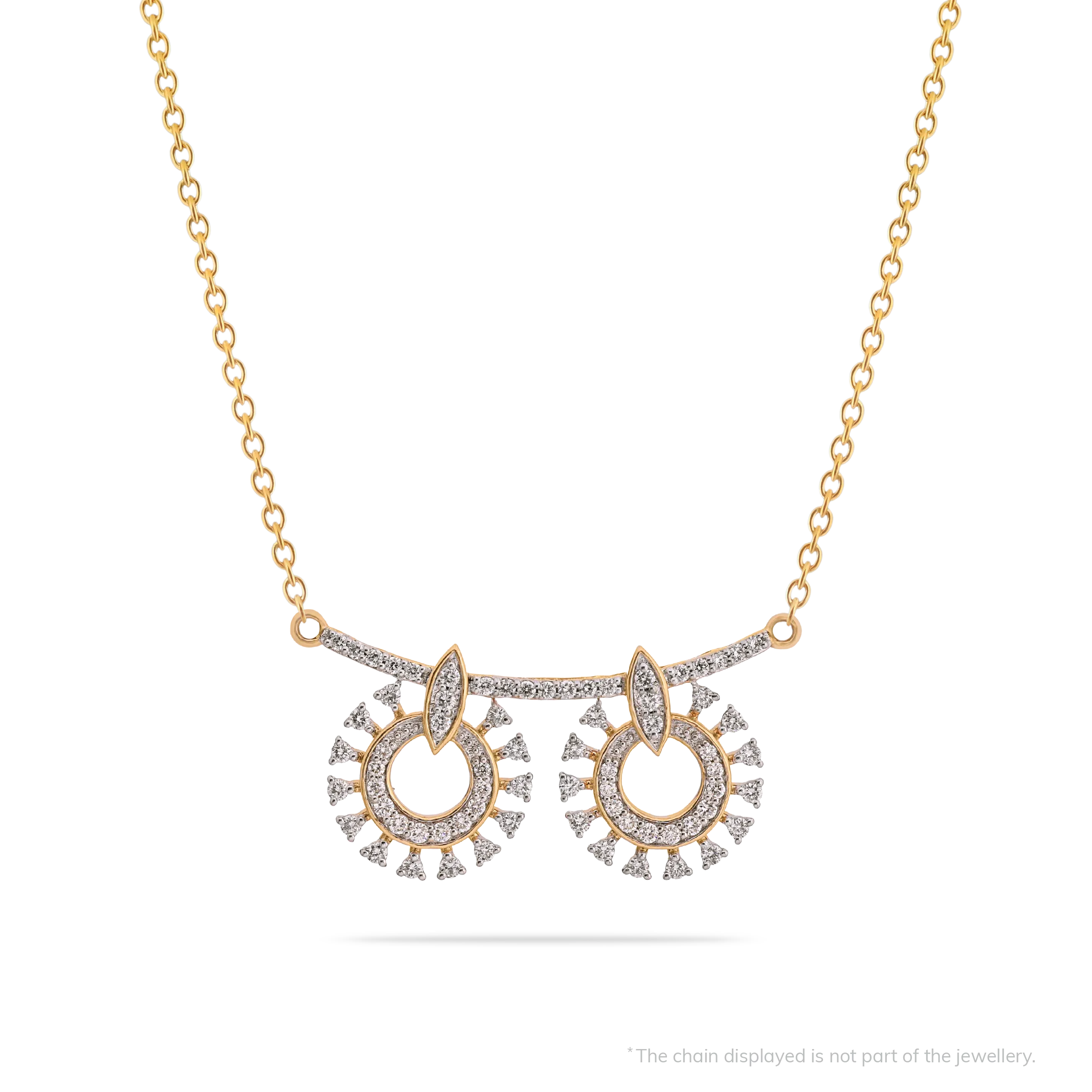
Circles, squares, bars, triangles, and linked forms can give a mangalsutra a crisp modern profile. These shapes work particularly well with simple necklines because their clean edges create definition without requiring elaborate ornament. A geometric pendant may also complement contemporary accessories more easily than a highly ornate motif.
Check the scale of the geometry before choosing. Very fine openwork can look delicate but may need more careful handling, while a solid shape may feel sturdier and visually stronger. The most wearable option usually has enough detail to express your style but not so much that it competes with every outfit.
Classic black-bead designs with modern details
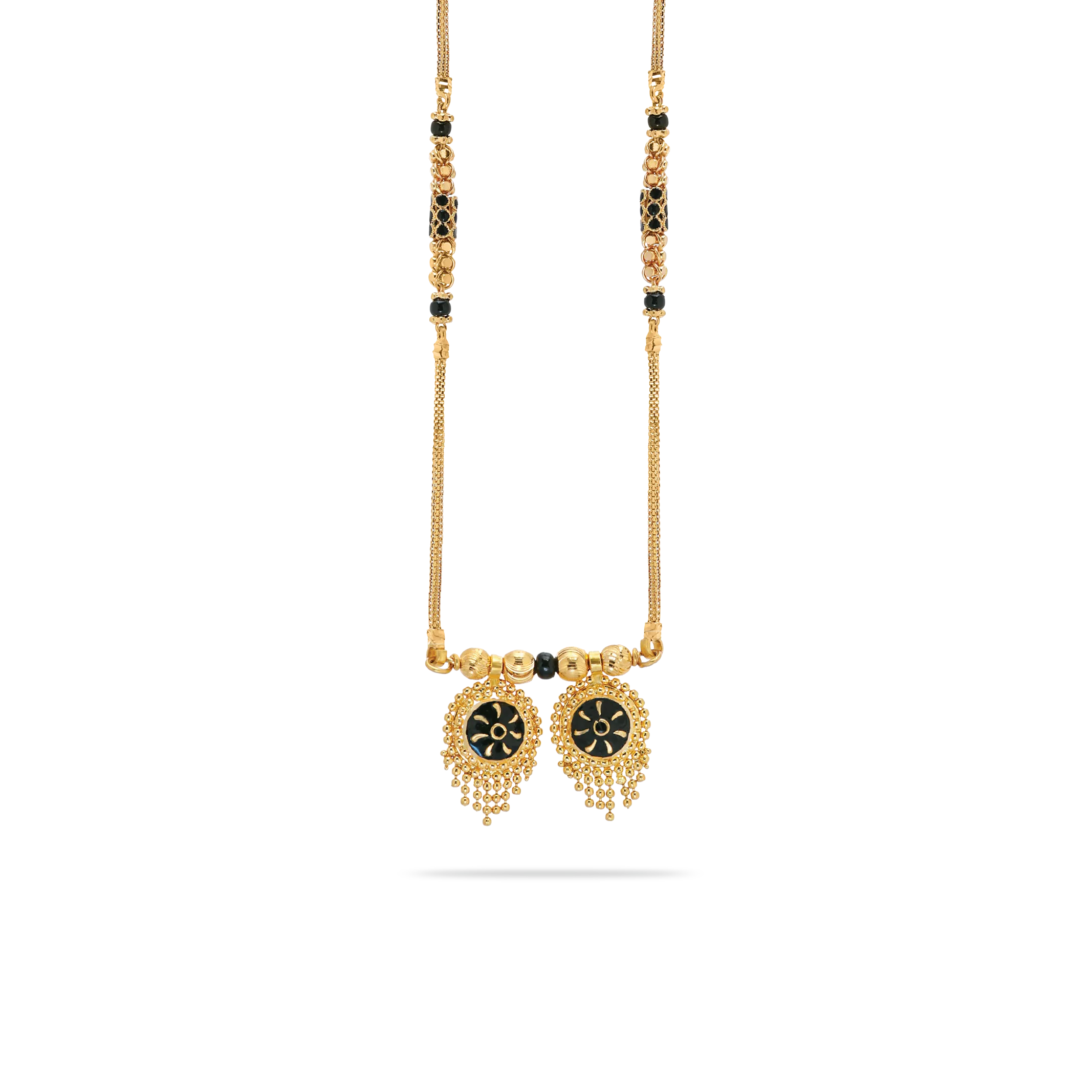
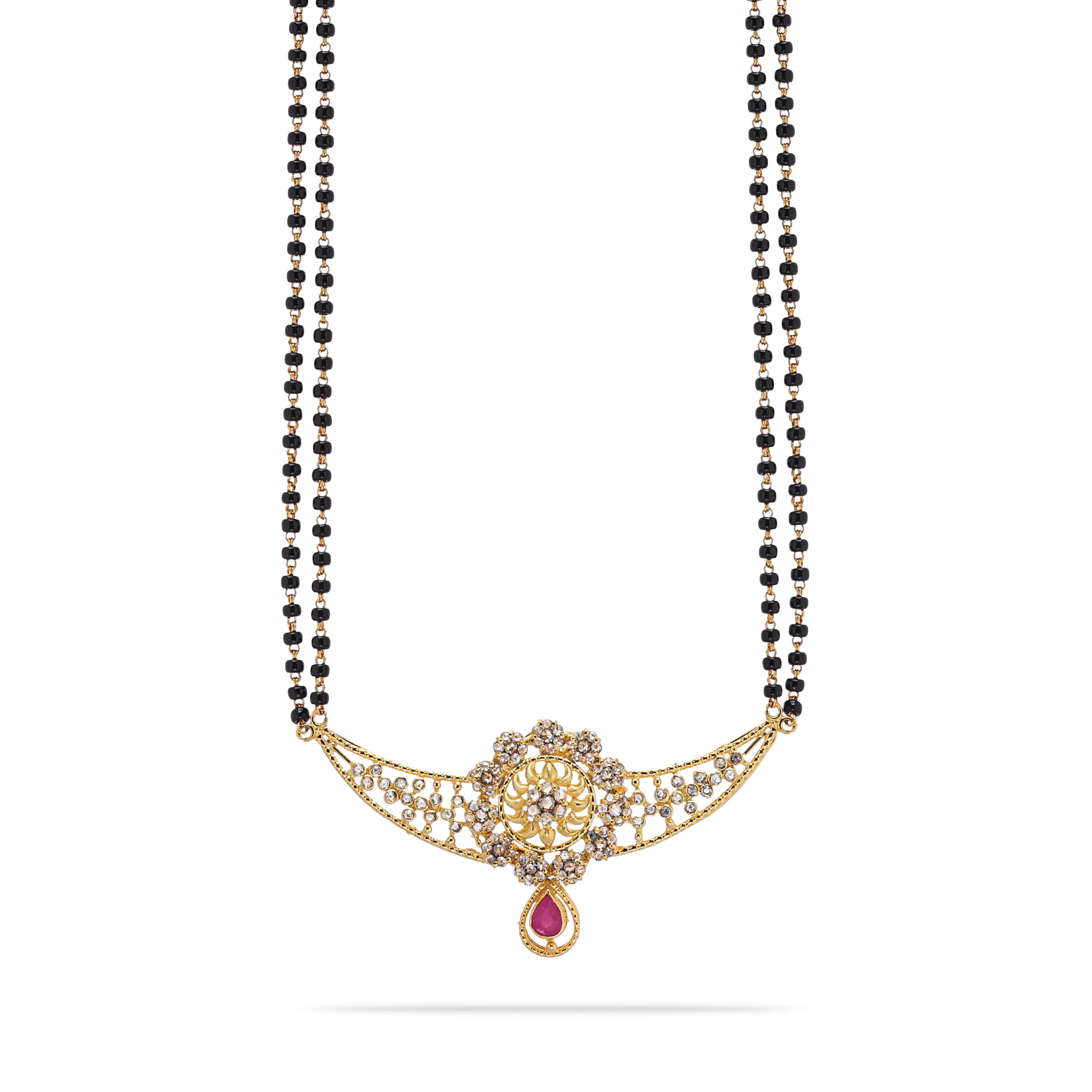
A classic black-bead arrangement can remain visually current when paired with a slimmer chain, a smaller central pendant, or a polished metal frame. Some designs keep the beads concentrated near the pendant, creating a lighter appearance along the sides of the neck. Others distribute them more evenly for a distinctly traditional look.
Compare how the beads are spaced and connected, not just how they appear in a product photograph. The arrangement should feel intentional and sit evenly when worn. Small changes in bead size, gold separators, and pendant width can make a familiar design look either understated or ceremonial.
Select the right materials and metal finish
Materials affect appearance, weight, care, and cost, so they deserve as much attention as the pendant design. Gold color is only one part of the decision; purity, setting construction, bead quality, and the wearer’s skin needs matter as well. A beautiful finish is more satisfying when it remains easy to maintain. Read the specifications slowly and compare like with like.
Compare yellow gold , white gold , and rose gold
Yellow gold has a warm, traditional presence and pairs naturally with many Indian jewelry pieces. White gold has a cooler appearance that can make diamonds and other clear stones look especially crisp. Rose gold brings a pinkish warmth that feels softer and can complement both neutral and romantic color palettes.
The metal tone should support your existing jewelry and clothing, but personal preference matters more than strict matching. If you frequently mix metals, a pendant with two tones can bridge the gap. Also ask about the surface finish and any care or refinishing requirements associated with the chosen metal.
Understand the role of diamond and gemstone settings
A stone’s appearance depends on more than its size. The setting determines how securely it is held, how much light reaches it, and whether the edges are protected during daily wear . Bezel settings offer a smooth metal border, while prongs may create more exposure and sparkle but require careful inspection.
For colored gemstones, consider whether the stone’s hue works with your wardrobe and whether the jeweler provides clear information about its identity and treatment. A smaller, well-set stone can be more practical than a larger one with a setting that feels vulnerable. Ask to see the piece from the side as well as from the front.
Choose durable black beads and secure fittings
Black beads should be consistent in size, smoothly finished, and firmly attached to the chain or connecting elements. Uneven holes, rough surfaces, or loose separators can lead to discomfort and may signal weaker construction. The central area deserves particular attention because it receives the most movement and contact with clothing.
When comparing bead arrangements, a short checklist keeps the evaluation focused:
- Look for even bead spacing and a consistent surface finish.
- Check that gold separators do not move excessively along the chain.
- Test whether the clasp closes cleanly and stays shut with gentle movement.
- Inspect the pendant connection for gaps, thin loops, or sharp edges.
After this check, consider how the fittings feel in your hand. A secure piece should not feel stiff or awkward, but it should give the impression that the chain, beads, and pendant are working as one construction.
Consider skin sensitivity and maintenance needs
If your skin reacts easily to jewelry, ask about the metal composition, plating, and areas that touch the neck. A smooth finish helps, but it does not replace accurate material information. You may also prefer a design with fewer textured surfaces, since those areas can hold lotion, dust, or moisture.
Maintenance is usually straightforward when you keep the mangalsutra away from harsh chemicals and store it separately to limit scratches and tangling. Wipe it gently after wear and follow the jeweler’s instructions for cleaning stones and metal. If the design is plated or includes delicate settings, confirm whether professional care is recommended.
A broader diamond jewelry trends guide can be useful when you are comparing stone shapes and settings across jewelry categories, provided you bring the same questions back to the mangalsutra itself: how secure is the setting, how comfortable is the profile, and how well does it suit regular wear?
Find the right fit for your lifestyle
A mangalsutra becomes genuinely useful when it fits the rhythm of your life. Someone who spends long hours at a desk may want a very different profile from someone who commutes, travels, or works with children. Clothing, movement, and layering habits all influence what feels effortless. Think through a normal week rather than an idealized occasion.
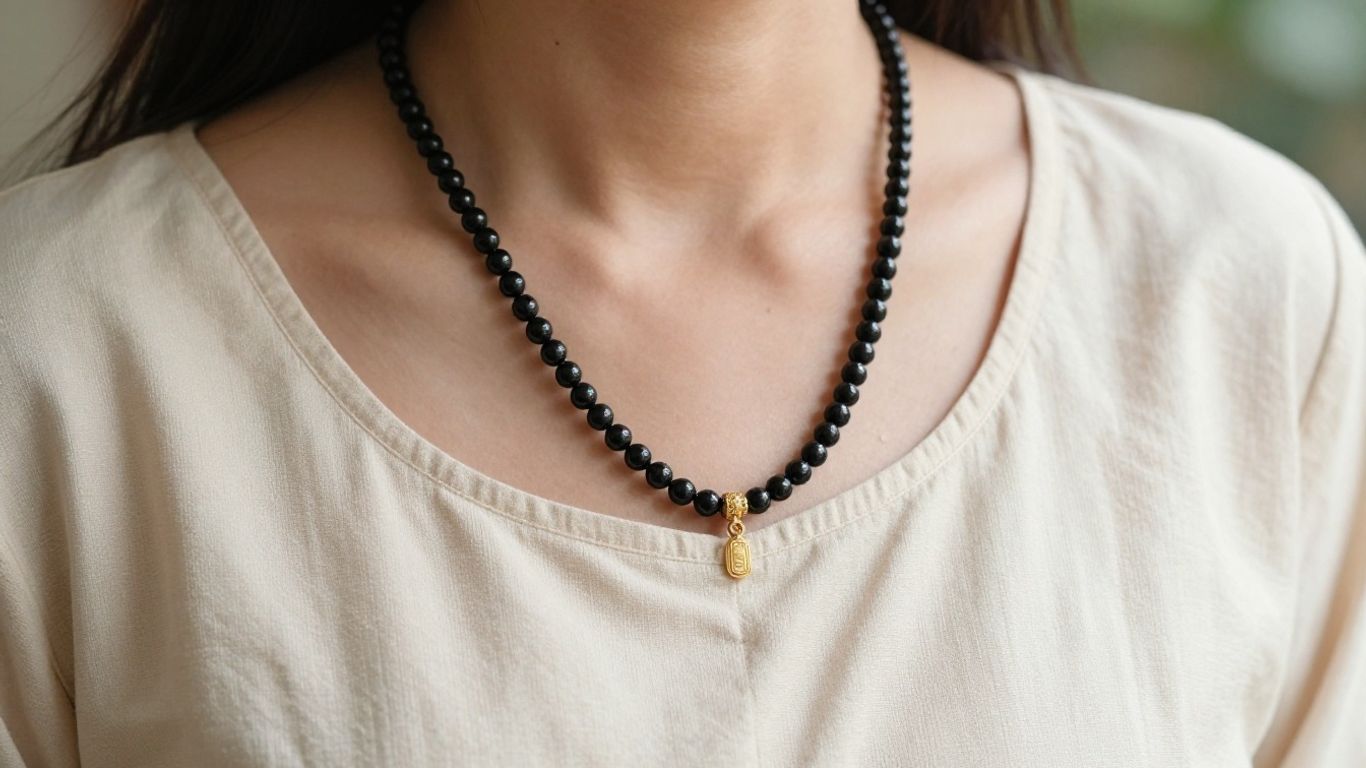
The most versatile choice is not necessarily the smallest. It is the one that stays comfortable, looks intentional, and does not require constant adjustment as you move between settings.
Designs for office and professional outfits
For office dressing, look for a pendant that sits neatly against the neckline and does not make noise when you move. Slim chains, compact motifs, and controlled sparkle usually work well with blouses, button-down shirts, knit tops, and tailored dresses. A design with a smooth profile is less likely to catch on a scarf or jacket.
If your workplace style is understated, choose a piece that adds polish without becoming the first thing people notice. White gold or a small diamond detail may feel discreet, while yellow gold can bring warmth to a mostly neutral wardrobe. Try the necklace with the necklines you wear most often before making a final decision.
Lightweight options for active daily routines
An active routine calls for a chain and pendant that do not tug when you walk, bend, or reach. Smaller beads and a lighter pendant can reduce movement, though the chain still needs enough strength for regular use. A secure clasp matters particularly when the necklace is exposed to frequent motion.
Consider when you would remove the piece as well. If you do exercise, swim, or sleep in your jewelry, ask the jeweler how those habits may affect the metal, beads, or settings. Removing a necklace for activities that could strain it is often the simplest way to extend its life.
Versatile styles for casual and festive wear
A medium-scale pendant can move between a cotton kurta, a plain top, and a festive silk outfit without appearing too casual or too formal. Details such as a polished gold frame, a few carefully placed diamonds, or a slightly richer bead arrangement add flexibility. You can also change the rest of your jewelry to shift the mood of the same mangalsutra.
For everyday inspiration, collections of daily wear mangalsutras commonly include lightweight chains, dainty pendants, and designs intended to work with both traditional and contemporary clothing. Use those categories as a starting point, then compare exact measurements and materials rather than relying on the label “daily wear .”
Features to look for when layering with other necklaces
Layering works best when each necklace has a clear position and visual role. A short mangalsutra can sit near the collarbone with a longer chain below it, while a more prominent pendant may need to stand alone. Avoid stacking pieces with similarly sized pendants that overlap and twist.
Look for a chain length that creates separation, a pendant with a clean outline, and beads that do not snag on neighboring chains. If you often layer jewelry, consider a design with a quieter pendant so the black-bead detail remains visible without making the neckline feel crowded.
Evaluate quality, safety, and long-term durability
Good craftsmanship is visible in small details that product photographs may not capture. Examine the points where parts meet, the smoothness of the metal, and the way the necklace behaves when handled. Durability is not only about using more metal; it is also about thoughtful proportions and reliable connections. These checks are worth making whether you shop in person or online.
Check the chain, clasp, and pendant construction
Run your fingers carefully along the chain and pendant edges to find rough spots, catches, or unusually thin sections. The clasp should open and close with a clear action, and its connecting ring should be properly closed. A pendant loop that looks too narrow for the chain may become a weak point over time.
Ask whether the chain can be repaired or replaced if necessary. A jeweler who explains the construction clearly gives you a better basis for judging the piece. Do not confuse a delicate appearance with poor quality, but do question any part that feels unfinished or disproportionately light.
Look for secure bead connections and stone settings
Inspect the transition between the black-bead sections and the gold chain. Beads should not slide unpredictably, and the connecting elements should not expose sharp ends. For stone-set pendants, look at the setting under magnification if possible and ask how it is checked before sale.
A stone should not rock noticeably when touched, and prongs should appear even rather than bent or irregular. With bezel settings, check that the surrounding rim is continuous and smooth. These observations do not guarantee future performance, but they can reveal avoidable weaknesses before purchase.
Review gold purity, hallmarking, and certification
The product description should state the metal purity in a way you understand, along with applicable hallmarking information. For diamond or gemstone pieces, ask what certification or documentation is provided and whether it corresponds to the exact item. Keep invoices, certificates, and any product records together after purchase.
If you are comparing several pieces, write down the purity, stone information, total weight, and included services. This prevents a lower price from seeming attractive simply because important specifications were omitted. Clear documentation is part of the value of the jewelry, not an administrative extra.
Identify signs of comfortable and reliable craftsmanship
A well-made mangalsutra usually feels balanced when held by the chain, with the pendant settling naturally rather than pulling sharply to one side. Its edges should be smooth, the finish should be even, and the clasp should be proportionate to the chain. Comfort is also a quality consideration because an irritating or awkward piece is less likely to be worn.
Modern Mangal describes 18K solid gold mangalsutras, lab-grown diamonds as its standard, natural diamonds and gemstones available on request, and a Piece Passport for a permanent record of a piece’s story and provenance. Those documented details illustrate the kind of material and provenance information a shopper may look for, though the exact inclusions should always be confirmed for the item being considered.
Shop for an elegant mangalsutra with confidence
Shopping becomes calmer when you decide what matters before opening a product page or visiting a showroom. Set a budget, identify your preferred length and metal tone, and make a short list of non-negotiable comfort features. Then compare pieces on the same terms. This approach helps the emotional appeal of a design sit alongside sensible buying checks.
Set a realistic budget before comparing designs
Your budget should account for more than the displayed price. Consider metal purity, stone quality, workmanship, taxes or delivery charges where applicable, and the cost of future repairs or resizing. A simple piece in a higher purity may suit you better than a heavily decorated design that leaves little room for maintenance.
Decide which features you are willing to trade. You might prefer a smaller diamond with a secure setting, a lighter pendant in solid gold, or a simpler design with a stronger chain. Knowing those priorities makes comparison more honest and reduces pressure to choose based on sparkle alone.
Compare online product details and size specifications
Online photographs can make a pendant look larger or a chain appear heavier than it is. Read every measurement, including chain length, pendant dimensions, bead size, metal purity, stone count, and total weight when provided. Look for multiple angles and a close view of the clasp and pendant connection.
Save or screenshot the specifications of your finalists so you can compare them side by side. A gold jewelry trends guide may provide broader styling context, but the final decision should come from the exact product details and how they fit your wardrobe and routine.
Check return policies, warranties, and resizing services
A return window matters when you cannot try the necklace on before buying. Confirm whether the item is made to order, whether returns exclude personalized pieces, and who pays for return shipping. Warranty language should also explain what is covered, for how long, and whether normal wear or accidental damage is excluded.
Ask about resizing before purchase, especially if the chain length is not adjustable. Find out whether the jeweler can repair a broken clasp, replace a bead, or inspect a loose setting later. These services may not feel urgent on the day you buy, but they can make ownership much easier.
Choose a trusted jeweler and verify authenticity
A trustworthy jeweler gives specific information about materials, construction, pricing, and after-sales support. The seller should be willing to answer direct questions without treating them as a nuisance. Check that the invoice matches the product description and that any hallmark, certificate, or warranty document belongs to the piece you receive.
Modern Mangal’s documented use of a Piece Passport for a permanent record of a piece’s story and provenance is one example of the kind of ownership documentation shoppers may encounter. Whatever form the record takes, retain it with the invoice and inspect the necklace promptly after delivery. A careful final check protects both your purchase and your peace of mind.
Conclusion
Choosing an elegant mangalsutra for daily wear is a matter of bringing meaning, comfort, personal style, and careful buying together. Start with a proportion that suits your clothes and routine, then examine the metal, beads, settings, construction, documentation, and seller policies. When a mangalsutra feels easy to wear and genuinely looks like you, it is far more likely to become part of everyday life.
Frequently Asked Questions
What makes a mangalsutra suitable for daily wear ?
A suitable daily-wear mangalsutra is comfortable, lightweight enough for long use, securely constructed, and versatile with your regular clothing. Smooth edges, a dependable clasp, and a proportionate pendant are especially helpful.
What chain length is best for everyday use?
The best length depends on your neckline preferences, body proportions, and wardrobe. Measure a necklace you already like and compare that measurement with the stated chain length, checking whether the pendant is included.
Are diamond mangalsutras practical for daily wear ?
They can be practical when the stones are securely set and the pendant has a smooth, comfortable profile. Bezel settings may be appealing for everyday use because the metal surrounds the stone, but every setting should still be inspected.
Which gold color should I choose?
Choose yellow, white, or rose gold based on your existing jewelry, clothing palette, and personal preference. Yellow gold feels traditional, white gold looks cooler and understated, and rose gold offers a softer warm tone.
How can I check whether a mangalsutra is well made?
Inspect the chain, clasp, pendant loop, bead connections, and stone settings. Look for smooth edges, even finishing, secure closures, consistent bead spacing, and documentation that clearly states the metal and stone details.
How should I care for a daily-wear mangalsutra?
Wipe it gently after wearing and store it separately to prevent tangling and scratches. Keep it away from harsh chemicals and activities that could strain the chain or damage the stones, and follow the jeweler’s cleaning guidance.
What should I check before buying a mangalsutra online?
Review the exact measurements, metal purity, stone information, bead details, total weight, delivery terms, return policy, warranty, and resizing options. Confirm that the invoice and any certification will correspond to the item you receive.
Bridal mangalsutra styles: A guide to choosing the perfect design for your wedding
10 minute read
Related blogs:
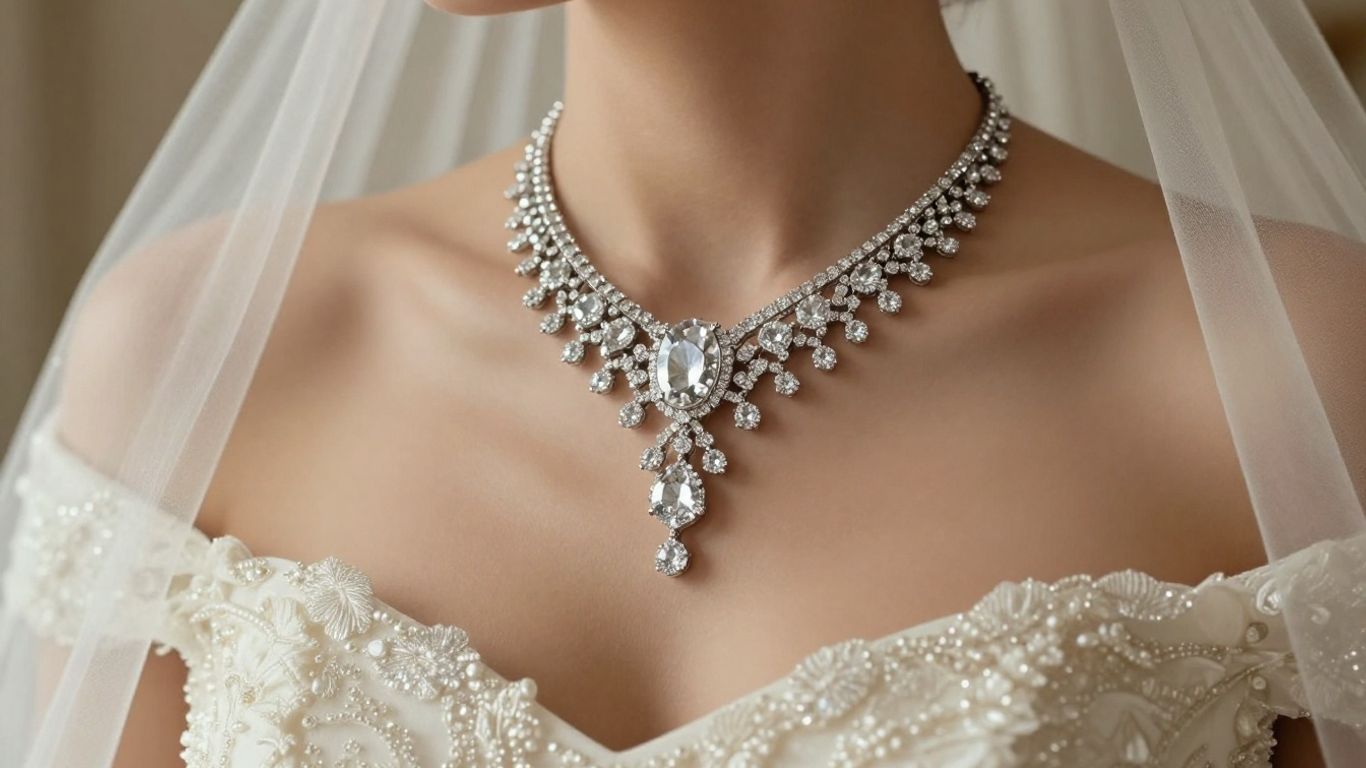
September 17, 2026
How to Choose the Perfect Diamond Necklace for Bride on Her Wedding Day
Read More
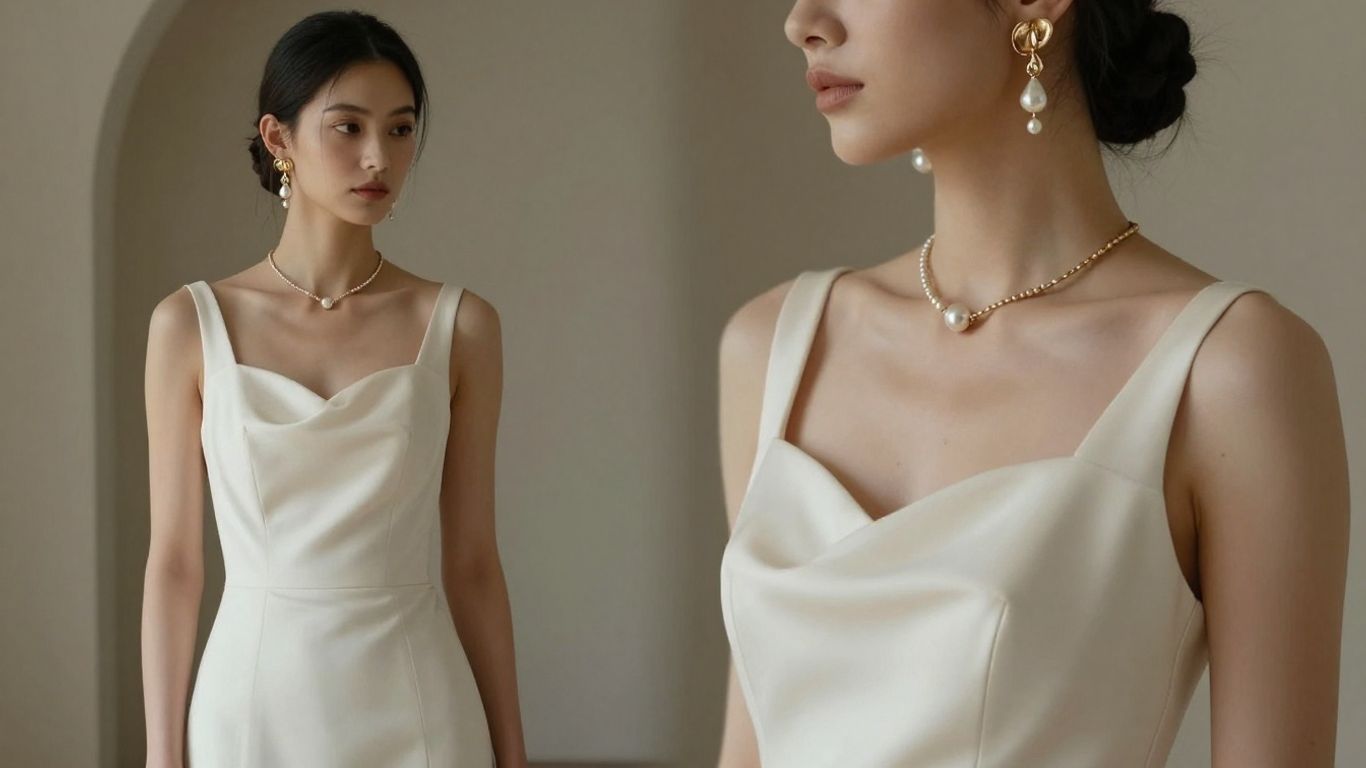
September 17, 2026
Wedding jewellery for modern brides: how to choose timeless pieces with contemporary style
Read More
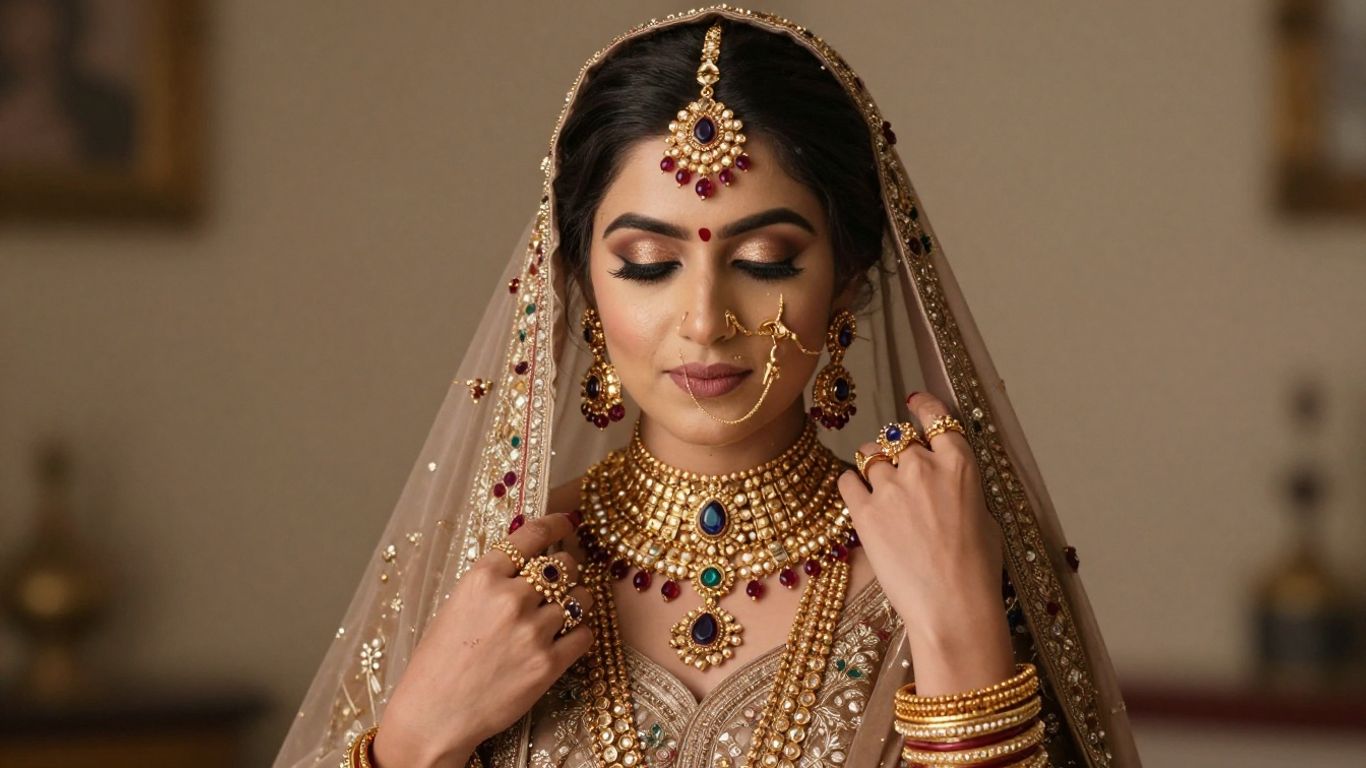
September 17, 2026
Wedding jewellery for traditional brides: A complete guide to choosing timeless bridal pieces
Read More
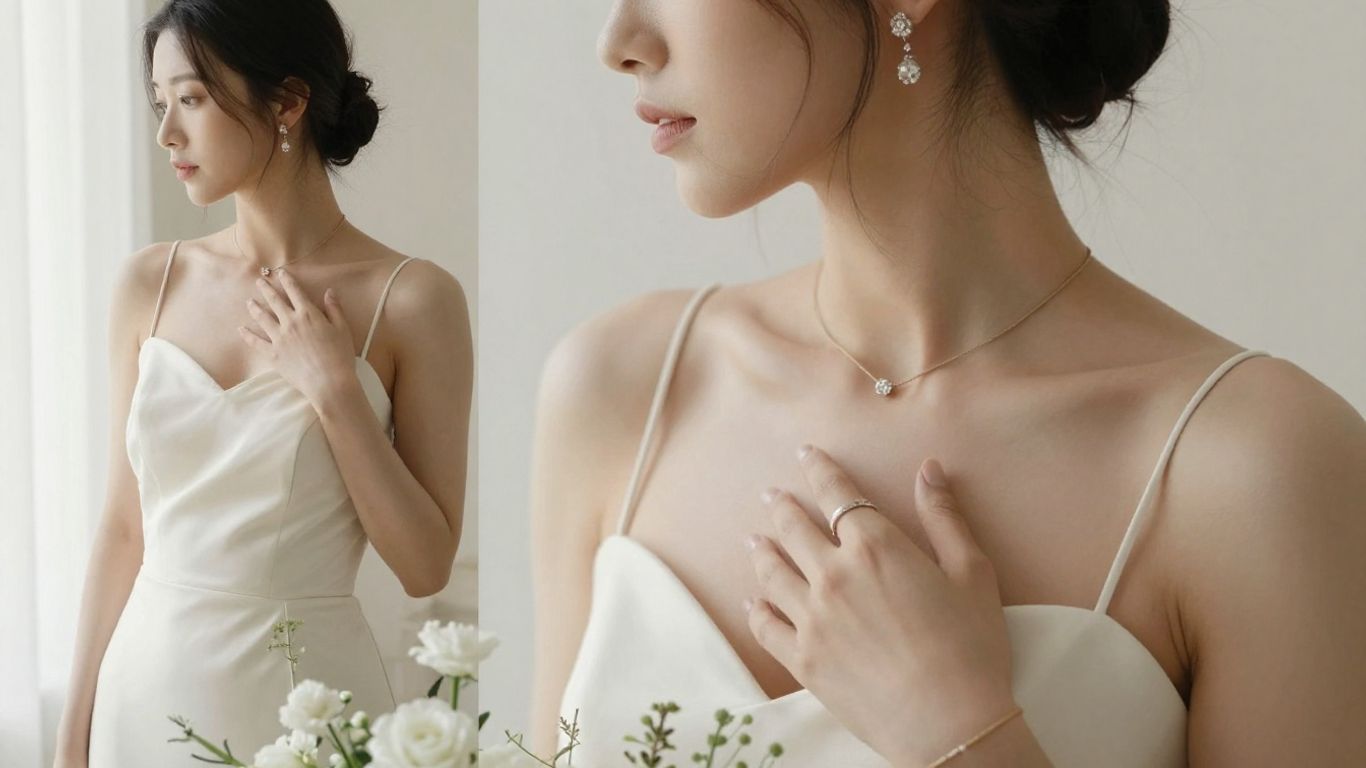
September 17, 2026
Wedding jewellery for minimalist brides: A complete guide to choosing timeless pieces
Read More









.webp)
.webp)