Emerald cut diamond ring: How to choose the perfect stone and style
September 22, 2026 | 10 minutes read
Key Takeaways
An emerald cut diamond ring rewards a careful look at proportion, clarity, setting, and everyday practicality. The most beautiful choice is the one whose geometry and character feel right to you.
- Emerald cuts reflect light in broad flashes rather than rapid sparkle.
- Clarity and cut proportions deserve close attention because the facets are relatively open.
- Solitaire, halo, three-stone, and bezel settings create distinctly different moods.
- Metal color can change how the diamond’s body color appears.
- A grading report, clear return policy, and regular care make shopping more secure.
Understand what makes an emerald cut diamond unique
An emerald cut has a calm, architectural beauty that stands apart from more glittering diamond shapes. Its long lines and clipped corners can make a ring look polished, elegant, and quietly distinctive. Before comparing stones, it helps to understand why two diamonds with the same carat weight may create very different impressions on the hand.
The step-cut facet pattern and hall-of-mirrors effect
Rather than using many small facets designed for rapid scintillation, an emerald cut uses broad, parallel steps beneath its table. These facets can reflect light in long flashes, creating the familiar hall-of-mirrors effect as the stone moves. The result is less like a burst of glitter and more like light traveling across glassy planes.
That openness also makes the diamond’s outline and internal features easy to read. A well-proportioned stone should feel balanced from the front, with crisp edges and an appealing relationship between its length, width, and depth.
How emerald cuts differ from brilliant-cut diamonds
Brilliant-cut diamonds are built around numerous angled facets that return light in lively, fast-moving flashes. Emerald cuts tend to offer broader reflections and a quieter rhythm, which many people find sophisticated rather than showy. Neither look is inherently better; the choice depends on whether you prefer mirror-like flashes or a more constant sparkle.
A helpful comparison is to view both shapes under the same lighting and move them slowly. Notice not only brightness, but also how the light travels through the stone and whether dark areas appear as it tilts.
Why clarity matters more in an emerald cut
The large table and open step facets can make inclusions easier to see than they would be in a busy brilliant cut. That does not mean every emerald cut needs the highest possible clarity grade. It means the individual stone should be examined carefully for visible marks, especially near the center, corners, and edges.
Look at the diamond in several lighting conditions and ask whether it appears clean at a normal viewing distance. An eye-clean appearance matters most when the stone will be worn every day, while a higher laboratory grade may matter less if it does not improve what you can actually see.
Choosing between elongated and square proportions
Elongated emerald cuts create a lengthening effect on the finger and often suit graceful, linear settings. Squarer proportions feel more compact and can work beautifully with halos, three-stone arrangements, or a bold solitaire. There is no universal ideal ratio, so compare outlines side by side rather than relying only on a listing photograph.
Consider how the stone relates to your hand, your preferred band width, and the direction you want the ring to face. A longer outline can look refined; a squarer one can feel stronger and more graphic.
Evaluate emerald cut diamond quality
The 4Cs remain a useful starting point, but an emerald cut asks you to interpret them through its particular geometry. Carat weight does not tell the whole story: face-up spread, color, clarity, and light behavior can change the ring’s presence considerably. Take your time with comparison, especially when stones are close in price.
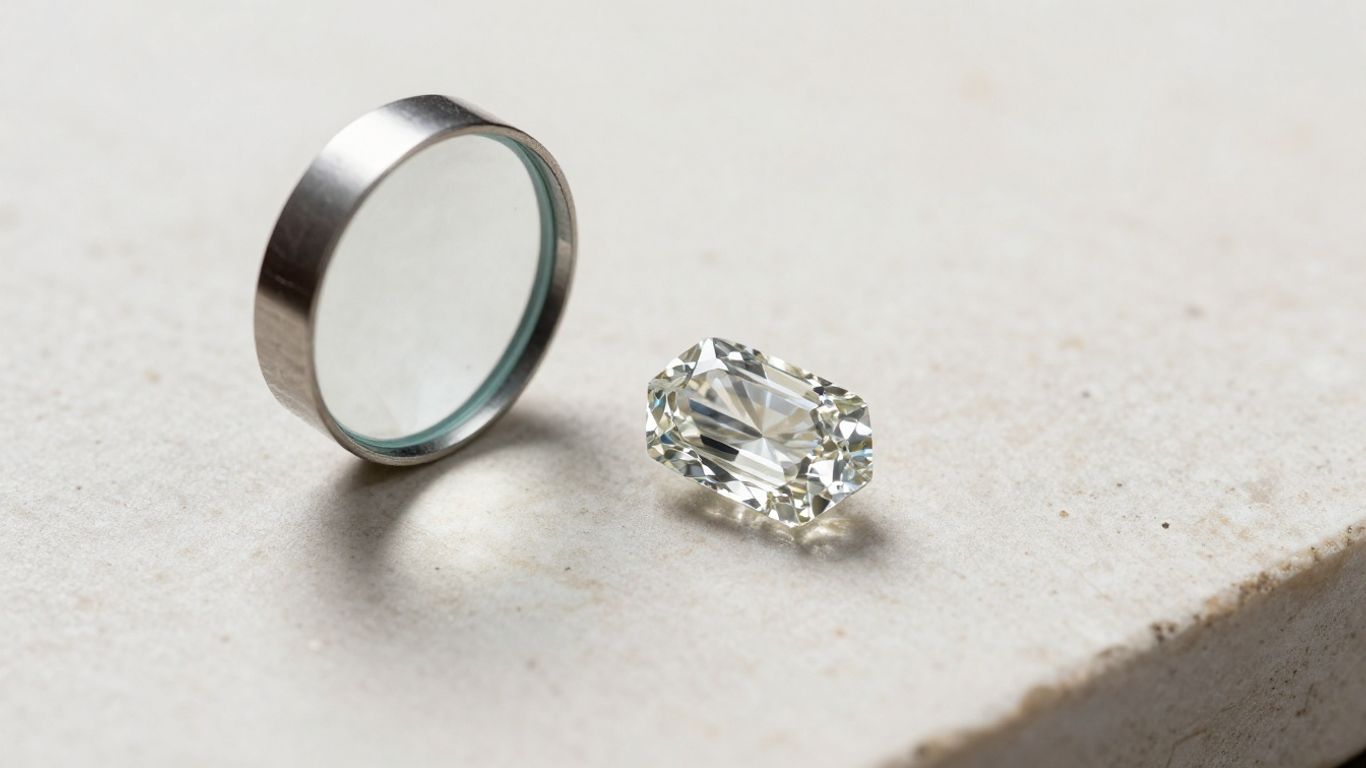 Emerald cut diamond beside jewelry loupe" >
Finding the right length-to-width ratio
Length-to-width ratio describes how slender or square the diamond looks from above. Some buyers prefer a long, elegant outline, while others want a nearly square silhouette with a more substantial visual presence. Use the ratio as a screening tool, then trust your eye when comparing actual stones.
The depth and table percentages can also affect the diamond’s face-up appearance and light return. A report provides useful measurements, but photographs and videos viewed in consistent conditions help you understand how those measurements translate into a real stone.
| Proportion preference | General visual impression | Setting styles to consider |
|---|---|---|
| More elongated | Sleek and lengthening | Solitaire or east-west inspired designs |
| Moderately elongated | Balanced and versatile | Solitaire, halo, or three-stone settings |
| Nearly square | Compact and graphic | Halo, bezel, or substantial bands |
These categories are not strict rules. They simply give you language for describing what you like before you compare stones with your jeweler.
Comparing color grades in step-cut diamonds
Because emerald cuts have broad, open facets, warmth in the diamond can sometimes be more noticeable than it is in a highly faceted brilliant shape. White metals may make a warmer stone’s color easier to see, while yellow or rose gold can create a more deliberately blended look. The right grade depends on your taste, setting, and budget.
View the diamond against both a white background and the metal you are considering. A slight difference in grade may be difficult to notice once the stone is mounted, while a large difference can affect the overall mood of the ring.
Identifying inclusions and clarity characteristics
Start with the center of the stone, then inspect the corners and the area near the girdle. Inclusions that sit beneath prongs may be less visible, but they should never be dismissed without checking whether they affect durability. Ask for magnified images, a video, and an explanation of any characteristics noted on the report.
The goal is not to buy a number. It is to find a diamond that looks clean and lively to your eyes while remaining structurally sound. If the stone is lab-grown or natural, the same visual inspection remains useful.
Balancing the 4Cs with your engagement ring budget
A sensible budget begins with the design you can comfortably wear and maintain, not with a target carat number alone. Allocate money toward the features that matter most to you: perhaps a longer outline, a higher clarity, or a more elaborate setting. A smaller but beautifully balanced diamond can feel more impressive than a larger stone with distracting weaknesses.
Write down your priorities before shopping. Decide which compromises are acceptable, then compare complete rings rather than judging the loose diamond in isolation. This keeps the setting, wedding band, insurance, and future care in the same conversation.
Choose the right emerald cut diamond ring setting
The setting determines how an emerald cut sits on the hand, how much of its outline remains visible, and how much additional sparkle surrounds it. It also affects protection, cleaning, and how easily the engagement ring pairs with a band. Think about your daily habits alongside the visual style you admire.
Classic solitaire settings for a minimalist look
A solitaire leaves the emerald cut as the clear focal point. Four or six prongs can frame the corners and create different balances between security and visibility, while a slim band keeps the overall look restrained. This is a strong choice when you love the stone’s clean outline more than surrounding sparkle.
For broader advice on comparing stone, setting, and metal, this classic engagement ring guide offers a useful companion perspective. Apply its general principles to the more linear personality of an emerald cut .
Halo settings for added sparkle and visual size
A halo surrounds the center stone with smaller accents, adding contrast and a brighter perimeter. It can make an emerald cut feel more ornate and may visually enlarge the overall face of the ring. The halo’s shape matters: a close-fitting rectangular outline preserves the architectural look, while a rounded halo softens it.
Look closely at the spacing between the center and halo. Even alignment helps the design feel intentional, especially when the center stone has strongly clipped corners or a long silhouette.
Three-stone designs with emerald side stones
Three-stone rings create a strong horizontal composition, with the center emerald cut supported by two neighboring stones. Emerald side stones can echo the center’s linear character, while contrasting shapes can create a more expressive arrangement. The proportions should feel coordinated rather than competitive.
Consider the height of each stone and the way the shoulders meet the center. A low, smooth transition is usually more comfortable and makes the three stones read as one composition.
Bezels, hidden halos, and other protective details
A bezel wraps metal around the diamond’s perimeter, offering a clean modern outline and extra coverage at the corners. A hidden halo adds sparkle beneath the center without changing the ring’s face-up simplicity. Petite claw prongs can also protect clipped corners while keeping more of the diamond exposed.
Your lifestyle should guide this decision. If your hands regularly meet hard surfaces or fine materials, corner protection and a secure gallery may matter more than a minimal side profile.
Select a metal and setting style
Metal changes more than the ring’s color. It influences the contrast around the diamond, the visual weight of the band, and the way the ring relates to other jewelry. Samples viewed in person are especially helpful because photographs can flatten subtle differences in warmth and finish.
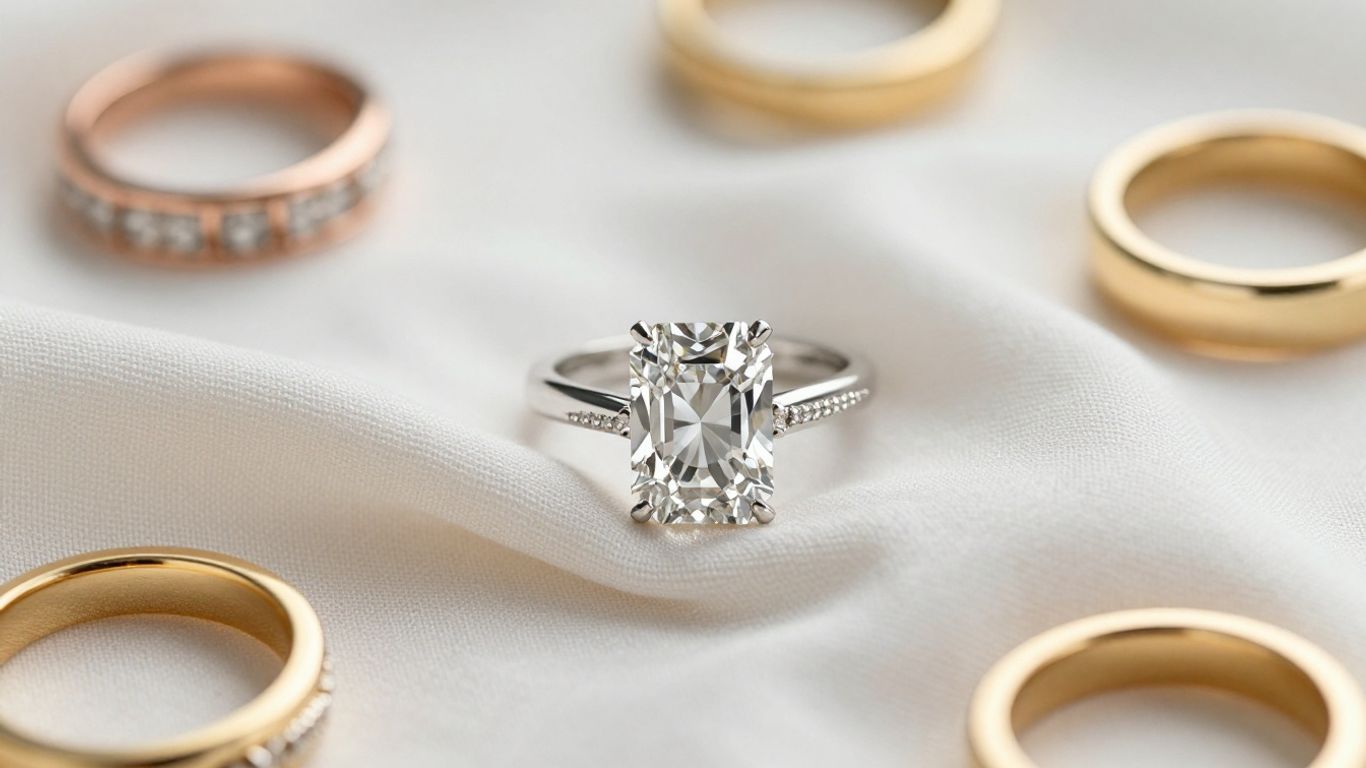
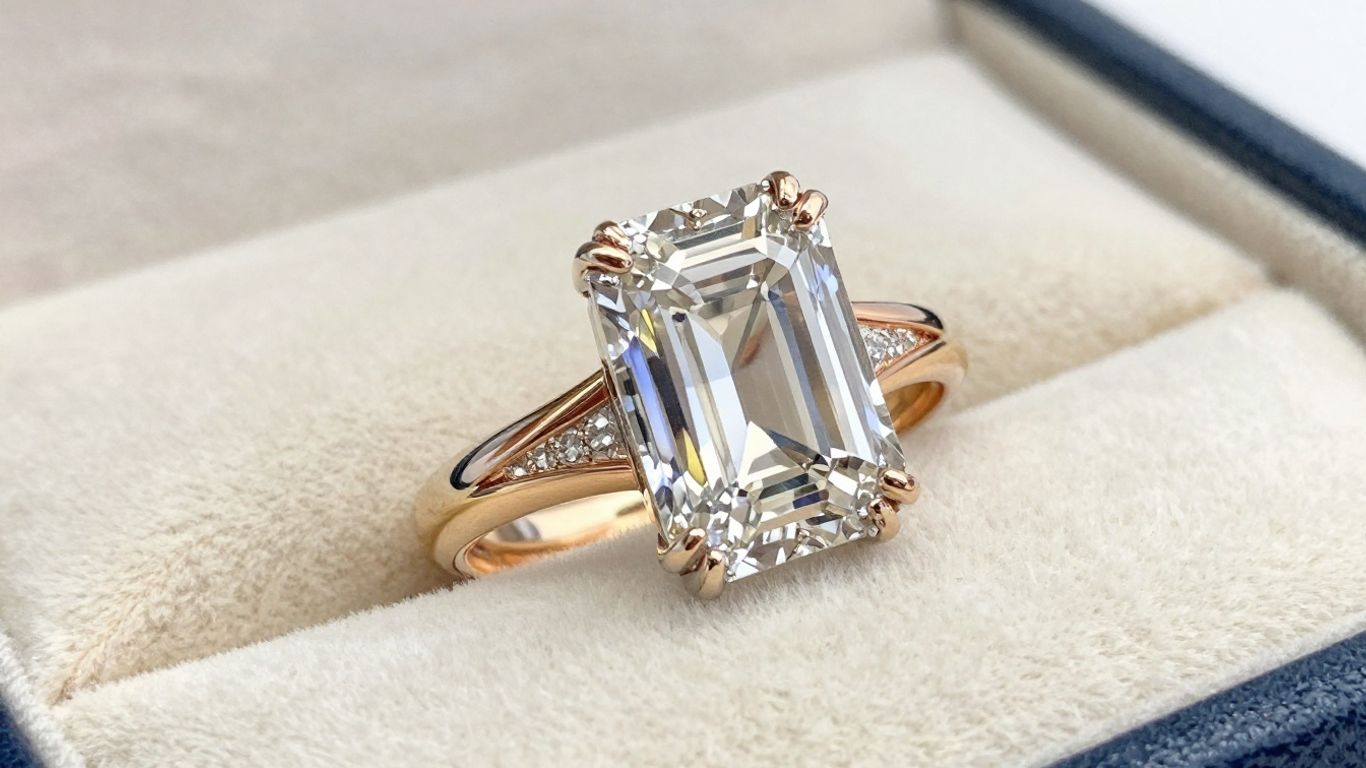 Emerald cut ring with mixed metal bands" >
Platinum versus white, yellow, and rose gold
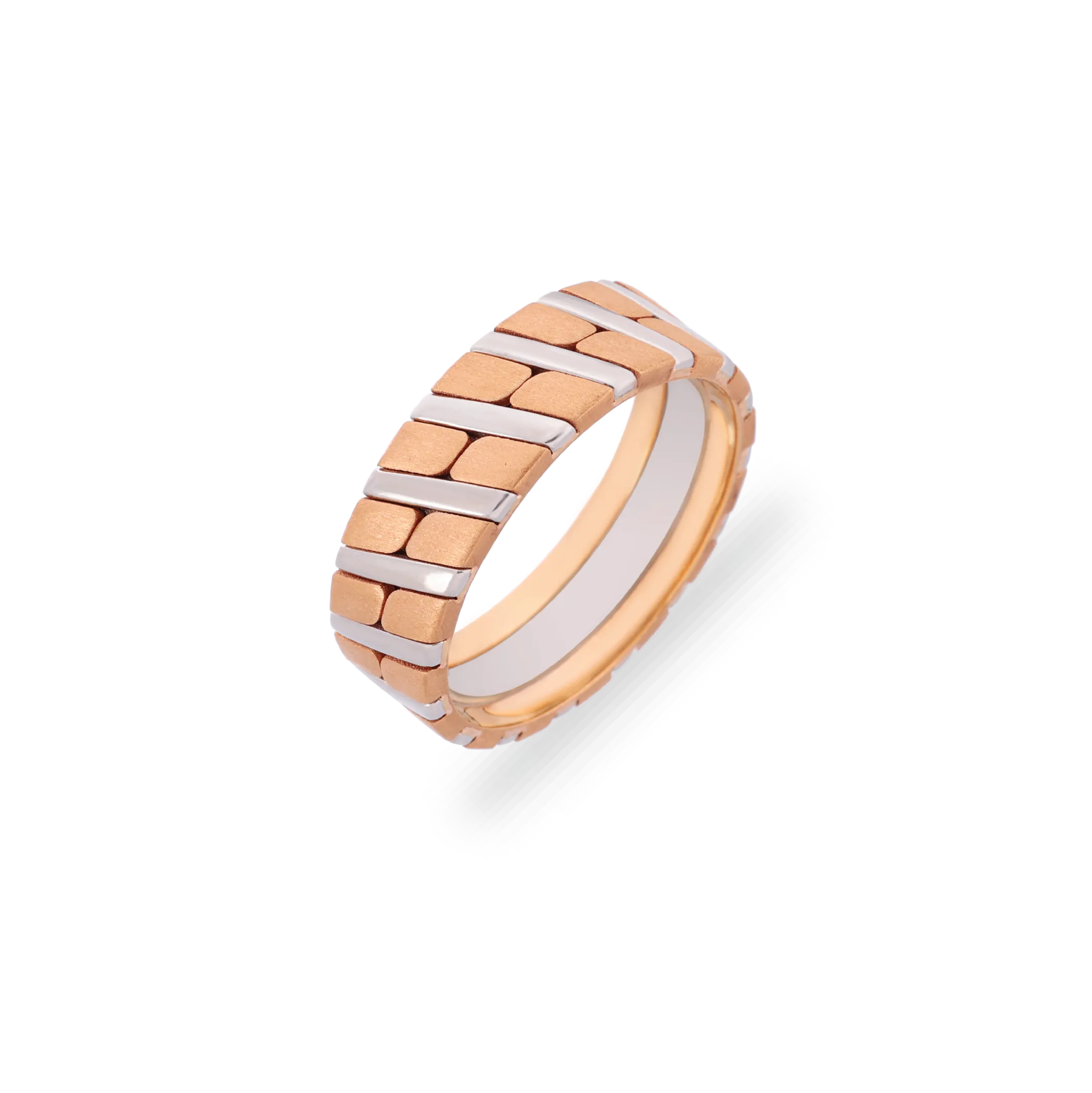
Platinum has a naturally pale appearance and a substantial feel, while white gold offers a similar cool-toned look with its own maintenance considerations. Yellow gold brings warmth and contrast, and rose gold adds a soft blush that can make a geometric emerald cut feel more romantic. The best choice balances appearance with how you live in the ring.
Think about the jewelry you already wear, but do not feel required to match every piece. Mixed metals can look deliberate when the shapes and finishes share a common visual thread.
Matching the metal to the diamond’s color
A cool metal can make a diamond appear crisp and bright, but it may also draw attention to warmth in the stone. Yellow or rose gold can blend more naturally with a warmer diamond and create a richer overall impression. This is why comparing the loose stone beside actual metal samples is worthwhile.
The prongs deserve attention too. A white-metal head can keep the center looking bright, while yellow-gold claws can add a small, intentional note of contrast. Ask to see both options if you are uncertain.
Deciding between modern and vintage-inspired designs
Modern emerald cut rings often rely on clean bezels, slender bands, or carefully spaced accents. Vintage-inspired designs may bring in milgrain, engraved shoulders, filigree, or geometric details that recall earlier jewelry periods. The center stone can suit either direction because its linear shape is both historical and contemporary.
Choose details you will enjoy seeing from close up, not just elements that look appealing in a product photograph. A restrained ring can feel more personal when one small detail, such as engraving or a distinctive gallery, carries the design.
Coordinating the engagement ring with a wedding band
An emerald cut may sit high enough for a straight wedding band, or it may need a curved, notched, or contoured band to avoid a gap. The shoulder width and setting height are just as important as the metal color. Try the pair together and check whether the edges feel comfortable when your fingers move.
For broader ideas about combining bridal pieces and balancing metals, explore this wedding jewelry styling guide. Keep the final pairing practical: a beautiful stack should still allow both rings to sit securely and wear evenly.
Shop for an emerald cut diamond ring with confidence
Shopping becomes easier when you separate verified information from attractive presentation. Ask for the stone’s measurements, treatment details, grading report, and clear images before making a decision. Whether you shop online or in person, a thoughtful process helps you compare like with like.
Comparing natural and lab-grown emerald cut diamonds
Natural and lab-grown diamonds can both be evaluated by shape, proportions, clarity, color, and light performance. Their origin and pricing structures differ, so decide what information and value matter most to you before comparing individual stones. The ring should still meet your standards for appearance and durability.
Ask whether the listed price includes the setting, whether the stone can be exchanged, and whether the report identifies the diamond’s origin. Clear answers make it easier to compare options without reducing the decision to carat weight alone.
Reviewing diamond certifications and grading reports
A grading report should correspond to the exact diamond you are considering. Check the report number, measurements, proportions, color, clarity, and any comments about treatments or identifying features. If the mounted ring comes with a different stone from the one shown online, request updated documentation.
Read the report alongside your own observations. A document provides consistency and useful data, but it cannot replace seeing how the diamond handles light or how its outline looks on your hand.
Checking light performance, symmetry, and polish
Symmetry matters because step-cut lines are easy to notice when they are uneven. Inspect whether the corners appear balanced, the facets align cleanly, and the outline looks centered. Polish affects the quality of the facet surfaces, while light performance is best judged through movement under several lighting conditions.
Watch for persistent dark zones, haziness, or a lifeless face-up appearance. A short video can reveal behavior that a still photograph hides, particularly when the diamond is gently rotated.
Understanding warranties, insurance, and return policies
Before purchasing, read the return window, resizing terms, warranty exclusions, and shipping responsibilities. Ask what happens if a prong loosens or a stone requires service, and whether routine inspections are included. Insurance may cover loss, theft, or damage, but the terms vary considerably.
Keep the receipt, report, appraisal, and photographs together after purchase. Those records can simplify a claim or repair and give you a reliable reference if the ring is later resized.
Care for and personalize your emerald cut diamond ring
An emerald cut ring can be an everyday piece, but its open facets deserve regular attention. Dust and skin oils may soften the crisp reflections that make the shape appealing. Gentle care, sensible storage, and periodic professional checks help preserve both the diamond and its setting.
Cleaning and maintaining a step-cut diamond
Clean the ring with warm water, mild soap, and a soft brush, paying attention to the underside of the setting. Rinse it over a secure basin or closed drain and dry it with a lint-free cloth. Avoid harsh household chemicals and remove the ring before activities that could expose it to impact or abrasive grit.
A simple routine works best when it is easy to repeat. For regular upkeep, keep these habits in mind:
- Remove the ring before swimming, cleaning, or strenuous manual work.
- Store it separately so the diamond and metal do not rub against other jewelry.
- Wipe away lotion and residue before storing the ring overnight.
- Use professional cleaning when buildup remains beneath the setting.
These steps preserve the sharp contrast and clean reflections that define the cut. They also give you a chance to notice a loose prong or other change before it becomes a larger problem.
Protecting vulnerable corners with prongs
The clipped corners of an emerald cut are less exposed than sharp points, but they still deserve protection. Prongs should sit securely and meet the corners evenly without hiding more of the stone than necessary. A bezel or protective corner design may be a sensible choice for someone with an especially active routine.
Do not wait for a stone to visibly move before seeking advice. If the ring catches on fabric, feels different, or develops a rough spot, stop wearing it and have the setting examined.
Customizing engraving and accent stones
Engraving can add a private date, initials, or a short phrase without changing the center stone. Accent stones may bring contrast along the shoulders, gallery, or halo, but their scale should support rather than compete with the emerald cut . Small design decisions often make a classic setting feel distinctly personal.
Discuss the available space and future resizing before approving an inscription. A jeweler can help you choose lettering and placement that remain legible without weakening the band.
Scheduling professional inspections and resizing
A professional inspection can check prongs, the setting, the shank, and the diamond’s security. The right inspection interval depends on wear, but a routine review is wise for a ring worn every day. Resizing should also be handled carefully, particularly when the band has intricate details or several accent stones.
If your finger size changes, avoid forcing the ring on or wearing it loose enough to spin. Timely adjustment protects comfort and reduces the chance of an accident.
Conclusion
Choosing an emerald cut diamond ring is a balance of geometry, light, protection, and personal taste. Compare real stones carefully, give clarity and proportions the attention they deserve, and choose a setting and metal that suit both your style and your daily life. The right ring will feel considered without feeling overworked.
Frequently Asked Questions
Is an emerald cut diamond a good choice for an engagement ring?
Yes, especially for someone who prefers clean lines, broad flashes of light, and a refined appearance over intense glitter. Its open facets make careful inspection important, but that same structure gives the cut its distinctive character.
What clarity grade is best for an emerald cut diamond?
There is no single required grade. Choose a stone that appears eye-clean from normal viewing distances, then check the report and magnified images for inclusions that could affect beauty or durability.
Does an emerald cut diamond look larger than a round diamond?
It can appear larger face-up because its rectangular outline spreads weight across a broad surface. The actual impression depends on length-to-width ratio, depth, setting, and how the stone is viewed on the hand.
Which setting protects an emerald cut diamond best?
A bezel offers substantial perimeter coverage, while well-placed prongs can protect the clipped corners while leaving more of the diamond visible. The best option depends on your activities and preferred appearance.
Should I choose platinum or gold for an emerald cut ring?
Choose based on color preference, existing jewelry, maintenance expectations, and budget. Platinum and white gold create a cool contrast, while yellow and rose gold bring warmth and can soften the diamond’s geometric look.
Are lab-grown emerald cut diamonds durable?
A lab-grown diamond has the same basic hardness as a natural diamond because both are diamond material. Evaluate the individual stone’s cut, clarity, setting, documentation, and purchase terms rather than relying on origin alone.
How often should an emerald cut ring be inspected?
Have it checked periodically if you wear it often, and arrange an inspection promptly if a prong catches, the ring feels loose, or the stone appears to move. Regular professional care can identify setting problems early.
How to Choose an Oval Solitaire Ring: A Complete Guide to Shape, Setting, and Value
10 minute read
Related blogs:
November 20, 2025
The Timeless Elegance of the Tennis Bracelet: A Comprehensive Guide
Read More
November 20, 2025
The Ultimate Guide to Styling and Wearing a Choker Necklace
Read More
November 20, 2025
Find Your Perfect Engagement Ring: A Comprehensive Guide to Styles and Diamonds
Read More
November 20, 2025
The Timeless Elegance of a Diamond Tennis Bracelet: A Buyer's Guide
Read More