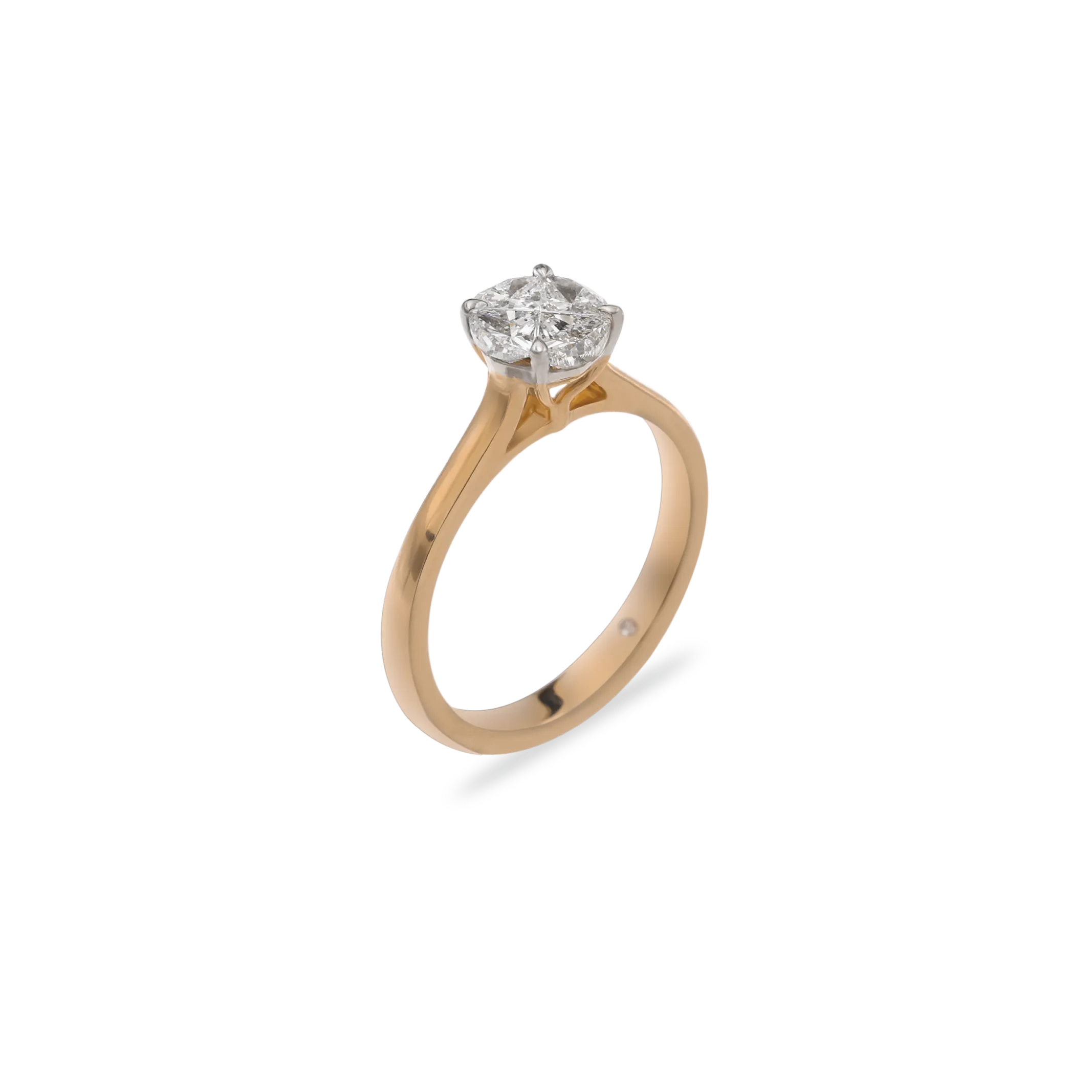
Round Solitaire Ring: How to Choose the Perfect Classic Engagement Ring
September 21, 2026 | 10 minutes read
Key Takeaways
A round solitaire ring is a classic choice because it keeps attention on one center diamond while leaving room for personal details.
- Start with diamond cut, then weigh color, clarity, and carat against your budget.
- Choose a metal and setting that suit your lifestyle as well as your taste.
- Check proportions carefully, including ring size, setting height, and wedding-band space.
- Compare the full cost, certification, warranty, and return terms before buying.
- Plan for gentle cleaning, regular inspections, and personal touches such as engraving.
What makes a round solitaire ring a timeless choice
A round solitaire ring centers the design on one prominent diamond, creating a clean outline that can feel traditional or contemporary. Its simplicity makes small differences in proportion, metal, and setting especially visible. For readers comparing classic styles, this solitaire engagement ring guide offers another useful perspective on center stones, settings, and everyday wear.
Defining the solitaire setting
A solitaire setting holds one main stone as the visual focus, usually with a plain or lightly detailed band. The shoulders of the ring lead the eye toward the center rather than competing with it. That restraint can make the diamond appear especially intentional, while giving you freedom to choose a more distinctive profile, engraving, or band finish.
The setting may use prongs, a bezel, or another structure to secure the stone. Prongs allow more light and diamond edge to remain visible, while a bezel surrounds the stone with metal and can create a smoother, more protected outline. The right choice depends on how much openness, security, and low maintenance you want.
Why round diamonds remain popular
Round brilliant diamonds are cut with a symmetrical outline and a facet arrangement designed to return light across the stone. Their familiar shape works with many band profiles and metal colors, so the ring does not depend on a passing trend. It is also easy to compare round diamonds because their proportions can be assessed against a widely recognized shape standard.
Popularity alone should not decide the purchase. A beautifully chosen round diamond still needs to suit the wearer’s hand, daily routine, and preferred degree of sparkle. A smaller stone with lively reflection can feel more appealing than a larger stone that looks dull or poorly balanced.
The balance of simplicity and sparkle
A solitaire has fewer visual elements, which means the center diamond carries nearly all of the design’s energy. That can be an advantage: the ring feels uncluttered, and the diamond is easy to notice from different angles. The band may stay understated, or it may introduce texture, tapering, milgrain, or a sculpted shoulder without changing the basic solitaire character.
Because the design is so edited, proportion matters more than ornament. A very delicate band can make a substantial diamond look dramatic, while a wider band gives the same stone a more grounded appearance. Try to judge the entire ring rather than the center stone alone.
How the design suits different personal styles
The solitaire format adapts well to different wardrobes and preferences. A slim polished band can suit someone who likes quiet minimalism, while a split shoulder, engraved gallery, or warm gold tone can give the same basic idea a more expressive personality. The choice does not have to be strictly classic to remain timeless.
Consider how the ring will feel after the proposal or wedding day. Someone who wears simple jewelry every day may prefer a low, smooth profile; someone drawn to vintage details may enjoy a more decorative gallery. The best style feels recognizable as the wearer’s, not merely attractive in a display case.
How to choose the right round diamond
The diamond is the heart of a round solitaire ring, so this stage deserves patient comparison. A larger carat weight is not automatically the best value, and a high clarity grade may matter less than lively light return when inclusions are not visible to the unaided eye. Look at the stone in different lighting and ask for clear documentation.
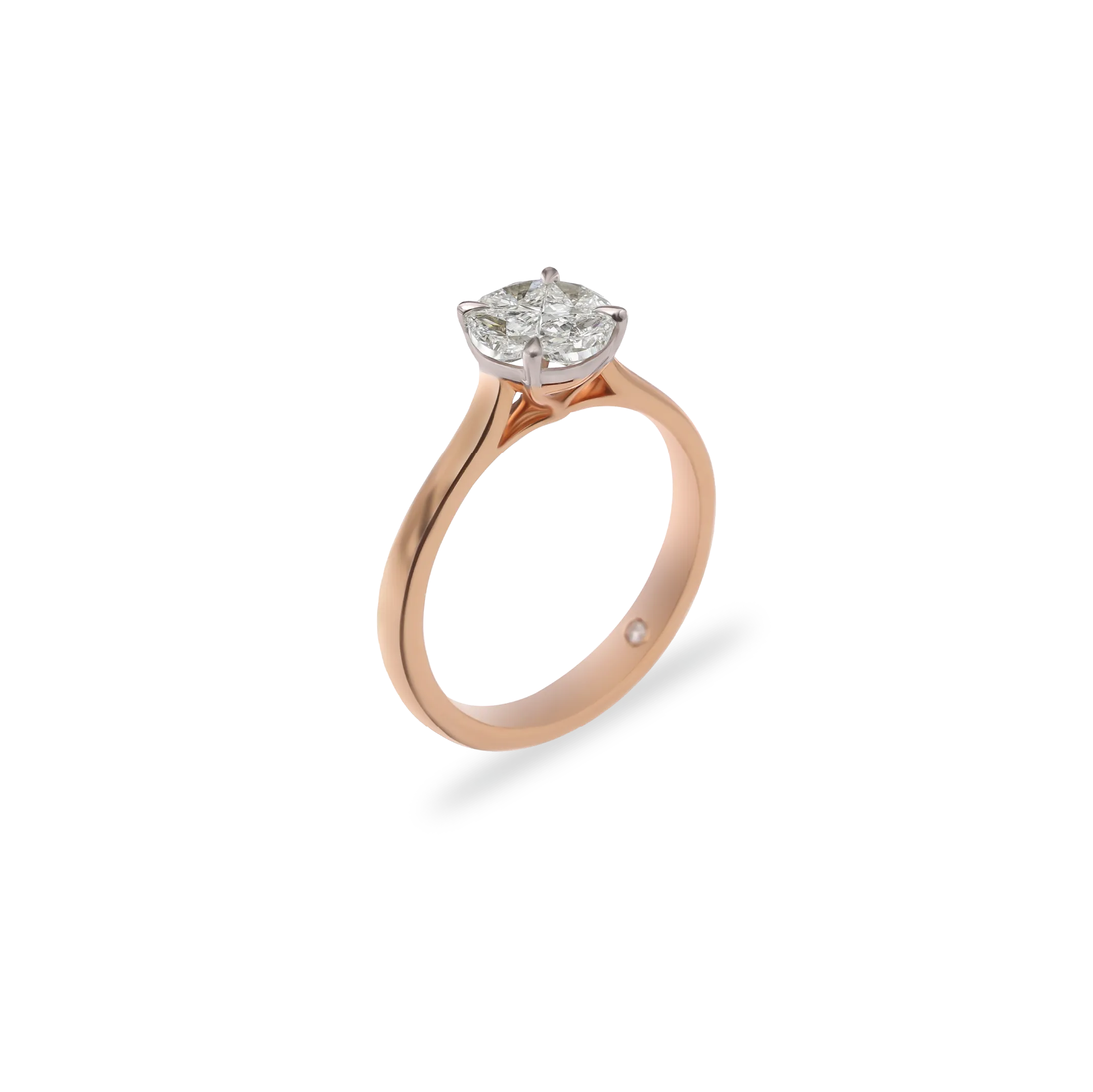
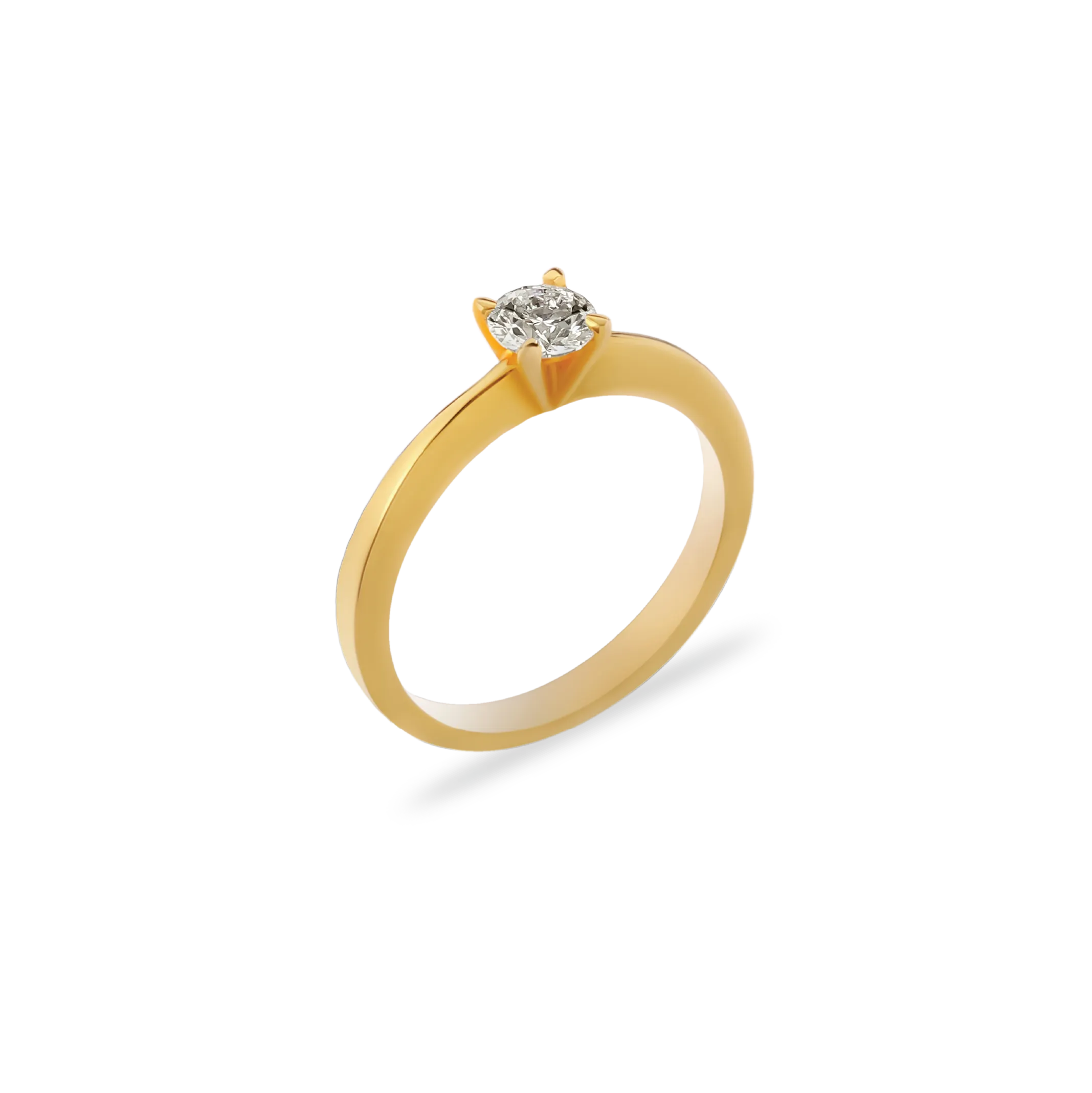
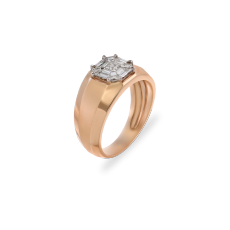
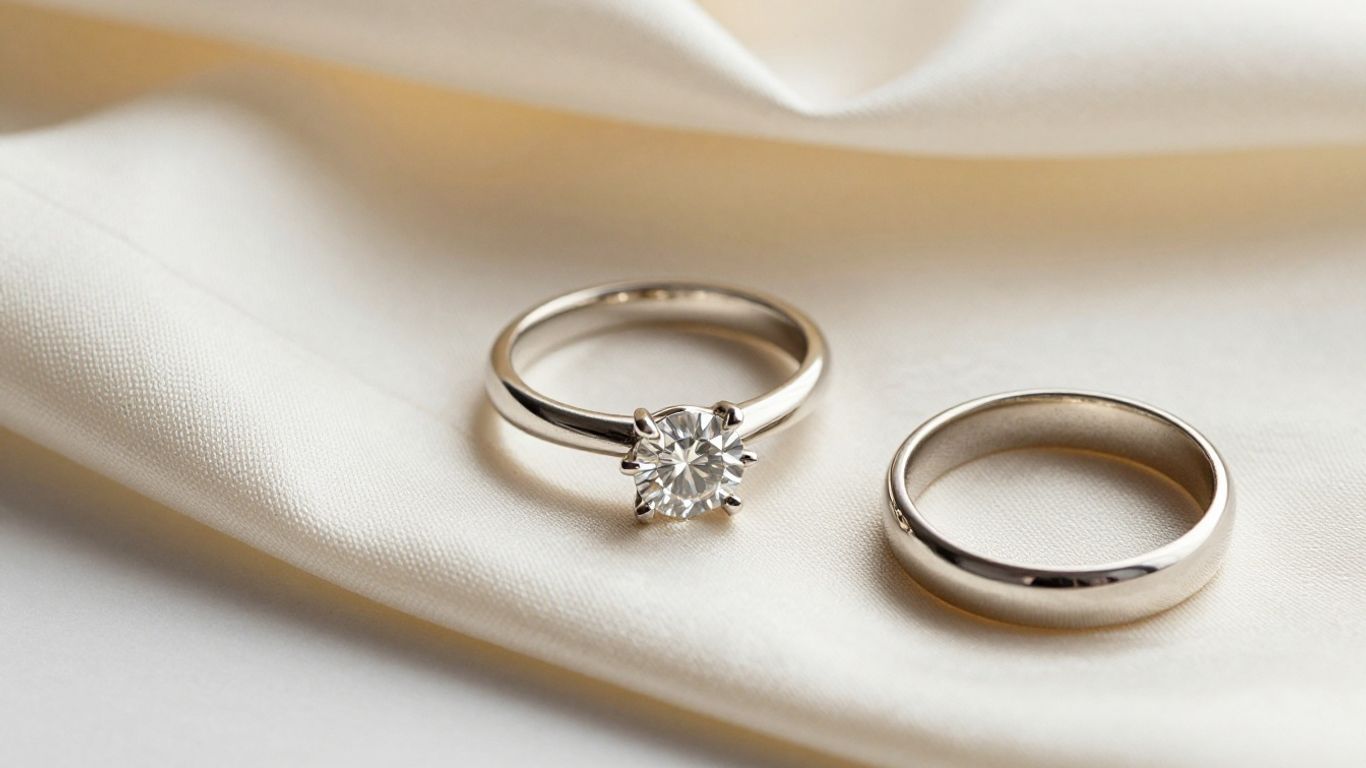
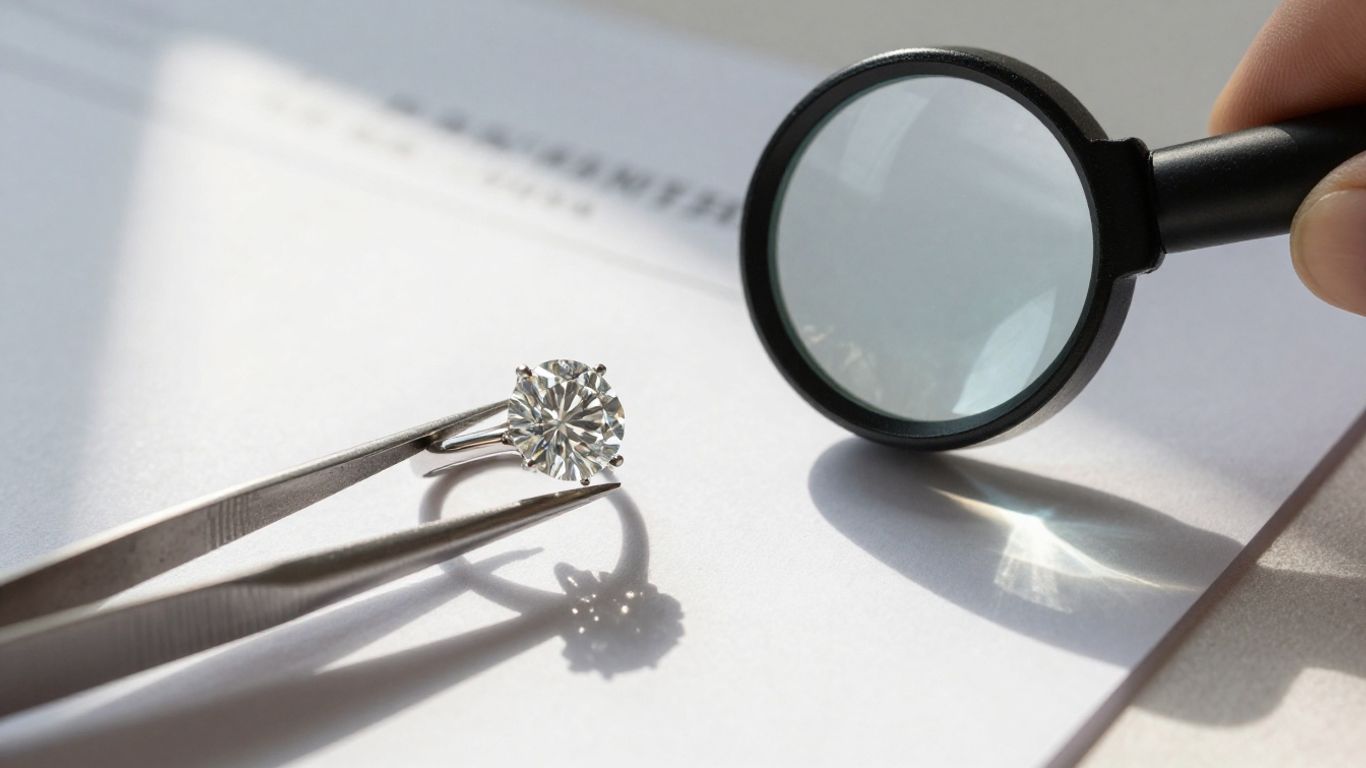
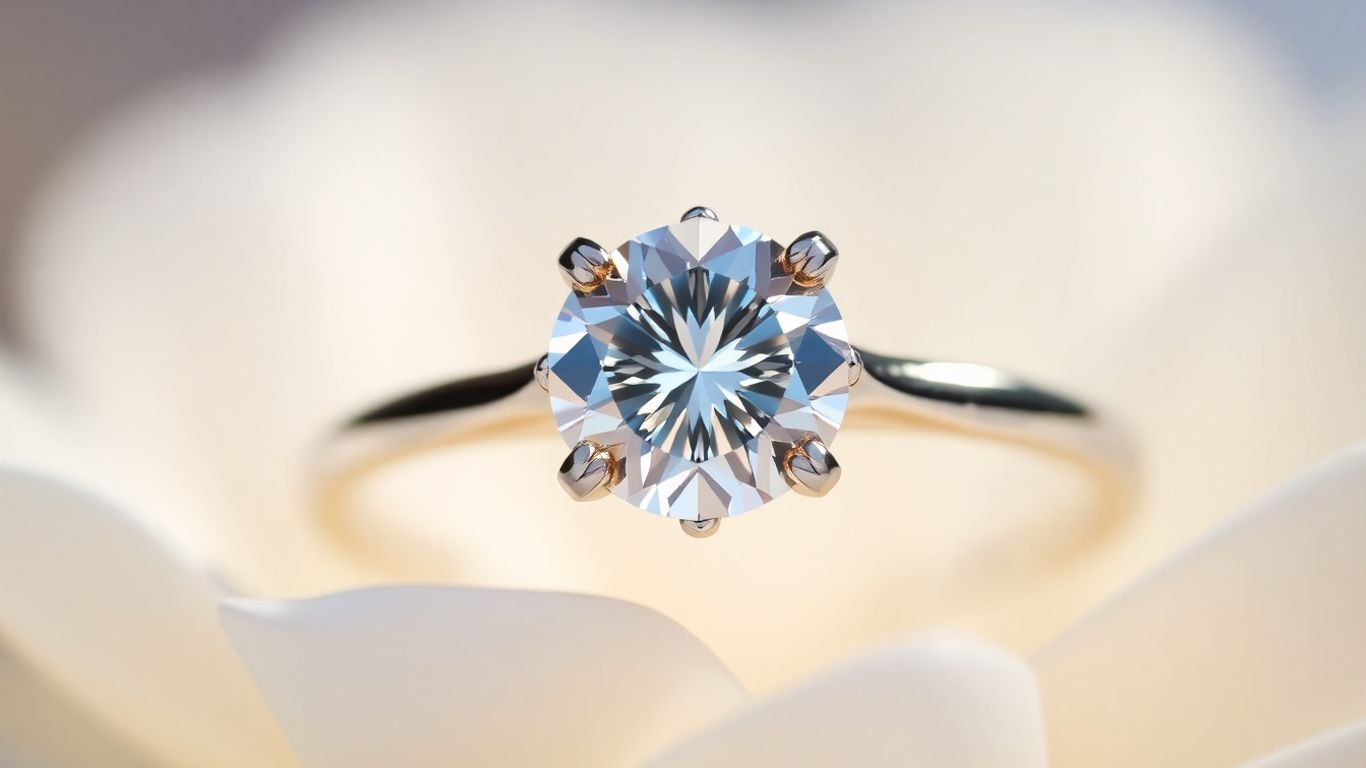
The image below captures the kind of close visual comparison shoppers often make when judging a center diamond and its setting.
Comparing cut, color, clarity, and carat
The four Cs provide a useful vocabulary, but they should be considered together. Cut has the strongest effect on brightness and liveliness in a round diamond, while color affects how warm or white it appears. Clarity describes internal and external characteristics, and carat measures weight rather than visible diameter alone.
A practical comparison might look like this:
| Factor | What it describes | What to inspect |
|---|---|---|
| Cut | Facet proportions and finish | Brightness, contrast, and sparkle |
| Color | Body tone in the diamond | Whether it looks white in its setting |
| Clarity | Internal and surface characteristics | Whether marks are visible without magnification |
| Carat | Weight of the diamond | Face-up size and overall proportion |
This framework helps prevent one grading term from taking over the decision. Two diamonds with the same carat weight can look quite different in diameter, brightness, and apparent presence, so compare actual measurements and images whenever possible.
Understanding ideal and excellent cuts
“Excellent” and “ideal” are grading or retail terms that can vary by laboratory and seller, so they should not replace inspection of the individual stone. Review the grading report, proportions, symmetry, polish, and visible performance. A round diamond with strong light return usually appears crisp and animated rather than gray, sleepy, or overly dark.
Ask whether the report comes from a respected independent laboratory and whether the stone matches its documentation. Videos can help, though lighting and camera settings affect what you see. When possible, view the diamond in person or ask for neutral, well-lit imagery before making a final choice.
Choosing between lab-grown and natural diamonds
Lab-grown and natural diamonds are both diamond materials, but their origins and pricing structures differ. A natural diamond forms through geological processes, while a lab-grown diamond is created in a controlled setting. The right choice is personal and may depend on budget, origin preferences, family expectations, or the meaning attached to the purchase.
Whichever route you consider, compare the same fundamentals: cut quality, measurements, grading documentation, and the seller’s policies. Avoid treating origin as a substitute for evaluating the particular stone. The diamond should still look beautiful to you and work with the setting you have chosen.
Selecting a diamond shape that complements the setting
A round center stone is naturally suited to a classic solitaire, but the setting’s proportions still matter. A tapered band can draw the eye inward, while a straight band creates a more architectural outline. The height and width of the basket or prongs should feel scaled to the diamond rather than added as an afterthought.
Although this article focuses on a round center, looking at other solitaire proportions can clarify your preferences. A broader overview of diamond shape and solitaire settings can be useful when you are deciding whether the round outline is the right visual match for the band.
Which metal and setting details matter most
Metal changes the ring’s color, weight, maintenance needs, and overall mood. The setting also affects how much of the diamond is exposed, how securely it is held, and how easily the ring pairs with another band. These decisions are practical, but they are also part of the ring’s character.
Before choosing, think about existing jewelry and daily habits. Someone who works with their hands may value a protected profile, while someone who wants maximum diamond visibility may accept a more raised setting. There is no universally superior combination; there is only a better match for the wearer.
Comparing platinum, white gold , yellow gold , and rose gold
Platinum has a naturally white appearance and a substantial feel, while white gold offers a similar cool-toned look with its own care considerations. Yellow gold brings warmth and can create a pleasing contrast with a bright round diamond. Rose gold adds a pinkish tone that feels softer and more distinctive without changing the solitaire format.
Consider how the chosen metal works with the wearer’s existing jewelry and skin undertone, but do not treat either as a strict rule. Durability, weight, maintenance, and personal taste deserve equal attention. If the ring will be worn beside a wedding band, compare the two metals together rather than viewing the engagement ring alone.
Choosing prong styles for security and visibility
Prongs hold the diamond at selected points around its girdle. Four prongs can leave more of the outline visible and create a clean, open appearance, while six prongs add another point of support and give the center a more traditional look. Rounded, claw, and other prong shapes also change the visual delicacy of the ring.
Ask how the prongs are finished and whether they sit smoothly against clothing and skin. The most attractive arrangement is one that protects the diamond without visually overwhelming it. A setting professional can also explain how the chosen prong design affects future inspection and maintenance.
Considering a cathedral, basket, or low-profile setting
A cathedral setting raises the shoulders of the band toward the center stone, creating an elegant side view and often leaving room beneath the diamond. A basket setting supports the stone with a structured framework, while a low-profile design keeps more of the ring close to the finger. Each creates a different balance between visibility, clearance, and comfort.
Think about snagging, gloves, work routines, and how often the ring may meet hard surfaces. A taller setting can show the diamond beautifully but may require more awareness during daily wear . A lower design can feel practical, though it may limit the space available for a wedding band.
Matching the band width to the center stone
Band width influences whether the center diamond looks airy, bold, or balanced. A narrow band can make the stone appear larger by contrast, but it should still feel structurally appropriate for everyday wear. A wider band gives the ring a stronger visual base and may suit a larger center stone or a more substantial hand.
Try several widths with a similar stone size, ideally on the finger rather than only in a tray. The difference can be surprisingly subtle on paper and obvious when worn. Also inspect the side view, since the band and setting should look connected rather than like separate components.
How to find the right fit and proportions
A ring can be visually perfect and still become a poor choice if it pinches, spins, or catches constantly. Fit includes more than the numerical size: it involves the shape of the finger, the ring’s interior profile, the setting height, and the space needed for a future wedding band. Small adjustments can make a lasting difference.
This section is where trying on actual samples becomes particularly valuable. A ring that feels light and comfortable for a few minutes may behave differently over a full day, especially in warm weather or during movement.
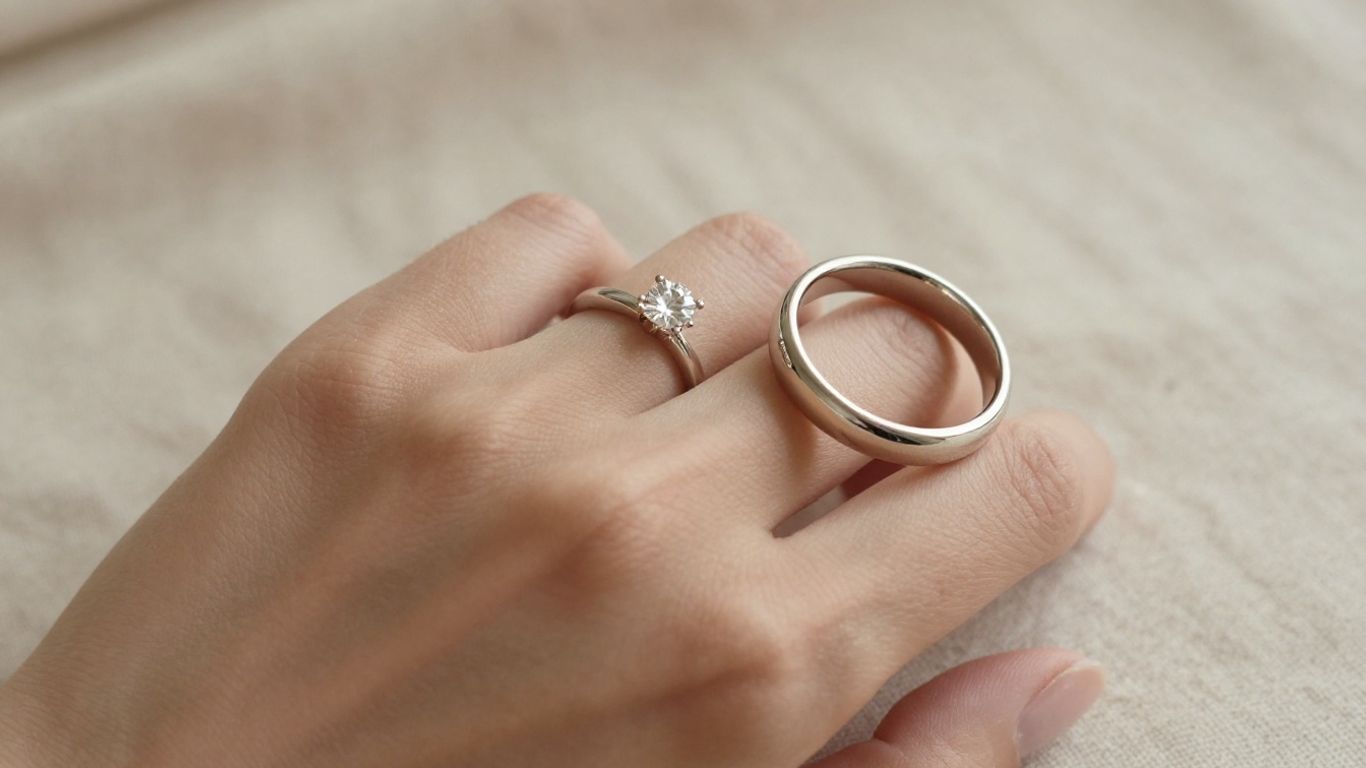
Measuring ring size accurately
Measure the intended finger at a comfortable temperature, since fingers can expand or contract during the day. A professional sizing tool is more dependable than estimating from an existing ring, particularly when the existing piece has a different width or shape. If the ring is a surprise, discreetly borrow a ring worn on the same finger and have it measured.
Ask how the jeweler accounts for a wide band or a larger setting. The fit should be secure without being difficult to remove. A slightly snug feel at the base is usually preferable to a ring that turns freely, but swelling, climate, and personal comfort still matter.
Balancing diamond size with finger shape
The same diamond can look delicate on one hand and commanding on another. Finger length, width, knuckle shape, and the spacing between neighboring rings all affect the result. A round diamond has a balanced outline, so changes in band width and setting height may influence the look more than expected.
Use try-on images or sample settings as a guide, but trust the wearer’s reaction. The goal is not to follow a universal proportion formula. It is to find a center stone and band that feel visually comfortable from the top, side, and three-quarter views.
Choosing a comfortable setting height
Setting height affects both appearance and wearability. A raised center can allow a wedding band to sit close beneath it and can make the diamond more prominent from the side. A lower profile may reduce catching and feel easier during work, exercise, or sleep.
Pay attention to the underside of the ring as well. Smooth edges, a comfortable interior, and a gallery that does not press into the finger can matter more than a small difference in height. If the wearer is not accustomed to rings, a restrained profile may be the easiest starting point.
Planning for a wedding band
The engagement ring should be considered alongside the wedding band, even if that purchase comes later. A straight band may meet a raised solitaire neatly, while a curved or contoured band may be needed around a lower setting. Mixing metals can be attractive, but it should look deliberate rather than accidental.
Try a few band shapes together and check for movement, gaps, and pressure points. A small gap is not necessarily a problem if it suits the design, but it should be expected. Planning ahead can prevent an expensive alteration or a wedding-day surprise.
How much to budget for a round solitaire ring
Budgeting is easier when the ring is treated as a group of decisions rather than a single price tag. The diamond, setting, metal, craftsmanship, sizing, taxes, and future care may all affect the final amount. A clear range gives you room to compare quality without becoming attached to one specification too early.
The emotional importance of the ring does not require financial strain. A thoughtful purchase can be modest or substantial, provided the priorities are clear and the terms are understood before payment.
Factors that influence the total price
Diamond quality usually drives the largest part of the cost, but carat weight is only one variable. Cut quality, color, clarity, origin, grading, metal choice, setting complexity, and labor can all shift the price. A hand-finished or customized ring may cost more than a simpler ready-made version because it involves additional design and production time.
Also account for practical extras. Resizing, insurance, engraving, independent appraisal, and future repairs may not be included in the displayed price. Ask for a complete written breakdown so the comparison is fair.
Setting a realistic diamond budget
Start with the amount you can spend comfortably, then decide which features matter most within that limit. Many buyers prioritize cut and visible beauty over maximum carat weight, while others care strongly about a particular size or origin. Defining those priorities early keeps the search focused.
It helps to compare several diamonds with similar measurements rather than browsing by carat alone. Ask what compromise would be least noticeable to the eye and which one would bother you later. A budget is useful when it supports a confident choice, not when it becomes a scorecard.
Comparing custom, designer, and ready-made rings
A ready-made ring can simplify the process and allow you to see the finished proportions immediately. A designer ring may offer a recognizable design language or particular finishing details. Custom work can provide more control over the setting, proportions, and personal details, though it may require more time and clearer communication.
Compare the design service as well as the object. Ask who approves the final specifications, how changes are handled, and whether a preview is available before production. A lower price is not necessarily better if the process leaves important questions unanswered.
Evaluating warranties, certifications, and return policies
A diamond grading report should identify the stone and describe its assessed characteristics. A warranty may cover particular manufacturing issues, while a return policy explains whether and when the ring can be sent back. These documents serve different purposes, so read each one rather than assuming one replaces the others.
Check deadlines, resizing exclusions, custom-order rules, and the condition required for a return. Keep invoices, reports, and photographs together after purchase. Clear paperwork is not romantic, but it makes ownership considerably easier.
How to care for and personalize your ring
A round solitaire ring is made for regular wear, but regular wear exposes it to soap, cosmetics, knocks, and gradual loosening. Gentle habits help preserve both the diamond’s appearance and the setting’s condition. Care should be simple enough to become part of your routine rather than an occasional project.
Personalization can be equally restrained. A meaningful inscription, a distinctive gallery, or a thoughtfully chosen metal may say more than a crowded collection of decorative details.
Cleaning and storing the ring safely
For routine cleaning, use lukewarm water, a mild dish soap, and a soft brush, taking care around the underside of the diamond and the setting. Rinse over a secure drain cover or a bowl rather than an open sink. Dry with a soft, lint-free cloth and avoid harsh household chemicals unless a professional has confirmed they are suitable.
A few practical habits reduce the chance of loss or damage:
- Remove the ring before using strong cleaners or handling abrasive materials.
- Keep it in a separate soft compartment so it does not scratch other jewelry.
- Place it in one consistent location when washing hands or sleeping.
- Avoid ultrasonic cleaning unless a jeweler has checked that the setting is suitable.
These steps are easy to follow and protect against the small lapses that commonly lead to scratches, buildup, or misplaced jewelry. Regular gentle cleaning also makes it easier to notice a loose prong or a change in the setting.
Checking prongs and inspecting the setting
Look at the prongs occasionally under good light. They should appear even and firmly placed, with no sharp snagging points, looseness, or visible gaps around the diamond. Gently brushing a clean fingertip or a piece of fine fabric near the setting can reveal a catch, but do not pull at anything that feels loose.
The diamond should not rattle when the ring is handled. If you notice movement, a missing accent, a bent prong, or a change in alignment, stop wearing the ring until it has been examined. Early attention is usually simpler than repairing damage after the stone has fallen out.
Adding engraving and meaningful details
Engraving can add an intimate message without changing the clean outline of a solitaire. Dates, initials, a short phrase, or a private reference are common choices, but the best inscription is one that will still feel natural years from now. Check the available space and character limit before finalizing the wording.
Other personal details might include a hidden gemstone, a distinctive gallery motif, or a band finish chosen for its tactile quality. Keep the wearer’s daily habits in view. A detail is most successful when it can be enjoyed without making the ring difficult to wear or maintain.
Knowing when to seek professional maintenance
Professional inspection is worthwhile when the ring has been knocked, the diamond seems loose, or the prongs begin to snag. A jeweler can assess the setting, clean areas that are difficult to reach, and recommend repairs or polishing when appropriate. The timing of routine checks depends on wear, setting style, and the jeweler’s guidance.
Remove the ring before activities that expose it to impact, chemicals, or heavy pressure. If an accident occurs, resist the temptation to test the setting repeatedly. Store the ring safely and arrange an inspection so a small issue does not become a lost diamond.
Conclusion
Choosing a round solitaire ring is less about finding one universally perfect specification than about balancing diamond character, setting security, comfort, budget, and personal meaning. Take time to compare the whole ring from several angles, read the paperwork carefully, and choose details that will remain enjoyable in ordinary life as well as on special occasions.
Frequently Asked Questions
Is a round solitaire ring a good choice for everyday wear?
Yes, it can be, provided the setting suits the wearer’s routine and the ring is inspected regularly. A secure, comfortable profile is often more important than a highly raised design.
Which diamond quality matters most in a round solitaire ring?
Cut is usually the first quality to examine because it strongly affects brightness and sparkle. Color, clarity, and carat should then be balanced according to the stone’s appearance and your budget.
Should I choose four or six prongs?
Four prongs can show more of the diamond’s outline, while six prongs offer additional support and a more traditional look. The best option depends on the stone, setting design, and your preference for visibility.
Is platinum better than gold for a solitaire ring?
Neither is automatically better. Platinum has a naturally white appearance and a substantial feel, while yellow, white, and rose gold offer different colors, weights, and maintenance considerations.
How can I make sure the ring will fit with a wedding band?
Try the engagement ring with straight, curved, or contoured bands before finalizing the setting. The height and shape of the center structure determine whether the bands sit flush or leave a deliberate gap.
Can a round solitaire ring be personalized?
Yes. Engraving, metal color, band finish, gallery details, and the setting profile can all add personality while preserving the solitaire’s uncluttered design.
How often should a solitaire ring be professionally checked?
Have it checked according to the jeweler’s recommendation and sooner if the ring is struck, catches on fabric, or seems loose. Regular inspection helps identify setting problems before the diamond is at risk.
Princess cut solitaire ring: How to choose the perfect style, setting, and diamond
10 minute read
How to Choose an Oval Solitaire Ring: A Complete Guide to Shape, Setting, and Value
10 minute read
Related blogs:
November 20, 2025
The Timeless Elegance of the Tennis Bracelet: A Comprehensive Guide
Read More
November 20, 2025
The Ultimate Guide to Styling and Wearing a Choker Necklace
Read More
November 20, 2025
Find Your Perfect Engagement Ring: A Comprehensive Guide to Styles and Diamonds
Read More
November 20, 2025
The Timeless Elegance of a Diamond Tennis Bracelet: A Buyer's Guide
Read More