How to choose the best jewellery for your bridal lehenga
July 23, 2026 | 10 minutes read
Key Takeaways
Selecting the right accessories is a pivotal part of your wedding preparations, as it defines your bridal personality. This article details the essential considerations for curating a cohesive and comfortable look that highlights your unique style.
- Match your necklace length to the specific depth and shape of your blouse neckline.
- Balance the scale of your jewellery with the density of your lehenga's embroidery.
- Harmonize metal tones with the underlying color temperature of your fabric for a polished effect.
- Prioritize comfort to ensure you can enjoy your celebrations without the distraction of heavy ornaments.
- Transition your look effortlessly by selecting modular pieces that serve varied roles throughout the wedding events.
Considering lehenga silhouette and neckline
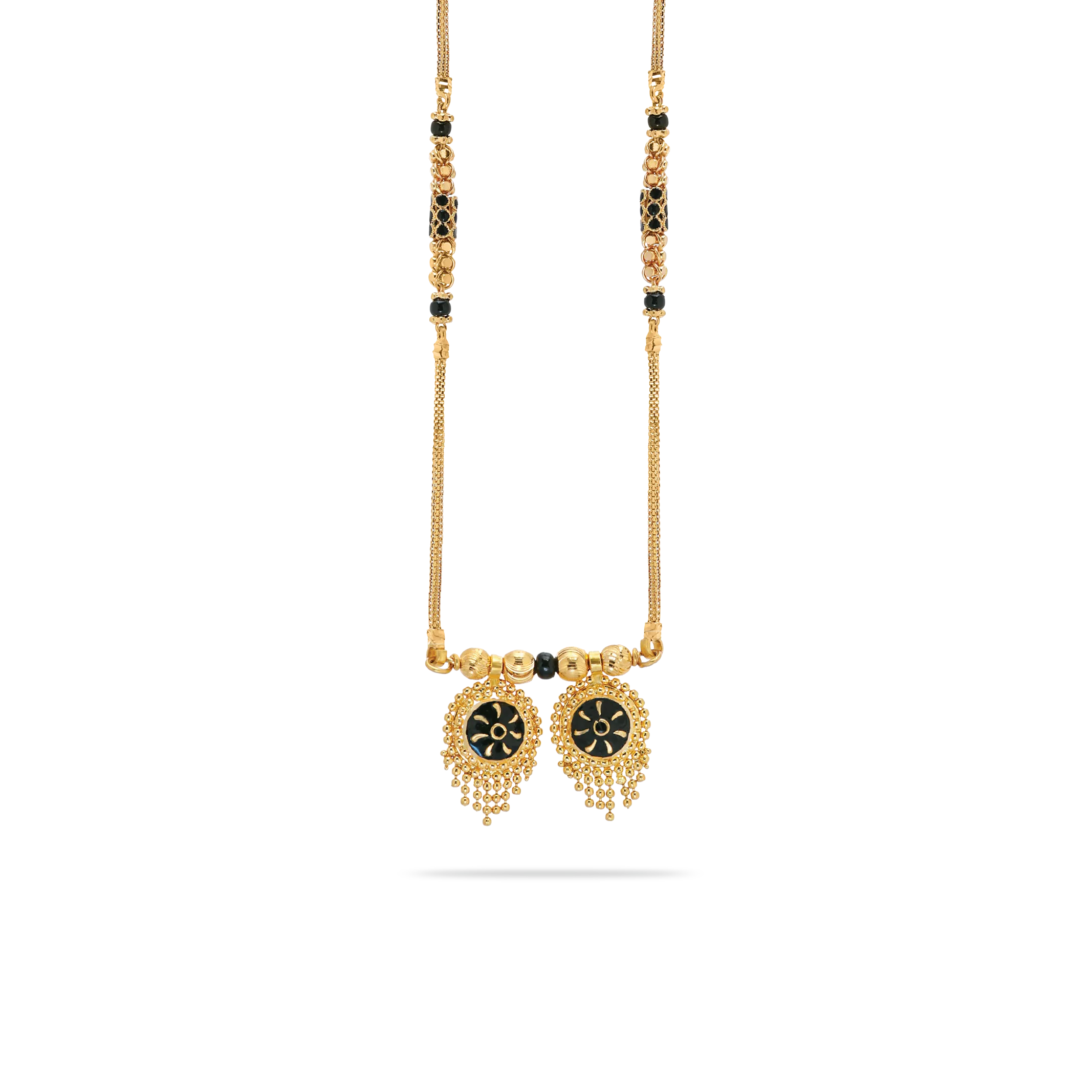
Your blouse neckline acts as the frame for your face, so it should guide the primary choice of your neck jewellery. A well-selected piece should sit comfortably on your skin without tangling in the embroidery or overlapping with the fabric. When you start exploring, C Krishniah Chetty & Co offers extensive collections that help manage these proportions seamlessly.
Choosing necklaces based on blouse necklines
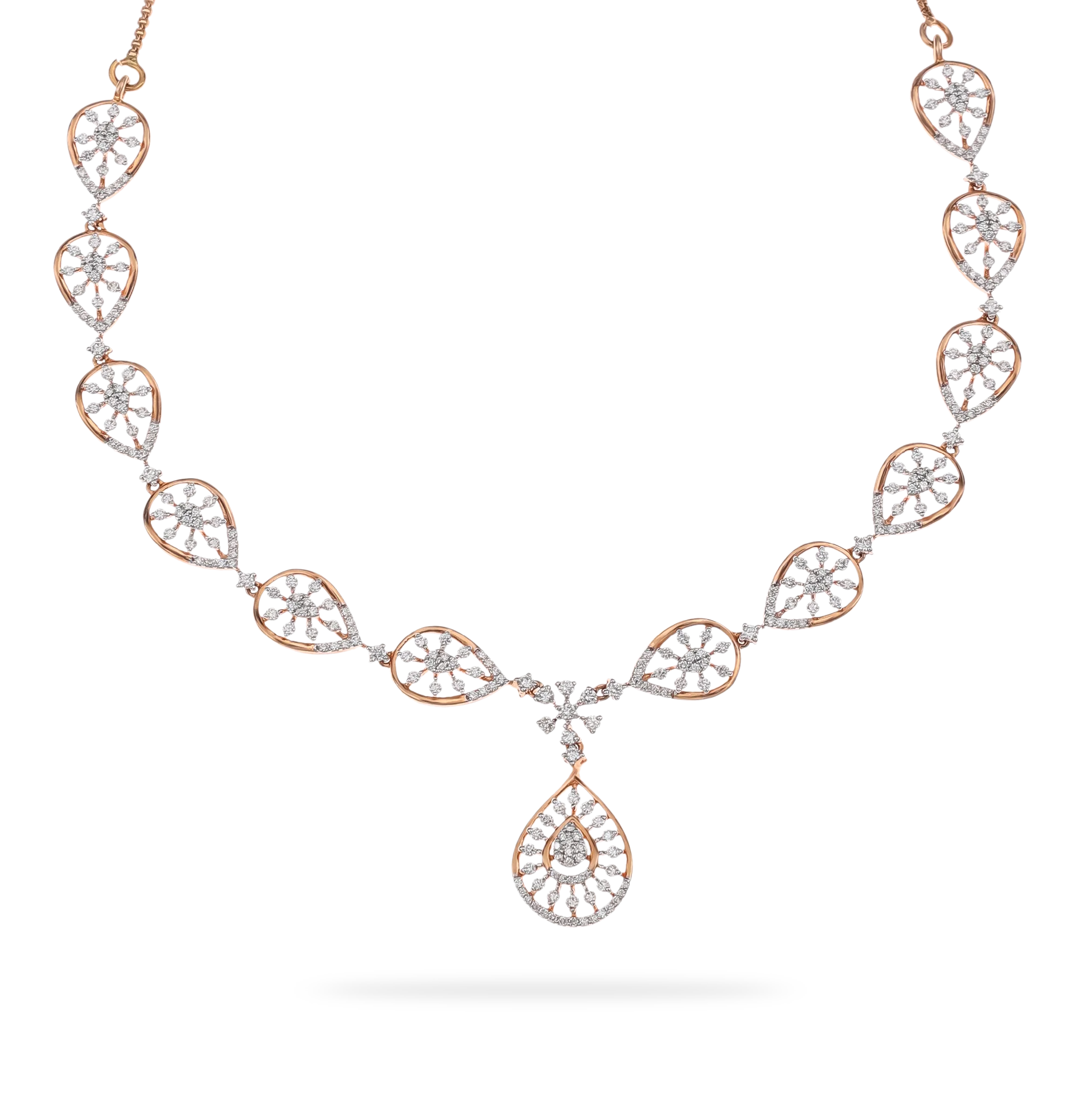
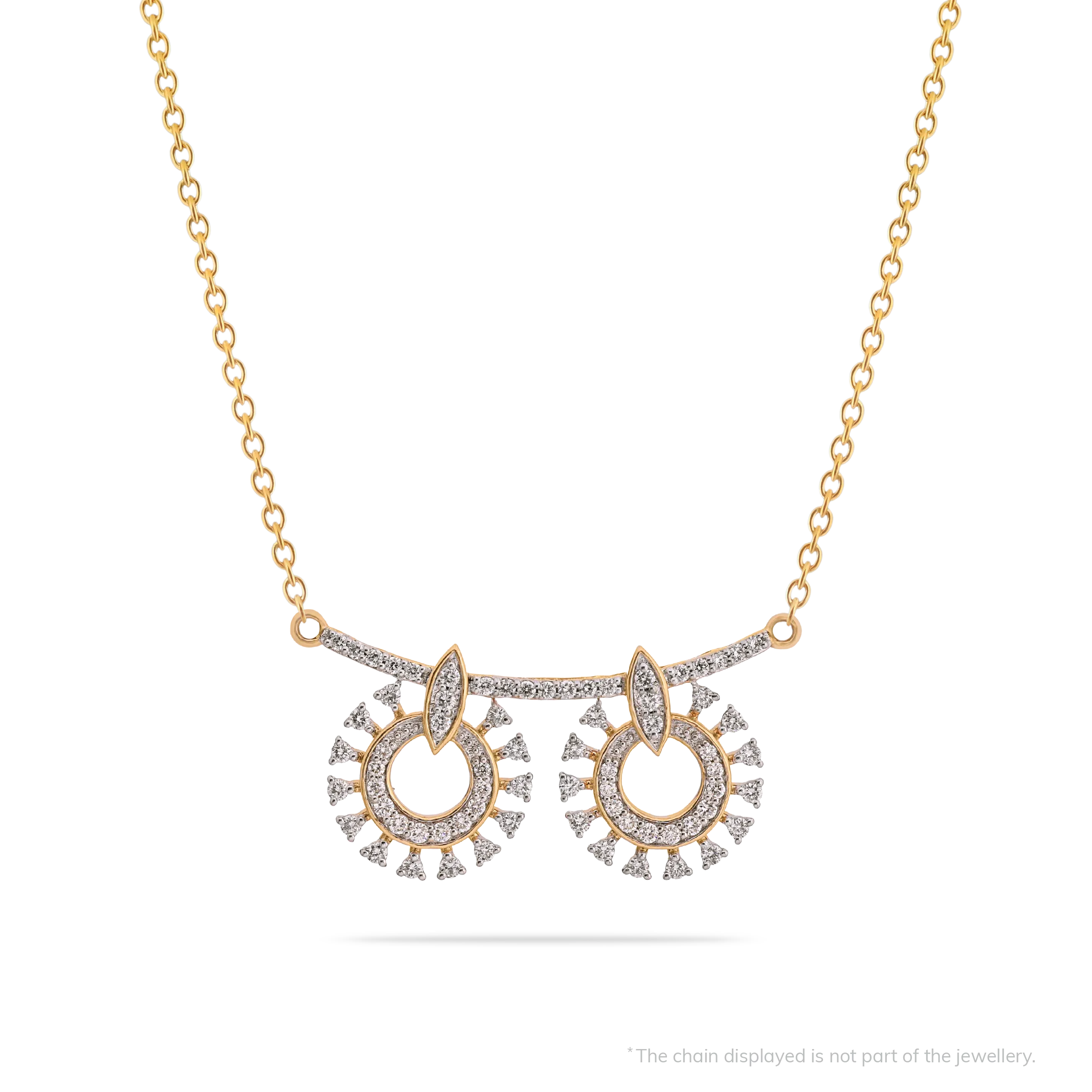
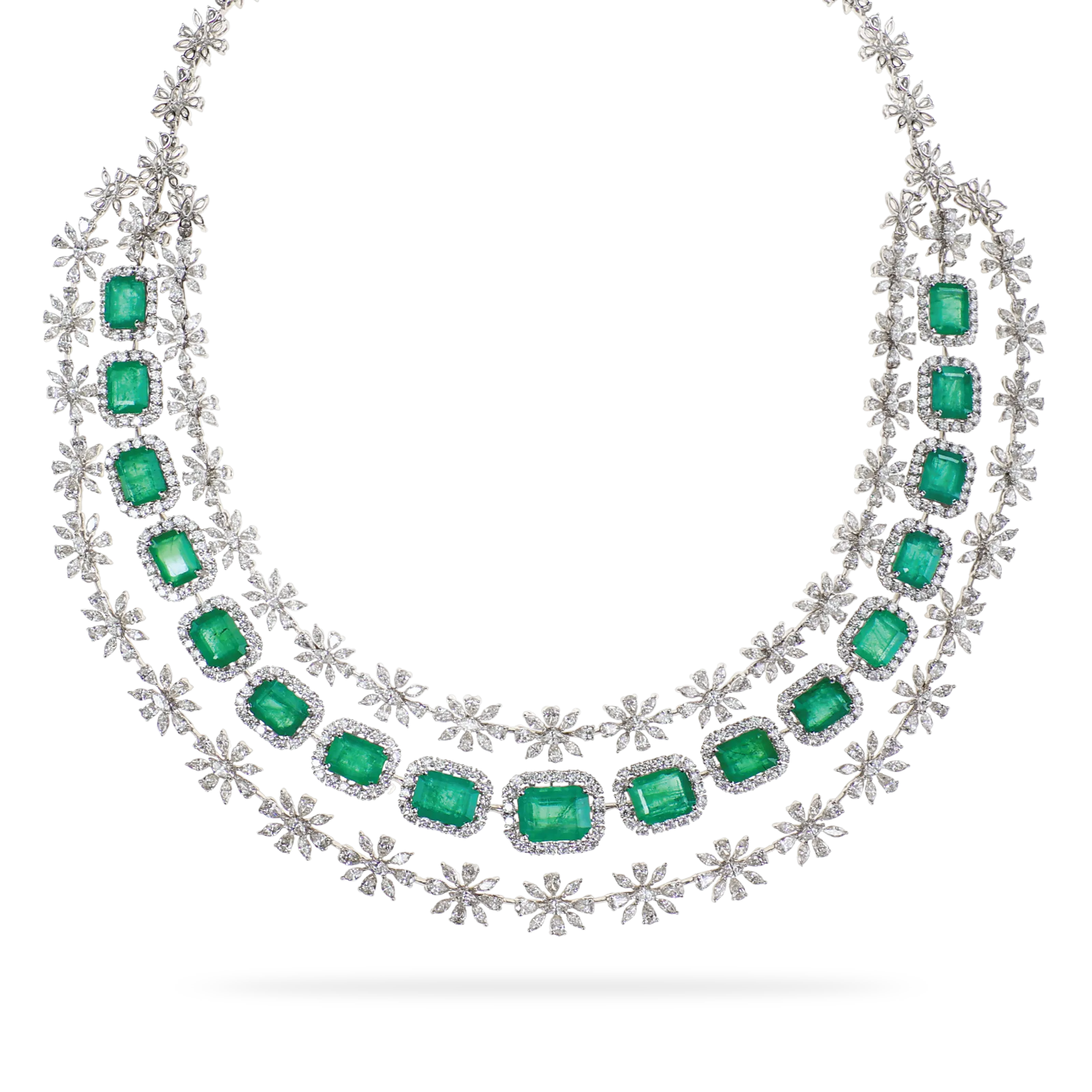
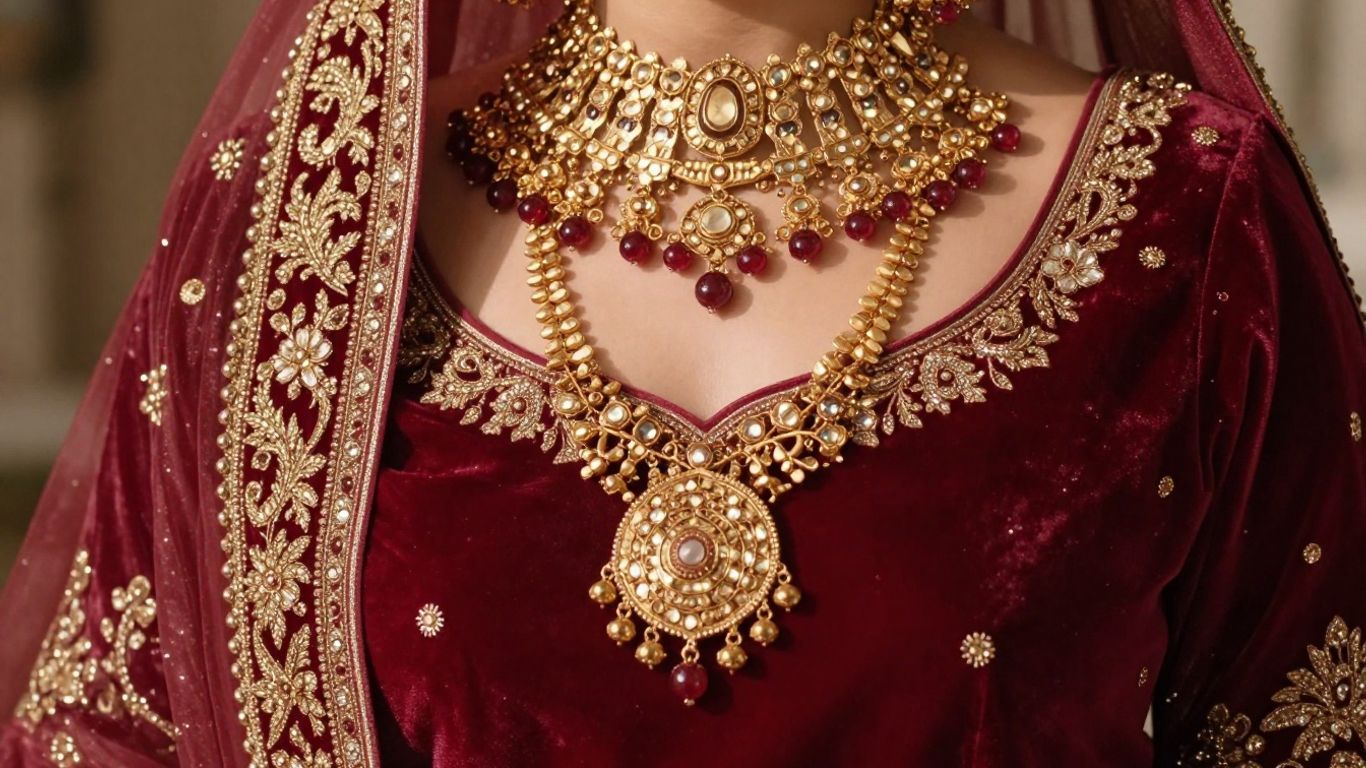
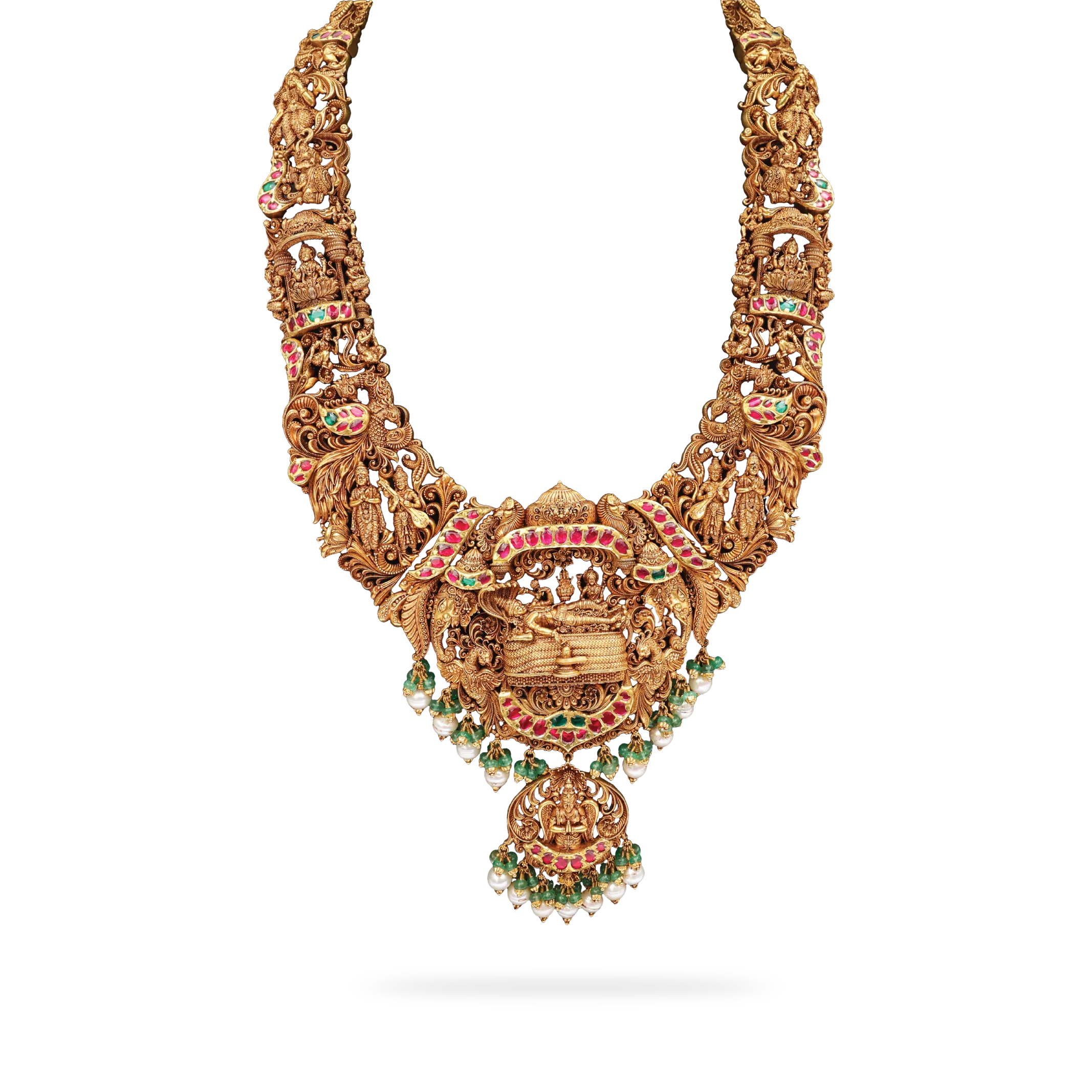
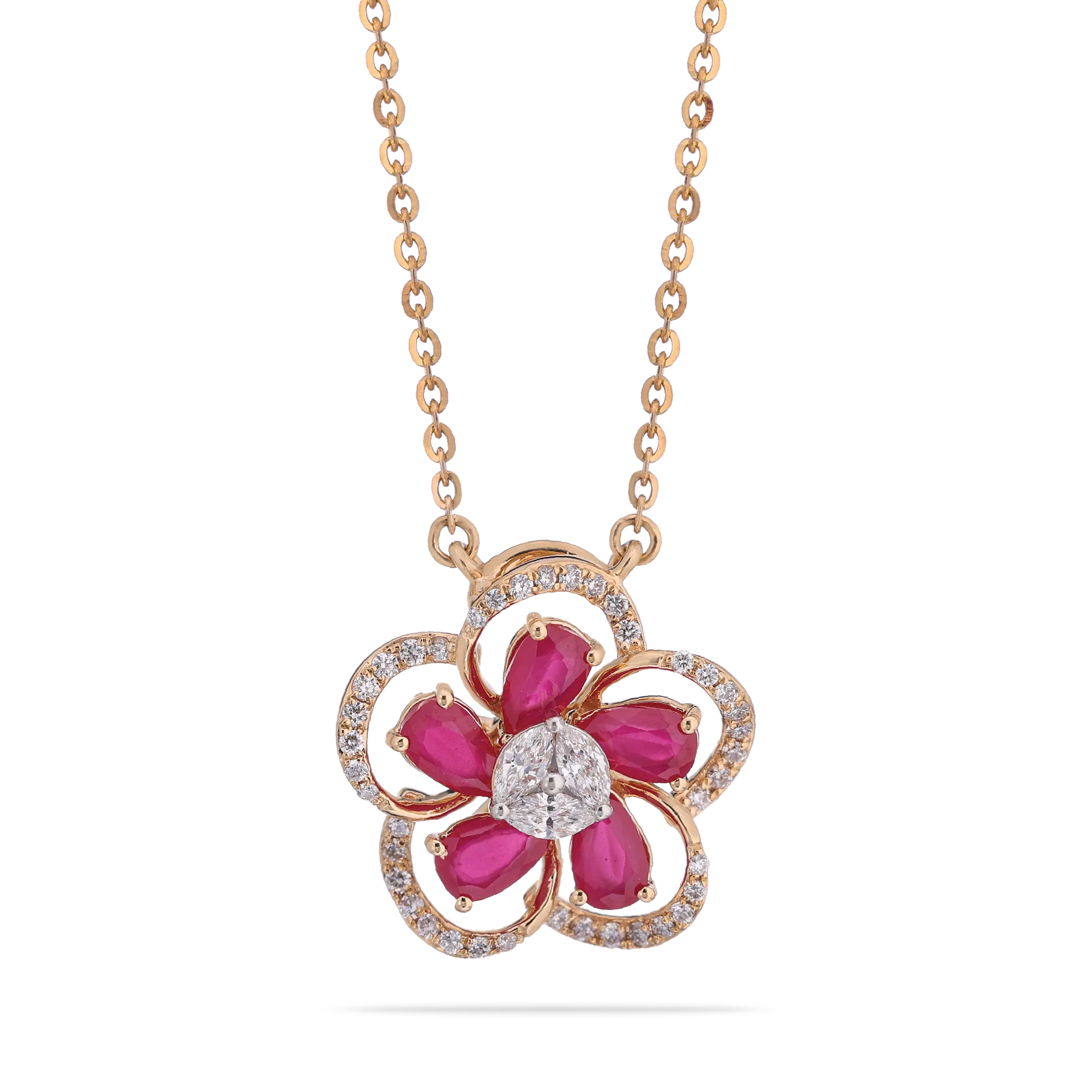
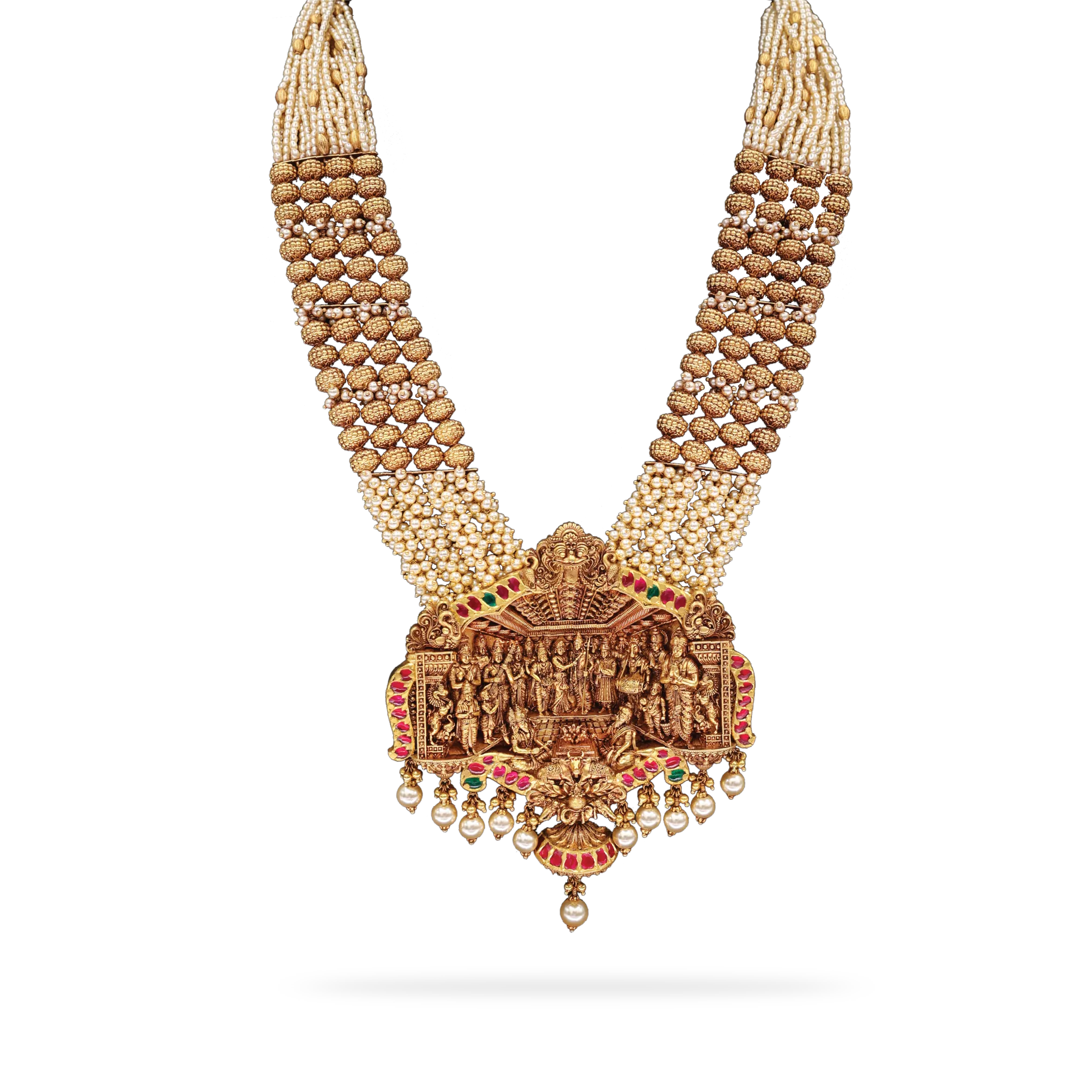
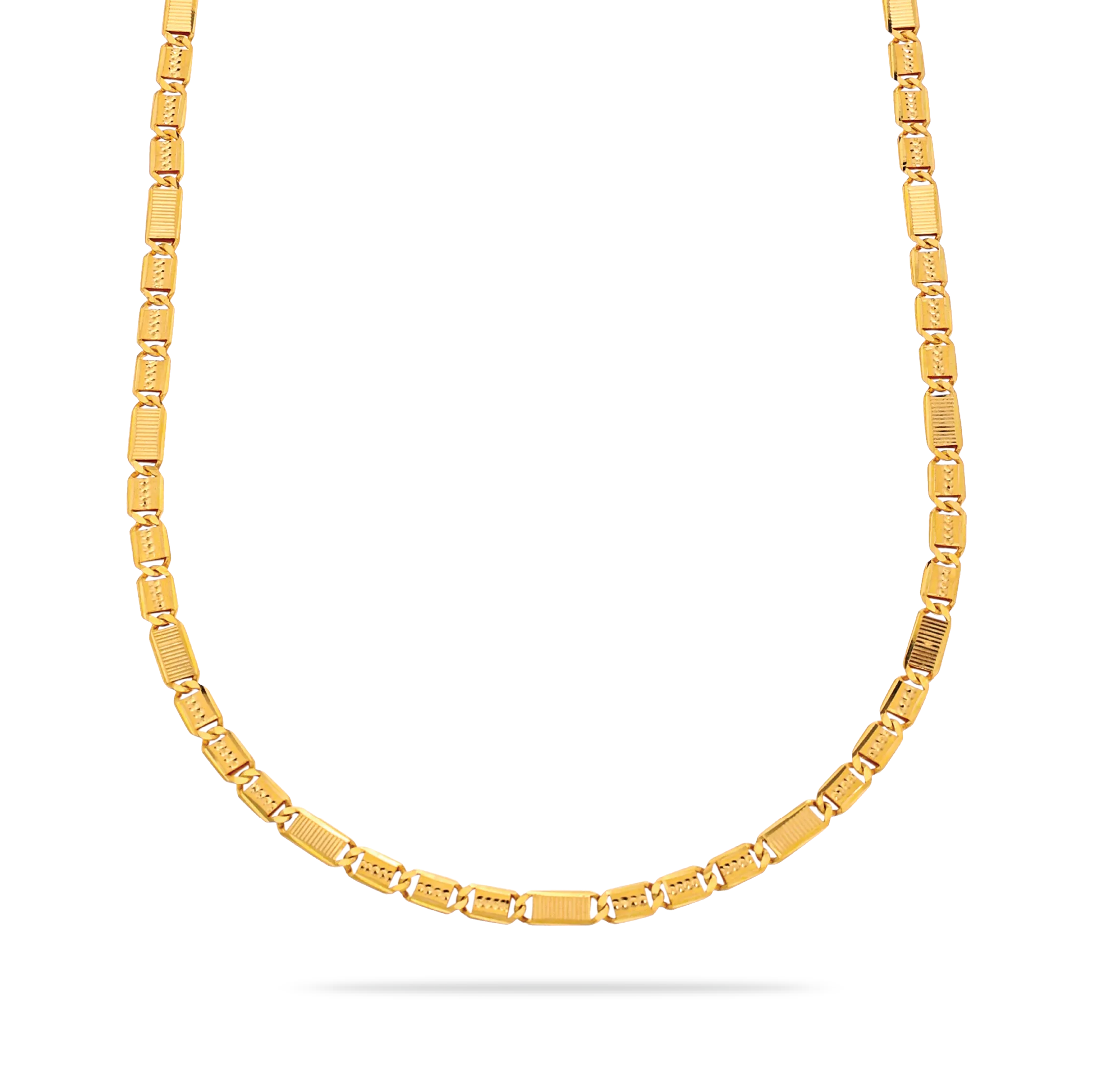
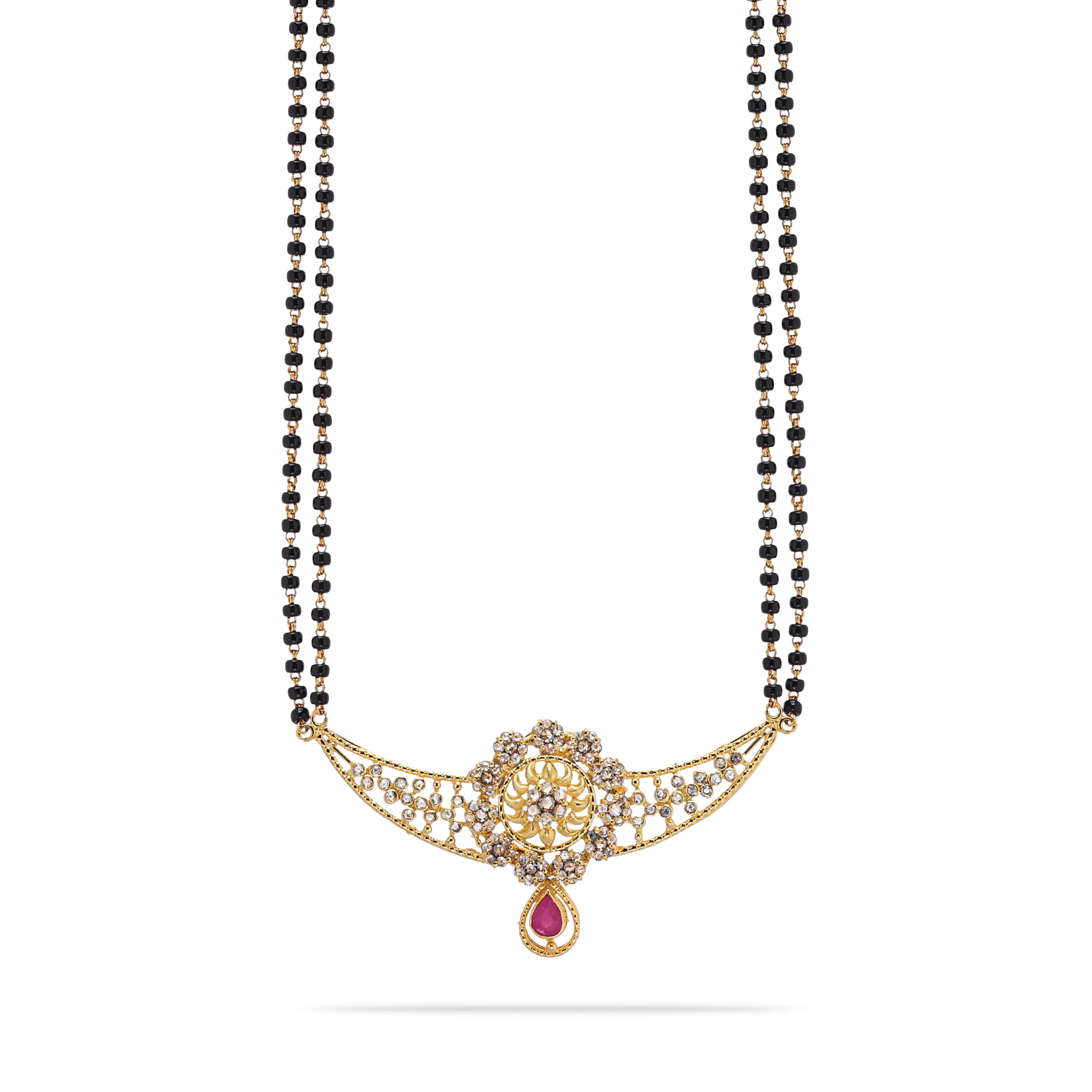
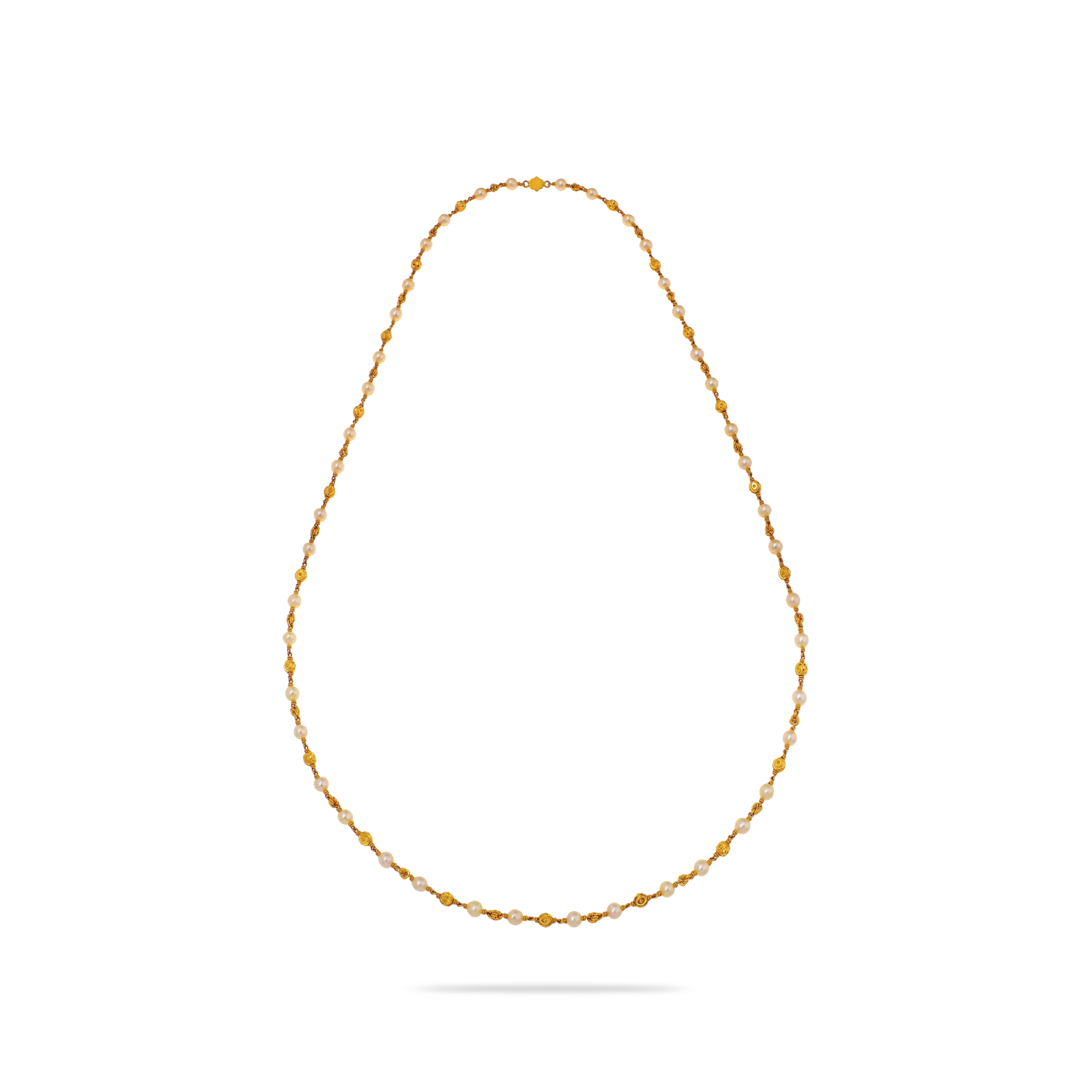
Deep-cut necklines provide an open canvas for a heavy, multi-layered rani haar, while high or collared necklines look sophisticated with delicate gold pendants. The focus should be on the negative space created by the blouse, ensuring the jewellery highlights your collarbone rather than clashing with the fabric's edge.
Balancing heavy lehenga embroidery with jewellery weight
When your lehenga is heavily laden with zari or zardosi work, it is often wise to choose jewellery that breathes rather than competes for attention. You can look at the visual weight of your outfit as a whole; dense embroidery requires lighter, airy gemstone settings, whereas minimal fabric detail allows for larger, ornate statement pieces.
When to opt for a choker versus a rani haar
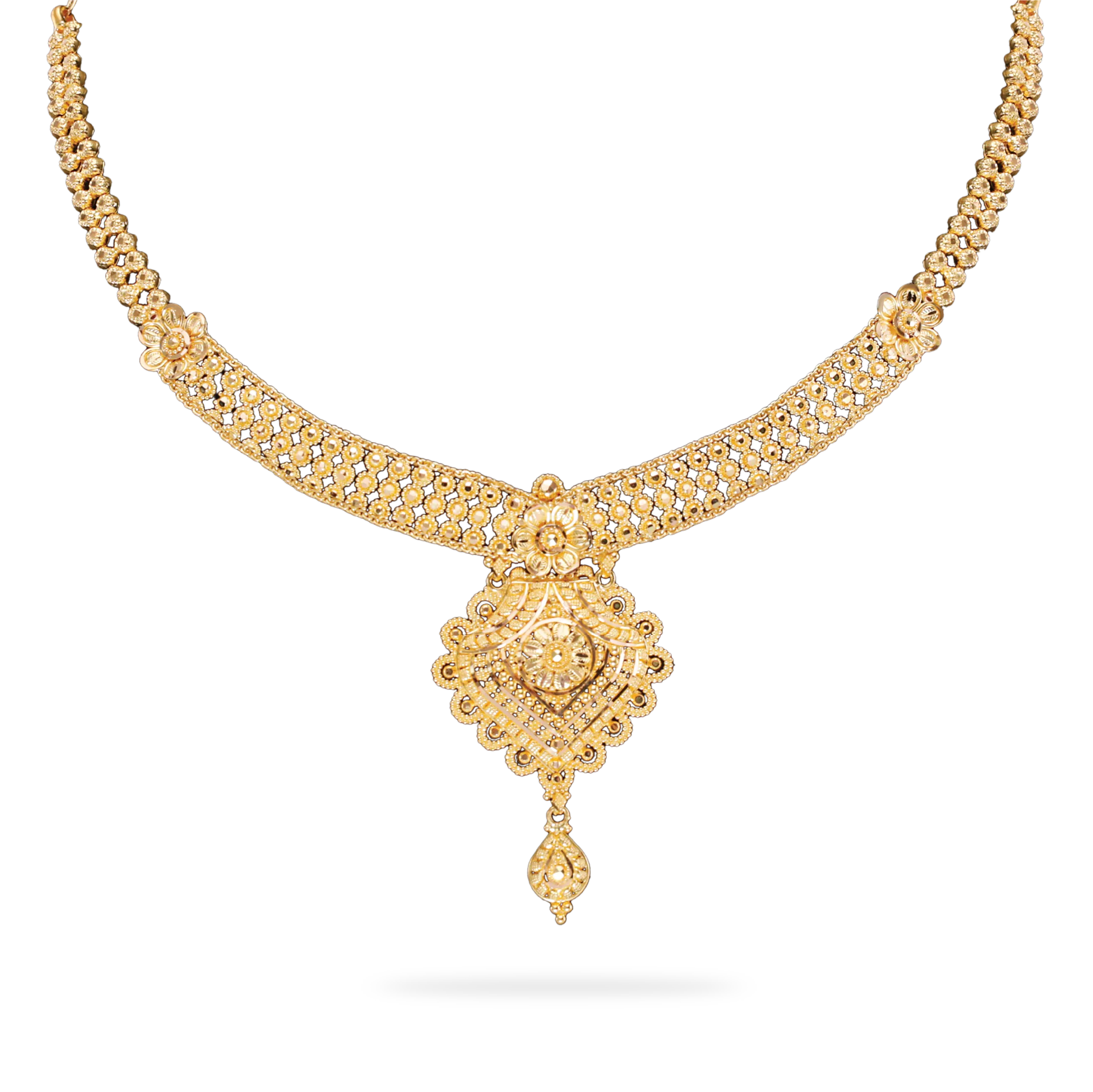
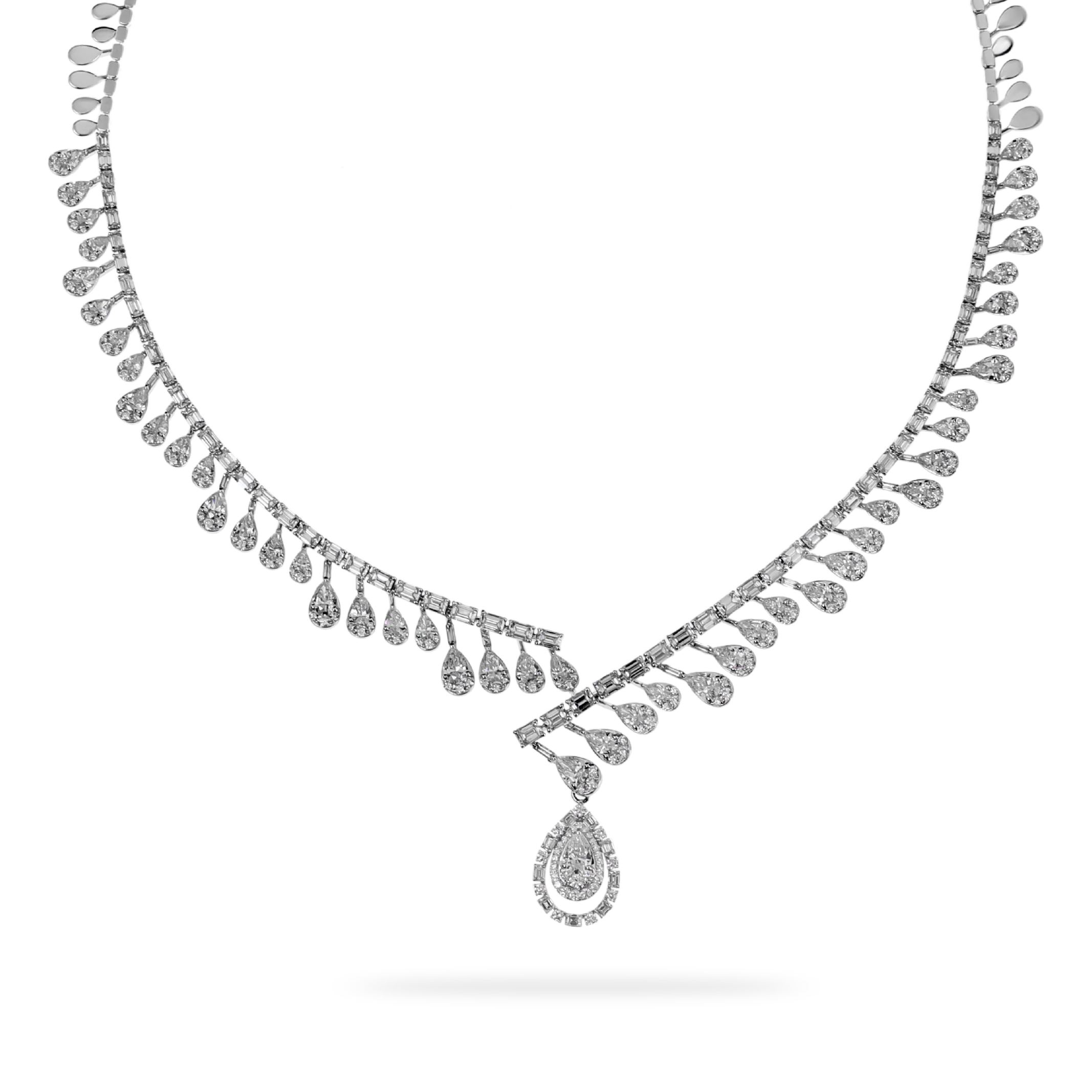
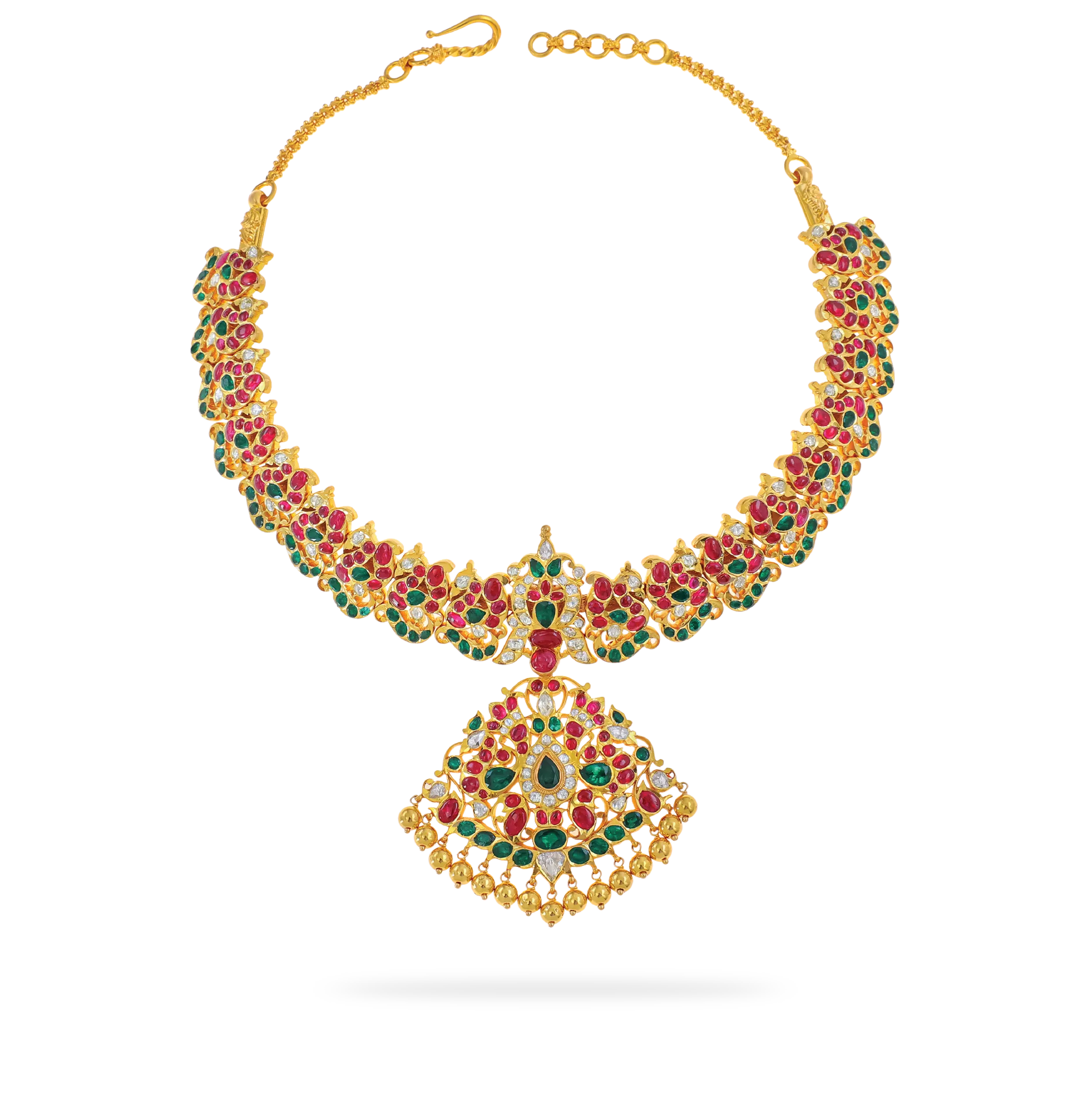
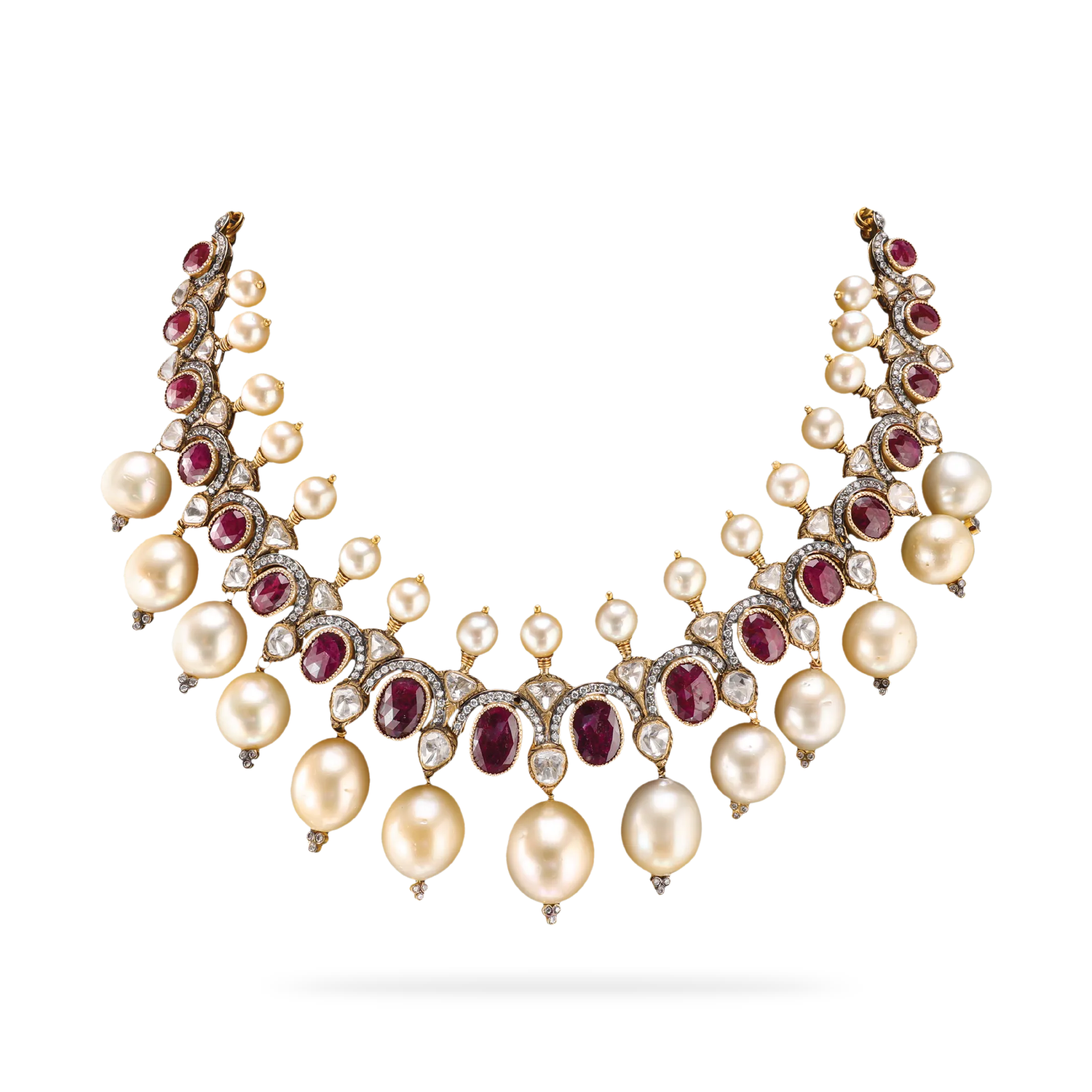
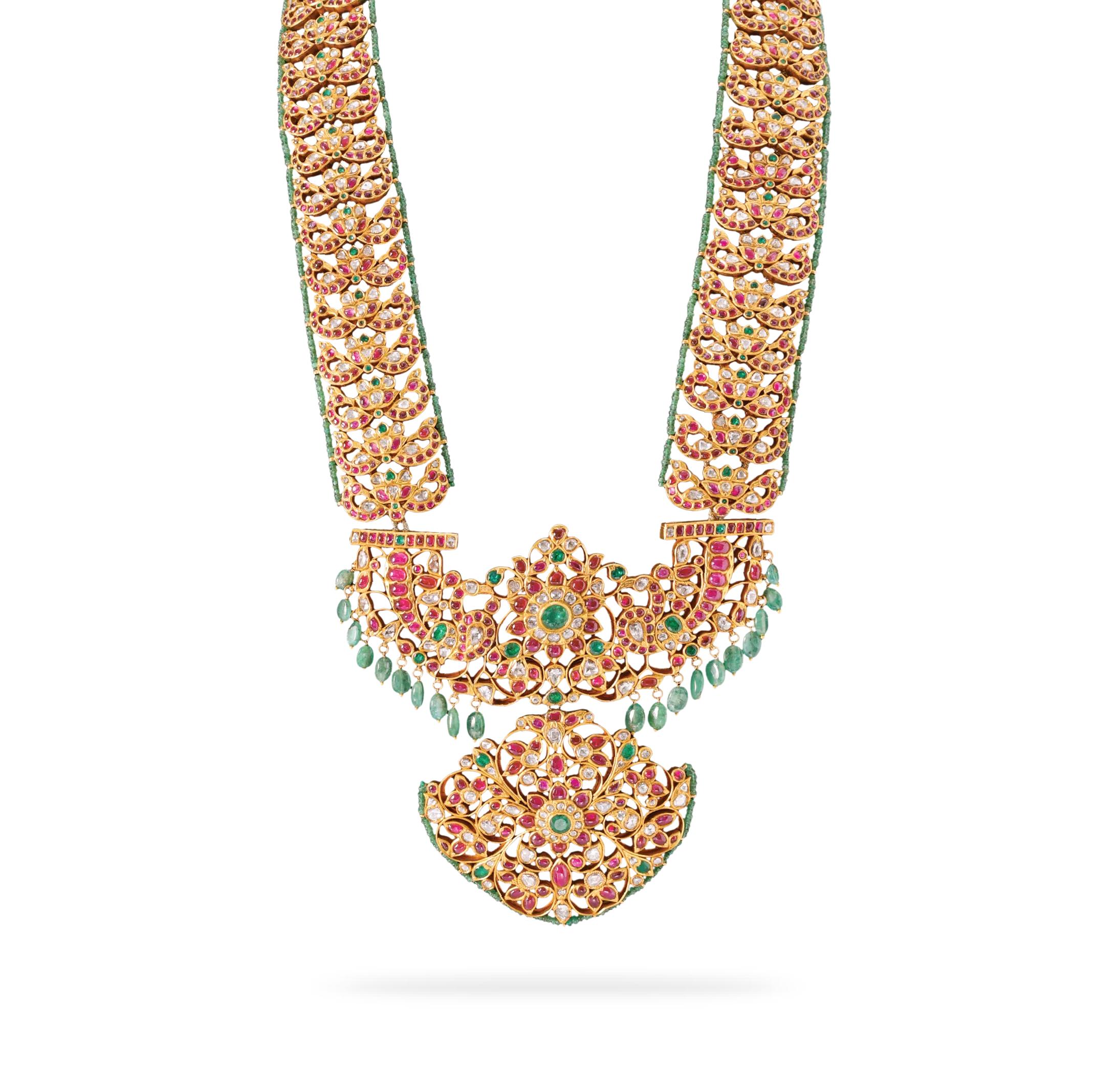
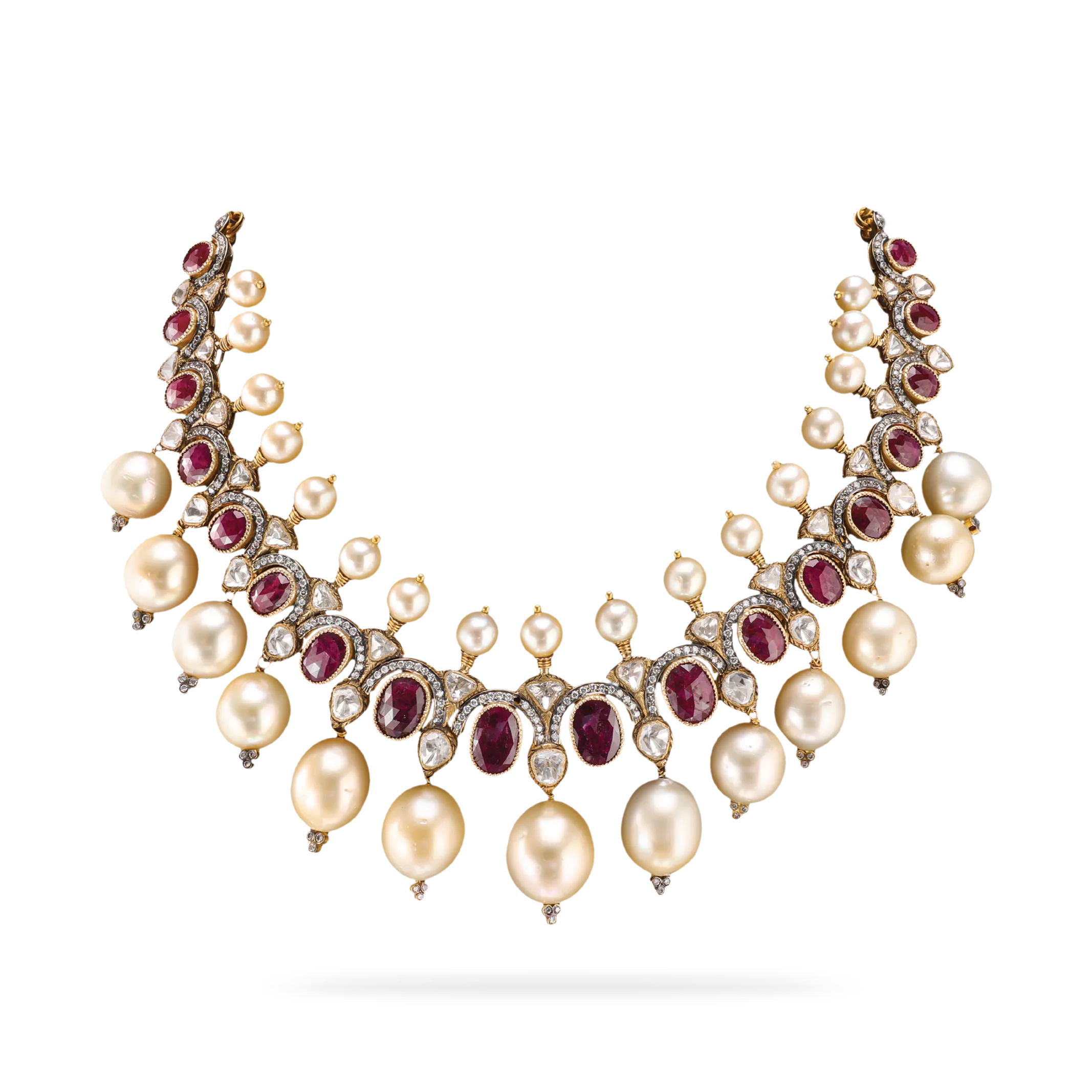
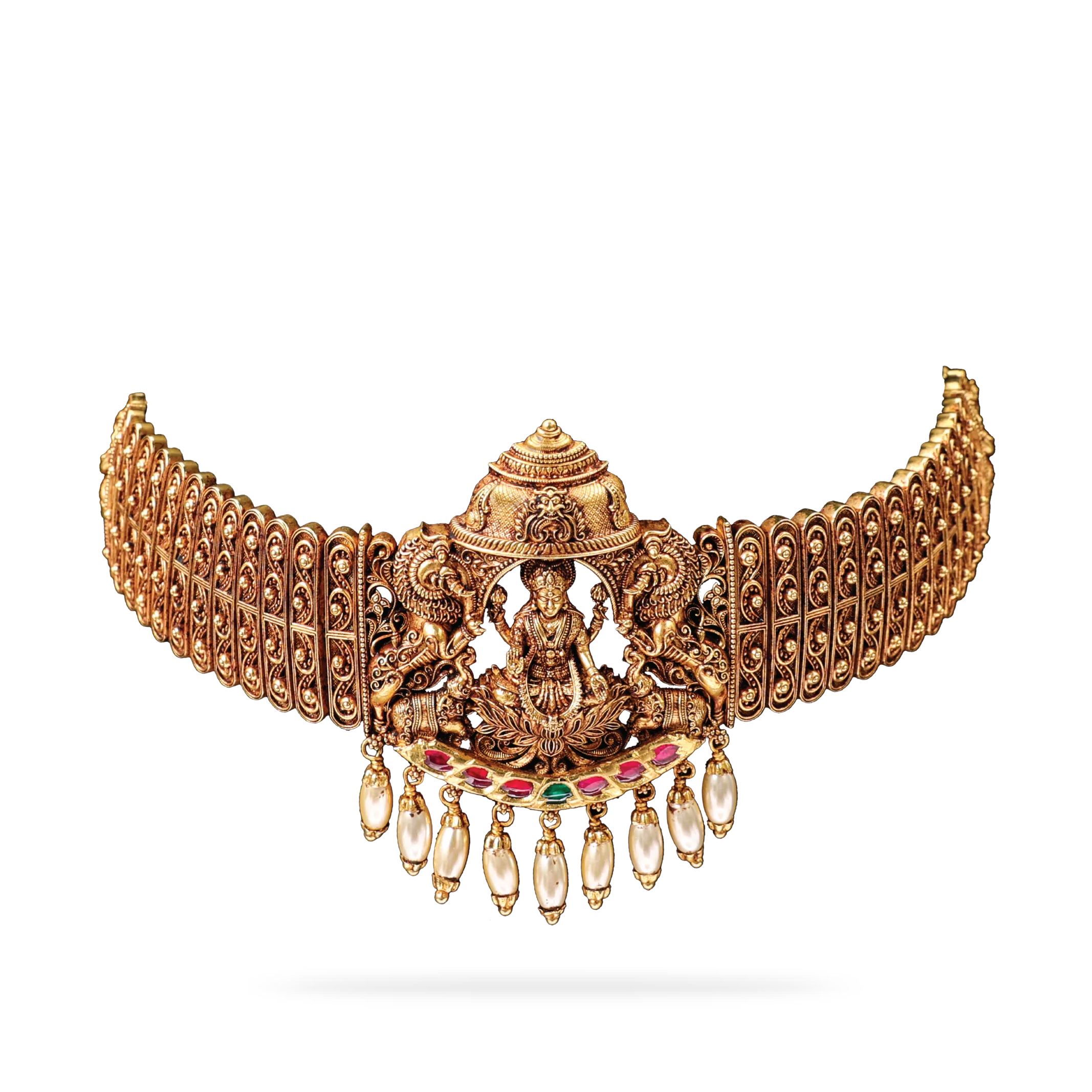
Choosing between a choker and a long rani haar often comes down to your personal neck length and the desired focal point. Chokers are excellent for defining the neckline and providing an intense pop of color near the face, whereas rani haars elongate the torso and add a sense of regal tradition that sits elegantly against the lehenga skirt.
Impact of dupatta draping on neck jewellery visibility
Your dupatta drape can either bury a beautiful necklace or enhance it through framing effects. Opting for a pinned or side-swept dupatta style ensures your neck jewellery remains the protagonist of your ensemble throughout the ceremony.
Matching metal tones to fabric colors
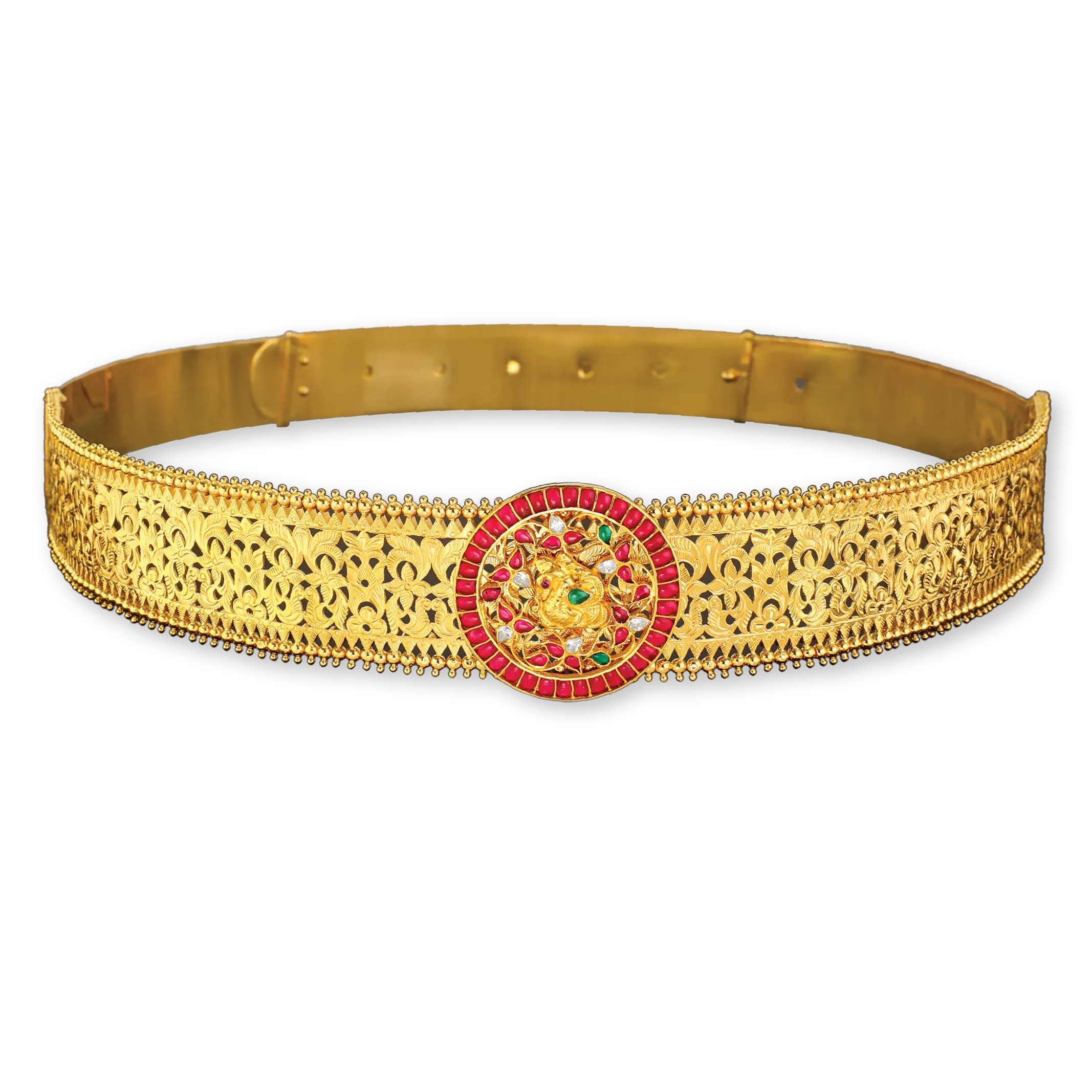
Selecting the correct metal finish is crucial for achieving a cohesive bridal aesthetic that ties all your elements together. Whether you choose gold, silver, or rhodium, the key is to ensure the tone complements the undertones of your lehenga fabric. Gold usually feels more traditional for warmer palettes, but the rules are bending in modern bridal fashion where custom styling is key.
Gold jewellery for warm-toned bridal fabrics
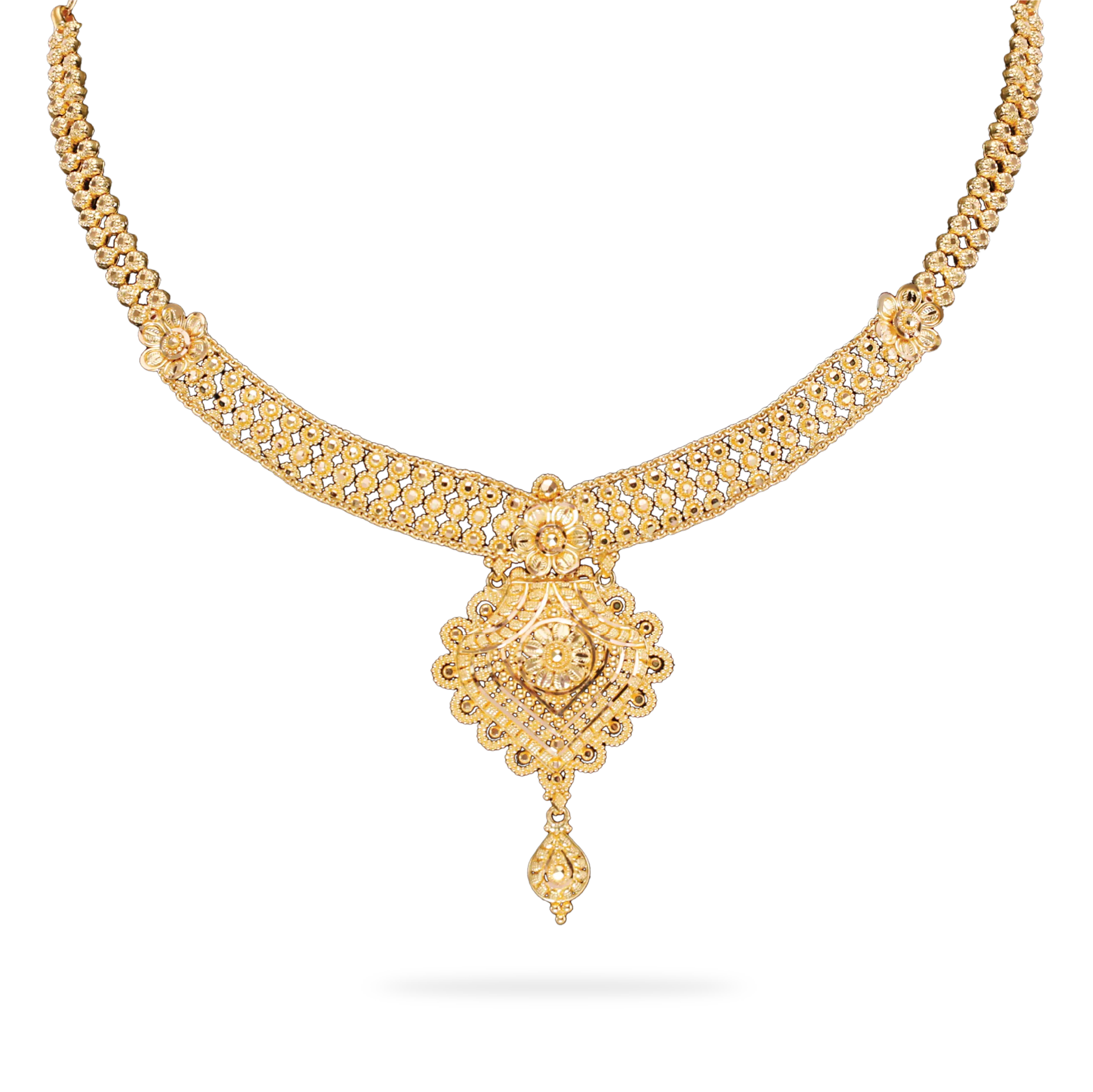
Gold is the classic companion for warm bridal fabrics, particularly shades of orange, yellow, and traditional crimson. The natural warmth of high-karat gold enhances these deep hues, creating a saturated, glowing look that appears timelessly regal and deeply connected to heritage.
Silver and diamond options for cool-toned lehengas
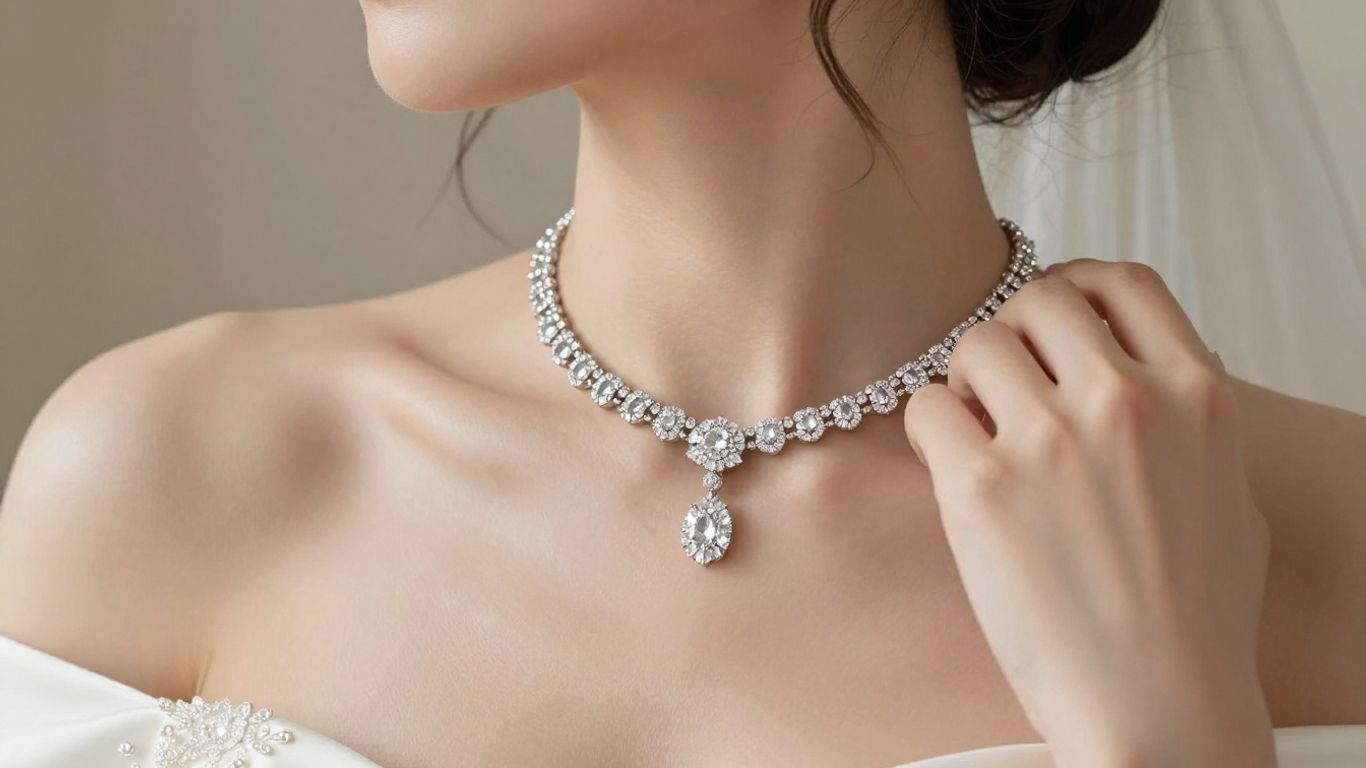
Cool-toned lehengas in shades of blue, sage green, or silver work wonders with platinum or white gold jewellery. Diamonds or white stones reflect the coolness of these fabrics perfectly, ensuring the metallic brightness doesn't wash out the delicate color of your wedding attire.
Using antique finishes for traditional aesthetics
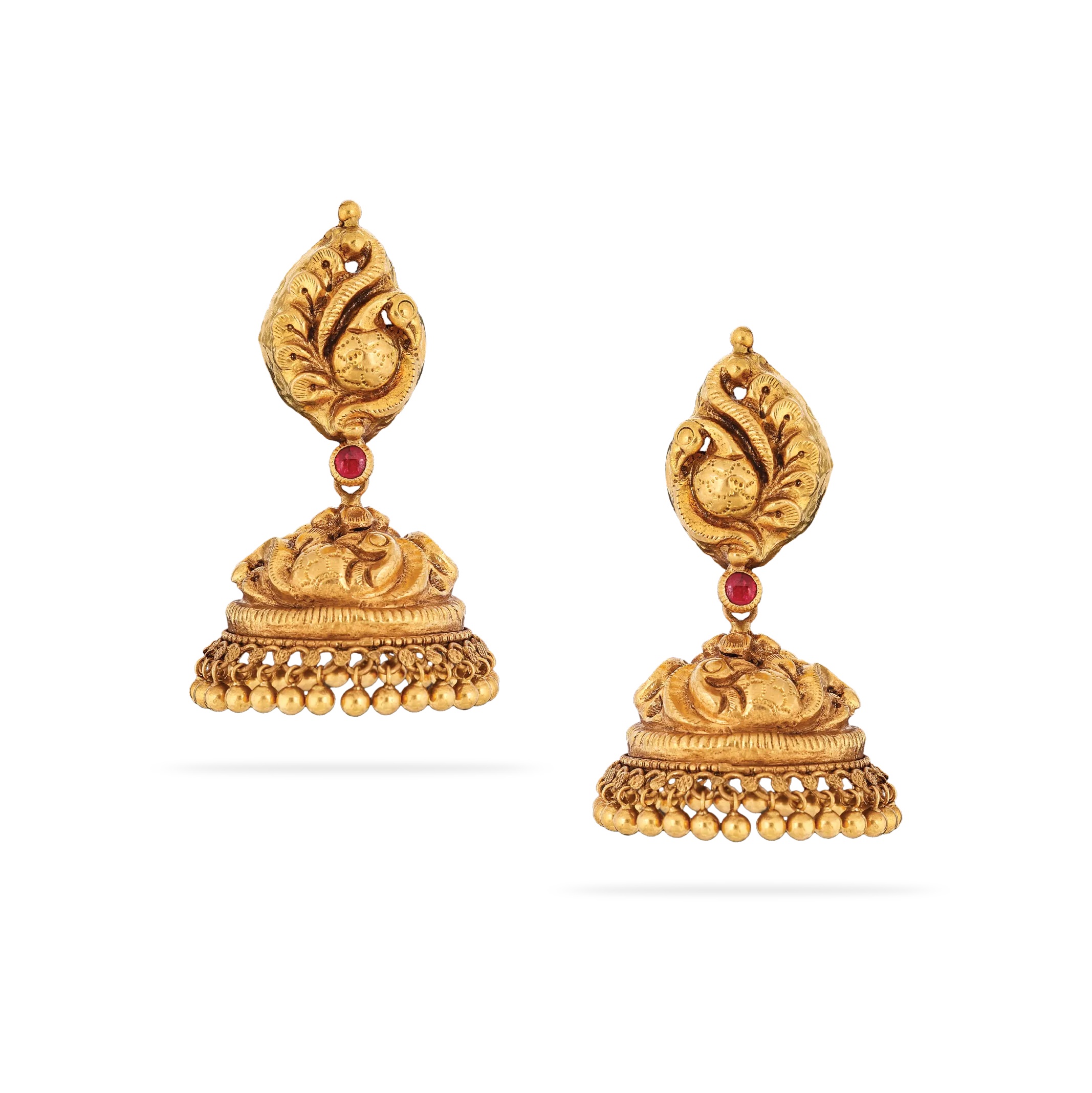
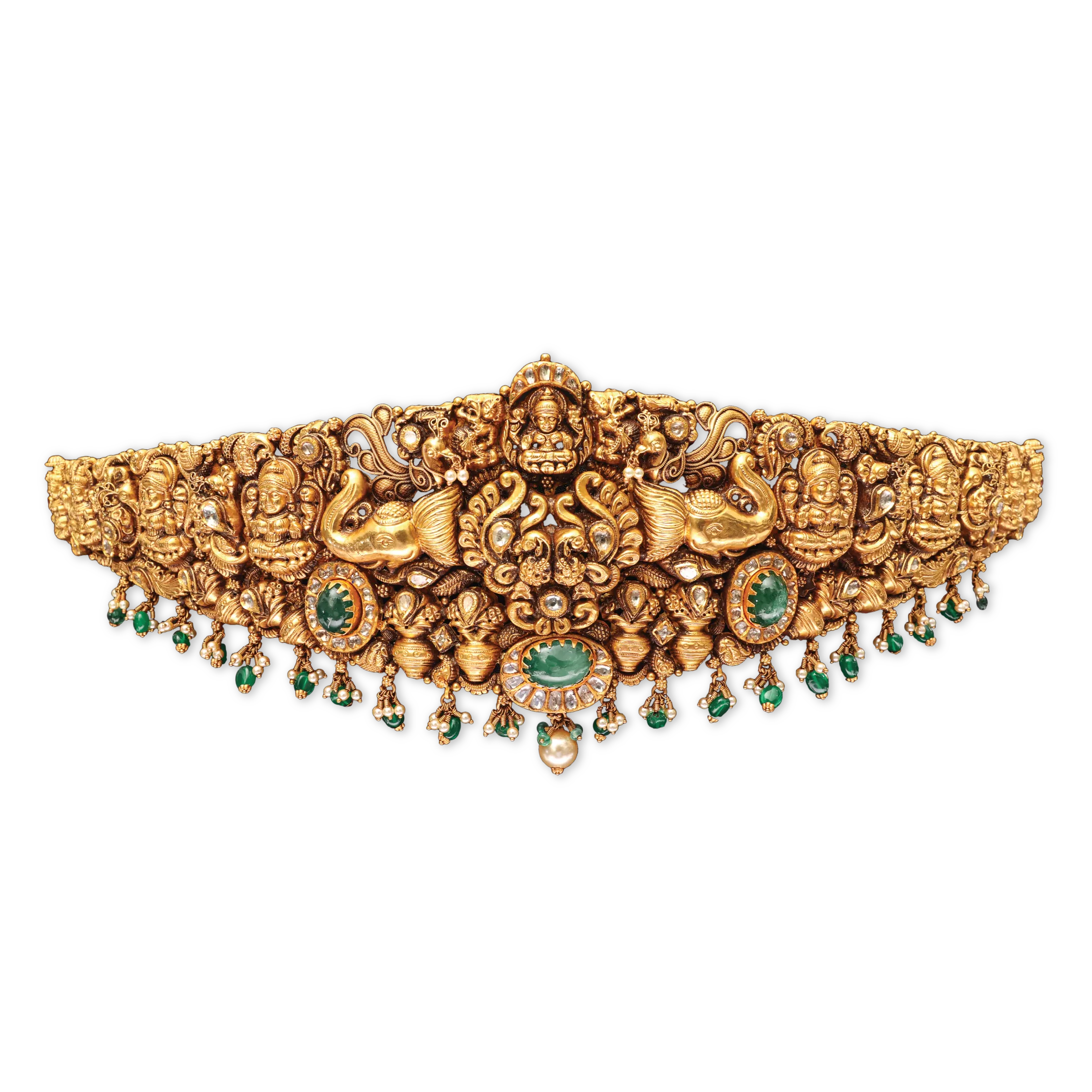
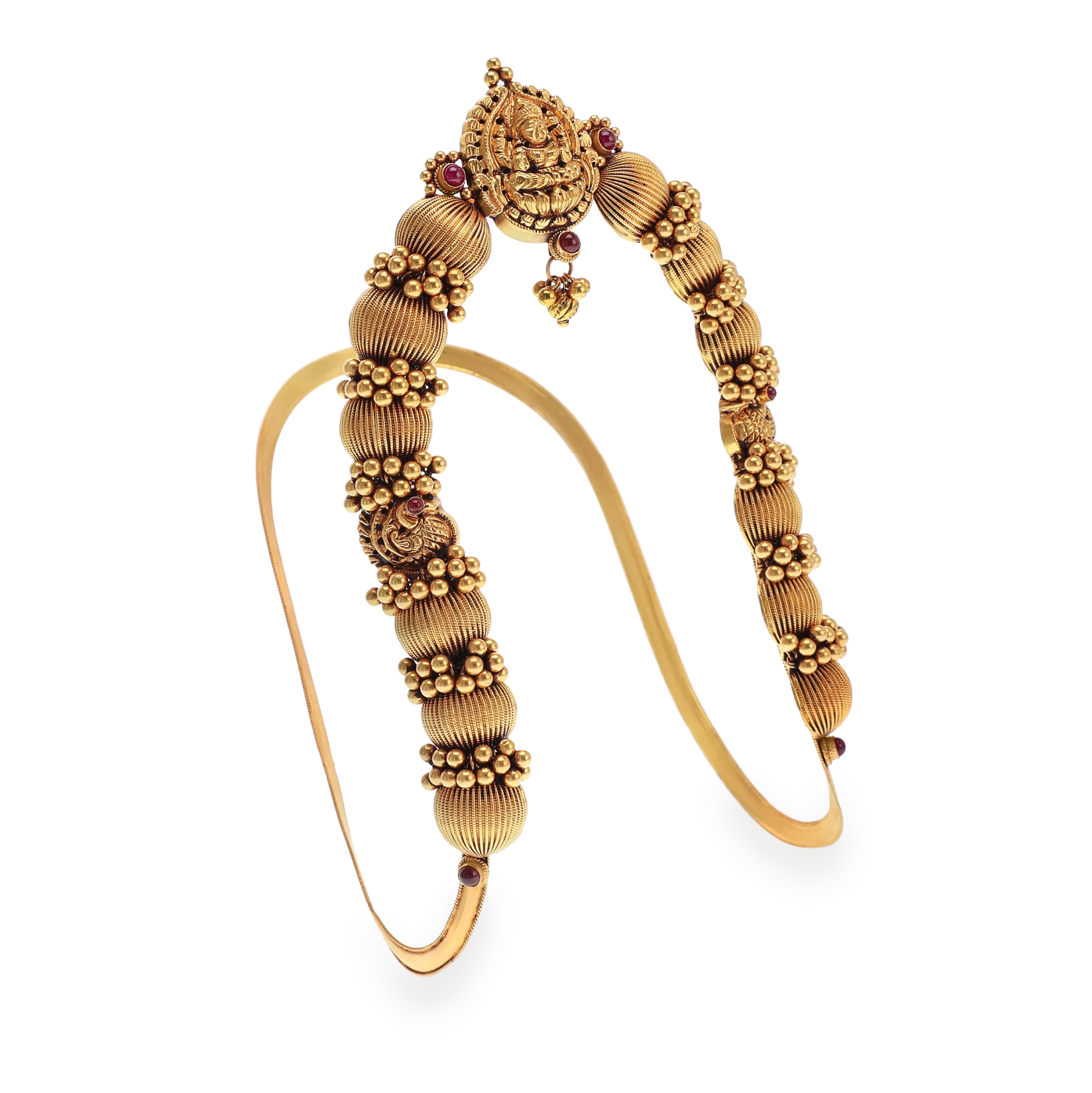
Antique-finished gold, such as Temple jewellery or slightly blackened oxidised layers, brings an earthy, rooted feeling to traditional wedding styles. This choice is particularly effective when working with muted, matte-finished fabric textures which have a rustic charm.
Mixed metal trends for modern bridal styling
Modern bridal fashion is embracing the art of metal mixing to create multi-dimensional looks. By integrating varied finishes, you can achieve a sophisticated and bespoke appearance, as long as you maintain a consistent design language across the individual pieces.
- Classic Yellow Gold : Best for traditional reds and warm hues.
- White Gold and Platinum: Ideal for pastels and icy color palettes.
- Rose Gold : Complements soft pinks and neutral floral tones.
- Antique Silver: Perfect for rustic or bohemian-inspired lehenga styles.
Selecting essential ornament pieces
Finding the perfect set of accessories involves more than just a necklace; it is the curation of every detail, from head to finger. By thoughtfully assembling your collection, you ensure every piece has a purpose.
Picking the right maang tikka for your face shape
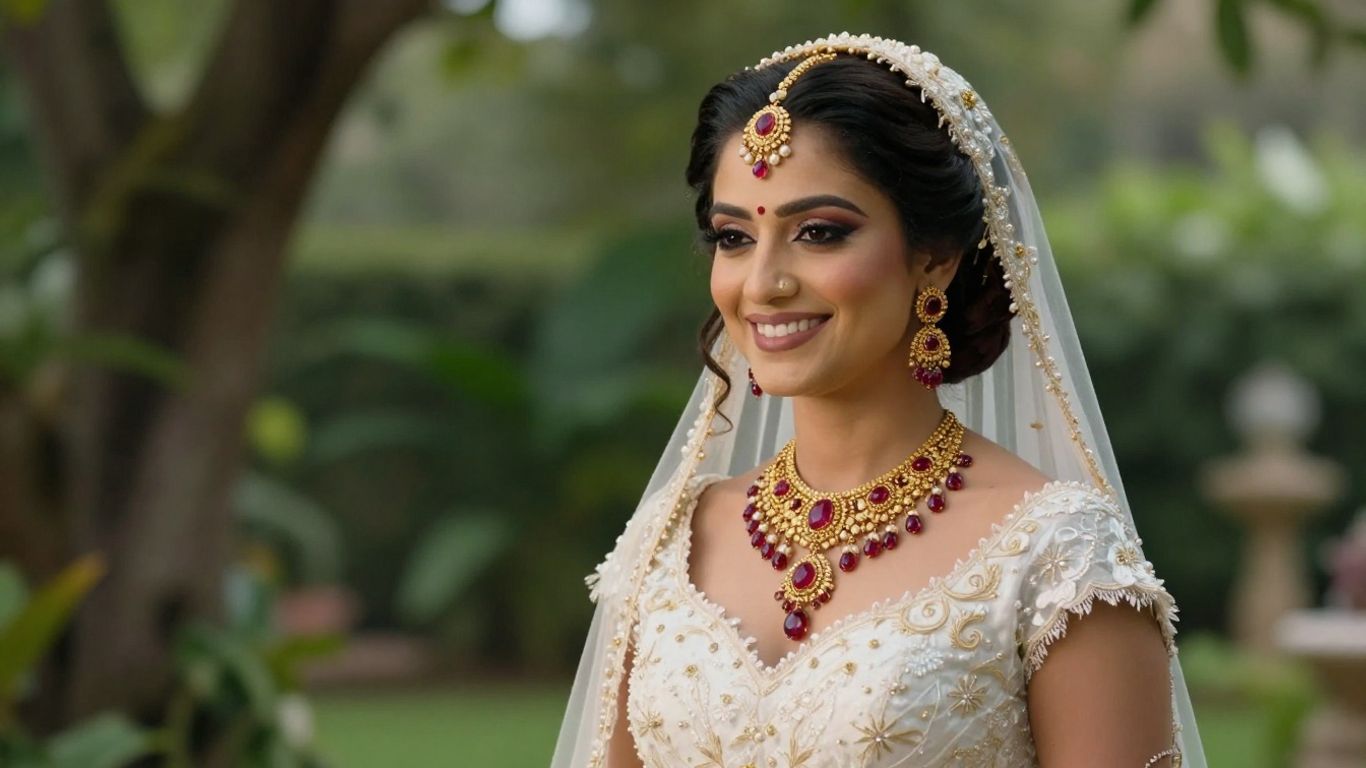
Your maang tikka should balance your forehead length and highlight your natural features. A center-parted style works beautifully for heart-shaped faces, while a larger, statement tikka can round out a sharper, more angular facial structure.
Earring styles that complement your hair and veil
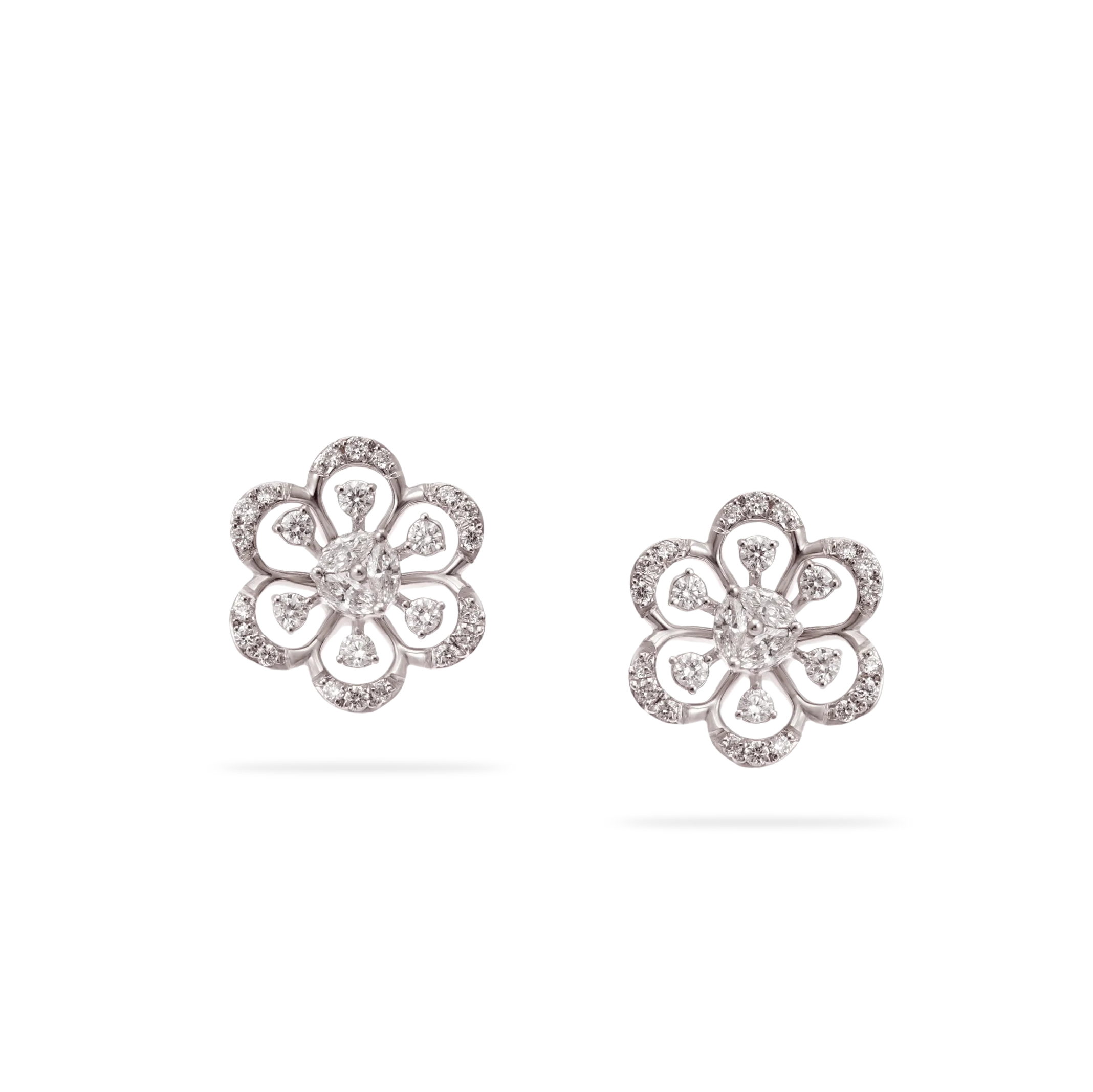
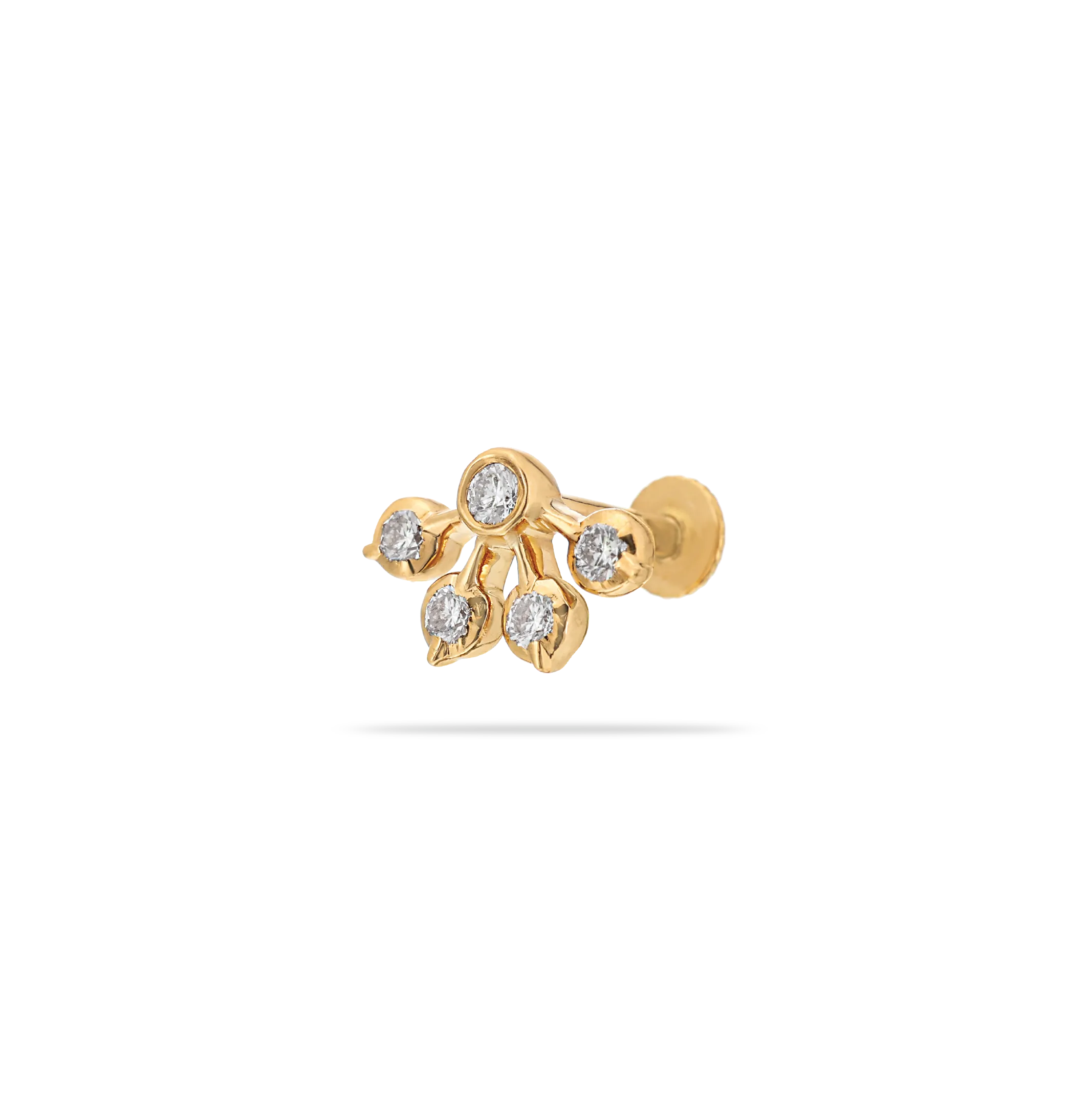
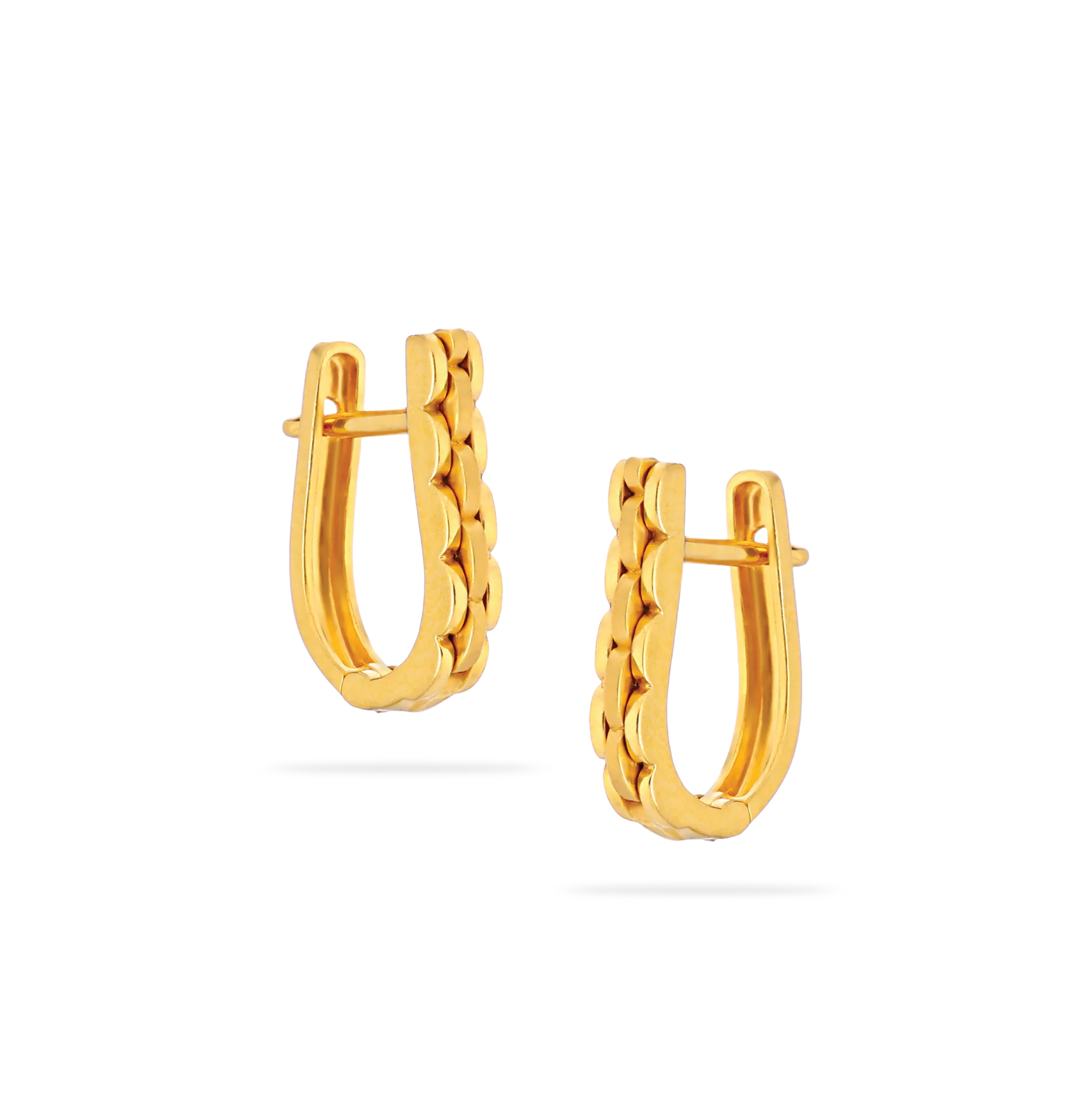
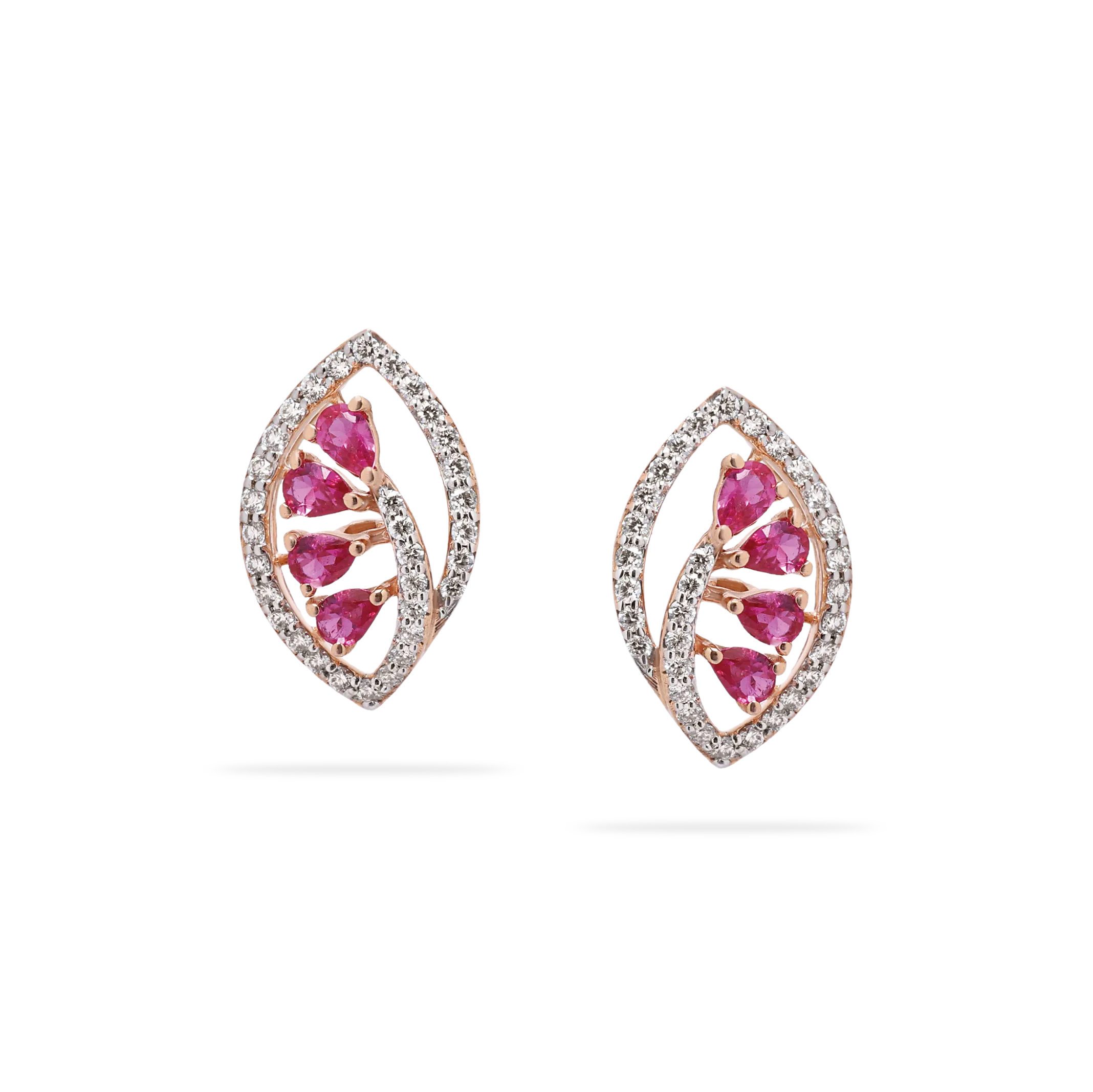
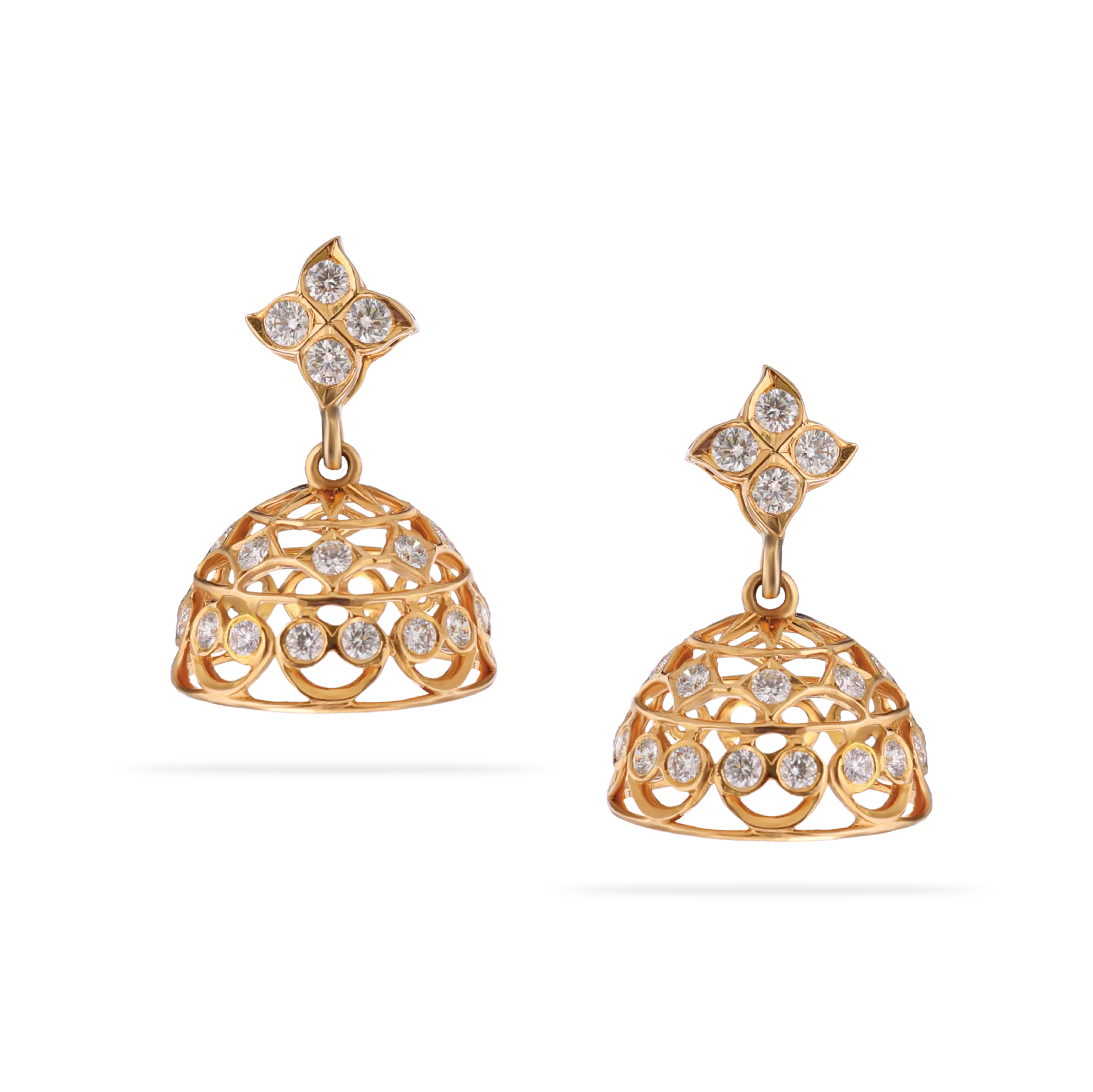
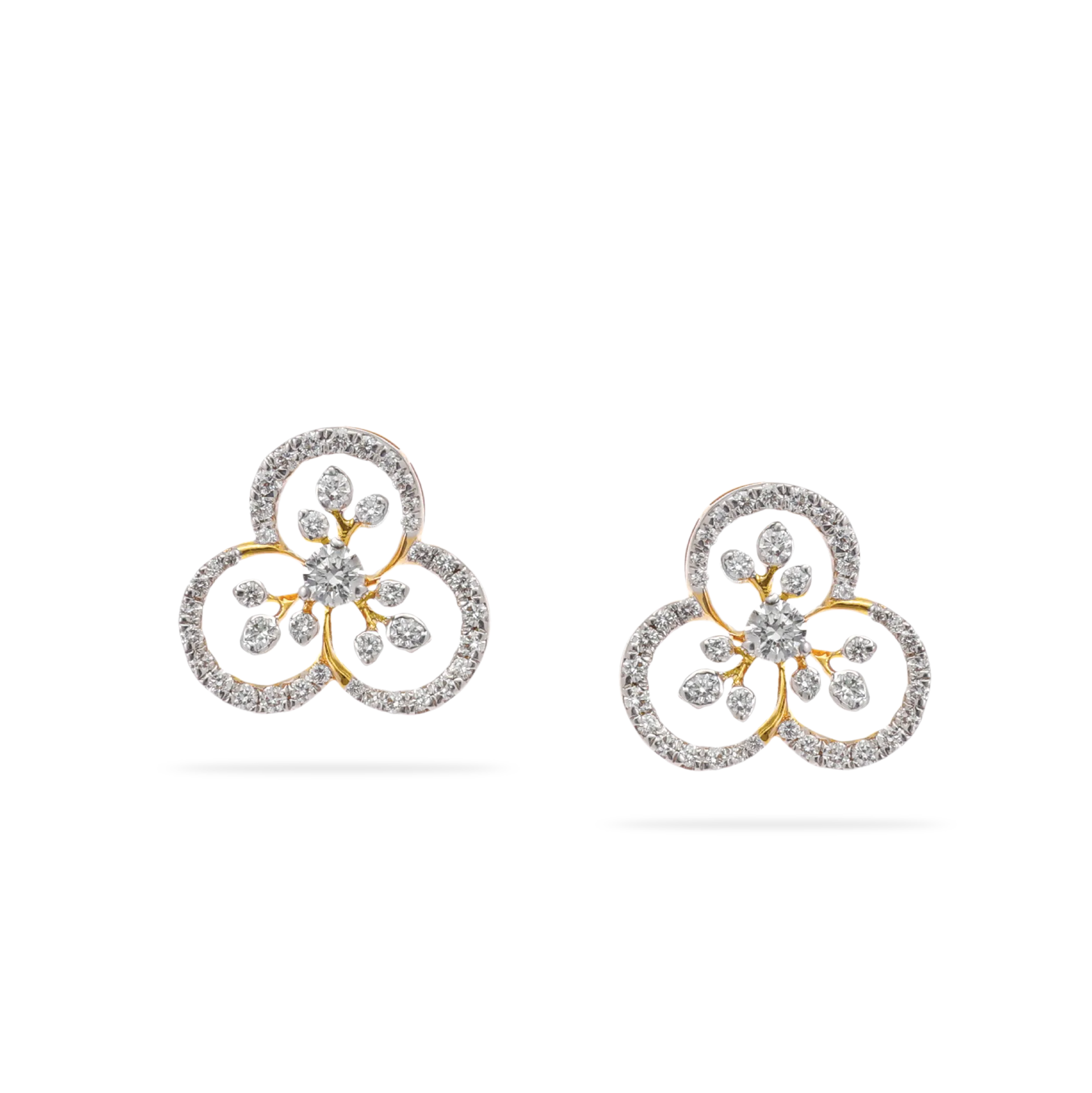
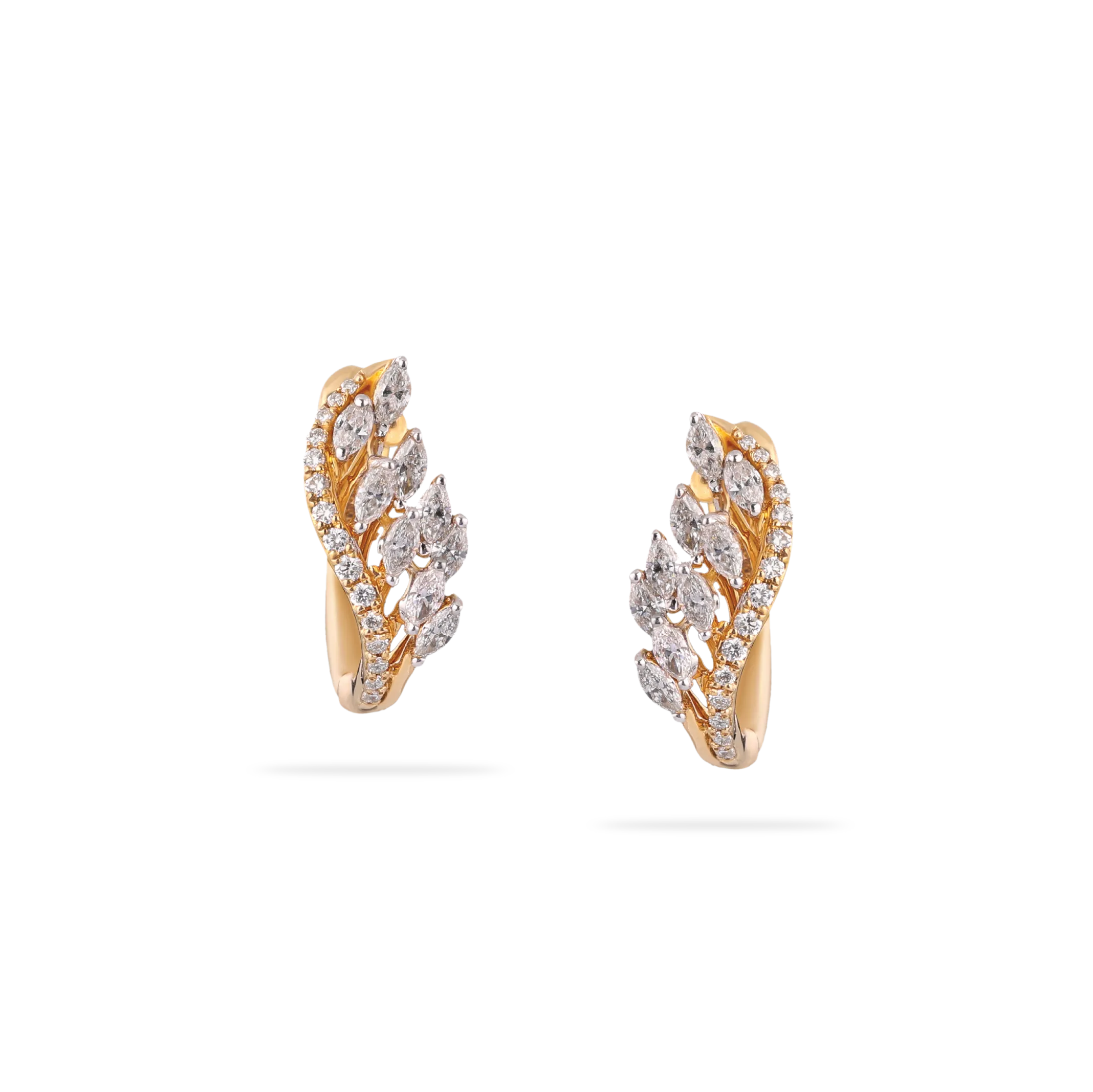
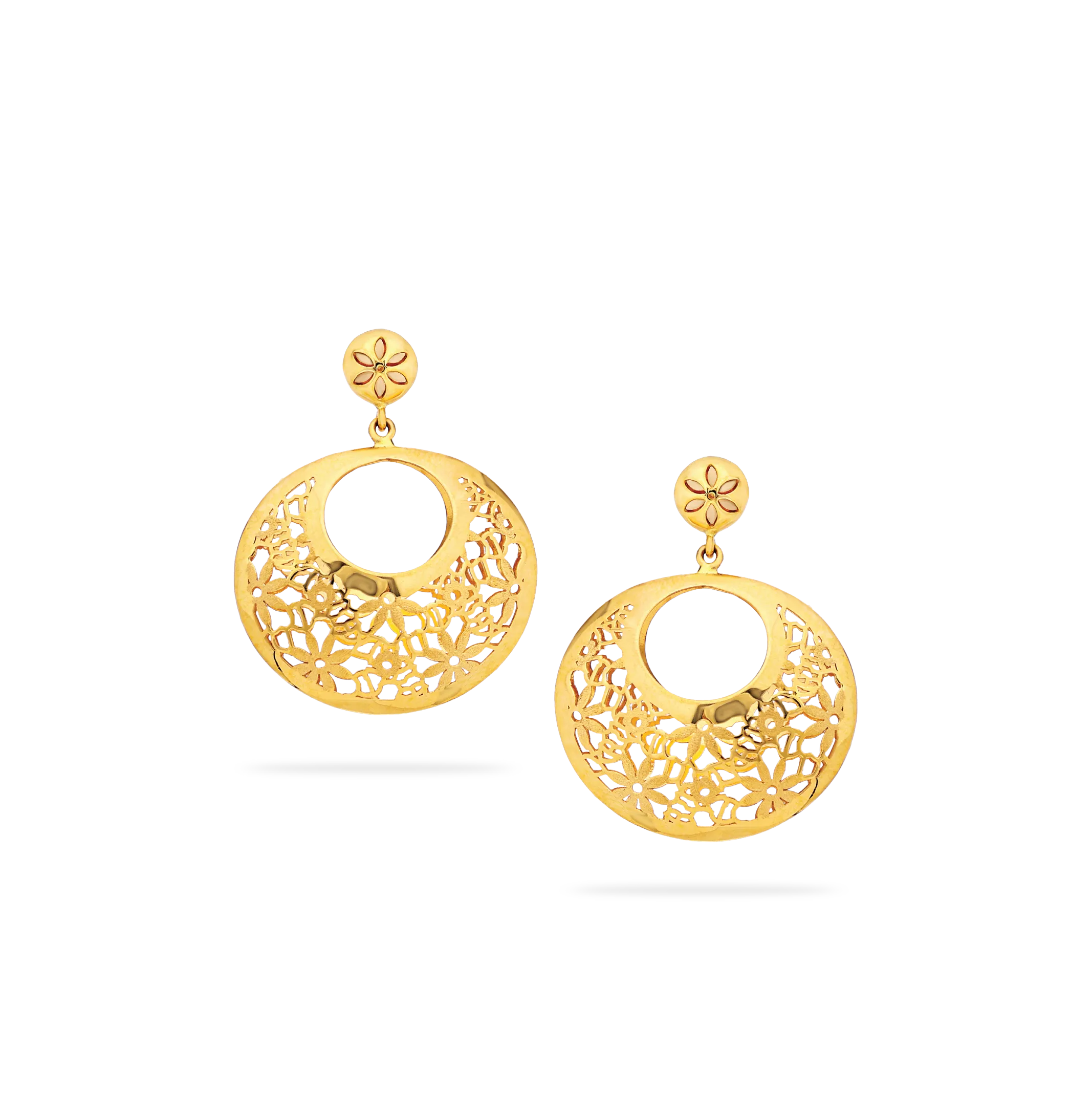
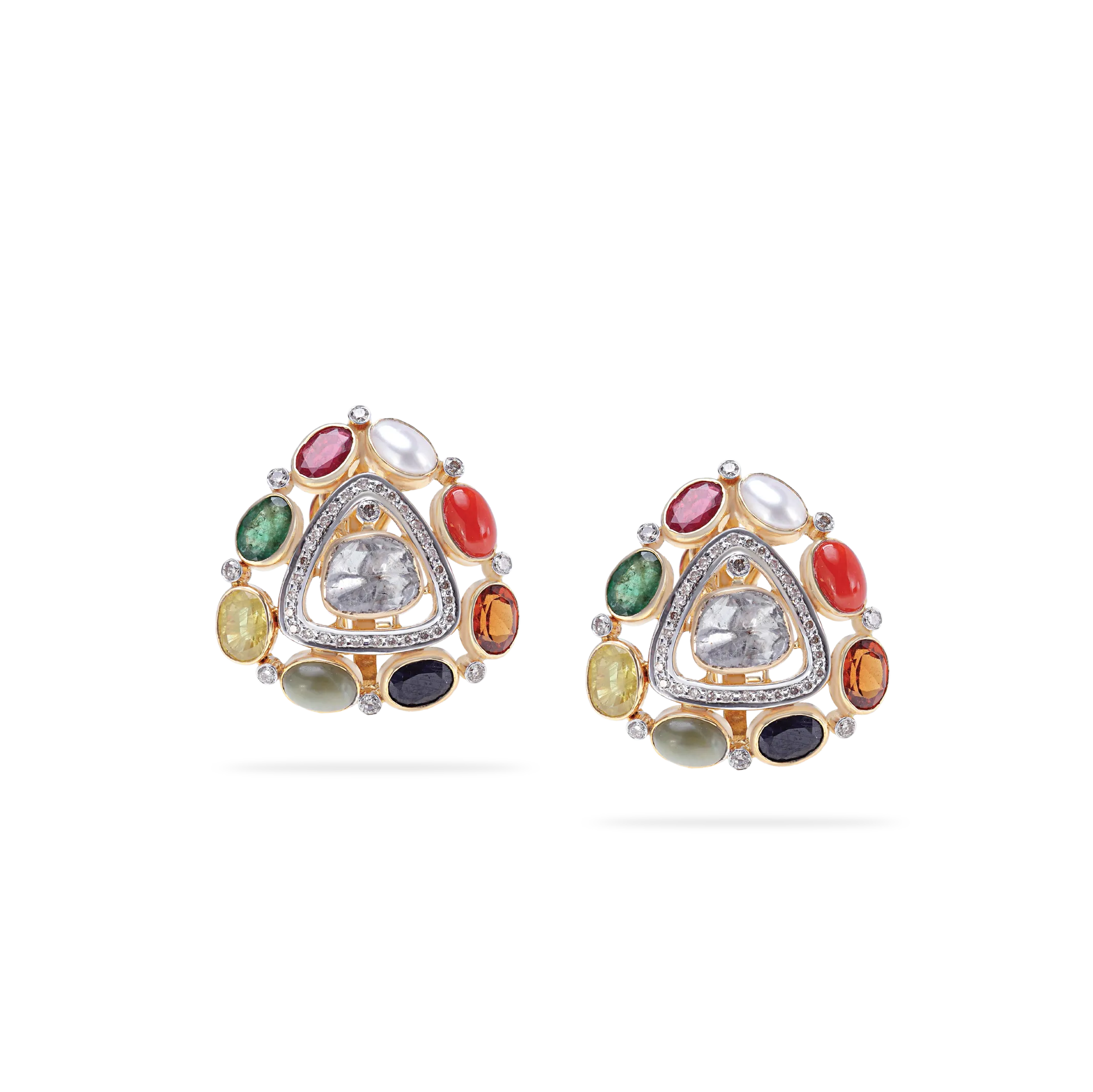
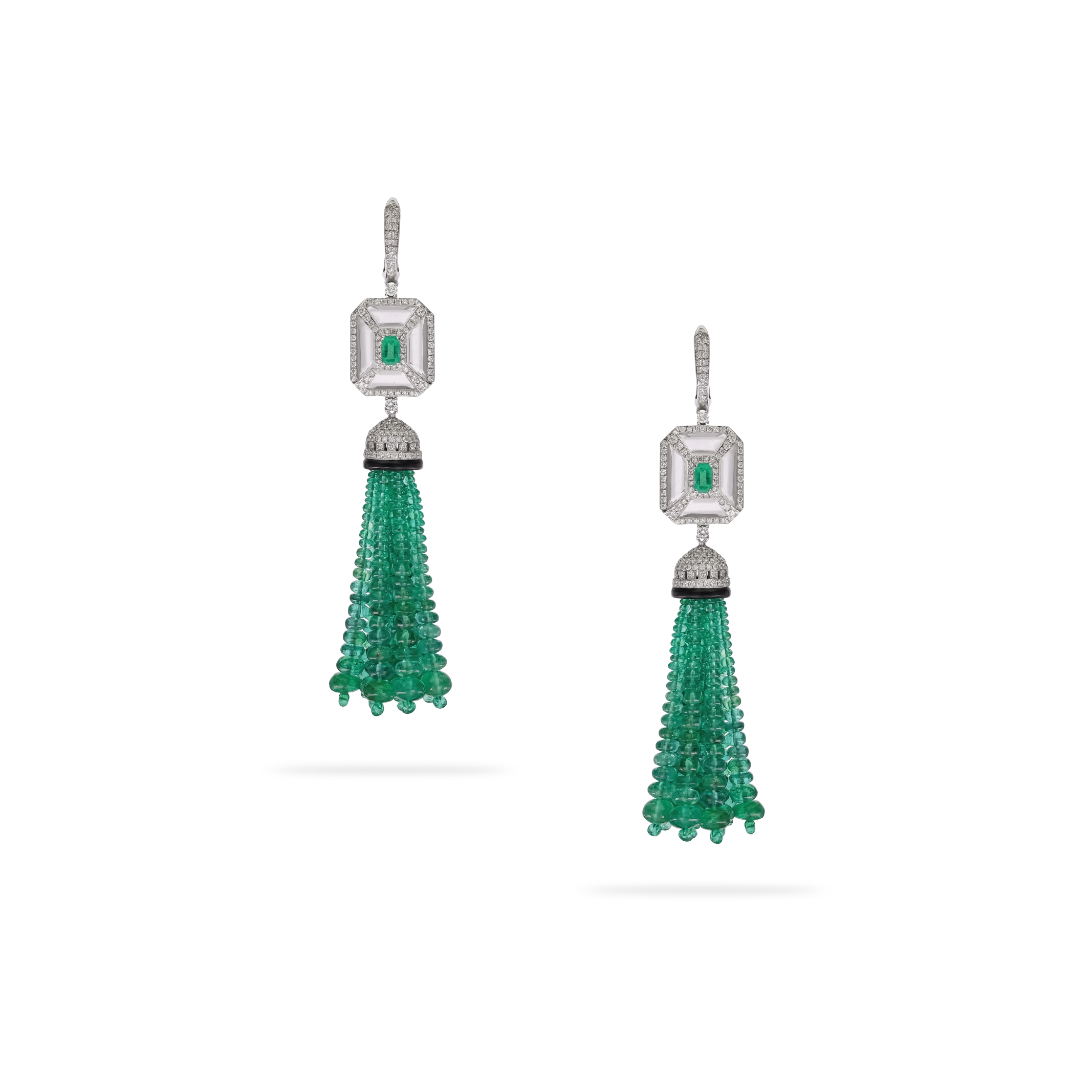
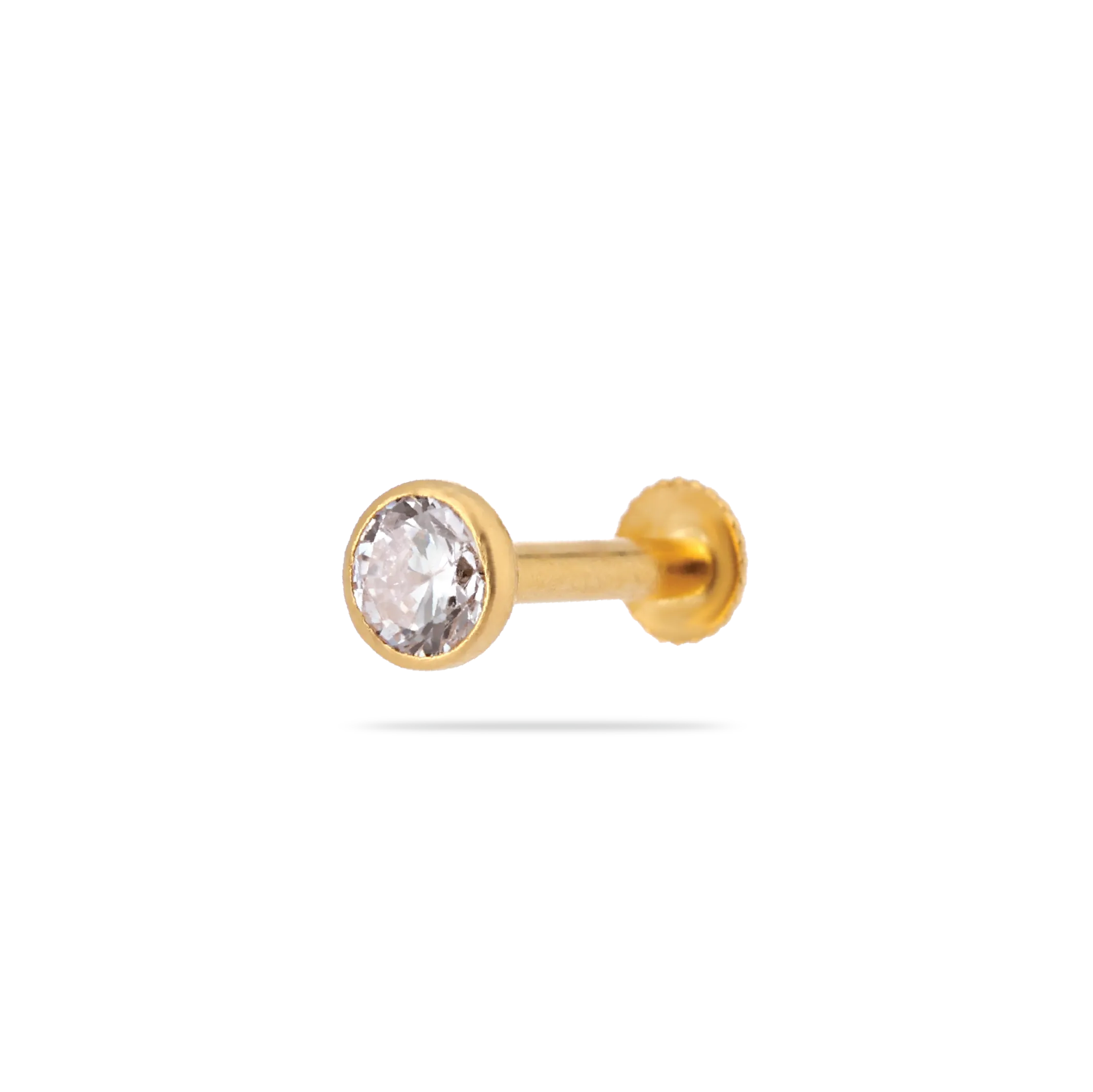
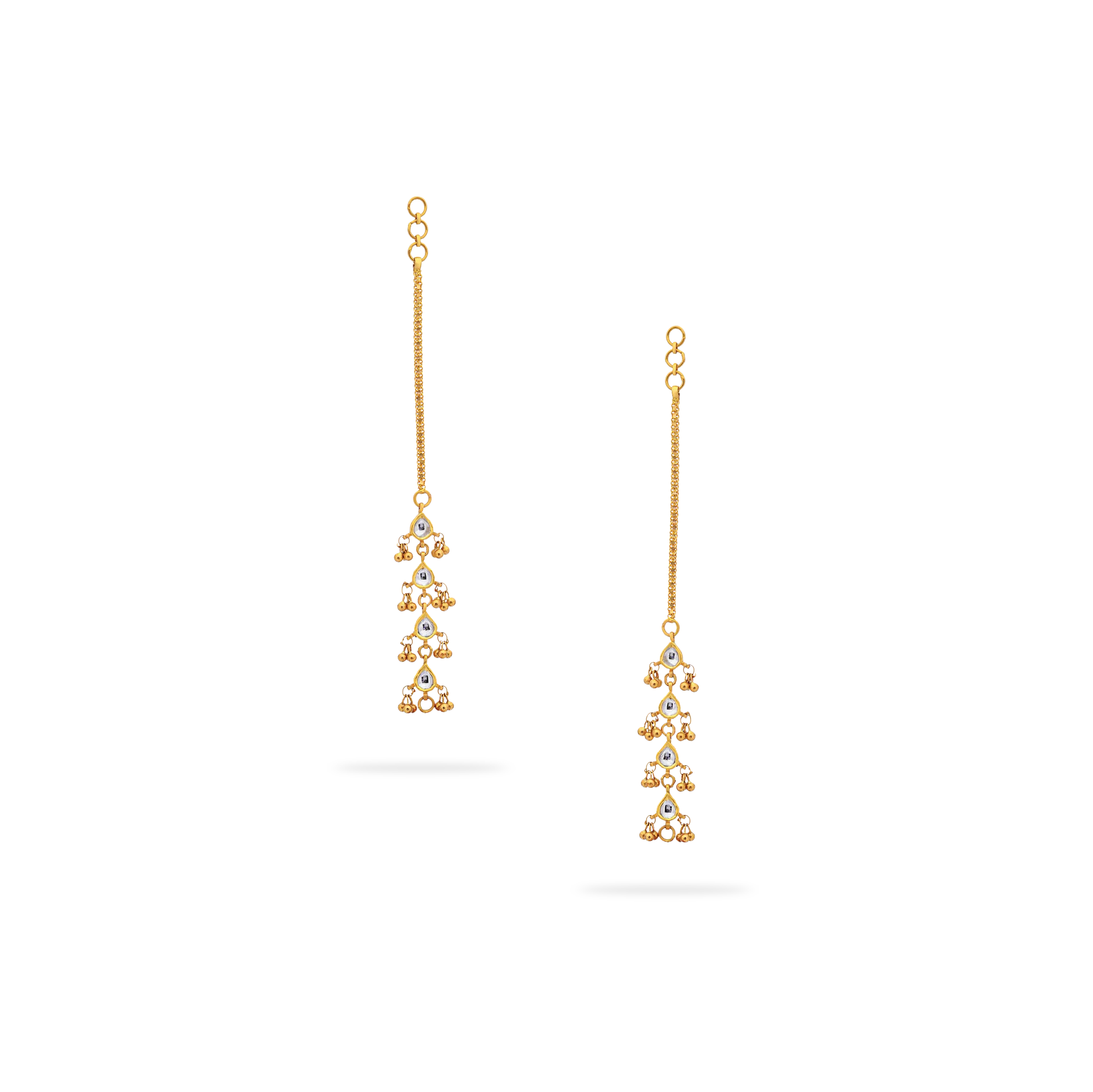
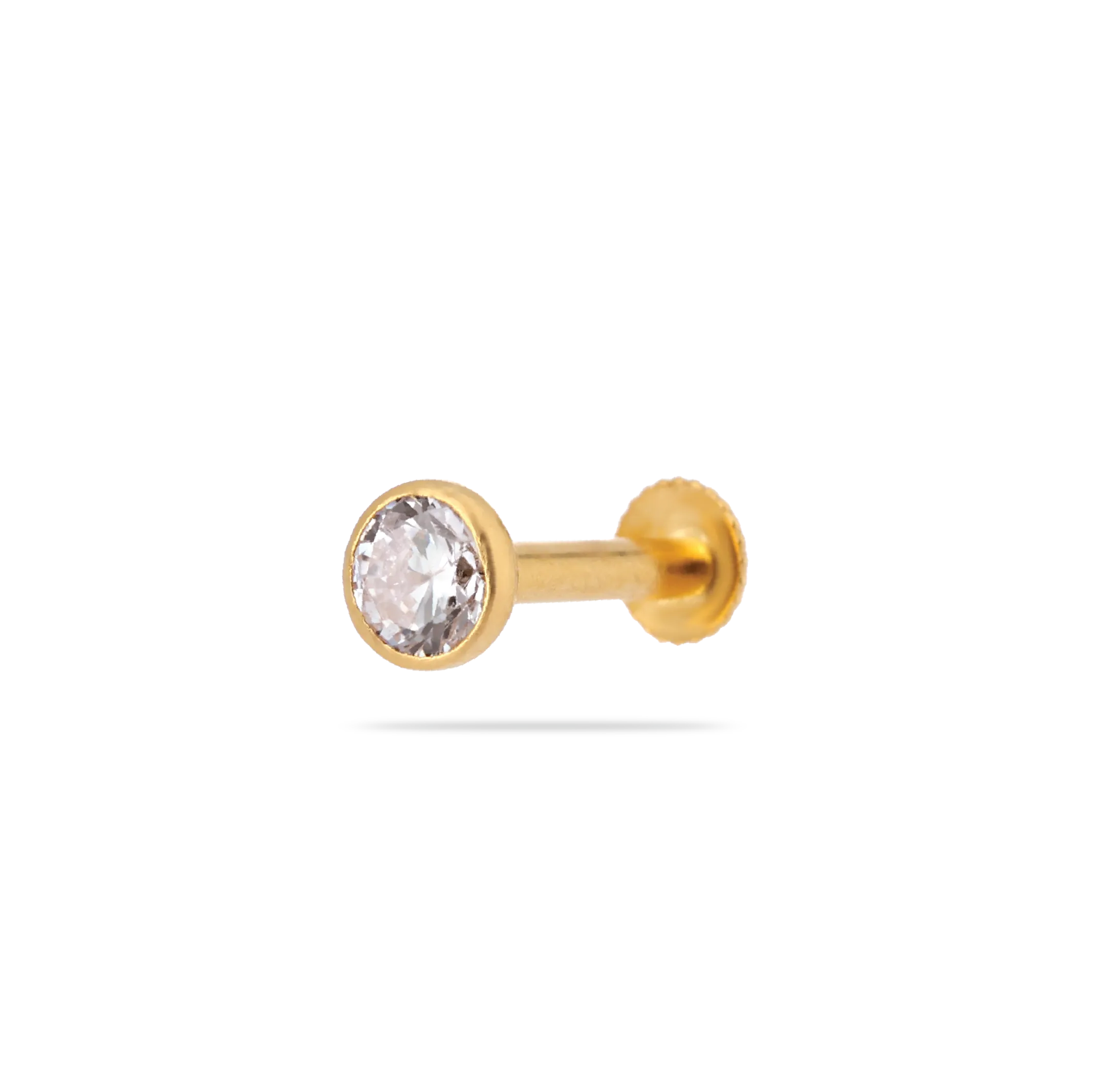
Earrings should be chosen based on whether you plan to wear your hair up or down; an updo allows for long, dangling jhumkas that catch the light, while open hair styling might require more substantial studs to remain visible through the day.
Nath designs for specific lehenga styles
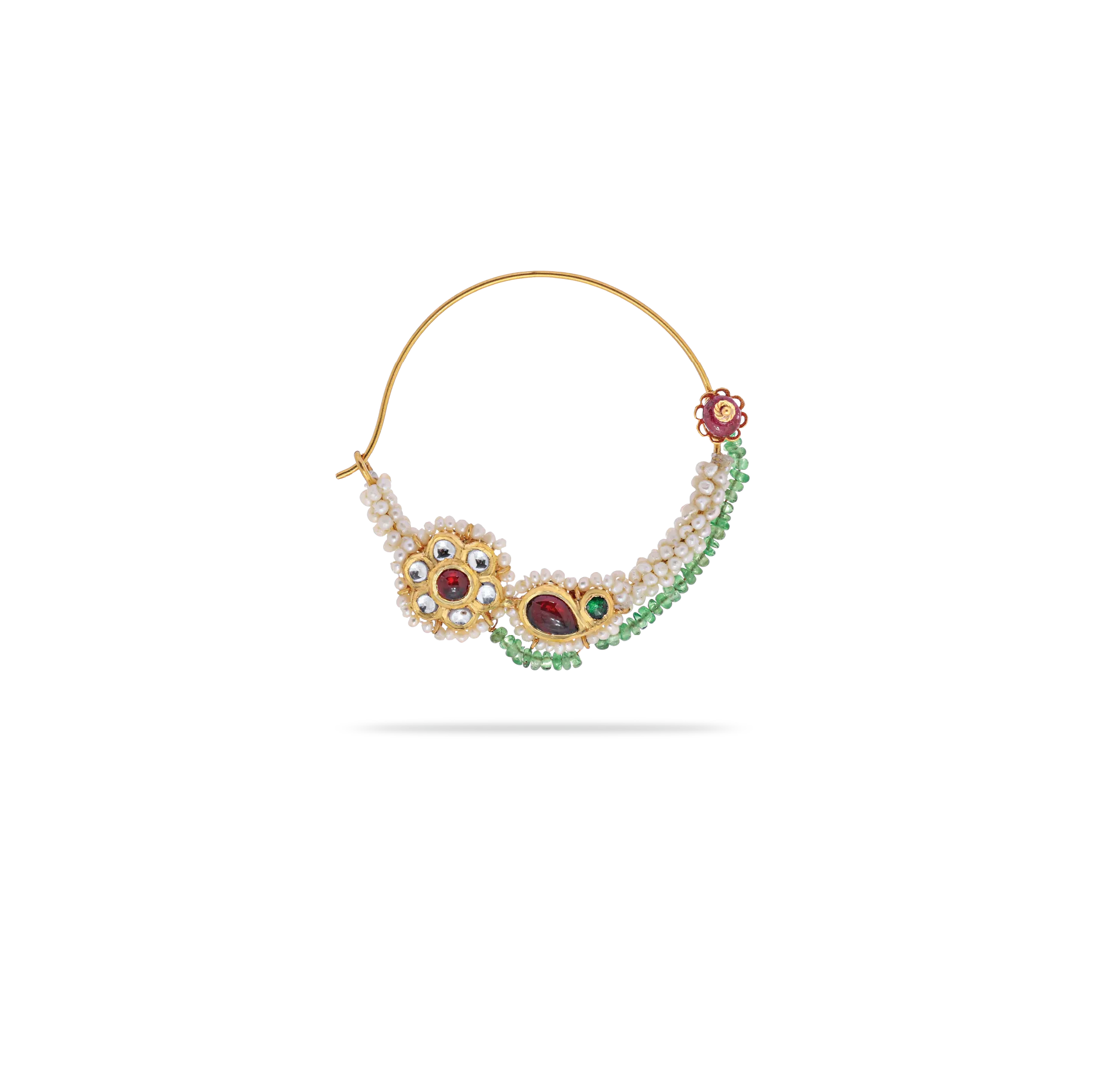
Nath designs span from small, delicate loops to large, complex pieces connected by a chain that anchors to the hair. Consider the overall volume of your other facial jewellery before adding a nath, ensuring the balance remains harmonic.
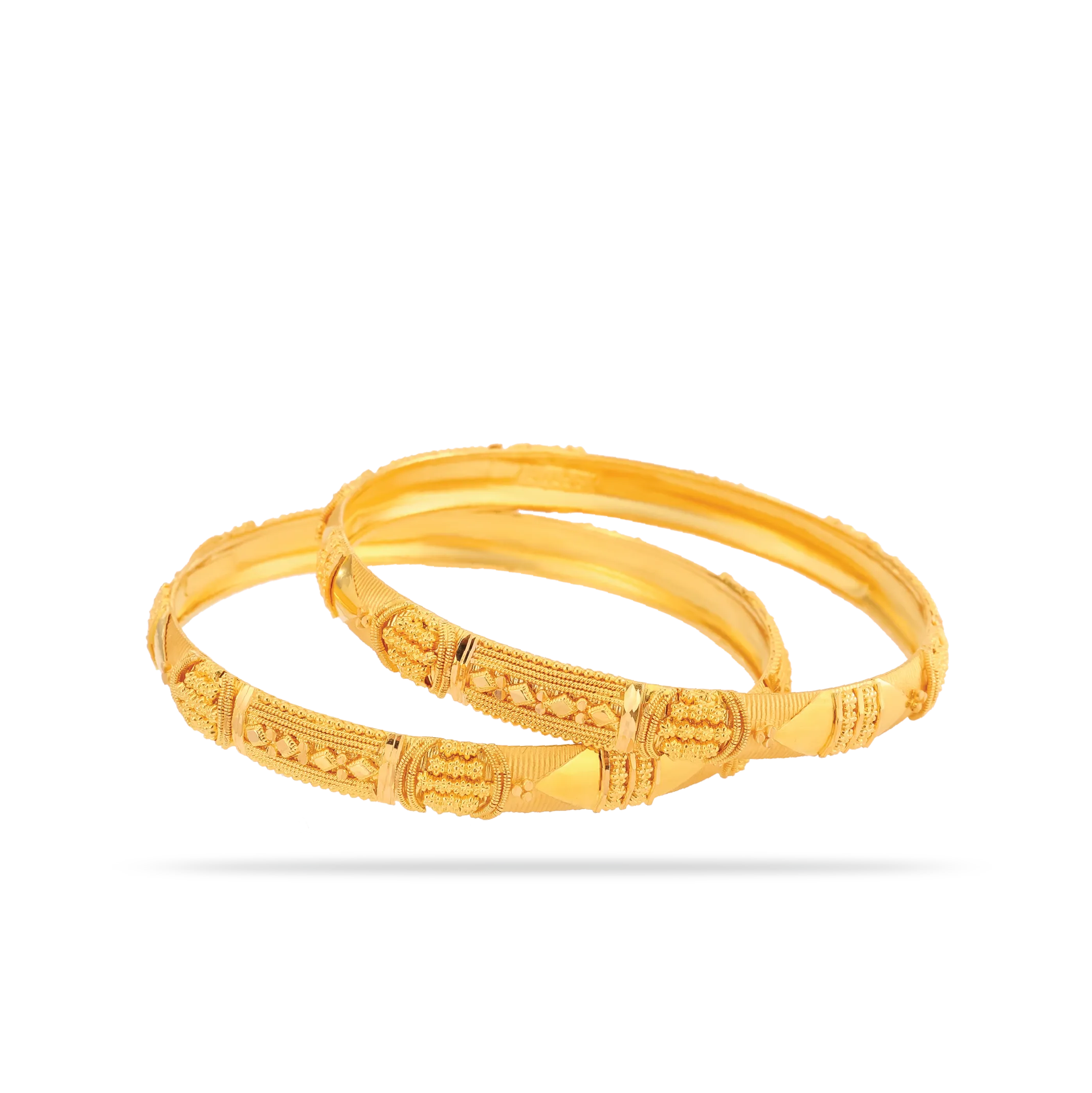
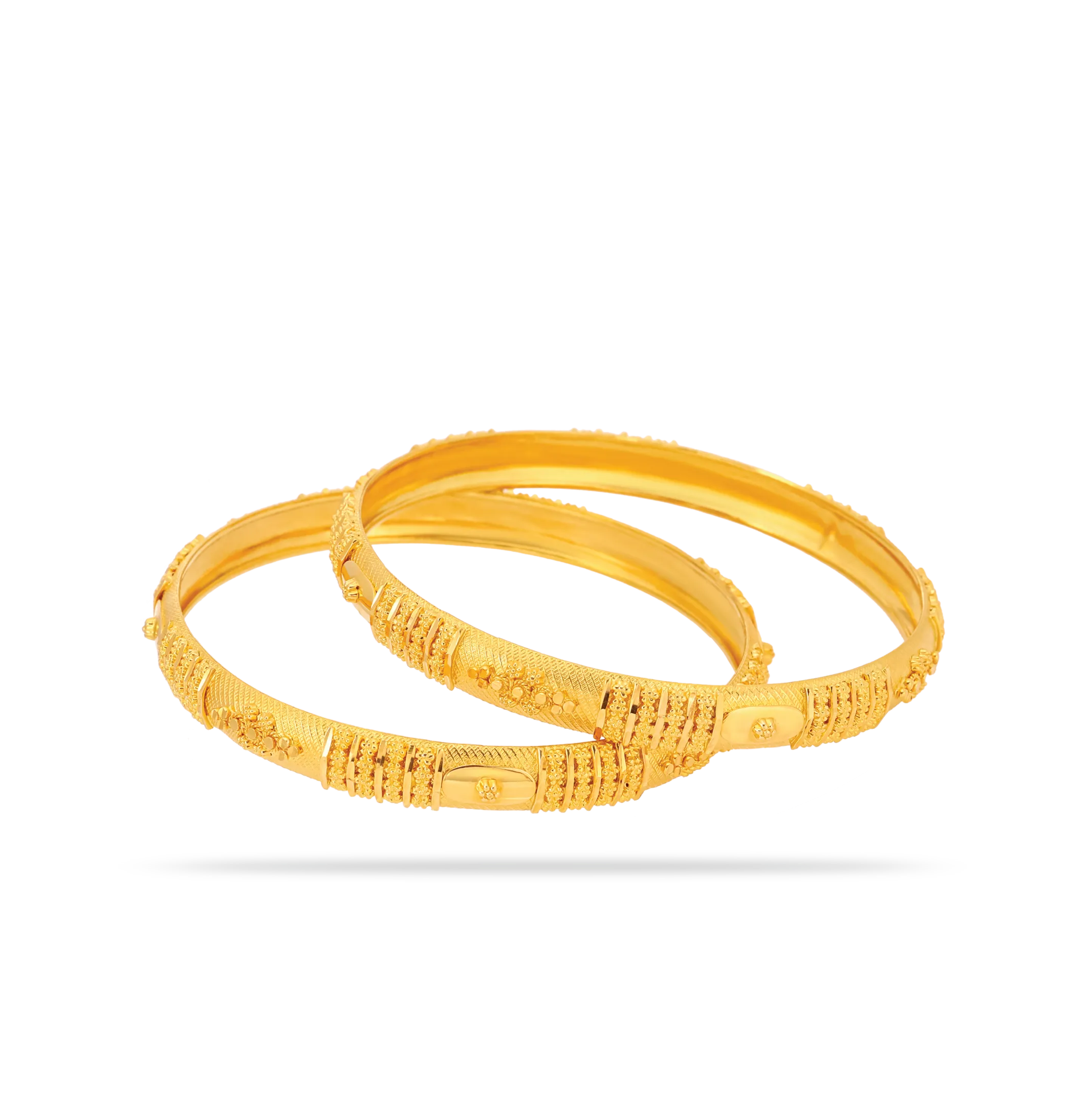
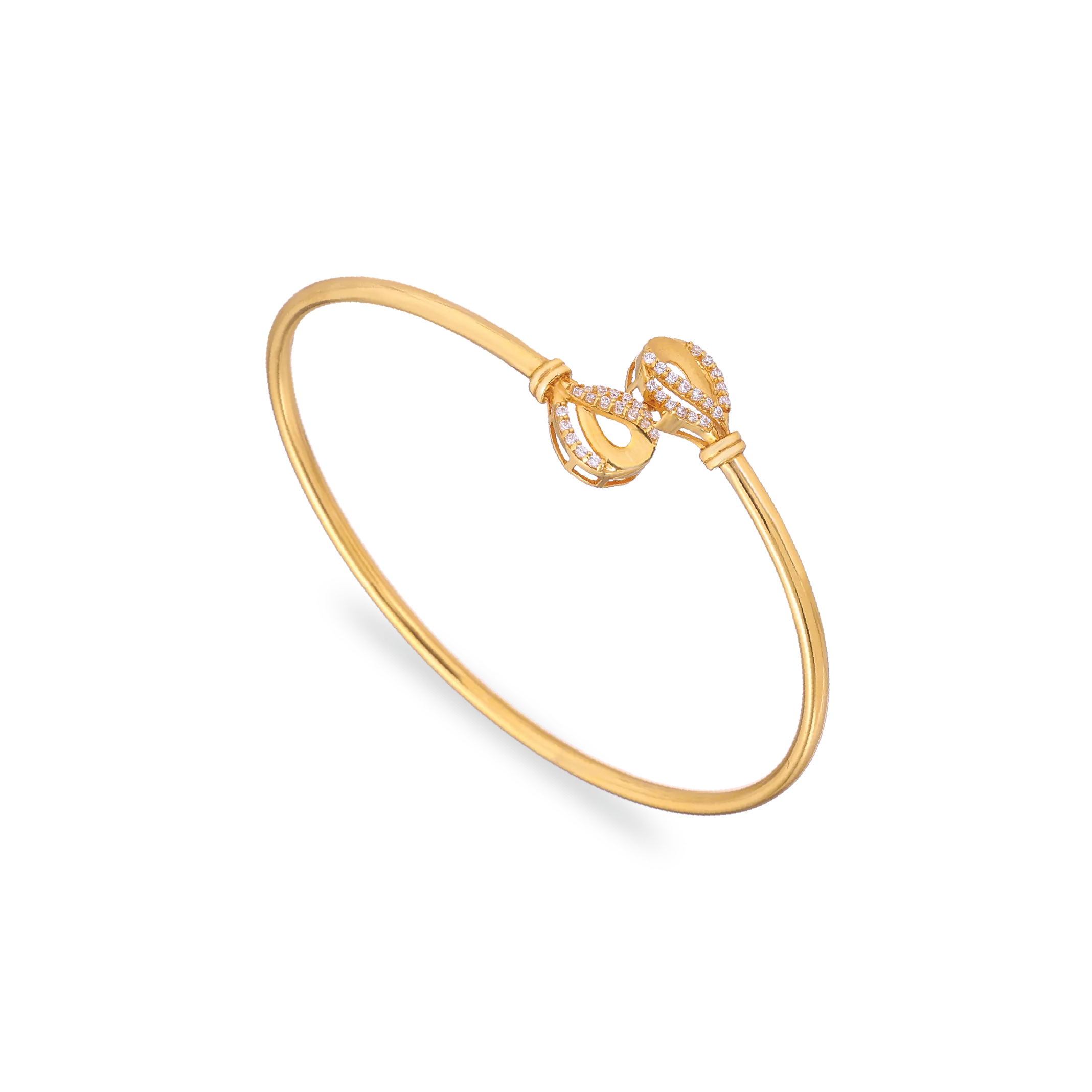
Selecting bangles and haath phool for arm detailing
Your hands are frequently in focus during the rituals, making bangle selection and haath phool placement essential. The table below outlines how some of these pieces serve different bridal looks:
| Jewellery Type | Best Visual Placement | Typical Lehenga Match |
|---|---|---|
| Haath Phool | Back of Hand | Sleeveless or short-sleeved |
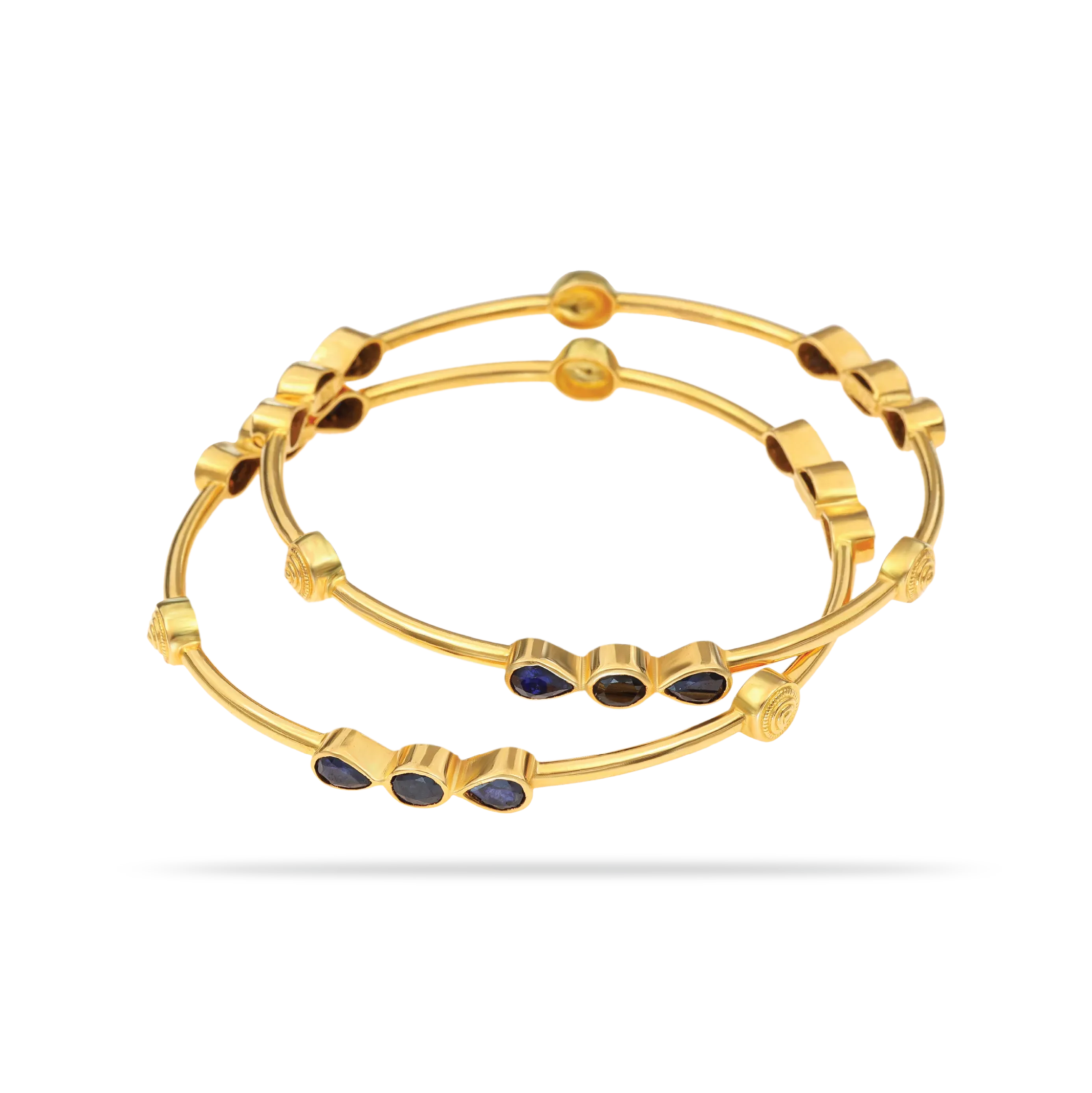
| Glass Bangles | Wrist/Forearm | Casual, multi-colored lehenga |
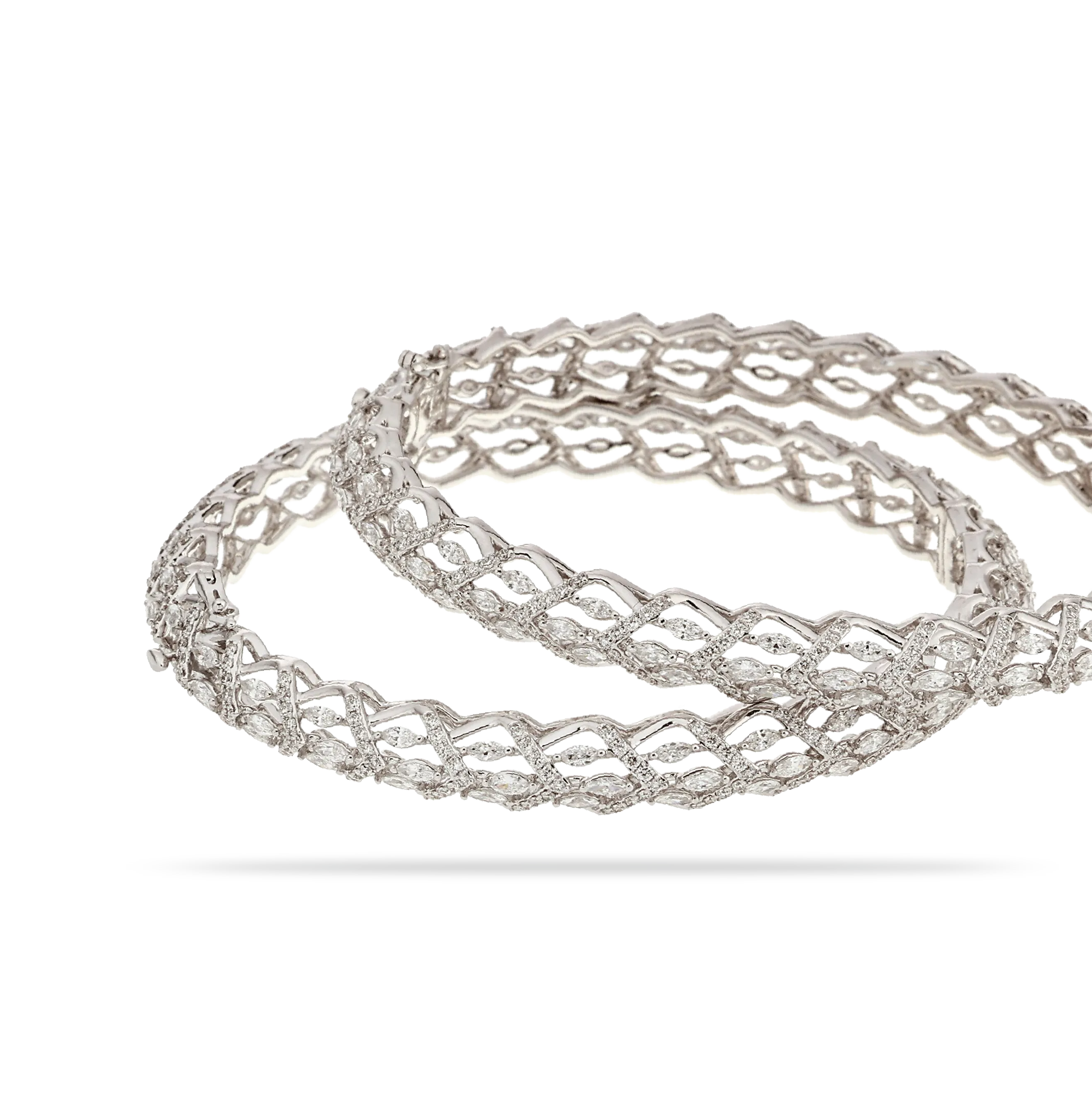
| Broad Kadas | Near the Elbow | Heavily embroidered sleeve |
Selecting these pieces well ensures that your arms never look bare while also providing a sense of completion to the entire wedding aesthetic.
Coordinating jewellery with lehenga color palettes
Coordinating your accessories helps you feel C Krishniah Chetty & Co brings a level of cohesion to your wedding day attire that is difficult to replicate. By understanding color theory, you can pick stones that either echo your fabric color or provide a striking contrast.
Complementary color palettes for red and maroon lehengas
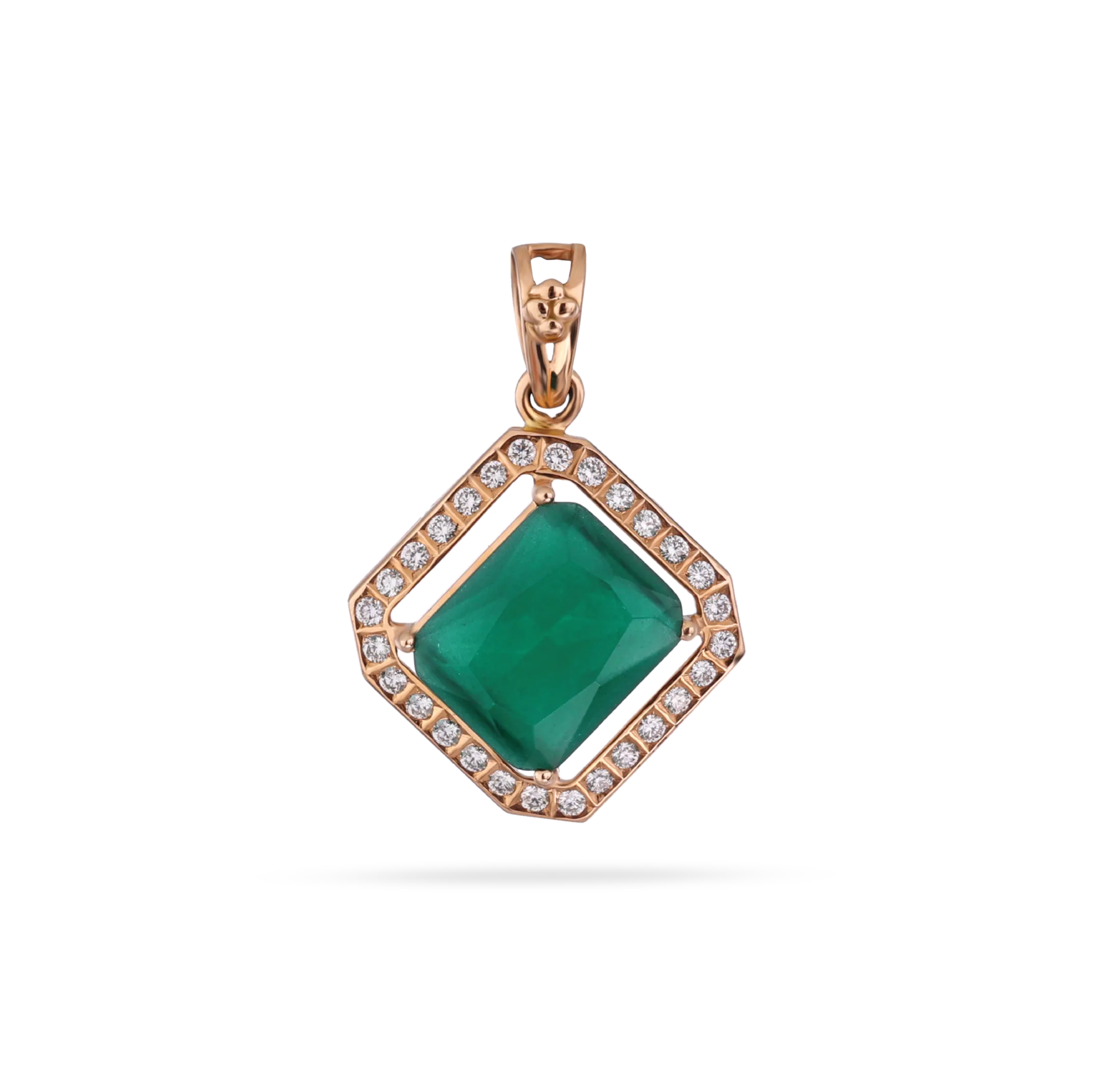
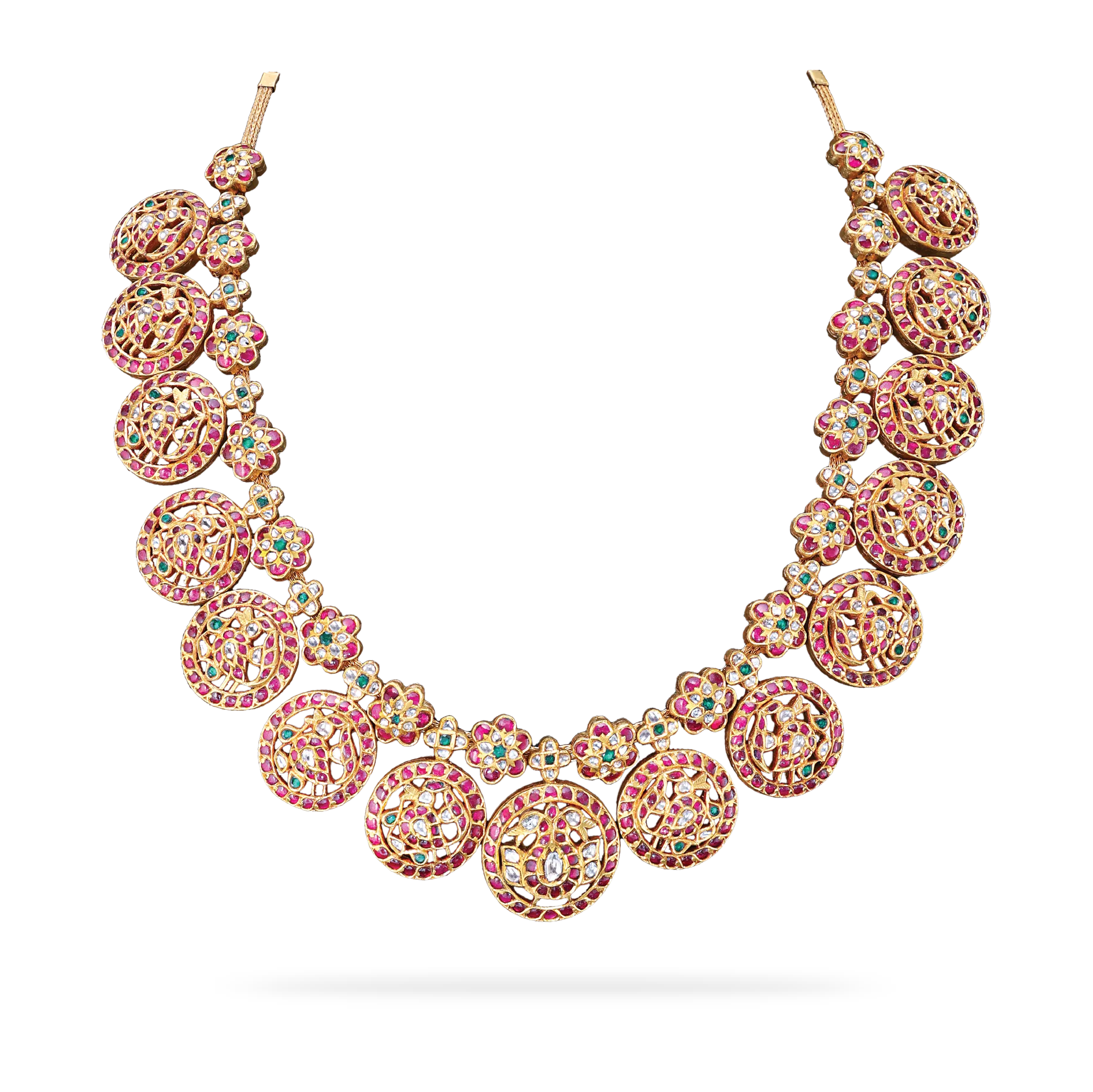
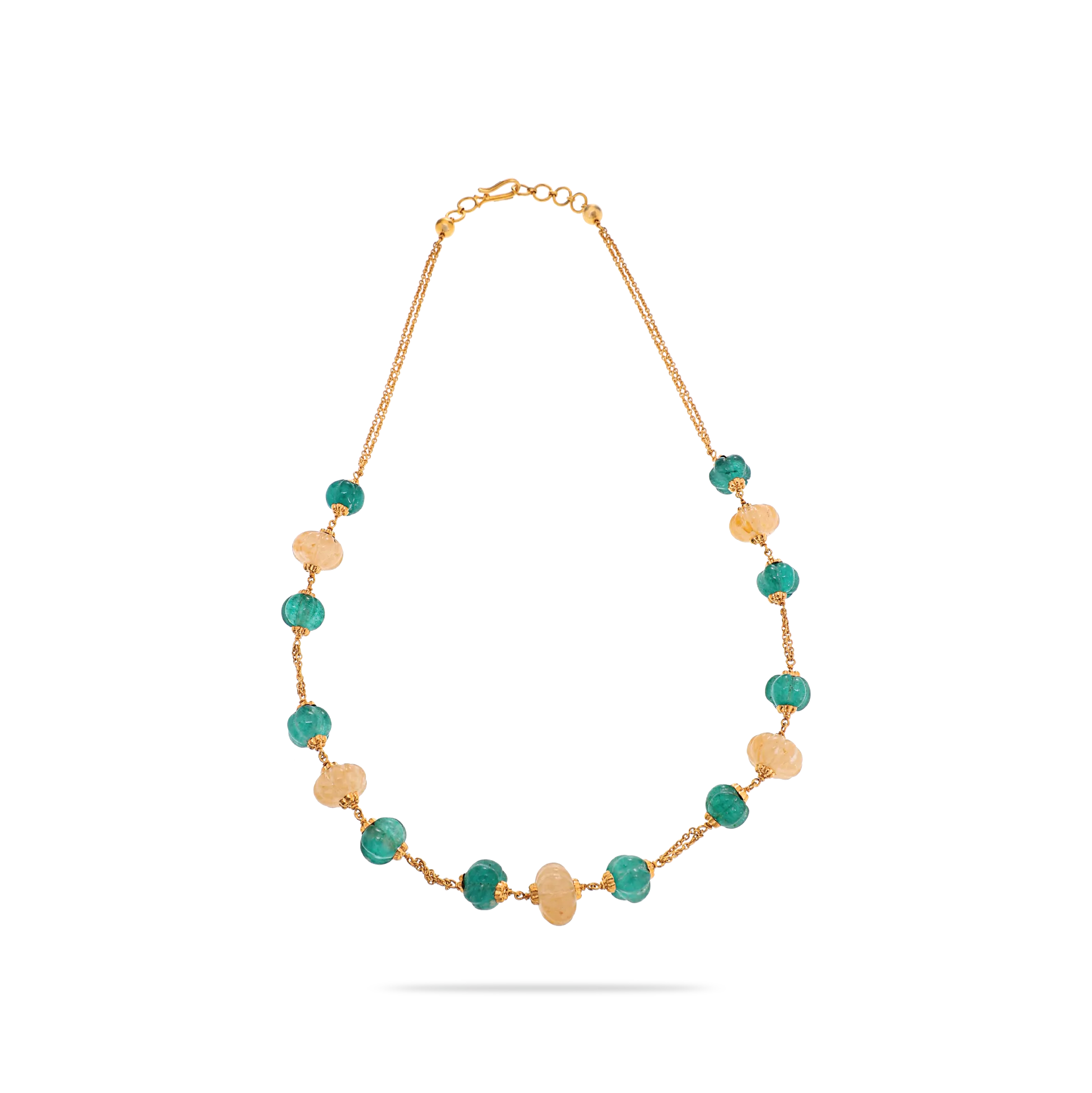
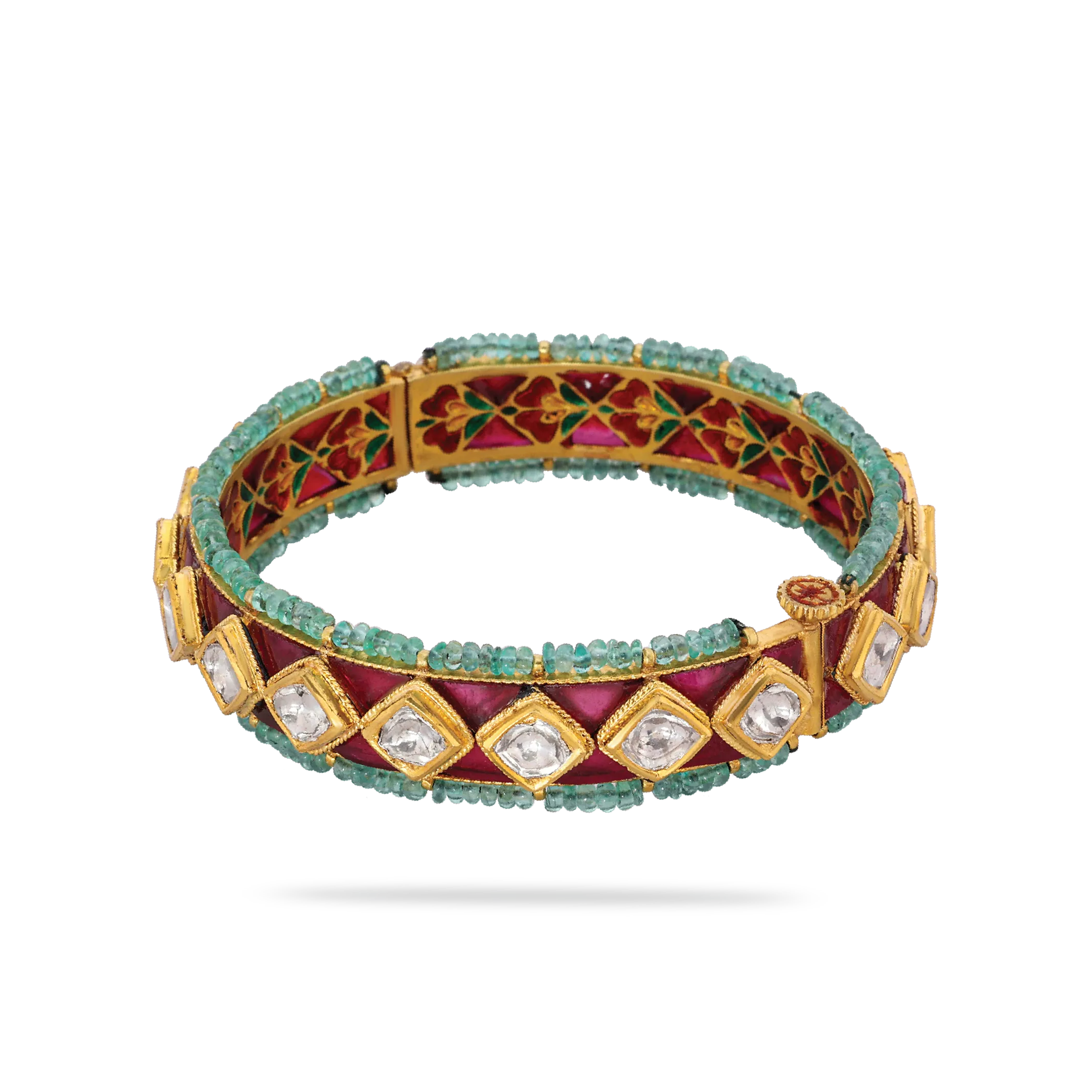
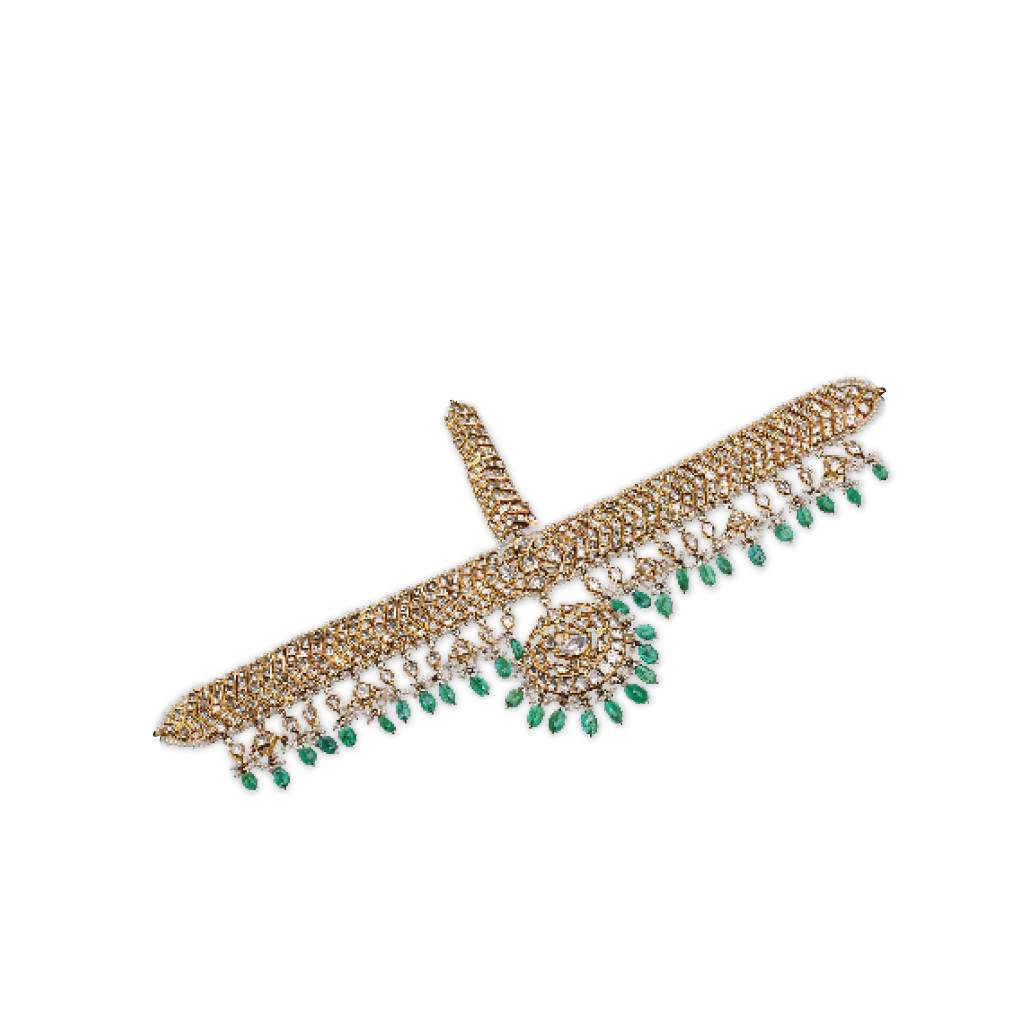
Red lehengas look stunning with polki or uncut diamond sets that maintain a traditional identity. If you want to lean into the contrast, green emerald stones can provide a pop of color that makes your bridal look feel more adventurous and dynamic.
Choosing metallic and gemstone contrasts for pastel lehengas
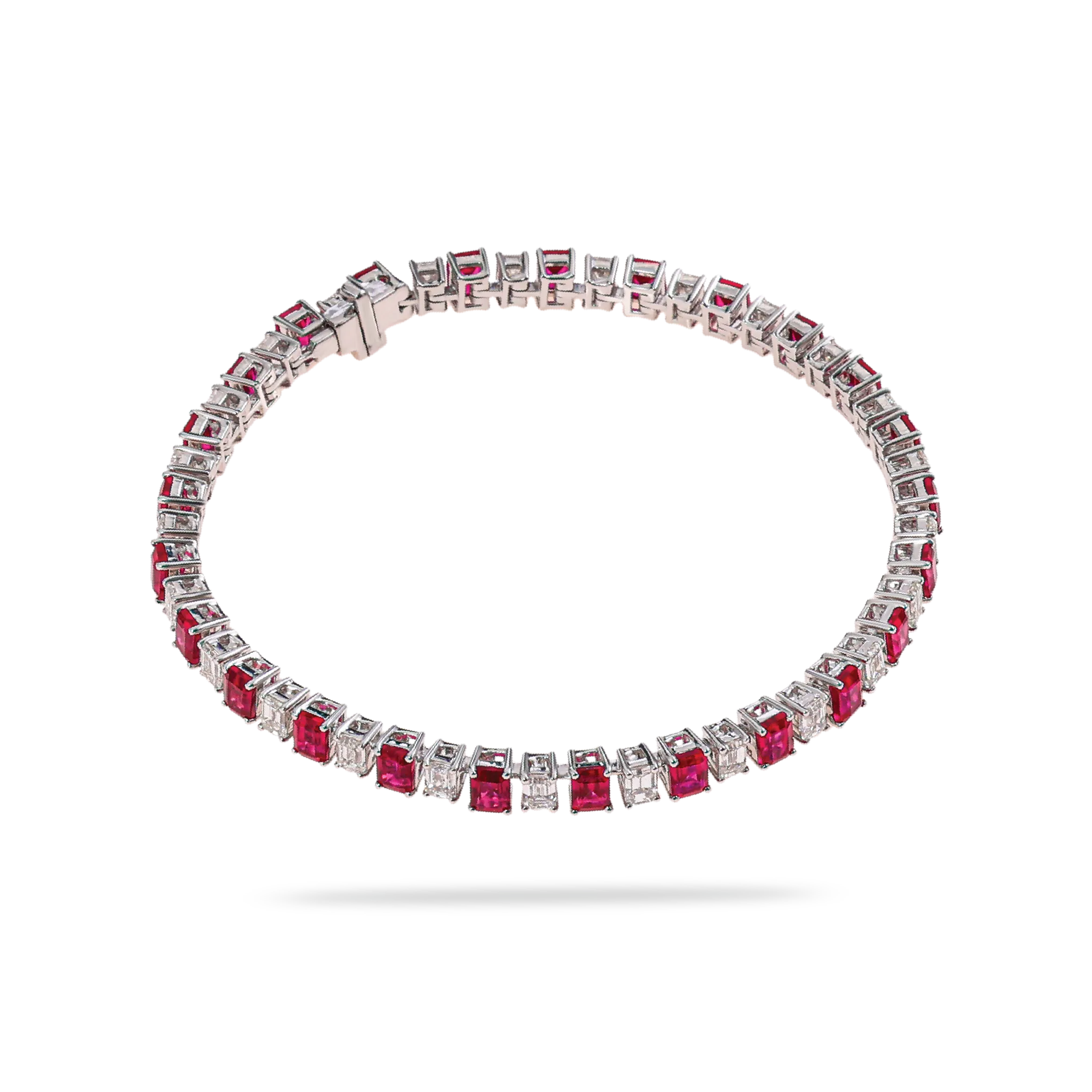
Pastels thrive on subtle metallic contrasts where the jewellery acts as a light, ethereal accent rather than a heavy anchor. Consider using soft pearls or light colored rubies to enhance the whimsical nature of your dress.
Monochromatic jewellery choices for bold lehenga colors
For a truly fashion-forward look, matching your jewellery stones exactly to the color of your lehenga creates a seamless, monochromatic effect. This is a bold choice that highlights the craftsmanship of your jewellery while ensuring the total ensemble looks perfectly unified.
Incorporating floral or colored stone accents for themed looks
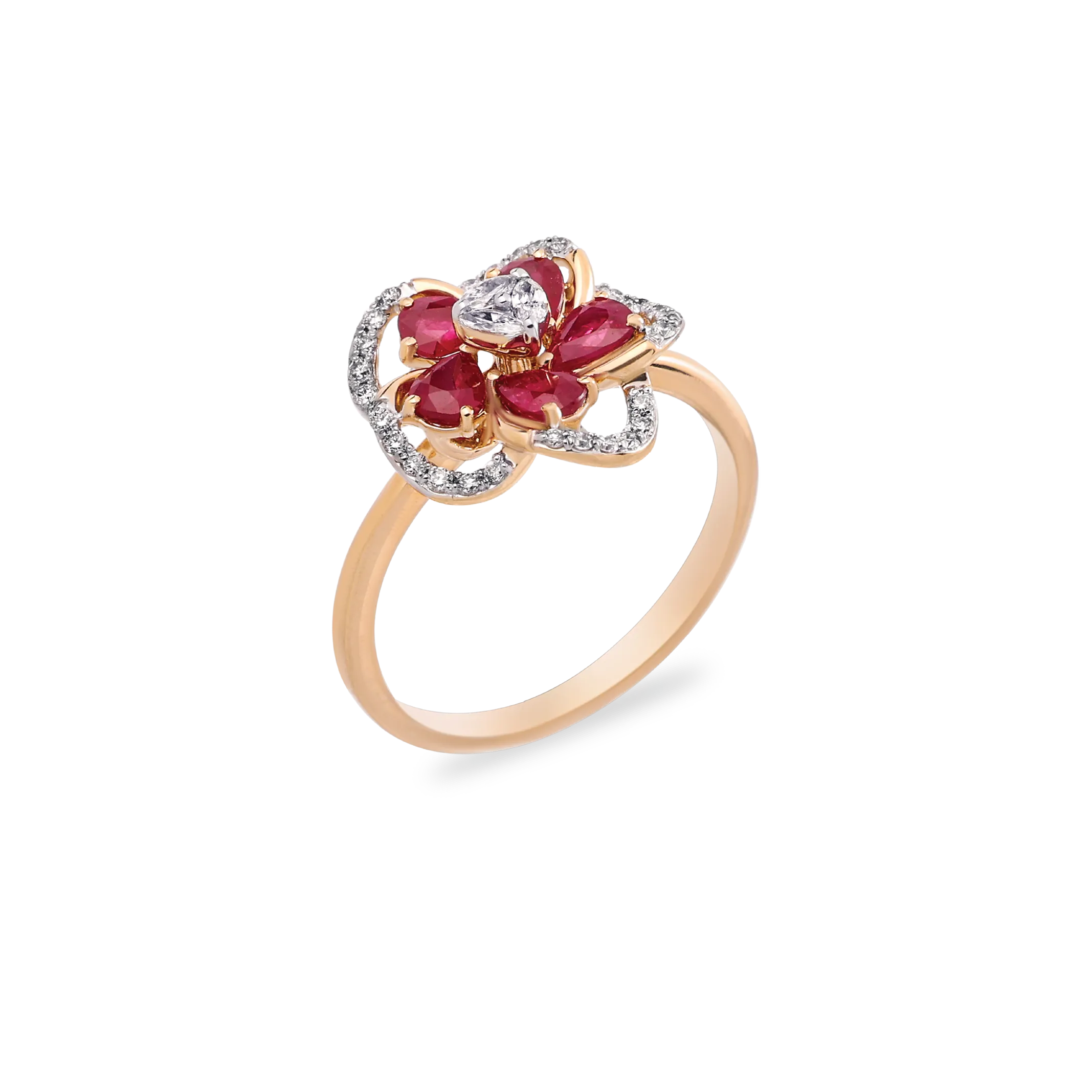
Floral stone work is becoming popular for modern bridal looks, especially during daytime events. These accents bring an organic softness that bridges the gap between traditional jewellery and contemporary, light-hearted wedding themes.
Considering comfort and long-wear factors
Bridal jewellery must be as comfortable as it is beautiful, given the long hours you will be wearing it. It is essential to ensure that pieces like C Krishniah Chetty & Co are designed with a focus on both longevity and a seamless user experience for your ceremony.
Testing the weight of statement necklaces for extended wear
Weight can quickly become a comfort issue, so always trial heavy pieces during your outfit fittings. Check that stones don't pull on your neck or cause skin irritation over extended durations.
Ensuring secure fastening for heavy bridal pieces
Double-check that all hooks and fasteners are secure, as bridal activities like dancing often put strain on intricate jewellery connections. A safety latch on heavy necklaces can prevent any unfortunate mishaps while you celebrate.
Managing hair accessories for comfort with heavy veils
Heavier veils need robust hair pins and sturdy clips to prevent your hairstyle from sagging. Distribute the weight of your head jewellery and veil pins evenly across your crown to avoid scalp pressure points that build up over time.
Transitioning jewellery looks from ceremony to reception
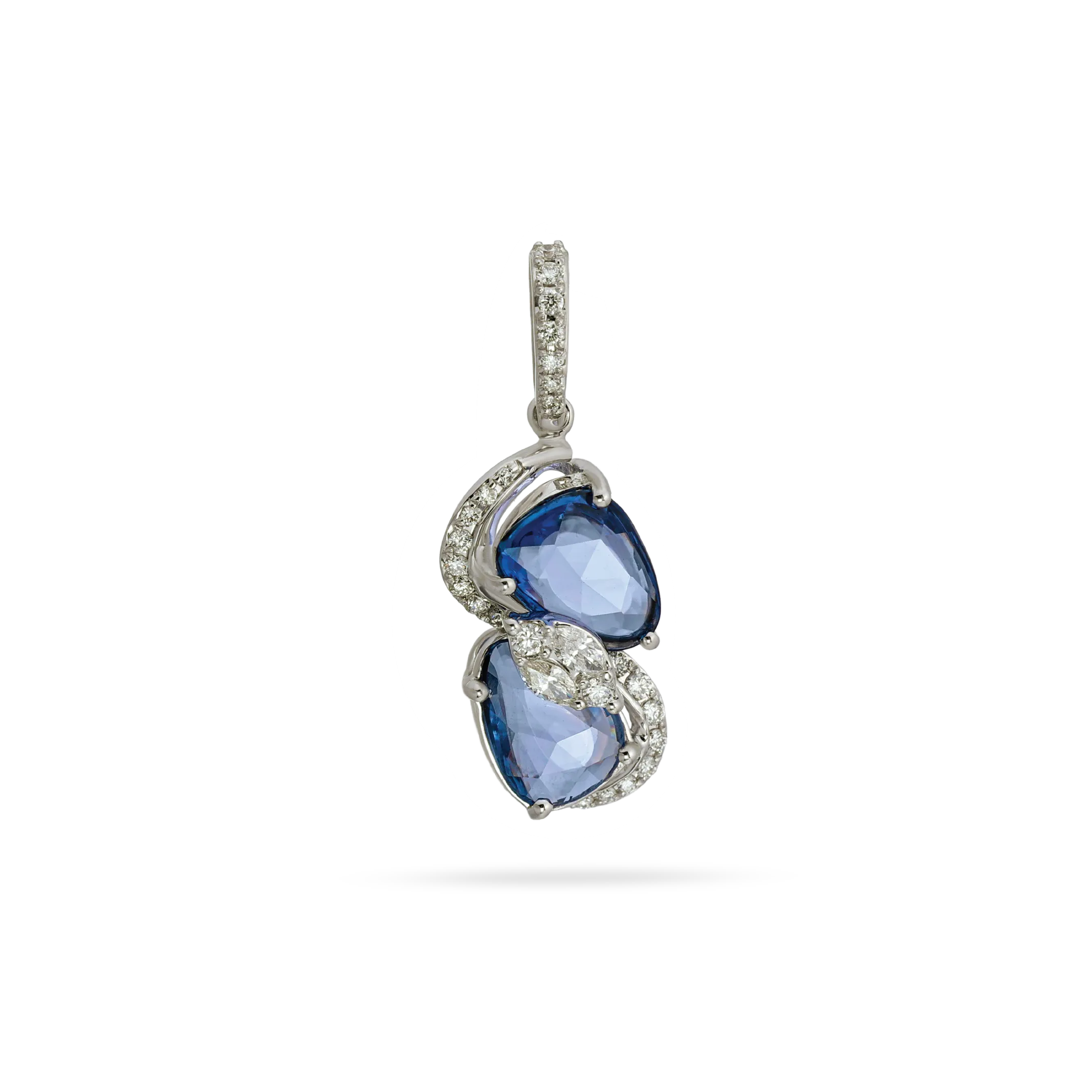
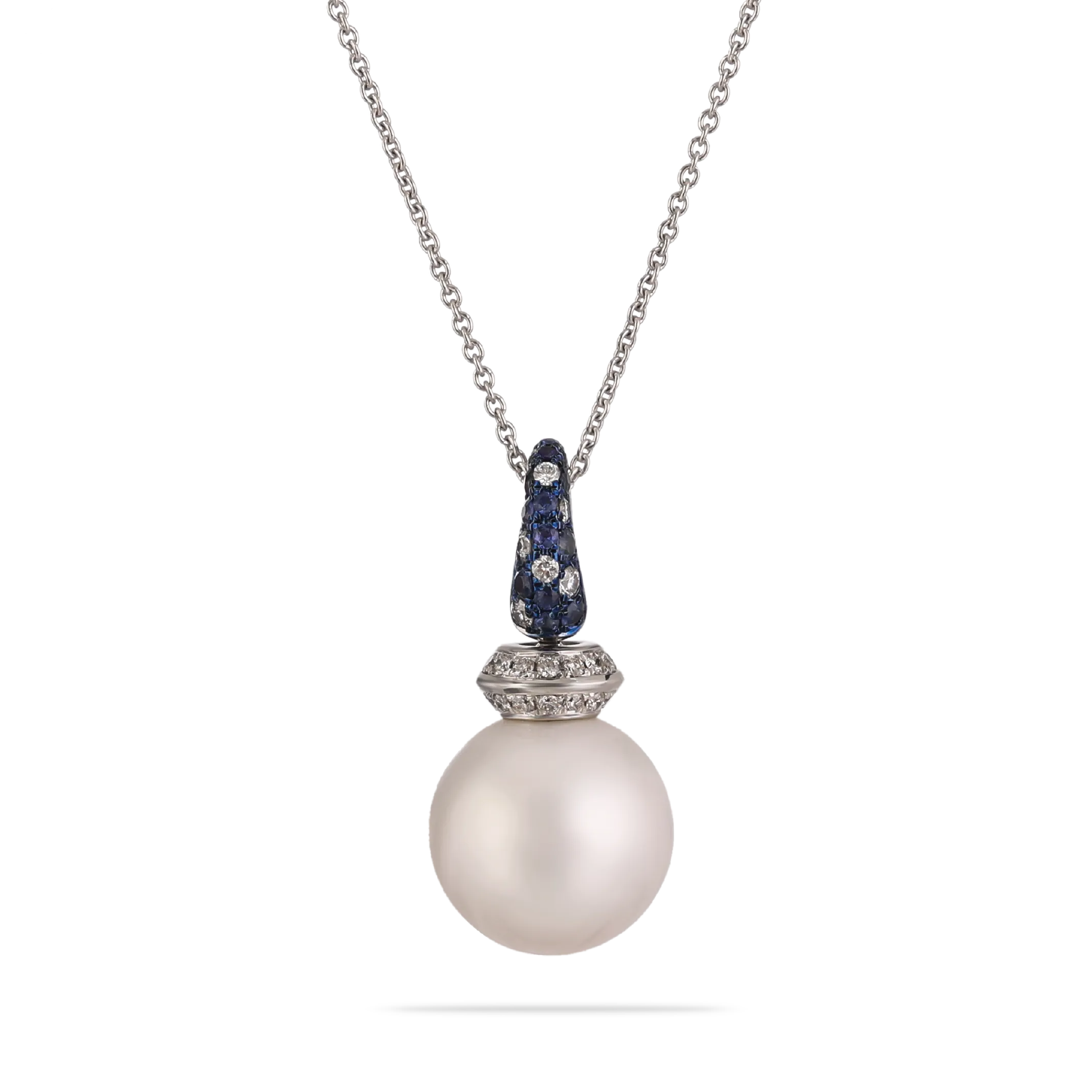
Many brides now opt for modular jewellery that allows them to swap a heavy ceremony necklace for a lighter pendant for the reception. This flexibility is a wonderful way to keep your look fresh while remaining comfortable as the party continues into the night.
Conclusion
By carefully considering both aesthetic balance and physical comfort, you can select the best jewellery for a bridal lehenga that resonates with your personal style. Trust your instincts and ensure every piece contributes to your overall vision of a radiant, unforgettable wedding day look.
Frequently Asked Questions
Should jewellery be selected before or after the lehenga is finalized?
It is always better to select your lehenga first, as the neckline, embroidery intensity, and color palette of the dress act as the primary constraints for your jewellery choices.
Are diamonds acceptable for a traditional bridal lehenga?
Yes, diamonds are very popular in modern bridal attire, especially in polki or uncut settings that bridge the gap between classic Indian heritage and a luxury sparkle.
How many pieces of jewellery are essential for the wedding?
There is no set rule, but the core pieces typically include a necklace, earrings, a maang tikka, bangles, and a nath, which provide a complete and balanced look.
Can I mix gold and diamond jewellery?
Yes, mixing metals and materials is a popular trend, provided you maintain a consistent design style throughout the different pieces.
What can I use to stop necklaces from tangling with dupatta pins?
Using a soft ribbon or a secure back-hook that sits flat against your blouse can help prevent tangling, and careful placement of dupatta pins away from the necklace chain is essential.
Is it necessary to wear bangles on both hands?
While tradition often suggests wearing bangles on both wrists, modern brides might choose to wear a heavy haath phool on one hand and leave the other arm with thinner, stacked bangles to ensure comfort.
How can I make my jewellery look clean during the event?
Keep a small, soft microfiber cloth in your vanity kit to gently wipe away any sweat or oil, and avoid touching the gemstones with your fingers while eating or applying makeup.
How to style temple jewellery: A guide to blending tradition with modern fashion
10 minute read
Related blogs:
November 20, 2025
The Timeless Elegance of the Tennis Bracelet: A Comprehensive Guide
Read More
November 20, 2025
The Ultimate Guide to Styling and Wearing a Choker Necklace
Read More
November 20, 2025
Find Your Perfect Engagement Ring: A Comprehensive Guide to Styles and Diamonds
Read More
November 20, 2025
The Timeless Elegance of a Diamond Tennis Bracelet: A Buyer's Guide
Read More









.webp)
.webp)