How to choose certified diamond jewellers Bangalore shoppers can trust
August 26, 2026 | 10 minutes read
Key Takeaways
A certificate is a useful starting point, but a trustworthy purchase also depends on comparison, clear pricing, and after-sales support.
- Verify the grading report and issuing laboratory before paying.
- Compare the 4Cs alongside shape, setting, and overall appearance.
- Ask jewellers to separate diamond, metal, making, and tax charges.
- Read return, exchange, warranty, buyback, and repair terms carefully.
- Keep every document and arrange insurance and safe storage after purchase.
Understand what diamond certification means
Certification gives a diamond an independent description that can be compared across sellers. It does not replace your own inspection or answer every question about whether a piece suits your budget. For shoppers comparing certified diamond jewellers Bangalore offers, the report should be one part of a wider buying process.
Why an independent grading report matters
An independent grading report records characteristics such as cut, color, clarity, and carat weight. Because the assessment comes from a laboratory rather than only the selling jeweller, it gives you a common reference point when comparing stones. The report supports comparison, but it does not tell you which diamond will look most attractive to your eyes.
Ask to see the full report before making a commitment, not only a product card or a verbal grade. A report can also help an appraiser or insurer identify the stone later, provided the diamond remains with the documented jewellery.
How to verify a report number and issuing laboratory
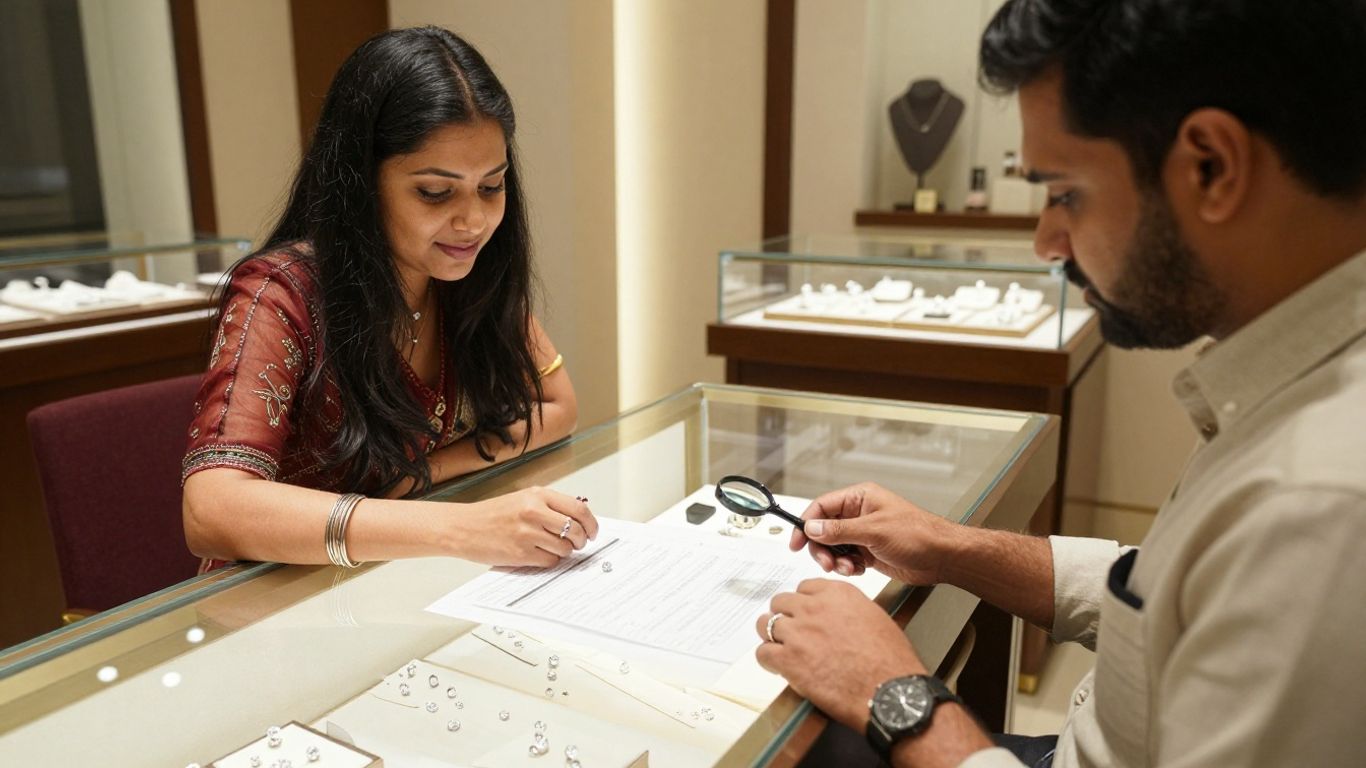
Check the report number through the issuing laboratory's official verification service, using the laboratory's own website rather than a link supplied only by a salesperson. Match the displayed details with the stone in front of you, including the measurements, shape, grades, and any identifying features recorded in the report.
The issuing laboratory matters because grading standards and report formats can differ. If a number cannot be found, the online record does not match the paper, or the seller discourages verification, pause the purchase until the discrepancy is explained.
The difference between certified natural and lab-grown diamonds
Natural diamonds form in the earth, while lab-grown diamonds are produced in controlled environments. Both can have the appearance and physical properties associated with diamond, but the origin should be disclosed clearly and reflected in the documentation. A certificate should not leave you guessing about what you are buying.
If you are considering lab-grown jewellery, Cosmos Diamonds describes its pieces as using IGI-certified diamonds and BIS-hallmarked gold. Treat that as a documented claim to verify for the specific item, rather than assuming every product or seller uses the same standards.
Why certification does not guarantee the best value
A certificate does not establish a fair retail price, guarantee perfect eye appeal, or assess the quality of the setting. Two diamonds with similar grades can differ in proportions, fluorescence, transparency, or visible inclusions. Compare the actual stone, the total jewellery price, and the policies attached to the sale.
Value is personal, too. A slightly smaller diamond with better light return may be more satisfying than a larger stone selected only for its carat weight. Take time to compare photographs, videos, and the stone under showroom lighting and, where possible, neutral lighting.
Compare diamond quality before you visit a jeweller
A little preparation makes a showroom appointment more productive. Decide what you want the ring, earrings, or pendant to feel like, then establish a practical budget rather than starting with a target carat alone. The 4Cs provide structure, while shape and setting determine much of the finished appearance.
How the 4Cs affect beauty and price
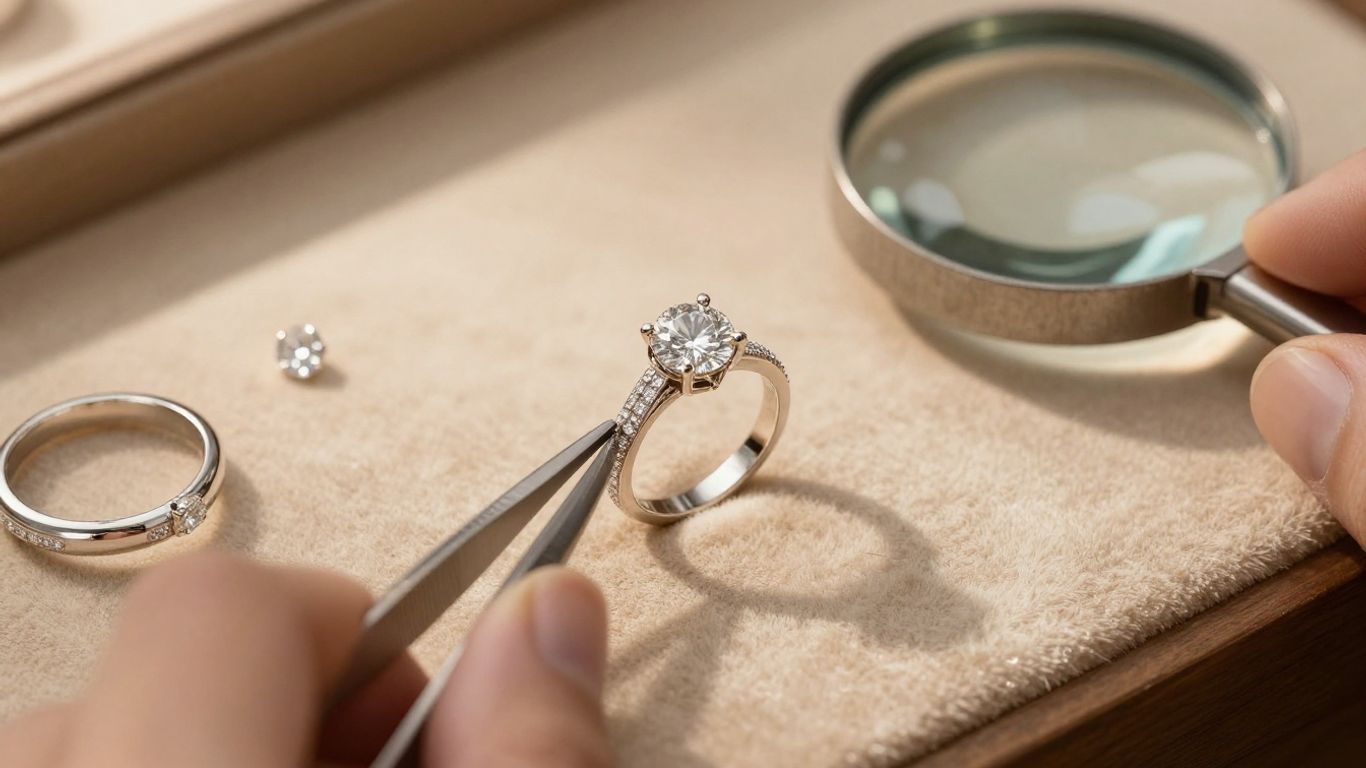
Cut affects how efficiently a diamond returns light; color describes body tone; clarity records internal and surface characteristics; and carat refers to weight, not visual diameter. These factors interact, so a higher grade in one category may have less visible benefit than a balanced combination across all four.
Ask the jeweller to show comparable stones side by side. A direct visual comparison is often more useful than studying isolated numbers, especially when the price difference is substantial.
Choosing the right cut for brilliance
Cut is particularly important for round diamonds, but proportion and finishing matter for fancy shapes as well. Look for lively reflections, a pleasing pattern, and minimal areas that appear dull when the stone moves. A jeweller should allow you to view the diamond from several angles.
Do not confuse a diamond's shape with its cut grade. Round, oval, pear, emerald, princess, and other shapes create different visual effects, and not every fancy shape is described by the same grading scale.
Balancing carat weight, color, and clarity
Start by identifying which differences you can actually see at the intended viewing distance. Many buyers prefer to protect cut quality first, then adjust color, clarity, or carat to remain within budget. The right balance depends on the shape, metal color, setting, and whether the stone is viewed loose or mounted.
A useful comparison should include the complete price, not just the stone's headline discount. Ask for the report and measurements so you can distinguish a heavier diamond from one that looks larger because of its proportions.
When diamond shape and setting matter more than size
An elongated shape can appear larger across the finger, while a halo or carefully designed setting can change the visual spread of a centre stone. Prongs, bezel edges, band width, and metal color also influence how prominent the diamond looks. Try a few styles rather than assuming the biggest carat will be the most flattering.
The setting must suit everyday wear as well as photographs. A delicate design may be elegant but need more care, while a protective bezel can reduce exposed edges on a frequently worn piece.
Evaluate certified diamond jewellers in Bangalore
Trust is built through observable behaviour: clear answers, consistent documentation, and time to make a decision. Visit with your questions written down and compare how different jewellers explain the same stone. A polished showroom is pleasant, but it is not proof of grading accuracy or fair pricing.
Checking reputation, experience, and customer reviews
Read recent reviews for patterns rather than relying on one enthusiastic comment. Look for feedback about whether products matched descriptions, whether documents were supplied, and how issues were handled after payment. Ask people you know about communication and service, but still verify the details of your own purchase.
Experience should show in the questions the jeweller asks you. A good adviser will discuss wear, budget, design, and documentation instead of pushing the most expensive stone immediately.
Comparing showroom service with online buying
A showroom lets you examine sparkle, finishing, comfort, and fit in person. Online buying may offer broader browsing and convenient price comparison, but you need reliable images, complete specifications, accessible support, and a clear return process. Whichever route you choose, the final invoice and certificate should be available for review.
For online lab-grown jewellery research, Wondr documents certified jewellery using SGL, IGI, and BIS Hallmark references and describes seven-day returns and lifetime exchange options. Confirm the current terms and the eligibility of the particular item before relying on them.
Assessing customization and design expertise
Customization is more than changing a stone size. Ask whether the jeweller can provide a drawing or rendering, explain the metal and setting choices, and confirm how alterations affect the price and delivery schedule. Bespoke work should have a written specification so the delivered piece can be checked against the agreed design.
If a jeweller offers customized solitaire rings, ask what parts can actually be changed and whether the certificate will accompany the final stone. Varniya documents customized solitaire rings, IGI reports, and BIS-hallmarked gold; those claims should still be matched to your selected product.
Questions to ask before making an appointment
A short call can save time and reveal whether the jeweller is prepared to answer practical questions. Ask whether the relevant stones are available to view, which laboratory issued their reports, and whether a detailed quotation can be provided before the visit.
Bring these questions with you:
- Is the quoted price for the complete jewellery piece?
- Can I verify the report number before payment?
- Which parts of the design, metal, or stone can be customized?
- What are the return, exchange, resizing, and repair terms?
The answers should be specific rather than vague assurances. If important terms are only promised verbally, request them in writing before placing a deposit.
Review pricing and purchase policies
Jewellery pricing can look simple on a display card while containing several separate components. Compare like with like: the same diamond origin, similar grades and measurements, the same metal purity, and equivalent workmanship. A lower headline price is not useful if it excludes charges that another seller has already included.

Comparing diamond, setting, and making charges
Request an itemized quotation that separates the diamond, metal weight and rate, setting or making charges, taxes, and any certificate or delivery fees. This lets you see whether a discount applies to the stone, the workmanship, or only a promotional portion of the order.
A quotation should also identify the diamond clearly enough to compare it with its report. If the stone changes during design revisions, ask for an updated quote and documentation before approving the final piece.
Understanding taxes, discounts, and payment options
Ask whether the displayed price includes applicable taxes and whether payment methods carry additional charges. Discounts should be explained in rupee terms or as a clearly defined percentage, with the original price and conditions visible. Confirm the deposit, balance due, delivery timeline, and refund method for cancelled orders.
Payment convenience should not pressure you into rushing. Keep the quotation, receipts, payment confirmations, and written communication together until the jewellery and all documents have been received.
Checking return, exchange, and cancellation terms
Read the policy for made-to-order and customized pieces separately from ready-to-ship jewellery. Check the time limit, condition requirements, deductions, return shipping responsibility, and whether the refund is monetary or issued as store credit. Also ask what happens if delivery is delayed or the delivered piece differs from the approved specification.
A policy is only useful when it is accessible and unambiguous. Save a copy of the terms that applied on the purchase date, especially if the website or promotional offer may change later.
Identifying pricing claims that need closer review
Claims such as “best price,” “zero making charges,” or unusually large savings need context. Ask what comparison price is being used, which products qualify, and whether the offer changes the exchange or return terms. Limelight describes IGI-, GIA-, or SGL-certified lab-grown jewellery along with online and store purchasing options; compare the specific item and current policy rather than relying on a general promotion.
The more dramatic the claim, the more precisely it should be documented. A transparent seller can explain the calculation without making you feel that questions are unwelcome.
Inspect jewellery quality and documentation
The final inspection should connect the physical piece to the paperwork. Examine the metal, stone, setting, and finish under good light, and do not feel obliged to collect the jewellery until discrepancies are resolved. Documentation is part of the product, not an administrative extra.
Examining the metal hallmark and purity
Look for the applicable hallmark and confirm the stated metal purity on the invoice. The invoice should identify the metal, weight where relevant, and any details needed to understand the charge. Ask the jeweller to point out the hallmark if it is difficult to see on a small piece.
Also check whether the design uses more than one metal or includes plated elements. Those details can affect care, durability, and the way future repairs are handled.
Confirming that the diamond matches its certificate
Compare the certificate's shape, measurements, carat weight, and identifying details with the stone or finished jewellery. For a mounted diamond, ask how the jeweller confirms the match and whether any identifying feature can be viewed. The report number should correspond to the exact stone, not merely a similar listing.
If the report describes a different shape, size, or origin, stop and ask for clarification. Do not accept a substitute on the assumption that a small change will not matter.
Reviewing invoices, warranties, and authenticity documents
Collect the original or officially issued report, a detailed invoice, warranty terms, authenticity documentation, and any care instructions. Check the purchaser's name, product description, metal purity, stone details, and total paid amount before leaving. Keep digital scans in a secure location as well.
Warranty language deserves careful reading. It may cover manufacturing defects but exclude accidental damage, normal wear, loss, or unauthorized repairs, so ask what process applies when a problem appears.
Assessing craftsmanship, finishing, and stone security
Run a fingertip gently over accessible edges and inspect joins, polish, symmetry, and the underside of the setting. Prongs should look even and secure, without catching on fabric. Earrings should close firmly, and a ring should sit comfortably without twisting or pinching.
Ask for a final inspection under magnification if the piece contains a prominent stone. A professional should be willing to explain how the stone is held and what routine checks are recommended.
Plan for ownership after the purchase
A diamond purchase continues long after delivery. Rings may need resizing, prongs can wear, and everyday pieces collect residue that affects their appearance. Choose a jeweller whose support promises are written clearly enough to use months or years later.
Understanding resizing and repair services
Ask whether resizing is possible for the chosen design and how it may affect engraving, pavé stones, or the band structure. Confirm turnaround times, estimates, shipping arrangements, and whether repairs must be completed by the original jeweller to preserve warranty coverage.
Some designs cannot be resized easily, so this question belongs before payment. A comfortable fit today is helpful, but a repair plan protects the usefulness of the piece over time.
Checking cleaning and inspection support
Find out whether routine cleaning and prong inspections are complimentary, included for a limited period, or charged separately. Ask how often the setting should be checked if the jewellery is worn daily. Regular inspection is especially sensible for pieces with small accent stones or fine prongs.
Follow the care guidance for the specific metal and setting. Home cleaning should be gentle, and professional cleaning should not substitute for checking whether stones remain secure.
Reviewing buyback and upgrade policies
Buyback and upgrade programmes can sound attractive but often depend on the original invoice, condition, diamond origin, exclusions, and the value assigned to metal or stones. Ask whether the benefit is cash, credit, or an exchange adjustment, and whether making charges are excluded.
Get the calculation method in writing. A future policy is easier to assess when you know what documents must be retained and how the value will be determined.
Protecting the jewellery with insurance and safe storage
Consider insurance based on the documented replacement value and check whether the policy covers loss, theft, accidental damage, and travel. Store the certificate and invoice separately from the jewellery, while keeping the piece in a dry, lined compartment that prevents contact with harder items.
Photograph the jewellery and record its identifying details after purchase. Remove rings before activities that may expose them to impact, chemicals, or sudden temperature changes, and schedule an inspection when the piece shows looseness or damage.
Conclusion
Choosing among certified diamond jewellers Bangalore shoppers can trust becomes easier when you verify the report, compare the complete value, inspect the finished piece, and understand support after the sale. A careful process may take a little longer, but it leaves you with clearer expectations and greater confidence in the jewellery you choose.
Frequently Asked Questions
Is a diamond certificate the same as a guarantee of quality?
No. A certificate records a laboratory's assessment of specified characteristics, but it does not guarantee that the diamond is the best-looking option for your budget or that the jewellery setting is well made.
How can I verify a diamond grading report?
Use the issuing laboratory's official report-verification service and compare the online record with the report and physical stone. Check the number, measurements, shape, grades, and any identifying details.
Should I prioritize cut or carat weight?
For many buyers, cut has a strong effect on visible brightness, while carat affects weight and price. Compare stones in person and choose the balance that fits your preferences, design, and budget.
Are lab-grown diamonds real diamonds?
Lab-grown diamonds are diamonds produced in controlled environments rather than formed naturally underground. Their origin should be disclosed clearly, and the relevant documentation should identify what is being sold.
What should a jewellery invoice include?
It should identify the jewellery, metal purity and relevant weight, diamond details, charges, taxes, discounts, and total paid. Keep the invoice with the certificate and warranty documents.
What return terms should I check before buying?
Check the time limit, condition requirements, exclusions for customized pieces, deductions, refund method, and shipping responsibility. Save the version of the policy that applied when you purchased.
How should I care for a diamond ring?
Have the setting inspected periodically, clean it according to the jeweller's guidance, and store it separately from harder jewellery. Remove it during activities that could cause impact, snagging, or chemical exposure.
Premium gold jewellery Bangalore: A guide to choosing quality, design, and value
10 minute read
Heritage jewellery stores Bangalore: How to choose timeless craftsmanship and value
10 minute read
Related blogs:
November 20, 2025
The Timeless Elegance of the Tennis Bracelet: A Comprehensive Guide
Read More
November 20, 2025
The Ultimate Guide to Styling and Wearing a Choker Necklace
Read More
November 20, 2025
Find Your Perfect Engagement Ring: A Comprehensive Guide to Styles and Diamonds
Read More
November 20, 2025
The Timeless Elegance of a Diamond Tennis Bracelet: A Buyer's Guide
Read More









.webp)
.webp)