How to Choose Bridal Jhumka Earrings for Your Wedding Look
September 19, 2026 | 10 minutes read
Key Takeaways
The right bridal jhumka earrings should feel beautiful in photographs and comfortable through the ceremony. Let your outfit, proportions, hairstyle, and jewelry finish guide the choice.
- Match the jhumka finish to your outfit’s dominant colors and embroidery.
- Choose a size that complements your face without overwhelming your features.
- Check the clasp, stone settings, pearl attachments, and overall balance before buying.
- Coordinate earrings with your necklace, maang tikka, bangles, and hairstyle.
- Store and clean the earrings carefully so they remain bright after the wedding.
Understand the appeal of bridal jhumka earrings
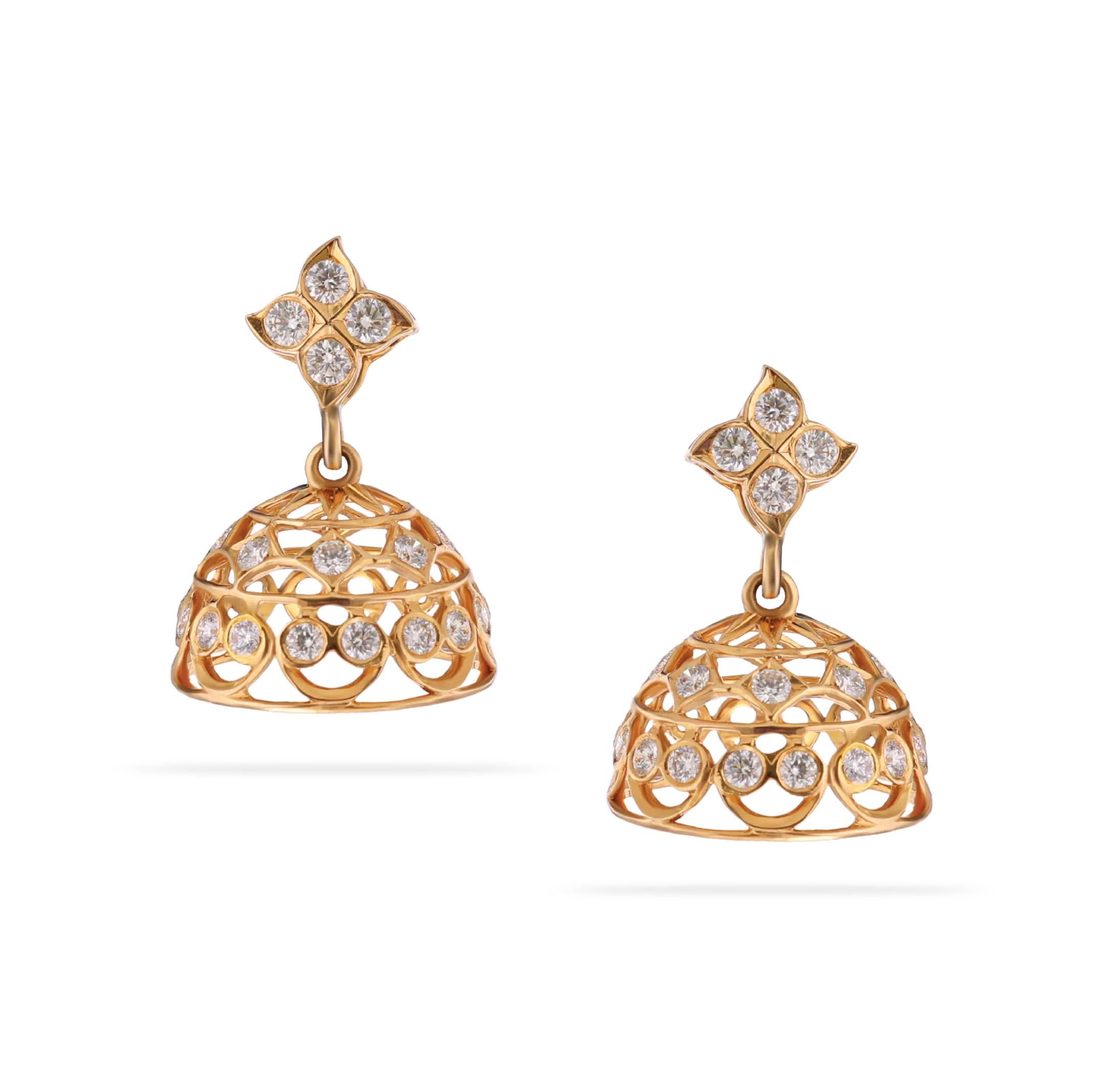
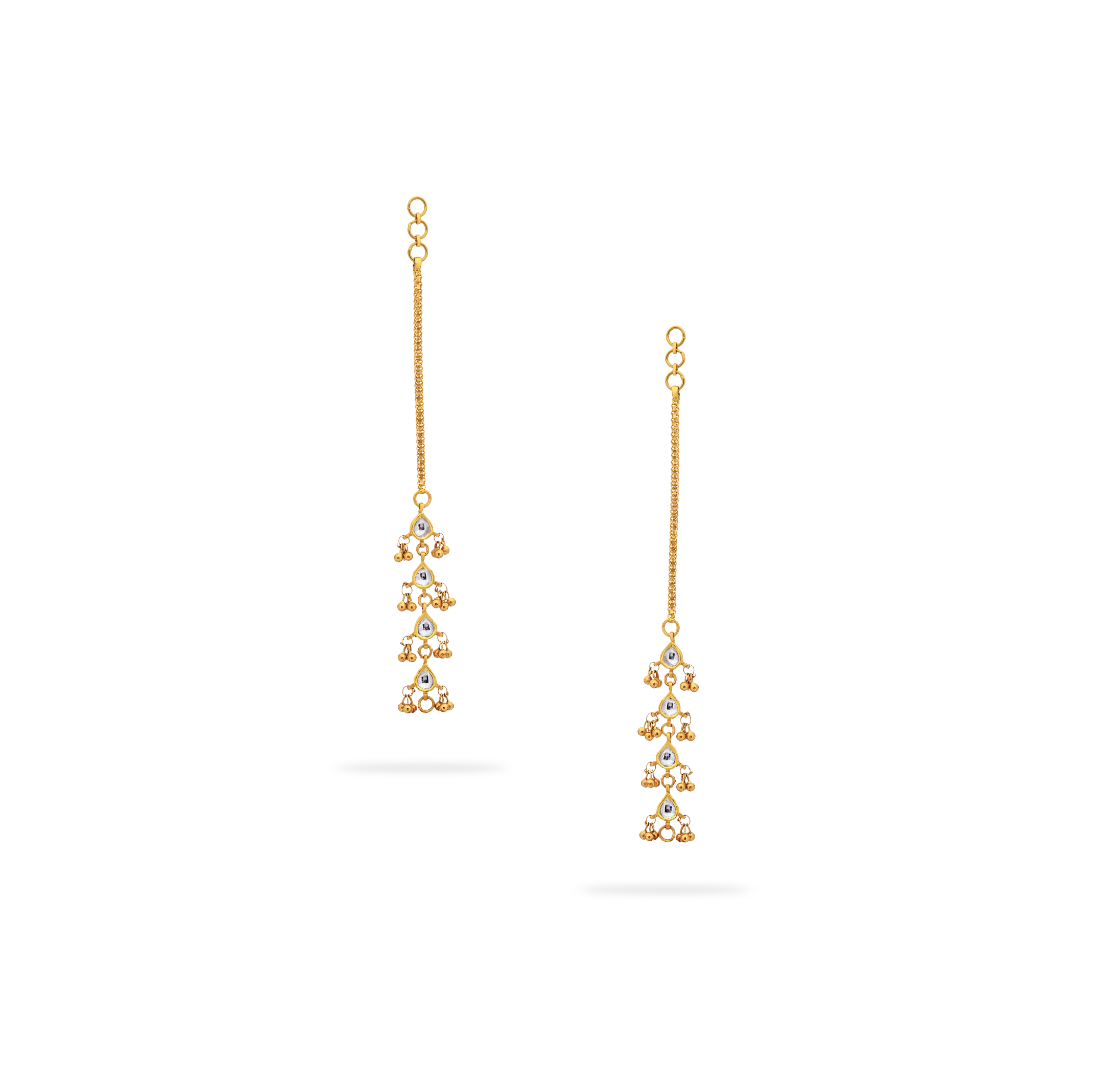
Jhumkas have a distinctive bell-shaped silhouette that brings movement and softness to bridal jewelry. Their traditional character works beautifully with heritage outfits, while simpler versions can suit a contemporary wedding look. The best pair feels connected to the bride’s personal style rather than added at the last minute.
The history and cultural significance of jhumka jewelry
Jhumka jewelry is closely associated with South Asian festive and bridal dressing, with regional variations in motifs, finishes, and construction. Temple-inspired details, floral patterns, pearls, and layered bells can all carry a sense of tradition without requiring a completely traditional outfit. For many brides, the appeal is partly emotional: the earrings can recall family jewelry and cultural celebrations while still feeling personal.
A pair does not need to be an heirloom to have that effect. Choosing a motif that echoes your family’s jewelry or the setting of your ceremony can make the accessory feel more intentional.
Why jhumkas suit traditional and contemporary bridal outfits
The rounded lower bell softens the face, while the top stud or hoop creates a clean point of connection to the ear. That balance allows jhumkas to sit comfortably beside a silk saree, embroidered lehenga, or more pared-back contemporary outfit. Small changes in the metal, stone color, and number of tiers can shift the mood from classic to modern.
If your overall jewelry plan is still developing, a guide to timeless wedding jewelry can help you define whether your look leans minimalist, vintage-inspired, or more fashion-forward. Keep that wider style direction in mind when selecting earrings.
How bell-shaped designs create movement and sparkle
The bell shape catches light as it moves, especially when the lower rim includes beads, pearls, or small stones. This movement is noticeable in photographs and during moments such as walking down the aisle or turning toward guests. A tiered design creates more motion, while a compact bell offers a neater, quieter effect.
Look at the earrings from the side as well as from the front. The profile shows whether the bell hangs cleanly or sits too close to the neck, and it gives you a better sense of how the pair will move with your hairstyle.
Choosing between statement and understated styles
Statement jhumkas can become the visual focus of the face, making them a strong choice when the neckline or blouse is relatively simple. Understated styles work well when the outfit already has extensive embroidery, a prominent necklace, or a dramatic veil. Neither approach is automatically more bridal; the surrounding details determine the balance.
A clear focal point usually makes the whole jewelry arrangement look calmer. If the earrings are large, allow one or two other pieces to support them rather than compete with them.
Match jhumka designs to your bridal outfit
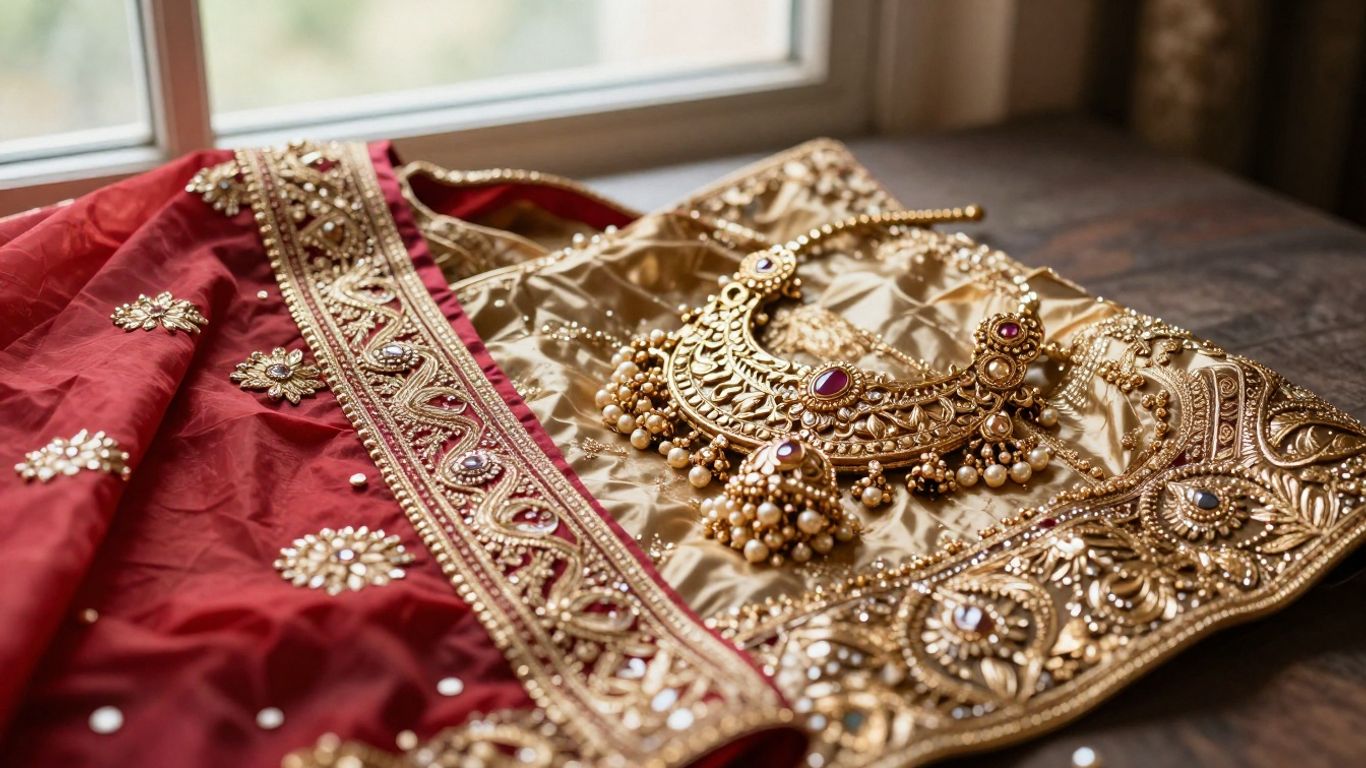
Your earrings should relate to the fabric, color, neckline, and decorative language of the outfit. Start by identifying the strongest visual feature, such as gold zari, colored stones, pearl work, or dense thread embroidery. Then select jhumkas that echo that feature without copying every detail.
Pairing jhumkas with sarees and silk lehengas
Silk sarees and silk lehengas often pair naturally with gold-look jhumkas , especially when the fabric includes zari or warm metallic details. A traditional bell with a pearl fringe can soften a rich silk, while a more geometric design can make the outfit feel current. Consider the drape too: heavy fabric and a broad pallu may support a larger earring, while a lighter saree can look better with a more compact silhouette.
The earring should also remain visible against the hair and saree border. Try the complete outfit together rather than judging the jewelry against a plain blouse.
Coordinating earrings with embroidered bridal outfits
Embroidery gives you several ways to create harmony. Pick up one recurring element—perhaps a blush stone, a pearl accent, or antique-looking gold—and let the jhumkas repeat it in a restrained way. When the embroidery is delicate, a detailed earring can add richness; when the surface is dense, a simpler outline often looks more polished.
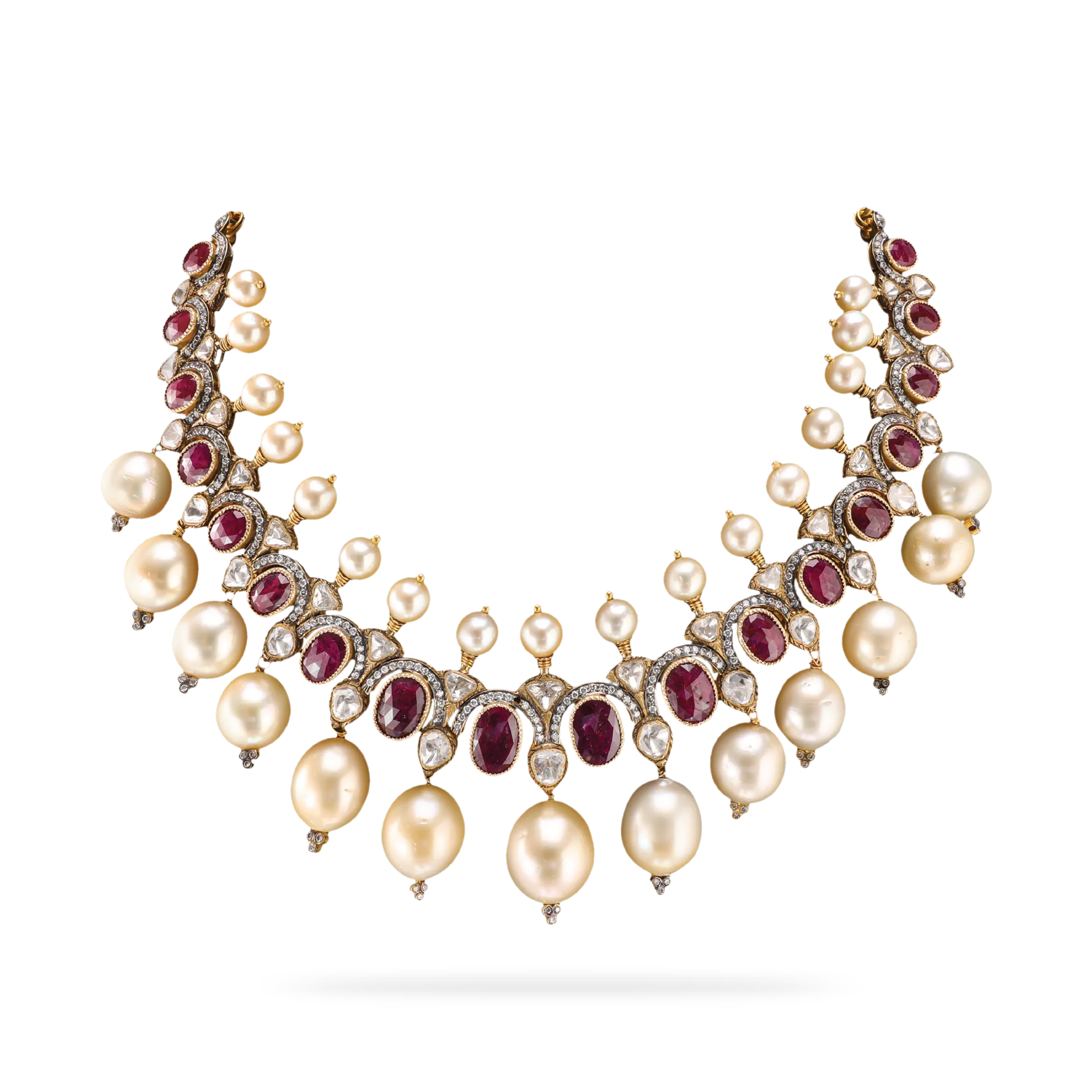
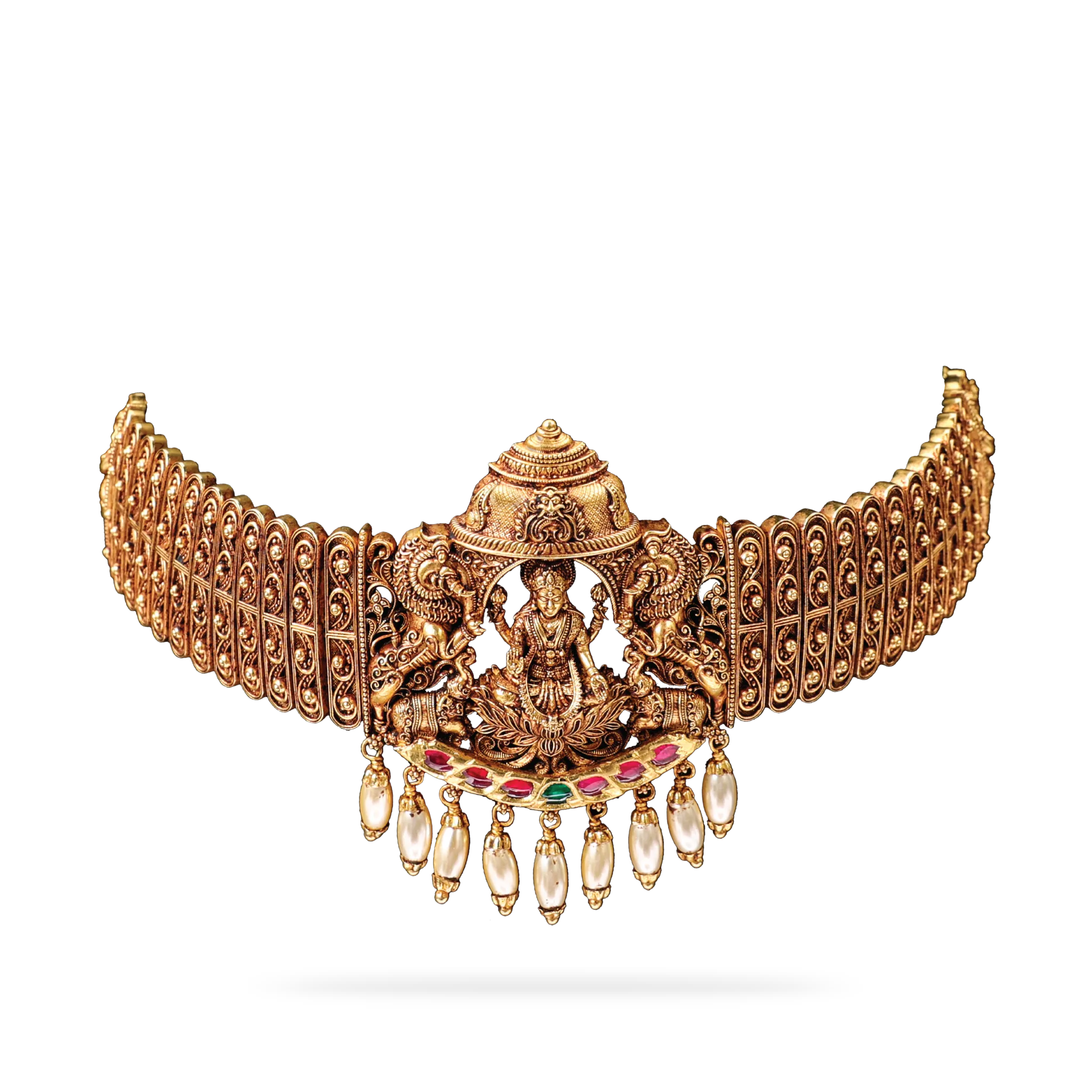
A bridal jewelry guide such as choosing a bridal choker set also reinforces the value of treating earrings, neckline jewelry, and dress details as one composition. The goal is coordination, not a perfect match between every accessory.
Selecting metals for red, pink, gold, and pastel color palettes
Warm yellow gold usually sits comfortably with red, maroon, orange, and traditional gold palettes. Pink outfits can work with yellow gold , rose-toned accents, or a mixed finish depending on whether the fabric is warm or cool. Pastels often benefit from pearls, soft gold, silver-toned details, or stones that repeat the outfit’s gentler color.
Use the table below as a starting point rather than a strict rule. Lighting, fabric sheen, and the color of your other jewelry can change the result.
| Outfit palette | Useful jhumka finishes | Detail to consider |
|---|---|---|
| Red or maroon | Yellow gold , antique gold | Match the warmth of the zari or embroidery |
| Pink or coral | Gold, rose-toned accents, pearls | Repeat one shade without adding too many colors |
| Gold or champagne | Gold, matte gold, clear stones | Vary texture so the jewelry does not disappear |
| Pastel blue or lavender | Pearls, silver-toned details, pale stones | Check the finish under both daylight and warm light |
After comparing the options, hold the earrings beside the actual fabric and photograph the combination. A finish that looks balanced in a store can appear much brighter or duller beside a wedding outfit.
Balancing ornate earrings with heavily embellished clothing
When the outfit is already richly decorated, reduce visual competition by choosing one dominant feature in the jhumkas . That might be a clean bell shape, a pearl fringe, or a single stone color. Avoid stacking several unrelated motifs simply because each one looks attractive on its own.
It can help to put on the veil and necklace before deciding. If the earrings disappear, choose a slightly clearer outline; if the face already feels crowded, reduce the number of tiers or decorative drops.
Explore popular bridal jhumka styles
Bridal jhumkas come in many combinations of metal color, surface finish, stones, and hanging details. The style name matters less than the way those elements work together on your ear and beside your outfit. Look closely at construction photos, not only front-facing product images.
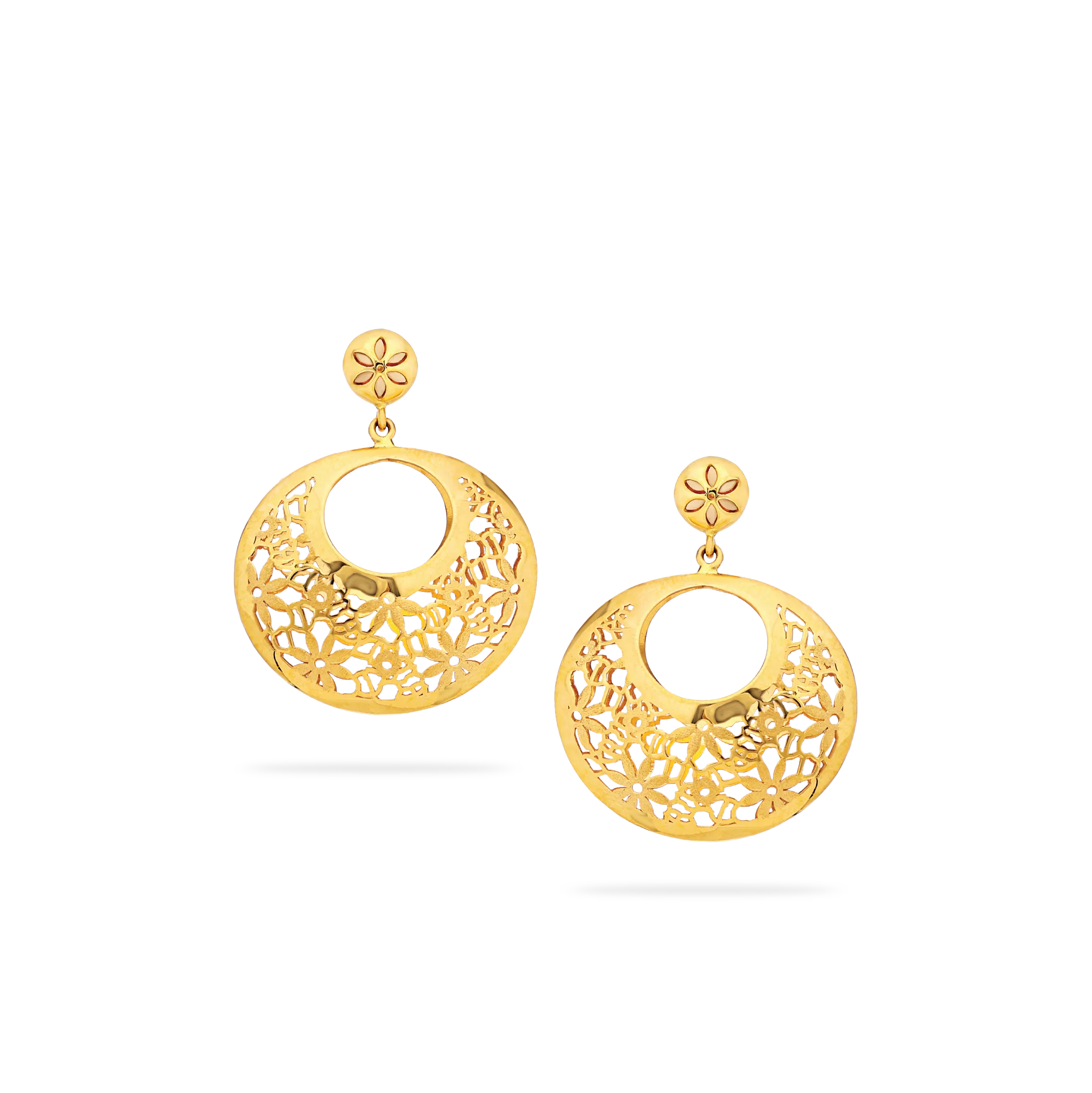
Gold-plated and traditional gold-look jhumkas
Gold-plated and gold-look designs offer the visual warmth many brides want without requiring a solid-gold piece. Their appeal often comes from detailed motifs, layered bells, and a finish that works with silk and traditional embroidery. Ask how the plating should be cared for, particularly if you expect to wear the earrings beyond the wedding.
Some designs described as temple-inspired combine classic motifs with pearl drops and a lighter construction. For example, the gold-plated pearl-drop jhumkas listed in the coverage material are described with temple-inspired motifs and pearl drops for wedding and ethnic wear.
Pearl-drop jhumkas for a soft, elegant finish
Pearls add a gentle edge to the firm geometry of the bell. They can make a large earring look less severe and can also connect naturally with pearl details in a blouse, veil, or necklace. Check whether the pearls are evenly sized and securely attached, since loose drops can change the balance of the earring.
For a more delicate bridal look, choose a shorter fringe with fewer drops. A longer fringe creates more movement but may catch on hair or fabric during busy parts of the day.
Kundan, polki, and AD stone designs for extra sparkle
Kundan, polki, and AD stone styles each create a different kind of shine, so compare the sparkle with your venue and outfit. Highly reflective stones can look vivid under reception lighting, while a softer, irregular surface may feel more antique and textural. The setting should hold each stone securely and should not have sharp edges that catch on a veil.
A broad collection of handcrafted jhumki designs includes traditional, floral, Kundan, and CZ-influenced styles. That range illustrates why it is useful to compare silhouettes first and stone details second.
Temple-inspired and antique-finish jhumkas
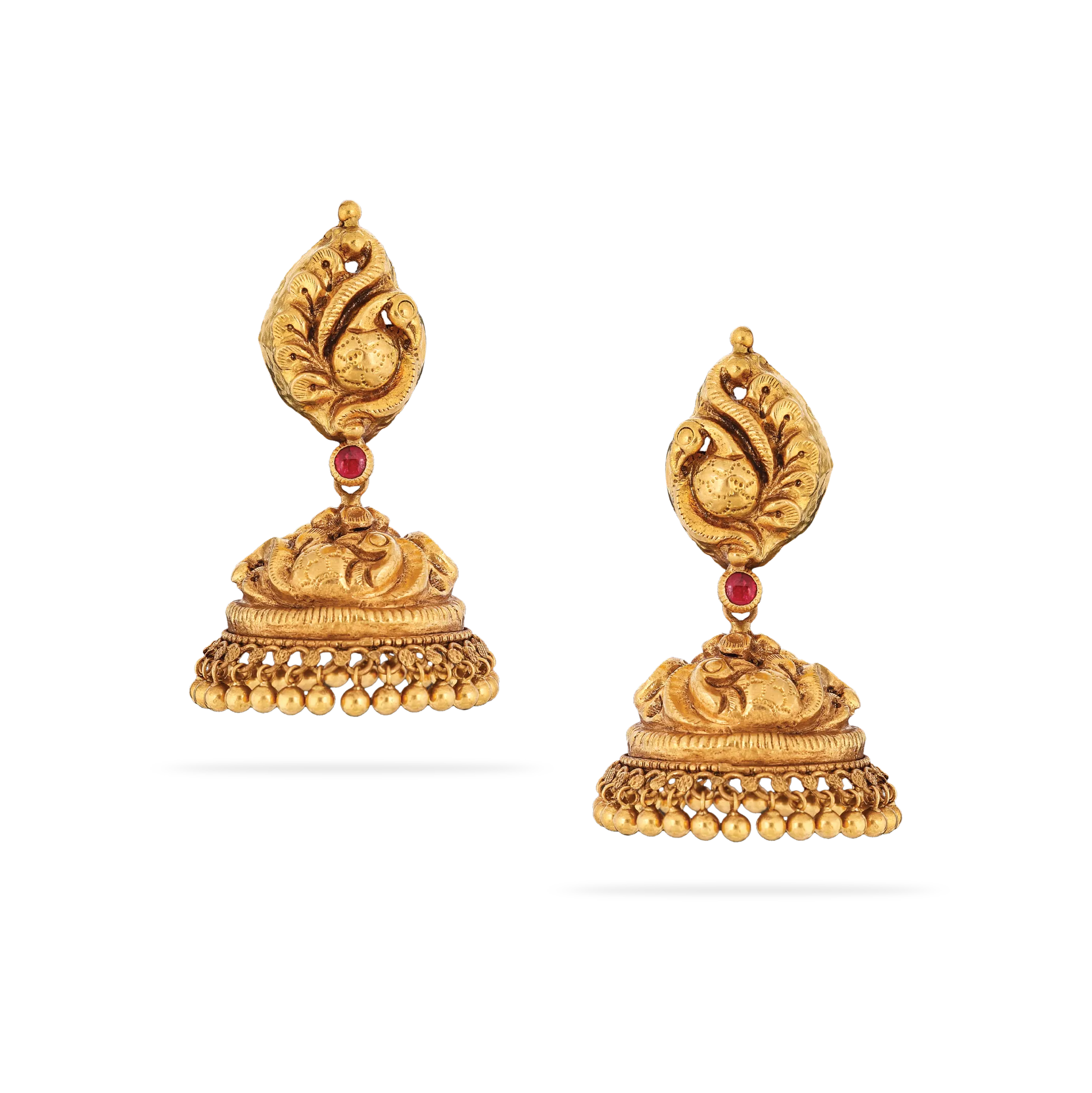
Temple-inspired jhumkas often use sculptural motifs and a deeper finish to create a heritage mood. Antique surfaces can bring out the relief in the bell, making the design readable even when the stones are understated. They pair especially well with traditional textiles, but a restrained antique finish can also add contrast to a modern outfit.
Before choosing one, examine the color in natural light. Some antique finishes are intentionally uneven, while others may simply look dull; knowing the intended effect helps you judge the pair fairly.
Choose the right size and shape
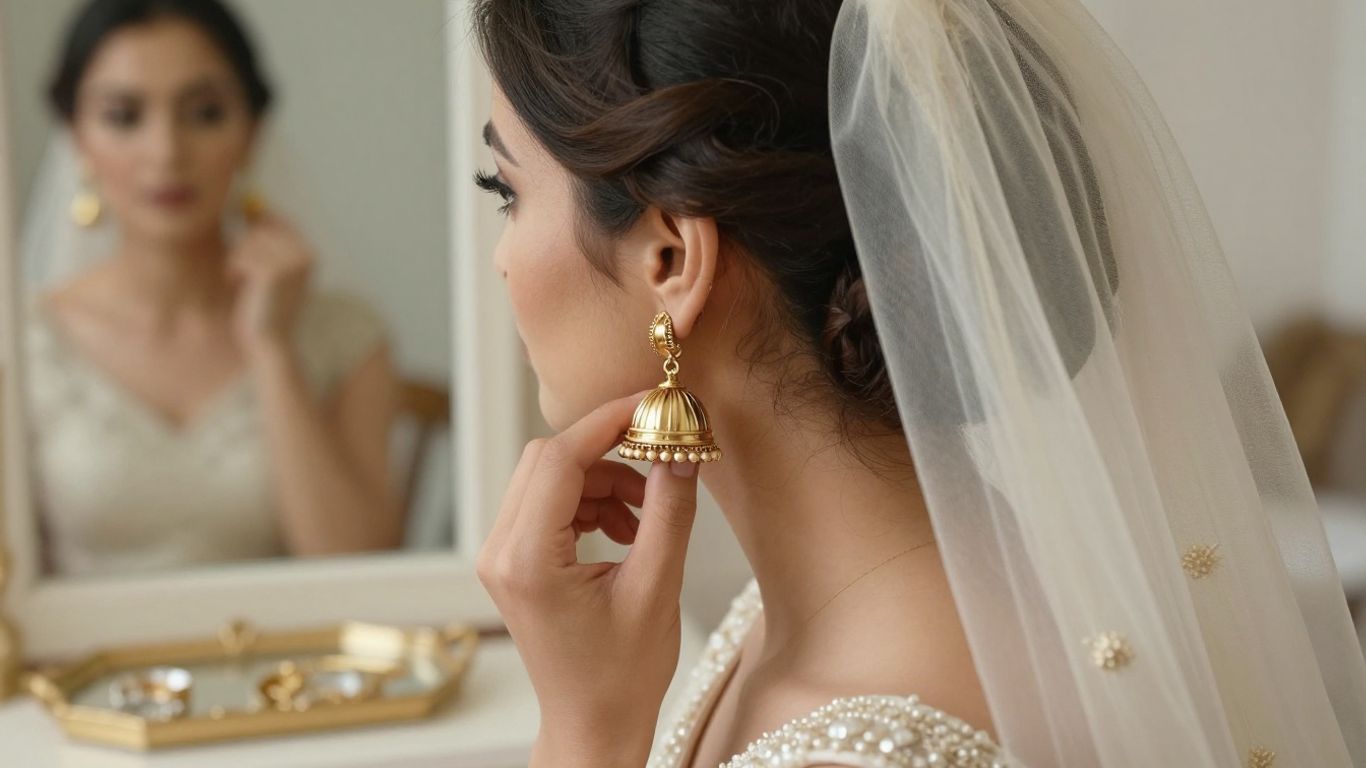
Size is not only a matter of personal taste. It affects comfort, visibility, balance, and how the earrings relate to your face and hairstyle. Try the pair while standing, sitting, and turning your head, because an earring that looks perfect from the front may feel cumbersome after an hour.
Finding proportions that complement your face shape
Longer jhumkas can complement a rounder face by adding vertical movement, while wider or rounded designs can suit a longer face. Oval faces can usually carry a broad range of silhouettes, but the neckline and hairstyle still matter. These are starting points, not fixed rules; your comfort and preference should have the final say.
Take a front-facing photograph with your hair styled as planned. The image often makes the proportion easier to judge than a mirror does, particularly when you are comparing several pairs.
Selecting lightweight options for all-day comfort
Wedding jewelry may be worn through makeup, photographs, rituals, meals, and dancing, so weight deserves attention early. Ask whether the bell is hollow, how the lower elements are joined, and whether a supporting backing is included. A lighter pair can still look substantial when its shape and finish are well designed.
Do not judge comfort by holding the earrings in your palm. Wear them for at least fifteen minutes and move naturally. Pressure at the piercing, pulling from the front, or a backing that pinches are all signs to reconsider.
Deciding between compact, medium, and oversized jhumkas
Compact jhumkas suit smaller features, busy necklines, and events where you want the earrings to remain easy to wear. Medium designs are often the most versatile because they show clearly in photographs without dominating the face. Oversized jhumkas can be striking for the main ceremony, but they need especially careful attention to weight and security.
Use these practical checks before settling on a size:
- Make sure the bell remains visible beside your hairstyle.
- Compare the earring’s width with the widest part of your face.
- Check that the lower edge does not rest against your neck.
- Wear the pair long enough to notice pressure or pulling.
These checks turn a visual decision into a practical one. If a dramatic pair fails them, look for the same design language in a smaller or lighter version.
Considering hairstyle, veil, and neckline visibility
A low bun may leave large jhumkas completely visible, while loose waves can hide the top stud and catch on the drops. A veil may cover part of the earring during the ceremony, so consider whether the pair still looks balanced when only the lower bell is visible. Neckline height matters as well, especially with long or layered jhumkas .
Take a test photograph from the angles your photographer is likely to use. The result will show whether the earrings frame the face or disappear into the styling.
Check quality, comfort, and craftsmanship
A beautiful front view does not tell you everything about a pair of earrings. Quality is also visible in the back, at the joints, around the stones, and in the way the earring hangs from the ear. Give yourself enough time to inspect these details before the final purchase.
Evaluating metal plating and stone settings
Look for an even surface without obvious patchiness, rough edges, or discoloration. Stones should sit securely in their settings, with no visible gaps or adhesive around the edges. If the design is plated, ask about care instructions and avoid assuming that a bright finish will remain unchanged if exposed to perfume, sweat, or water.
Run a clean fingertip gently along the edges. Any sharp point that catches on skin, fabric, or hair deserves attention before the wedding.
Inspecting pearl attachments, clasps, and decorative details
Pearls and hanging beads should be attached firmly and should move without twisting the entire earring. Examine the post, screw, hook, or push-back closure for smooth operation. Decorative details should be symmetrical enough to look intentional, even when the design has a handcrafted character.
Open and close the fastening several times. A clasp that feels difficult in a quiet room may be frustrating when you are dressing quickly on the wedding day.
Choosing skin-friendly materials for sensitive ears
If your ears are sensitive, ask what materials touch the piercing and whether the posts or backs differ from the visible metal. Do not wait until the wedding to test a new pair. Wear them briefly on an ordinary day and watch for itching, redness, or discomfort.
A trusted jeweler can explain the construction more clearly than a generic product description. Keep any care or material information with the earrings so it is available later.
Testing weight, balance, and security before the wedding
The earring should hang straight rather than tipping forward or pulling the lobe down. Walk, turn your head, and gently move your hair around the pair to test its security. If you plan to wear a veil or heavy hairstyle, include those elements in the trial.
Schedule a final fitting several days before the ceremony, not on the morning itself. This leaves time to change the backing, select a smaller pair, or make another practical adjustment.
Style and care for your bridal jhumkas
Once you have chosen the earrings, the finishing work is coordination and care. Bridal jewelry looks most composed when each piece has enough room to be seen. It also stays more beautiful when it is protected from moisture, friction, and rushed handling.
Coordinating jhumkas with maang tikka, necklace, and bangles
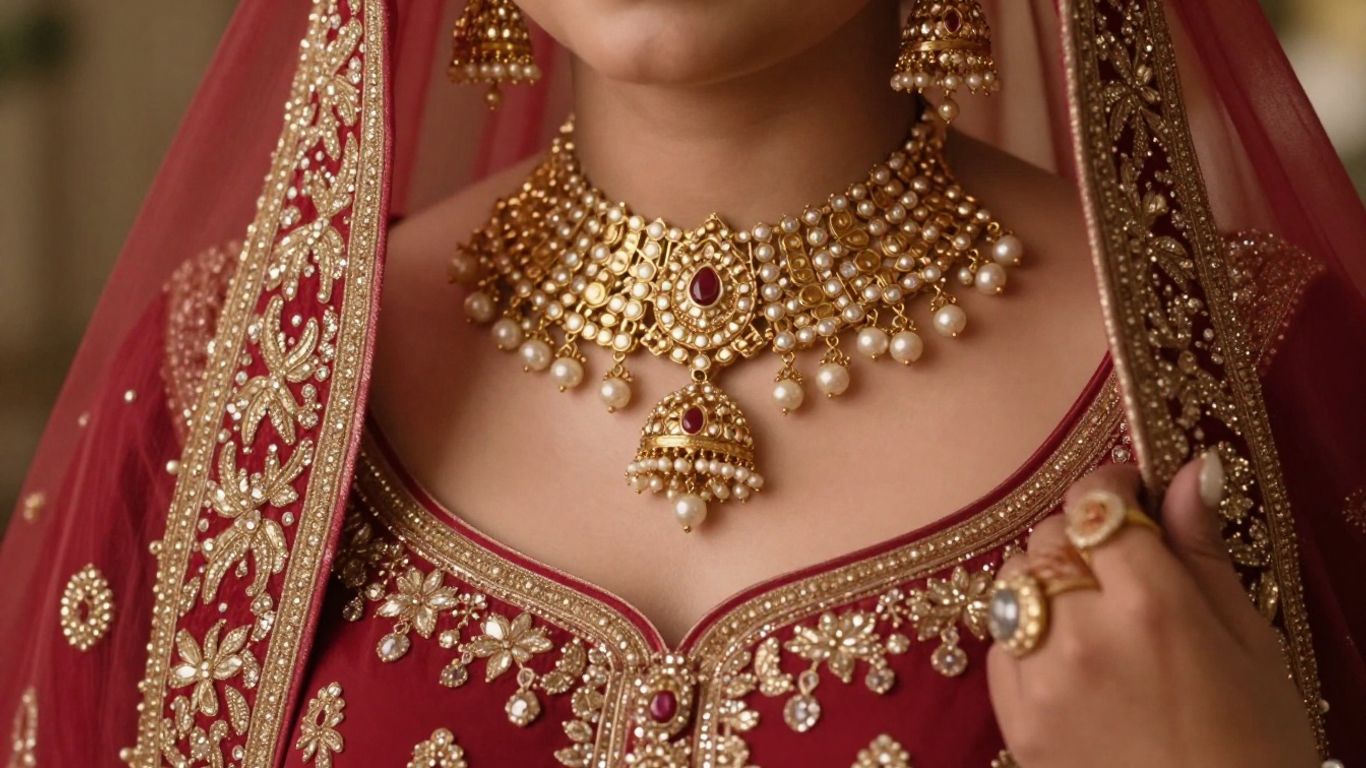
Begin with the piece you most want people to notice, then let the other jewelry support it. Large jhumkas may need a simpler necklace or a lighter maang tikka, while compact earrings can sit comfortably beside a more elaborate choker . Keep the metal family consistent unless mixed metals are a deliberate part of the look.
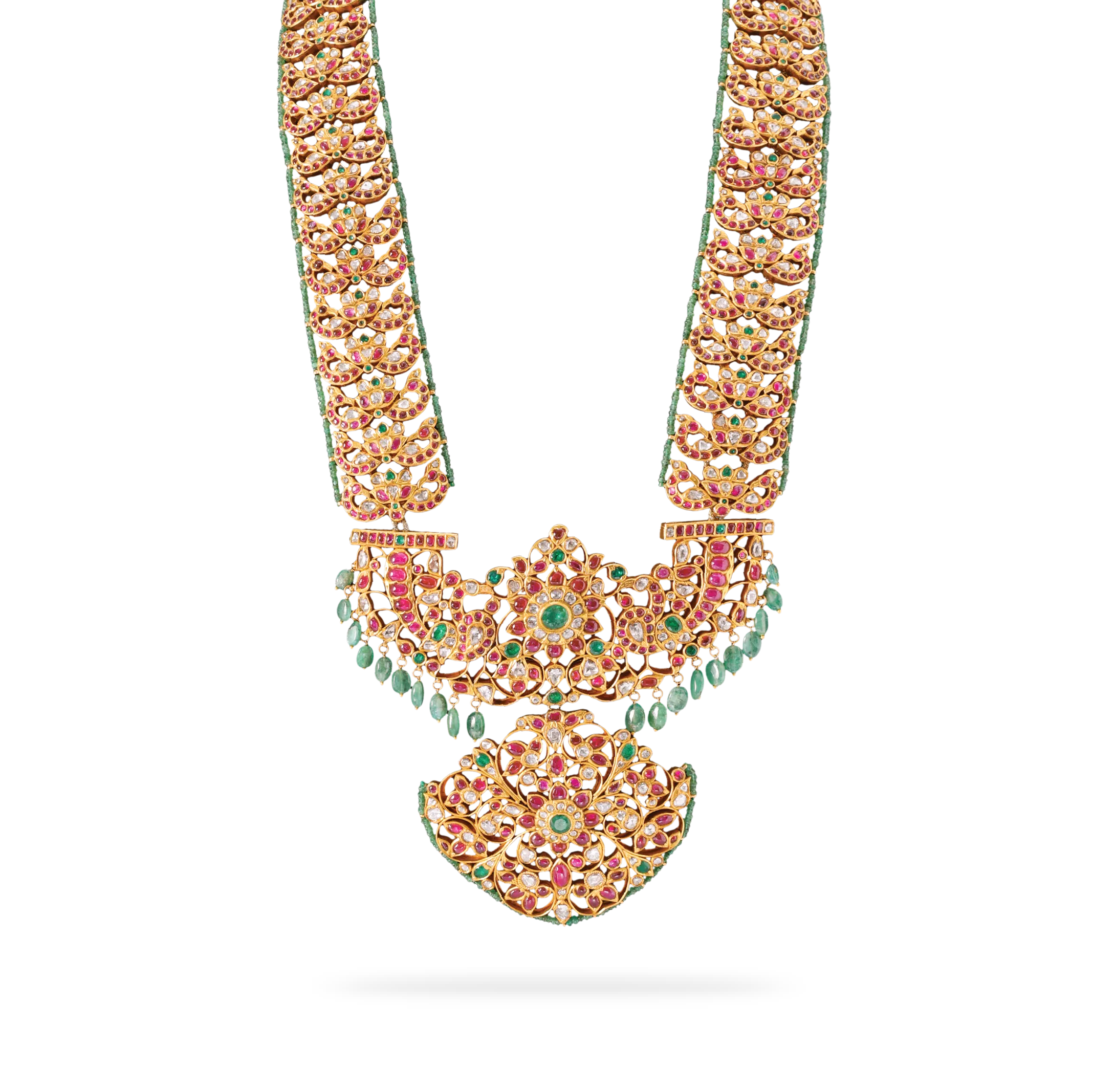
A bridal long necklace set can be evaluated alongside the earrings by comparing metal, gemstone, length, and neckline. That approach keeps the overall arrangement cohesive without making every piece identical.
Styling earrings for the ceremony, reception, and pre-wedding events
You do not need one pair to serve every event. A traditional, more substantial jhumka may suit the ceremony, while a lighter pair can be easier for the reception. For a pre-wedding event, consider a compact style that works with brighter clothing and allows the face to remain expressive in photographs.
Keep the most important practical details consistent: secure fastenings, a comfortable weight, and enough contrast against the hairstyle. A beautiful pair that is constantly adjusted will not feel beautiful for long.
Storing bridal jewelry to prevent scratches and tarnishing
Store each earring pair separately in a soft pouch or a divided jewelry box. Keep metal surfaces from rubbing against stones, chains, or rough fabric. A cool, dry location is preferable to a humid bathroom, and keeping the original packaging can help if it provides a soft, protective compartment.
Close clasps before storing the earrings so they do not catch on the pouch. It is also useful to photograph the pair and note where the backs are kept, especially when several accessories are being packed for travel.
Cleaning and maintaining stones, pearls, and plated finishes
Follow the maker’s care instructions, since pearls, stones, and plated surfaces do not all respond to the same cleaning method. In general, keep perfume, hairspray, lotion, and water away from the earrings, and wipe them gently with a soft, dry cloth after wearing. Avoid abrasive cloths and aggressive polishing products unless the material specifically allows them.
Let the earrings dry fully before returning them to storage. A few quiet minutes of care after each wear can preserve the finish far better than trying to correct damage later.
Conclusion
The best bridal jhumka earrings bring together tradition, proportion, comfort, and personal taste. Compare them with the actual outfit, test their weight and fastening, and choose a finish that supports rather than competes with the rest of your jewelry. When the pair feels secure and genuinely like you, it will look natural in both photographs and memories.
Frequently Asked Questions
What are bridal jhumka earrings?
Bridal jhumka earrings are bell-shaped earrings commonly styled with South Asian wedding outfits. They may feature gold-look finishes, pearls, stones, sculptural motifs, or multiple hanging tiers.
How do I choose the right jhumka size?
Consider your face shape, hairstyle, neckline, and how long you will wear the earrings. Medium styles are often versatile, while larger designs need extra attention to weight and visibility.
Are heavy jhumkas suitable for a wedding ceremony?
They can be, but only if you have tested them for an extended period and feel no pulling or pressure. A lightweight construction or supportive backing may make a substantial design more comfortable.
Which jhumka finish works with a red bridal outfit?
Yellow gold , antique gold, and warm stone details often complement red, maroon, and similar palettes. Compare the finish with the actual fabric because the zari and lighting can affect the final combination.
Can I wear jhumkas with a necklace and maang tikka?
Yes. Coordinate the metal and general level of detail, then choose one main focal point. If the earrings are elaborate, simpler surrounding pieces may create a more balanced result.
How should I store bridal jhumka earrings?
Keep each pair in a soft, separate compartment away from moisture, friction, and direct contact with other jewelry. Store the backs with the earrings so the set remains complete.
How can I keep plated jhumkas looking bright?
Keep them away from perfume, hairspray, lotion, sweat, and water when possible. Wipe them gently with a dry, soft cloth after use and follow any care instructions supplied with the earrings.
Related blogs:
November 20, 2025
The Timeless Elegance of the Tennis Bracelet: A Comprehensive Guide
Read More
November 20, 2025
The Ultimate Guide to Styling and Wearing a Choker Necklace
Read More
November 20, 2025
Find Your Perfect Engagement Ring: A Comprehensive Guide to Styles and Diamonds
Read More
November 20, 2025
The Timeless Elegance of a Diamond Tennis Bracelet: A Buyer's Guide
Read More