How to Value Old Gold Jewellery: Melt Value vs Heritage Value
Almost everything written about selling old gold is written by people who buy it for melt. That is one answer to what your jewellery is worth, and for most pieces it is the right one — but not for all of them. Here is how the valuation is actually done, which deductions are legitimate, and how to tell the difference.
The short answer
Old gold jewellery is valued by taking its net gold weight, multiplying by its assayed purity to get the fine gold content, and multiplying that by the current gold rate. Stones, pearls, enamel, lac and thread are removed or deducted first, because they are not gold. From that figure a buyer may apply a refining or melting margin. Making charges and wastage from the original purchase are not recovered. A small minority of pieces — genuinely antique work, signed pieces, exceptional craftsmanship, or important stones — are worth more than their melt value, and those should never be sold by weight without a separate assessment.
On this page
Your jewellery has two values, and they are rarely the same
Every piece of gold jewellery carries a floor price: the market value of the metal it contains. That figure is objective, calculable to two decimal places, and it does not care what the piece looks like. Call it the melt value.
A smaller number of pieces also carry a value as objects — because of who made them, when, how, or what is set in them. Call that heritage value. It is not objective, it is not calculable from a rate card, and it exists only where someone will pay for the piece rather than for the metal.
The mistake that costs people money is assuming their jewellery has heritage value when it does not. The mistake that costs people more is assuming it does not when it does — because that mistake is irreversible. A melted bangle cannot be un-melted.
Being straight about it: most gold jewellery is worth its melt value. A twelve-year-old machine-made chain, a plain bangle, a set bought for a wedding in 2005 — these are metal, and any honest jeweller will tell you so. The purpose of this guide is to make sure you get the metal price accurately, and to help you recognise the minority of pieces where you should stop and take advice.
The valuation formula
How the number is arrived at
Value = net gold weight × assayed purity × current rate per gram, less any legitimate deduction
Every term matters. Net gold weight, not gross. Assayed purity, not assumed. The current rate, for the correct purity, on the day of the transaction.
Working through each term:
Net gold weight
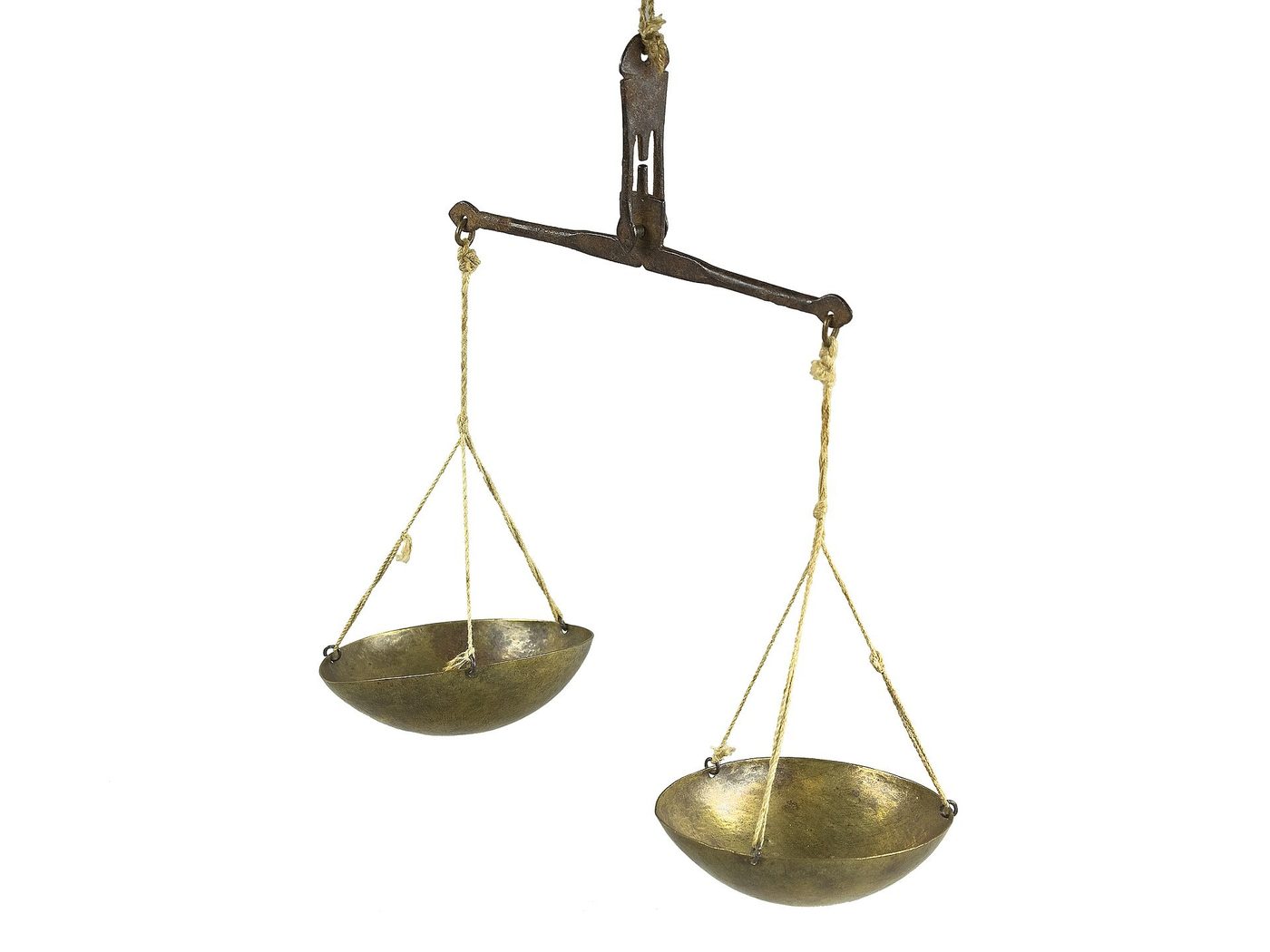
The piece is weighed after stones, pearls, enamel, lac filling, thread and any other non-gold material are removed or accounted for. On a Kundan or Jadau piece this matters enormously — the lac behind the setting can be a substantial share of the gross weight. On a heavy studded necklace, gross and net can differ dramatically. Insist on seeing the net weight established, on a calibrated balance, in front of you.
Assayed purity
Not what you were told when you bought it, and not what is stamped on it if that stamp predates hallmarking. Purity is what testing shows it to be. If the piece carries a modern BIS hallmark with a HUID, the purity is already established and verifiable, which is one of the quieter benefits of buying hallmarked gold in the first place.
The current rate
Gold rates move daily. The rate applied should be the rate for the assayed purity — a 22K piece valued at the 22K rate. Ask what rate is being used and confirm it against the day's published rate before agreeing to anything.
How purity is actually tested
Three methods are in common use in India, and they are not equivalent.
| Method | How it works | Destructive? | Reliability |
|---|---|---|---|
| Touchstone / acid | The piece is rubbed on a stone and acid applied to the streak | Marks the surface | Indicative only. Reads the surface, so plating and surface enrichment defeat it |
| XRF spectrometry | Low-energy X-rays excite the metal; the machine reads each element's fluorescence signature, typically in around 30 seconds | No — entirely non-destructive | Good, and fast. Still a surface-layer reading, so heavy plating can mislead |
| Fire assay | A sample is melted and the gold separated and weighed | Yes | The reference method. This is what BIS uses under IS 1418 |
For valuing an intact ornament, XRF is the sensible default: it is quick, it is non-destructive, and it reads the whole alloy rather than guessing from a colour. Its one real limitation is that it measures near the surface, so a thickly plated base-metal item can read higher than it is — which is why a careful buyer will also weigh the piece and check that the density is consistent with the reading.
You are also entitled to an independent opinion. Any consumer can have a piece tested at a BIS-recognised Assaying and Hallmarking Centre for ₹200, by fire assay as per IS 1418. For a single valuable piece where the assessed purity is being disputed, that is money well spent.
Watch how the piece is handled
Testing and weighing should happen in front of you. If a piece is taken into a back room to be assessed and returns with a number, you have no way to verify what was done. Reputable houses test at the counter for exactly this reason. Never allow an item to be melted before a price has been agreed — once it is melted, your negotiating position and your piece have both gone.
Which deductions are legitimate, and which are not
This is where the spread between buyers appears, and where the number can quietly be reduced.
Legitimate
- Non-gold weight. Stones, pearls, enamel, lac, thread and wax are not gold and are properly excluded from the gold weight. Note this is an exclusion, not a penalty — and you should get your stones back if you want them.
- Purity adjustment. If the piece assays below the caratage assumed, the value reflects what is actually there. Unwelcome, but correct.
- A refining margin. Recovering fine gold from an alloy has a real cost. On bullion this is commonly around 1–2%. On ornaments it is somewhat higher, because the alloy is more complex and solder joints, plating and residues have to be dealt with.
Questionable
- A large blanket “melting loss”. A 22K ornament is 91.6% gold, and while a small amount of metal is genuinely lost in melting and refining, it does not approach the 10% or 15% figures that are sometimes quoted. If a substantial melting loss is being applied, ask what it consists of and how it was arrived at.
- Deductions applied twice. A purity deduction and a separate melting loss and a handling charge can, stacked together, describe the same cost three times. Ask for the deductions itemised as a single list with percentages against each.
- A vague “processing” or “handling” charge. It may be legitimate, but you are entitled to know what it pays for.
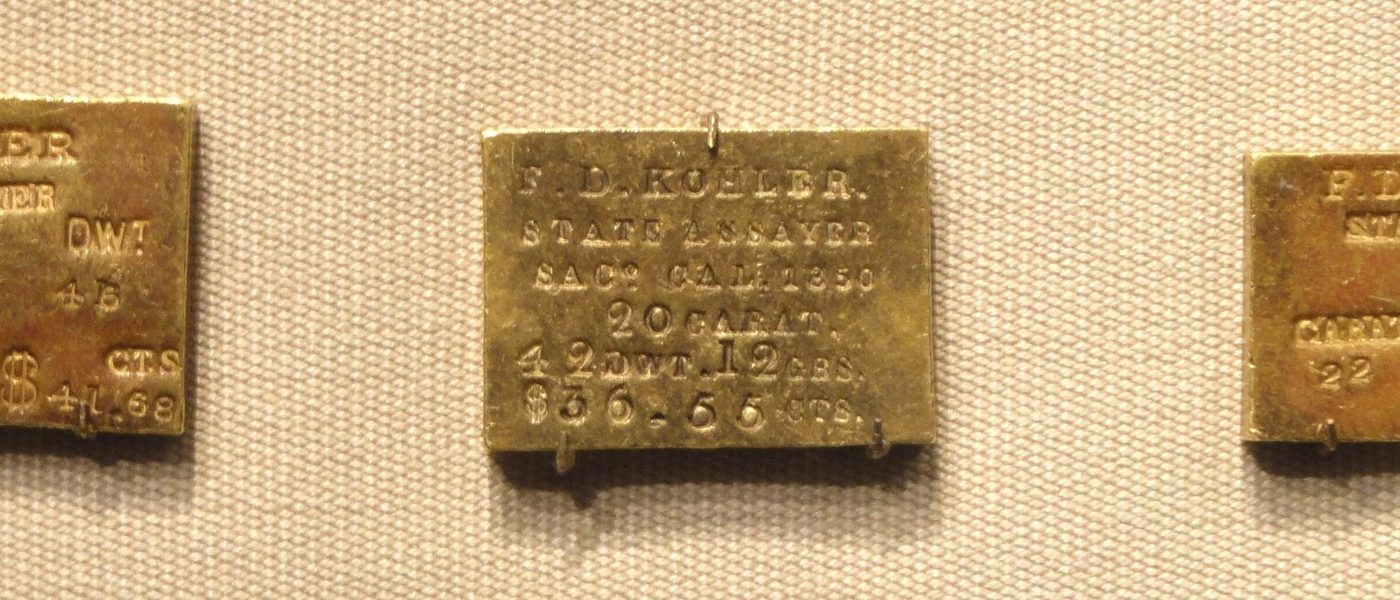
There is no BIS or consumer-protection rule capping what a buyer may deduct on old gold. The terms are purely commercial, which means the only real protection is comparison and clarity. Get the deductions written down as percentages before you agree, and take the piece elsewhere if they will not be written down.
A worked valuation
An old 22K necklace with some stones. Round numbers, assumed rate, to make the structure visible.
22K necklace · 48.500 g gross · assumed 22K rate ₹9,000 per gram
| Gross weight of the piece | 48.500 g |
| Less stones, enamel and lac, removed and returned | (6.500 g) |
| Net gold weight established on a calibrated balance | 42.000 g |
| Net gold value — 42.000 g × ₹9,000 | 378000.00 |
| Less refining margin at 2% | -7560.00 |
| Value of the metal | 370440.00 |
Note that no part of the making charges or wastage paid when the necklace was bought appears anywhere in this calculation. They were spent at purchase. Note also the 6.5 g of non-gold weight: had it been valued as gold, the difference would have been over ₹58,000.
When a piece is worth more than its metal
Stop and take advice before selling by weight if any of the following apply.
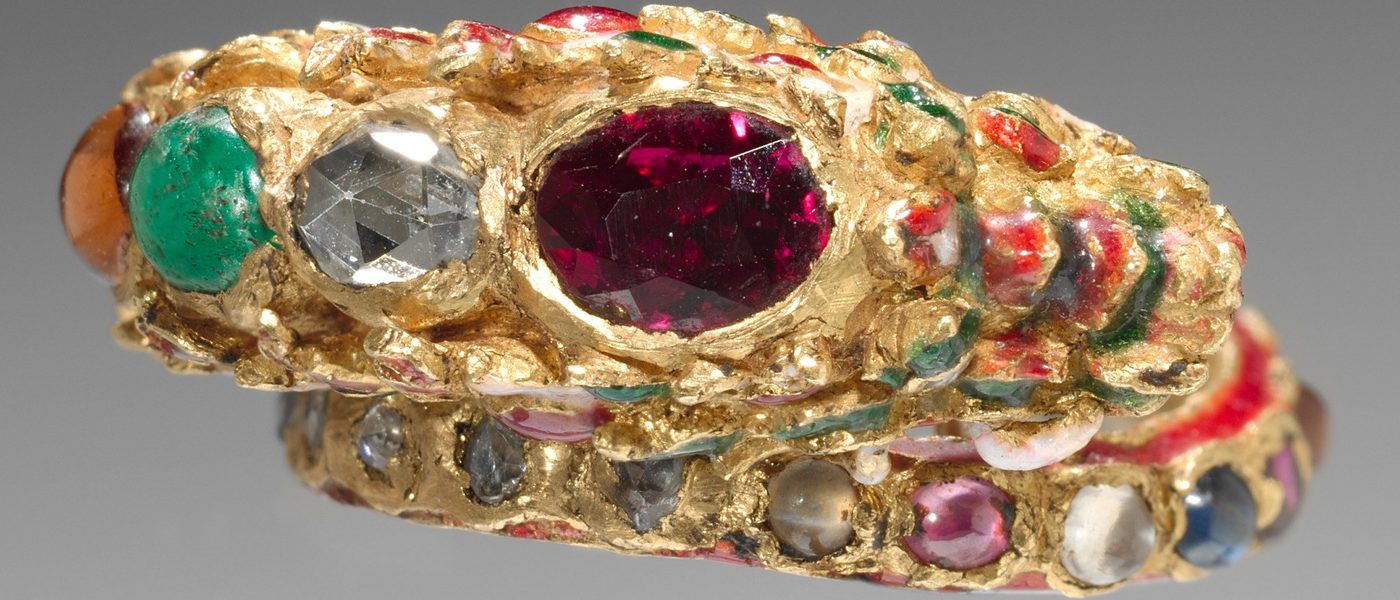
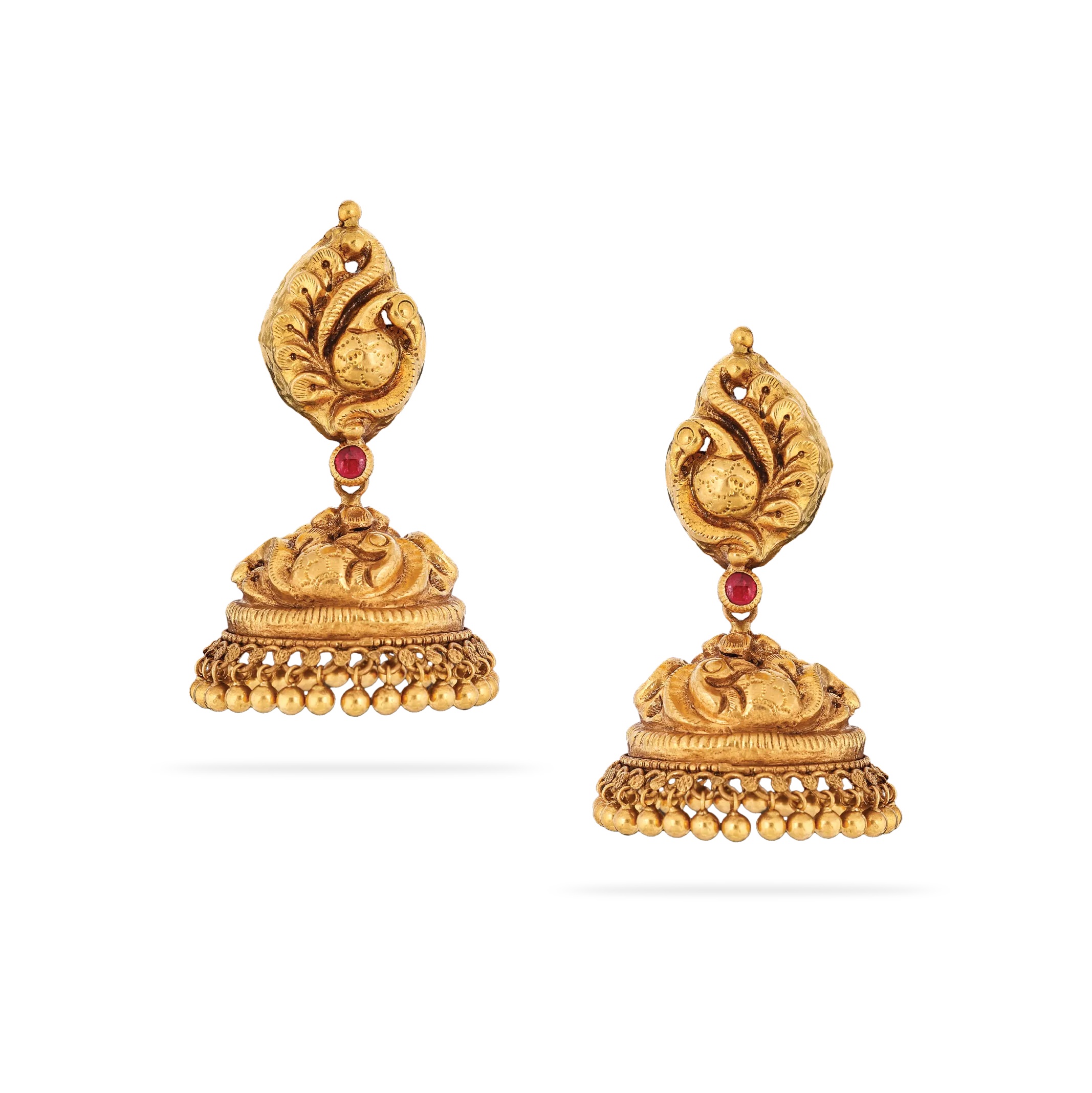
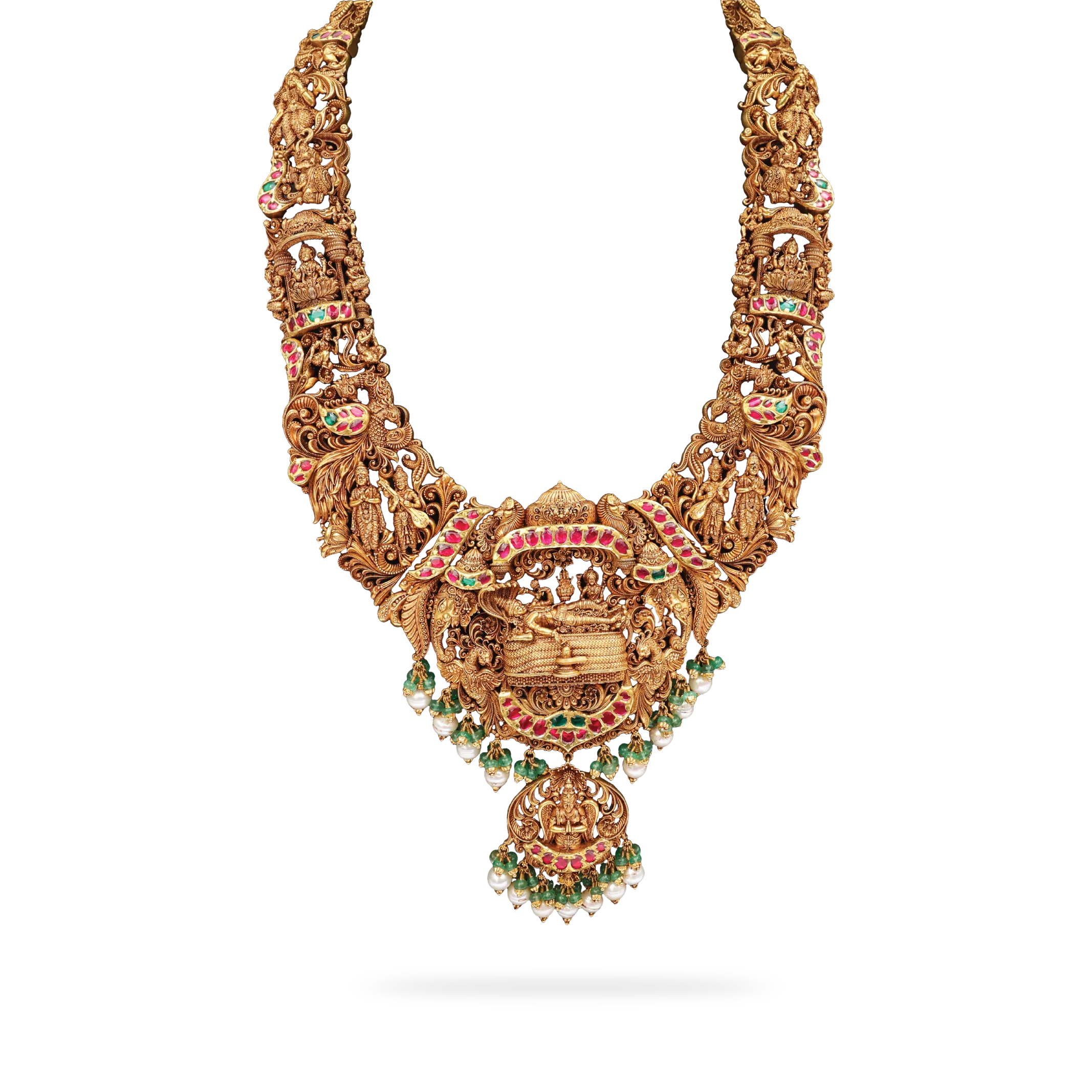
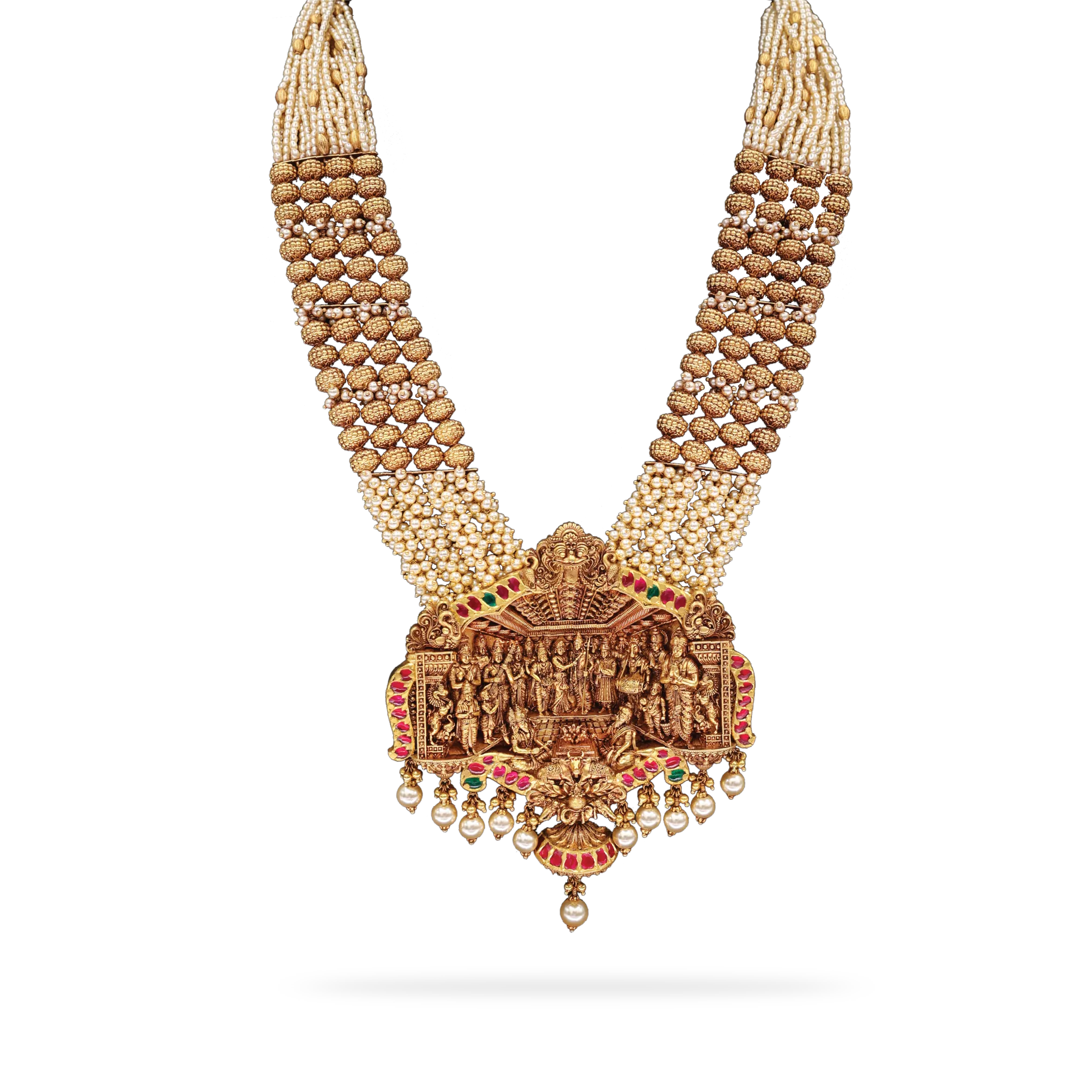
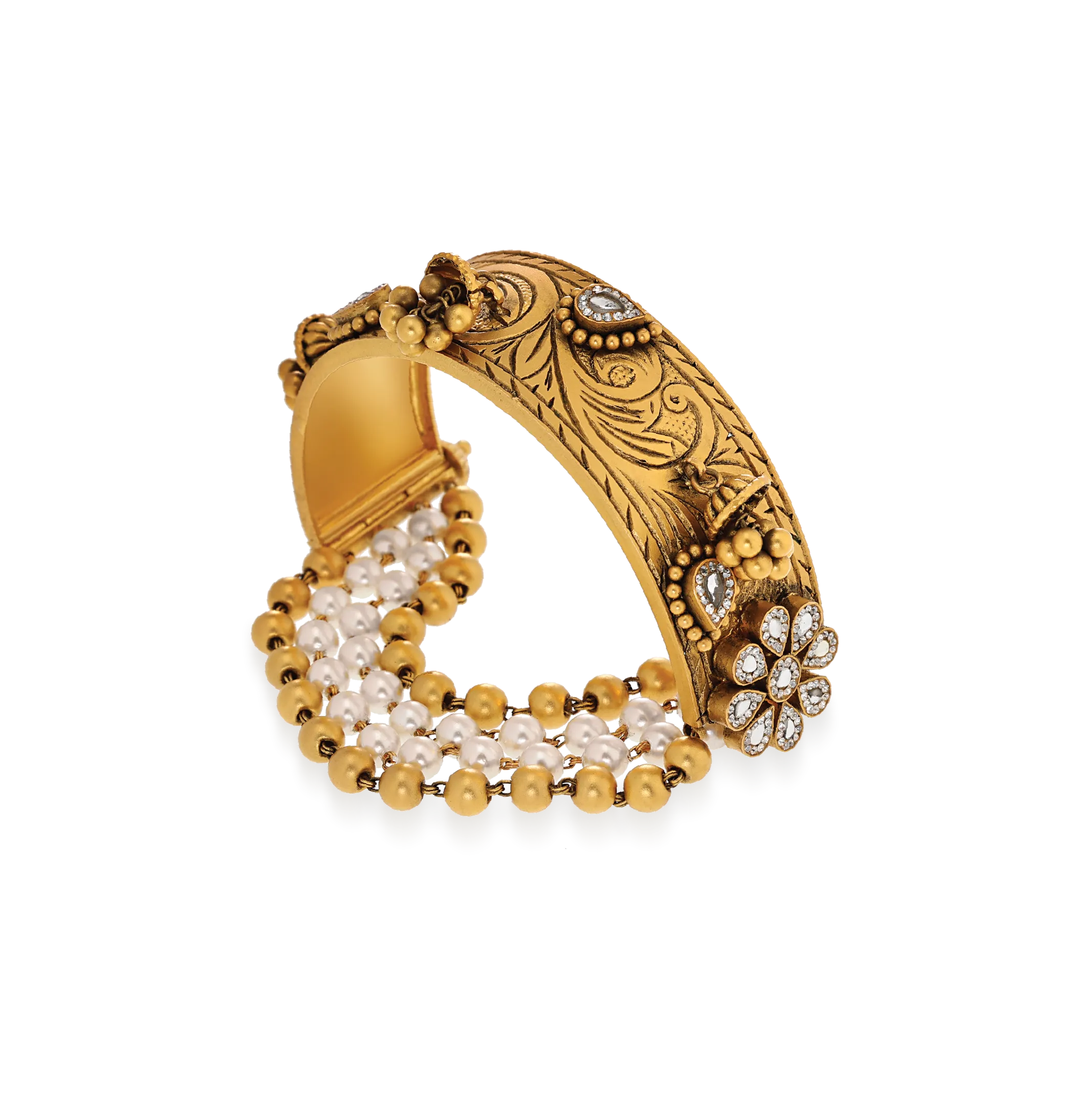
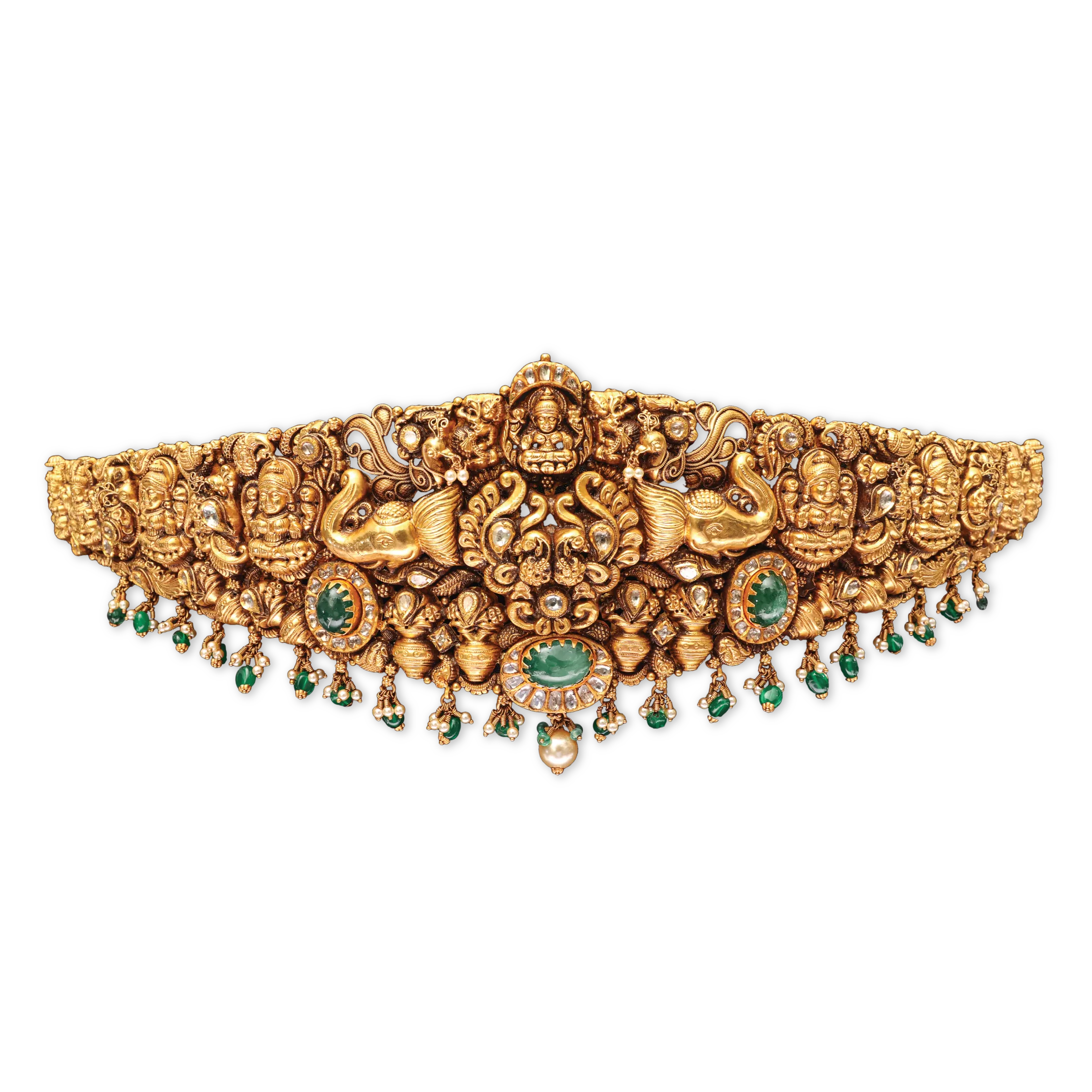
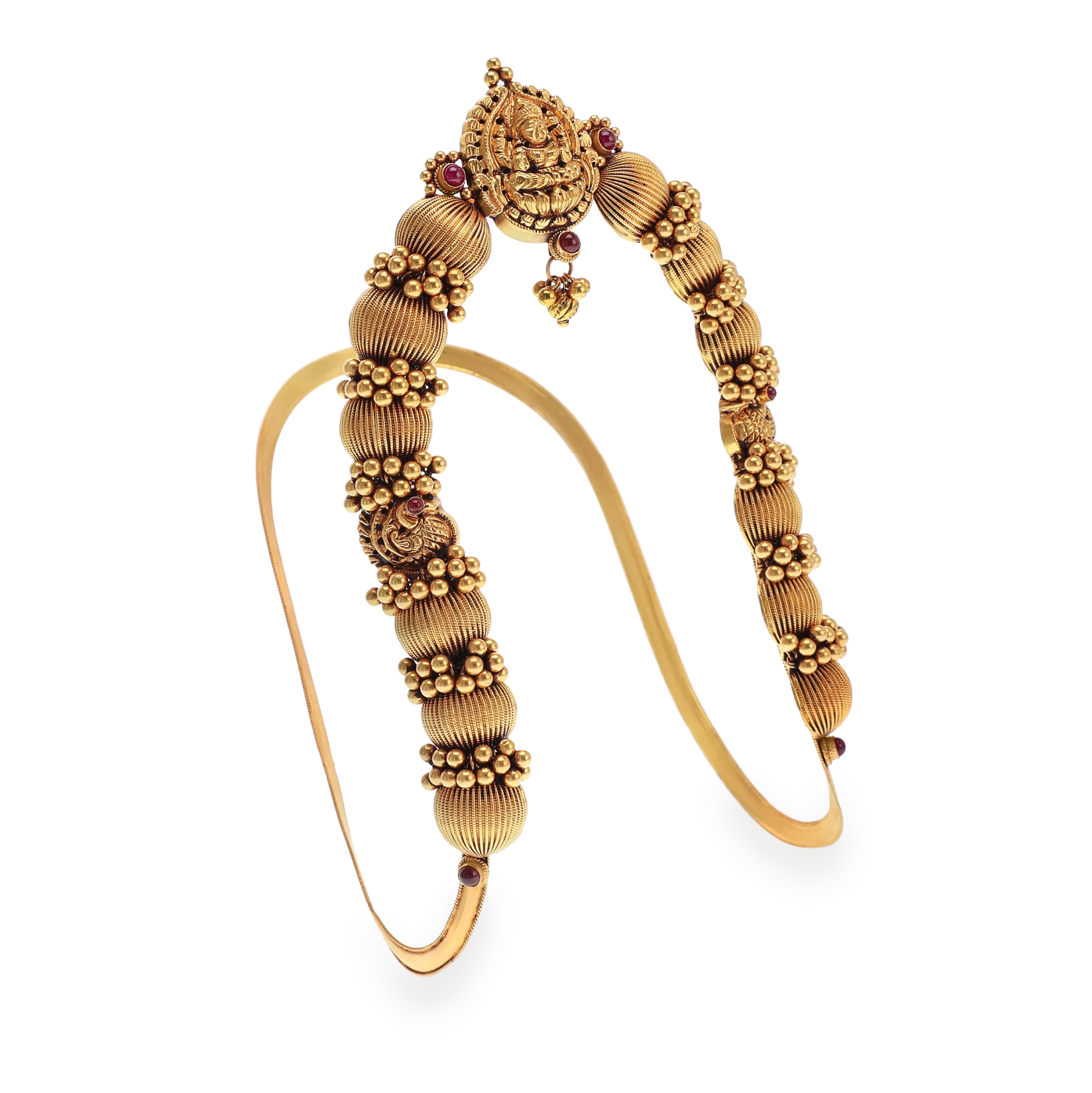
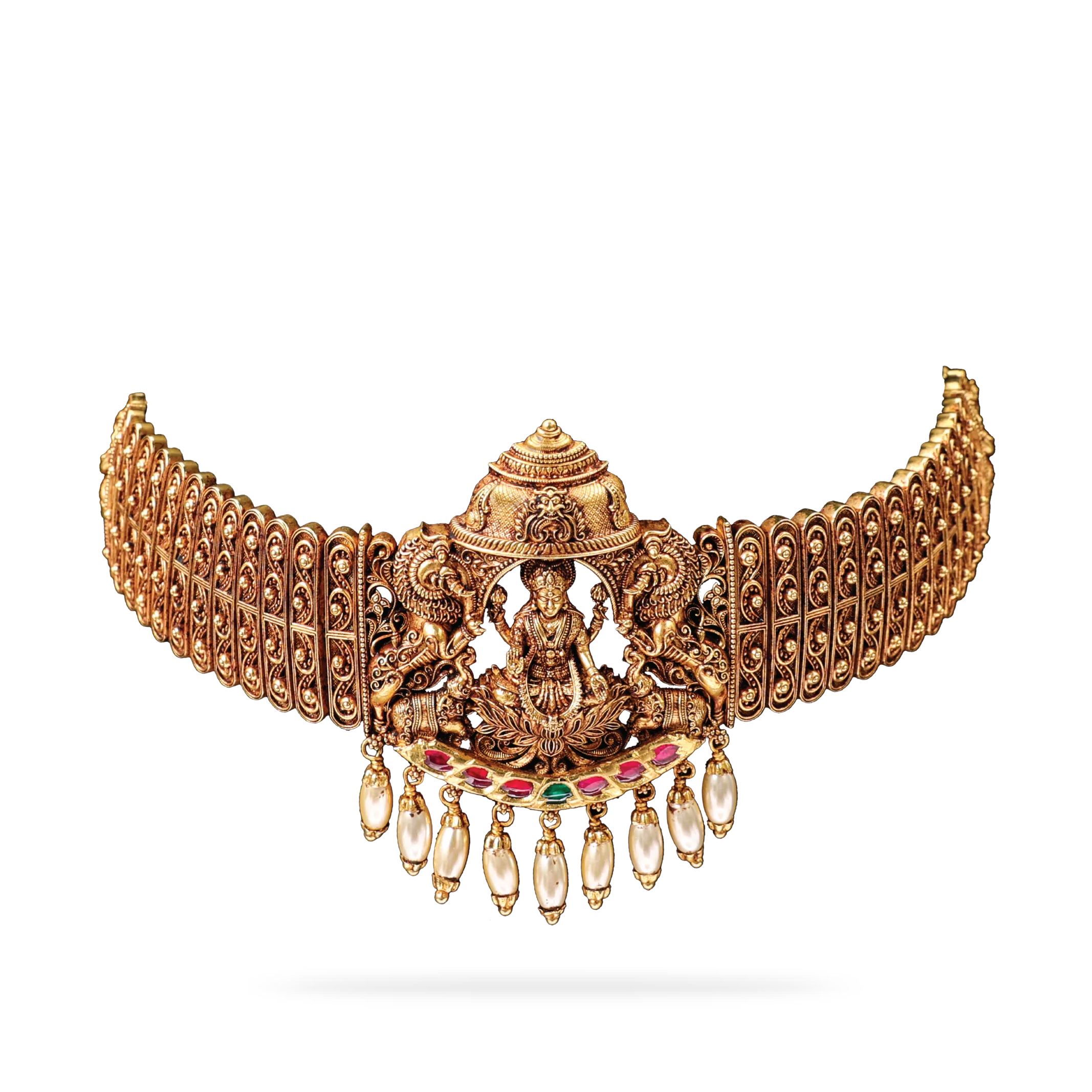
- It is genuinely old and hand-made. Pre-independence work, or older, particularly regional traditions executed by hand — temple work, Nakshi, Thewa, fine filigree, hand-chased repoussé. Some of these skills have very few practitioners left, and a piece that demonstrates them well may be irreplaceable.
- It carries a maker's mark, a signature, or a documented provenance. A named house, a princely-state association, an original fitted case, an old bill of sale.
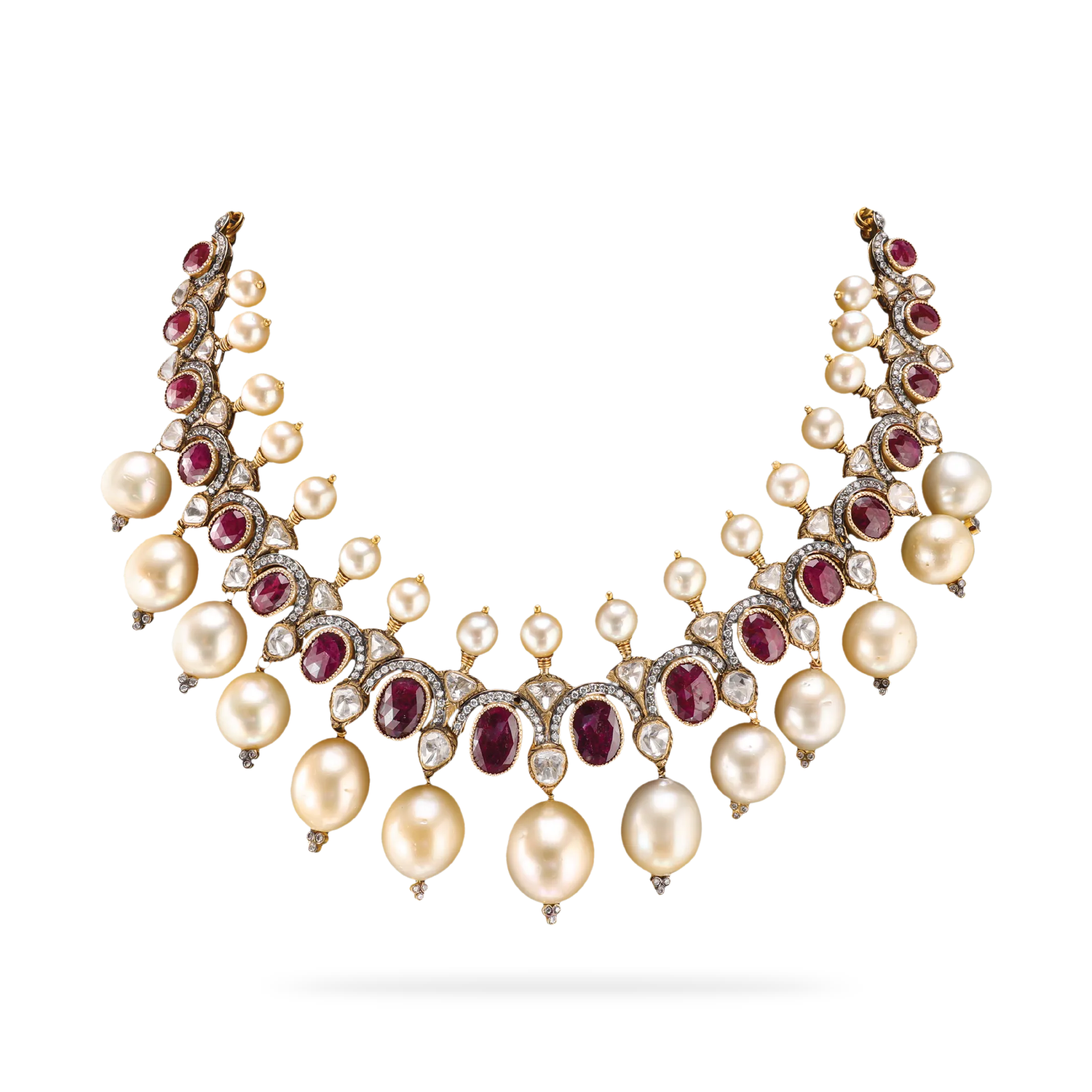
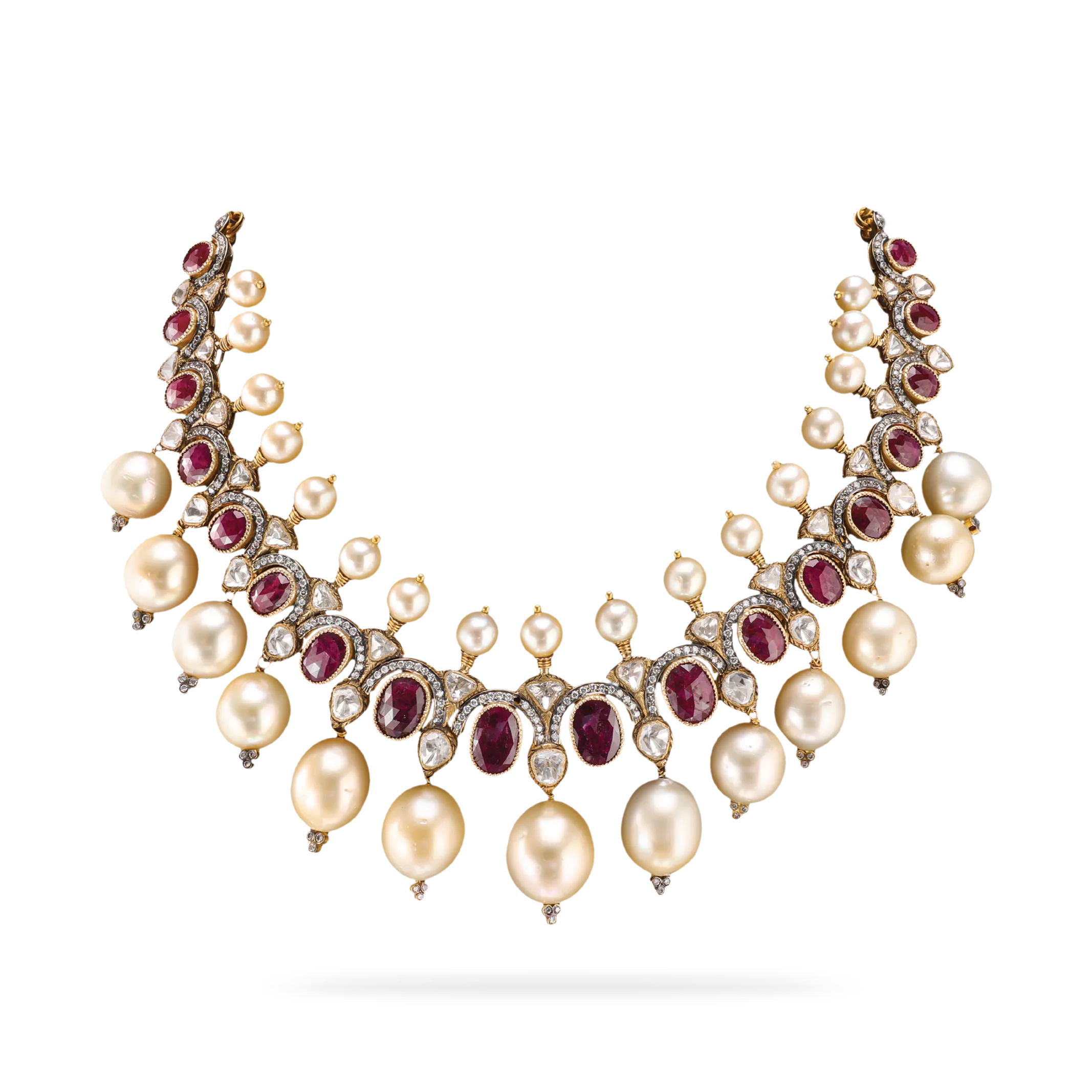
- It contains stones of real quality. Old-cut diamonds, untreated Burmese rubies, Kashmir sapphires, natural pearls. These are valued separately and can far exceed the gold. Natural basra pearls in particular are routinely discarded by weight-buyers who do not recognise them.
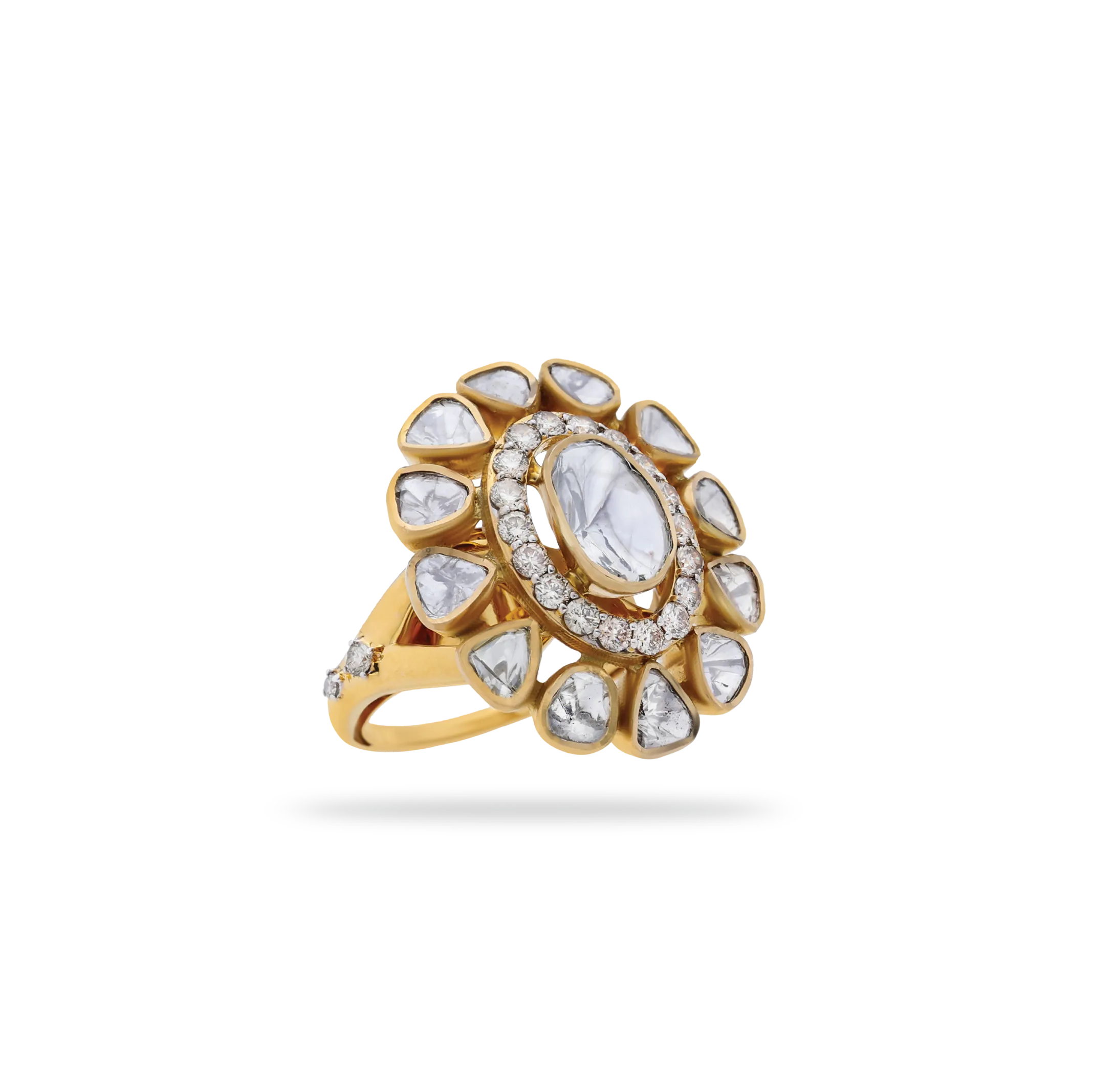
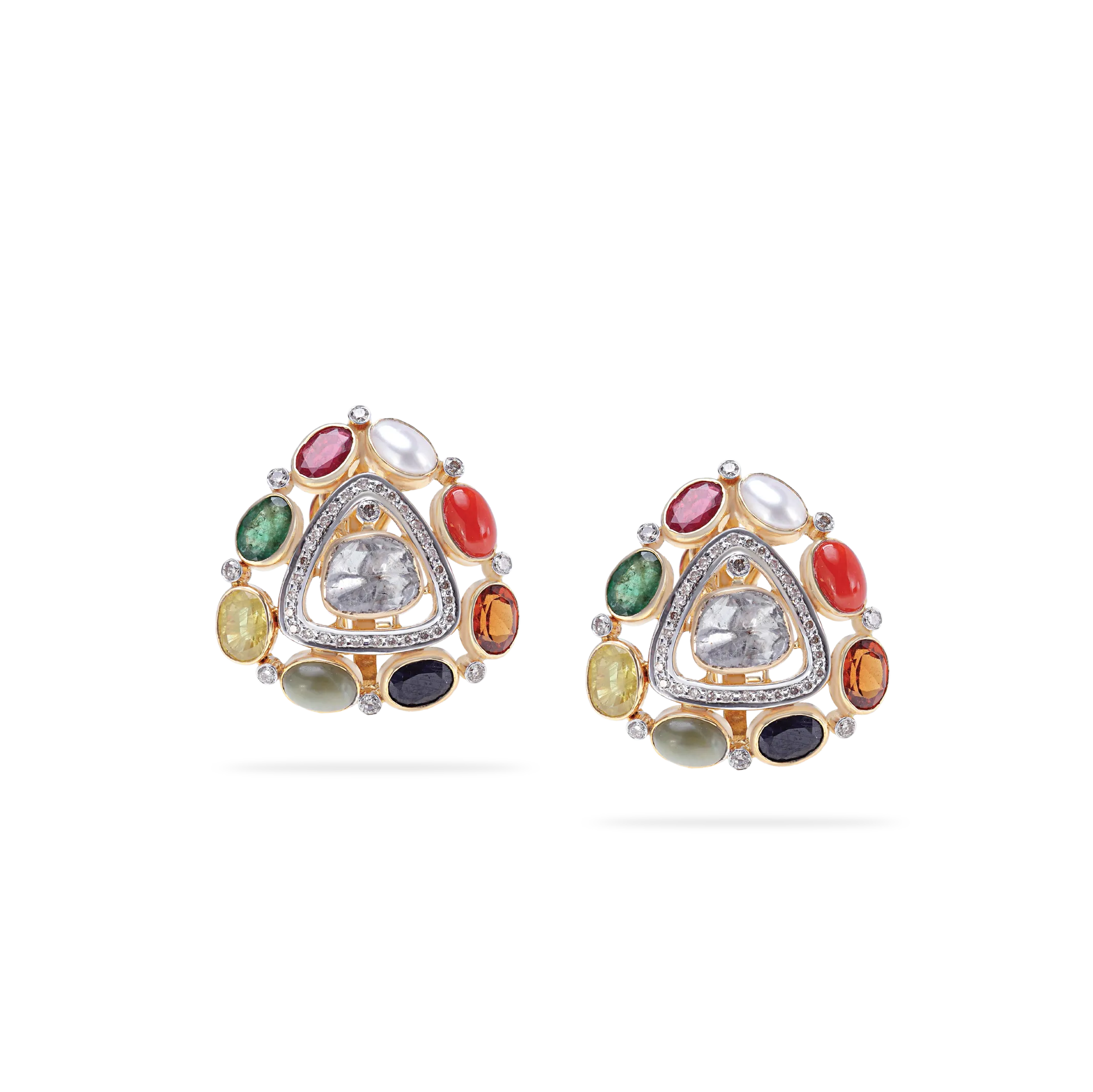
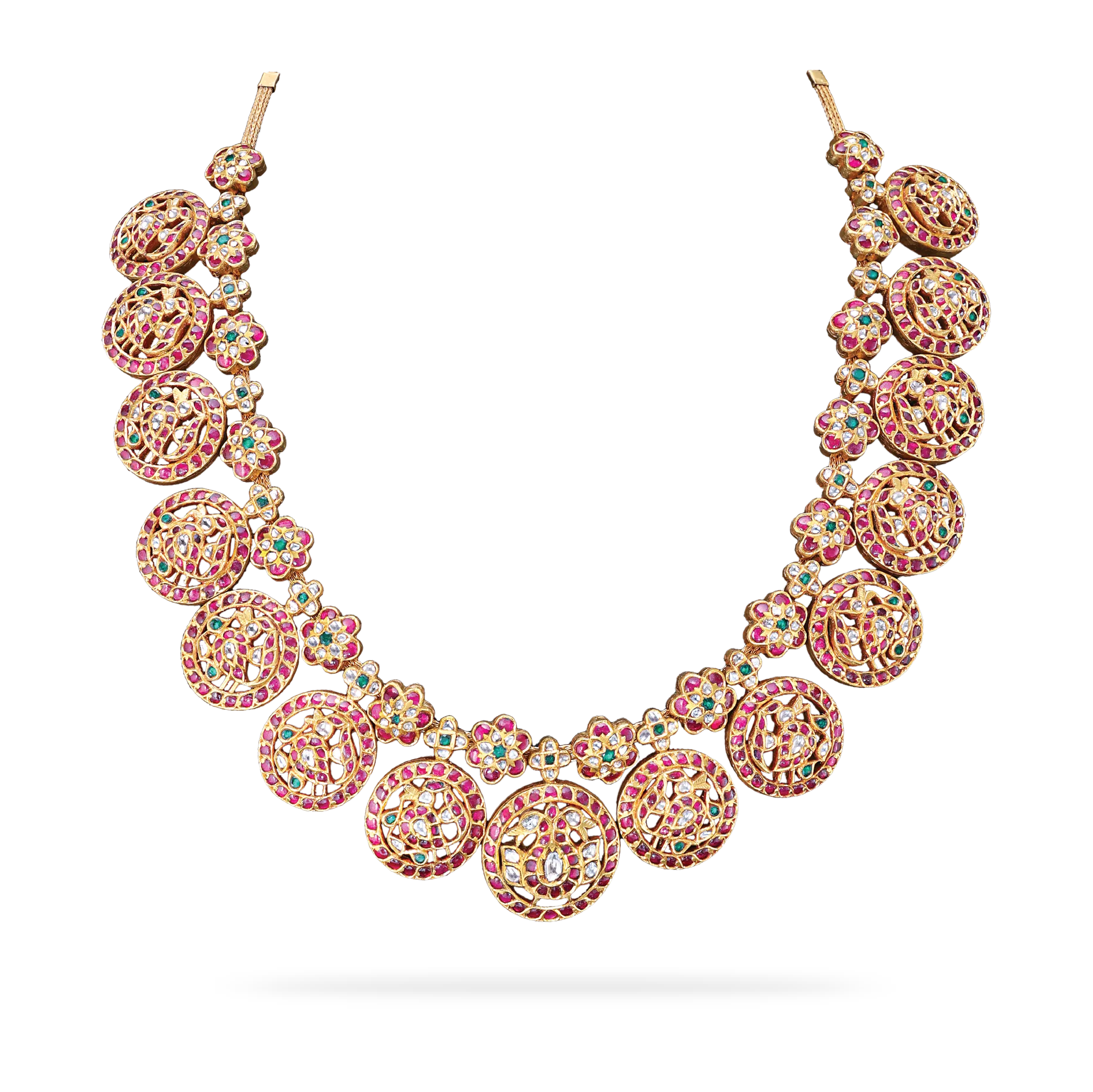
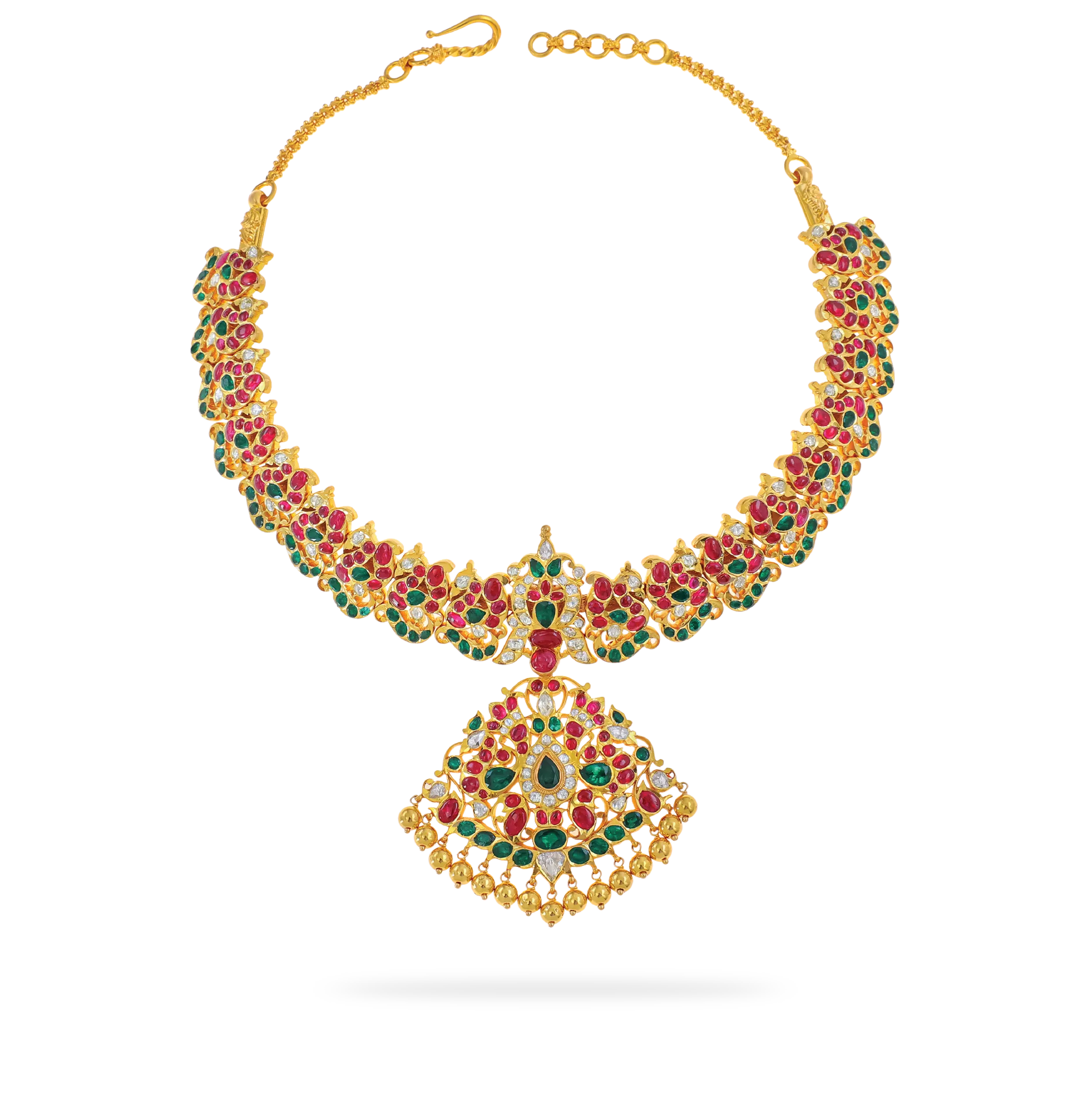
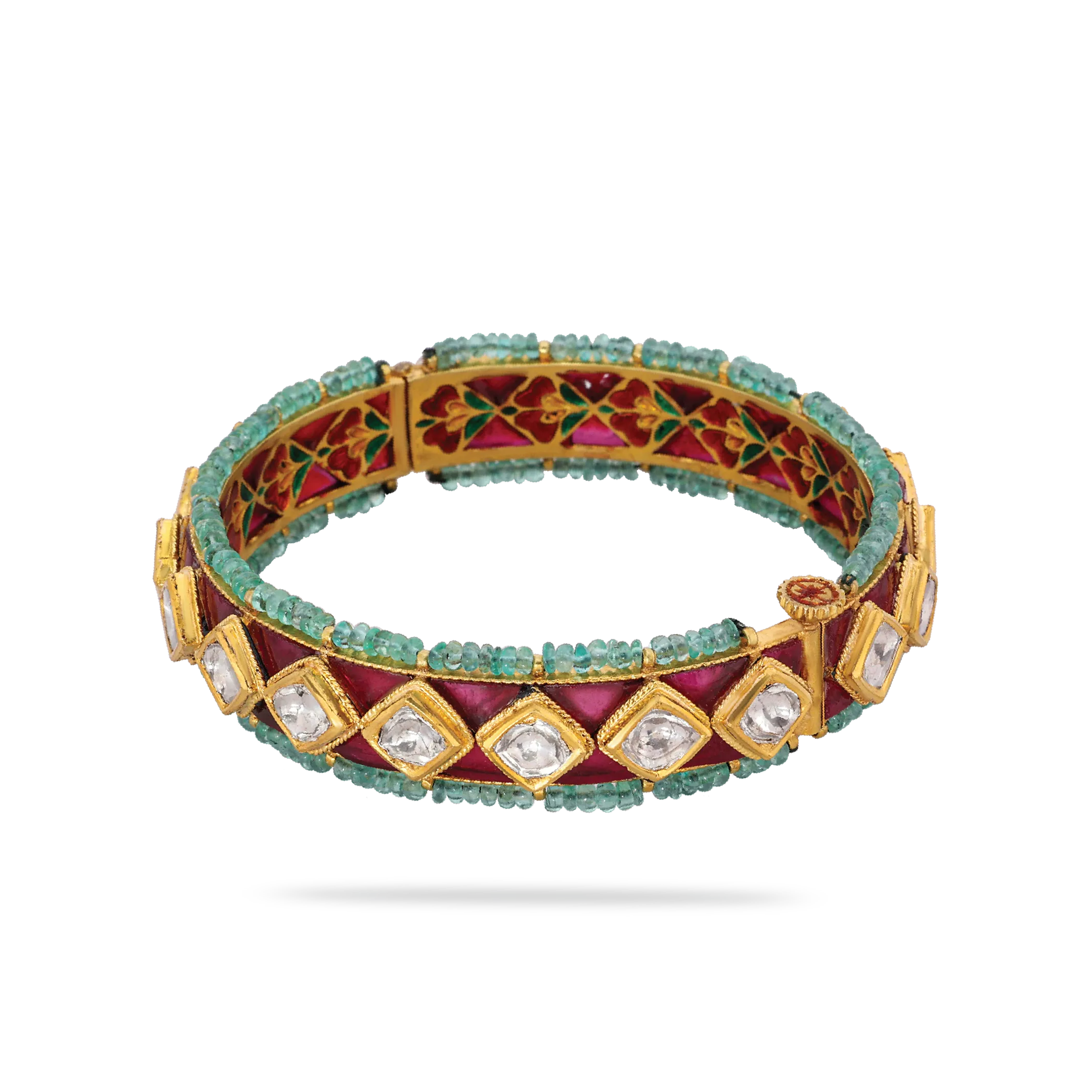
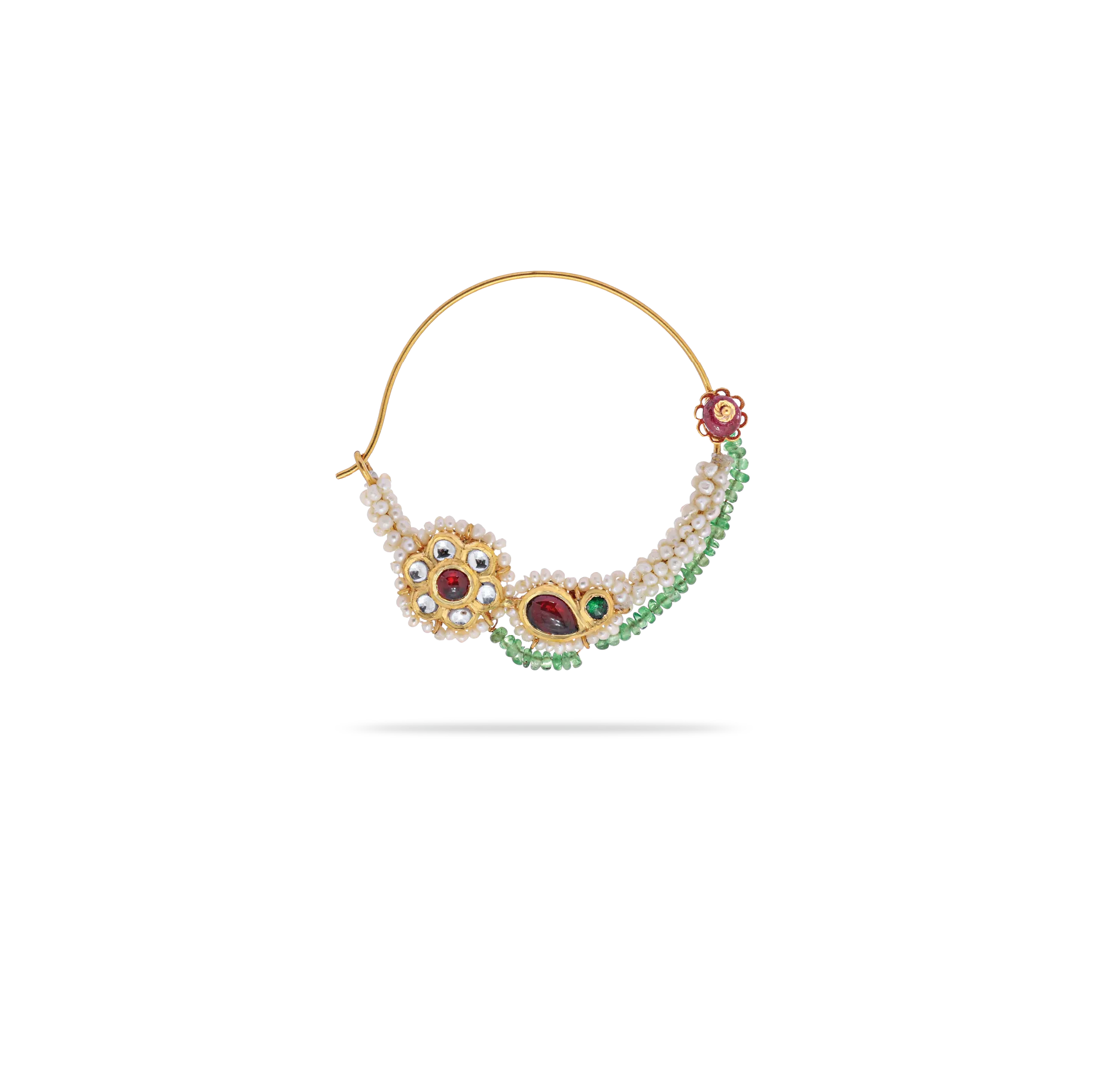
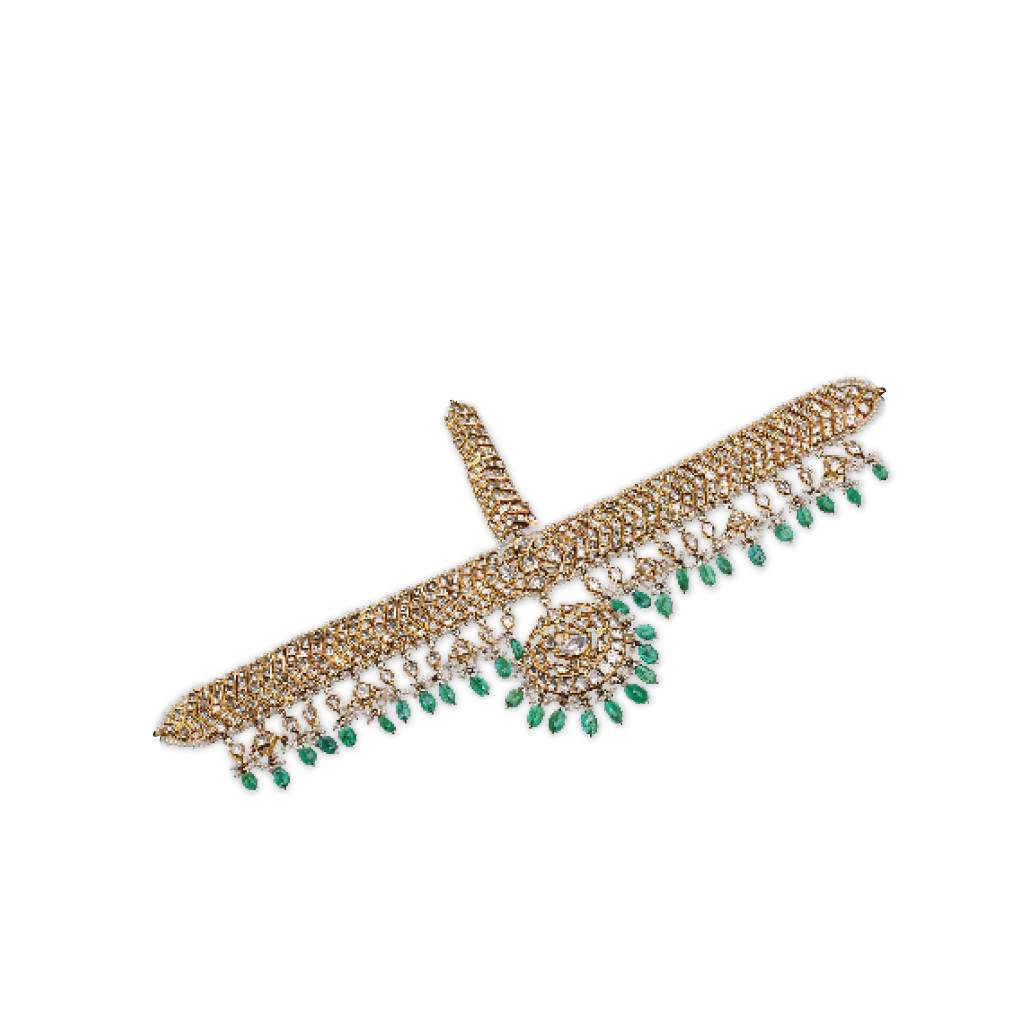
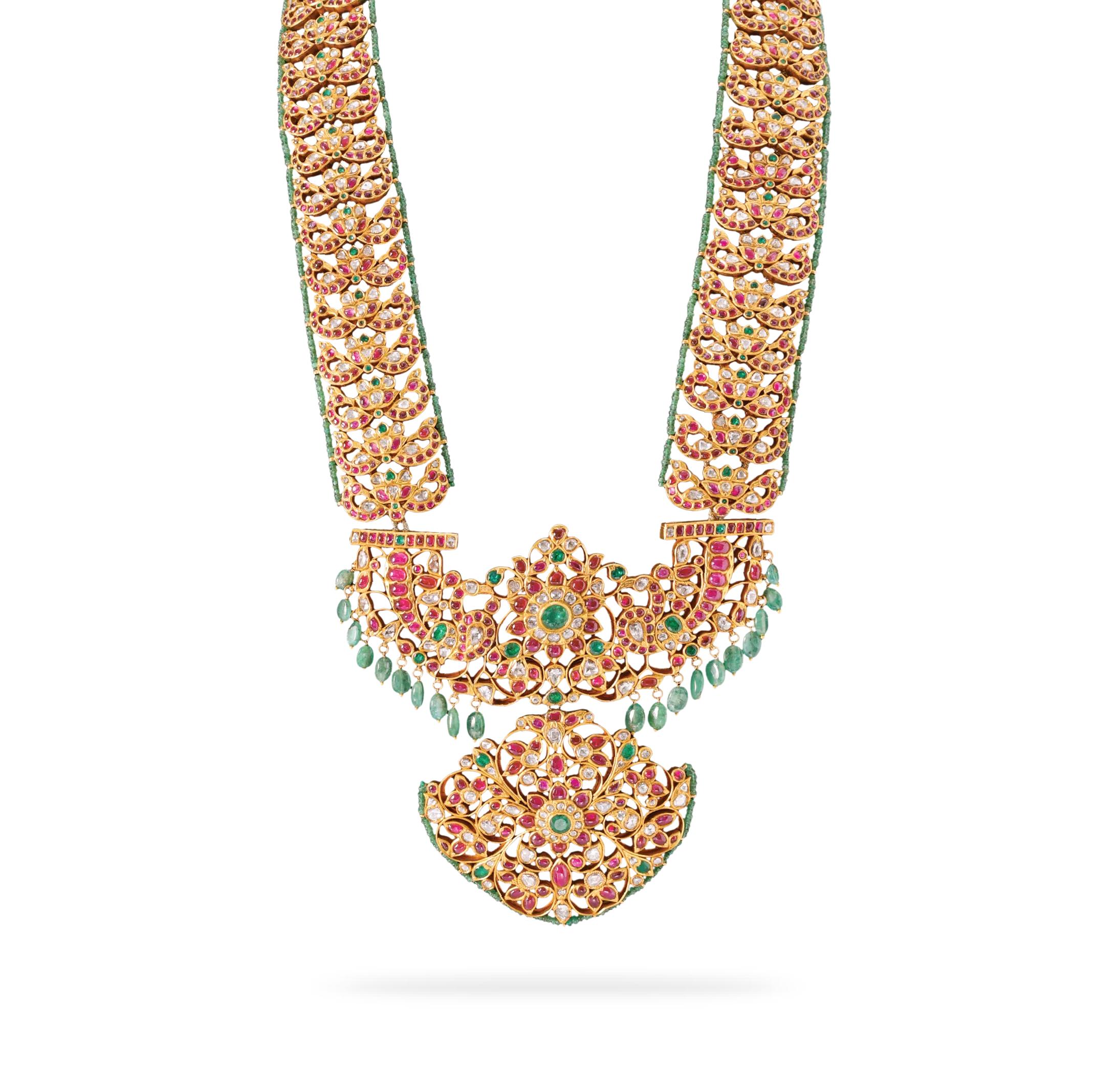
- It is Polki, Kundan or Jadau of good quality. The uncut diamonds are not glass, the setting represents substantial skilled labour, and the gross weight is misleading because of the lac. These should never be assessed as scrap.
- It is complete as a set, in original condition. Sets are worth more intact. Breaking one up to sell a single piece usually destroys value.
Get a second opinion before you melt
A gold buyer whose business is refining has no commercial reason to identify heritage value, and often no expertise to. That is not dishonesty — it is simply a different trade. If you suspect a piece is more than its metal, take it to a jeweller who deals in antique and heritage work and ask for an assessment before you take it anywhere that buys by weight. The assessment costs you little. Melting is permanent.
Exchanging against selling for cash
Two different transactions with different economics.
| Exchange at a jeweller | Sell for cash | |
|---|---|---|
| Typical rate offered | Usually more favourable, since the jeweller retains the sale | Usually lower, reflecting the refining margin |
| What you receive | Credit against new jewellery | Money |
| GST position | You pay GST on the new piece; the old metal offsets the price | No GST charged to you as a private seller |
| Best when | You intend to buy again anyway | You need the funds, or do not want more jewellery |
The important caveat on exchange: a generous-sounding rate on your old gold means little if the making charges on the new piece are inflated to compensate. Evaluate both halves of the transaction separately. Ask what your old gold is worth as a cash figure, then ask for the full breakdown on the new piece, and only then decide. Our guide to gold making charges per gram sets out what that breakdown should contain.
The tax position on selling old gold
Gold jewellery is a capital asset, and a gain on sale is taxable. The rules changed materially in 2024, so older articles on this subject are unreliable.
- Held for more than 24 months: long-term capital gains, taxed at 12.5% without indexation.
- Held for 24 months or less: short-term capital gains, taxed at your applicable slab rate.
- Indexation was removed for gold sold on or after 23 July 2024. The earlier regime of 20% with indexation no longer applies.
- Your cost of acquisition includes the making charges you paid at purchase — which is a concrete reason to keep original invoices.
For inherited jewellery, the cost and the holding period are generally taken from the original owner, so documentation of when and at what price a piece entered the family is genuinely valuable. Where no records exist, a registered valuer's report is the usual route. High-value transactions also attract PAN and KYC requirements, so expect to provide identification.
This is general information rather than tax advice, and individual circumstances differ. For anything substantial, speak to a chartered accountant before you transact.
Protecting yourself in the transaction
- Know the day's rate before you walk in. Published rates are freely available. Any offer is judged against that number.
- Get more than one valuation for anything significant. Two or three assessments will show you the spread quickly, and the spread is the information.
- Watch every weighing and every test. Calibrated balance, in front of you, stones removed and handed back.
- Ask for deductions as an itemised list with percentages. If they cannot be written down, that is your answer.
- Never permit melting before a price is agreed in writing.
- Take a receipt recording gross weight, net weight, assayed purity, rate applied and every deduction.
A third option people forget
Selling and exchanging are not the only choices. Old gold can be remade.
A great deal of inherited jewellery is unworn for reasons of style rather than sentiment — the metal is fine, the stones are fine, but nobody is going to wear that particular necklace again. Remaking uses the same gold, and often the same stones, to produce something that will actually be worn. You pay for the new making, not for new metal.
It also preserves something a sale cannot. The gold in a remade piece is the gold your grandmother wore, which for many families is the whole point. Where a piece has real heritage value, we would usually counsel restoring or conserving it rather than remaking — but where it does not, and it is simply sitting unused in a locker, remaking is very often the best answer available.
If you would like a piece assessed, bring it to us on Main Guard Cross Road. We will weigh it and test it in front of you, tell you what the metal is worth, and tell you honestly if we think it is worth more than that. We have been looking at old Bangalore gold since 1869, and we would rather talk you out of melting something that should not be melted than take the transaction.
Frequently asked questions
How is old gold jewellery valued?
Value equals net gold weight multiplied by assayed purity multiplied by the current rate per gram, less any legitimate deduction. The piece is first weighed after stones, pearls, enamel, lac and thread are removed, since these are not gold. Its purity is then established by testing rather than assumed from an old stamp. The rate applied should be the rate for that assayed purity on the day of the transaction. Making charges and wastage paid at the original purchase are not recovered.
How do I calculate the value of my old gold?
Take the net gold weight in grams, multiply by the purity as a decimal, and multiply by the current rate per gram for that purity. A 42 gram net 22K piece contains 42 multiplied by 0.916, which is 38.472 grams of fine gold. Buyers then commonly apply a refining margin. Establish the net weight on a calibrated balance in front of you, since gross weight on a studded piece can be very different from net gold weight.
Do I get making charges back when I sell old gold?
No. Only the metal is valued, because a buyer cannot resell your specific ornament as an ornament. The making charges and wastage you paid at purchase were spent at that moment and do not form part of the valuation. This is why those charges represent the true cost of owning the ornament rather than the metal.
How do jewellers test the purity of old gold?
Three methods are common. Touchstone and acid testing rubs the piece on a stone and applies acid to the streak, which marks the surface and is indicative only, since it reads the surface and can be defeated by plating. XRF spectrometry fires low-energy X-rays at the piece and reads each metal's fluorescence signature in around 30 seconds; it is entirely non-destructive and is the practical standard for valuing intact pieces. Fire assay melts a sample to separate and weigh the gold and is the reference method, used by BIS under IS 1418, but it is destructive.
What deductions can a jeweller make on old gold?
Legitimate deductions are the exclusion of non-gold weight such as stones, pearls, enamel, lac and thread; an adjustment where the piece assays below the assumed caratage; and a refining margin, which is commonly around 1 to 2% on bullion and somewhat higher on ornaments. Questionable practices include a large blanket melting loss of 10 or 15%, deductions that describe the same cost more than once, and vague processing or handling charges. There is no BIS or consumer-protection rule capping deductions, so the terms are purely commercial.
Is a 10% melting loss on old gold reasonable?
It warrants questioning. A 22K ornament is 91.6% gold and while a small quantity of metal is genuinely lost during melting and refining, the loss does not approach 10 or 15%. On bullion, the refining margin is commonly only 1 to 2%. If a substantial melting loss is being applied to your piece, ask what it consists of and how it was calculated, and ask for all deductions itemised as percentages before agreeing.
When is old gold jewellery worth more than its melt value?
When it is genuinely old and hand-made, particularly regional traditions such as temple work, Nakshi, Thewa, fine filigree or hand-chased repousse work. Also when it carries a maker's mark, signature or documented provenance; when it contains quality stones such as old-cut diamonds, untreated Burmese rubies, Kashmir sapphires or natural basra pearls; when it is good Polki, Kundan or Jadau, where the uncut diamonds and skilled setting labour are substantial; and when it survives as a complete original set. In all these cases, get a specialist assessment before selling by weight.
Should I exchange old gold or sell it for cash?
Exchange at a jeweller usually attracts a more favourable rate, because the jeweller retains the onward sale, and you receive credit against new jewellery. Selling for cash usually attracts a lower rate reflecting the refining margin, but you receive money and no GST is charged to you as a private seller. The caveat on exchange is that a generous rate on your old gold means little if the making charges on the new piece are inflated to compensate, so evaluate both halves of the transaction separately.
What is the tax on selling old gold jewellery in India?
Gold jewellery is a capital asset. If held for more than 24 months, gains are long-term capital gains taxed at 12.5% without indexation. If held for 24 months or less, gains are short-term and taxed at your applicable slab rate. Indexation was removed for gold sold on or after 23 July 2024, so the earlier 20% with indexation regime no longer applies. Your cost of acquisition includes the making charges you paid, which is a practical reason to keep original invoices. This is general information rather than tax advice; consult a chartered accountant for anything substantial.
Can I sell gold jewellery that is not hallmarked?
Yes. Consumers are expressly permitted to sell old jewellery to a jeweller whether it is hallmarked or not, and whether or not it carries a HUID. Hallmarking obligations apply to jewellers selling to the public, not to individuals selling their own jewellery. What an unhallmarked piece is worth simply depends on assay, since purity will be established by testing rather than taken from a mark.
What documents do I need to sell old gold in India?
Expect to provide identification, as high-value transactions attract PAN and KYC requirements. You should receive a receipt recording gross weight, net weight, assayed purity, the rate applied and every deduction. If you have the original invoice, keep it, since it establishes your cost of acquisition for capital gains purposes. For inherited jewellery with no records, a registered valuer's report is the usual route to establishing cost and holding period.
Should I remake old gold jewellery instead of selling it?
It is often the best option for inherited pieces that go unworn for reasons of style rather than sentiment. Remaking uses the same gold, and frequently the same stones, so you pay for the new making rather than for new metal, and the resulting piece contains the metal your family actually wore. Where a piece has genuine heritage value, restoration or conservation is usually the better counsel than remaking. Where it does not and it is simply sitting unused, remaking is very often the best answer.
Bring the piece in. We will show you the hallmark.
Our flagship on Main Guard Cross Road keeps a 10× loupe and a calibrated balance on the counter for exactly this. No appointment needed, no obligation to buy.
Visit our Bengaluru storeSpeak to a jewellerSources & standards referenced
- IS 1418 — fire assay as the reference method for determining gold content; BIS consumer testing at a recognised Assaying and Hallmarking Centre for ₹200.
- XRF spectrometry as a non-destructive purity test, typically completing in around 30 seconds and reading each element's fluorescence signature.
- Refining margins of approximately 1–2% on bullion, and industry commentary that melting loss on 22K ornaments does not approach 10–15%.
- Bureau of Indian Standards — Hallmarking FAQs (consumers): consumers may freely sell old hallmarked or un-hallmarked jewellery to a jeweller.
- Finance (No. 2) Act 2024 — removal of indexation and 12.5% long-term capital gains rate for assets transferred on or after 23 July 2024; 24-month holding period for jewellery; cost of acquisition including making charges.
- PAN and KYC requirements applicable to high-value bullion and jewellery transactions in India.









.webp)
.webp)