22K vs 24K Gold: Which Is Better, and Why 916 Wins in Bengaluru
24K is the purer metal. That does not make it the better buy. Here is what caratage actually measures, why 916 became the standard in Bengaluru, and how to choose between 22K, 18K and 14K for the specific thing you are buying.
The short answer
For jewellery, 22K is better than 24K. For saving in metal, 24K is better than 22K. They are answers to different questions. 24K gold is 99.9% pure but too soft to hold a shape, a stone or a clasp — which is why it is sold as coins and bars rather than ornaments. 22K gold is 91.6% pure, hallmarked as 916, and hard enough to be worn daily while still looking unmistakably like gold. In Karnataka and across South India, 916 is the default for ornaments. Where a piece must grip diamonds securely, 18K (750) is the correct choice, and for hard-worn daily pieces 14K (585) is defensible.
On this page
What a karat actually measures
A karat is a fraction with 24 on the bottom. It describes how many parts out of twenty-four of an alloy are pure gold.
So 22K means 22 parts gold to 2 parts other metals. The arithmetic is straightforward:
The conversion
Purity percentage = (karat ÷ 24) × 100
22K → (22 ÷ 24) × 100 = 91.67%, expressed as fineness 916.
18K → (18 ÷ 24) × 100 = 75.0%, expressed as fineness 750.
14K → (14 ÷ 24) × 100 = 58.33%, expressed as fineness 585.
Fineness is the same information written as parts per thousand, and it is what you will find stamped on a hallmark: 22K916. The two numbers say the same thing twice, once in the traditional unit and once in the metric one. Fineness is rounded to a standard grade, which is why 91.67% is marked 916 rather than 917.
Note that karat here has nothing to do with the carat that weighs a diamond. Same sound, unrelated meaning — one is a purity fraction for metal, the other is a unit of mass equal to 0.2 grams for gemstones. Indian invoices sometimes write both as “ct”, which is a good reason to read yours slowly.
The gold purity chart
These are the grades the Bureau of Indian Standards permits for hallmarking, under IS 1417:2016.
| Caratage | Fineness | Gold content | Relative hardness | Typically used for |
|---|---|---|---|---|
| 24KS | 995 | 99.5% | Softest | The only hallmarkable 24K jewellery grade; rare in ornaments |
| 23K | 958 | 95.8% | Very soft | Uncommon in Indian retail |
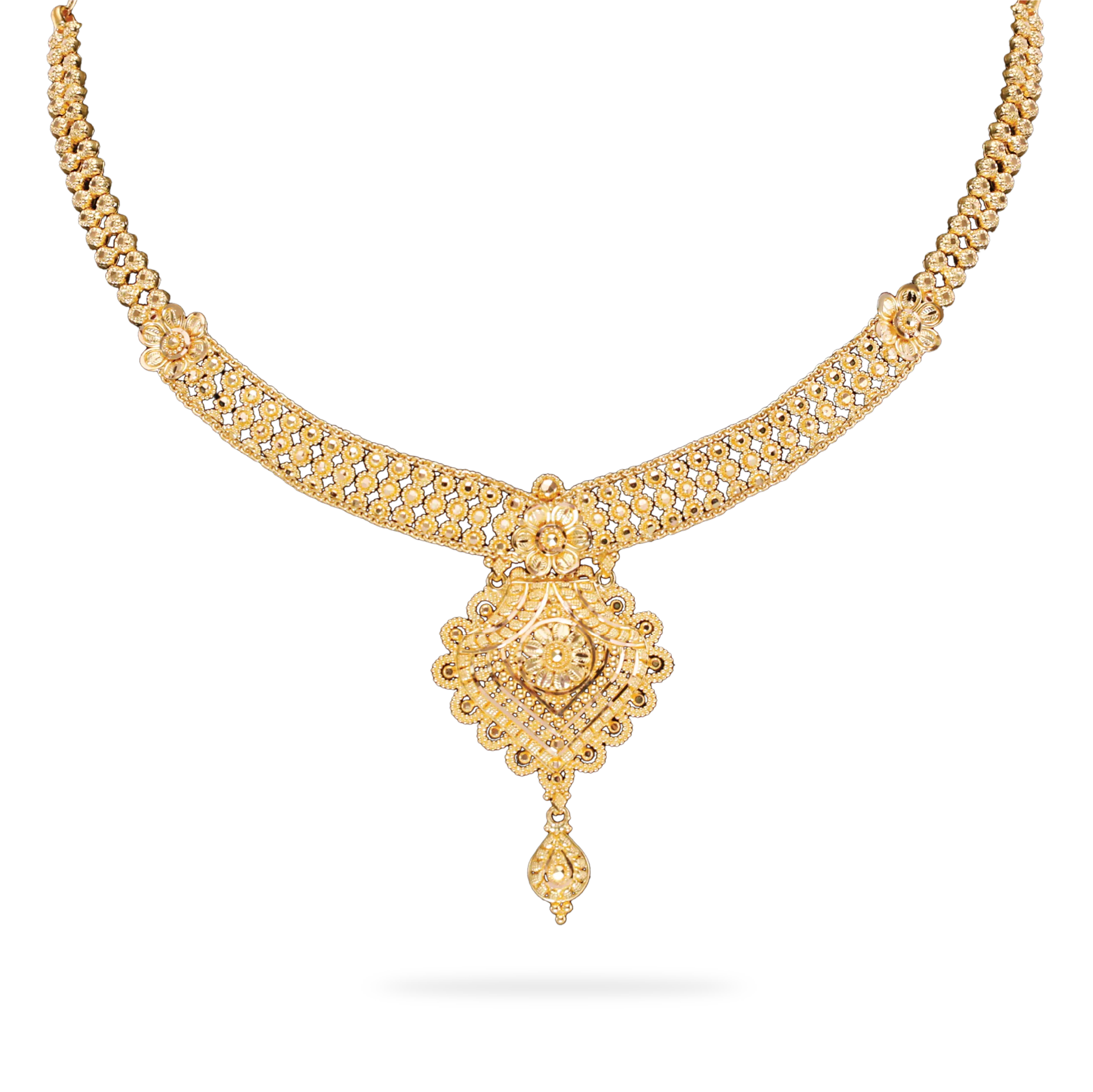
| 22K | 916 | 91.6% | Soft but wearable | Traditional Indian ornaments, bridal, temple work, chains, bangles |
| 20K | 833 | 83.3% | Moderate | Uncommon in retail |
| 18K | 750 | 75.0% | Firm | Diamond and gemstone settings, solitaires, fine contemporary work |
| 14K | 585 | 58.5% | Hard | Daily wear, thin structures, pieces that take knocks |
| 9K | voluntary grade | 37.5% | Hardest | Not part of the mandatory scheme in India |
999 is not a jewellery grade
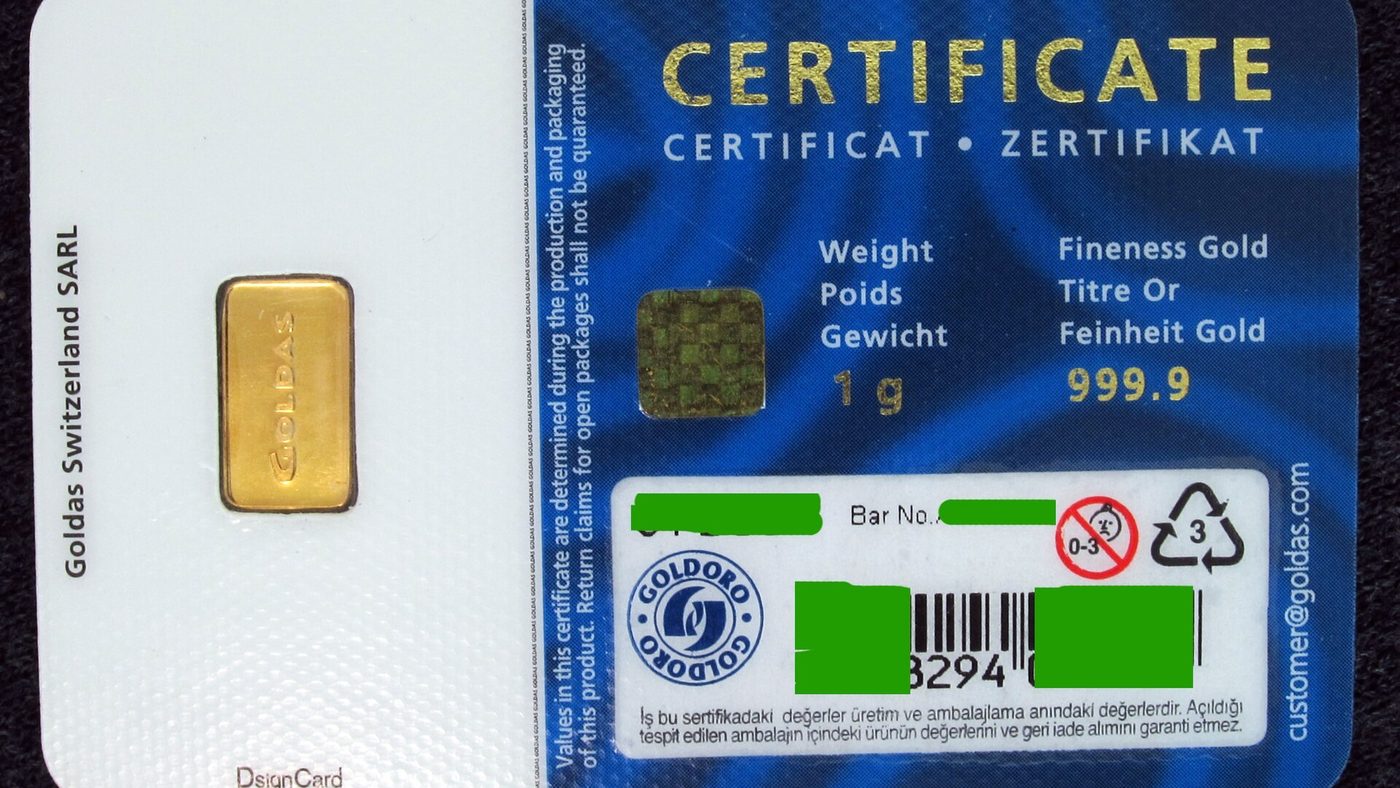
The hallmarkable 24K grade is 24KS at 995 fineness. There is no 999 hallmarking grade for gold jewellery in India. 999 is a bullion fineness — and gold bullion in bar, sheet, wire or coin form is expressly excluded from the hallmarking order altogether. So if you are shown “999 hallmarked gold jewellery”, the description is loose. Coins and bars are judged on the refiner's assay certificate and sealed packaging, not on a hallmark.
Why 24K gold cannot really be jewellery
Pure gold is remarkable stuff. It is the most malleable metal there is — a single gram can be beaten into a sheet roughly a square metre in area, which is how the gold leaf on temple domes and the foil in Kundan work is made.
That property is exactly the problem. A metal you can flatten with a hammer and a patient afternoon is a metal that deforms in ordinary life. Put a 24K ring on a hand that opens doors, carries bags and washes dishes, and within months it is out of round. Set a diamond in 24K prongs and the prongs relax; eventually the stone drops out. Make a 24K clasp and it opens in your handbag.
There is also no repairing your way out of it. Ornaments fail at their thinnest points — the shoulders of a ring, the links of a chain, the pin of an earring. Softer metal means those points give sooner and give again after they are mended.
This is why traditional Indian goldsmithing settled on 22K rather than pure gold long before anyone was writing standards. 22K is a compromise arrived at by craft: it keeps the deep, warm yellow that reads immediately as gold, and it adds just enough hardness to survive being worn.
Where 24K makes complete sense
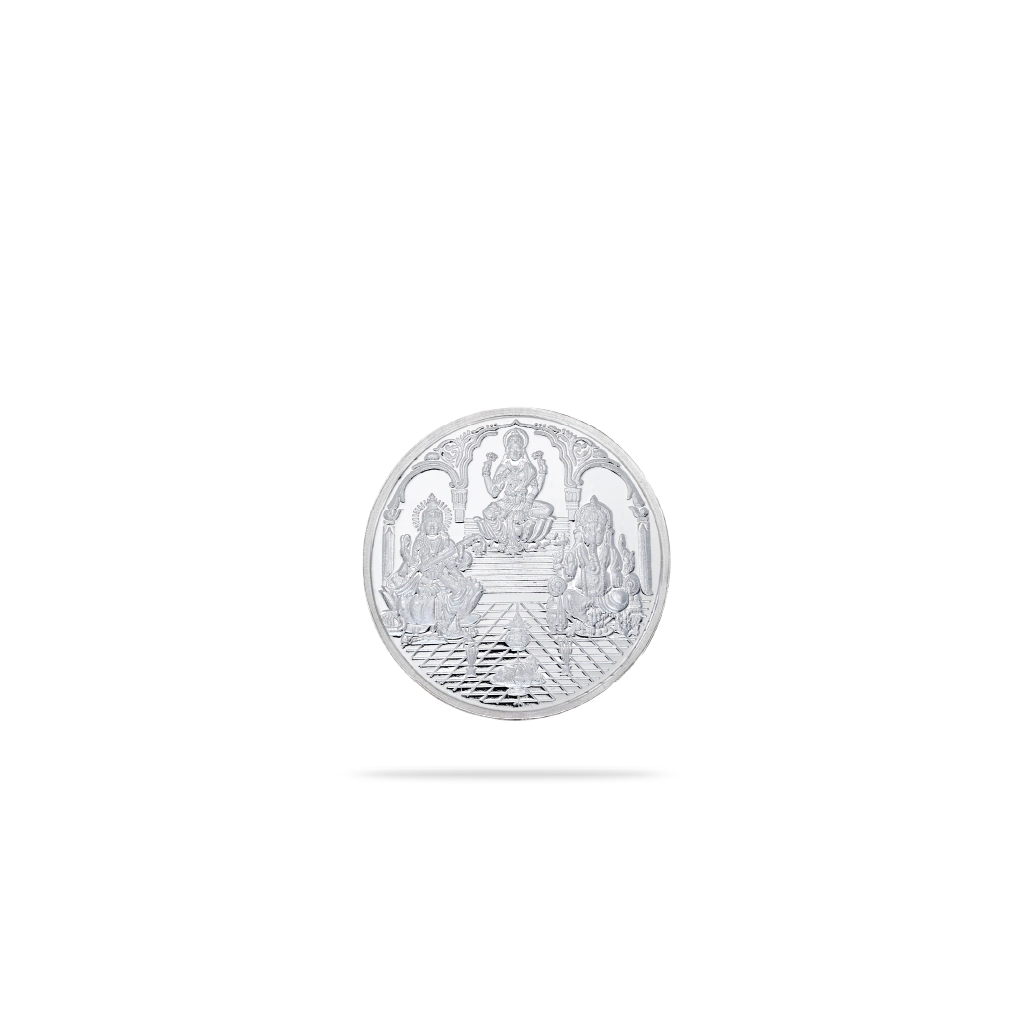
If your purpose is to hold gold rather than wear it, 24K is the right instrument, and buying it as coins or bars avoids paying making charges on metal you intend to keep as metal. What you should not do is buy 24K expecting to wear it, or buy ornaments expecting them to behave like bullion. Those are two different purchases and it is worth being clear with yourself about which one you are making.
What the other 8.4% is made of
In 22K gold, 91.6% is gold and the remaining 8.4% is a deliberate alloy — usually copper and silver, sometimes with a little zinc. The proportions are a goldsmith's decision, and they do real work: they set the hardness, the melting behaviour, how the metal responds to soldering, and the exact shade of yellow.
Colour is almost entirely a question of what is added:
- Yellow gold — gold with copper and silver in roughly balanced proportion. The traditional Indian warm yellow leans a little more towards copper.
- Rose gold — the same idea with the copper proportion raised. More copper, pinker metal, and slightly harder than the equivalent yellow.
- White gold — gold alloyed with white metals, commonly palladium or nickel, and almost always finished with a rhodium plating to achieve a true white. That plating is a surface, not the metal, and it wears; expect to have a white gold piece re-plated periodically. Anyone with a nickel sensitivity should ask what the alloy contains before buying.
Two consequences follow. First, colour tells you nothing about purity — 18K yellow, 18K white and 18K rose are all 75% gold. Second, white gold is the one metal on this list with a maintenance schedule, which is worth knowing before you choose it for a piece you intend to wear every day for thirty years. Platinum, by contrast, is white all the way through.
Why 916 is what Bengaluru buys
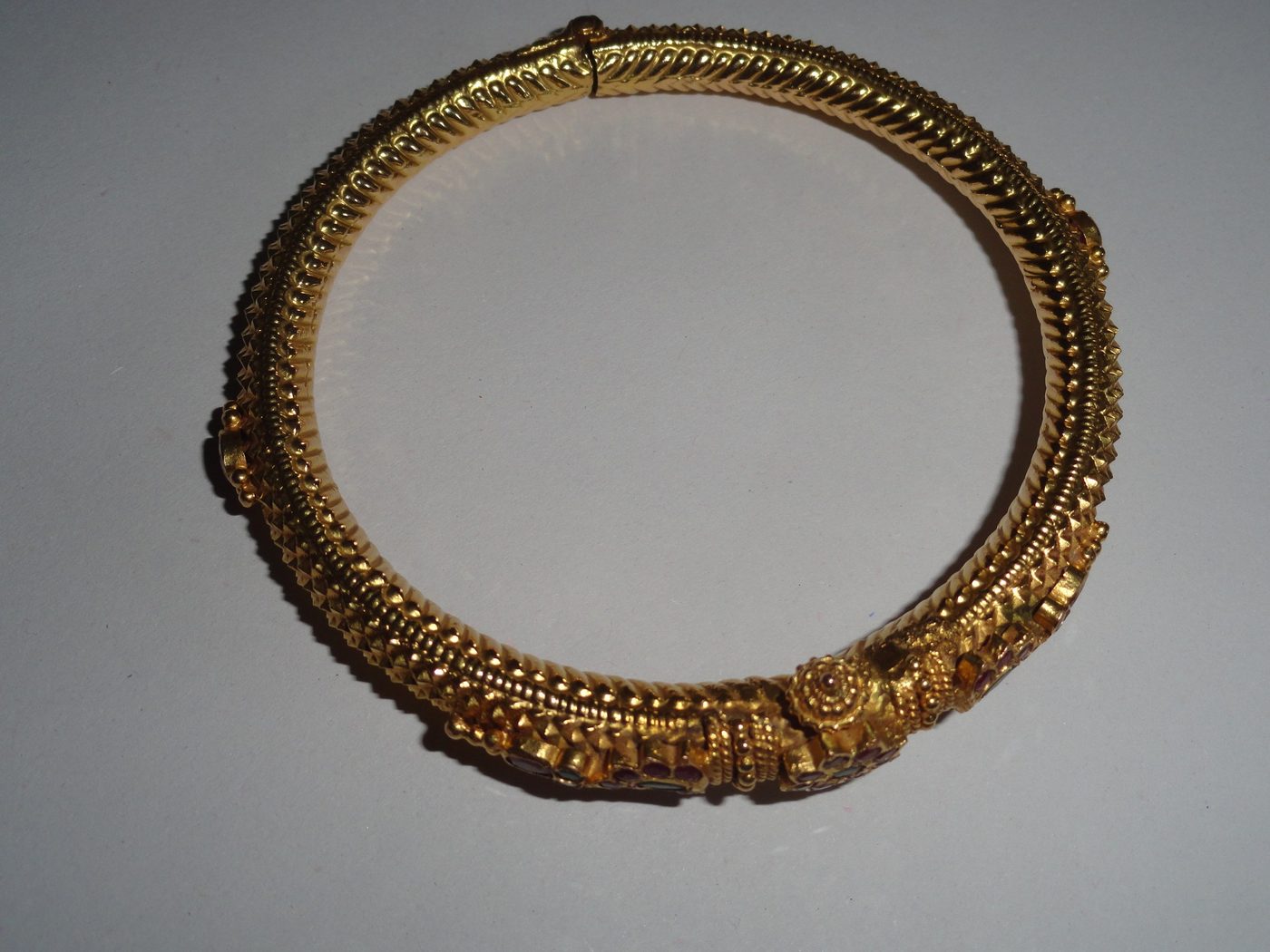
Walk into any established jewellery house in this city and ask for gold, and unless you specify otherwise you will be shown 22K. Ask about “916” and everyone in the room knows exactly what you mean — the number is used here as a synonym for proper gold.
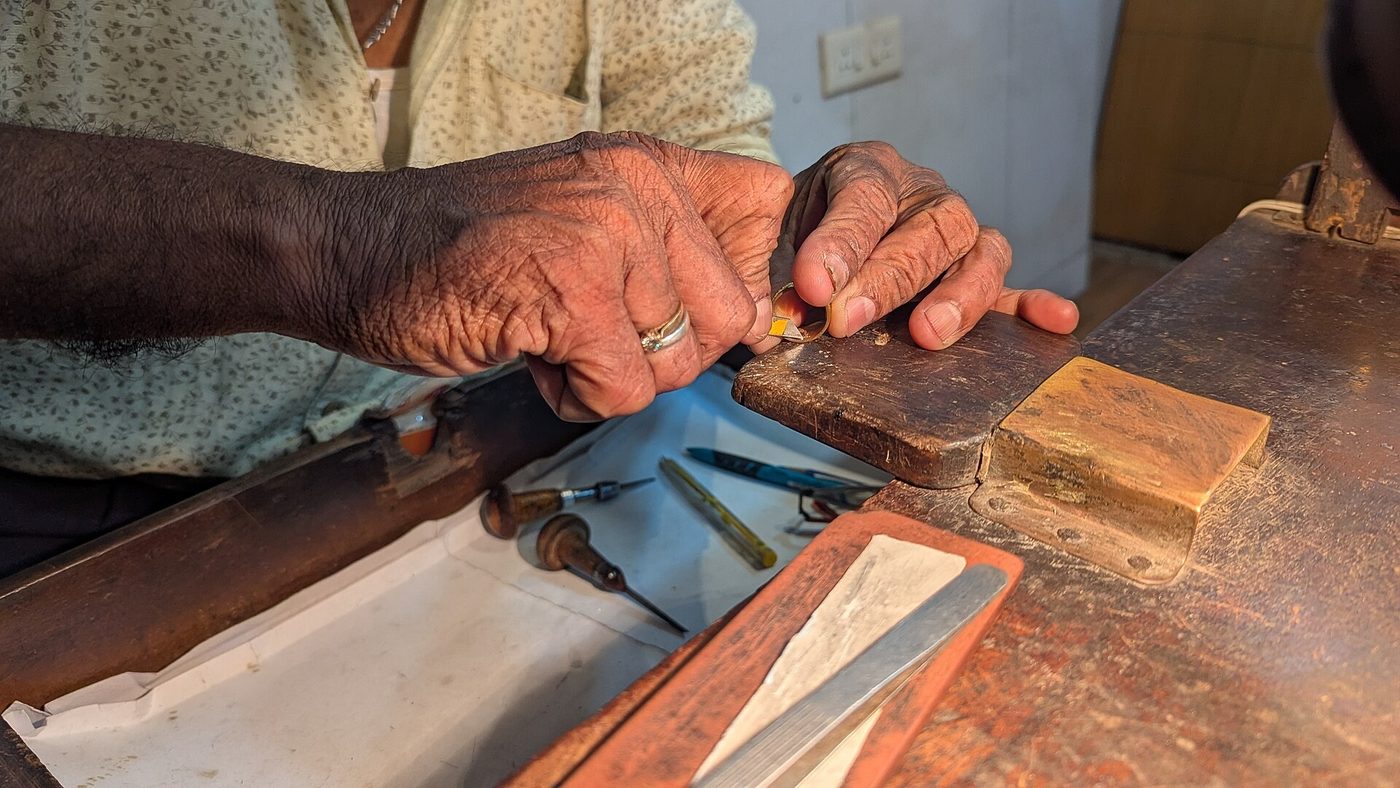
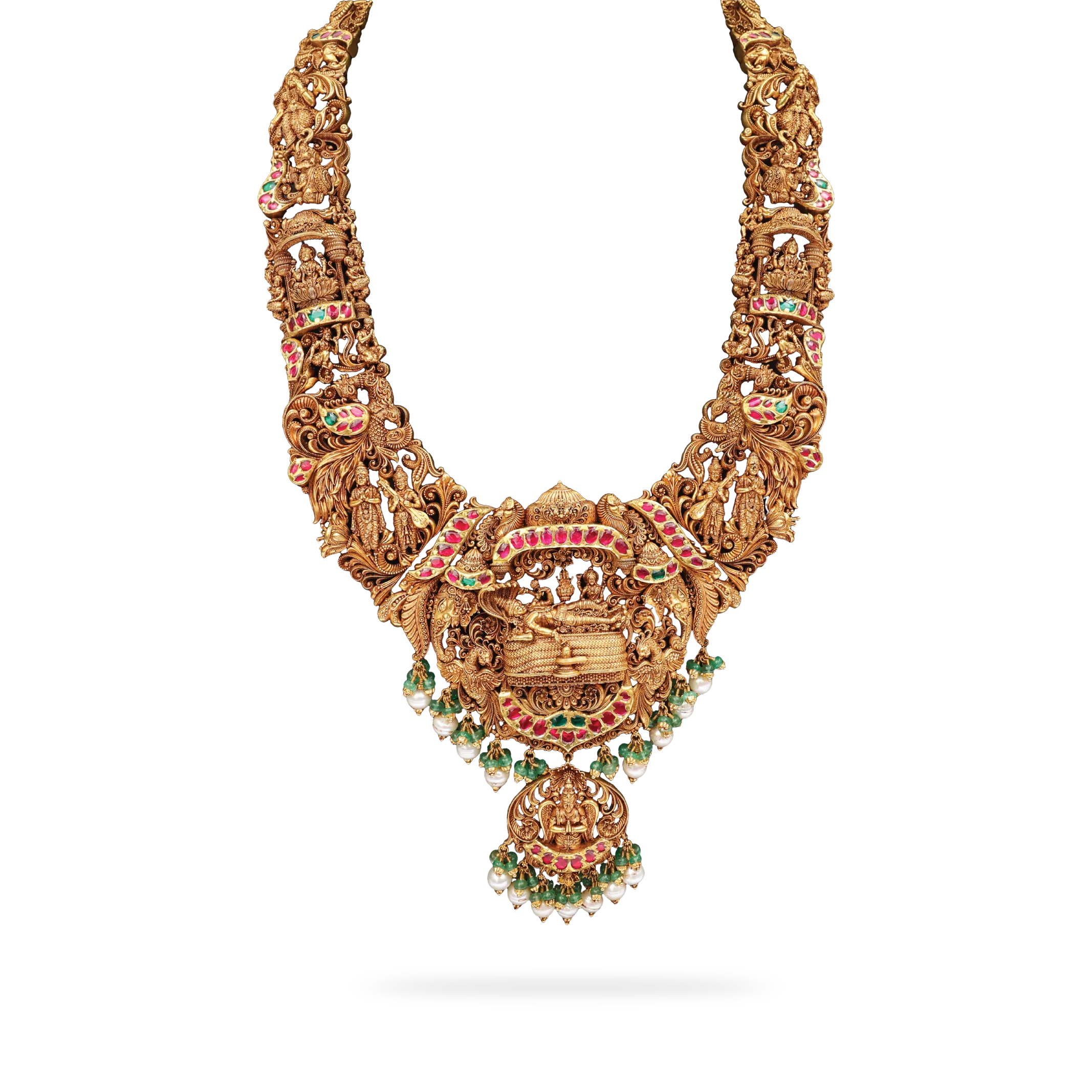
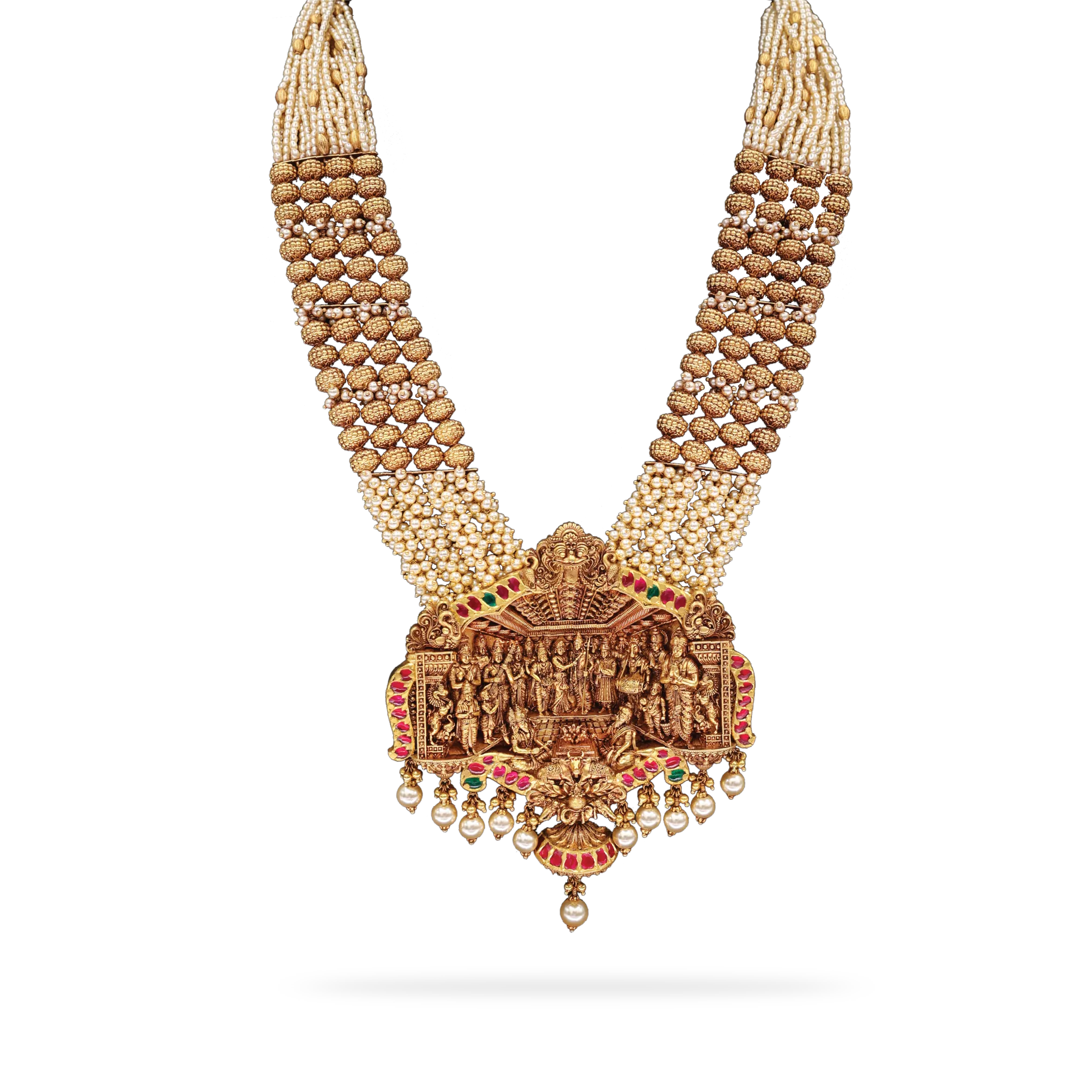
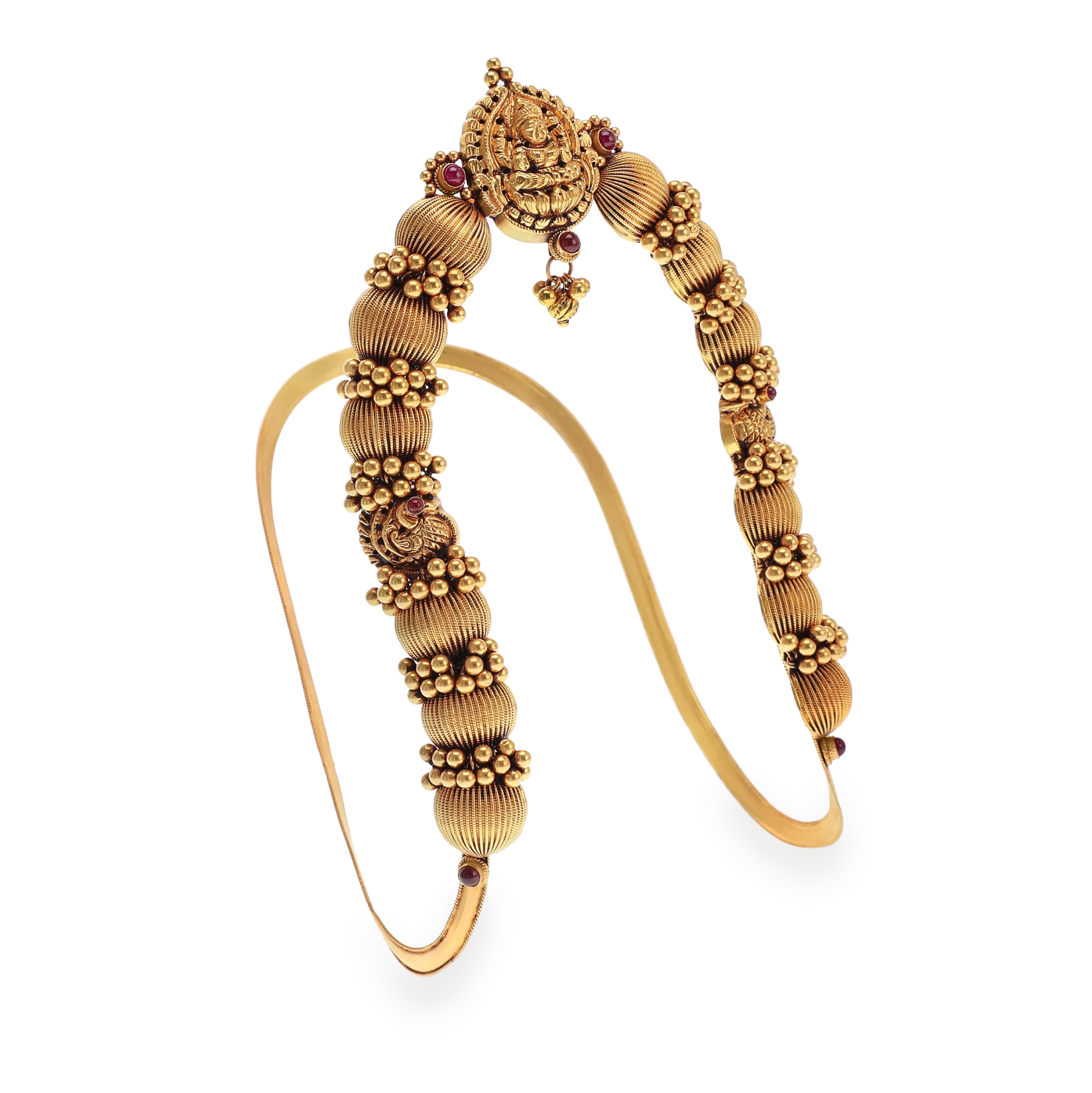
Some of that is craft logic. South Indian work — temple jewellery, Nakshi, the deep-relief repoussé that Karnataka and Tamil Nadu are known for — depends on a metal soft enough to take fine detail under a punch and hold it. 22K does that. 18K resists the tool.
Some of it is how gold functions in an Indian household. An ornament here is frequently expected to do two jobs at once: to be worn, and to hold value that can be realised or passed on. A higher gold content serves the second job better, because more of what you own is the metal itself.
And some of it is simply continuity. Families buy where their families bought, in the purity their families bought, and a bangle acquired in 1970 sits in the same box as one acquired last month. There is a practical benefit to that: matched pieces across generations behave the same way when they are cleaned, repaired or exchanged.
When 18K is the better choice, not the cheaper one
There is a persistent idea that 18K is what you buy when you cannot afford 22K. For studded jewellery that gets it backwards.
A diamond is held by metal under tension. Prongs must be filed thin enough to disappear visually and still grip a stone against a lifetime of knocks; a channel must keep its walls parallel; a micro-pavé setting asks tiny beads of metal to hold stones with almost nothing behind them. 18K, at 75% gold, has appreciably more mechanical strength than 22K, and for that work it is the appropriate material rather than the economical one.
This is why fine solitaire and diamond jewellery is made in 18K or in platinum more or less everywhere in the world. If someone offers you an important solitaire set in 22K, ask how the setting is engineered. There are ways to do it, but it needs to be a considered design rather than an accident of stock.
Choosing by what you are actually buying
| What you are buying | Purity | Why |
|---|---|---|
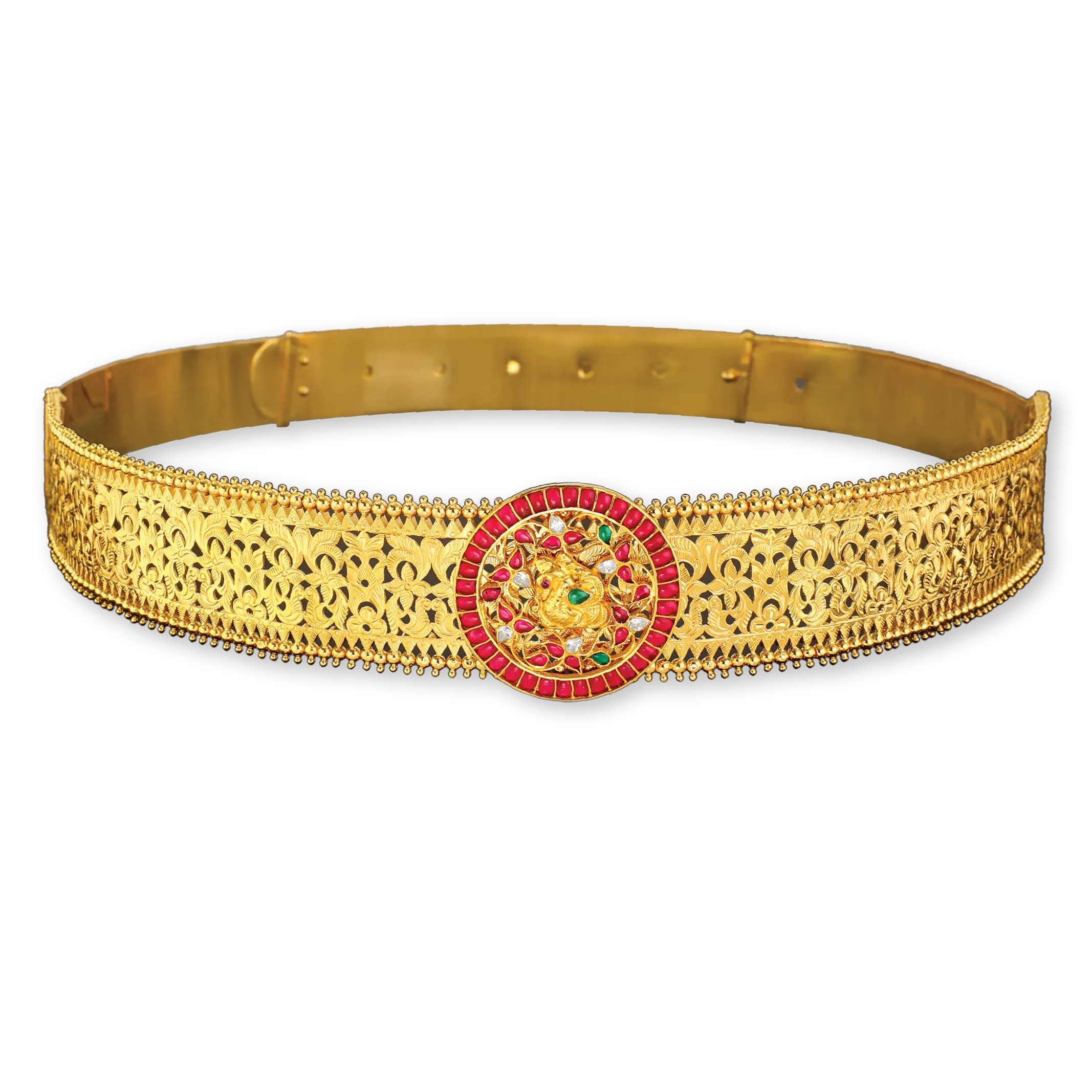
| Bridal set, haara, temple jewellery | 22K | Colour and craft tradition; substantial gold content in a piece meant to be kept |
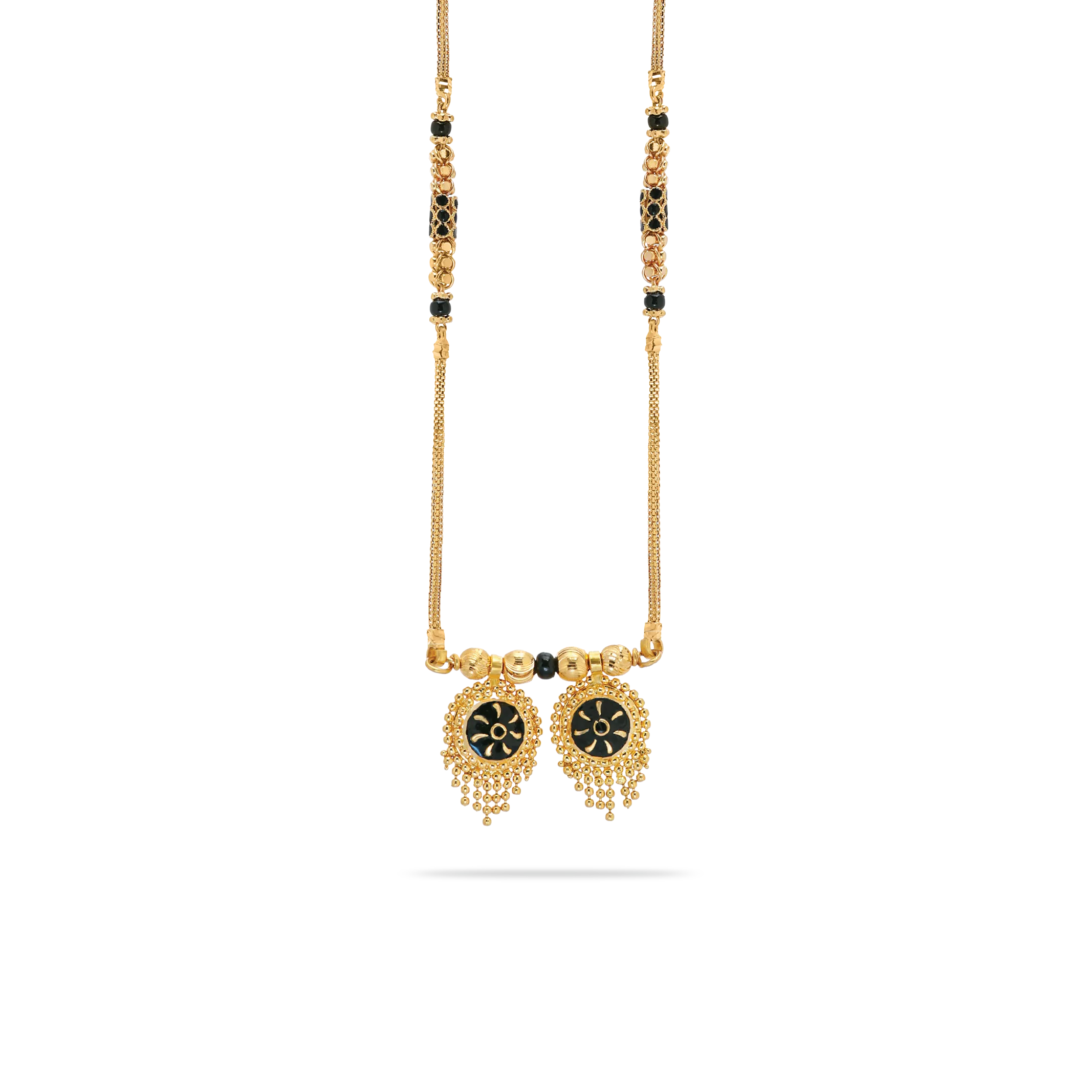
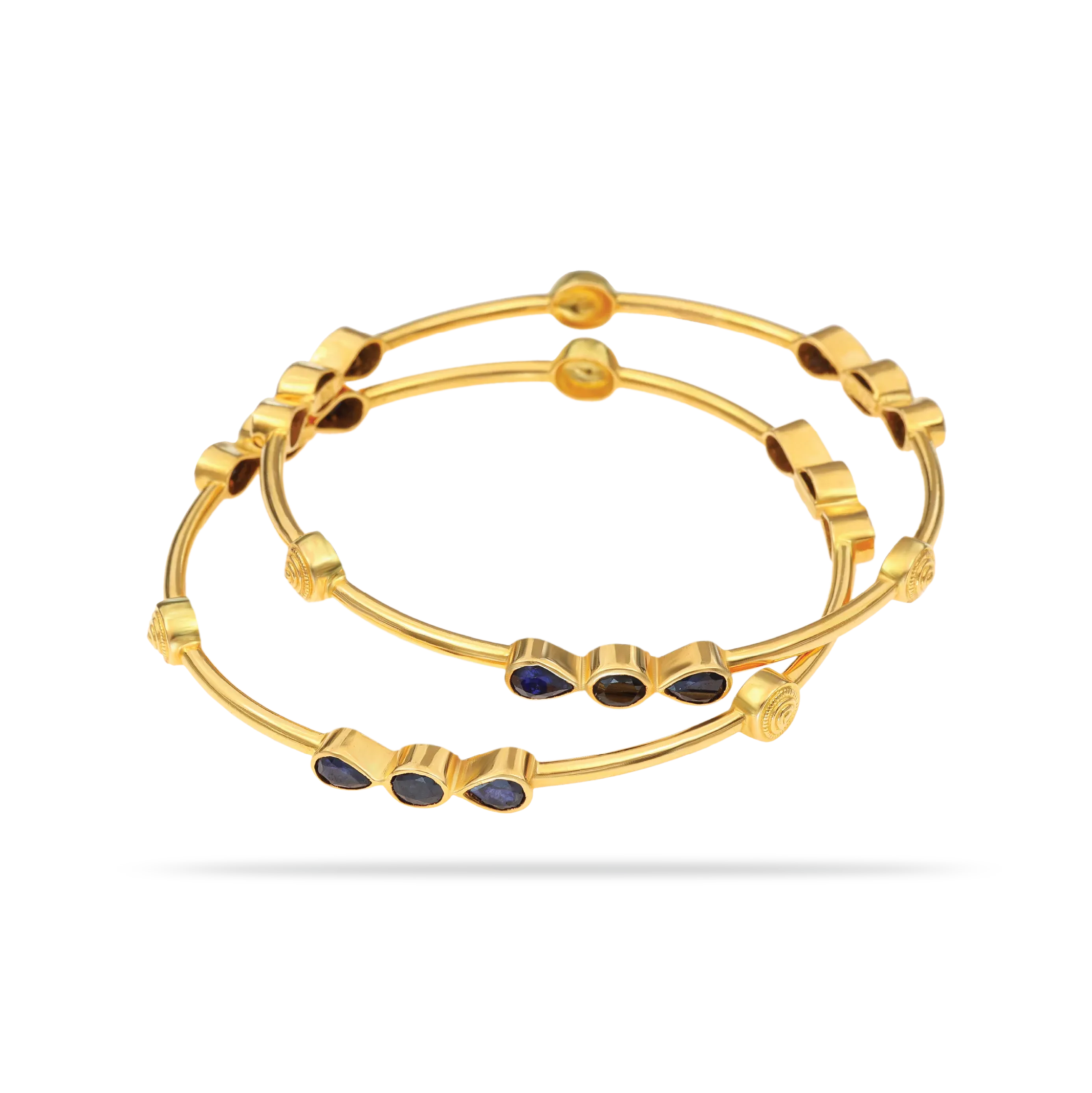
| Bangles, kadas, chains, mangalsutra | 22K | The Indian default; repairs and exchange are straightforward |
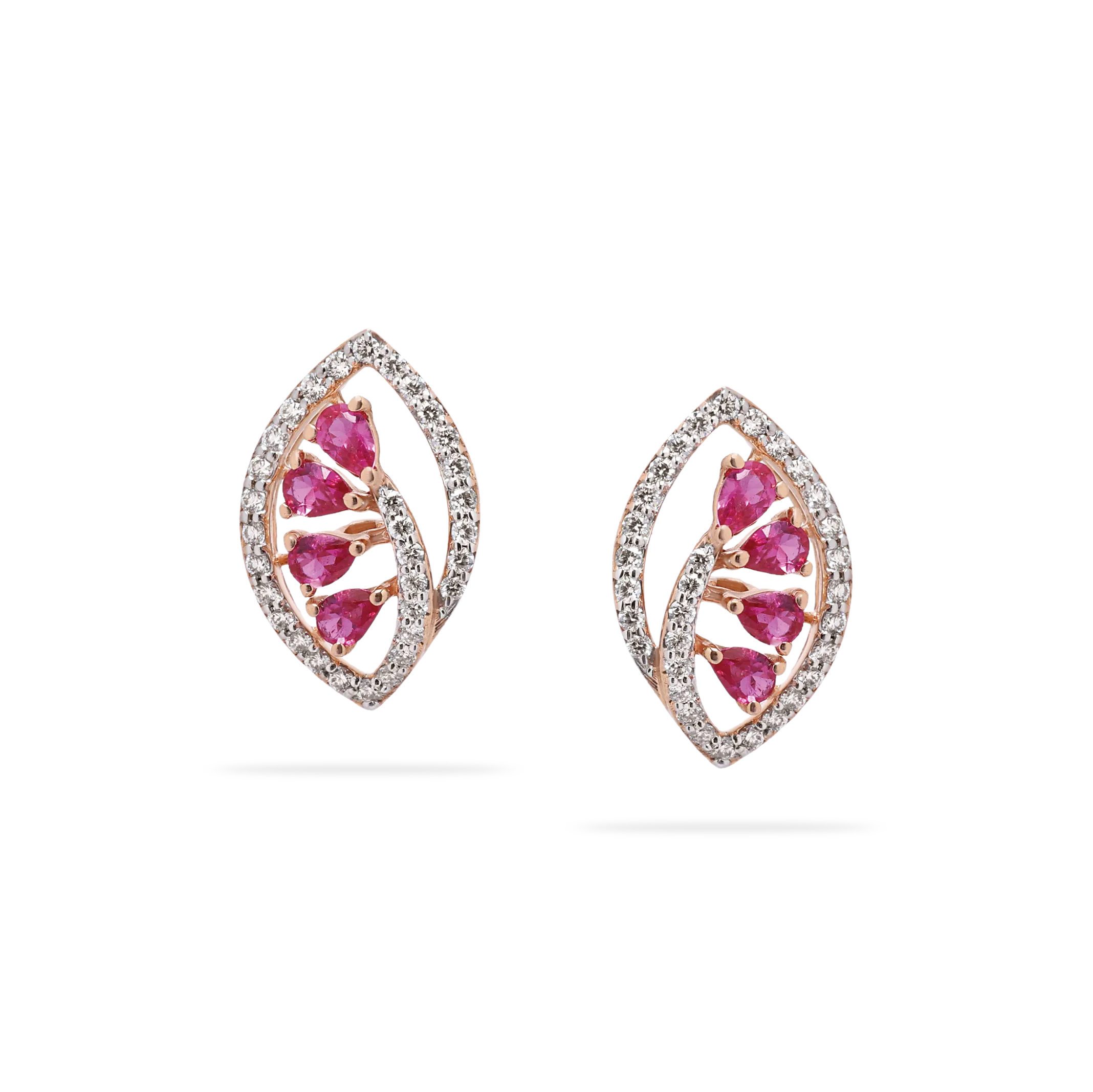
| Solitaire or diamond ring | 18K | Setting security; prongs and channels hold their tension |
| Gemstone jewellery with soft stones | 18K | Emeralds and opals need a setting that will not need frequent reworking |
| Everyday rings worn while working | 18K or 14K | Resists deformation; keeps its shape through knocks |
| Fine chains and delicate structures | 18K or 14K | Strength at small cross-sections |
| Buying gold to hold value | 24K | Coins or bars; no making charges on metal you intend to keep as metal |
How purity affects what you get back
When you exchange or sell gold, what is being valued is the gold in the piece, not the piece. The mechanics are simple:
Metal value of an old ornament
| Net gold weight, after removing stones and non-gold parts | 18.000 g |
| Purity, assayed at 22K | 0.916 |
| Fine gold content (18.000 × 0.916) | 16.488 g |
The same 18 g in 18K would contain 13.500 g of fine gold, and in 14K, 10.530 g. Purity is not a label on the transaction — it is the transaction.
Two things follow. Higher-purity ornaments return more per gram, which is part of why 22K holds its place in India. And assayed purity is what counts, not the purity you were told at the time of purchase — which is the whole argument for buying hallmarked gold with a verifiable HUID number in the first place. We set out how the rest of that valuation works, including which deductions are legitimate, in our guide to valuing old gold jewellery.
What purity does not determine is how much you paid above the metal. Making charges and wastage are separate, and they are where two identically hallmarked pieces diverge in price. That is covered in our guide to gold making charges per gram.
Verifying a purity claim before you pay
- Find the hallmark and read it. Look for three marks: the BIS logo, the purity in caratage and fineness, and the six-digit HUID. Ask for the magnifier — every registered jeweller is required to keep one of at least 10× on the counter.
- Verify the HUID in the BIS CARE app. Enter the six characters and check that the purity the app returns matches the purity marked on the piece, and that the article type matches what you are holding.
- Check the invoice agrees. The caratage on the bill should match the hallmark and the app. All three, one number.
- Have it independently assayed if you want certainty. Any consumer can have a piece tested at a BIS-recognised Assaying and Hallmarking Centre for ₹200, by fire assay as per IS 1418.
Four things that are commonly said and are not true
“Heavier gold is purer gold”
Weight and purity are independent. A heavy 18K bangle contains more gold than a light 22K ring, and tells you nothing about either piece's purity. Read the hallmark.
“Deeper yellow means higher purity”
Colour is a function of the alloy, and of the finish applied on top of it. Two 22K pieces from different workshops can differ visibly in shade. Colour is also the easiest thing to fake, which is precisely why hallmarking exists.
“You can test purity with a magnet, or by biting it”
Gold is not magnetic, but neither are several metals used to imitate it, so a magnet excludes almost nothing. Biting deforms the surface and tells you only that something is soft. Acid and touchstone testing reads the surface, which is exactly what plating is designed to defeat. Take the piece to an Assaying and Hallmarking Centre instead.
“22K and 916 are different things”
They are the same purity described in two units — 22 parts in 24, and 916 parts per thousand. A hallmark that reads 22K916 is not making two claims. It is making one claim twice.
The useful way to hold all of this: purity is a specification, not a grade of quality. 24K is not a better ornament than 22K any more than a raw ingredient is a better meal. Decide first what the piece has to do — be worn daily, hold a diamond, be handed down, or simply store value — and the right number follows from that.
Frequently asked questions
Is 22K or 24K gold better?
It depends what you want the gold to do. 24K gold is 99.9% pure but too soft to hold a shape, a stone or a clasp, so it is sold as coins and bars rather than ornaments. 22K gold is 91.6% pure and hard enough to be worn daily while keeping the deep yellow colour associated with gold, which is why it is the standard for Indian jewellery. For jewellery, 22K is better. For holding gold as an asset, 24K is better.
What is the difference between 22K and 916 gold?
There is no difference. They are the same purity expressed in two different units. 22K means 22 parts gold out of 24, which works out to 91.67%, and 916 is that same purity written as parts per thousand. A hallmark reading 22K916 is stating one purity twice.
What is the purity percentage of 24K, 22K, 18K and 14K gold?
24K is 99.9% pure, though the hallmarkable jewellery grade is 24KS at 995 fineness or 99.5%. 22K is 91.6% pure, hallmarked as 916. 18K is 75.0% pure, hallmarked as 750. 14K is 58.5% pure, hallmarked as 585. The conversion is purity percentage equals karat divided by 24, multiplied by 100.
Why is 24K gold not used for jewellery?
Pure gold is the most malleable metal there is, which makes it too soft to survive being worn. A 24K ring goes out of round within months of ordinary use, 24K prongs relax and eventually release the stone they hold, and 24K clasps open on their own. Ornaments also fail at their thinnest points, so softer metal means earlier and repeated failure. 22K adds just enough hardness while keeping the colour.
Which gold purities can be hallmarked in India?
IS 1417:2016 permits six caratages: 14K at 585 fineness, 18K at 750, 20K at 833, 22K at 916, 23K at 958 and 24KS at 995. A 9K grade also exists in the standard as a voluntary grade rather than part of the mandatory scheme. Note that there is no 999 hallmarking grade for gold jewellery, and gold bullion in bar, sheet, wire or coin form is excluded from the hallmarking order entirely.
Why is 916 gold so popular in Bangalore and South India?
Three reasons overlap. South Indian craft traditions such as temple jewellery and Nakshi work need a metal soft enough to take fine detail under a punch, which 22K does and 18K resists. Gold in an Indian household is often expected both to be worn and to hold value, and higher gold content serves the second purpose better. And families tend to buy in the purity their families bought, which keeps pieces across generations consistent to clean, repair and exchange.
Is 18K gold worse than 22K gold?
Not for the work it is chosen for. 18K contains less gold, but at 75% purity it has appreciably more mechanical strength than 22K, which is what a diamond setting needs. Prongs must be thin enough to disappear visually while gripping a stone for a lifetime, and channel walls must stay parallel. Fine solitaire and diamond jewellery is made in 18K or platinum throughout the world for this reason. For a bridal set or temple piece, 22K remains the better choice.
Does white gold and rose gold have less gold in it?
No. Colour comes from the alloying metals, not the gold content. 18K yellow, 18K white and 18K rose gold are all 75% gold. Rose gold has a higher proportion of copper in its alloy, and white gold is alloyed with white metals such as palladium or nickel and then usually plated with rhodium. That rhodium plating is a surface finish that wears and needs periodic renewal, which is worth knowing before choosing white gold for a piece you will wear daily.
Can I test gold purity at home with a magnet?
Not reliably. Gold is not magnetic, but neither are several metals used to imitate it, so a magnet rules out very little. Biting only tells you something is soft, and it deforms the surface. Acid and touchstone tests read the surface, which is exactly what plating defeats. For certainty, any consumer can have a piece tested at a BIS-recognised Assaying and Hallmarking Centre for 200 rupees by fire assay as per IS 1418.
Does higher purity gold have better resale value?
Higher purity returns more per gram, because what is being valued is the fine gold in the piece rather than the piece itself. An 18 gram ornament assayed at 22K contains 16.488 grams of fine gold; the same weight in 18K contains 13.500 grams. What matters is the assayed purity rather than the purity you were told at purchase, which is the practical argument for buying hallmarked gold with a verifiable HUID.
What does the 8.4% in 22K gold consist of?
In 22K gold, 91.6% is gold and the remaining 8.4% is usually a deliberate alloy of copper and silver, sometimes with a little zinc. The proportions are chosen by the goldsmith and affect hardness, melting and soldering behaviour, and the precise shade of yellow. Traditional Indian yellow gold leans slightly more towards copper, which produces its characteristic warmth.
Bring the piece in. We will show you the hallmark.
Our flagship on Main Guard Cross Road keeps a 10× loupe and a calibrated balance on the counter for exactly this. No appointment needed, no obligation to buy.
Visit our Bengaluru storeSpeak to a jewellerSources & standards referenced
- IS 1417:2016 — Gold and gold alloys, jewellery/artefacts: permitted caratages and fineness.
- Bureau of Indian Standards — Hallmarking FAQs: the six hallmarkable caratages and their fineness values.
- Press Information Bureau, 13 March 2026 — confirmation of 9K as a voluntary grade.
- Hallmarking of Gold Jewellery and Gold Artefacts Order, 2020 as amended — exclusion of gold bullion, bars and coins.
- IS 1418 — fire assay method for the determination of gold in gold alloys.
- Bureau of Indian Standards — Guidelines for Jewellers, July 2026: consumer testing charge and in-store verification requirements.









.webp)


.webp)