How to check diamond quality: A practical guide
October 28, 2026 | 10 minutes read
Key Takeaways
Diamond quality is best understood by combining the grading report with a careful look at the stone itself. Your priorities and budget matter as much as any single grade.
- Consider cut, color, clarity, and carat together rather than treating one grade as the whole story.
- Confirm that the grading report matches the diamond and understand what it does—and does not—tell you.
- Inspect the stone face-up in more than one lighting condition.
- Compare proportions and appearance, especially when choosing between diamonds of the same shape.
- Use home tools as preliminary checks, then seek an independent assessment when you need greater confidence.
Understand the 4Cs
The 4Cs provide a shared language for comparing diamonds, but they describe different qualities. A high grade in one area does not automatically make a stone the best choice for you. For a practical starting point, consider how each characteristic contributes to the diamond you see and the amount you are comfortable spending.
How cut affects sparkle and light return
Cut describes how a diamond’s proportions, facets, and finish influence the way it handles light. A well-proportioned stone can return light toward the viewer with lively brightness, while less effective proportions may create darker areas or a muted appearance. The grading term is useful, but looking at the diamond can reveal nuances that a label alone cannot. A diamond cut guide can help explain why cut deserves close attention during a comparison.
How color grades compare
Color grades describe how much body color is visible in a diamond, with the familiar D-to-Z scale moving from colorless toward increasingly noticeable yellow or brown tones. Small grade differences may be hard to see once a stone is mounted, and the setting can affect the way color reads. The broad groupings below offer a quick orientation, not a substitute for viewing the actual diamond.
| Grade range | General description | What to keep in mind |
|---|---|---|
| D–F | Colorless | Differences within this range can be subtle to the eye. |
| G–J | Near-colorless | Often appears white face-up, depending on the stone and setting. |
| K–M | Faint color | A warmer tint may be easier to notice from some angles. |
| N–Z | Very light to light color | Visible color becomes more pronounced across the range. |
Use the chart as a way to narrow your questions, then compare stones side by side if possible. Your preferred metal, setting, and the diamond’s shape can all influence whether a particular color grade feels right.
How clarity grades describe inclusions
Clarity grades describe internal characteristics, called inclusions, and surface characteristics, called blemishes. The grade reflects how these features appear under grading conditions; it does not by itself tell you whether an inclusion will be noticeable during everyday wear. Review the plot and comments, then look at the diamond face-up and from the side. This clarity and inclusion guide offers more context for weighing visibility against grade.
How carat weight relates to size
Carat is a unit of weight, not a direct measurement of how large a diamond looks from above. Two stones with the same carat weight can have different face-up dimensions because of shape and cut proportions. Compare measurements in millimeters alongside carat, and look at the stone in the setting you plan to wear. The distinction between weight and visible size is explored in this diamond size comparison guide.
Read the diamond grading report
A grading report records a lab’s assessment of a particular diamond and gives you details to compare against the stone in front of you. It is a useful reference, but not a guarantee of beauty, durability, market price, or a perfect match to your preferences. Take time to verify the report and read its details rather than relying on a grade summary alone.

Check the grading lab and report number
Start by identifying the lab that issued the report and locating its report number. If the lab provides an online report lookup, enter the number yourself and compare the returned details with the document you were given. The GIA report-number lookup described by StoneAlgo lets shoppers review certificate details and see information including fair price, cut score, and visual carat size for GIA-certified diamonds. Treat any added analysis as one reference point, not as a substitute for your own inspection.
Match the report to the diamond
Check that the report describes the stone you are considering, not simply a diamond with similar grades. Compare identifying details carefully, and ask the seller to explain any mismatch before proceeding. These are useful points to verify together:
- Report number and issuing laboratory
- Shape, measurements, and carat weight
- Color and clarity grades
- Any inscription details shown on the report
No single detail establishes a match on its own. If something is unclear, ask for a closer inspection or an independent opinion before treating the paperwork as settled.
Interpret the plot and clarity comments
A plot maps the approximate locations of clarity characteristics, while comments may describe features that are not drawn on the diagram. The illustration is a guide, not a photograph, and the symbols do not necessarily indicate how visible an inclusion will be to you. Use it to locate features and then inspect the actual diamond at a comfortable viewing distance. A clean-looking face-up appearance may matter more to you than a minor grade distinction.
Understand what a report does not guarantee
A report records grading information; it is not an appraisal or a promise about resale value. It also cannot tell you whether the diamond’s sparkle, color, or inclusions will appeal to you in person. Reports do not replace checking the stone’s condition, confirming the seller’s policies, or asking questions about details you do not understand. Think of the document as a strong starting point for a broader assessment.
Inspect the diamond’s appearance
A diamond’s grades matter, but your eyes ultimately tell you how it looks in ordinary viewing. Notice whether the stone feels bright and balanced, whether inclusions catch your attention, and how its apparent size fits your expectations. Make comparisons calmly; a diamond can look different when viewed alone than when placed beside another stone.
Look for brightness, fire, and contrast
Brightness is the overall return of white light, while fire describes flashes of spectral color. Contrast comes from the pattern of light and dark areas as the diamond moves. Look for a lively, balanced appearance rather than a single dramatic flash under a spotlight. A stone that looks attractive from several angles is generally easier to enjoy in day-to-day settings.
Check for visible inclusions and color
View the diamond face-up first, then tilt it gently to see whether any inclusion becomes more apparent from another angle. Notice color in the center and near the edges, and remember that a mounting can change how both color and inclusions appear. Prioritize appearance over perfection if a tiny grade difference is difficult to see and does not affect your enjoyment. The most useful comparison is between the actual stones, not just their report lines.
Compare face-up size with carat weight
Compare the millimeter measurements with the diamond’s face-up outline, since weight alone may not predict how large it appears. Shape and depth can affect how much of the stone is visible from above. For GIA-certified diamonds, StoneAlgo’s described tool includes visual carat size information; treat that as a point of comparison and confirm the stone’s appearance in person. The setting and finger size also influence the impression of scale.
View the diamond under different lighting
A showroom spotlight can make nearly any polished diamond sparkle, so ask to see the stone in more than one kind of light. Look at it in diffuse indoor lighting and, if practical, in natural daylight. Notice whether the pattern remains pleasing when the diamond is still as well as when it moves. A short comparison in ordinary light can help you judge what the stone will be like beyond the display case.
Assess cut quality beyond the grade
A cut grade offers a concise starting point, while proportions and the diamond’s visible pattern provide useful additional context. The details available vary by shape and grading report, so avoid applying a single set of expectations to every diamond. Use the grade to guide your inspection, then decide whether the stone’s actual light behavior suits you.
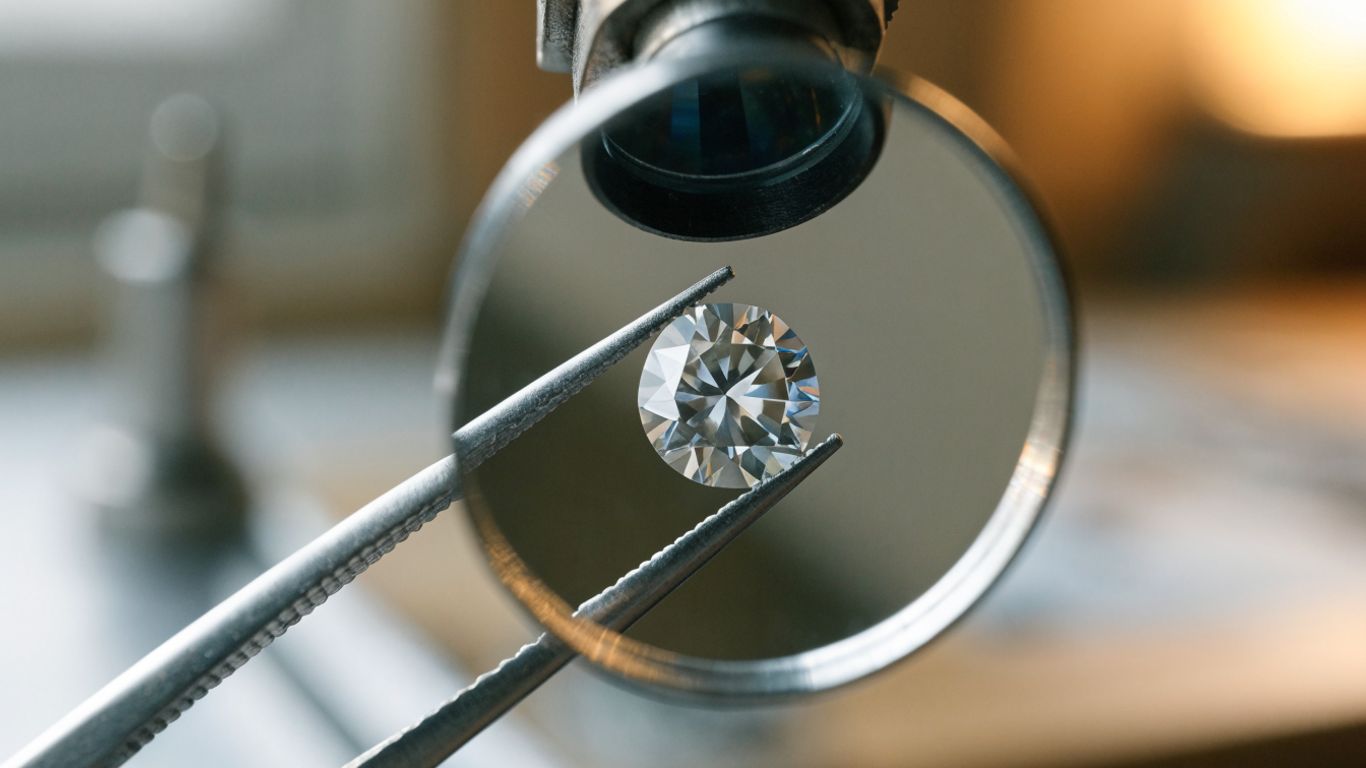
Review proportions and symmetry
Where the report lists measurements and proportions, review them as a group rather than treating one number as decisive. Symmetry describes how consistently the facets are arranged, while polish relates to the finish of the facet surfaces. These details can help explain why two diamonds with similar headline grades look different. StoneAlgo offers a cut score for round diamonds, according to its description; compare that information with the report and your own view of the stone.
Look for light leakage and uneven patterns
As you tilt the diamond, watch for areas that stay unusually dark or appear to lose brightness. Some dark patterning is part of contrast, so a dark area by itself does not prove that a diamond is poorly cut. Compare the pattern across the face and see whether it looks balanced as the stone moves. This is one reason a visual inspection adds information that measurements cannot provide alone.
Compare diamonds of the same shape
Shape affects the outline and the way facets return light, so compare like with like whenever possible. Place stones side by side under the same lighting and look at brightness, contrast, and face-up size without rushing to the grades. A practical comparison can focus on a few questions:
- Which diamond looks more balanced face-up?
- Does either stone show distracting dark areas or inclusions?
- Which one appears closer to your preferred size and shape?
Then revisit the reports to understand any differences you noticed. This keeps the paper comparison connected to the appearance that matters in real life.
Consider how shape affects grading standards
Cut grading is not applied in the same way to every shape, and some shapes may not receive an overall cut grade on a report. A round brilliant and an elongated fancy shape can also show different patterns even when both are well made. Compare each diamond with others of the same shape and rely on the report’s stated criteria. Avoid assuming that one grade label means exactly the same visual result across all shapes.
Use tools and tests appropriately
Tools can help you observe details that are hard to see unaided, but they answer limited questions. A loupe can bring small features into view, and a tester may help distinguish some materials, yet neither replaces careful identification and grading. If a result could affect a purchase decision, get an assessment from a qualified professional.
Examine the stone with a loupe
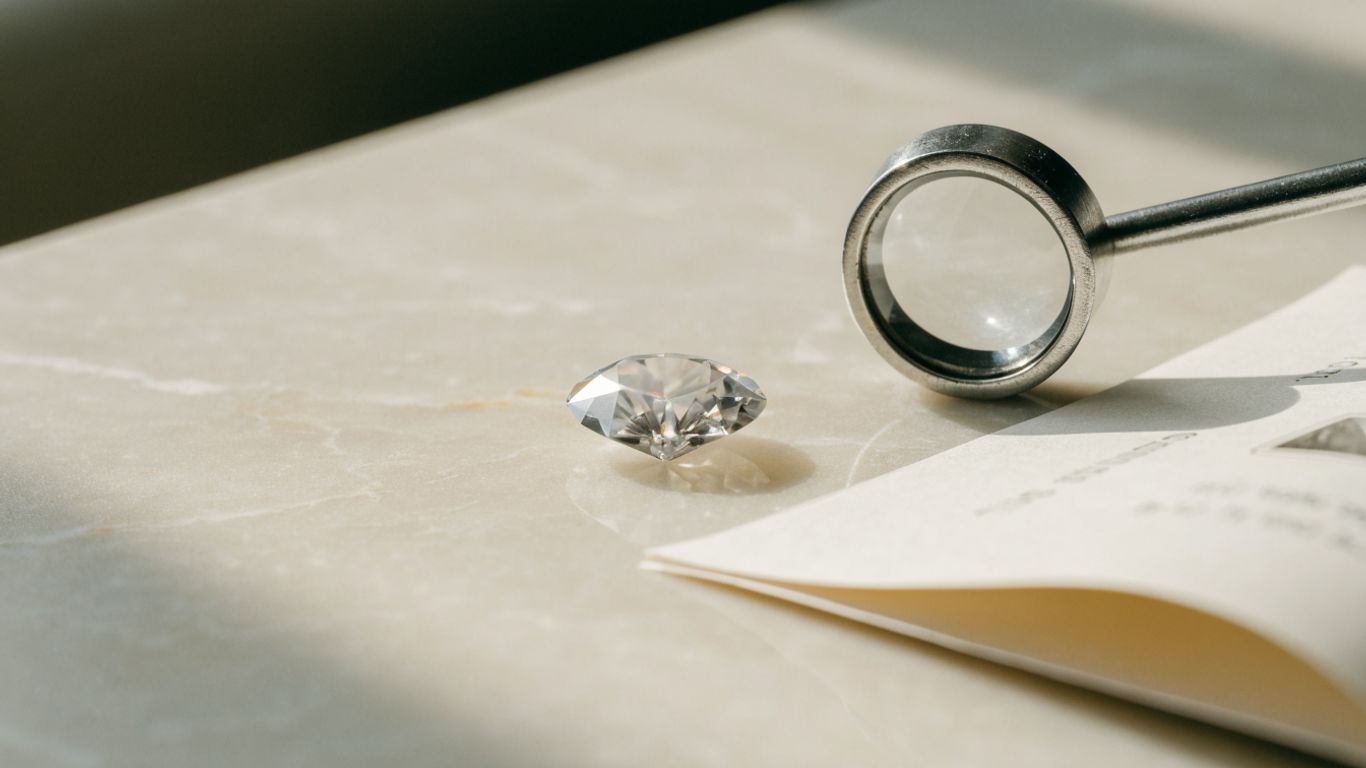
A jeweler’s loupe can help you inspect the surface, facet edges, and visible inclusions more closely. Keep the stone steady and use good light; magnification can make ordinary details seem more dramatic than they appear to the unaided eye. Do not expect a loupe to reproduce laboratory grading conditions or to establish a complete quality grade. Use it to form questions, then consider how the diamond looks at normal viewing distance.
Use a diamond tester with care
Some electronic testers assess a material property to help distinguish diamond from certain imitations, but models and methods vary. Follow the device instructions and make sure the stone is clean and positioned correctly. A positive reading is not a complete identification, and some testers may not distinguish diamond from other materials with similar responses. If you are curious about common checks and their limits, this guide to diamond testing provides additional background.
Treat home tests as limited checks
Home tests can be misleading when stones are mounted, dirty, or difficult to handle. Avoid relying on a single trick or test to establish identity or quality. In particular, do not use heat, scratching, or other potentially damaging methods on jewelry. When evaluating a stone at home, keep the process simple and use the result only to decide whether further professional review is needed.
Ask a qualified gemologist for an independent assessment
An independent gemologist can examine the diamond and explain what the report, setting, and visible features mean together. Ask what methods are being used and whether the assessment is independent of the sale. Bring the report and any questions you have noticed during your own inspection. This is especially sensible when the report and stone appear inconsistent or the purchase is a significant one.
Choose quality that fits your priorities
There is no single ideal combination of grades for every buyer. Your budget, preferred look, and willingness to trade one characteristic for another should guide the search. Decide what you value before comparing specific diamonds, then confirm the practical terms of the purchase as carefully as the stone itself.
Set a budget before comparing grades
Choose a comfortable spending range before getting drawn into small grade differences. A clear budget helps you compare realistic options and avoid paying more for a characteristic you may not notice. Leave room to consider the setting, taxes, and any required independent assessment. A diamond is a personal purchase, and stretching beyond your plan is not the only route to a satisfying choice.
Decide which 4Cs matter most to you
Think about what you will notice most: a lively appearance, a particular color, a clean face-up look, or a certain size. Rank those preferences before narrowing the options, since improving one grade may mean compromising elsewhere. If you are choosing jewelry for regular wear, comfort and setting design may matter alongside the stone. Your priorities give the grading report a more useful frame.
Balance visible appearance with report grades
Use the report to compare documented characteristics, then make sure the diamond itself looks right to you. A strong paper grade does not guarantee that a particular pattern or color will be your favorite. Conversely, a modest difference in grade may have little practical effect if both stones look appealing side by side. When uncertainty remains, pause and ask for a clearer view rather than relying on memory.
Confirm return and appraisal policies
Before paying, read the return window, any inspection conditions, and the process for resolving a report mismatch. Ask whether an appraisal is included or must be arranged separately, and clarify what the appraisal is intended to establish. Keep copies of the report and purchase documents. Clear policies give you time to review the diamond after the excitement of the initial viewing has passed.
Conclusion
Checking diamond quality means bringing the report, the visible stone, and your own priorities into the same decision. The 4Cs help structure a comparison, while direct viewing and sensible independent checks fill in what grades cannot say. Take your time, ask specific questions, and choose the diamond whose documented qualities and everyday appearance feel right for you.
Frequently Asked Questions
What is the most important of the 4Cs?
There is no universal answer. Cut can strongly affect a diamond’s light return, but the most important factor depends on the look, size, and budget you prefer.
Can I judge diamond quality from a certificate alone?
No. A grading report records assessed characteristics, but it cannot tell you whether the diamond’s appearance appeals to you or guarantee value or durability.
Does a higher carat weight always look larger?
Not necessarily. Shape and proportions affect face-up dimensions, so compare measurements and the visible outline as well as carat weight.
How can I tell whether an inclusion will be visible?
Inspect the diamond face-up and from different angles, ideally in ordinary lighting. The report can help locate characteristics, but the actual stone shows how noticeable they are to you.
Should I choose the highest color grade I can afford?
Only if that difference matters to your preferences. Compare stones in person and consider how the setting and metal affect the color you see.
Are home diamond tests reliable?
They are limited checks and may not distinguish diamond from every imitation. Avoid damaging methods and seek a qualified professional’s assessment when certainty matters.
What should I do if the report details do not match the diamond?
Pause the purchase and ask the seller to resolve the discrepancy. If the match remains unclear, seek an independent assessment before proceeding.
How to Know if Gold Is Hallmarked: A Guide to Finding and Verifying Gold Marks
10 minute read
Related blogs:
November 20, 2025
The Timeless Elegance of the Tennis Bracelet: A Comprehensive Guide
Read More

November 20, 2025
The Ultimate Guide to Styling and Wearing a Choker Necklace
Read More
November 20, 2025
Find Your Perfect Engagement Ring: A Comprehensive Guide to Styles and Diamonds
Read More
November 20, 2025
The Timeless Elegance of a Diamond Tennis Bracelet: A Buyer's Guide
Read More