Diamond clarity explained: How to understand grades and choose the right diamond
October 26, 2026 | 10 minutes read
Key Takeaways
Clarity is one part of a diamond’s character, not a complete measure of its beauty. The best choice depends on what you can see, what matters to you, and what fits your budget.
- Clarity grades describe internal inclusions and surface blemishes, assessed under magnification.
- Neighboring grades can differ in ways that are difficult to notice without magnification.
- A diamond’s appearance depends on more than its clarity grade, including cut, shape, and size.
- Lower clarity grades may look appealing when inclusions are hard to see face-up.
- Comparing stones and reading their grading reports can help you make a more informed choice.
What diamond clarity means
Diamond clarity describes the presence and appearance of characteristics within a diamond or on its surface. These natural features form as the stone develops, and their visibility can range from difficult to detect to readily apparent. Understanding them makes diamond clarity explained in practical terms, rather than as a string of letters and numbers.
Inclusions inside a diamond
Inclusions are characteristics inside a diamond. They may appear as tiny crystals, pinpoints, clouds, or lines, and their appearance varies from stone to stone. Some are visible only under magnification, while others may be noticeable to the unaided eye.
Blemishes on a diamond’s surface
Blemishes are characteristics found on a diamond’s surface. They can include small marks or irregularities, and some may be difficult to spot without magnification. A grading assessment considers these surface features alongside internal inclusions, rather than treating clarity as a count of marks alone.
How clarity characteristics affect appearance
The same grade does not mean every diamond looks alike. A small inclusion in an unobtrusive spot can be less noticeable than a feature that contrasts strongly with the surrounding stone. The visible inclusion pattern matters to the viewer, which is why the grade is useful context but not a substitute for looking at the diamond itself.
How the diamond clarity scale works
The widely used diamond clarity scale runs from Flawless at the top to Included at the lower end, with several categories in between. Each category reflects how noticeable a diamond’s characteristics are under standard examination, rather than a simple tally of flaws. Looking at the scale as a set of ranges can make the distinctions easier to understand.
Flawless and Internally Flawless grades
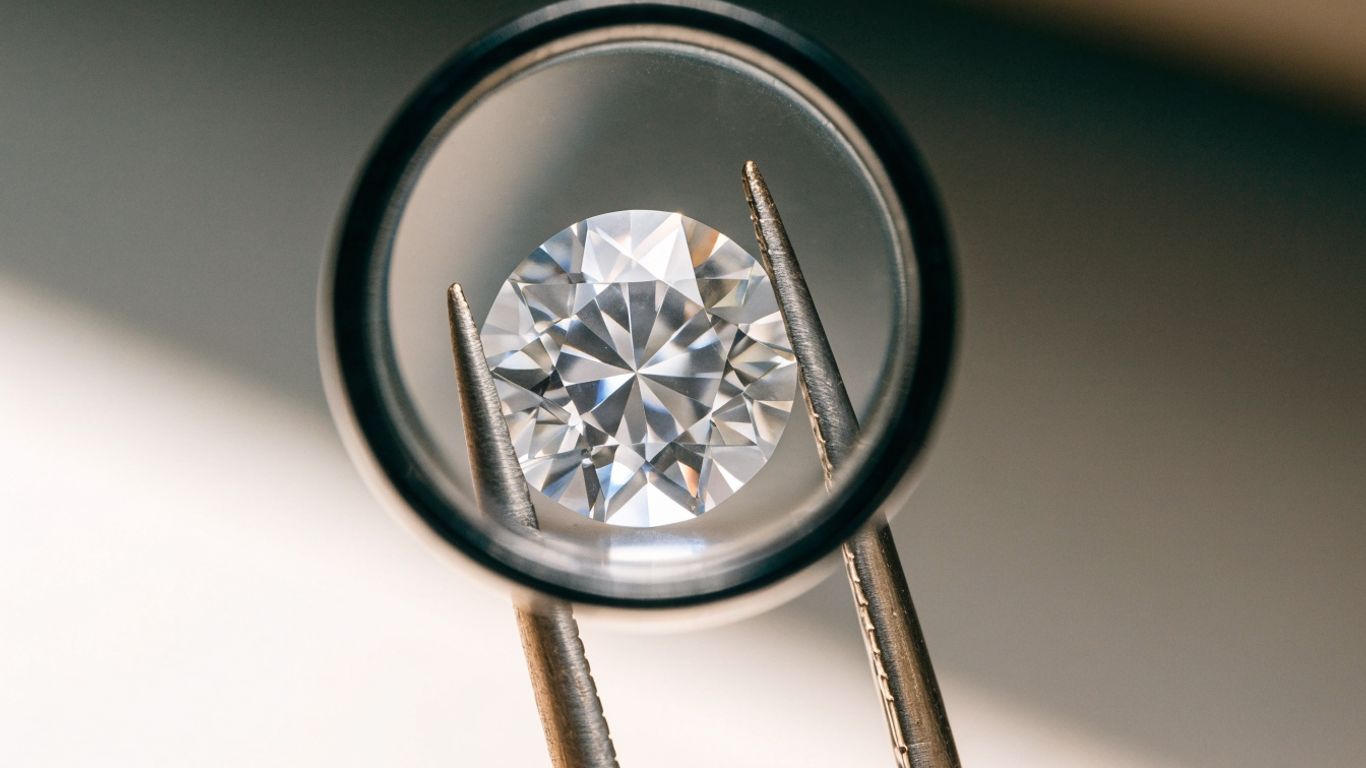
Flawless (FL) diamonds have no inclusions or blemishes visible to a skilled grader under 10× magnification. Internally Flawless (IF) diamonds have no visible inclusions at that magnification, though surface blemishes may be present. These are the top clarity grades, but a high grade does not automatically mean a diamond will look more beautiful to every buyer.
Very, Slightly, and Included grades
Below IF, the scale moves through Very Very Slightly Included (VVS1 and VVS2), Very Slightly Included (VS1 and VS2), Slightly Included (SI1 and SI2), and Included (I1, I2, and I3). The numbers within each category indicate further distinctions in the grading system. In general, characteristics become easier for a grader to see as the scale moves toward Included; some may also be visible without magnification.
What separates neighboring clarity grades
A neighboring grade may reflect a small difference in how difficult a feature is to see, rather than a dramatic change in how the diamond looks. This simplified comparison gives a sense of how the categories differ; individual stones can vary, and a grading report describes the specific diamond. A diamond clarity chart can provide another way to compare the full range of grades.
| Grade range | General clarity description | What a buyer may notice |
|---|---|---|
| FL–IF | No inclusions visible at 10×; IF may have surface blemishes | Differences often require close examination |
| VVS | Inclusions are very difficult to see at 10× | Usually subtle under magnification |
| VS | Minor inclusions are visible to a grader at 10× | Visibility to the unaided eye varies by stone |
| SI–I | Features are easier to see under magnification; some may be eye-visible | Individual appearance varies considerably |
The table is a guide, not a promise about how a particular stone will look. Size, location, and contrast affect visibility, so two diamonds within one category can make different impressions.
How gemologists grade diamond clarity
Gemologists assess clarity by examining a diamond’s characteristics using a consistent method. They consider not just whether a feature exists, but how it appears in relation to the whole stone. That close examination produces a grade that can help buyers compare diamonds, while still leaving room for individual stones to look different.
The role of 10× magnification
Ten-times magnification provides the standard viewing level used to assess clarity. A trained grader examines the diamond at this magnification to identify inclusions and blemishes that may not be visible during everyday viewing. The resulting grade is therefore a professional assessment under specific conditions, not a claim that every characteristic can be seen at arm’s length.
How size, number, and location affect a grade
The size and number of characteristics matter, but so do their position and appearance. A feature near the center may draw more attention than one close to the edge, and a contrasting mark may stand out more than a faint one. Graders consider these details together, rather than assigning a grade based on one factor in isolation.
Why grading reports may differ
A grading report records an assessment made by a gemological laboratory, and grading judgments can differ at the margins. A diamond near the boundary between grades may be assessed differently by separate graders or laboratories. When comparing stones, review the report for each diamond and consider the actual appearance as well; how clarity is graded offers further background on the features being assessed.
How clarity affects a diamond’s appearance
Clarity contributes to a diamond’s appearance, but it is only one part of what you see. Some stones with visible grades can look clean to the unaided eye, while others with a higher grade may have a characteristic that catches your attention. Comparing the diamond face-up, as you would normally wear it, can make the grade more meaningful.
Eye-clean appearance versus clarity grade
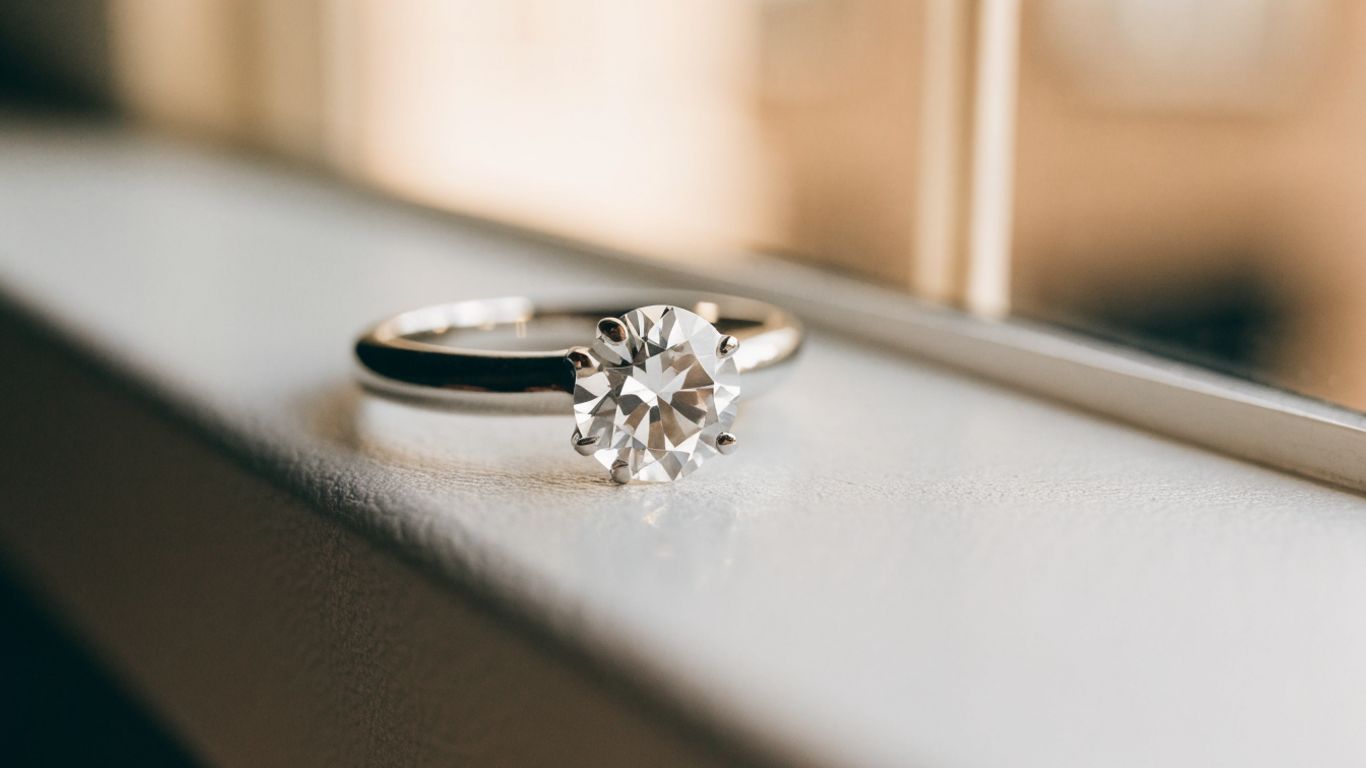
“Eye-clean” is a descriptive term for a diamond whose inclusions are not noticeable to the unaided eye at a typical viewing distance. It is not a clarity grade, and people may differ in what they notice. A diamond’s grade describes its examination under magnification; your own view of the stone helps answer whether its appearance feels right to you.
How cut influences the visibility of inclusions
Cut affects how light moves through and reflects from a diamond, which shapes its overall brightness and pattern. Those reflections can influence how easily an inclusion catches the eye, although the effect depends on the individual stone. It is worth judging clarity in the context of the whole face-up appearance, rather than assuming that a grade alone predicts how lively or clean a diamond will look.
How shape and carat weight affect what you see
Different shapes present a diamond’s face-up area and facets in different ways, so an inclusion may be easier to notice in one stone than another. Carat weight describes mass, not clarity, but a larger diamond can make characteristics easier to inspect simply because there is more visible surface. When possible, compare stones of the shape and approximate size you are considering.
How clarity affects diamond price
Clarity is one of the factors that can influence a diamond’s price, alongside considerations such as cut, color, and carat weight. Higher clarity grades are generally less common, and buyers may pay more for a stone with fewer or less visible characteristics. The practical question is whether a higher grade makes a visible difference that matters to you.
Why higher clarity grades usually cost more
Diamonds with higher clarity grades are graded as having fewer or less noticeable characteristics under magnification. This can make them more sought after, which is one reason they may cost more. Yet the price difference between grades does not necessarily translate into an equally noticeable difference when a diamond is viewed without magnification.
When a lower grade can look just as good
A diamond at a lower clarity grade may still look appealing if its inclusions are difficult to see in ordinary viewing. Their location, size, and contrast all matter, and a report cannot fully replace a direct visual comparison. Looking at the stone face-up can help you decide whether you notice any feature that would affect your enjoyment of it.
Balancing clarity with cut, color, and carat
Choosing a clarity grade is a matter of balancing it with the other qualities you value. Some buyers prefer to prioritize a diamond’s overall face-up appearance, while others want a higher clarity grade for peace of mind. If you are also comparing styles and settings, an engagement ring buying guide can help put diamond details alongside fit, design, and budget.
How to choose a clarity grade
There is no single clarity grade that suits every diamond buyer. The right choice depends on your budget, your own sensitivity to visible inclusions, and the particular stone you are considering. A considered comparison often tells you more than aiming for the highest grade by default.
Set a budget and prioritize what matters
Start by deciding what you want your budget to cover, then rank the qualities that matter most to you. If you care most about what is visible without magnification, compare the stone’s appearance rather than paying automatically for a higher clarity grade. If a higher grade itself is important to you, include that preference in your budget from the start.
Compare diamonds in person or through detailed images
When possible, view diamonds in person and compare them under similar lighting. If you are shopping remotely, look for detailed images or videos that show the diamond face-up and from more than one angle. These steps can help reveal whether a characteristic is visible in ordinary viewing or only under close inspection:
- Compare stones side by side under consistent lighting.
- Look at each diamond face-up before examining it with magnification.
- Check whether any inclusion draws your eye during a normal viewing.
- Use close-up images to understand where characteristics are located.
The point is not to find a stone with no detectable features at any distance, but to understand what you are seeing. Give yourself time to compare; your impression of the diamond is part of the decision.
Check the grading report and return policy
Review the grading report to confirm the stated clarity grade and see what characteristics the assessment records. Make sure you understand the seller’s return terms before purchasing, especially if you are relying on photographs or video instead of an in-person inspection. Clear documentation and a policy you are comfortable with can make the choice feel more straightforward.
Conclusion
Clarity grades offer a consistent way to describe a diamond’s internal inclusions and surface blemishes, but they do not tell the whole story of how it looks. Compare the grade with the stone’s face-up appearance, its other qualities, and the price. The right choice is the one that fits both your priorities and your budget.
Frequently Asked Questions
Diamond clarity can seem technical at first, but the basic ideas are manageable once you separate the grade from the diamond’s appearance. These answers cover common questions buyers have while comparing stones.
What does diamond clarity measure?
Diamond clarity describes the presence and appearance of internal inclusions and surface blemishes. Gemologists assess these characteristics under magnification as part of assigning a grade.
What is the highest diamond clarity grade?
Flawless (FL) is the highest grade on the commonly used scale. It indicates that a skilled grader sees no inclusions or blemishes under 10× magnification.
Is Internally Flawless the same as Flawless?
No. An Internally Flawless diamond has no inclusions visible at 10× magnification, but may have surface blemishes. A Flawless diamond has neither visible inclusions nor blemishes at that level of examination.
Can inclusions be seen without magnification?
Some inclusions are visible to the unaided eye, while others are difficult to see even under magnification. Their visibility depends on the individual feature and the diamond, so viewing the actual stone can be useful.
What does eye-clean mean?
Eye-clean generally describes a diamond whose inclusions are not noticeable to the unaided eye at a typical viewing distance. It is a descriptive term, not a formal clarity grade.
Does a higher clarity grade always look better?
Not necessarily. A higher grade describes fewer or less noticeable characteristics under magnification, but it does not guarantee that one diamond will look more appealing to you than another.
How should I choose a diamond clarity grade?
Set your budget, consider how much visible inclusions matter to you, and compare the diamond face-up. Read its grading report and assess the particular stone rather than relying on the grade alone.
Related blogs:
November 20, 2025
The Timeless Elegance of the Tennis Bracelet: A Comprehensive Guide
Read More

November 20, 2025
The Ultimate Guide to Styling and Wearing a Choker Necklace
Read More
November 20, 2025
Find Your Perfect Engagement Ring: A Comprehensive Guide to Styles and Diamonds
Read More
November 20, 2025
The Timeless Elegance of a Diamond Tennis Bracelet: A Buyer's Guide
Read More