Bridal haram designs: A complete guide to choosing the perfect wedding necklace
July 31, 2026 | 10 minutes read
Key Takeaways
A bridal haram can be the visual anchor of a wedding look, but the best choice depends on more than ornament. Consider its length, weight, motifs, metal, neckline, and how comfortably it will sit through the ceremony.
- Choose the haram length around the blouse neckline and overall outfit.
- Match traditional motifs or modern details to the bridal aesthetic.
- Layer thoughtfully so the necklace remains impressive rather than crowded.
- Compare purity, finish, gemstone settings, weight, and maintenance.
- Confirm the budget, certification, fit, and care arrangements before buying.
Understanding bridal haram designs and their traditional appeal
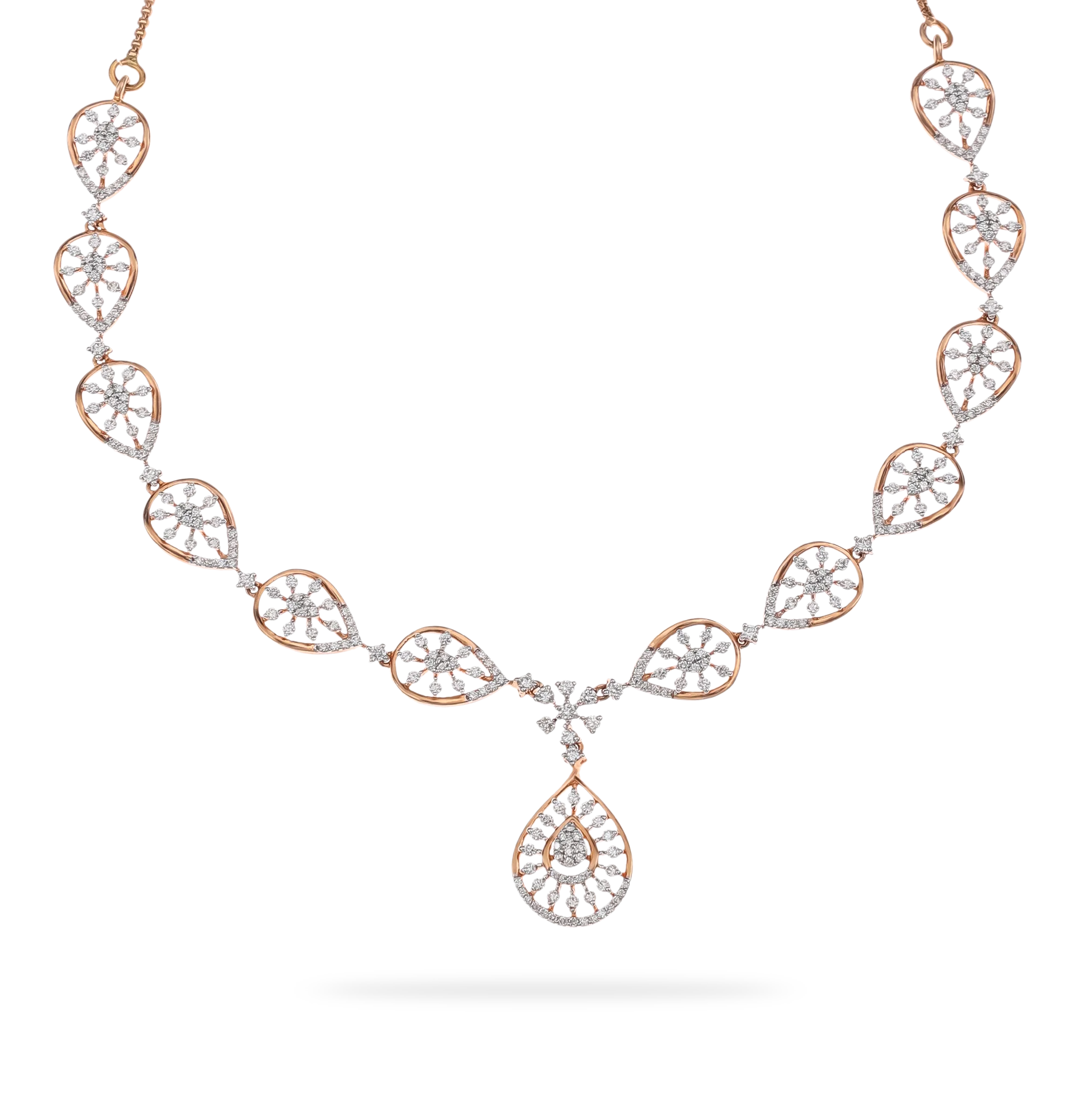
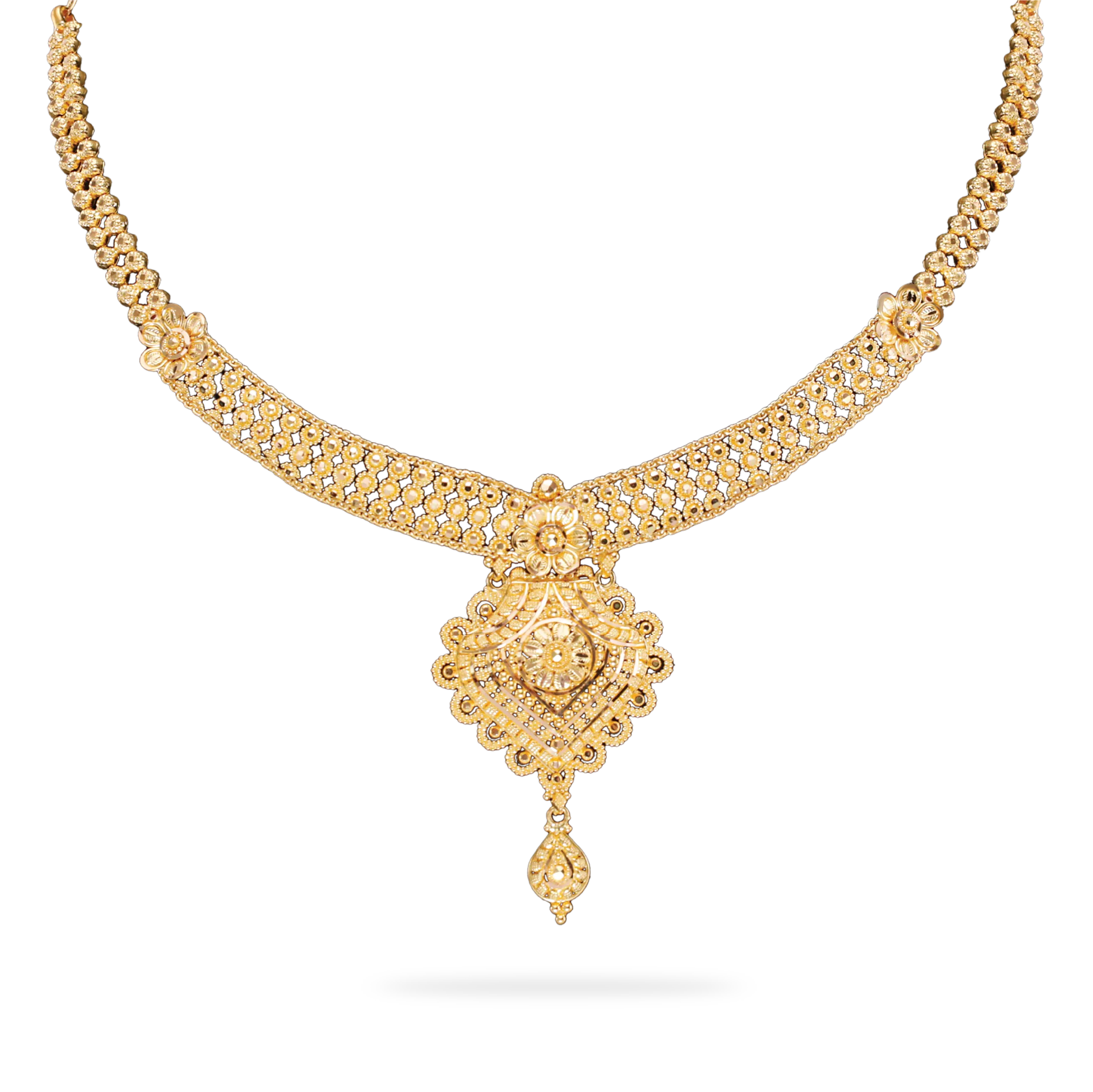
Bridal haram designs are long, often richly detailed necklaces made to create presence across the front of a saree or bridal blouse. They may be worn alone as a dramatic centerpiece or layered with shorter necklaces for a fuller traditional arrangement. The right piece should feel ceremonial without making the bride spend the day adjusting it.
What a haram necklace is and how it is worn
A haram is generally a long necklace that falls below the collarbone, sometimes reaching the upper torso or lower depending on its proportions. It is usually secured at the back with an adjustable chain or clasp, allowing the wearer to position the pendant and decorative sections neatly over the blouse. Before the wedding, try it with the actual outfit rather than judging its length from a display stand.
The necklace should rest flat and remain centered when you walk, sit, and turn. A secure closure matters just as much as the visible design, especially when the haram is heavy or paired with another necklace.
The cultural significance of layered bridal jewelry
Layered bridal jewelry can express ceremony, family tradition, and regional taste. Each strand adds texture and rhythm, while pendants and motifs may carry devotional, natural, or ancestral associations. The effect is not simply more jewelry; it is a carefully built frame for the face, blouse, and sari drape.
Many brides also use layering to combine a new piece with an heirloom. A shorter chain can provide a familiar detail close to the neckline, while the haram supplies length and movement.
How haram designs differ from other bridal necklaces
A choker or short necklace draws attention to the neck and collarbone, whereas a haram creates a longer vertical line. That makes it especially useful with a broad blouse neckline, a heavily bordered saree, or an outfit that needs a strong central ornament. Its scale also means that small differences in pendant size, chain spacing, and drop length are easy to see.
For a wider jewelry plan, a bridal jewellery checklist can help you consider the necklace alongside earrings, bangles, hair pieces, and practical details such as comfort and storage. The haram should have a leading role, not compete with every other accessory.
Why gold harams remain popular for weddings
Gold works naturally with many bridal textiles, from deep red and green to ivory, pink, and jewel-toned silks. Its warm surface catches light without requiring an elaborate setting, and traditional gold forms can be passed down or restyled for later occasions. The visual weight matters: a substantial-looking haram can anchor a wedding outfit even when the rest of the styling is restrained.
Purity, construction, and actual weight should still be assessed carefully. Gold color alone cannot tell you whether a piece is suitable for long wear or represents good value.
Popular styles of bridal haram designs
The range of bridal haram designs extends from temple-inspired pieces with repeated motifs to sleek versions with colored stones and cleaner geometry. Some designs feel intentionally antique, with a softened surface and dense relief, while others use a brighter finish for a more polished look. Think about the story your outfit already tells before adding another layer of detail.
Long temple-inspired harams with traditional motifs
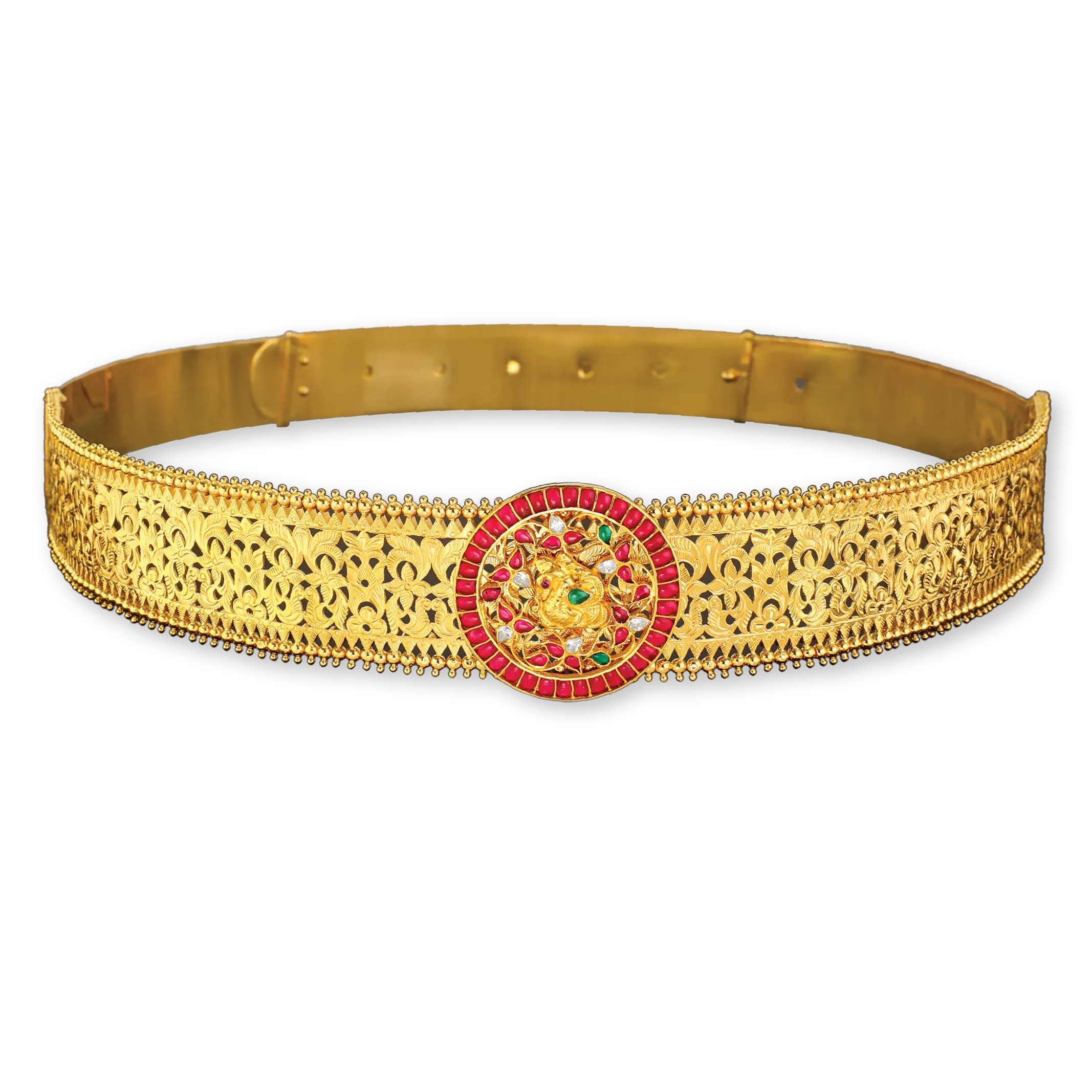
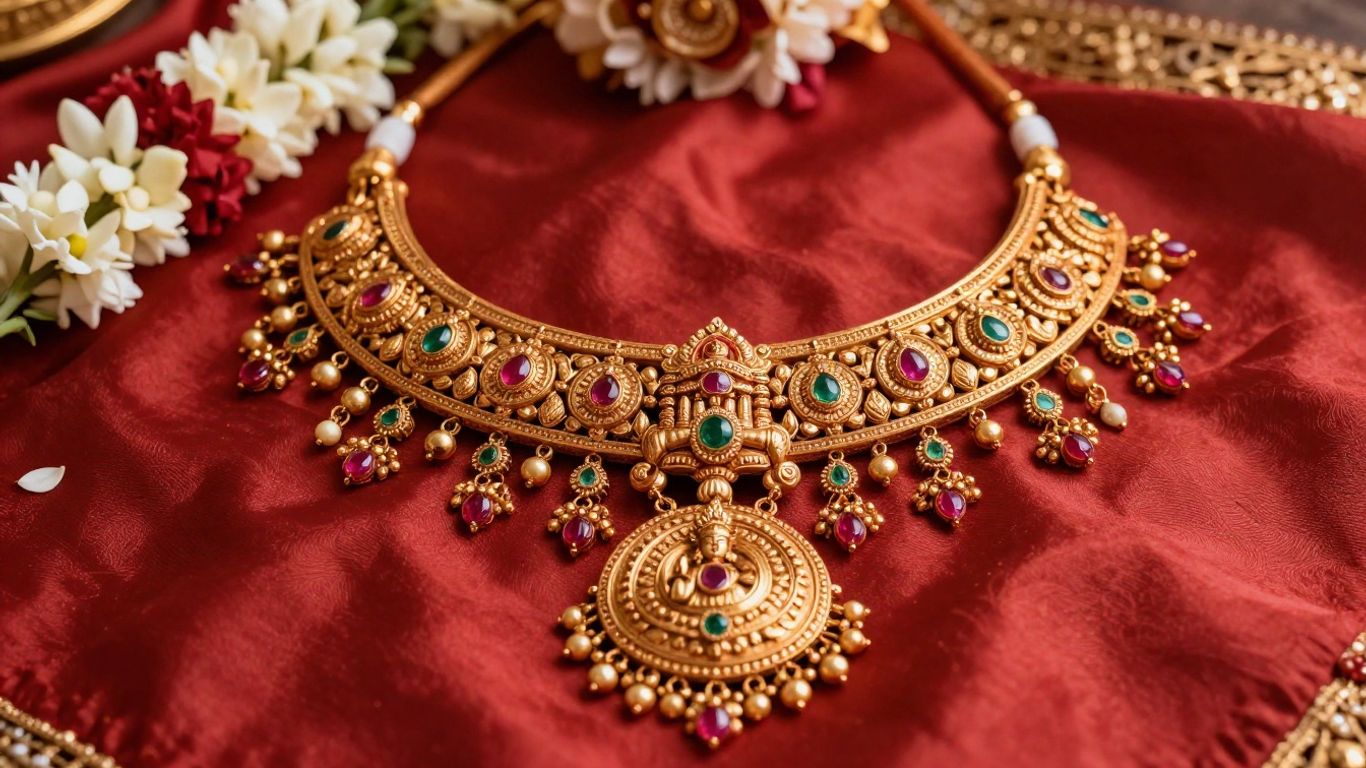
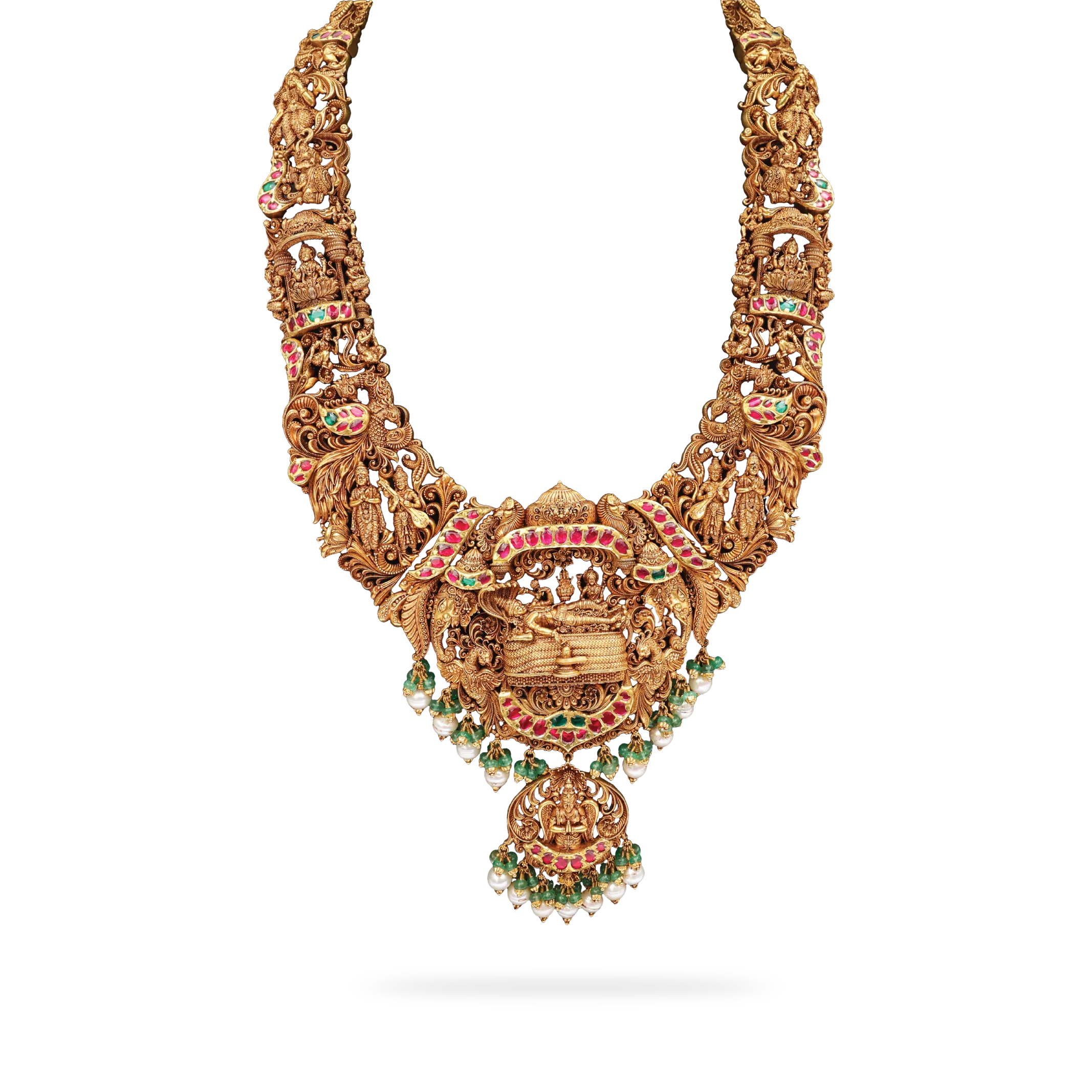
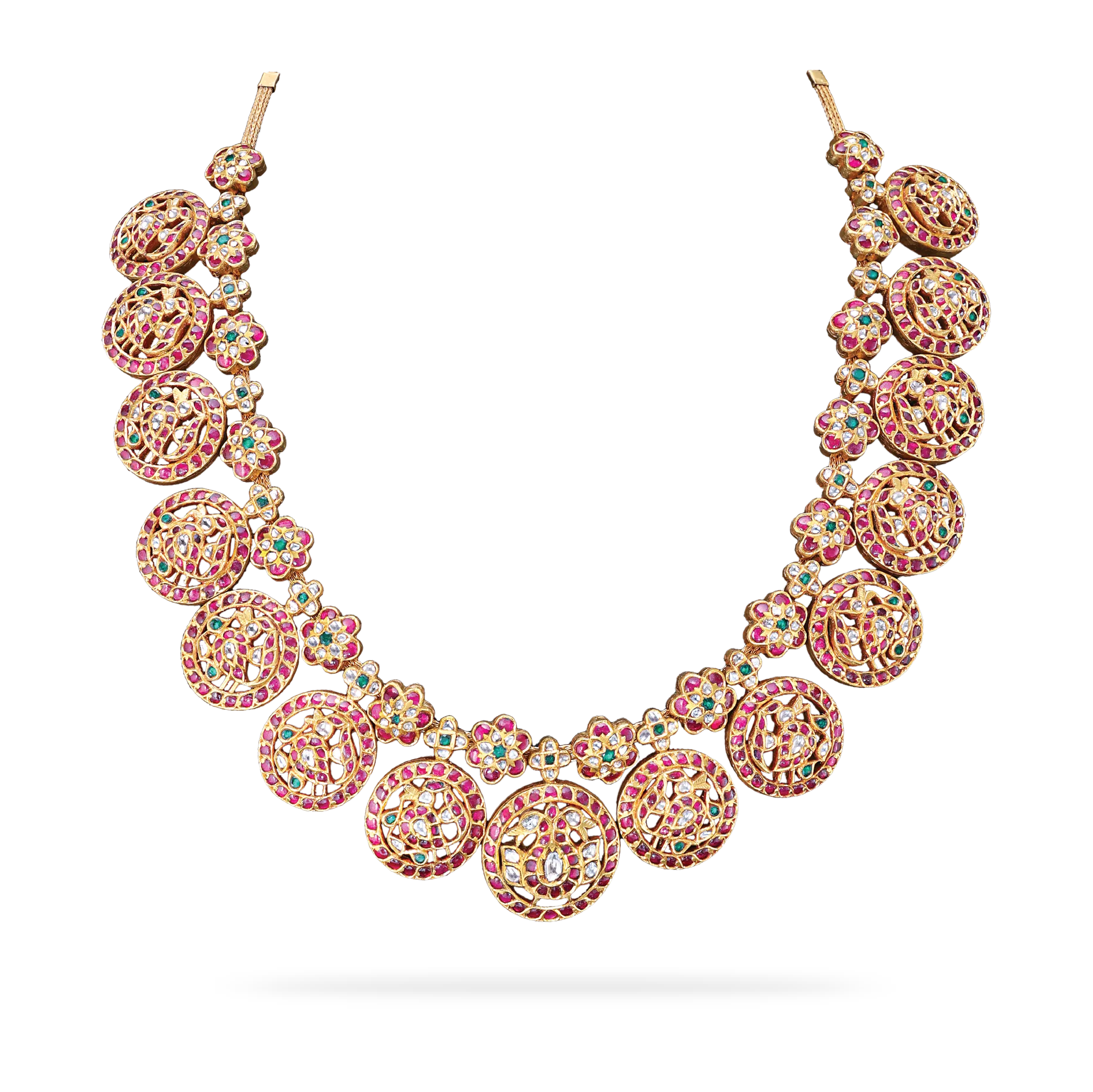
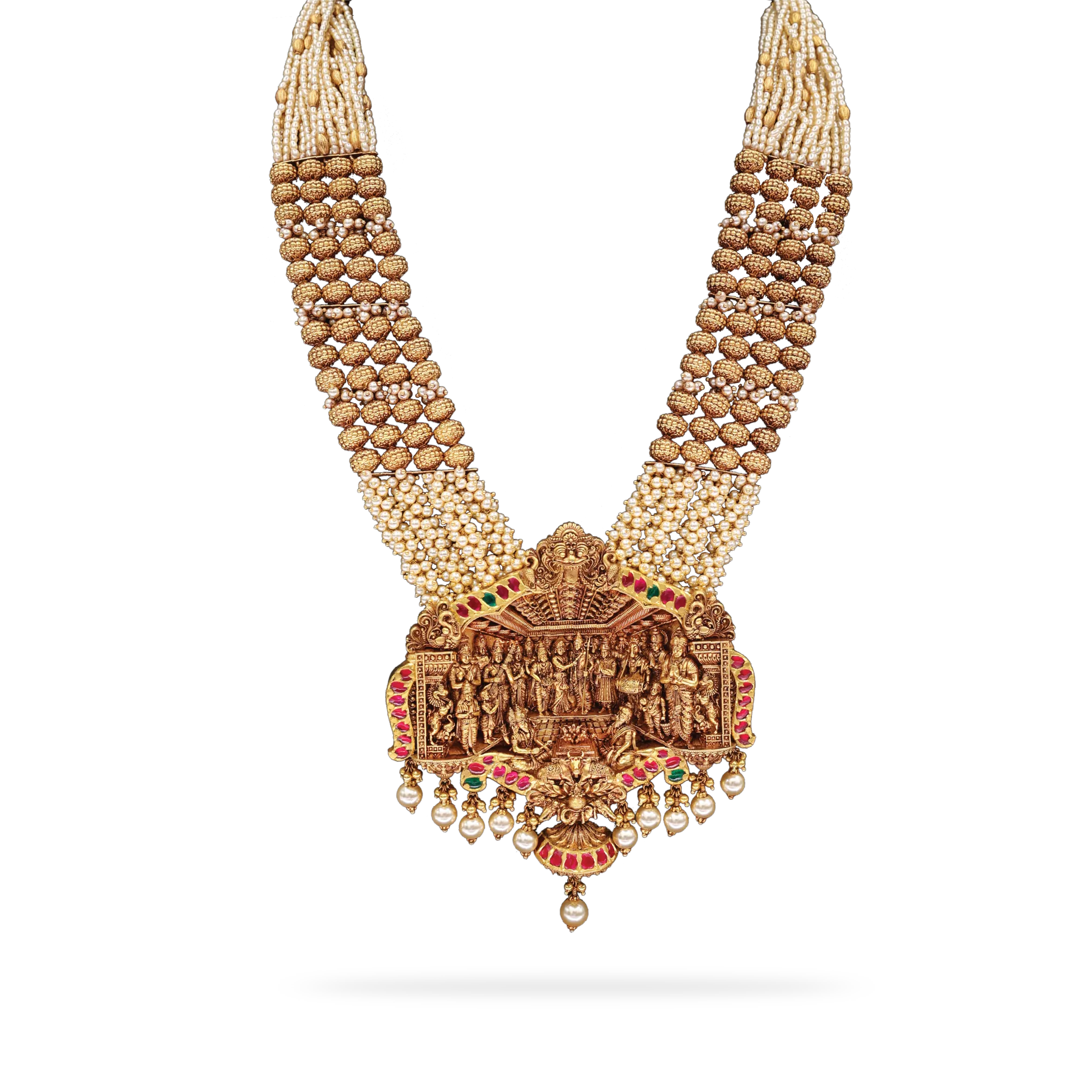
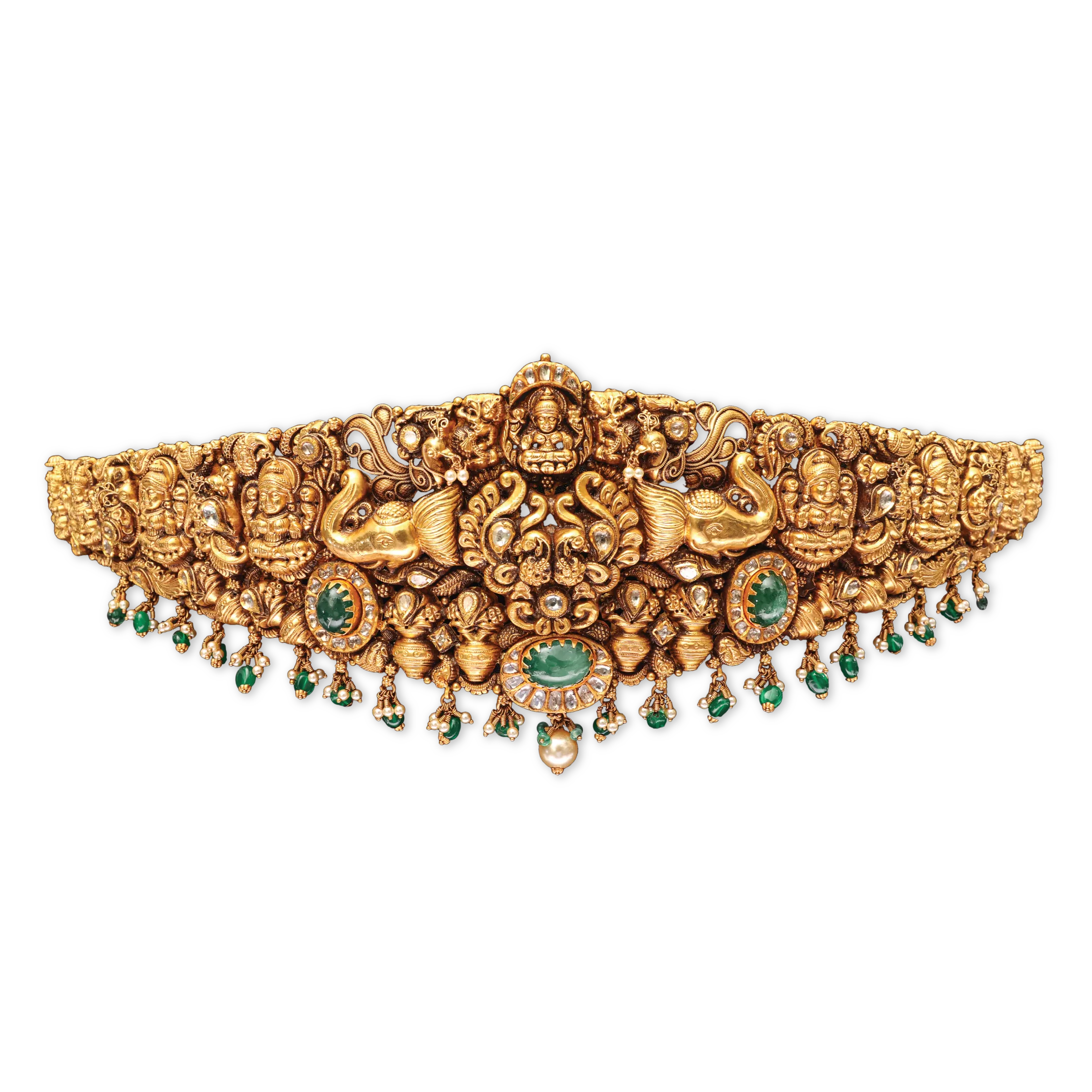
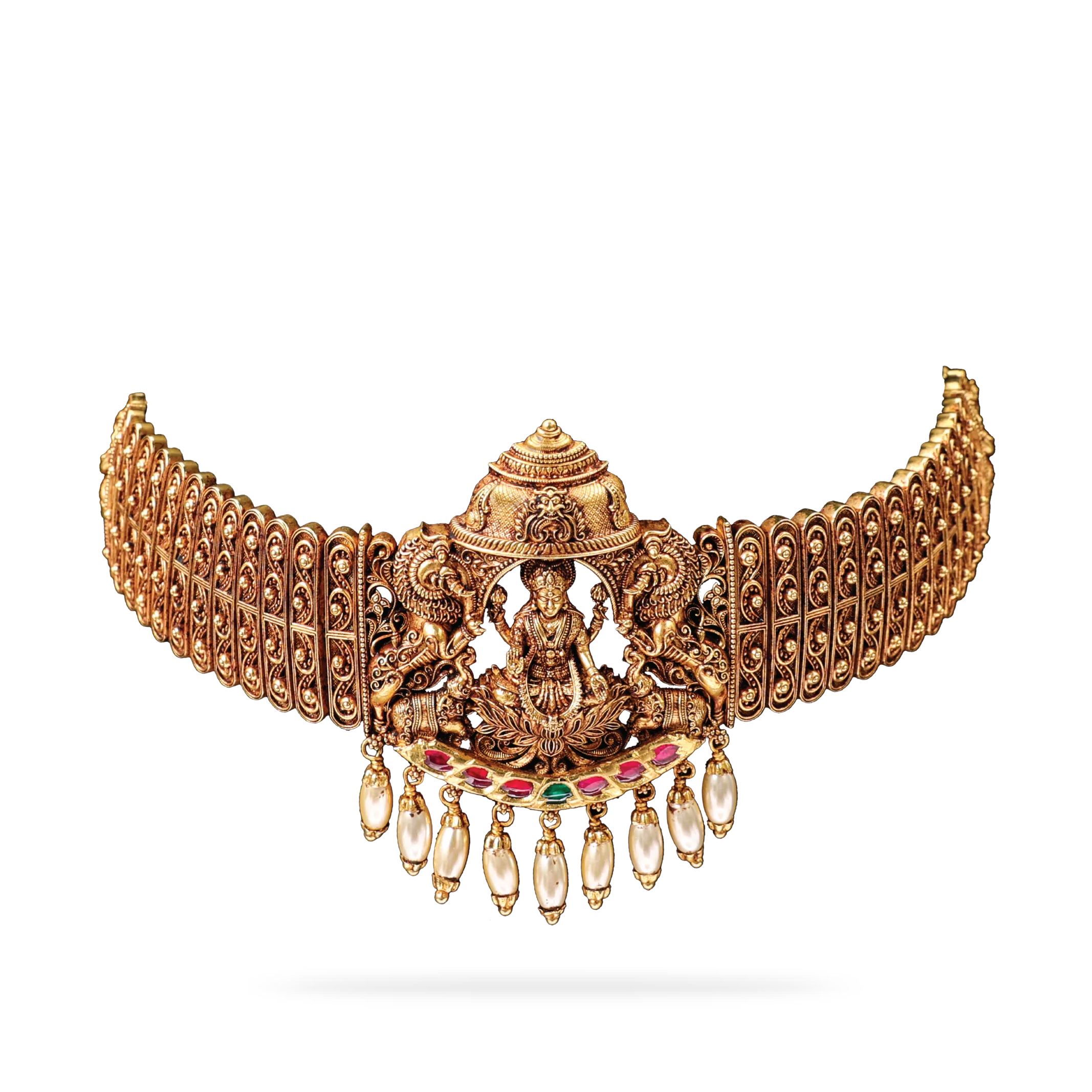
Temple-inspired harams often use rows of sculpted elements, coin-like sections, and a prominent central pendant. Their visual language suits silk sarees, traditional ceremonies, and bridal styling built around gold, jasmine, and classic hair ornaments. Because the motifs are usually repeated, the necklace reads clearly from a distance and photographs well.
A long piece with a substantial pendant can stand alone. If you add another necklace, choose a simpler shorter form so the temple details remain visible.
Lakshmi, peacock, mango, and floral patterns
Lakshmi motifs bring a devotional character, while peacocks introduce graceful curves and a sense of movement. Mango or paisley forms feel familiar and decorative, and floral patterns can soften a large necklace without making it look casual. The best motif is one that echoes another detail in the outfit, such as a border, embroidery element, or hair accessory.
A bride who wants South Indian styling may find broader context in a South Indian jewellery guide, particularly when coordinating a necklace with earrings and bangles. Avoid choosing motifs only because they are popular; scale and personal connection matter more.
Antique-finish designs for a heritage bridal look
An antique finish uses a darker surface treatment to bring out recessed details and give the jewelry a time-worn appearance. It pairs beautifully with handwoven fabrics, temple-style accessories, and heirloom-inspired styling. The finish can also make intricate work easier to read than a uniformly bright surface.
Before buying, inspect how evenly the finish is applied and ask how it should be cleaned. Abrasive polishing may remove the intended depth, so maintenance instructions should be part of the purchase conversation.
Contemporary harams with gemstones and modern detailing
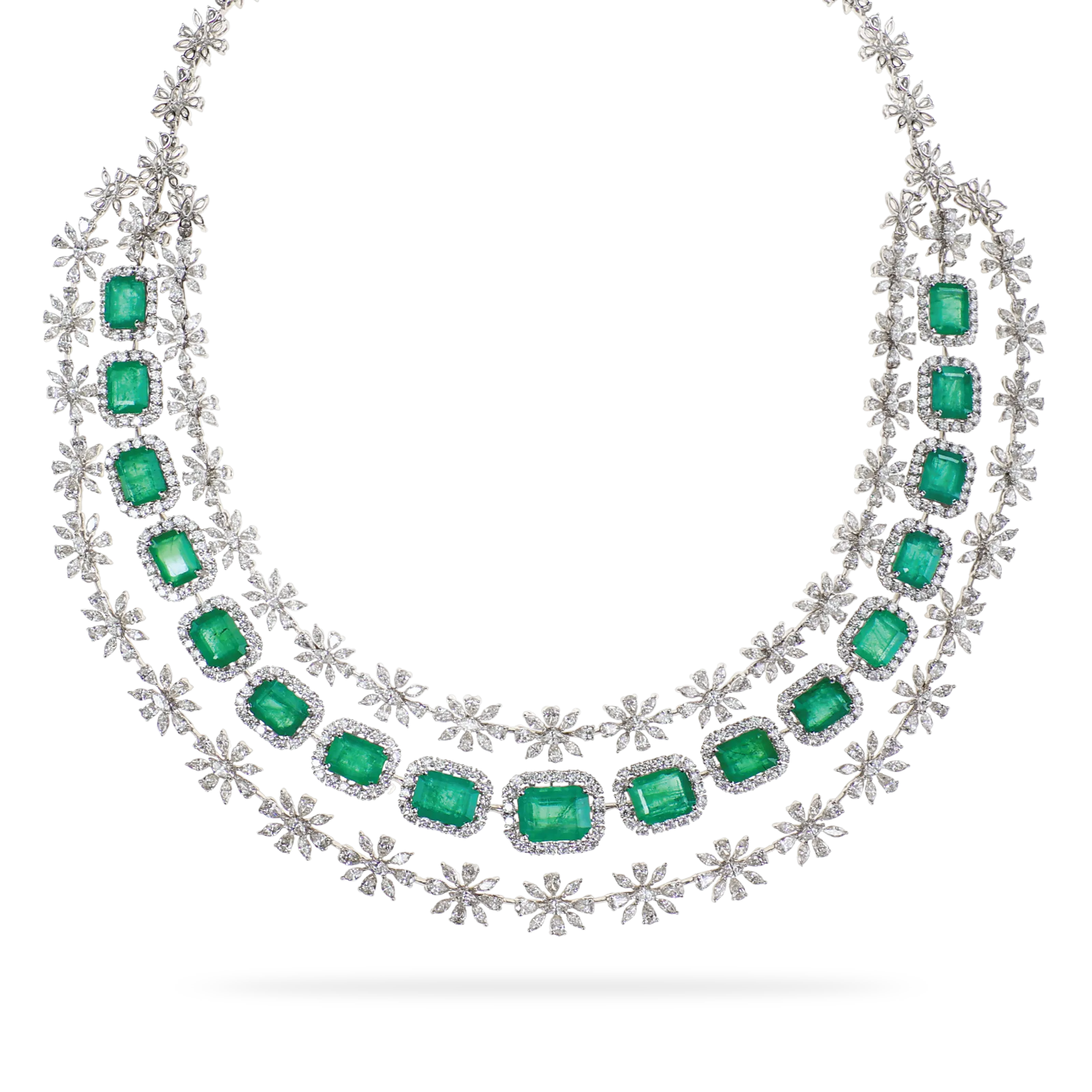
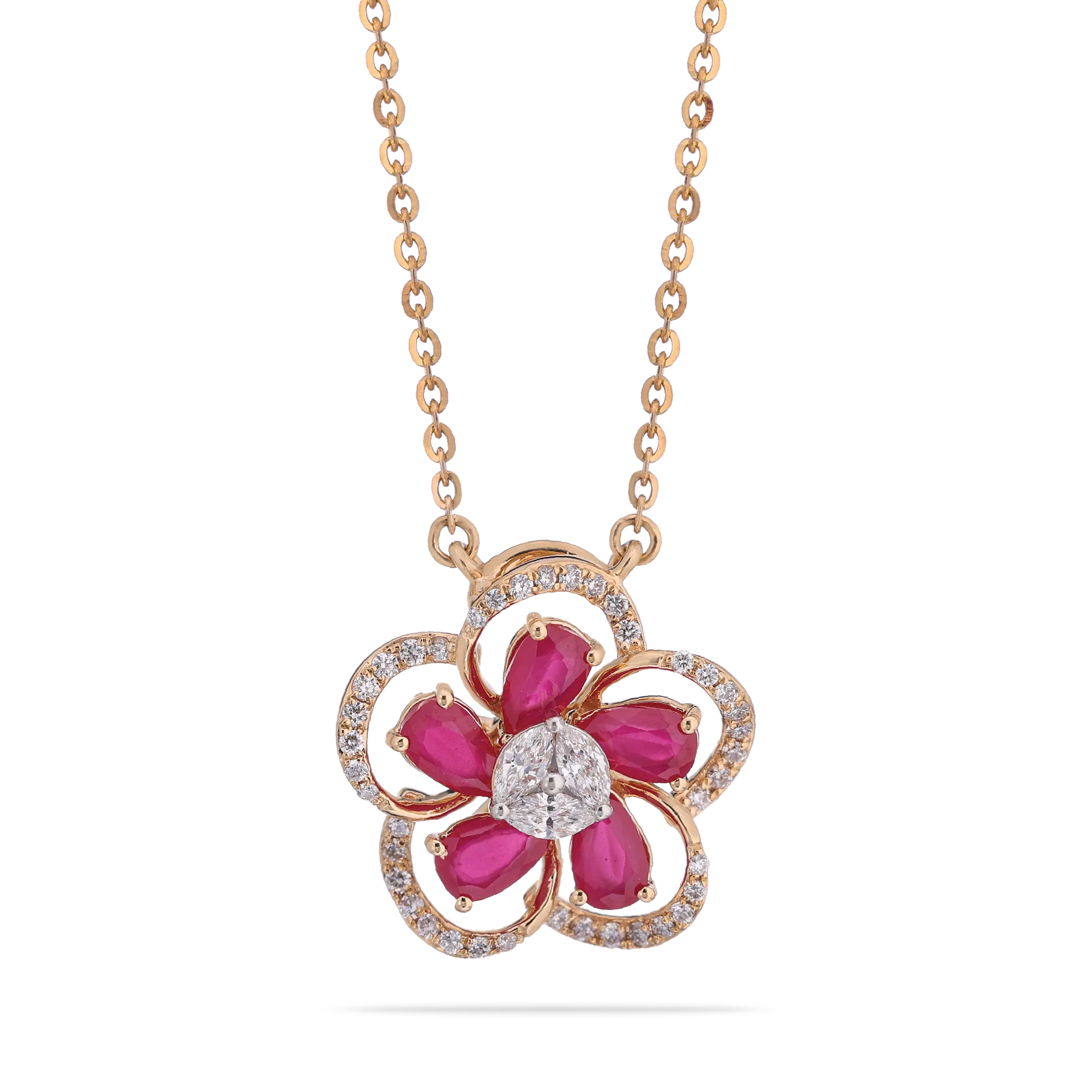
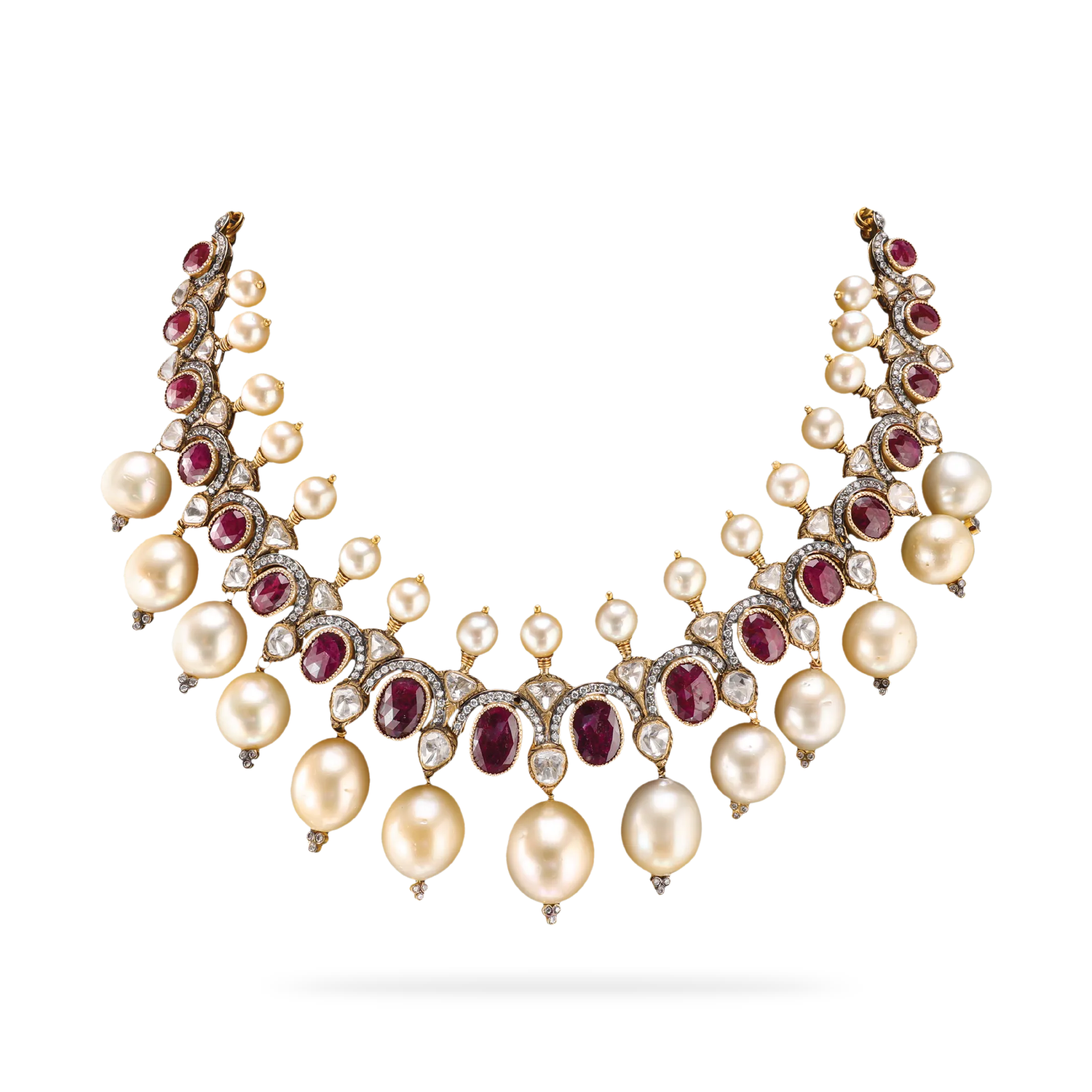
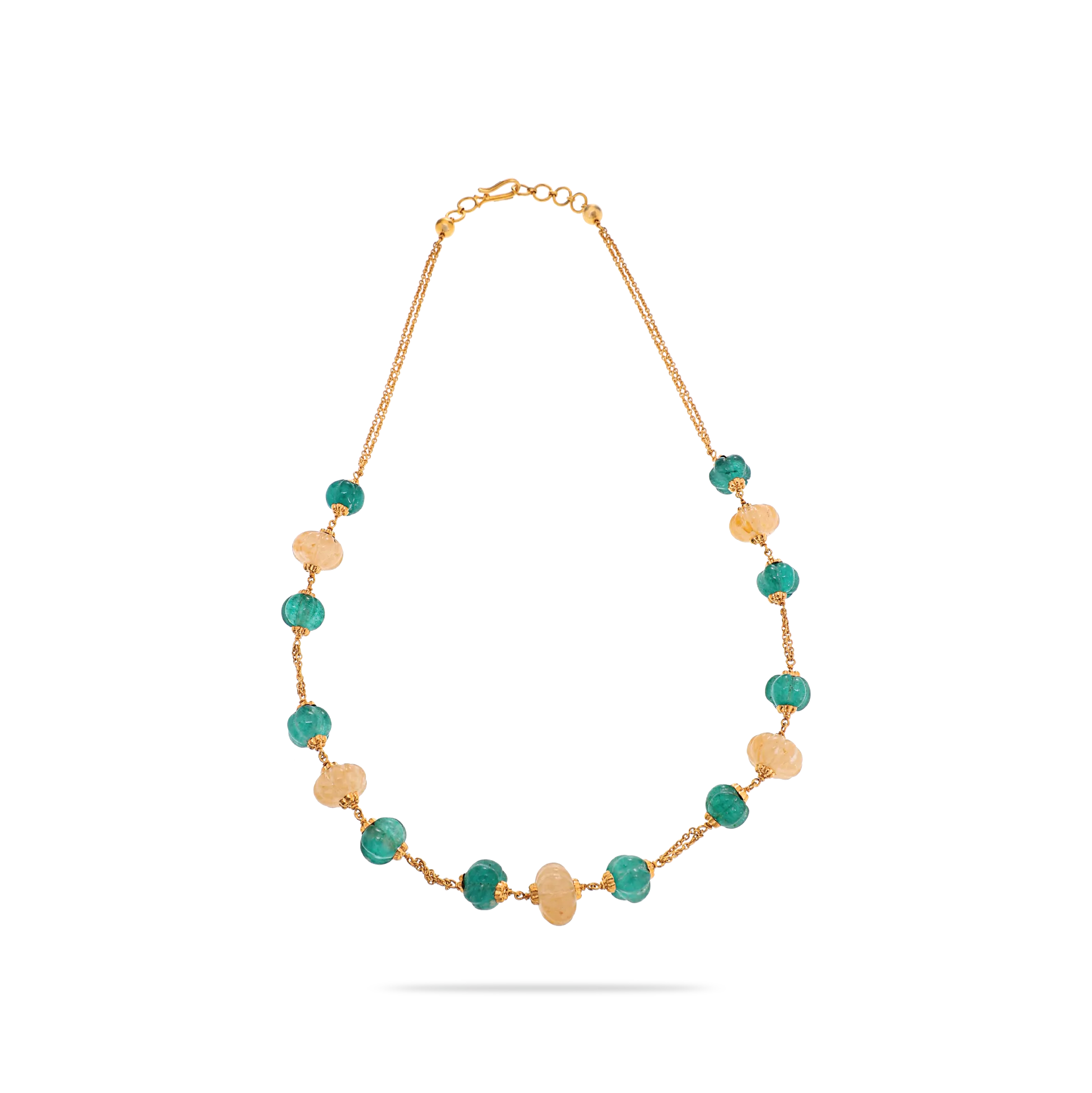
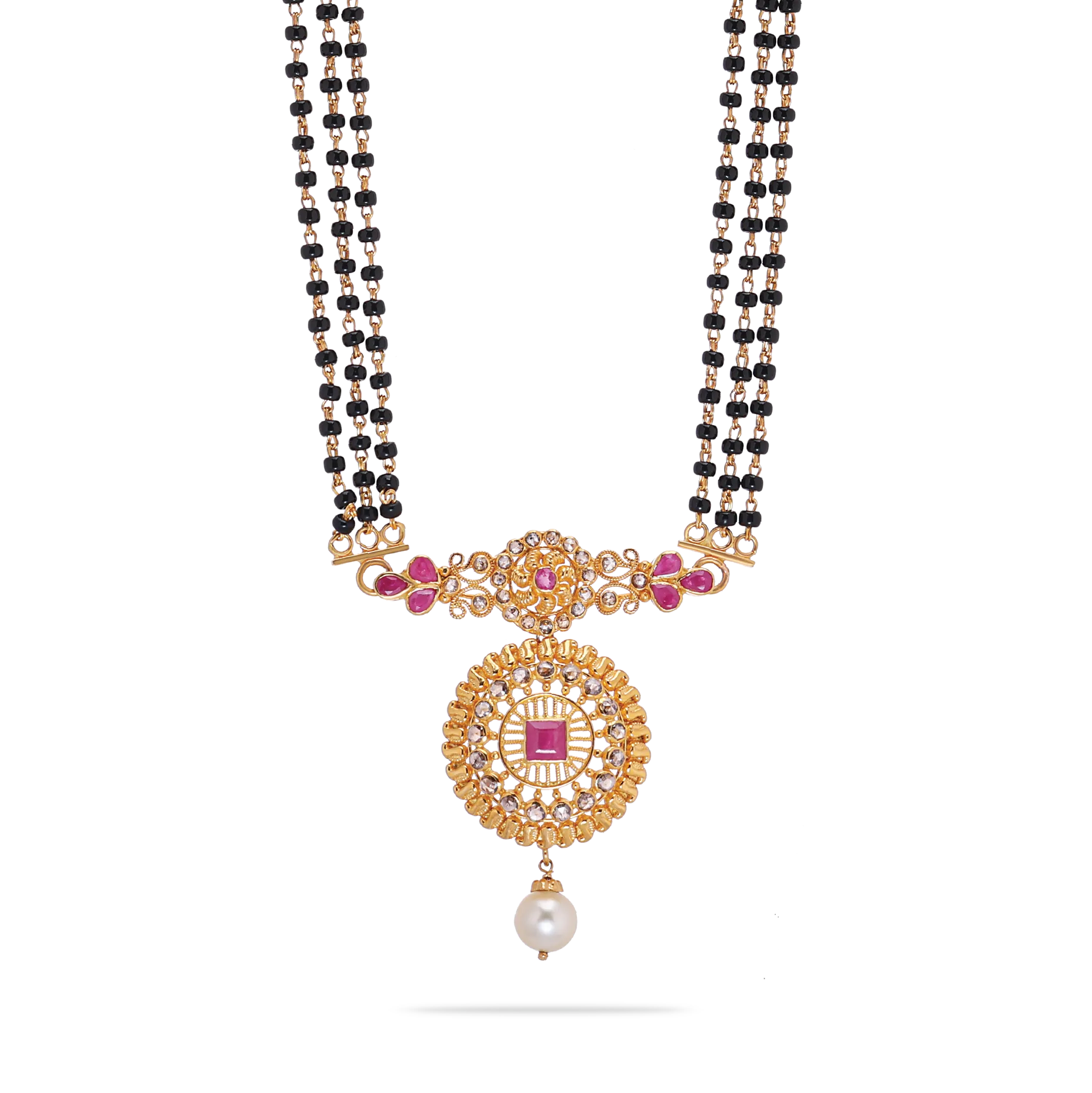
Contemporary harams may retain the long silhouette while simplifying the motif, opening space between elements, or adding ruby, emerald, pearl, or clear stone accents. They work well with modern sarees, lehengas, and blouses that already have a strong cut or embroidered surface. A restrained pendant can look especially elegant when the outfit does most of the color work.
For a lighter, modern approach, lightweight bridal jewellery offers useful styling ideas around comfort and visual balance. The goal is not to make a traditional necklace look minimal at any cost, but to choose detail that feels intentional.
Choosing the right haram based on bridal style
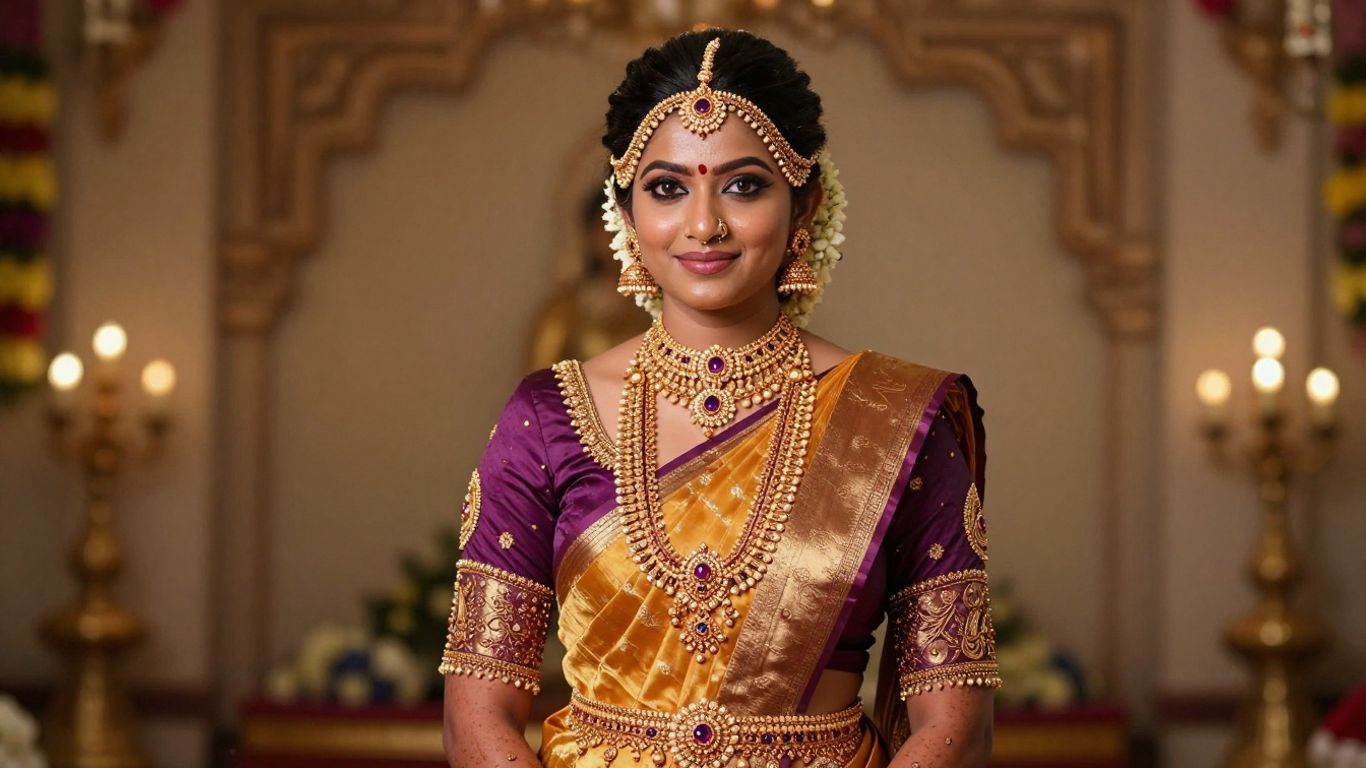
A necklace should belong to the outfit rather than sit on top of it as an unrelated object. Start with the fabric, neckline, color palette, and amount of surface decoration, then decide whether the haram should echo those qualities or provide contrast. A good match looks considered in photographs and comfortable in person.
Matching the necklace to a traditional wedding outfit
With a silk saree or heavily bordered traditional drape, a classic gold haram usually feels at home. Temple motifs, coins, floral relief, and a longer pendant can reinforce the outfit's formal character. If the saree already has elaborate zari work, choose a necklace with a clear outline so its details do not disappear into the fabric.
A traditional look does not require every piece to be identical. Repeated gold tones and compatible motifs are often enough to make the set feel cohesive.
Selecting designs for a contemporary bridal lehenga or saree
A contemporary lehenga can support a haram with open spacing, geometric accents, pastel stones, or a cleaner pendant. Match the metal and gemstone colors to the embroidery, but leave room for the outfit's silhouette to remain visible. With a minimalist saree, a single bold haram may be more effective than several dense layers.
Consider how the necklace meets the blouse edge. A gap can look deliberate and elegant; an awkward overlap can make both the blouse and jewelry appear untidy.
Balancing statement pieces with other jewelry
If the haram is the statement piece, earrings can be medium-sized rather than equally dramatic. A large maang tikka, nose ring, or waist belt may also compete for attention, so decide which areas should lead in the final photographs. The broader approach described in heritage bridal jewellery styling is useful when combining traditional forms with a newer outfit.
The balance is easier to judge when you take a full-length photograph. Mirrors can hide how much visual weight the jewelry creates once the saree, veil, and hair accessories are included.
Coordinating the haram with the wedding theme
A heritage venue and traditional ceremony may suit antique gold and sculpted motifs, while a formal evening reception may favor a brighter finish and colored stones. This does not mean the jewelry has to match the decor literally. Instead, let the venue, flowers, lighting, and clothing suggest the overall mood.
Keep the theme as a guide rather than a rule. A personally meaningful necklace will usually age better in photographs than one chosen only to fit a temporary color trend.
Finding the right size, length, and layering combination
Proportion is where many beautiful necklaces either succeed or lose their effect. The haram needs enough length to be recognizable, but not so much that its pendant disappears into the pleats or rests uncomfortably against the waist. Try the complete combination with the blouse, drape, veil, and intended earrings.
Choosing a length for the neckline and blouse design
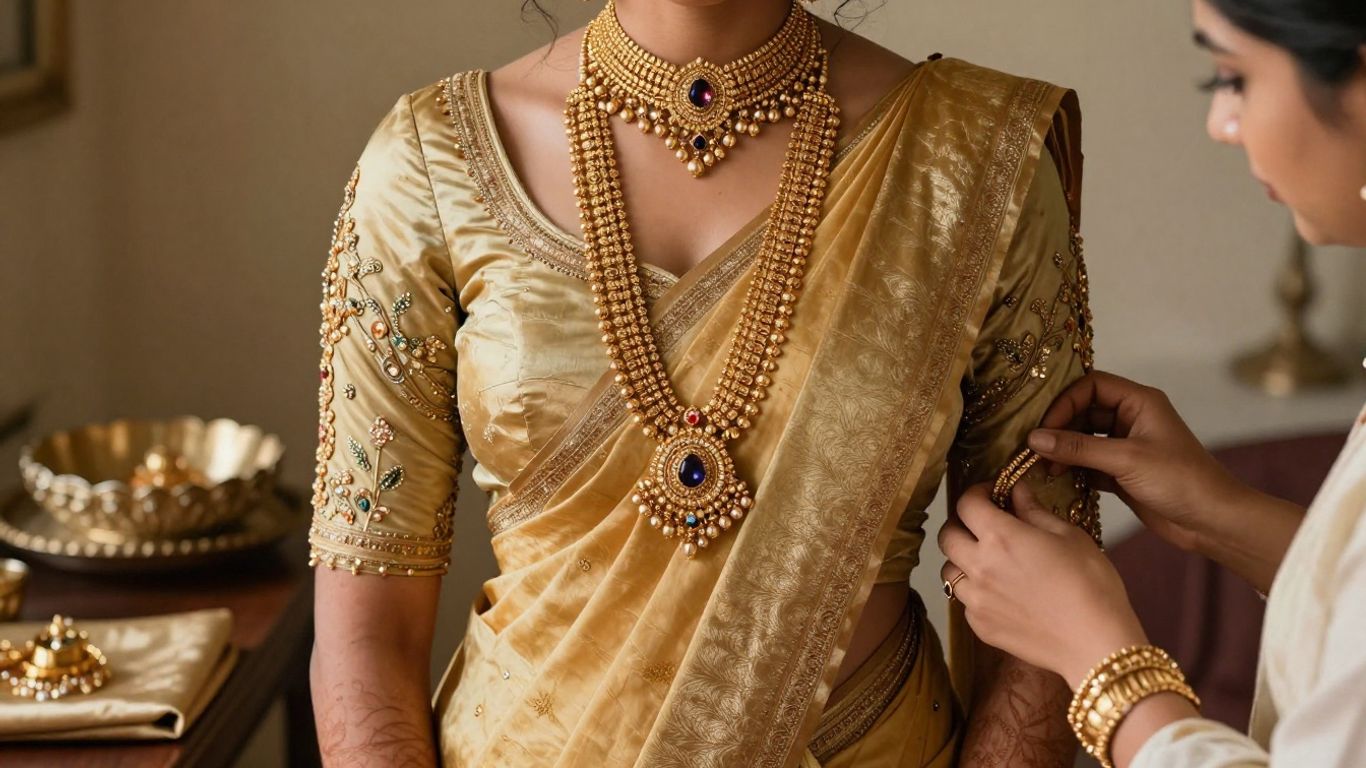
A high or closed neckline may call for a slightly shorter drop so the necklace does not fight the blouse. A wider or deeper neckline gives a long haram more room to fall and keeps the central pendant visible. The blouse's embroidery should also be considered: dense work can benefit from a simpler chain, while a plain blouse can carry more ornament.
Ask someone to photograph the necklace from the front and side. The side view often reveals whether the lower section catches on the fabric or pulls the chain out of position.
Combining short necklaces with a long haram
A short necklace can establish the upper edge of a layered arrangement, with the haram creating the longer line beneath it. Leave a visible separation between the pieces when possible; overlapping pendants can blur the design and make the layers appear heavier. Short necklaces with modest detail are usually easier to combine than two equally elaborate statement pieces.
The same principle applies to earrings. When the neck is richly layered, earrings that frame the face without extending too far into the necklace area can create a cleaner result.
Adjusting layers for comfort and movement
A wedding necklace must survive more than a fitting. It may be worn through greetings, photographs, dining, rituals, and hours of sitting. Test the clasp, chain, pendant movement, and contact points against the skin before finalizing the combination.
A practical fitting should include these checks:
- Walk and turn while wearing every planned layer.
- Sit with the blouse and saree arranged as they will be on the day.
- Check whether pendants twist, overlap, or catch on embroidery.
- Confirm that the clasp and extension chain are easy to reach.
These small tests can expose problems while there is still time to alter the chain or change the layering order. Comfort is not a compromise to beauty; it helps the bride carry the look naturally.
Avoiding an overcrowded bridal jewelry look
Crowding usually comes from repeating too many focal points rather than from wearing one large necklace. If the haram has a broad pendant, keep the shorter layer quiet and let the blouse show around it. If the outfit has heavy beadwork, a more open necklace can provide welcome breathing room.
Step back from the mirror and assess the whole silhouette. The necklace should guide the eye toward the face and center of the outfit, not create a wall of competing details.
Comparing materials, finishes, and gemstone details
Materials affect appearance, price, weight, and care. A piece can look impressive in a photograph while feeling too heavy in use, or it can offer a beautifully detailed surface without being made from solid gold. Compare the construction as carefully as the design, and ask for written details rather than relying on sales language.
Solid gold, gold-plated, and one-gram gold options
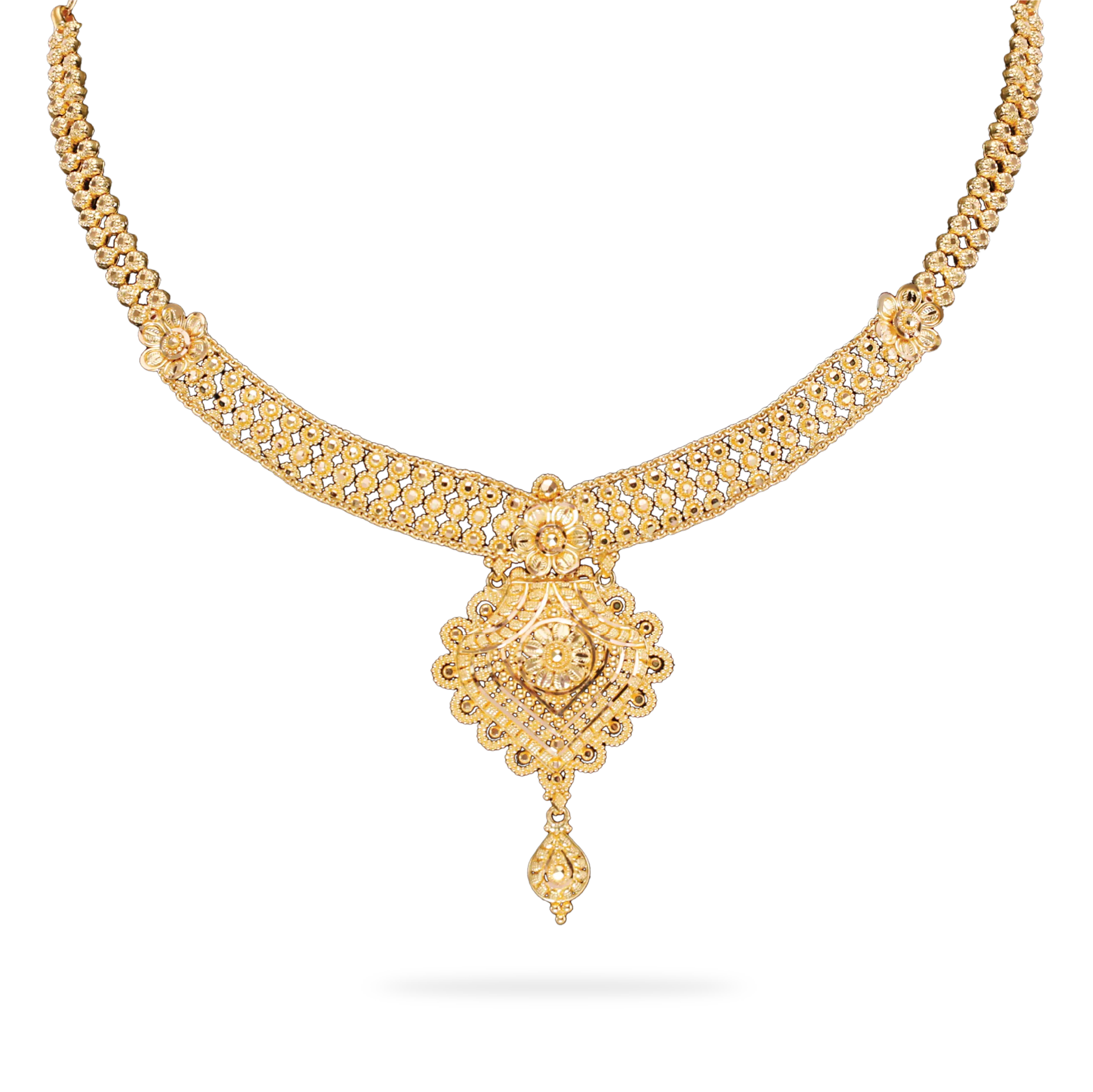
Solid gold is valued by purity and weight, while gold-plated jewelry places a gold surface over another base material. One-gram gold designs are often chosen when a bride wants the appearance of traditional gold jewelry at a more accessible price point. The distinction should be clear on the invoice, along with information about the base metal and expected wear.
A one-gram gold bridal haram collection can be a useful starting point for comparing silhouettes and decorative approaches. It should not, however, be evaluated as though it were identical to a solid-gold piece.
Choosing between yellow gold , rose gold , and white gold
Yellow gold has the strongest traditional association and complements warm bridal textiles particularly well. Rose gold adds a blush tone that can soften modern pastel outfits, while white gold creates a cooler, more understated contrast. The choice should work with the bride's other jewelry, embroidery, and preferred photographs rather than with skin-tone rules alone.
Mixing metals can work when it is deliberate, but a large haram usually benefits from one dominant metal color. Small accents can then provide contrast without making the set look accidental.
Using pearls, rubies, emeralds, and cubic zirconia
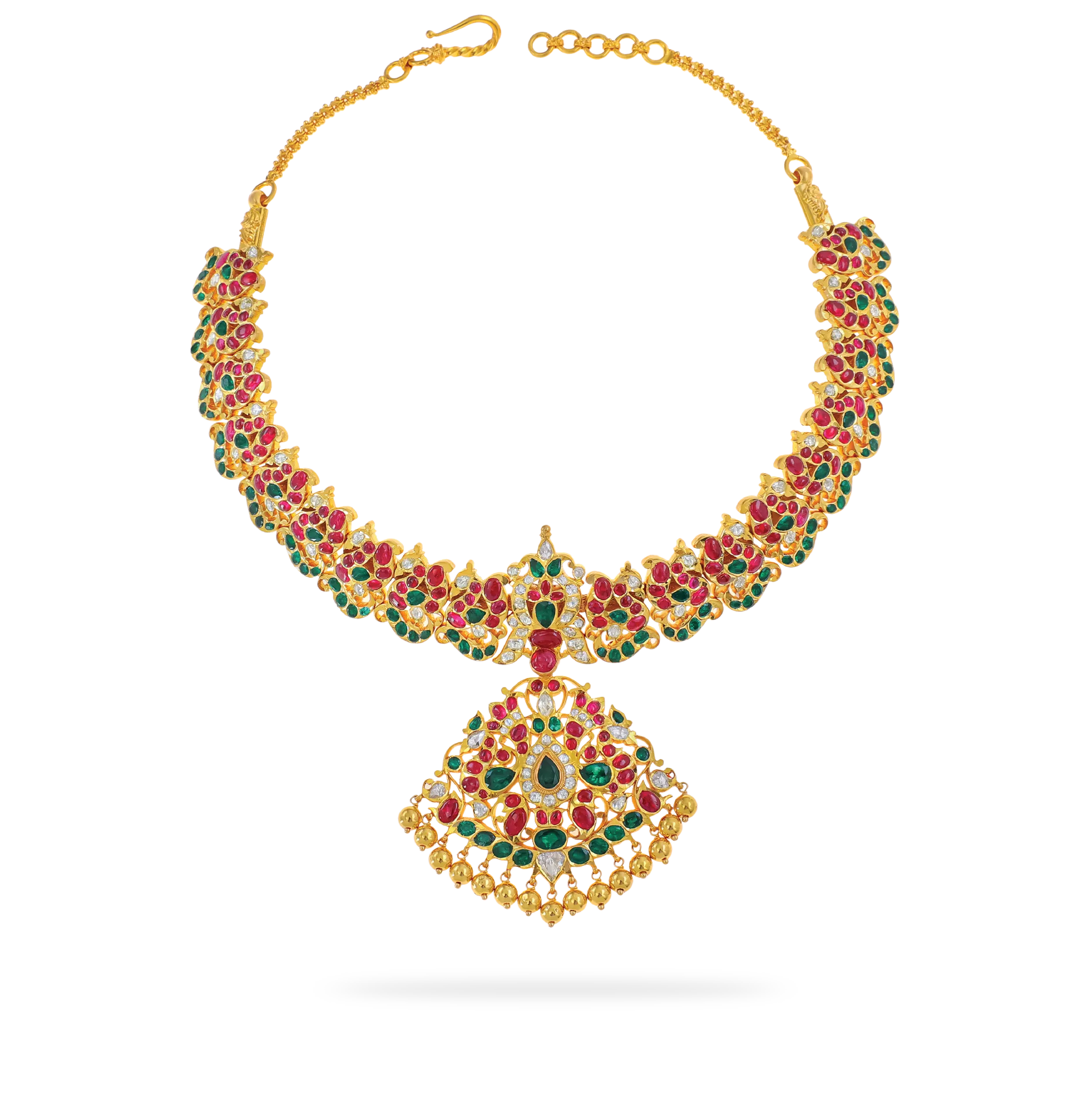
Rubies bring saturated red, emeralds add a deep green note, and pearls create a softer, luminous finish. Cubic zirconia can provide clear sparkle in designs where a bride wants brightness without the same gemstone cost. Look at the stones under the lighting used at the venue, since warm indoor light can change how colors appear.
The setting matters as much as the stone. Secure edges, even spacing, and a consistent cut help the necklace look polished when it moves.
Evaluating craftsmanship, durability, and maintenance needs
Inspect the back of the haram, not just its front. Smooth edges, firm links, secure stone settings, and a well-made clasp are signs that the piece has been considered for wear. Ask whether the necklace can be repaired locally and which cleaning products should be avoided.
For broader fine-jewelry buying guidance, craftsmanship and gemstone quality provides a useful comparison point. Keep the care instructions with the receipt, especially when the necklace includes an antique finish or multiple stone types.
Buying and styling bridal haram designs with confidence
Shopping becomes simpler when the decision is divided into design, fit, documentation, and aftercare. Take the blouse fabric or a photograph of the outfit, and make a note of the maximum comfortable weight you are willing to wear. A calm, measured fitting is more useful than choosing quickly under bright showroom lighting.
Setting a realistic budget before shopping
Set a total jewelry budget before falling in love with a particular motif. Include taxes, alterations, additional chains, insurance, storage, and any matching pieces that may be needed. If the haram is the main purchase, allow enough room for its clasp, finishing, and craftsmanship rather than spending the entire amount on decorative weight alone.
A budget is easier to follow when you compare two or three designs with similar length and material. That reveals whether a price difference comes from gold content, stones, labor, or branding.
Checking gold purity, weight, and certification
Ask for the purity, net gold weight, gross weight, stone weight where relevant, and hallmark or certification details. Read the invoice before paying and confirm that the description matches the actual piece. If the necklace is plated or one-gram gold, make sure that is stated plainly.
For general jewelry planning, South Indian jewelry choices offers a useful way to think about categories and occasion-specific selections. Documentation protects the purchase long after the wedding photographs are taken.
Customizing motifs, chains, and pendant details
Customization can be as small as changing the chain length or as personal as selecting a family motif for the pendant. Ask to see a sketch or digital rendering before approving significant changes, and confirm how alterations affect weight, delivery time, and cost. A personalized piece does not need every possible detail; one meaningful element can be enough.
The safest custom choices are those that improve fit or strengthen a connection to the outfit. A removable extension chain, for example, can make the haram more versatile after the wedding.
Caring for the haram before and after the wedding
Store the necklace separately in a soft, lined box or pouch, with pendants laid flat and chains gently fastened to reduce tangling. Keep it away from perfume, hairspray, cosmetics, moisture, and rough fabrics. After the wedding, wipe it with a suitable soft cloth and follow the jeweler's specific instructions rather than using household cleaners.
If the piece is an heirloom or has delicate stones, arrange professional inspection before long-term storage. A little care preserves both the finish and the memories attached to the necklace.
Unrelated online topics can easily appear during research, from Golden Sands property guidance to Venturis Clinic, expatriate borrower insurance, double sheepskin rug care, and FILTRO.ro maintenance guides. They are reminders to judge every page by its subject; for bridal jewelry, stay with sources that provide clear information about fit, materials, certification, and care.
Conclusion
The perfect haram is the one that feels connected to the bride, the outfit, and the occasion without overwhelming any of them. Compare its proportion, construction, metal, motifs, and comfort in the full wedding look, then buy with documentation and care in mind. A thoughtful choice can be magnificent on the wedding day and meaningful for years afterward.
Frequently Asked Questions
What is a bridal haram?
A bridal haram is a long necklace commonly worn as a central piece of wedding jewelry. It may feature repeated motifs, a large pendant, gemstones, or layered construction.
How long should a bridal haram be?
Its length should suit the blouse neckline, saree or lehenga silhouette, and the bride's comfort. Try it with the complete outfit to ensure the pendant remains visible and does not catch on the fabric.
Can a haram be worn with a choker ?
Yes. A shorter necklace can sit near the neckline while the haram creates a longer vertical line, provided the two pieces have enough separation and do not compete in detail.
Are antique-finish harams suitable for modern outfits?
They can be. The darker finish adds heritage character, while a simpler blouse, modern saree, or cleaner outfit can keep the overall look balanced.
Is one-gram gold the same as solid gold?
No. One-gram gold jewelry is generally designed to provide a gold-like appearance at a lower cost, while solid gold is assessed by its actual purity and weight. Confirm the material details on the invoice.
How can a bride make a heavy haram more comfortable?
Use a secure clasp, test the necklace while walking and sitting, adjust the chain carefully, and avoid stacking several heavy pieces in the same area. A fitting before the wedding can identify pressure points.
How should a bridal haram be stored after the wedding?
Fasten the chain, lay the necklace flat in a soft separate pouch or box, and keep it away from moisture, perfume, cosmetics, and abrasive materials. Follow the jeweler's cleaning and inspection recommendations.
Traditional South Indian jewellery: a guide to styles, symbolism, and choosing the right pieces
10 minute read
Related blogs:
November 20, 2025
The Timeless Elegance of the Tennis Bracelet: A Comprehensive Guide
Read More
November 20, 2025
The Ultimate Guide to Styling and Wearing a Choker Necklace
Read More
November 20, 2025
Find Your Perfect Engagement Ring: A Comprehensive Guide to Styles and Diamonds
Read More
November 20, 2025
The Timeless Elegance of a Diamond Tennis Bracelet: A Buyer's Guide
Read More









.webp)
.webp)